Short nail designs for 2026: 21 ideas for natural nails

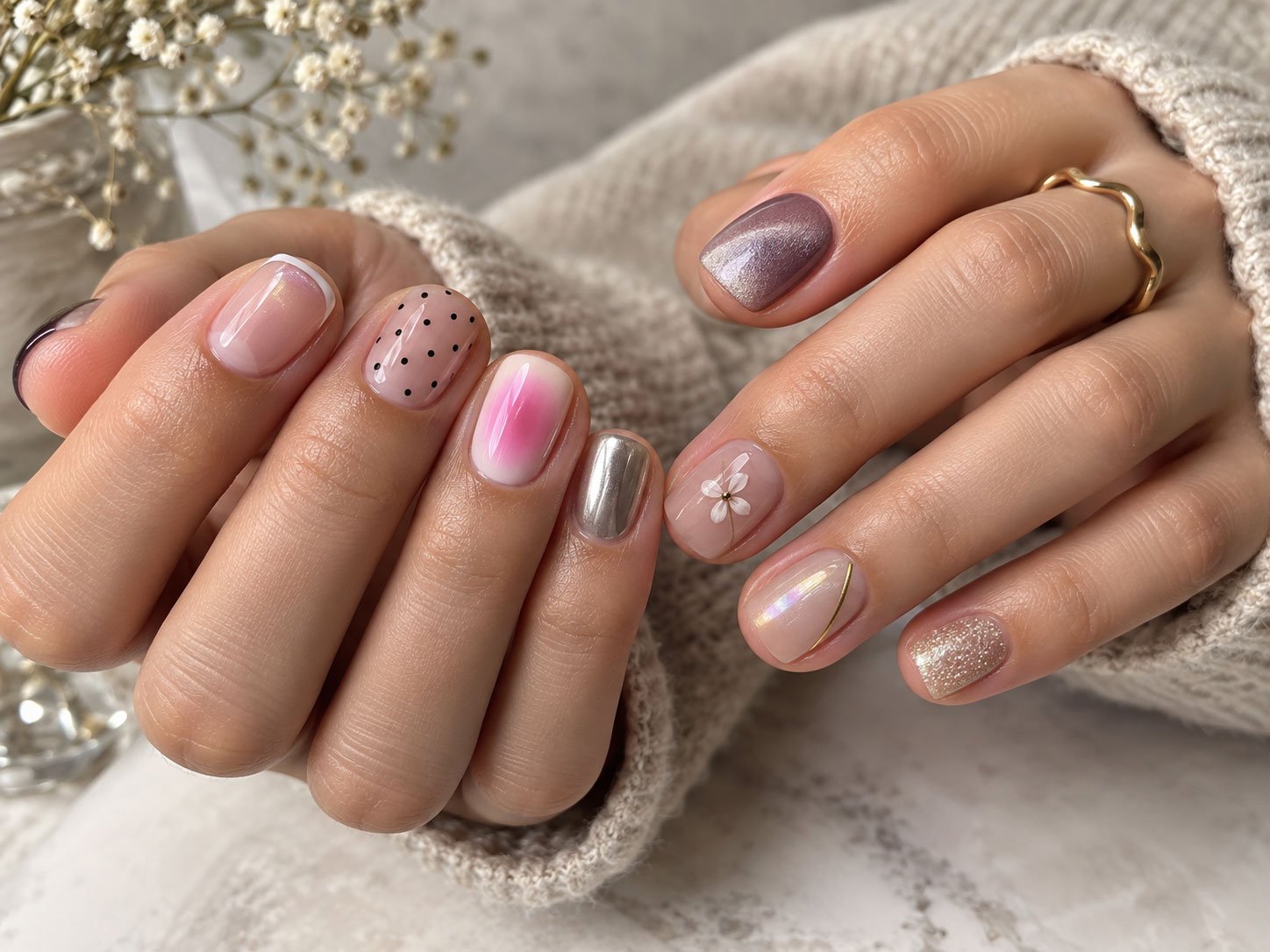
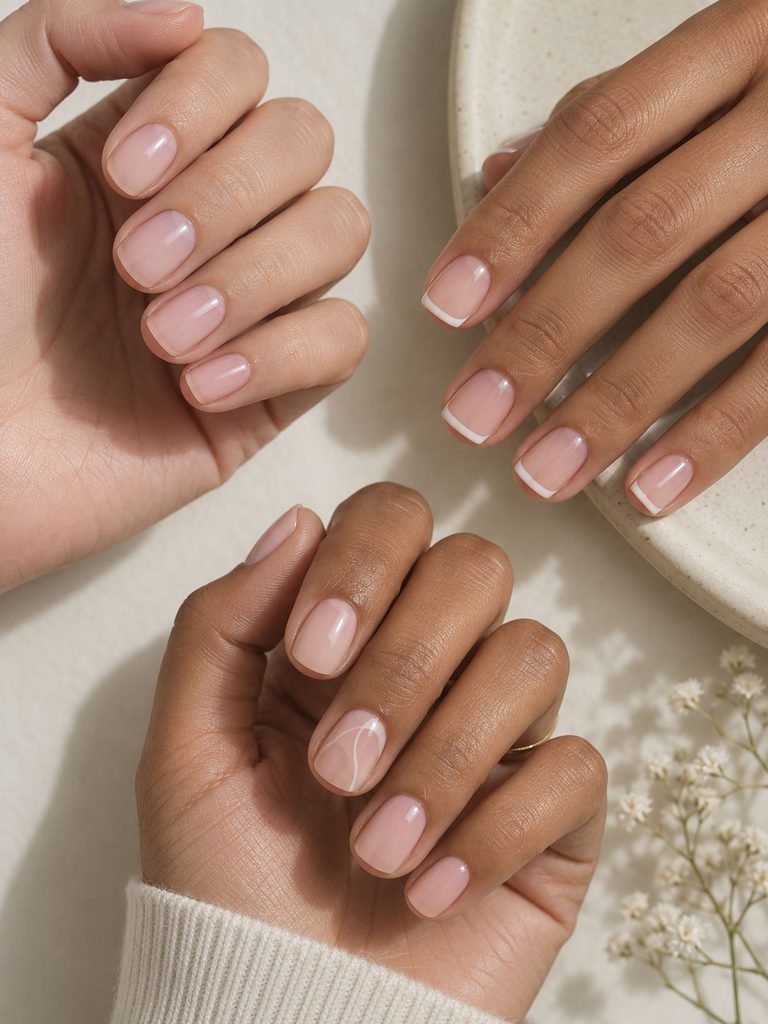
Short nails do not need scaled down copies of designs made for long extensions. The strongest short nail designs use the smaller canvas on purpose. Thin French tips, controlled negative space, dots, tiny motifs, translucent color and concentrated shimmer can all look balanced without adding length.
Current 2026 nail coverage keeps returning to short natural shapes alongside micro French details, polka dots, jelly finishes, magnetic effects and carefully scaled art.
The trick is not choosing the smallest possible decoration. It is deciding where the eye should land and leaving enough uncluttered space around it.
What makes nail art work on short nails
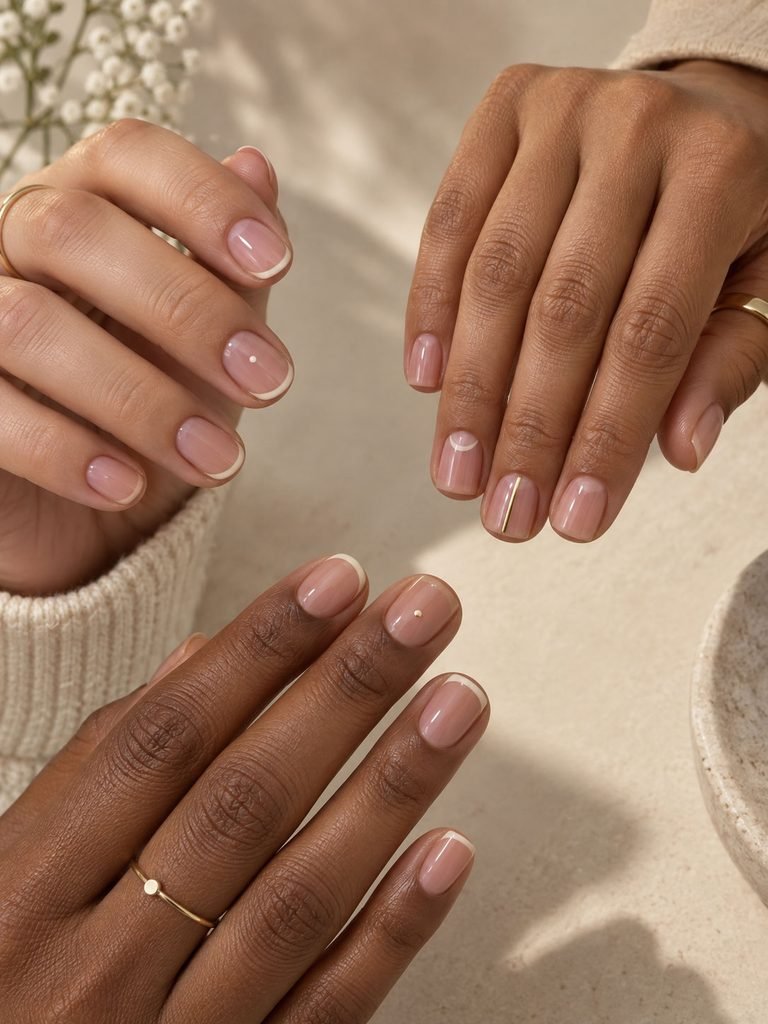
Short nails usually look most intentional when the design has a clear focal point. That might be the free edge, one side of the nail, the center or the area close to the cuticle. Filling every available millimeter with detail can make several individually attractive elements compete with one another.
Round, square and squoval shapes can all work well at short lengths. Vogue’s 2026 short nail guide likewise identifies all three as practical short nail shapes rather than declaring one universal winner.
Scale matters more than complexity. A French line that occupies half of a very short nail changes the proportions dramatically. Make that line much finer and the same basic idea becomes lighter. A floral design can work for the same reason when it uses one or two small blooms instead of filling every nail with petals.
Leave the surrounding nail and cuticle area healthy too. The American Academy of Dermatology recommends moisturizing nails and avoiding cutting or forcefully pushing back the cuticles. Its manicure and pedicure safety guidance also advises checking salon cleanliness and tool hygiene.
For a more restrained version of many of the ideas below, Femorias’ office friendly nail designs show how short length, quiet color and small accents can work in a workplace setting.
Fine lines and open space: ideas 1 to 5
1. Micro French tips
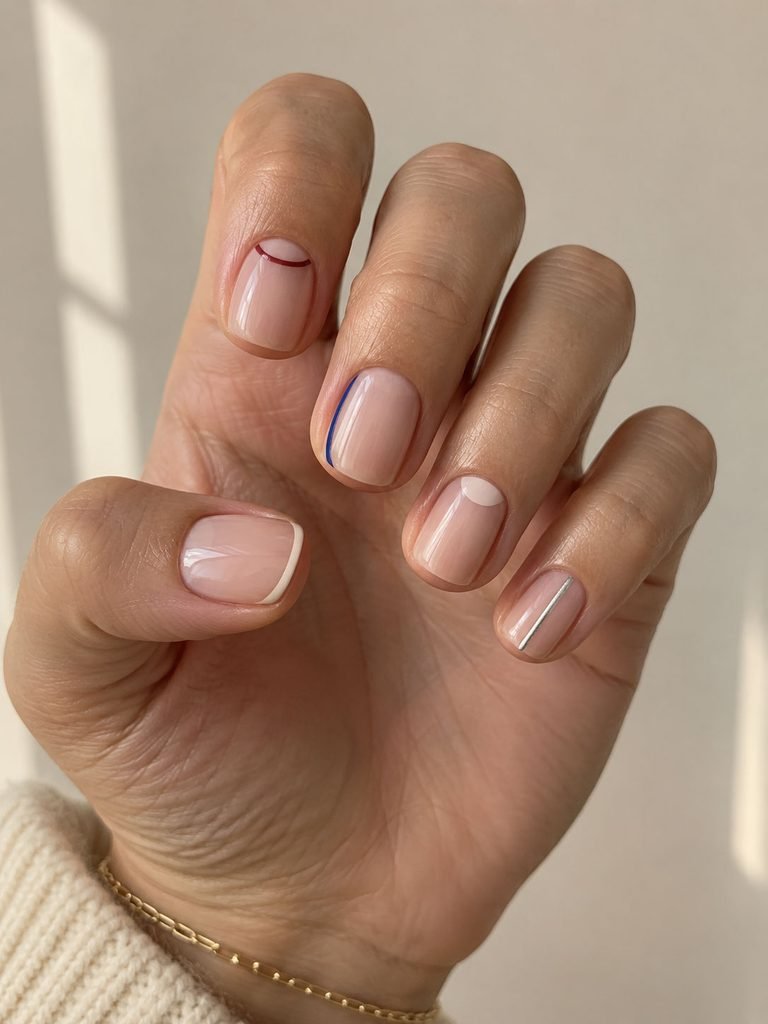
A micro French keeps the familiar French manicure structure but reduces the colored edge to a very fine line. That makes it one of the easiest designs to fit onto a nail with little free edge.
Cream and soft white feel classic. Chocolate, navy, cherry or olive can make the same placement more noticeable without demanding more nail space. Current 2026 short nail coverage continues to feature micro French details prominently.
The tradeoff is precision. A very thin line makes uneven thickness more visible, so a fine detail brush or an experienced nail technician helps.
2. Reverse micro French
Move the fine line from the tip to the base of the nail and you get a reverse French effect. The open center gives the color somewhere to breathe while the curved line picks up the natural shape near the cuticle.
Use this when you want a French reference without emphasizing a very short free edge. Keep in mind that a strong line close to the cuticle may make new growth easier to notice.
3. Side French
A side French shifts the accent onto one outer edge of the nail rather than running across the entire tip. It works especially well when you want the eye to travel lengthwise instead of straight across the nail.
A slim cobalt, red or metallic curve can provide enough contrast on its own. There is little reason to add another major motif.
4. Negative space half moons
Leave a small crescent near the base unpainted while applying color to the rest of the nail. The bare section becomes part of the design rather than unused space.
A sheer base makes the transition softer and can make growth less abrupt than an opaque color placed tightly against the cuticle.
5. One vertical metallic line
A single fine silver or gold line gives a short nail a clear lengthwise direction without covering much surface area.
Place it slightly off center if you want the result to feel less formal. The line needs to be clean because there is nowhere for a wobble to hide, but the design itself can be done with regular polish and a fine brush.
Soft color and light effects: ideas 6 to 10
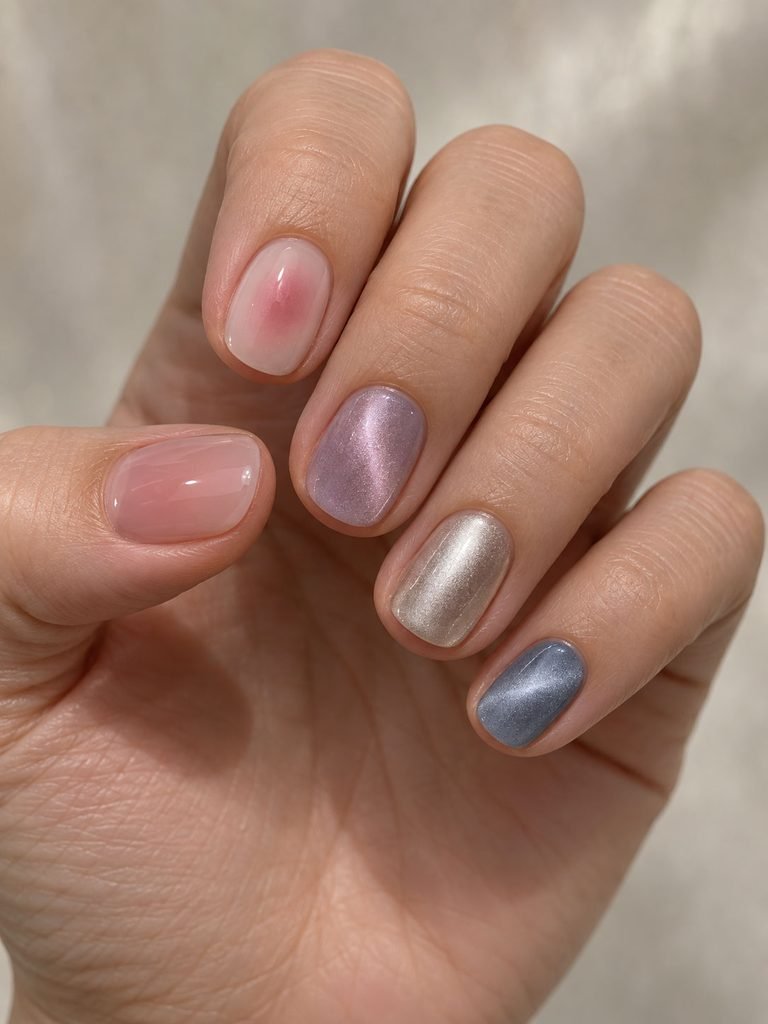
6. Milky jelly color
A translucent jelly finish gives short nails color without turning the whole nail into one dense block. Pink, berry, peach and brown can all work when the formula stays sheer enough for light to pass through the layers.
This is a useful choice when you want a manicure that feels polished but not highly decorated. It also gives you a flexible base for one tiny dot or line later.
7. A centered aura
Aura designs place a diffused patch of color near the center of the nail and allow it to fade toward the edges. On a shorter nail, keep the colored center relatively controlled so there is still visible contrast around it.
Recent fall 2026 coverage continues to feature aura gradients among short nail options.
A salon airbrush can produce a very smooth fade, while some softer versions can be recreated with careful sponging. The smoother the transition, the more convincing the effect.
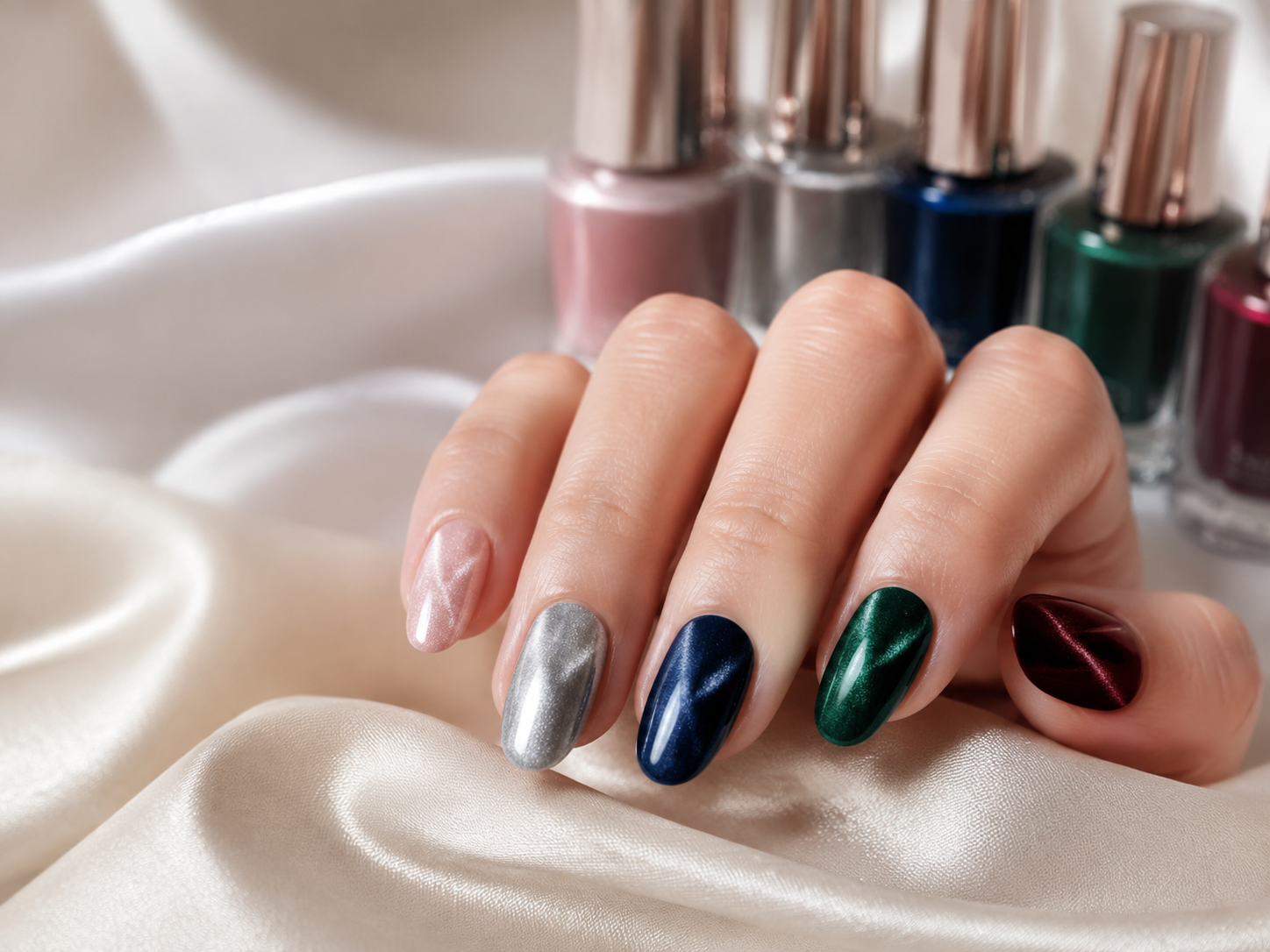
8. A cat eye halo
Magnetic shimmer provides movement and depth without needing several painted elements. A centered halo or narrow reflective beam is particularly useful when the nail does not have room for complicated line work.
Soft pink, silver and lavender keep the effect quiet. Emerald, burgundy and deep blue create stronger contrast. For more ways to control the beam and velvet effect, see Femorias’ cat eye nail art ideas.
Check the product before starting because magnetic nail color can belong to different systems. Follow the instructions for the specific polish, magnet and curing method rather than assuming every magnetic formula behaves the same way.
9. A light chrome glaze
Chrome can give a simple short manicure more dimension without adding a painted motif. A sheer pink, nude or pale lavender base with a restrained pearl or silver reflection is enough.
Chrome is less forgiving when the surface underneath is uneven because reflective finishes can draw attention to texture. Keep the underlying manicure smooth and resist the urge to combine heavy chrome with several other effects.
10. Velvet shimmer
Instead of concentrating magnetic particles into a sharp cat eye beam, a velvet look spreads the reflection more broadly across the nail.
That broad glow suits short nails because the finish itself provides the detail. A smoky silver, muted rose or deep brown can look complete without gems, lines or painted motifs.
Small motifs: ideas 11 to 16
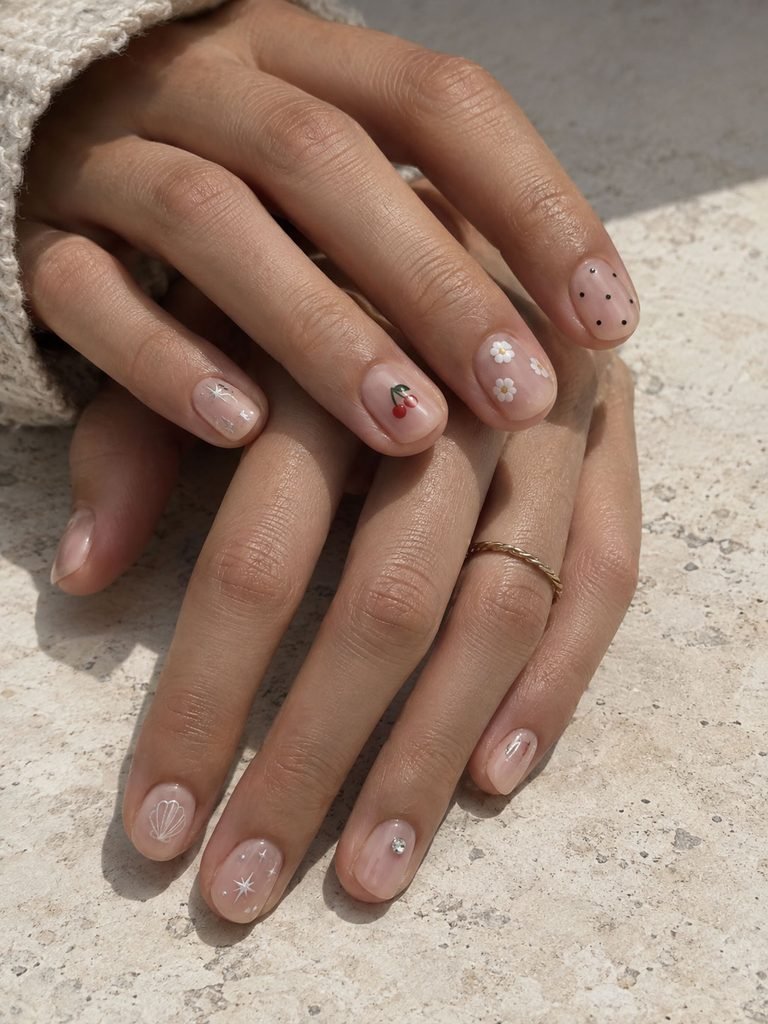
11. Tiny polka dots
Dots are one of the easiest ways to add pattern without losing the shape of the nail. Use a sheer base with a handful of evenly spaced dots or concentrate them near one edge.
Black and white give you crisp contrast. Red on pink feels playful. Metallic dots can make the same simple placement feel dressier.
Polka dots are appearing repeatedly in current short nail coverage and they remain one of the more approachable designs to recreate with a small dotting tool.
12. Micro florals
On a short nail, flowers benefit from editing. Two tiny daisies surrounded by bare space will usually read more clearly than a full field of petals.
A dotting tool can create a simple five dot flower without requiring detailed brush painting. Keep some nails plain or repeat only one small bloom across the set.
13. Tiny fruit accents
Cherries, lemons and strawberries can work on short nails when the fruit is treated as a small focal point rather than a repeating wallpaper pattern.
Try one motif on an accent nail while the remaining nails use a coordinating solid or sheer shade. Current spring and summer 2026 coverage has also used micro fruit as a short nail motif.
14. Sparse stars and dots
A few tiny stars surrounded by pin sized dots can create a night sky effect without requiring long nails.
The easiest version uses a dark base with fine metallic marks. A softer version reverses the contrast with a sheer nude base and small navy or silver details.
15. Pearly shell details
Shell inspired art can be as simple as a few fine curved ridges over a pearl finish. You do not need a large raised seashell on every finger.
Limit the strongest shell texture to one or two nails. This keeps the manicure wearable and leaves room for the pearly finish to remain visible.
16. One small gem accent
One flat crystal near the base of a nail can create a focal point without overwhelming a short shape. A single stone often reads more clearly than a cluster when surface area is limited.
Choose an attachment method intended for the nail product you are using and follow its directions. Keep adhesives and uncured nail products off the surrounding skin.
Bolder patterns: ideas 17 to 21
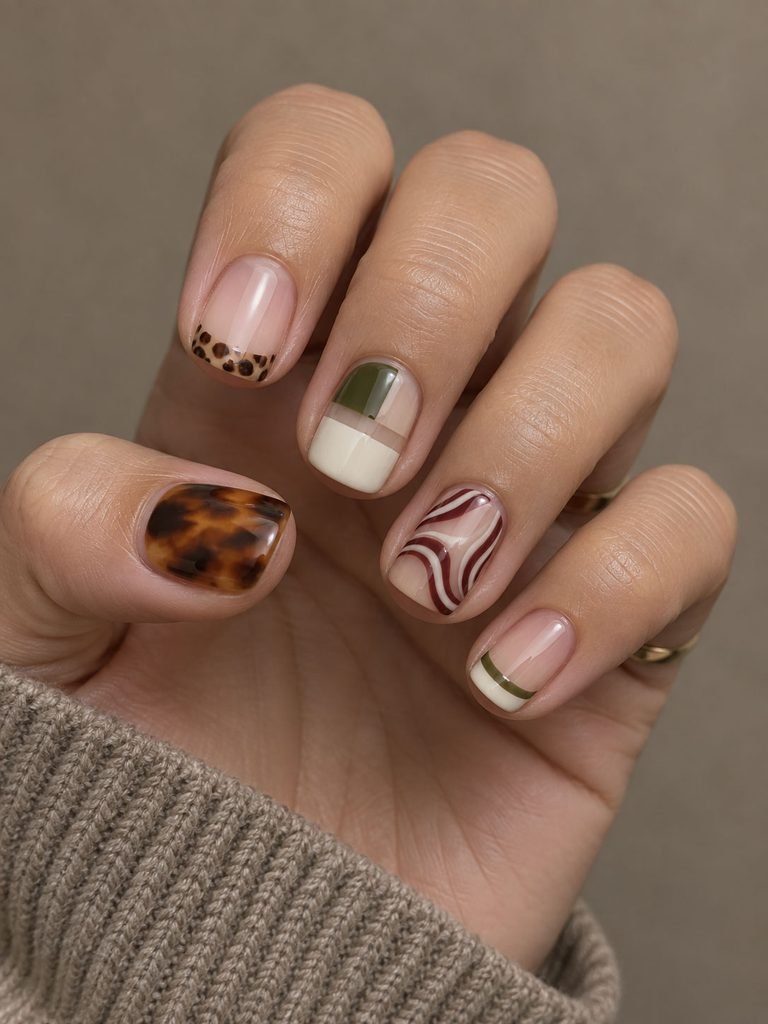
17. Tortoiseshell accents
Tortoiseshell brings several colors into one nail, so it benefits from restraint on a short set. Use the amber and brown pattern on one or two nails then keep the others sheer, caramel or deep brown.
Recent short fall manicure coverage includes tortoiseshell among the season’s compact pattern options.
The translucent layers are part of what gives tortoiseshell depth. If every patch becomes opaque, the pattern can turn visually heavy.
18. Animal print French tips
Put the pattern only where a French tip would normally sit. Leopard, zebra or snake inspired detail stays concentrated at the edge instead of covering the whole nail.
This placement is particularly useful for someone who likes a bold print but does not want ten fully patterned nails. Current autumn 2026 coverage is also using animal detail within French designs rather than only as full nail art.
19. Mismatched color blocks
Choose two or three colors then divide different nails into simple geometric sections. Leave some sheer space so the manicure still feels light.
The colors should repeat across the set even when the placements change. That repetition is what makes mismatched art look deliberate rather than accidental.
20. Fine swirls
Swirls adapt well to short nails as long as the lines remain narrow. Let one curve cross the nail diagonally or run two slim lines near one side.
Limit the palette to two or three coordinated colors. Thick lines in several competing shades can consume the available space quickly.
21. Double French lines
A double French uses two slim bands near the tip instead of one. The lines can be parallel or slightly separated by a strip of the base color.
Chocolate with cream, olive with soft pink or red with blush can make the idea more seasonal. If your nail has almost no visible free edge, move the second line slightly farther down the nail rather than making both bands thick.
Know which effects need special products or tools
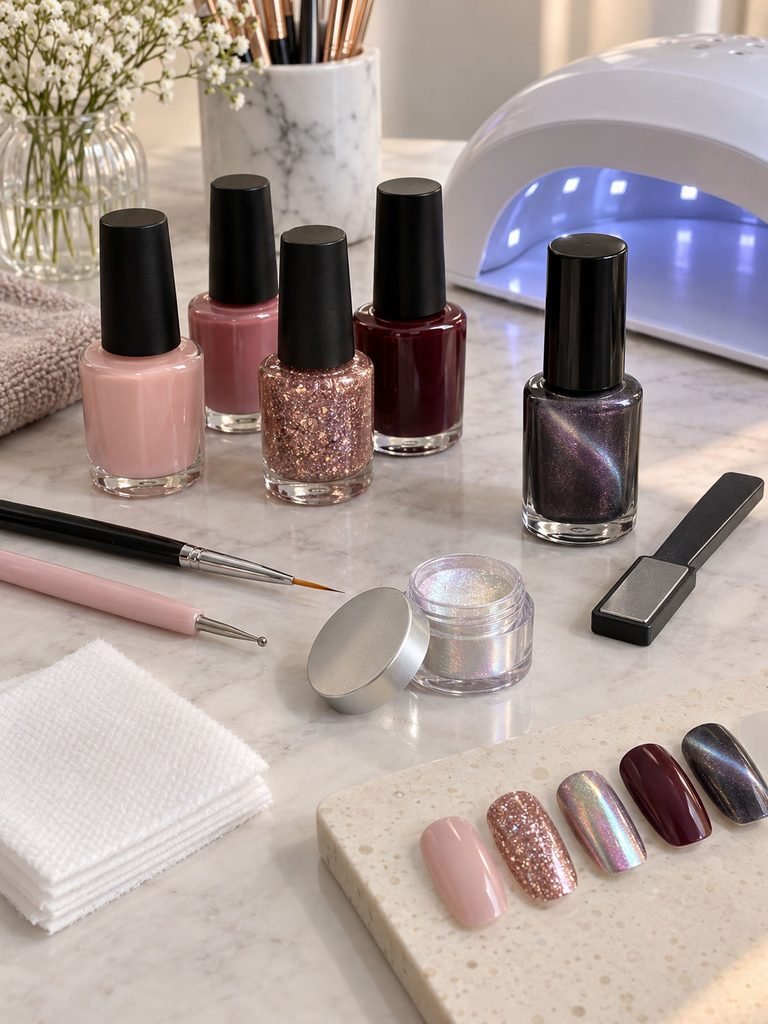
Not every design above requires gel. Dots, thin lines, simple French tips, many jelly finishes and straightforward color blocking can be done with regular air dry nail lacquer when the products are formulated for that use.
Magnetic, chrome and raised effects are different. Check the exact product system before using them. The US Food and Drug Administration advises consumers to follow nail product labels and warning statements and notes that skin contact with certain methacrylate monomers should be avoided to reduce the chance of an allergic reaction. See the FDA’s nail care product guidance.
Lamp cured gel deserves particular care because uncured product should not be treated like ordinary dry polish. A 2026 review of acrylate allergic contact dermatitis among manicure consumers and professionals discusses repeated acrylate exposure and improper curing as relevant concerns. Read the 2026 PubMed review on acrylate allergic contact dermatitis.
For gel manicures, the American Academy of Dermatology recommends following practical precautions including not picking off gel and protecting the backs of the hands before UV curing with broad spectrum SPF 30 or higher sunscreen or dark opaque gloves with exposed fingertips. Its full gel manicure guidance also discusses nail care between manicures.
A design is not worth forcing if the required product system is unfamiliar. Ask a trained nail professional for the effect or choose a regular polish version instead. Persistent rash, unusual nail changes or recurring nail problems are reasons to stop experimenting with the product and speak with an appropriate healthcare professional.
Short nail design questions
What nail shape works best for short nails?
There is no single required shape. Round, square and squoval can all suit short nails. Let your natural nail width, sidewalls, comfort and preferred look guide the choice rather than forcing a shape that needs extra length.
Can detailed nail art work on very short nails?
Yes, but scale the detail to the surface. One small flower, a narrow French edge or a compact magnetic halo will usually read more clearly than several large elements competing on the same nail.
Do dark colors automatically make short nails look shorter?
No. A dark glossy manicure can look clean and intentional at a short length. If you prefer a lighter visual effect, combine the darker shade with negative space, a fine tip or a sheer base instead of avoiding deep color entirely.
Which short nail designs handle visible growth best?
Sheer bases, jelly finishes and designs that leave some natural nail visible near the base tend to make the transition less abrupt. An opaque line positioned directly beside the cuticle can make new growth easier to see.
Do I need gel for short nail art?
No. Many of the most useful short nail designs can be created with regular lacquer. Gel becomes relevant when the chosen effect or specific product system requires curing.
How can I keep the design from feeling crowded?
Pick one dominant feature per nail, then repeat a color, finish or placement across the set. The repetition connects the manicure while the open space keeps individual nails readable.
Short nails give you less room but they also force every detail to earn its place. Start with the design you would still like if the embellishment were reduced by half. A thin edge, one motif or one controlled light effect is often enough to turn a practical natural length into a manicure that feels deliberate.