Nail Colors for Dark Skin, Nudes, Reds and Bold Shades to Try

Choosing nail colors for dark skin is easier when you stop searching for one universally flattering shade and start with the effect you want. A caramel nude can look subtle, pale pink can create soft contrast and cobalt blue can make the manicure the first thing someone notices.
Deep skin tones offer plenty of possibilities, from translucent neutrals to rich jewel colors. The useful questions are how much contrast you want, whether you prefer warm or cool color and how sheer or opaque the finish should be.
These nail color ideas cover medium deep to very deep complexions, with practical ways to choose a shade you will enjoy wearing.
Start with the effect you want
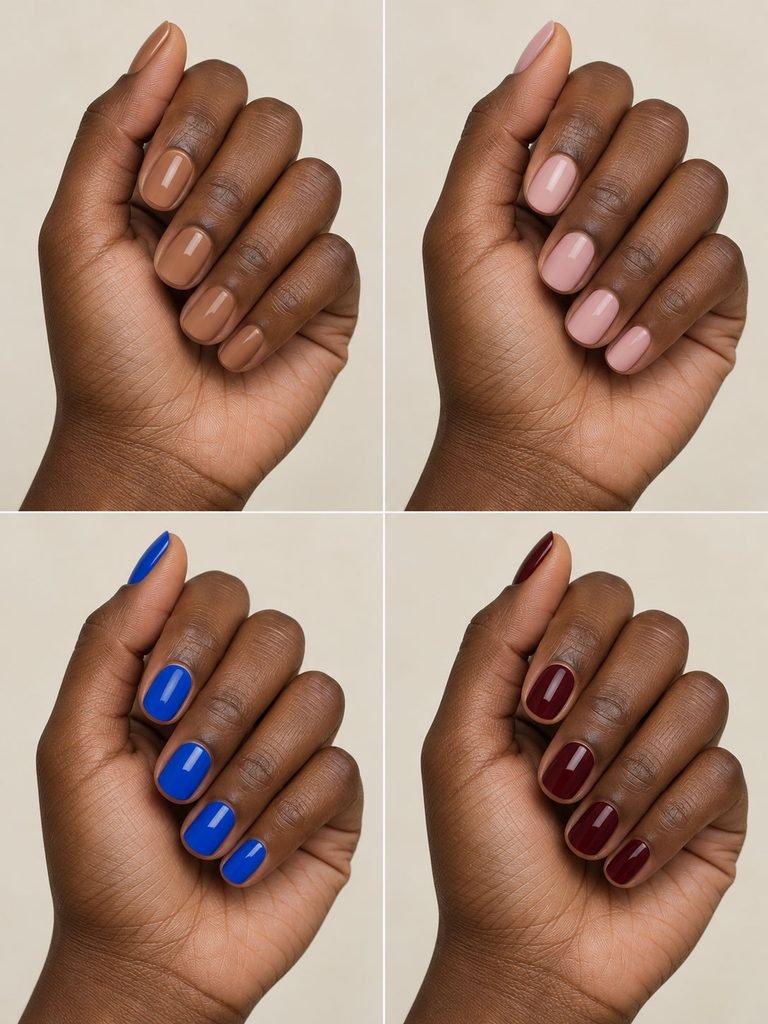
The most useful way to choose a polish is to decide whether you want your nails to blend with your skin, provide a gentle contrast or stand out boldly.
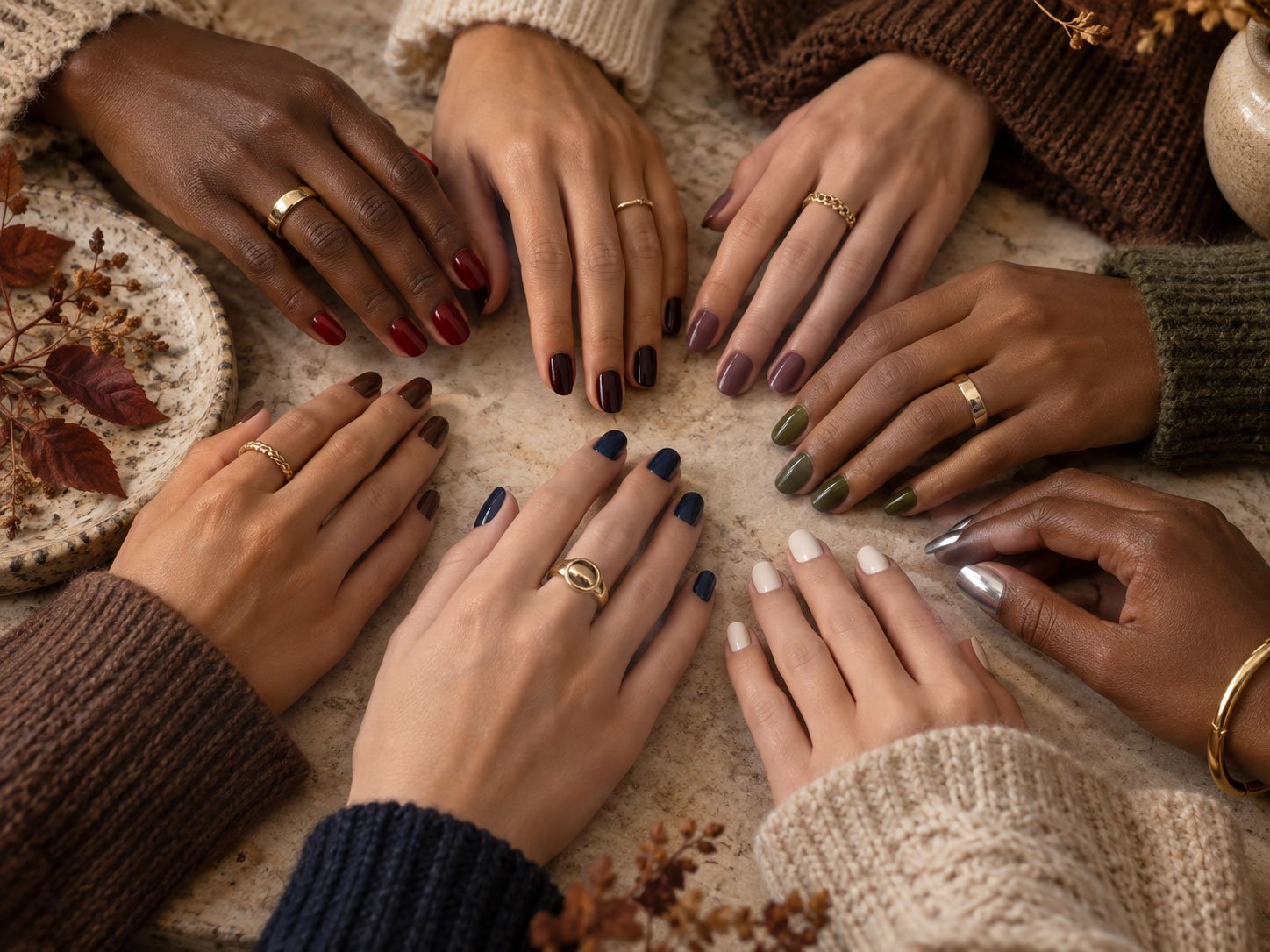
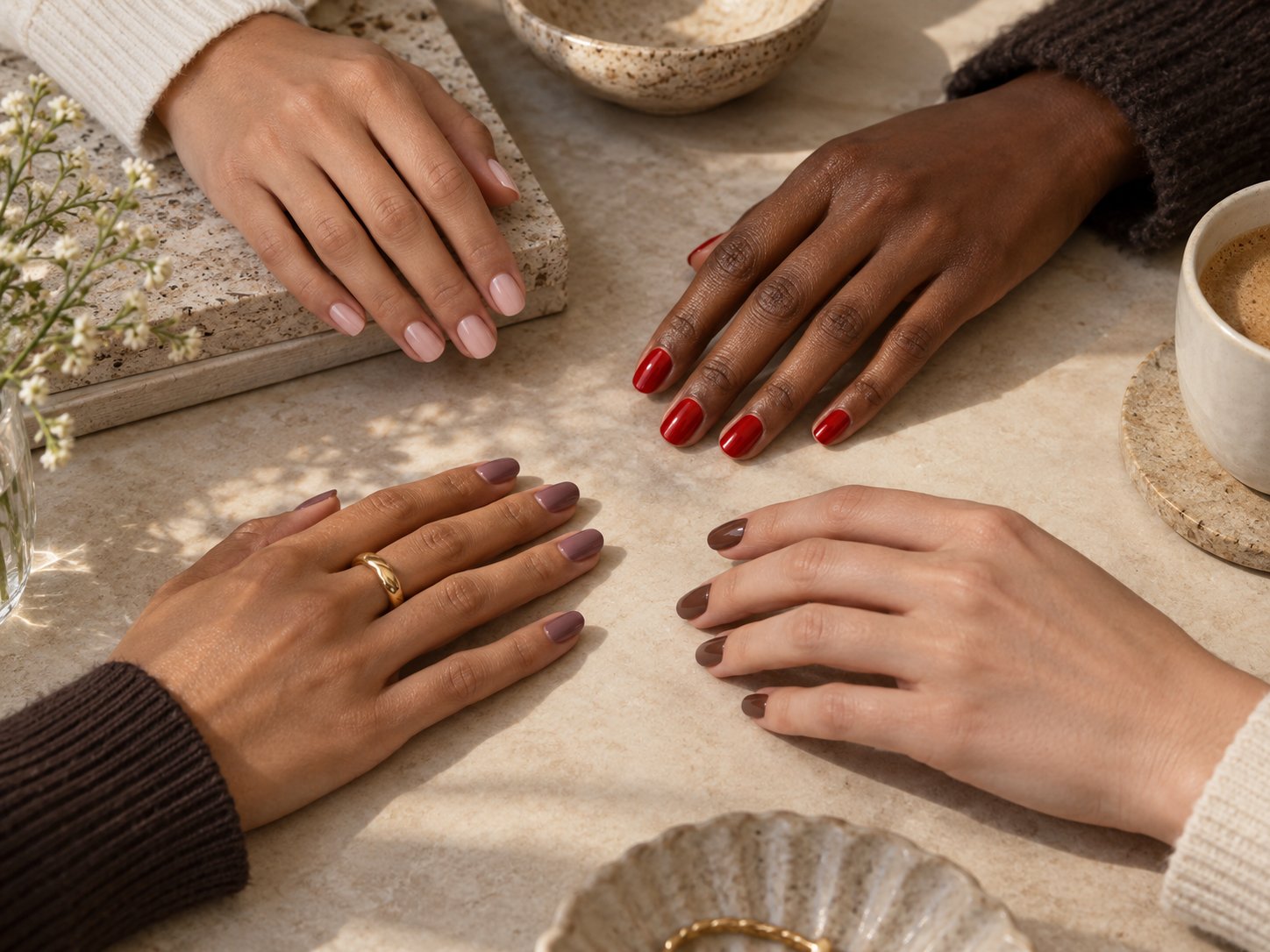
For a subtle look, try caramel, cocoa, rose brown or warm taupe. These shades sit closer to many deeper skin tones than traditional pale beige polish.
For soft contrast, consider milky pink, dusty lilac or creamy peach. The nail color remains noticeable without the intensity of a neon or jewel shade.
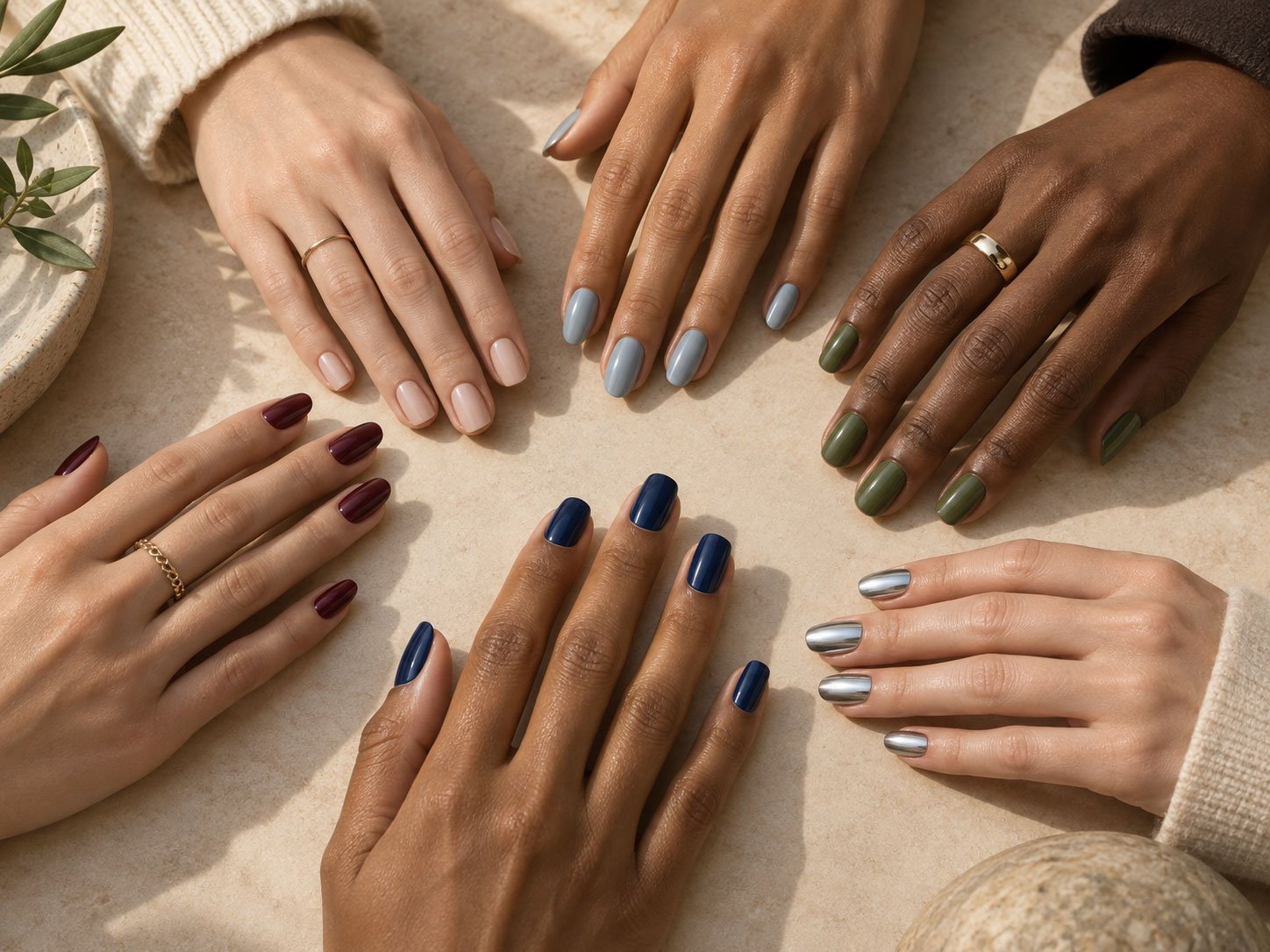
For a bold look, reach for cobalt blue, cherry red, bright coral or emerald green. Their color is clearly distinct from the hand, especially in an opaque cream finish.
For a darker, understated manicure, espresso, blackberry, oxblood and glossy black are useful options. The outline of the nails can look striking even when the polish is close in depth to your complexion.
The key distinction is contrast, not whether your skin tone supposedly permits a color. OPI’s nail color theory guide includes both light contrasting shades and rich colors among its suggestions for deeper complexions.
If you want broader inspiration beyond skin tone, Femorias’ guide to nail colors for different moods and occasions offers additional color families to consider.
Nude nail colors for dark skin
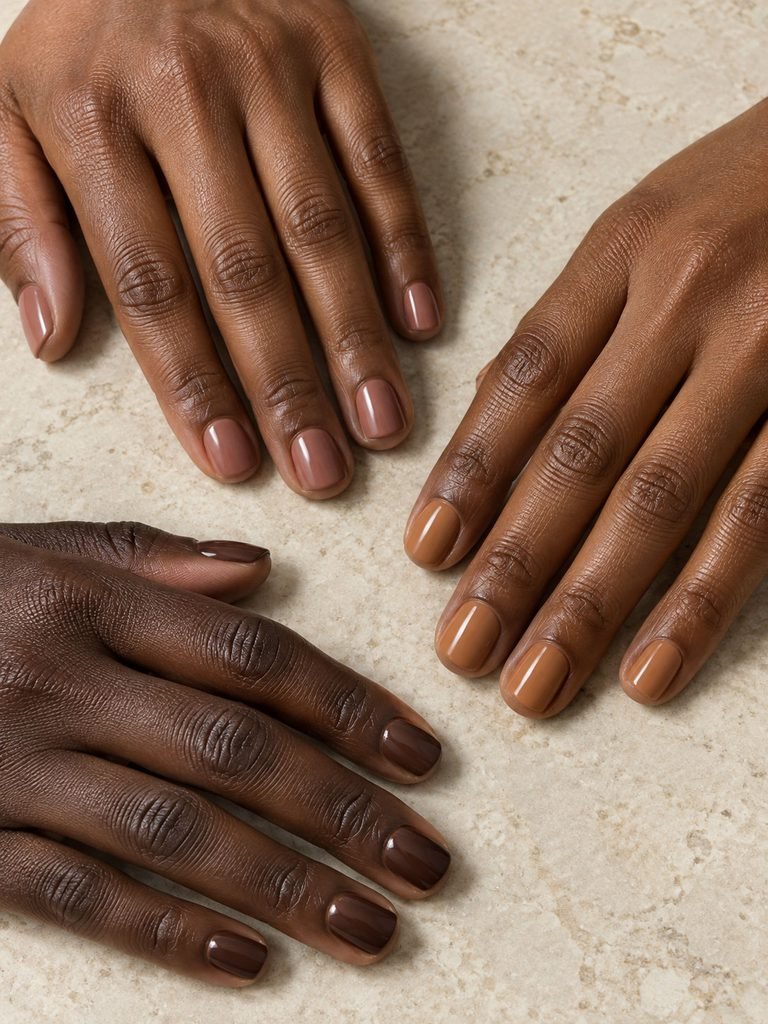
A good nude nail color does not have to match your skin exactly. It can be lighter, deeper, pinker or warmer, depending on how visible you want the manicure to be.
That is particularly helpful if traditional beige polish looks chalky, gray or too pale against your hands. Instead of giving up on nude nails, try a different depth or a polish with more brown, rose or peach in the base.
Rose brown is a useful starting point for a soft, polished effect. It combines muted pink with brown, creating noticeable color without the brightness of baby pink.
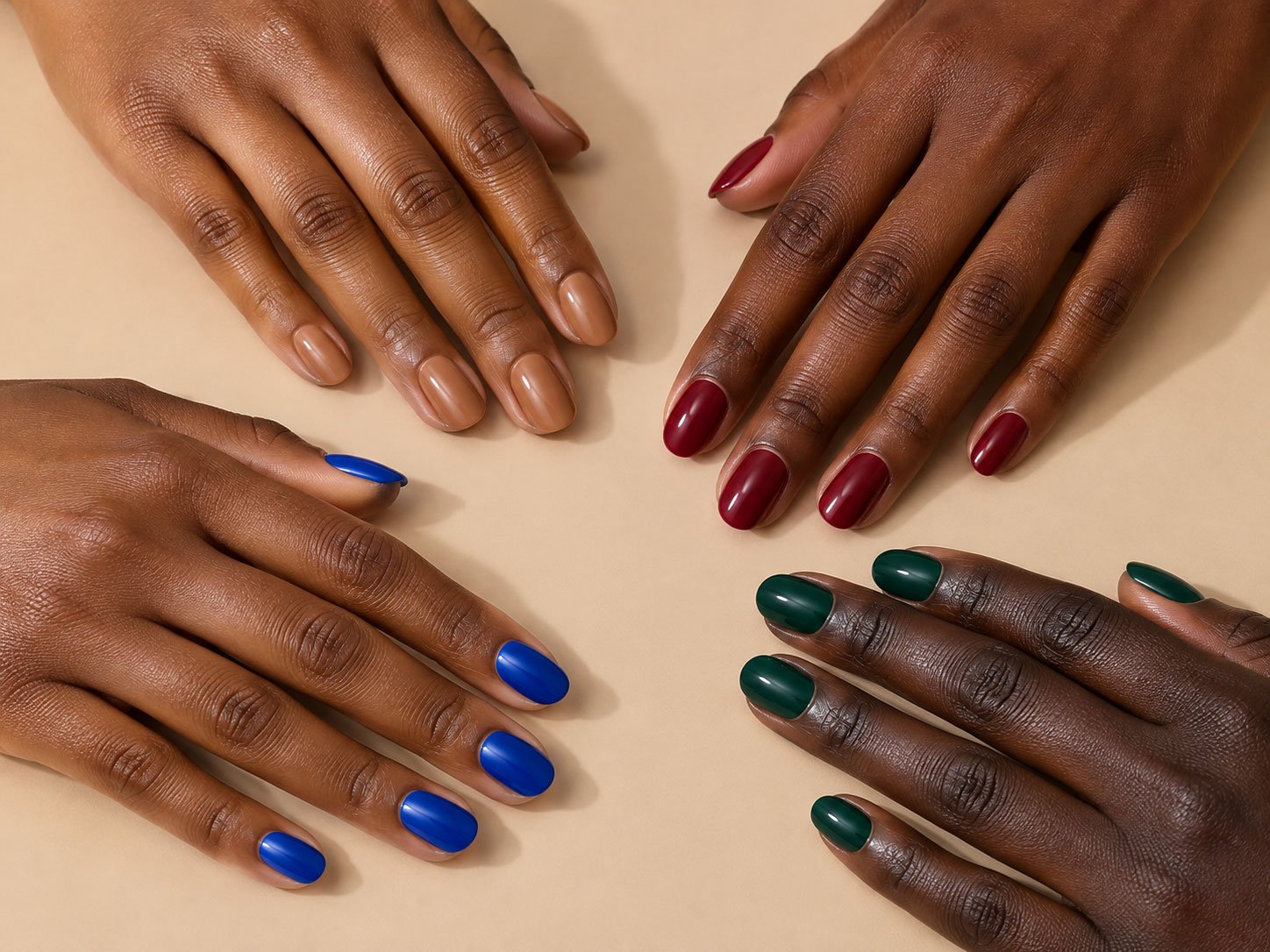
Warm caramel is a lighter nude option that can create gentle contrast on deeper complexions. Choose a cream finish for a defined color or a translucent version when you want the natural nail to remain visible.
Cocoa brown can give a coordinated look on very deep skin. If the polish nearly matches your complexion, choose a glossy finish when you want the nail shape to remain distinct.
Mauve taupe offers a cooler alternative. It works well for someone who finds yellow beige or orange leaning nude polish too warm for their taste.
Sheer pink beige provides a lighter, natural manicure. It is worth checking how transparent the formula is, because the visible nail bed can affect the final color.
The main mistake is judging a nude polish only by its appearance in the bottle. On deeper hands, two nearly identical beige shades can produce noticeably different results when one is opaque and the other is sheer.
Try the shade beside your fingers first. For a blended effect, look for a color with similar warmth and depth to your skin. For a more defined nude manicure, choose one that is clearly lighter or deeper.
A pale nude is not automatically the wrong choice. Sometimes the contrast is exactly what makes it appealing.
Red and berry nail colors worth trying
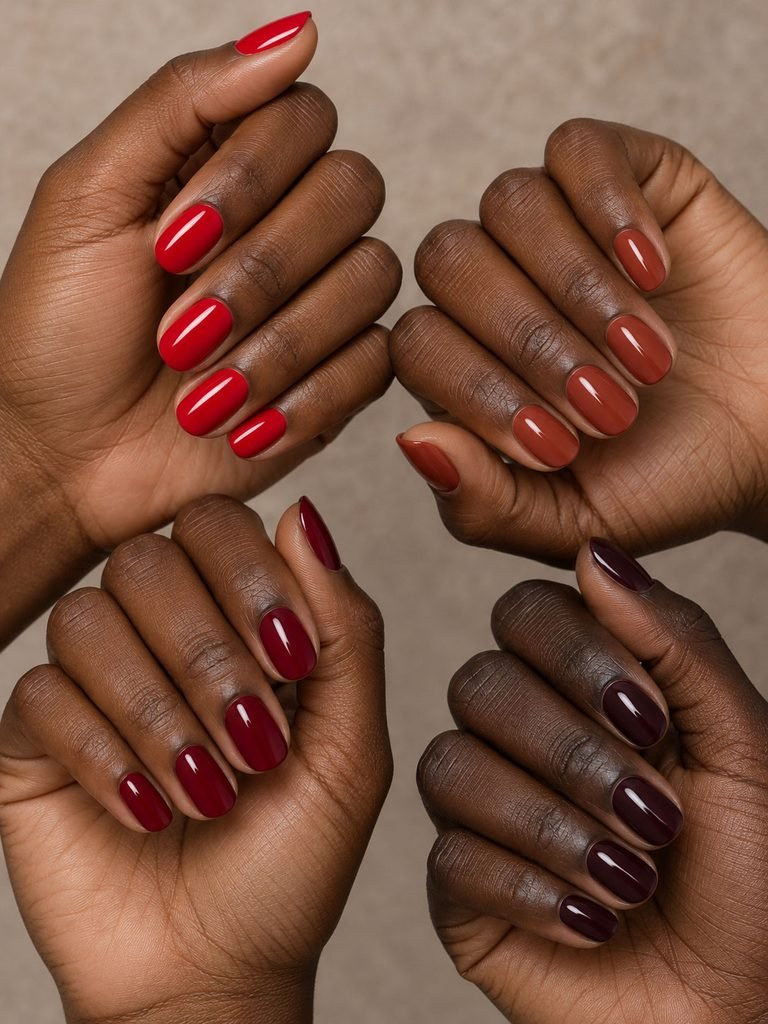
Red offers several very different looks on deep skin. A bright cherry red creates a crisp statement, while brick and wine shades feel warmer or deeper.
Cherry red is the clearest classic choice when you want the polish to be immediately visible. It works well as a solid cream manicure on short or long nails.
Blue leaning red has a cooler appearance than tomato red. It is worth comparing when warm red polish seems more orange than you intended.
Brick red combines red with muted orange or brown. This produces a more earthy result that works well for someone who prefers warm neutrals but wants stronger color.
Wine red sits between classic red and deeper berry. It is a versatile choice when bright crimson feels too strong.
Black cherry or oxblood provides the moodiest variation. Under bright light, the red or purple undertone becomes more apparent. In dim light, some formulas may look nearly black.
When choosing between two red polishes, place them beside each other rather than trying to remember the difference. A slightly warmer base or deeper pigment can change the whole impression.
- For an everyday red, start with a medium depth cherry or berry.
- For a darker manicure, try burgundy or black cherry.
- For strong warmth, compare tomato red with brick red.
Bright nail colors for dark skin
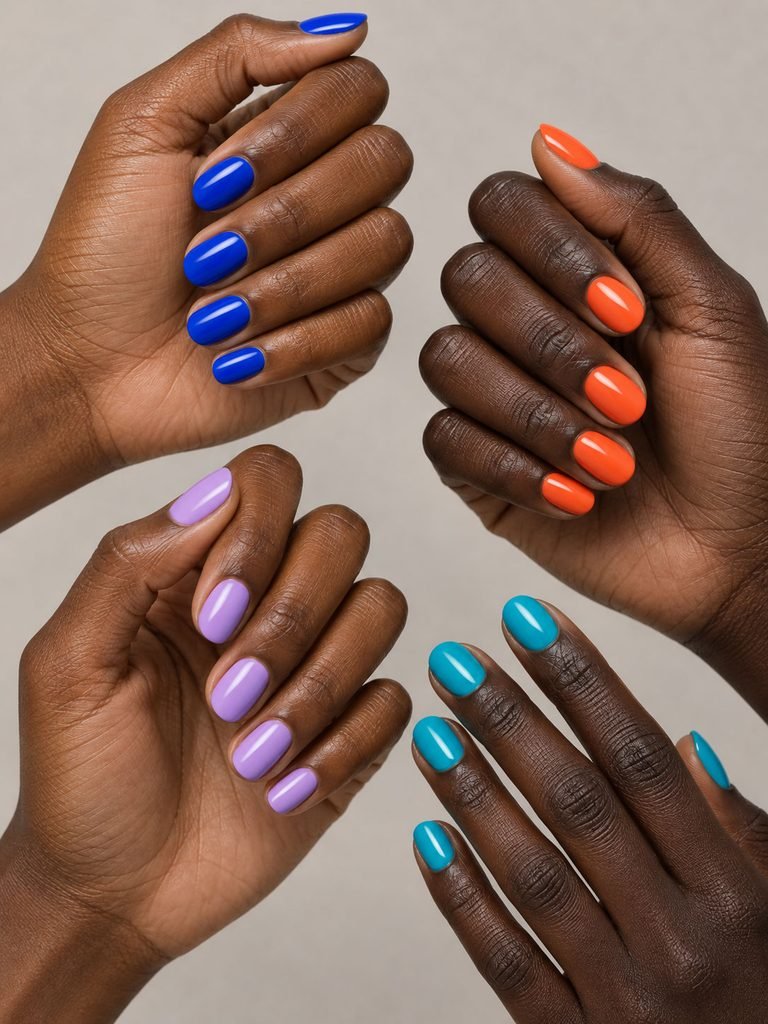
Bright colors create a deliberate contrast against deep brown skin. They are particularly useful when you want a simple manicure to feel expressive without adding nail art.
Cobalt blue makes a direct, saturated statement. The opaque cream finish gives it a clear outline, even on short nails.
Orange coral has a warm and lively character. Choose a stronger orange red for bold contrast or a muted coral if you want a softer effect.
Lilac creates a lighter, cooler look. On very deep skin, the difference in lightness makes it especially noticeable. A creamy lilac has more solid coverage, while a translucent lavender feels softer.
Turquoise or teal combines the freshness of blue with green. Teal often feels slightly more muted than a bright turquoise, so the distinction is worth checking in person.
Hot pink or fuchsia offers a saturated alternative to red. A cool fuchsia appears different from a peach based bright pink, even if both are labeled simply as pink.
Lime or chartreuse creates a more experimental look. These shades may be harder to coordinate with a quiet everyday wardrobe, but that is part of their appeal for someone who wants an unusual manicure.
Essie’s color guide for dark skin includes choices ranging from lilac and baby pink to neon orange, olive green and metallic silver. That variety is a useful reminder that deep skin does not require only dark colors.
For a first bright manicure, consider cobalt or coral. Both have a clearly defined color identity. If you want a lighter pastel, start with lilac or pink and decide whether you prefer solid cream coverage or a more transparent result.
Deep shades, jewel tones and metallic finishes
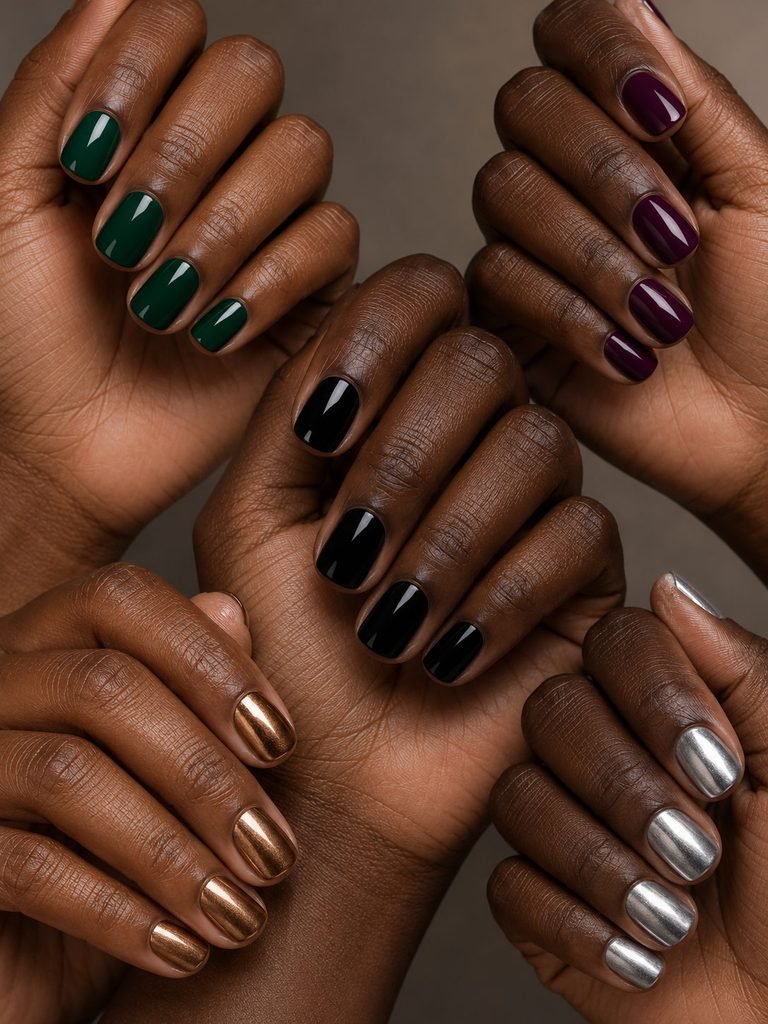
Dark polish can look especially polished on deep skin when the color and finish are clearly defined. A dark manicure does not have to rely on sharp contrast to look intentional.
Espresso brown is a softer alternative to black. On some complexions it creates a close tonal match, while on others its warmer brown undertone remains visible.
Emerald green has a rich jewel appearance. Choose a full coverage cream if you want pure color or a fine shimmer when you prefer a little reflection.
Deep plum adds purple to a dark manicure. Plum can look nearly black indoors, so inspect the polish in daylight if the purple character is important to you.
Midnight blue is a dark alternative to black or burgundy. It offers a subtle difference that becomes more noticeable in brighter light.
Glossy black is a clear minimalist option. The finish matters here. High gloss produces visible reflections, while a matte finish reduces shine and changes how the nail surface is perceived.
Metallics offer a different effect altogether. Gold, copper and bronze create warmer reflective highlights. Silver has a cooler appearance, while pearl finishes can add a gentle glow over a light or medium base.
On very deep skin, a bronze metallic may appear coordinated with the hand while still catching the light. Silver generally creates a stronger light and dark contrast.
If you are interested in current seasonal colors as well, Femorias’ 2026 nail color trends guide covers broader shades and finishes, including deeper reds, blues and metallic looks.
The choice between cream and metallic is often more important than the choice between two neighboring colors. The same brown family can look subdued in a cream finish and noticeably brighter with reflective pigment.
How to choose the shade before your next manicure
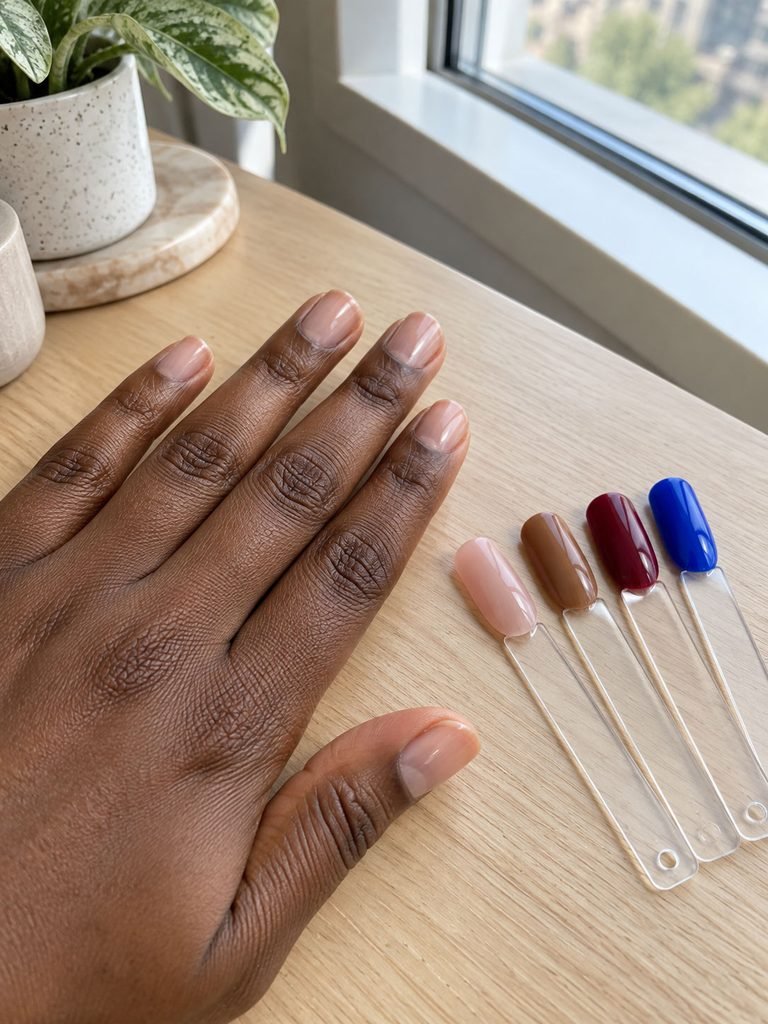
The most useful manicure reference is a photograph showing the actual polish on a complexion and nail length reasonably similar to yours. A product bottle or a heavily filtered photograph gives less reliable information.
Before committing to a color, use this short selection process:
- Pick the intended effect. Decide whether you want a close nude, soft contrast, saturated color or deep shade.
- Choose the color family. For example, compare caramel and rose brown rather than searching every neutral polish in the store.
- Check the finish. Sheer, cream, jelly, shimmer and metallic polishes can look different even when the shade names seem similar.
- Inspect real swatches. Where possible, hold a painted nail sample beside your fingers. Compare in daylight and ordinary indoor light.
- Check actual coverage. Look at examples showing the number of coats you intend to wear, because a sheer first coat may appear much lighter than a built up application.
- Take a reference to the salon. Include both the color and finish. Asking for a glossy, opaque oxblood is more specific than asking for dark red.
Undertone can help narrow a choice, but it should not become a restriction. Someone who usually likes warm brown may also love cool cobalt. A very deep complexion can look beautiful with pastel pink, and a lighter deep complexion can carry glossy black.
Be cautious about deciding your undertone from one clue, such as wrist vein color. Lighting, skin pigmentation and individual variation make that shortcut less reliable than comparing actual swatches.
For a simple wardrobe of colors, start with one neutral, one red and one shade that feels different from your usual choices. There is no need to purchase a large collection before finding what you enjoy wearing.
The product formula matters as well as color. The US Food and Drug Administration’s nail product guidance advises following labeled directions and warnings, with suitable ventilation when using nail products.
If you choose gel polish, use appropriate curing and removal practices. The American Academy of Dermatology’s gel manicure guidance recommends avoiding picking off gel polish and protecting the hands from UV exposure during curing.
A color choice should remain cosmetic. Persistent irritation, swelling or unusual nail changes deserve professional evaluation rather than simply covering the problem with another polish.
Common questions about nail colors for dark skin
What nude nail color works well on very dark skin?
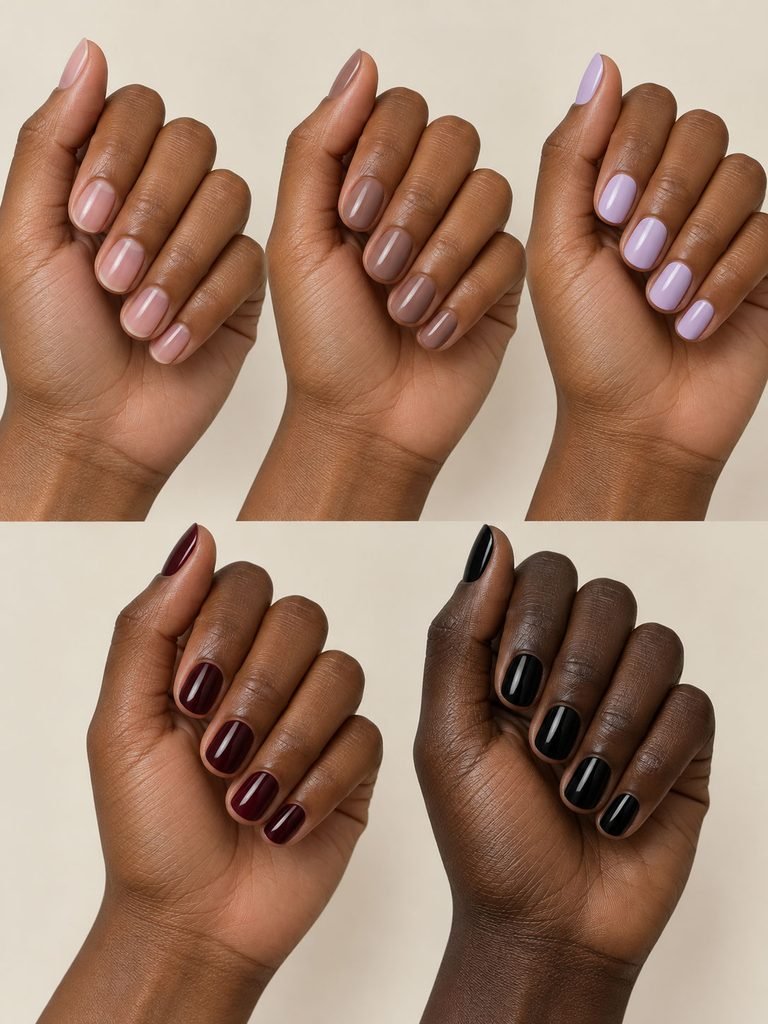
Cocoa, rose brown, warm caramel and deeper mauve are useful starting points. For a coordinated manicure, compare brown based shades close to your skin depth. For more contrast, try a lighter caramel or sheer pink. The best result depends on the amount of contrast you prefer.
Can dark skin tones wear pale pink or white nail polish?
Yes. Pale shades create an intentional light and dark contrast. A sheer blush can look softer because some natural nail color shows through. Opaque white is more graphic. Neither effect is automatically better.
Are dark nail colors suitable for short nails?
Yes. Burgundy, espresso, emerald and black can all work on shorter nails. A neat nail edge and consistent application are particularly noticeable when using strongly pigmented colors.
Which red nail color should I choose for dark skin?
Start with the kind of red you like most. Cherry red feels bright and classic, brick red appears warmer and wine red provides a deeper effect. Compare painted samples in natural light to see which red gives you the finish you want.
Does warm or cool skin undertone determine which nail polish I can wear?
No. Undertone can be a useful styling preference, but it is not a rule. Warm colors may create a coordinated look for one person while cooler colors provide appealing contrast for another. Testing real polish shades is more useful than avoiding entire color families.
A practical starting selection is rose brown for a quiet nude, cherry red for a classic manicure and cobalt blue for a strong color statement. If those do not match your taste, adjust the depth or finish before abandoning the color family.
The most useful nail color is the one that creates the look you actually wanted, not the one someone else says your skin tone must wear.