Timeless Nail Colors Worth Keeping in Your Rotation

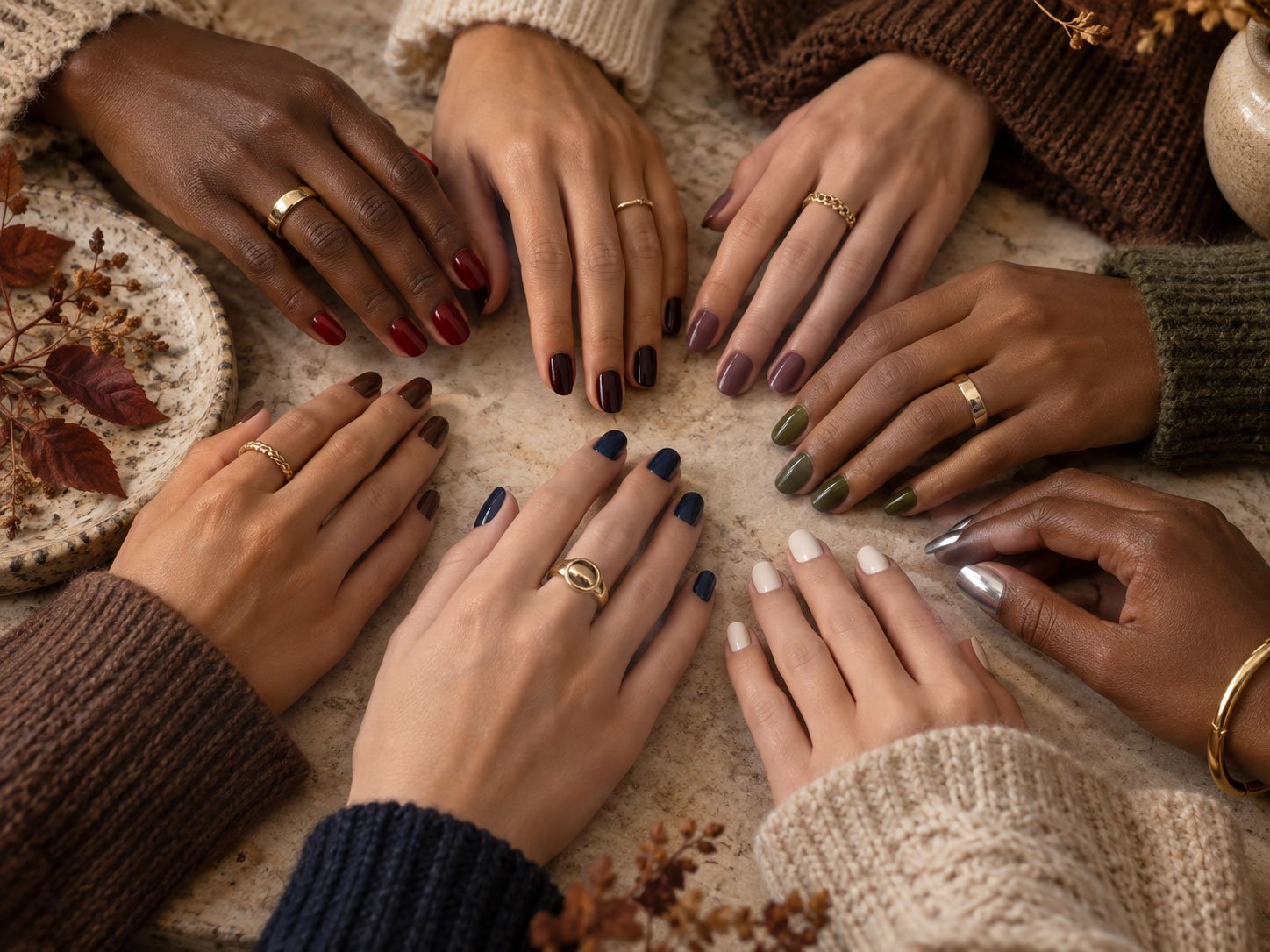
A useful polish collection does not need dozens of shades. Start with colors that perform different jobs: a quiet neutral, a classic statement shade, a flexible midtone, a deeper color, and one option that feels more personal or current. Add another bottle only when you can name the gap it fills.
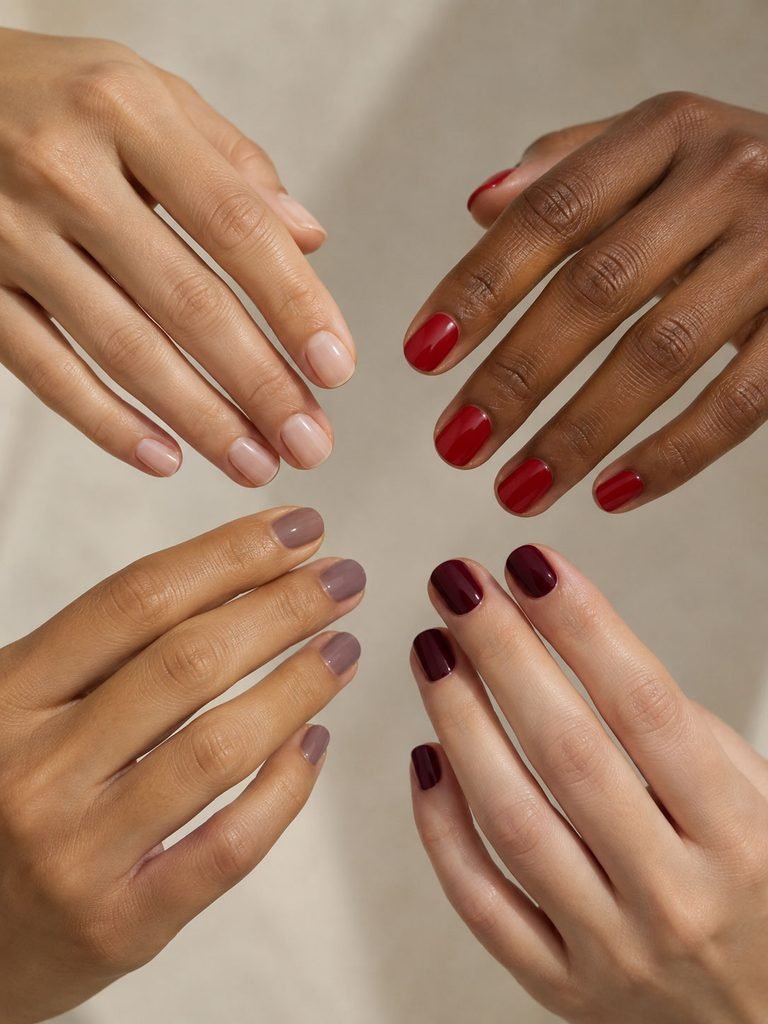
That approach is more useful than chasing a supposedly universal shade. The same nude, red, or brown can look completely different depending on its depth, transparency, finish, and the contrast it creates against your hand.
Nail color rotation
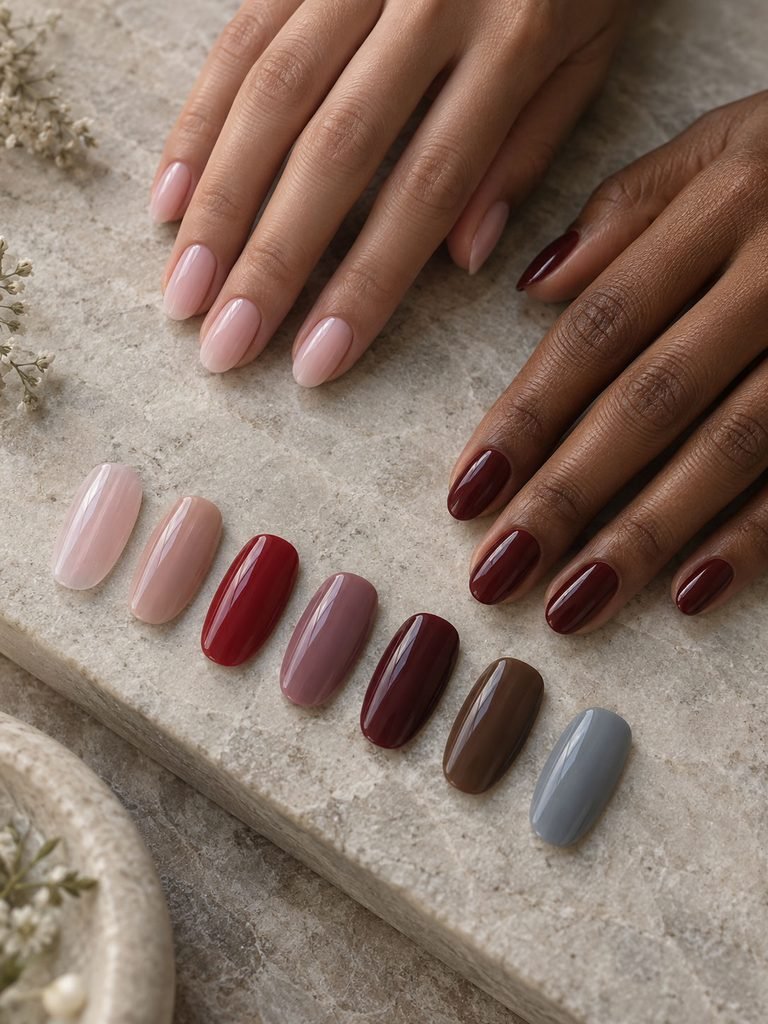
The strongest rotation is not a fixed set of mandatory colors. It is a set of useful color families. Long running editorial nail roundups repeatedly return to red, wine, beige, mauve, brown, olive, black, and other recognizable staples because they produce meaningfully different manicure looks. Allure’s editor and manicurist roundup of classic nail colors
1. Sheer pink or milky nude.
This is the easiest quiet manicure to keep in the rotation. Because some natural nail remains visible, growth at the base usually creates less visual contrast than it does with an opaque dark shade. Choose rosy pink, beige pink, caramel, or creamy white according to the effect you like rather than searching for one supposedly universal nude.
2. A nude or taupe with deliberate contrast.
A nude does not have to disappear into your skin. Some people prefer a close match. Others look better to themselves with a shade that is slightly lighter, deeper, pinker, or browner. Compare the bottle or a swatch against your hand in daylight and decide how visible you want the manicure to be.
3. Classic red.
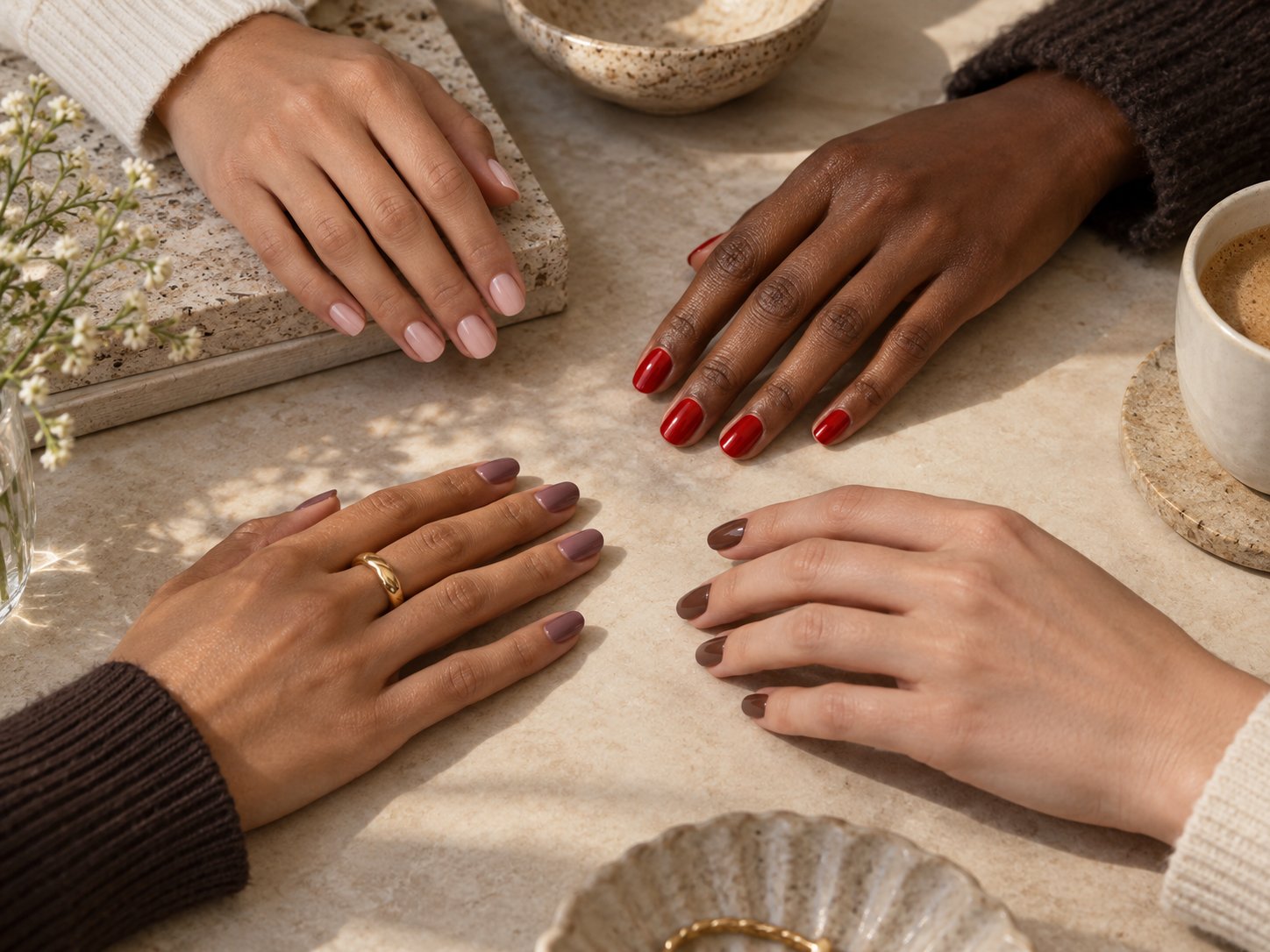
Red earns its place because small changes in temperature create noticeably different results. Orange red feels warmer and brighter. Blue red looks cooler and crisper. A balanced red sits between them. There is no need to treat one version as universally superior.
4. Muted mauve.
Mauve sits between pink, purple, gray, and brown depending on the formula. That makes it useful when nude feels too quiet and red feels too strong. Look for a version that stays muted enough to coordinate with the clothes you wear most often.
5. Deep berry or burgundy.
A deeper red family gives the collection a richer option without requiring black. A glossy finish emphasizes depth and reflection. A jelly finish makes the same family look lighter and more translucent.
6. Brown.
Caramel, cocoa, coffee, clay, and suede browns cover a surprisingly wide range. A lighter brown can behave like a warm neutral, while a deep chocolate creates almost as much contrast as burgundy or black.
7. One flexible wildcard.
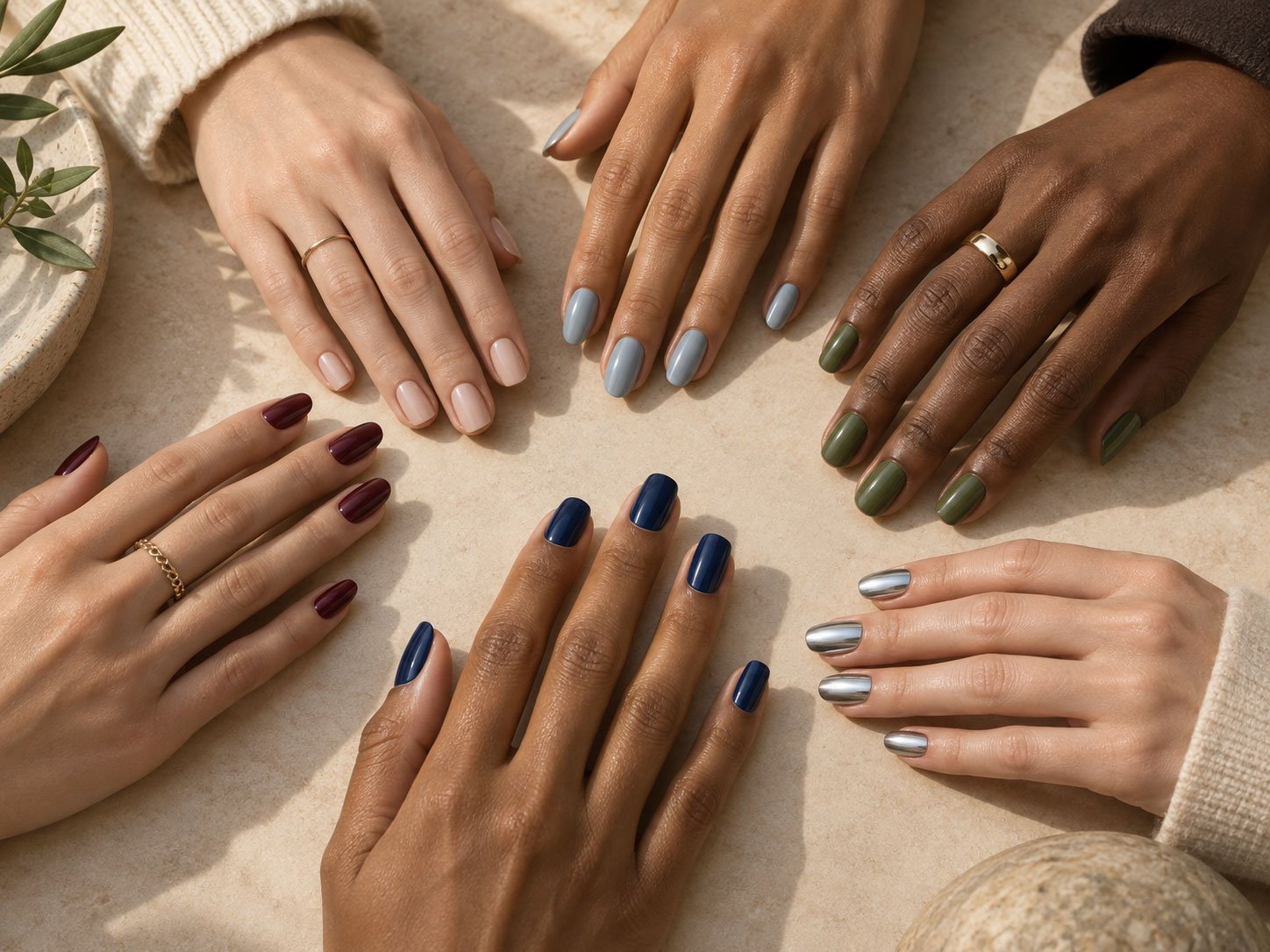
This is where gray, fog blue, olive, sapphire, black, silver, or another favorite belongs. You do not need all of them. Pick the one that gives your collection something the other bottles cannot.
A French manicure can still be part of a useful rotation, but it is better treated as a design rather than another color family. A sheer base and a soft cream tip can reuse colors that are already in the collection.
Choose by contrast, opacity, finish, and temperature
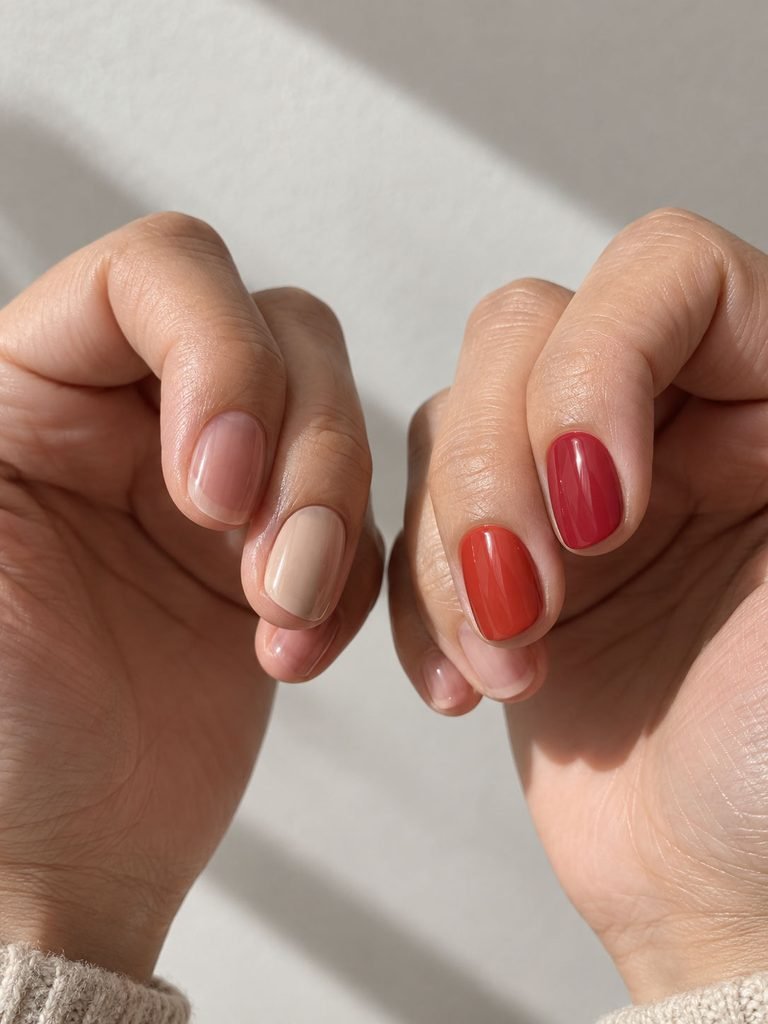
Skin tone charts can provide ideas, but they should not replace looking at the actual polish against your own hand. Four variables are more practical.
Contrast determines how strongly the nail separates visually from the hand. A translucent beige that sits close to your skin depth creates a quieter effect. Burgundy, black, silver, or saturated blue creates much more contrast.
Opacity determines how much of the natural nail influences the finished color. Sheer polish allows the nail plate, free edge, and any natural variation to remain visible. Opaque cream polish covers far more of that variation.
Finish changes the character of the same basic color. Gloss creates reflection and depth. Matte removes most reflection. Pearl and metallic finishes make light part of the look. Jelly finishes retain transparency.
Temperature can help when you are choosing between two otherwise similar bottles. Peach, caramel, coral, and orange red sit on the warmer side. Rose, berry, blue red, slate, and many mauves sit on the cooler side. Neutral versions fall closer to the middle.
Instead of trying to diagnose your coloring from one wrist test, compare two or three nearby shades in ordinary daylight. The one you keep looking back at is usually a more useful purchase than the one a chart says you should wear.
What makes regrowth and chips less noticeable
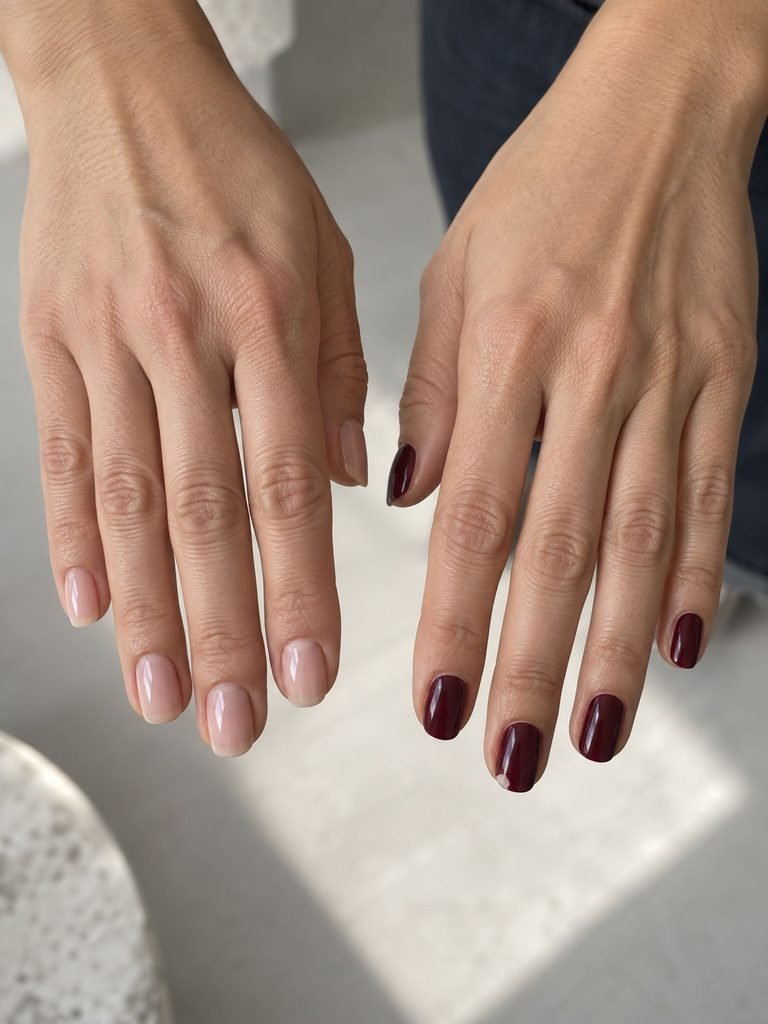
A color does not automatically make a polish formula physically last longer. What changes is how obvious normal wear looks.
Sheer and lower contrast shades usually make a small growth line at the cuticle less conspicuous because the transition between bare nail and polish is softer. A tiny chip can also attract less attention when the color is close to the natural nail.
Very opaque, dark, bright, or metallic polish creates a stronger boundary. That can look crisp when the manicure is fresh, but small chips may be easier to see.
This distinction matters when shopping. Choose sheer pink, milky nude, taupe, or muted mauve when your priority is making ordinary growth less noticeable. Choose red, burgundy, sapphire, black, or metallics when the stronger visual impact is worth a little more visible contrast.
For actual wear time, follow the directions for the polish system you use rather than assuming one color family is inherently more durable.
Match your rotation to your actual week

The most useful colors are the ones that fit situations you actually encounter.
For a week when you do not want to think about your manicure, sheer pink, milky nude, taupe, and soft mauve keep the color present without making it the first thing you notice.
For an event, dinner, or a day when you want the manicure to become part of the outfit, red and deep berry provide more contrast without requiring nail art.
For travel, one low contrast neutral and one stronger color cover more situations than carrying several nearly identical bottles.
Short nails do not require pale polish. Burgundy, brown, black, blue, and other deep colors can look very clean on short nails. Nail length changes the amount of visible color, not which hues you are allowed to wear.
If you like French manicures, keep the ingredients flexible. A translucent base plus cream, soft white, taupe, red, or another restrained tip color gives you more uses from the same bottles.
Keep one current color slot
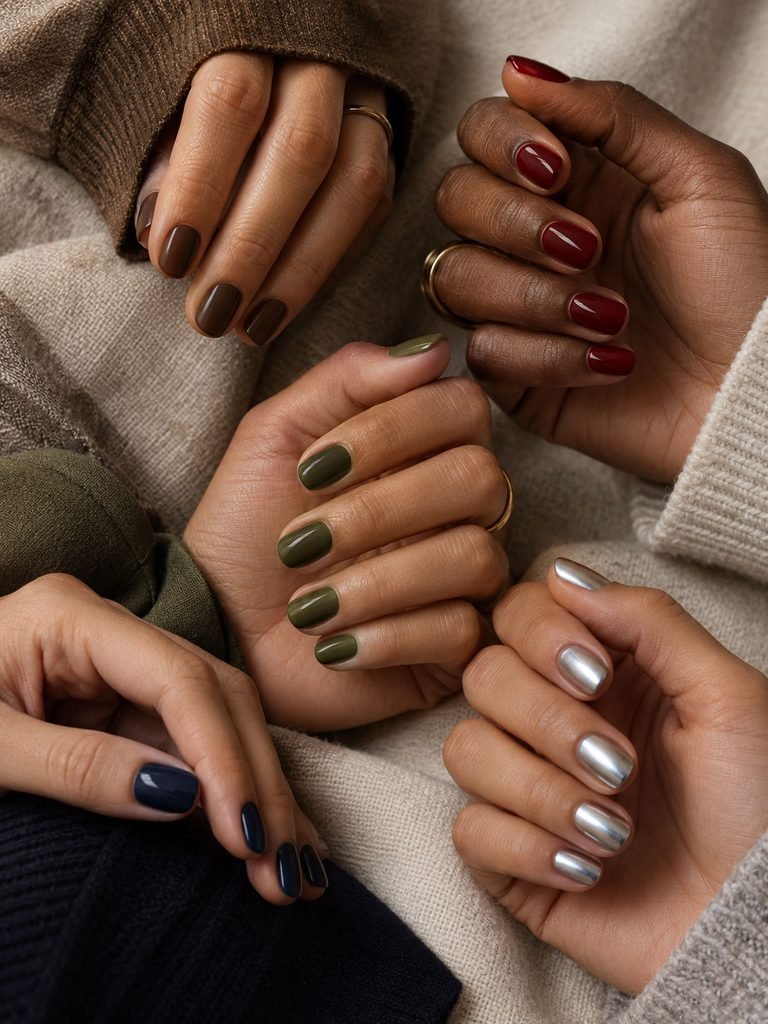
A permanent collection does not need to ignore trends. It just needs to stop treating every trend as permanent.
Current fall 2026 coverage is moving toward suede and cocoa browns, cherry, olive, sapphire, metallic silver, and colors that sit just above black. Those shades can refresh a collection without replacing the quieter colors that work throughout the year. Allure’s current fall 2026 nail color report
The useful rule is simple: keep one slot open for a color that feels current. When it stops appealing to you, that slot can change. The rest of the collection does not have to.
Femorias tracks the broader seasonal movement separately in its guide to 2026 nail color trends, including how different finishes change familiar colors. That keeps an evergreen rotation from turning into a trend report.
Use nail products safely
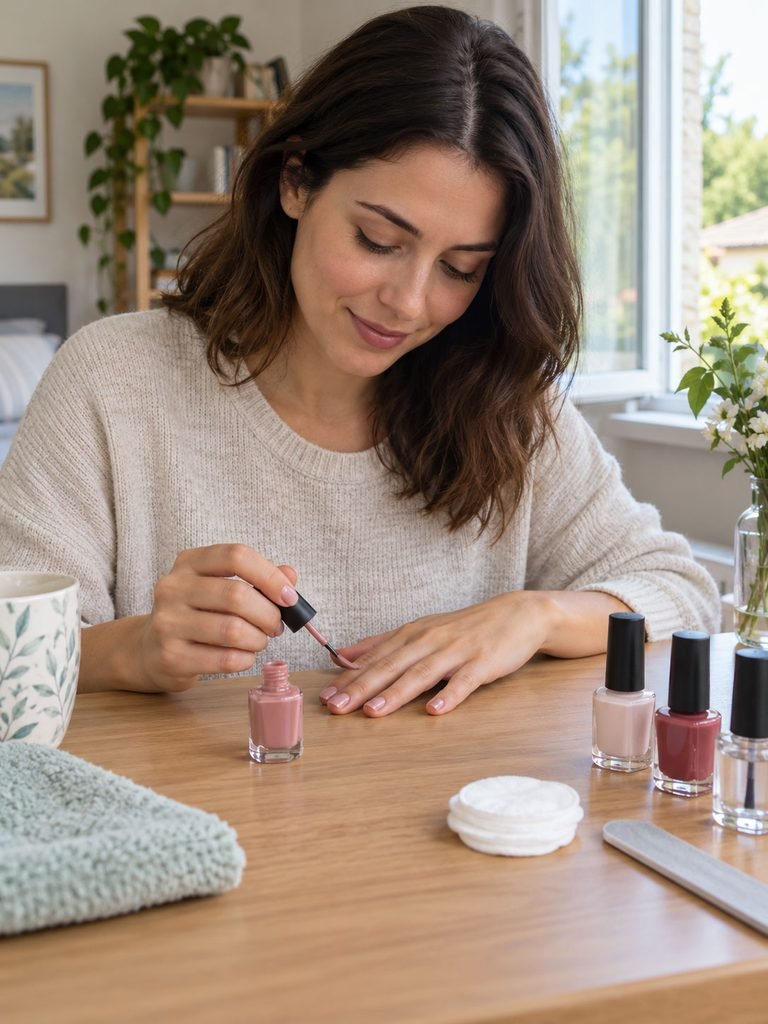
Color is cosmetic, but the products still need to be used according to their instructions. The FDA advises consumers to read nail product labels, follow warnings, use products with good ventilation, and pay attention to irritation or other reactions. FDA guidance on nail care products
If you use gel rather than traditional air drying polish, the curing and removal process adds other considerations. The American Academy of Dermatology notes that gel manicures can contribute to brittleness, peeling, and cracking, and recommends protecting the hands from UV exposure before curing. It also advises against picking gel polish off. American Academy of Dermatology gel manicure guidance
Persistent swelling, burning, pain, or an unusual change in the nail is no longer simply a color choice. Stop using the product and seek appropriate medical advice when symptoms warrant it.
Common questions about nail colors
What nail color goes with everything?
No single color literally goes with everything, but a sheer pink, milky nude, or low contrast taupe is usually the easiest place to start when you want the manicure to stay quiet beside different outfits.
Do nail colors have to match my skin undertone?
No. Undertone is one possible comparison tool, not a rule. Contrast, opacity, finish, personal preference, and the actual swatch on your hand can matter just as much.
Which nail colors hide chips best?
Sheer and lower contrast shades can make small chips and regrowth less obvious. That does not mean the polish physically lasts longer. Dark, bright, and opaque colors simply make the difference between bare nail and polish easier to see.
Are dark nail colors only for fall and winter?
No. Burgundy, brown, navy, black, and other deep colors can be worn at any time. Seasonal associations are inspiration, not restrictions.
What is the easiest classic color for a special occasion?
Red is the clearest traditional statement choice. If red feels too bright, deep berry or burgundy gives you a darker version of the same role. For a quieter event manicure, use a sheer neutral or French style.
Start with three bottles
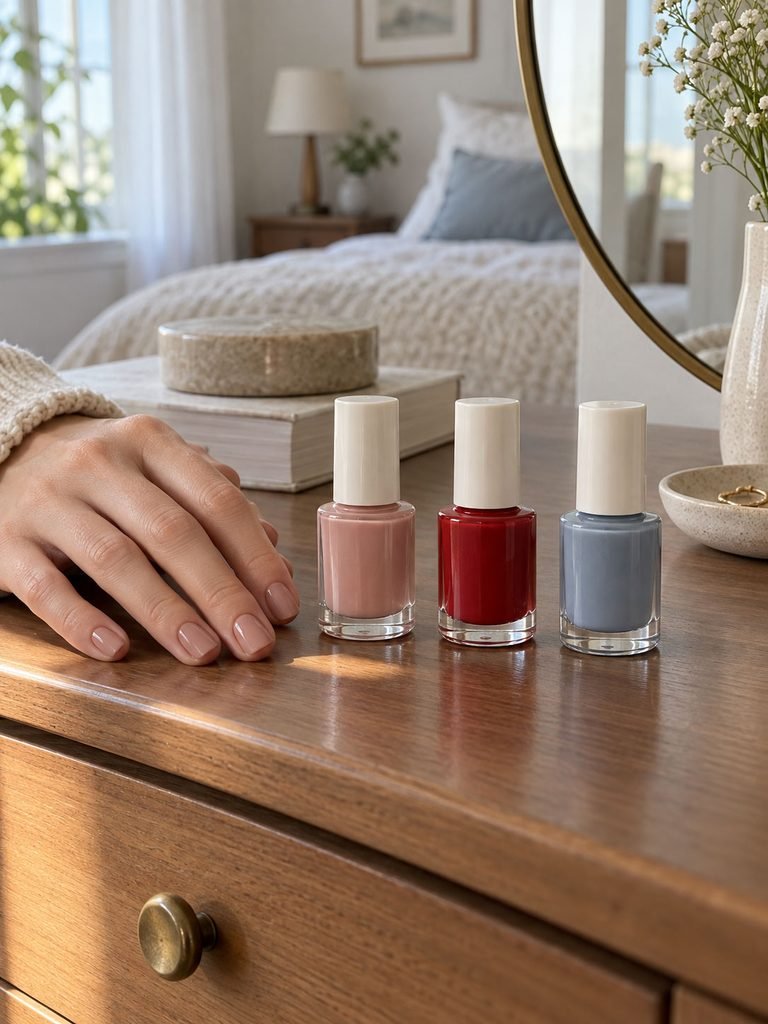
If you are rebuilding your collection, begin with three bottles: one sheer or low contrast neutral, one red, and one shade that feels noticeably different from both.
Wear each more than once before adding another. The next bottle should solve a real gap, such as a deeper evening color, a muted everyday midtone, or one seasonal shade you genuinely want to wear.
If seasonal releases are the reason your collection keeps expanding, Femorias also has a guide to planning seasonal nails without overspending. Its useful idea here is not that everyone needs the same budget. It is that new color should earn a place rather than arrive automatically with every season.
A small rotation works when every bottle has a clear purpose. Start with the colors that fit your real week, notice which ones you reach for repeatedly, and let those habits decide what deserves permanent space.