Backyard Decor Ideas for a Patio That Feels Comfortable and Finished

A patio usually feels unfinished for one of two reasons. Either it does not have a clear job, or it has collected plenty of decor without solving comfort first. Start with the way you want to use the space, then build around seating, shade, light, and a clear route to the house or yard. Plants, an outdoor rug, cushions, lanterns, and personal pieces work better after those basics are settled.
You do not need to buy everything at once. One comfortable seating zone with useful shade and evening light can feel far more finished than a larger patio crowded with accessories.
Start with the patio’s main job before buying decor
Decide what the patio needs to do most often. A small space rarely improves when it is forced to be a dining room, lounge, garden, fire pit area, and party zone at the same time.
For a lounge patio, put comfortable seating and shade first. For outdoor meals, reserve enough room for chairs to pull back without blocking the door or the route to the yard. If the goal is quiet coffee or reading, one good chair, a side table, shade, and a little privacy may be enough.
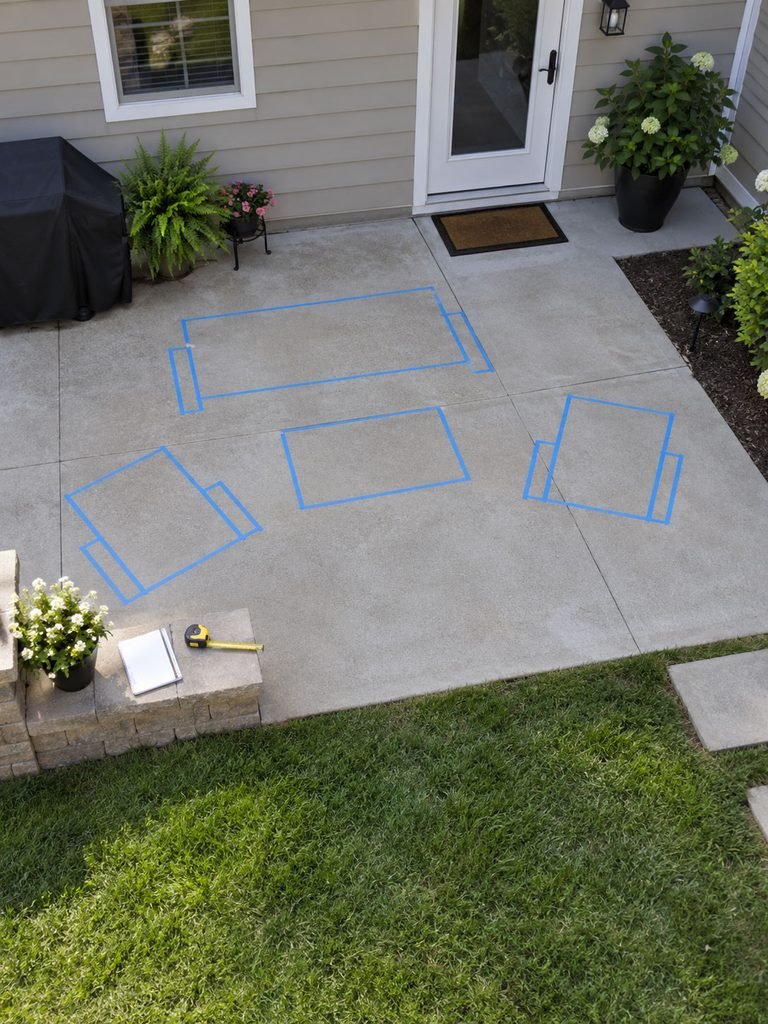
Before ordering furniture, mark its actual footprint and walk through the space. Femorias has a more detailed guide to patio layout ideas by size if you need to test furniture positions before buying.
This is also the moment to note the conditions decor cannot fix. An afternoon patio that becomes painfully hot may need an umbrella before new cushions. A space exposed to neighbors may benefit more from a privacy screen or tall planters than another side table.
Build the seating area from the largest piece out
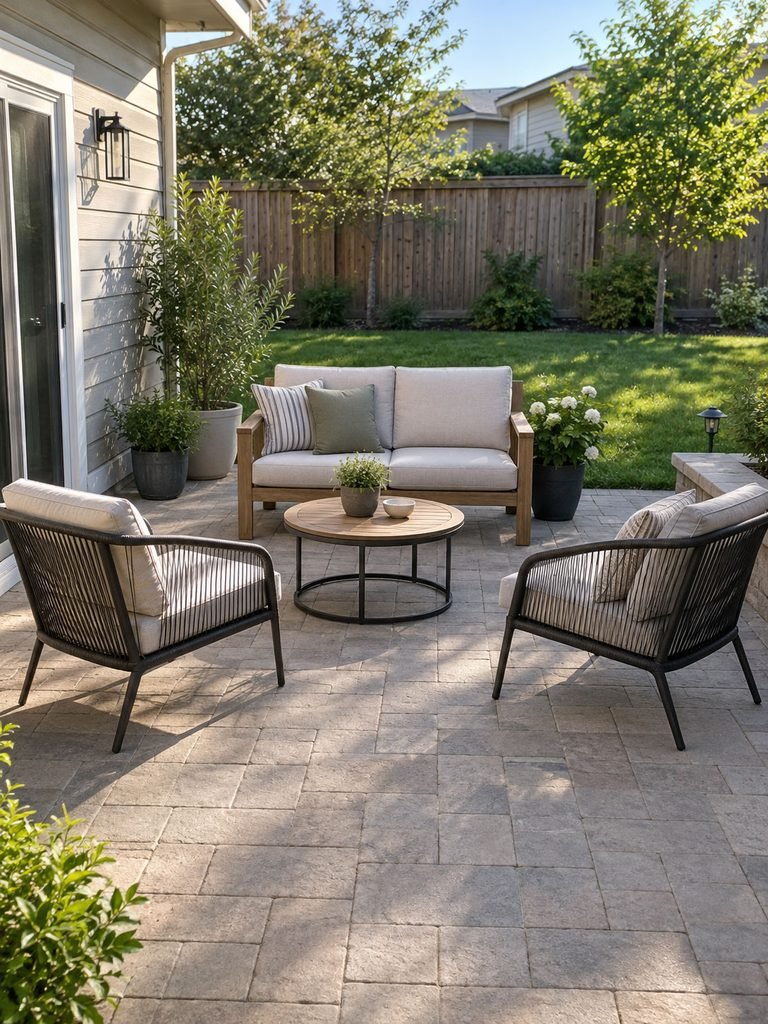
Use the largest necessary piece as the anchor, then stop before the patio feels full. On a compact slab that may be a loveseat, a pair of lounge chairs, or a bistro table. Larger patios can support a complete conversation group or separate dining and lounge zones, but only if people can still move comfortably between them.
Scale matters more than matching. A bulky sectional can make a small patio feel smaller even when its dimensions technically fit. Two proper chairs with a small table often create a better place to talk because each piece has room to function.
Look for furniture that earns its footprint. A storage bench can hide cushions. A garden stool can work as a drink table and occasional seat. Stackable dining chairs make sense when extra seats are only needed for guests.
Do not buy the matching set simply because a retailer grouped the pieces together. The patio needs the right functions, not the maximum number of coordinated items.
Use shade, privacy and plants to create a settled backdrop
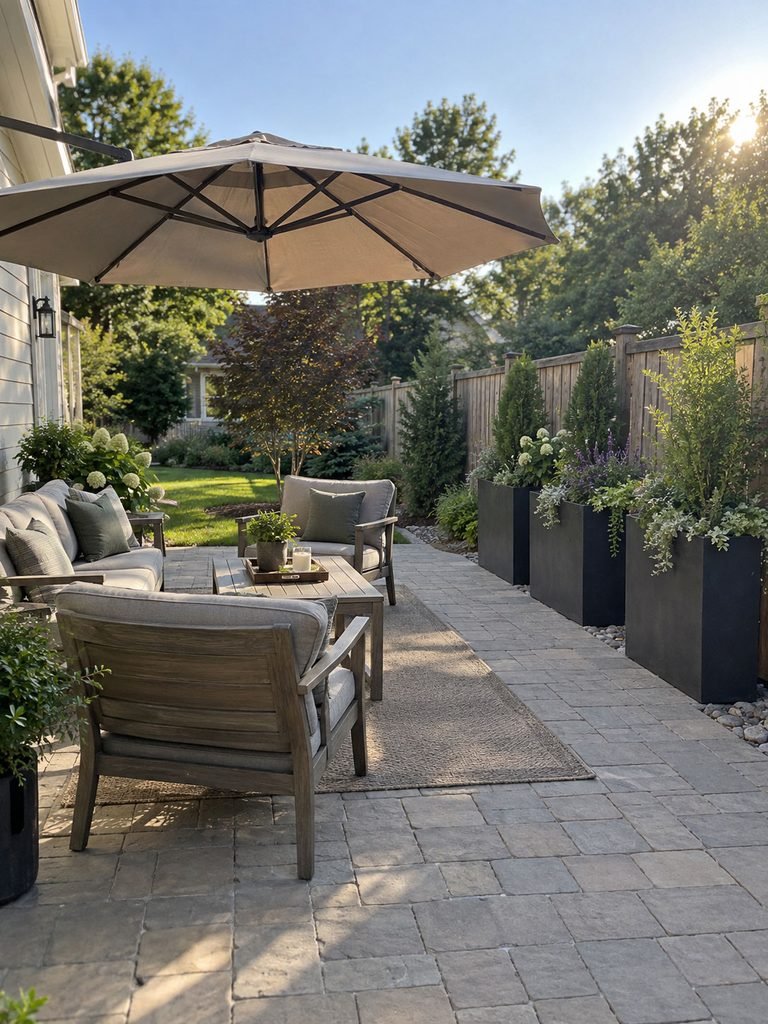
Shade changes how long you can actually use the patio. A freestanding umbrella is usually the simplest decorating level solution because it can move with the seating and does not require a permanent structure. On an exposed patio, choose a stable base appropriate for the umbrella and close it when wind becomes a concern.
Privacy does not require enclosing the entire yard. A freestanding screen beside the seating area, one tall planter at a direct sightline, or a trellis in an appropriate location may be enough. Place privacy elements where they block the view that bothers you rather than lining every edge automatically.
Plants work best when they solve a visual problem as well as adding greenery. A tall container can soften a blank fence. A pair of medium pots can frame a door without filling the walking path. Herbs near an outdoor dining area can be both decorative and useful.
Avoid choosing plants only because an inspiration photo labels them low maintenance. Check the light on your own patio and, for perennial plants, use the USDA Plant Hardiness Zone Map to see which plants are likely to tolerate your area’s winter lows. USDA describes the map as the standard tool for comparing perennial cold hardiness by location.
Add lighting where people actually sit and walk
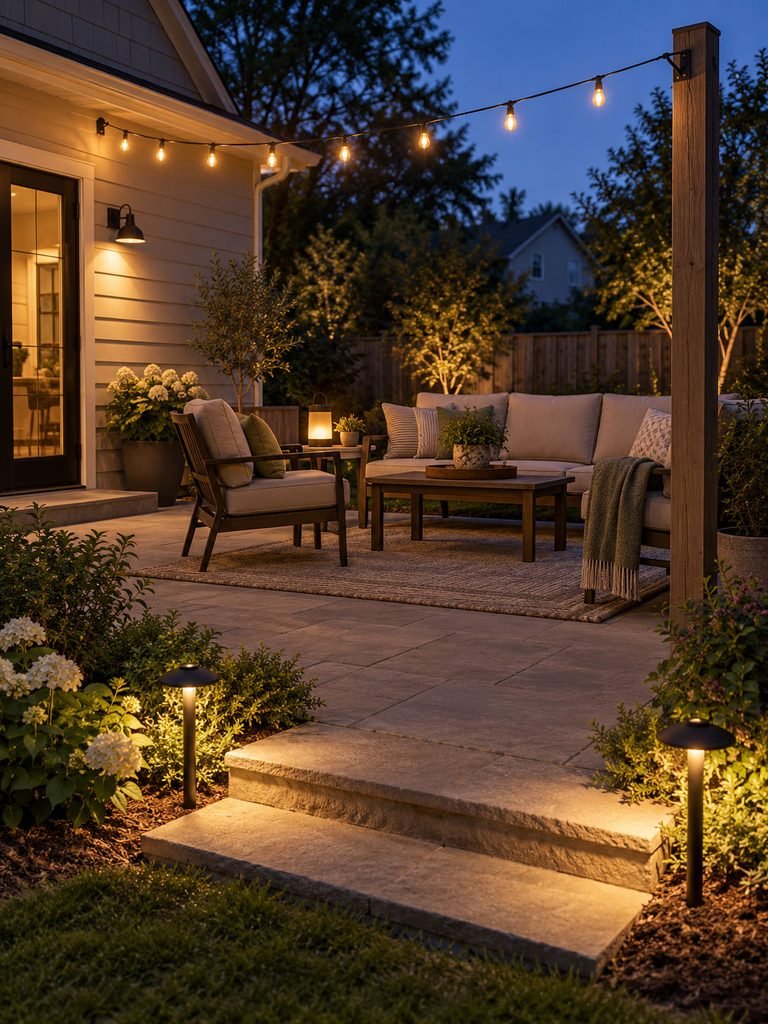
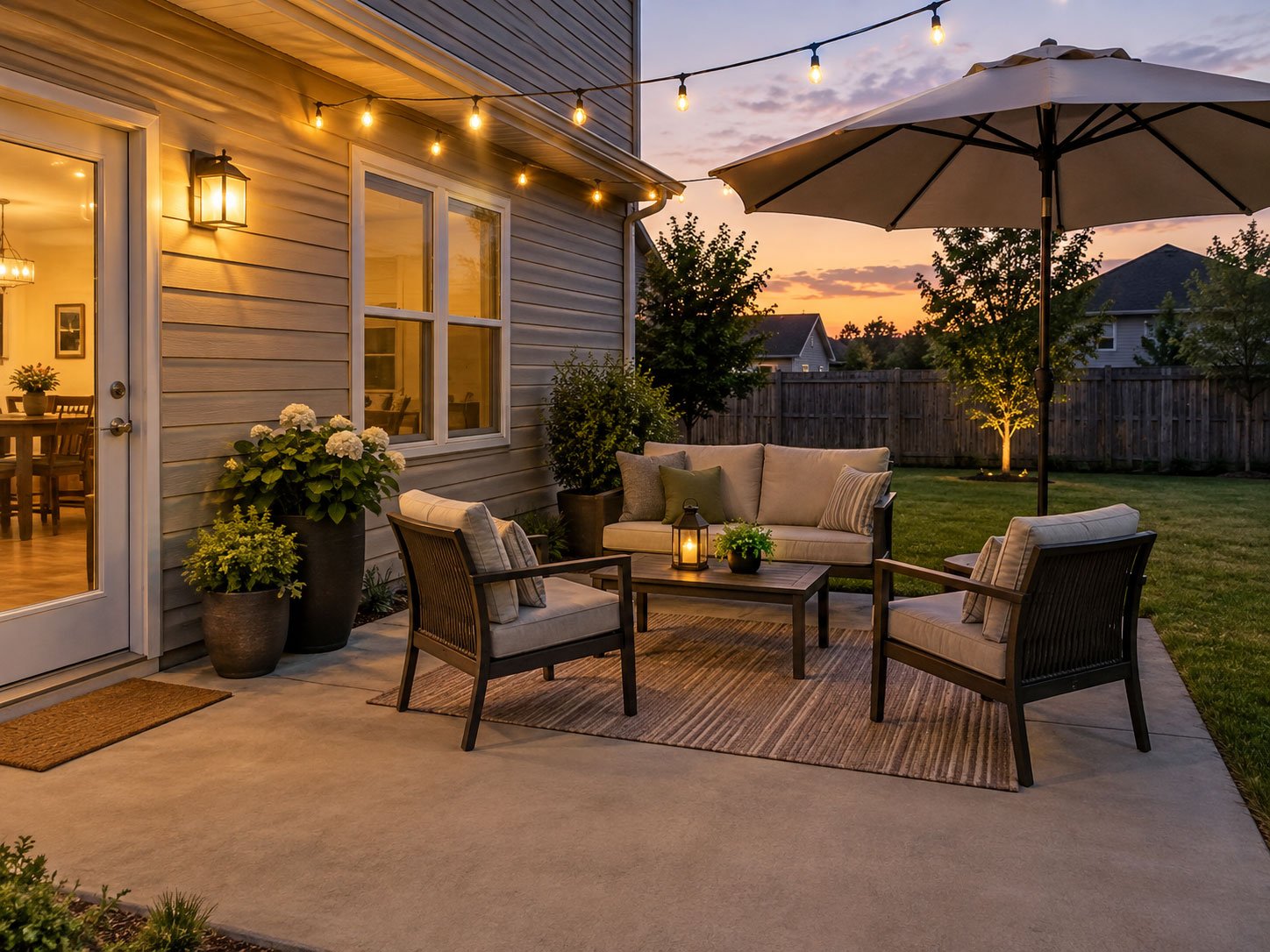
Lighting should make the patio easier to use after dark, not simply add more glowing objects. Start with the places that matter: where people sit, where food or drinks are set down, and any step or transition that needs to remain visible.
One strand of warm outdoor lights can provide general atmosphere. A rechargeable table lamp or lantern gives useful light close to a dining or seating area. Low path lights can help define an edge without turning the whole yard into a brightly lit stage.
If you use plug in lights or an extension cord outdoors, electrical safety is part of the decorating decision. The Electrical Safety Foundation International advises using cords and electrical decorations marked for outdoor use, using GFCI protected circuits, inspecting cords for damage, and keeping electrical connections away from standing water. ESFI outdoor decoration safety guidance
Permanent electrical work is different from hanging decor. If the patio needs a new exterior receptacle or permanent wiring, that work should be handled according to applicable electrical requirements rather than improvised with a long term extension cord.
Layer rugs, cushions and small decor without creating upkeep problems
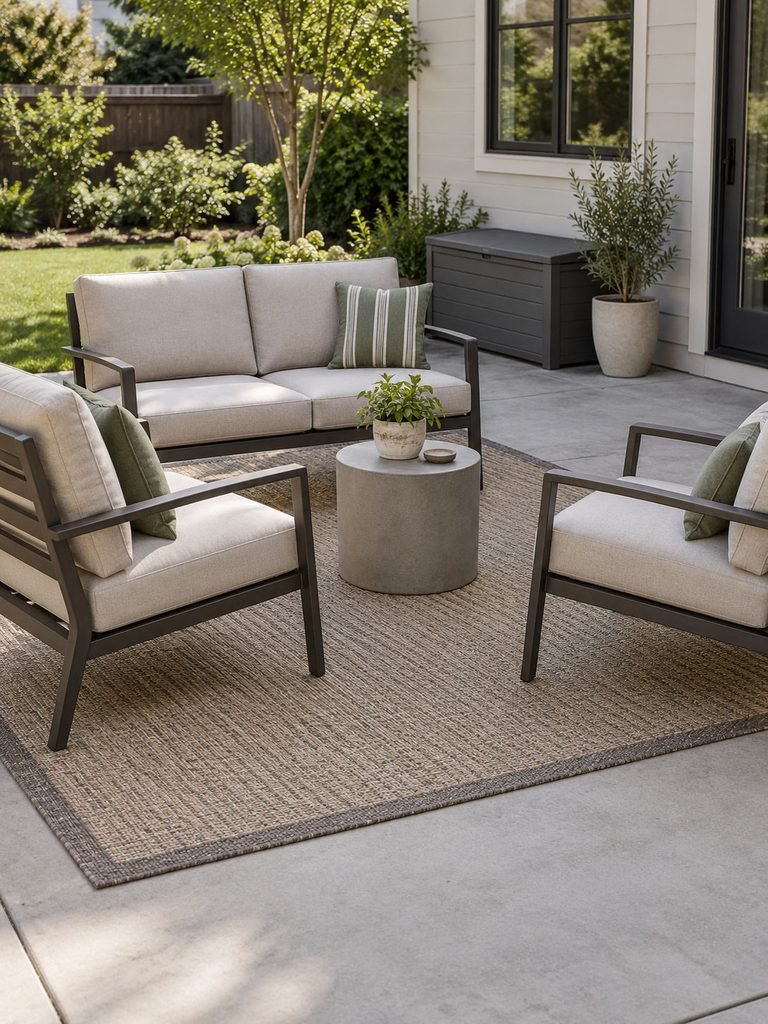
Textiles make hard outdoor surfaces feel softer, but they also create most of the storage and drying work. Add only as many cushions and throws as you are willing to move, clean, or store.
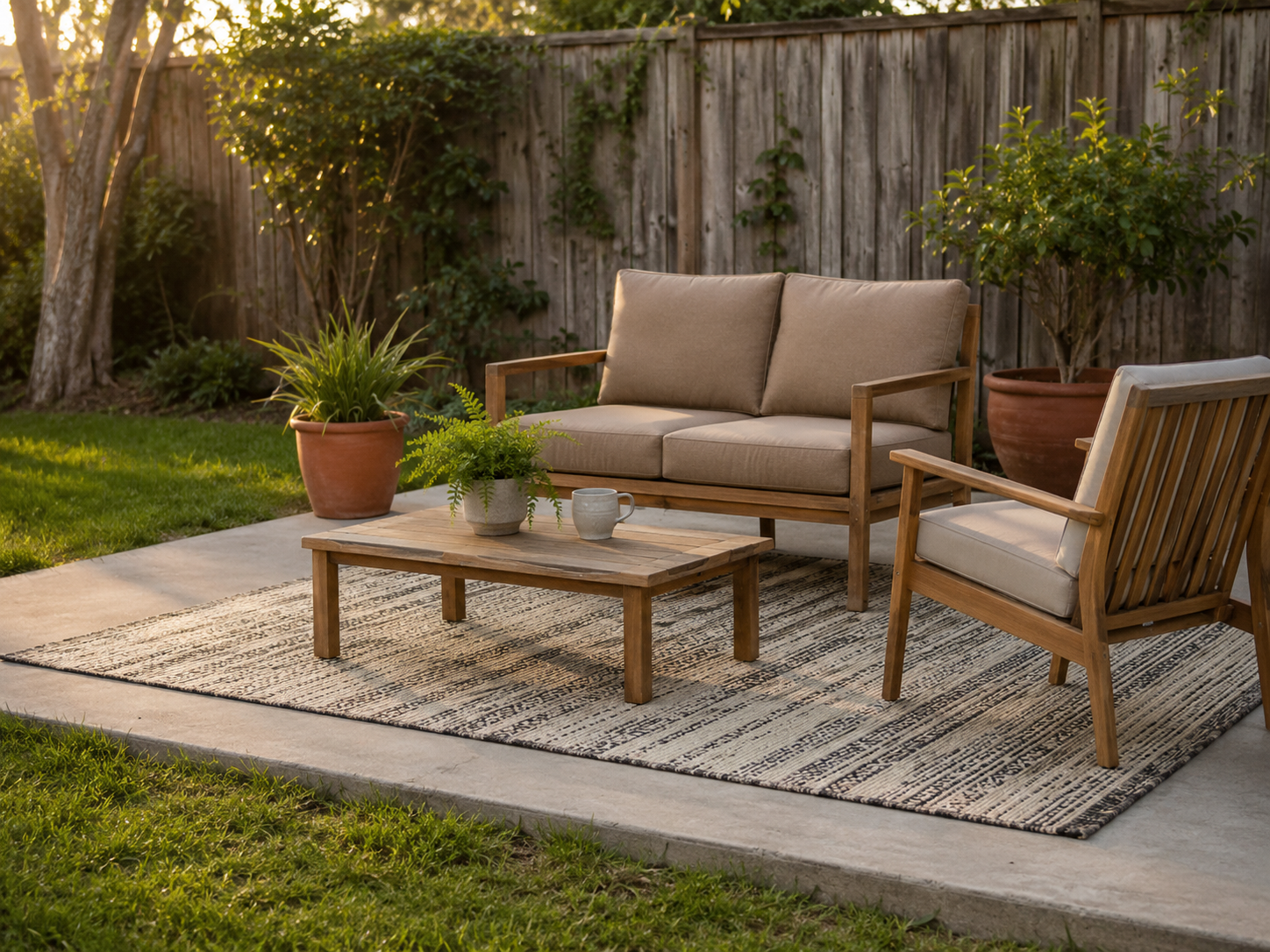
An outdoor rug can visually connect separate chairs and make a concrete slab feel more intentional. Surface matters, though. A rug behaves differently on concrete, lawn, wood, or composite decking, and the wrong backing can trap moisture or mark the material underneath. The Femorias guide to using an outdoor rug on grass, concrete or decking goes deeper into those surface differences.
For a simple color plan, repeat a small number of tones instead of buying every accessory in a different color. The cushions might repeat the house trim, the rug can introduce a pattern, and planters can carry one material or color through the space.
Personal decor works best when it is sparse enough to notice. One ceramic planter, lantern, outdoor safe wall piece, or tray can give the patio character. Five small objects competing on the same table usually read as clutter and make cleaning harder.
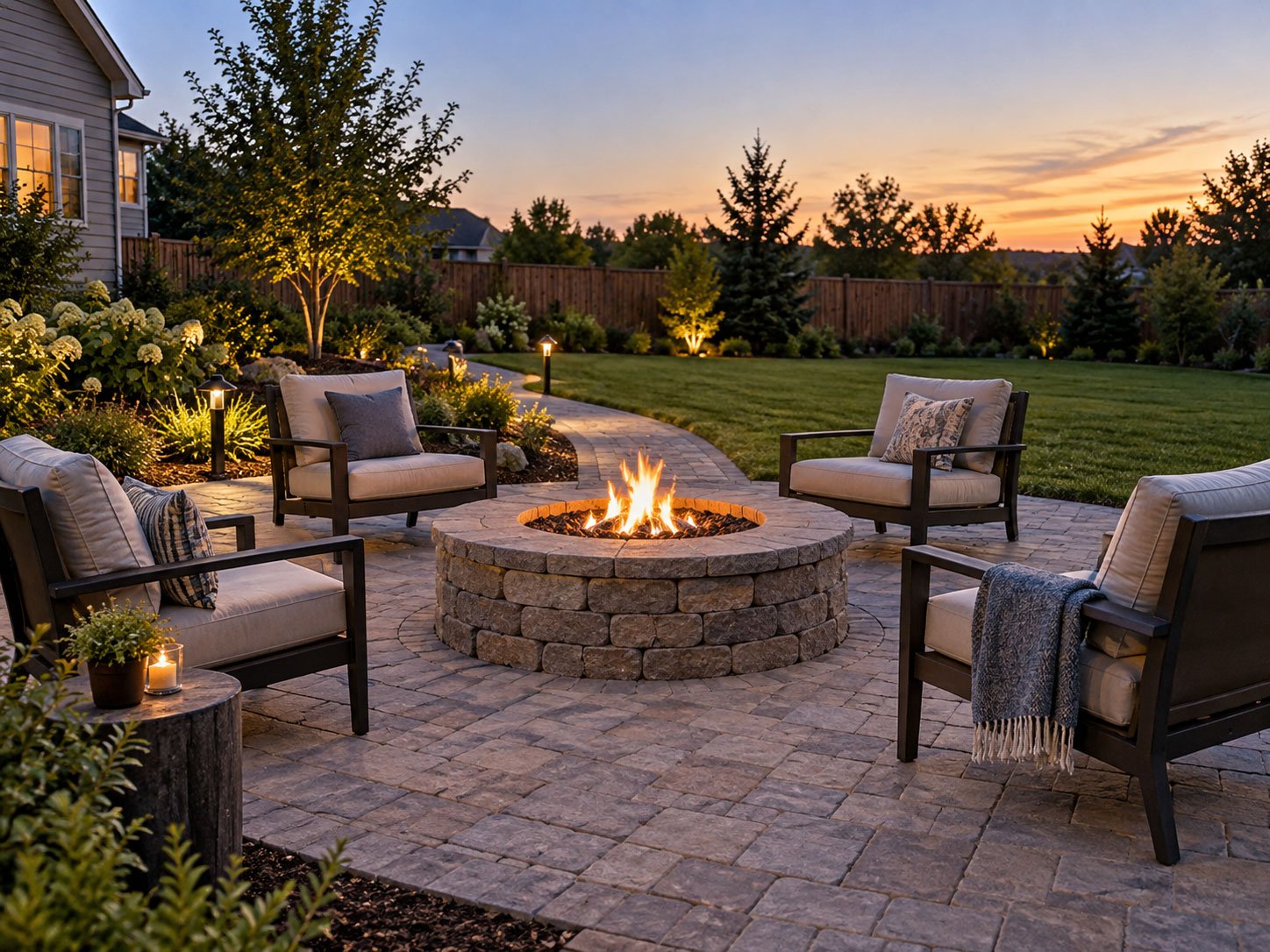
Choose one focal point and keep fire features separate from decoration
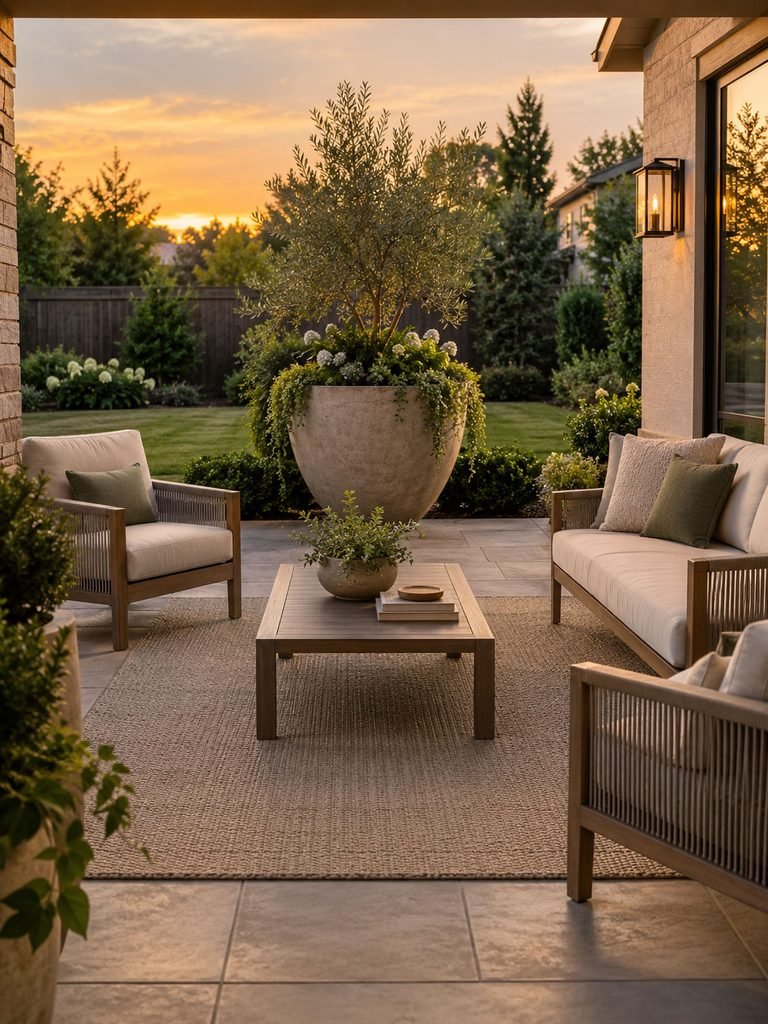
A focal point gives the seating area somewhere to land visually. It does not have to be expensive or permanent. A large planter, compact fountain, sculptural side table, striking umbrella, or a view into the garden can do the job.
Fire pits and tabletop flame features should not be treated like ordinary accessories. They introduce clearance, fuel, supervision, local rules, and combustible materials into the design.
The U.S. Fire Administration currently advises using outdoor fireplaces and fire pits at least 10 feet from a home or anything that can burn, watching children closely, and fully extinguishing the fire before leaving the backyard. Follow the appliance manufacturer’s instructions and any local restrictions as well. U.S. Fire Administration outdoor fire safety guidance
If those clearances do not fit your patio, choose another focal point. A planter, rechargeable lantern, or low table can still give the seating area a center without forcing a flame into a space that cannot safely support one.
Decorate on a budget without buying the same thing twice
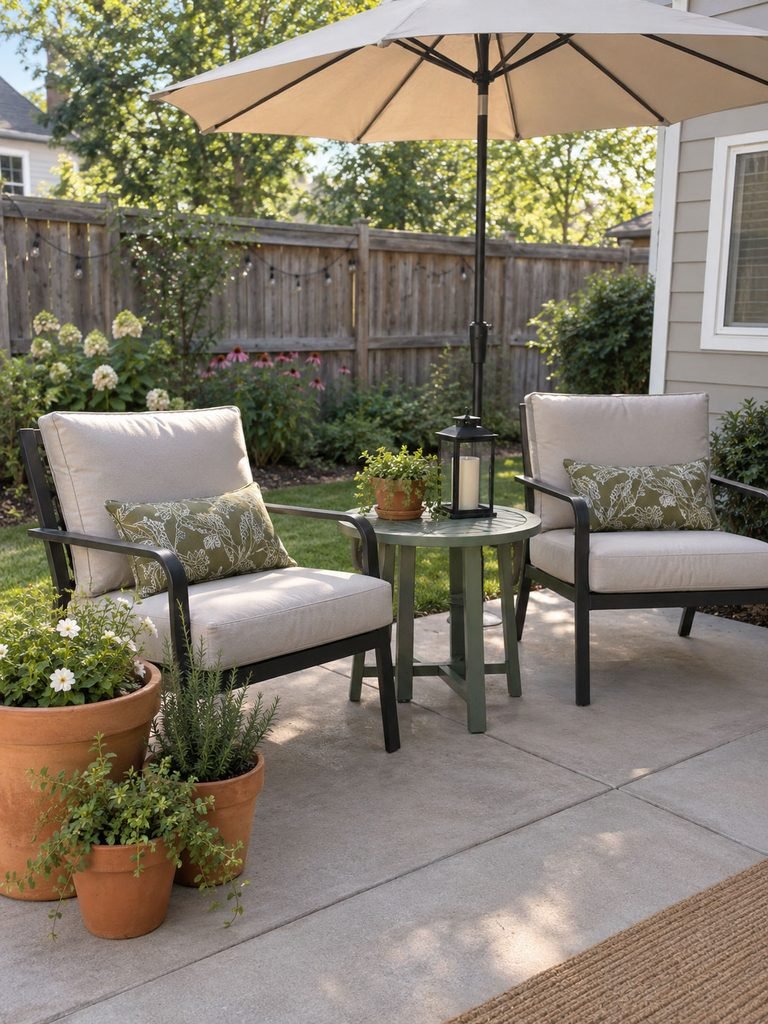
Spend first on whatever currently stops you from using the patio. If the chairs hurt, improve the seating. If the afternoon sun sends everyone indoors, solve shade. If dinner outside ends at sunset because nobody can see the table, work on lighting.
Decor is usually cheaper when the big decisions come first. Once the furniture layout is settled, you know the rug size. Once you know the shade, you know which plants can live there. Once you know where people sit, you know where a lantern or side table will actually help.
Reuse pieces when their materials are suitable for outdoor exposure. A sturdy exterior table may be worth cleaning or refinishing. Existing planters can look more intentional when they are grouped rather than scattered around the perimeter.
Thrifted accessories make sense when they can tolerate the conditions. Indoor baskets, soft upholstery, untreated artwork, and absorbent rugs may cost little up front but become expensive if they deteriorate after one wet season.
One useful rule is to make each new purchase solve a visible problem. That keeps a budget patio from becoming a collection of cheap things that still does not feel comfortable.
Backyard decor questions worth answering before you shop
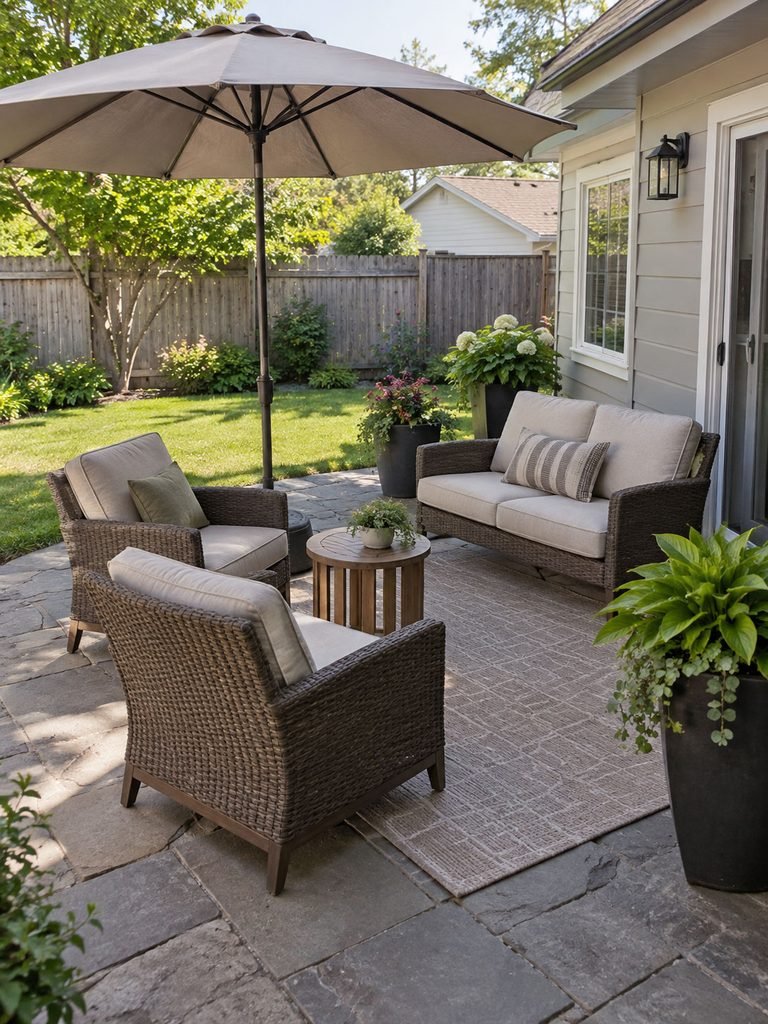
How do I make a backyard patio feel cozy without cluttering it?
Use fewer, larger elements. Comfortable seating, one appropriately sized rug, a group of plants, warm evening light, and one visual focal point will usually do more than many small decorative objects. Leave some empty floor and table space so the patio still feels easy to move through.
What should I buy first for a bare patio?
Start with the item that makes the space usable. That is usually seating, shade, or a table, depending on how you plan to use the patio. Rugs, pillows, lanterns, and decorative objects should come after the layout works.
How can I decorate a very small patio?
Choose one primary function. A pair of comfortable chairs and a small table may work better than squeezing in a full dining set and a lounge area. Use vertical greenery or one tall planter when you want more visual interest without sacrificing floor space.
Are outdoor rugs a good idea on concrete?
They can work well, especially when the rug is made for outdoor exposure and the slab drains properly. Lift the rug after heavy rain if moisture remains trapped beneath it, and check the surface occasionally rather than leaving it untouched for an entire season.
What backyard decor works for renters?
Freestanding furniture, umbrellas, weighted planters, removable lighting, portable side tables, and rugs are generally easier to reverse than structures attached to the house or fence. Read the lease before attaching screens, lights, hardware, or anything that changes the exterior.
Do I need a fire pit to make the patio feel cozy?
No. Warm lighting, comfortable seating, shade or enclosure, plants, and textured materials can create the same sense of intimacy without an open flame. If your patio cannot meet safe clearances, leaving the fire feature out is the better design decision.
Start with one usable seating zone this weekend. Clear what does not belong, mark where the furniture should sit, and fix the biggest comfort problem before buying decorative extras. Once that first zone works in daylight and after sunset, the smaller details become much easier to choose.