Backyard Fire Pit Ideas for a Comfortable, Well Planned Gathering Space

A backyard fire pit works best when you plan the entire gathering area, not just the object that makes the flame. Start with a location that can meet fire safety guidance and the manufacturer’s instructions, then account for the ground surface, occupied chairs, walking routes and how the space will be used after dark.
The U.S. Fire Administration advises using outdoor fire pits at least 10 feet from a home or anything that can burn, while the NFPA’s educational guidance also stresses local restrictions, level noncombustible placement, supervision and keeping the pit away from combustible structures and vegetation. If your available spot cannot satisfy the applicable requirements, another backyard focal point is a better design decision. U.S. Fire Administration outdoor fire safety guidance
Plan the safe, usable footprint before choosing a style
The first decision is not round versus square. It is whether the fire pit zone can occupy the yard without colliding with the house, fence, vegetation, doors, paths, cooking area or other uses.
NFPA educational guidance says to check local fire department or municipal restrictions first. It places contained outdoor fire pits at least 10 feet from anything that can burn and recommends a level surface that will not catch fire, such as patio blocks, brick or concrete. It also advises keeping pits away from siding, decks, railings, vegetation, eaves and overhanging structures. Manufacturer requirements or local rules may be stricter, so treat 10 feet as guidance to verify rather than permission to squeeze a pit into any 10 foot gap. NFPA Educational Messages Desk Reference fire pit guidance
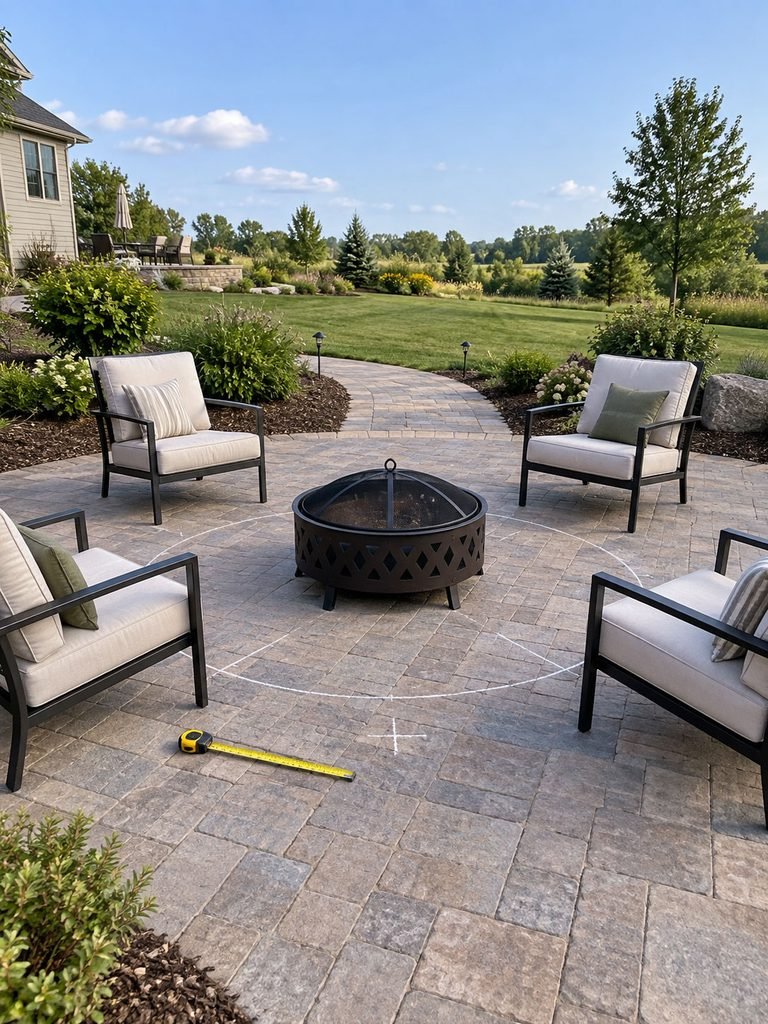
Once a potential location passes that first check, mark the whole arrangement. Put a box, planter or unlit portable pit where the fire feature would sit. Move your actual chairs into position. Sit down, stand up, pull each chair back and walk behind it.
That test catches a common mistake: the pit fits, but the gathering space does not.
If you are still working out how much furniture your patio can support, Femorias’s patio layout ideas by size can help you test occupied furniture footprints and walking routes before buying anything.
Eight backyard fire pit ideas worth adapting to your yard
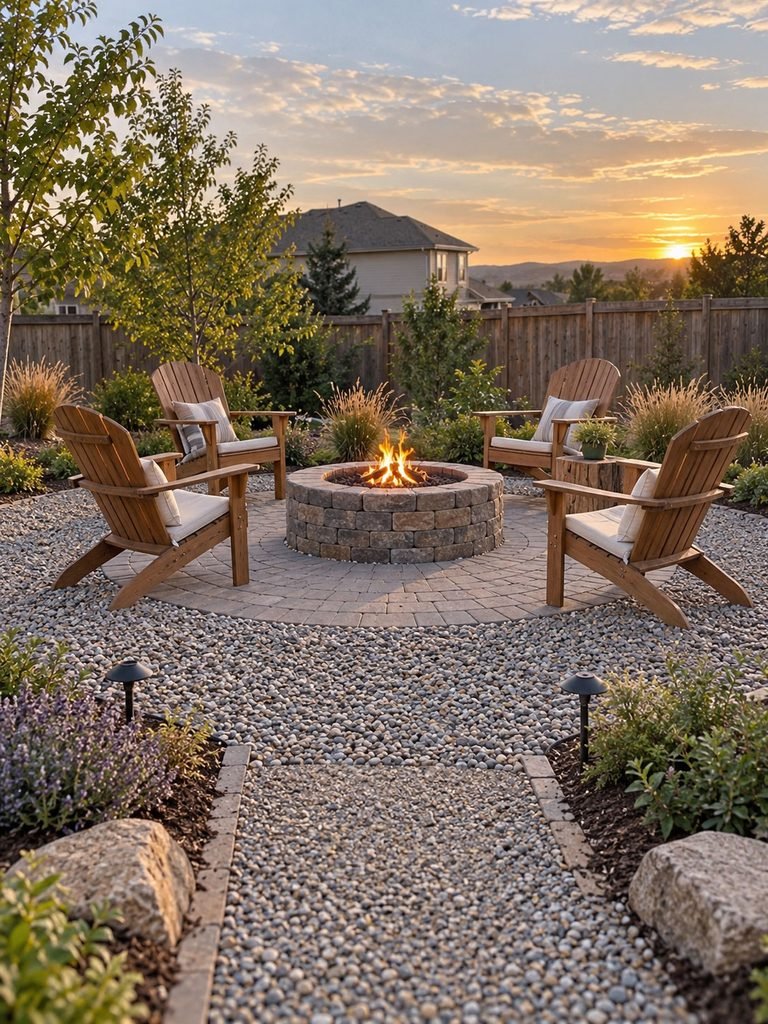
The best idea is the one that fits the yard conditions and the way you gather. These eight approaches give you genuinely different starting points.
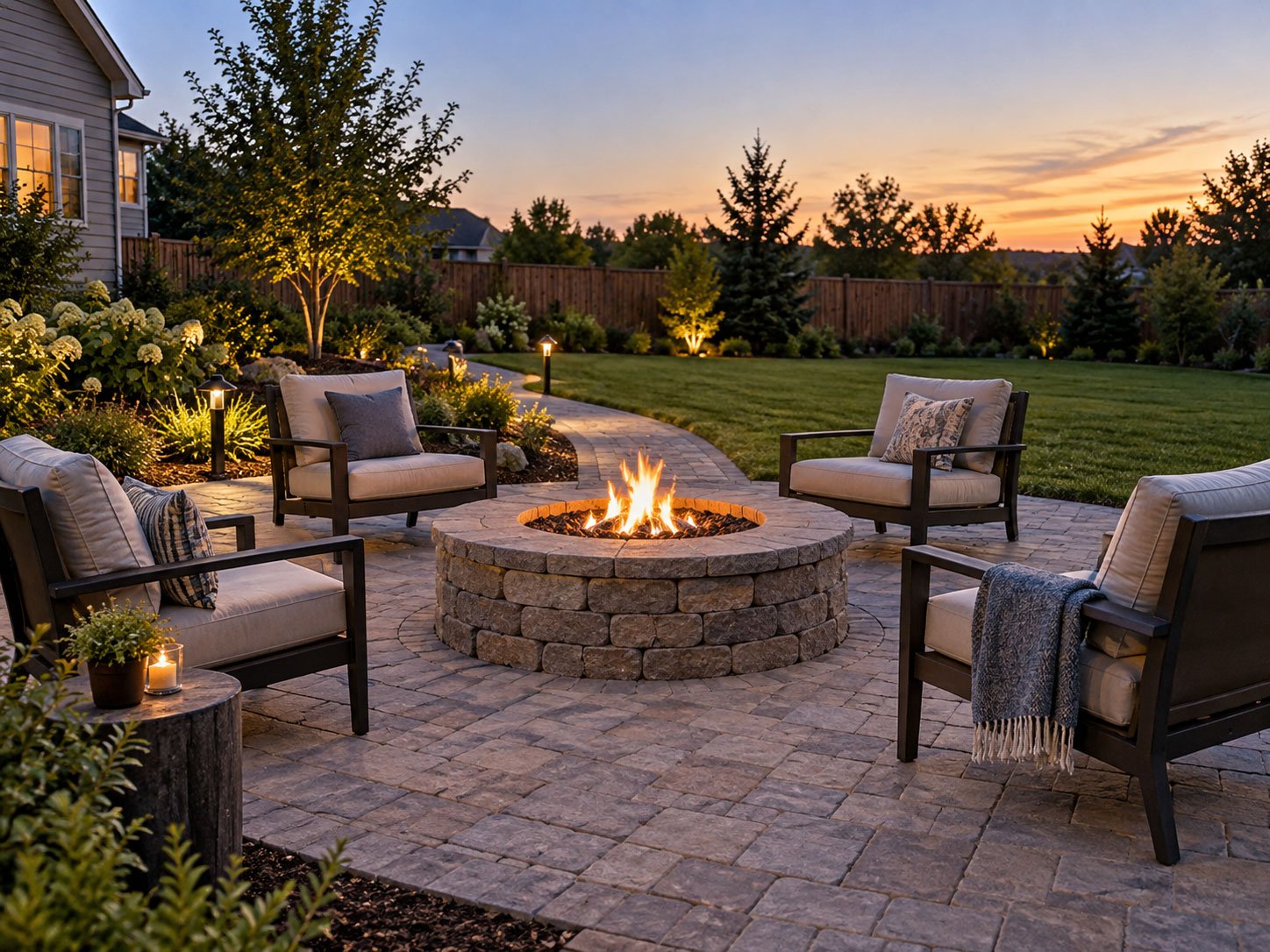
1. A paver circle with movable chairs.
This is a flexible choice when you want the fire pit zone to read as a destination without committing to built in seating. Movable chairs also make it easier to change the arrangement for a smaller group.
2. A gravel gathering area with a stable fire pit base.
Gravel can visually separate the fire zone from the lawn and keep the design informal. The actual pit still needs to sit exactly as its manufacturer requires on a stable, level, appropriate surface. Do not assume loose gravel alone makes every portable pit suitable.
3. A rectangular gas fire table for a long patio.
A linear feature pairs naturally with a sofa and chairs arrangement or two facing benches. It can look more integrated with furniture than a round bowl, but the fuel connection, ventilation, clearances and approved installation still come before styling.
4. A simple round fire bowl with four individual chairs.
This works when flexibility matters more than a permanent built in look. Keep the surrounding design quiet: one strong surface, a small number of chairs and planting around the outer edge.
5. A masonry fire pit with a curved seat wall.
This can make a large yard feel intentionally designed, but it is a permanent hardscape project. Get the fire feature, drainage, masonry and any utilities designed and installed to applicable requirements rather than improvising a permanent build from an inspiration photo.
6. A portable pit in a dedicated open zone.
Portability is useful when the yard serves several purposes, but portable does not mean place it anywhere. Use only surfaces and clearances approved by the manufacturer and permitted locally.
7. A minimalist fire feature with restrained landscaping.
A simple concrete look or masonry form surrounded by uncluttered chairs, a defined path and low planting can work better than loading the area with pillows, baskets and decorative objects that create extra combustible material or upkeep.
8. A separate fire zone in a larger backyard.
If the yard has room, the fire pit does not have to share the dining or cooking patio. Giving it its own destination can reduce furniture conflicts and lets each outdoor zone do one job well.
Choose the fire pit type before you design the rest of the space
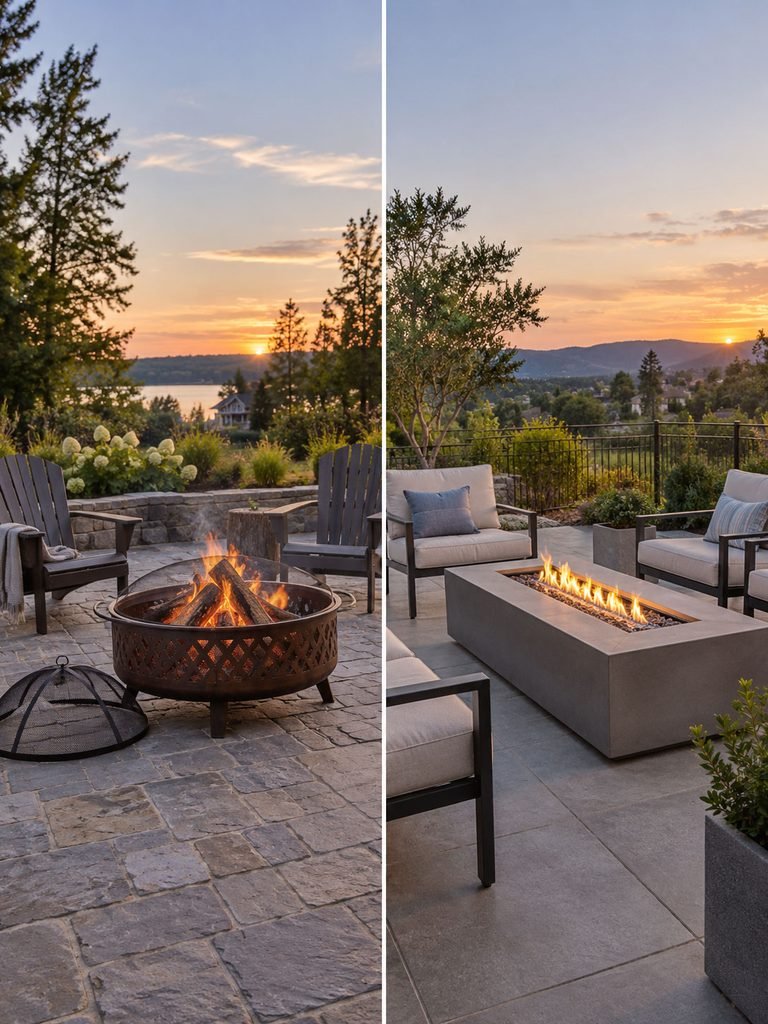
Fuel type changes the experience, upkeep and surrounding design. Pick it before buying the furniture.
| Type | Works well when | Practical tradeoff |
|---|---|---|
| Wood burning pit | You want a traditional open fire experience and local rules permit it | Smoke, sparks, ash and fuel storage add upkeep; a screen is recommended for wood burning fires |
| Gas or propane fire feature | You prefer a controlled appliance with straightforward on and off operation | Installation, fuel connections, ventilation and clearances must follow the appliance instructions |
| Portable metal pit | The yard needs flexibility or seasonal storage | It still needs an approved surface, proper clearances and a suitable location every time it is used |
| Permanent masonry feature | The fire area is a long term part of the landscape | Less flexible and more expensive to change; permanent construction may require professional design, permits or inspections |
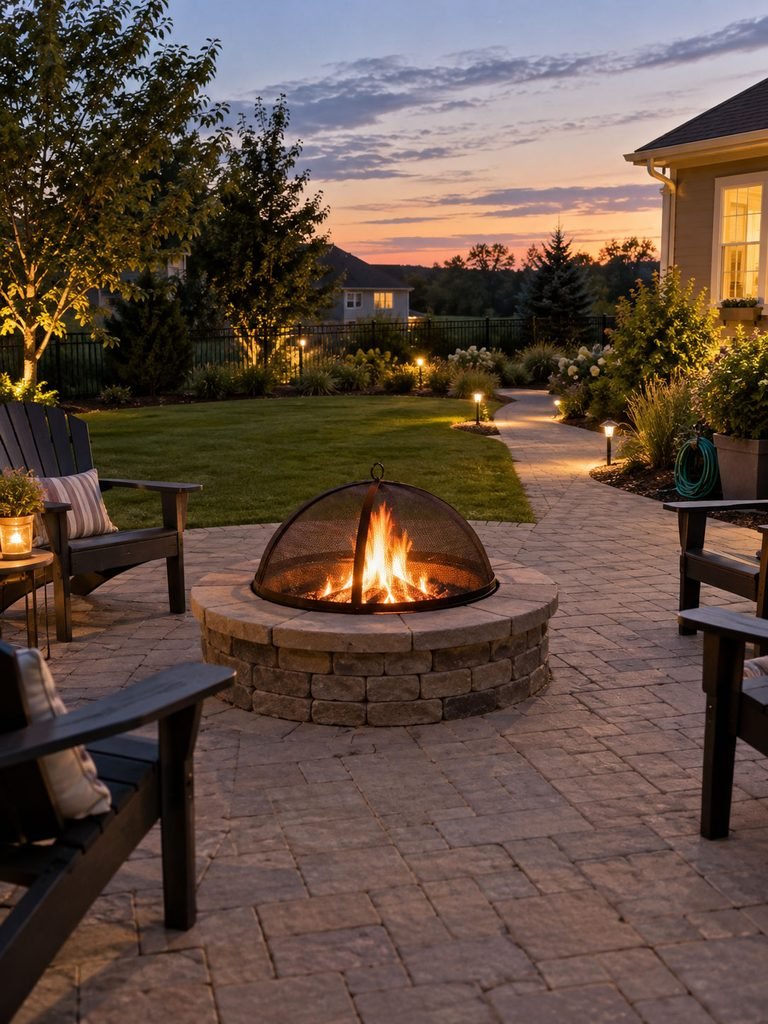
For wood burning fires, USFA recommends a metal screen to reduce escaping sparks. NFPA guidance also says not to use gasoline or similar combustible liquids to start or relight a fire and to keep an extinguishing method nearby.
One small fire feature deserves extra caution because it can look more like tabletop décor than a serious flame source. The U.S. Consumer Product Safety Commission has warned consumers not to buy or use open container fire pits designed to burn pooled alcohol or similar liquid fuel because of pool fire and flame jetting hazards. CPSC guidance on pooled alcohol fire pits
That is not an old theoretical issue. In July 2026, CPSC separately warned consumers to stop using specific Houswise tabletop fire pits after reports involving flame jetting, fuel leakage and unexpectedly high flames. CPSC’s July 2026 Houswise tabletop fire pit warning
Match the seating layout to the pit and the way you gather
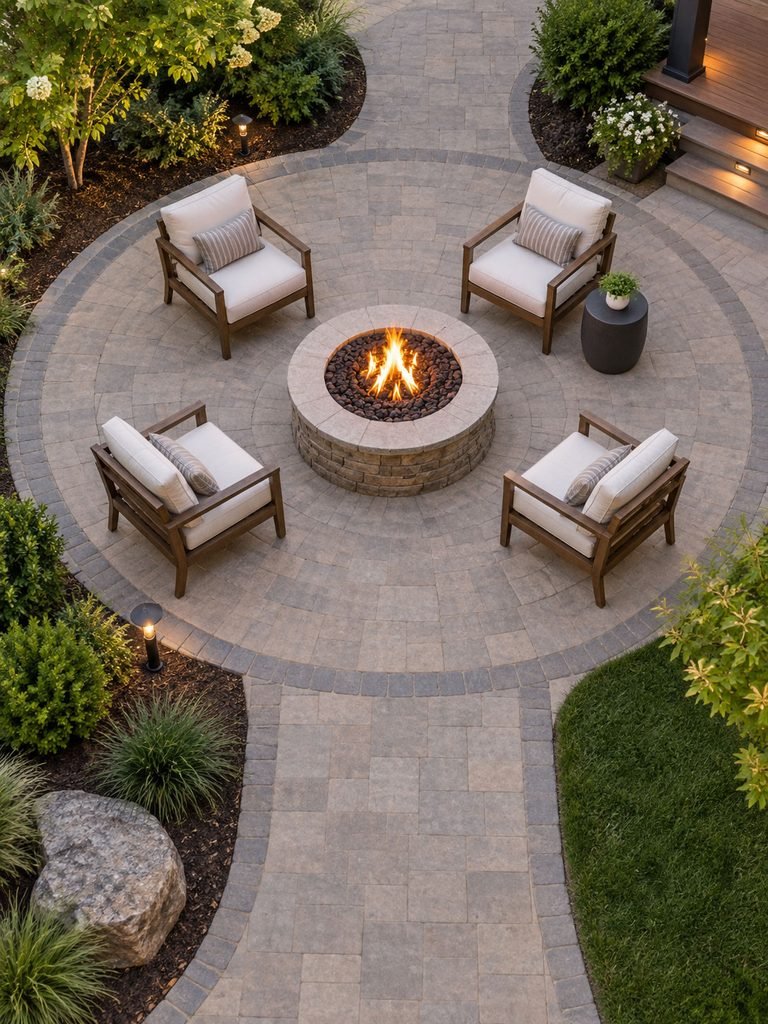
The pit shape gives you a useful clue, but the way people use the space matters more.
A round pit naturally supports individual chairs in a circle or semicircle. That is useful when guest numbers change because chairs can move. A rectangular fire table tends to work better with a more linear arrangement, such as a sofa opposite two chairs. Built in curved benches can make a permanent round pit look finished, but they cannot adapt when you decide the seats are too close, too exposed to wind or facing the wrong direction.
Do not measure the layout with empty chairs tucked neatly inward. Sit in them. Let the deepest chair move into its normal position. Leave a route behind occupied seats so nobody has to squeeze toward the fire to pass.
Also decide how many people the area needs to handle most nights. Designing for four regular users and occasionally adding two movable chairs is often more comfortable than permanently filling the circle with eight seats that sit empty most of the week.
Use the surface and landscaping to define the zone
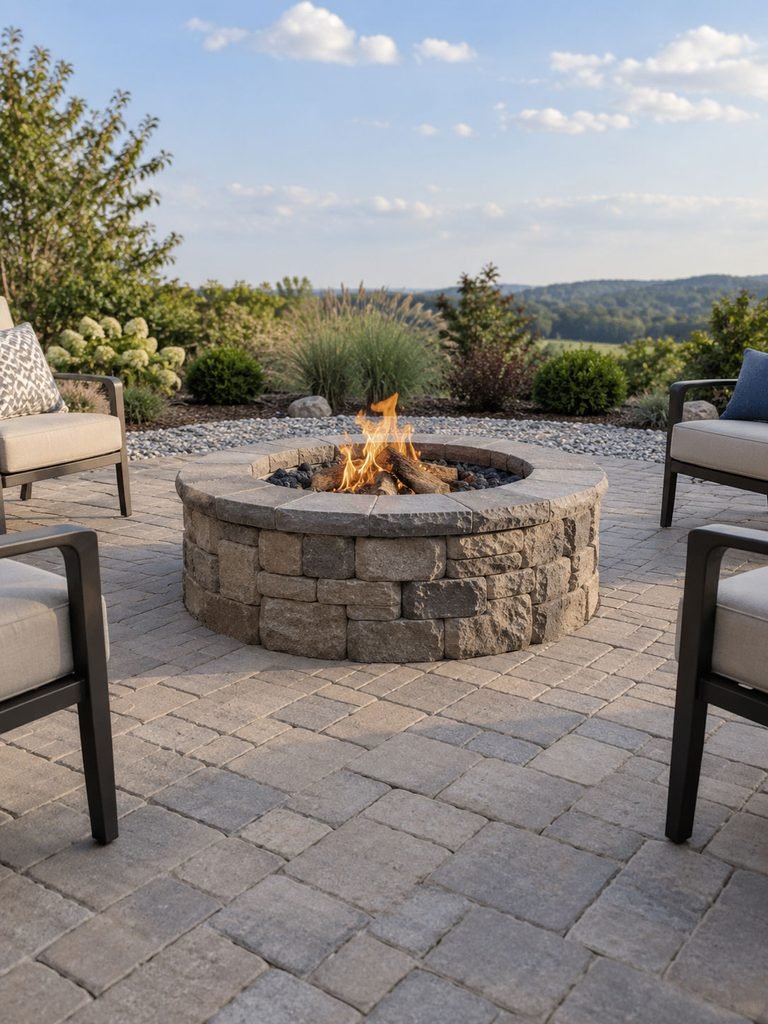
A defined ground surface does two jobs: it makes the fire area look intentional and gives furniture a predictable place to stand.
NFPA guidance favors a level surface that will not catch fire and specifically gives patio blocks, bricks and concrete as examples. That makes a paved area a straightforward visual foundation as well as an easier surface for chairs.
Gravel can work as a landscape treatment around an appropriately installed fire feature, but do not turn a gravel fire pit into a blanket construction rule. The appliance still needs the support and surface its manufacturer specifies.
Planting belongs at the outer edge, where it can soften the hardscape without hanging into the fire area. Instead of scattering little pots between chairs, use planting to frame the approach or create a backdrop.
Keep combustible decorative layers conservative. An outdoor rug may make an ordinary lounge area feel finished, but a fire pit zone is not the place to push fabric toward the center simply because the inspiration photo needs more texture.
Light the route, not the flame
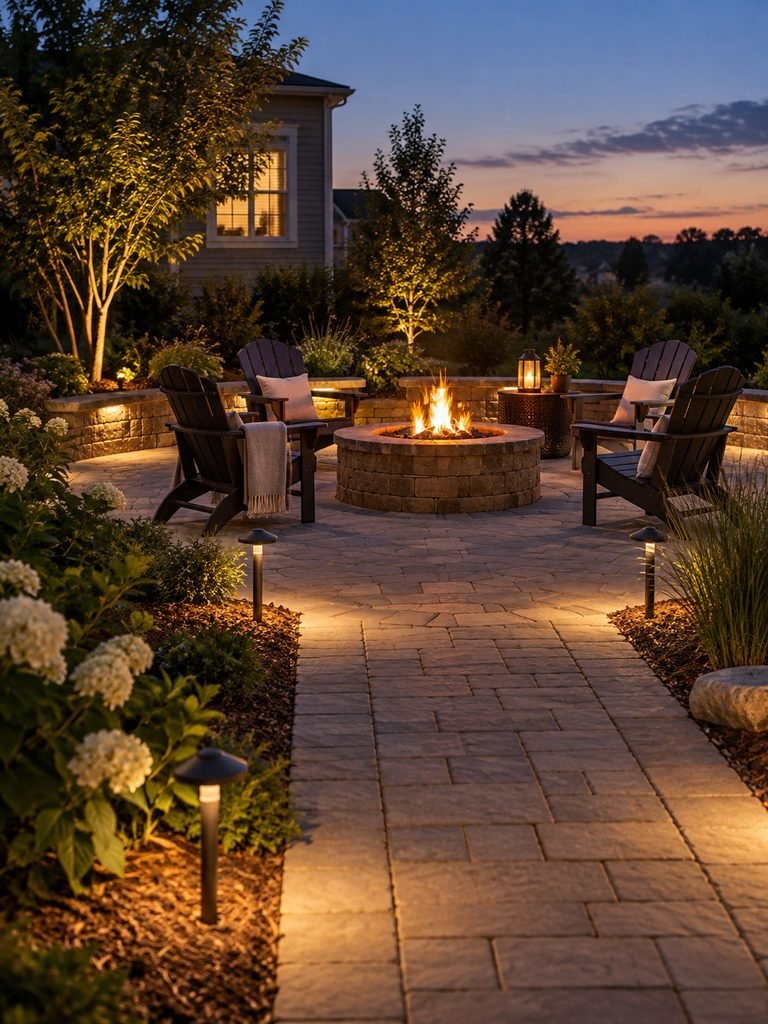
Firelight is a focal glow, not complete outdoor lighting. People still need to see the route to the chairs, changes in grade, steps, side tables and anything near their feet.
Keep the strongest supporting light where it solves a task: along the approach, near a step or on a table outside the fire feature’s immediate area. Avoid turning the fire pit into the center of an overhead web of decorative lights or other combustible material.
This is especially important because NFPA guidance identifies tripping or falling into a fire pit as a real hazard and recommends keeping the surrounding area clear and well lit.
If your patio has no exterior receptacle, Femorias’s guide to patio lighting without an outlet covers solar, rechargeable and temporary cord options. Keep any lighting choice consistent with outdoor electrical requirements and away from the fire feature itself.
Avoid the fire pit ideas that look better than they work
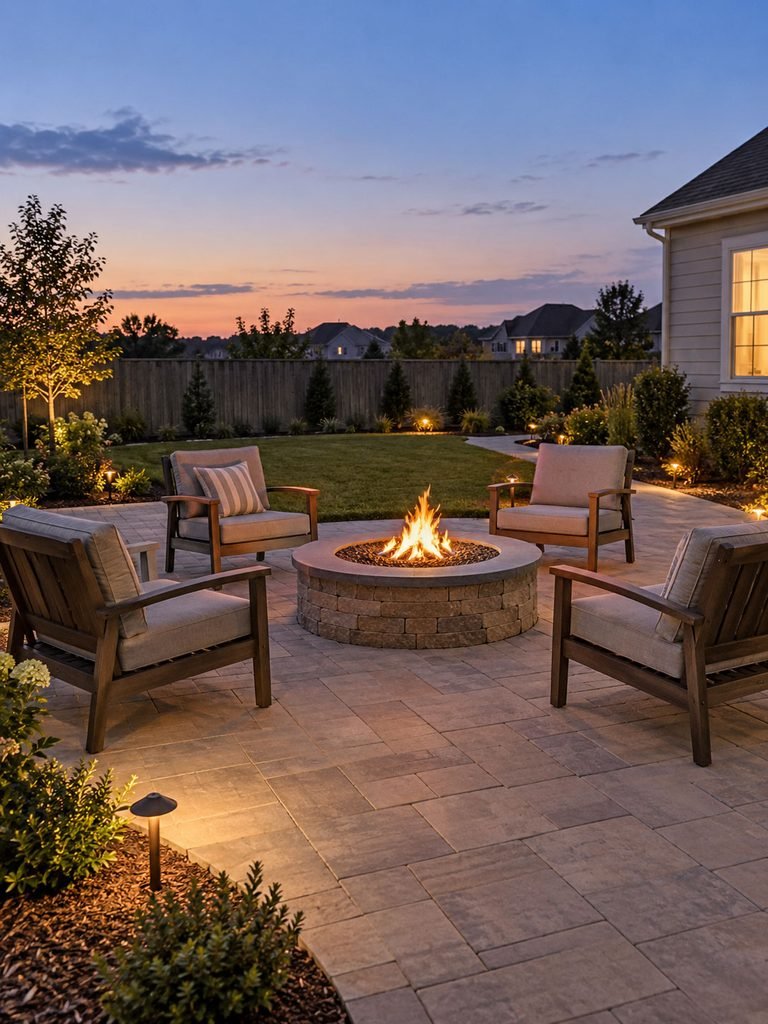
A fire pit area can photograph beautifully and still be annoying or inappropriate to use. Watch for these planning mistakes:
- Buying the pit before testing the whole footprint. Chairs and circulation usually consume more of the yard than the fire feature itself.
- Treating portable as permission to improvise placement. Portable appliances still have manufacturer and local requirements.
- Putting the fire feature on whatever surface already exists. Verify the approved support instead of assuming grass, decking or decorative gravel is acceptable.
- Adding soft décor too close to the fire. Pillows, throws and rugs are not automatically appropriate just because they are rated for outdoor weather.
- Using a pergola, umbrella, branch canopy or decorative lights as a ceiling over the pit. Do not assume an overhead feature is compatible with open flame. Follow the appliance instructions and applicable rules.
- Ignoring the trip back to the house. The route should remain visible and clear after dark.
- Treating a tiny liquid fuel tabletop flame as harmless décor. CPSC’s pooled alcohol warnings are a strong reason not to make these products the small backyard solution.
- Skipping local restrictions because the pit came from a major retailer. Product availability does not tell you whether that fuel type or placement is allowed where you live.
The best design sometimes ends with no fire pit at all. If the yard cannot provide a suitable location, build the gathering zone around seating, lighting, a low table or planting instead.
Backyard fire pit questions
How far should a backyard fire pit be from the house?
USFA advises using fire pits outdoors at least 10 feet from the home or anything that can burn. NFPA educational guidance likewise gives a 10 foot minimum for contained fire pits. Local requirements and the appliance manufacturer may require more, so check both before choosing the location.
Can I put a fire pit directly on grass?
Do not assume that is appropriate. NFPA recommends a level surface that will not catch fire and gives patio blocks, brick and concrete as examples. Follow the exact surface requirements for the fire pit you own or intend to buy.
Can a fire pit go under a pergola?
Do not assume it can. NFPA guidance says to keep fire pits out from under eaves, overhanging branches and structures. A covered installation should only be considered when the specific appliance instructions, local requirements and the structure itself explicitly support that use.
Do I need a spark screen for a wood burning fire pit?
USFA recommends using a metal screen over wood burning fires to help keep sparks from floating out.
Are small tabletop fire pits safer because the flame is smaller?
Size alone does not make a flame product safe. CPSC has warned specifically about pooled alcohol tabletop fire pits because of pool fire and flame jetting hazards. Check the fuel system and safety information rather than judging by the product’s small size.
Before buying anything, mark one possible fire pit zone in the yard and put your chairs around the empty center. Walk the route, check nearby structures and vegetation, then verify local requirements and the exact instructions for the fire feature you are considering. If the zone still works after those checks, choose the pit that suits that space, not the other way around.