Affordable Rooftop Decor Ideas That Look Polished on a Real Budget

A polished rooftop does not require a full set of new furniture. The least expensive route is usually to finish one useful area instead of spreading small purchases across the entire roof. Start with a clear seating footprint, add one strong ground layer, repeat a limited palette, then use lighting and plants to soften the hard surfaces.
A roof also has constraints an ordinary patio may not have. Wind, drainage, weight, electrical exposure, building rules and access all affect what belongs there. A bargain that blocks a drain, catches the wind, or cannot remain outdoors safely is not a bargain.
Check the rooftop before you decorate it
Before buying anything, confirm that the roof is an approved occupied space and find out what your lease, condo association, building management, or local rules allow. Renters should not assume that rooftop access automatically means permission to drill, attach shade structures, hang lights, or install privacy panels.
Keep drains, doors, stairs and normal walking routes clear. Avoid placing furniture where it could damage roofing material, and do not introduce large planters, masonry, built structures, or other substantial loads without knowing what the roof is designed to support.
That concern is not theoretical. The U.S. General Services Administration notes that rooftop planting systems add load and that water retention and other roof conditions can materially affect structural demands. Large soil filled containers deserve the same practical caution. GSA guidance on planted roof loads
You do not need to turn a decorating refresh into an engineering project. For ordinary movable furniture, the useful rule is simpler: if a change adds substantial permanent weight, alters the building, penetrates the roof, or creates a large surface that catches wind, get approval before treating it as decor.
Build one useful zone before buying more decor
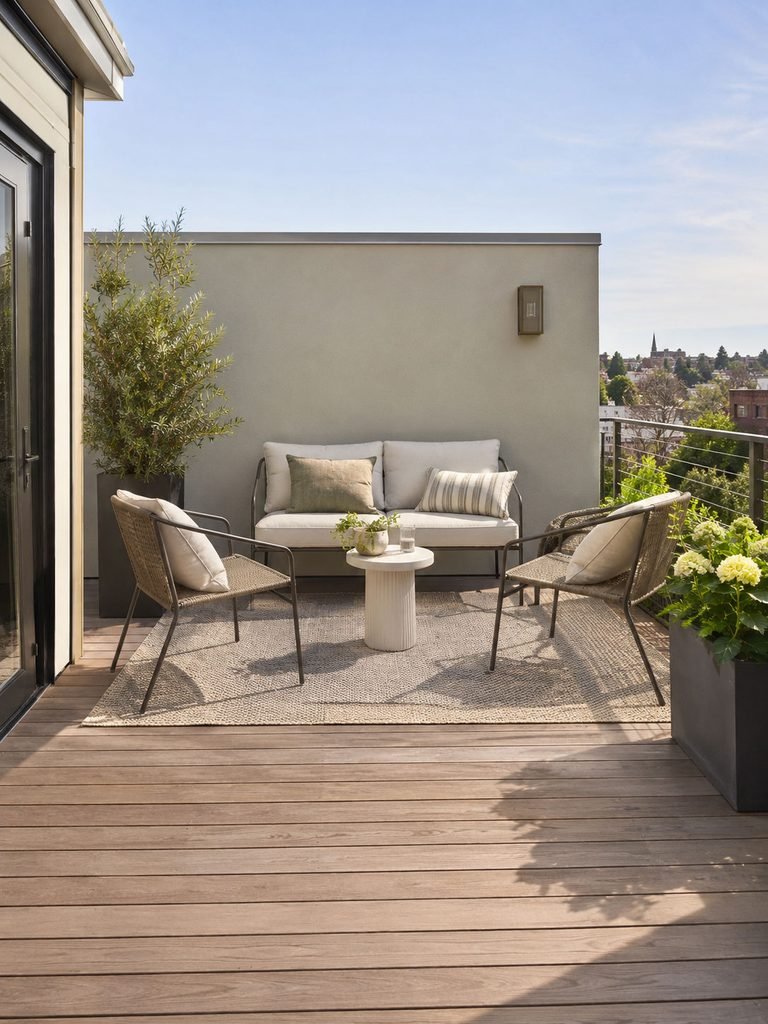
Decide what you actually want to do on the rooftop most often. If the answer is coffee, reading and conversation, create a lounge first. If you regularly eat outside, make dining the priority. A small roof usually looks more complete with one convincing use than with an undersized dining set beside an undersized lounge.
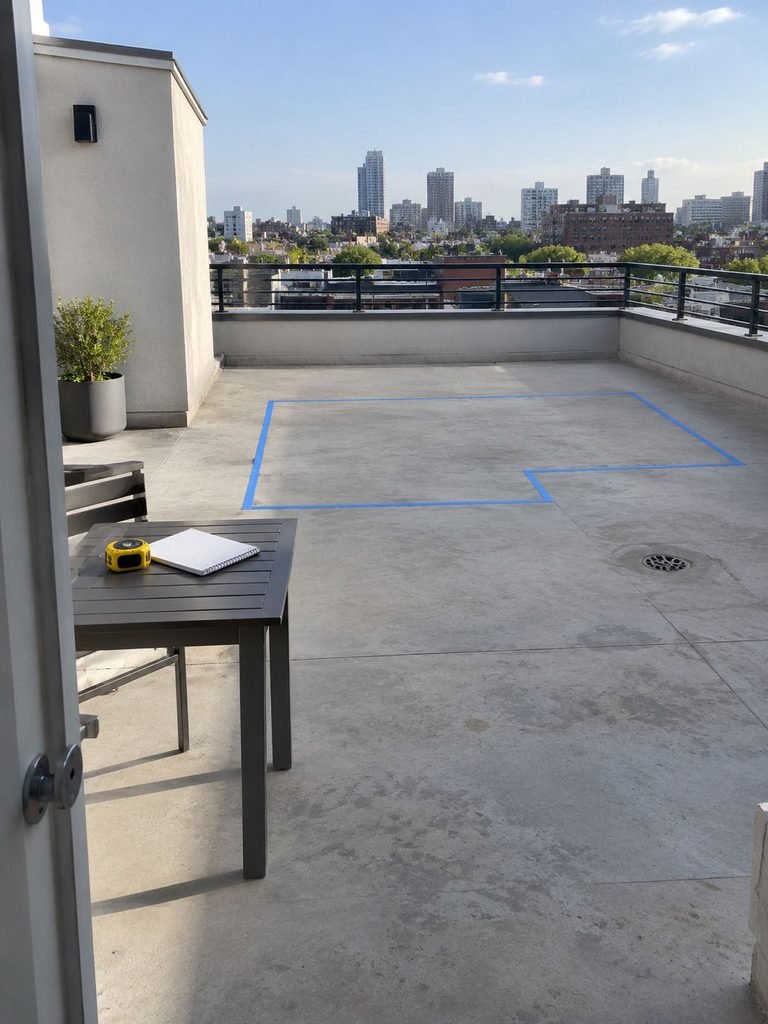
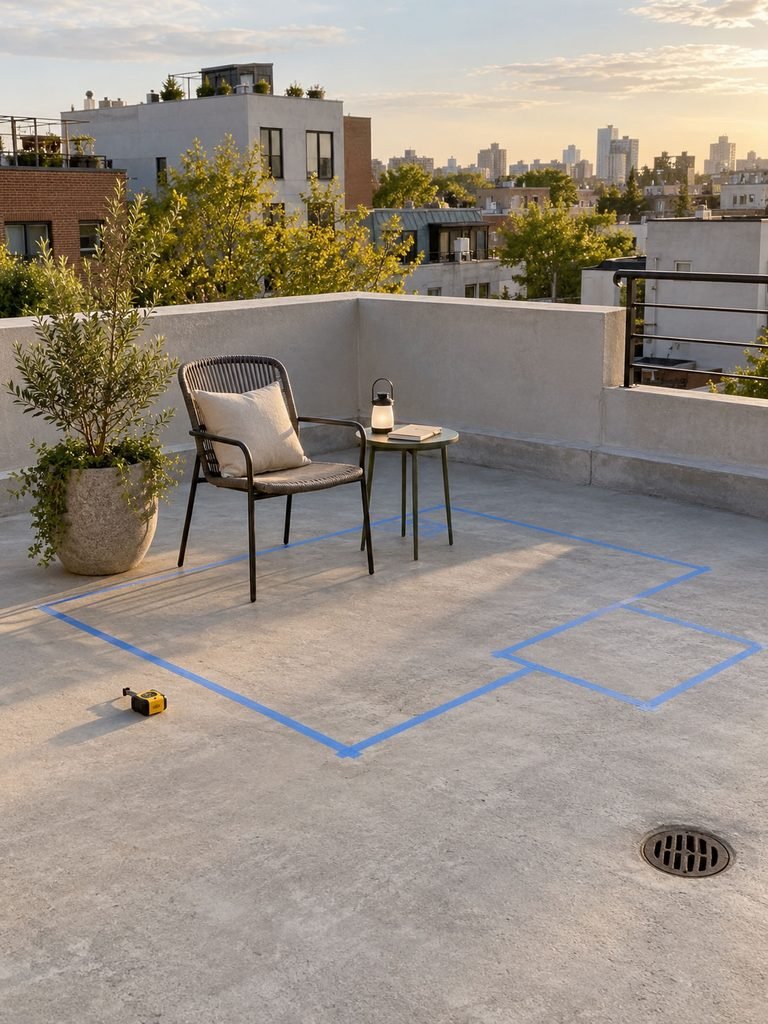
Measure the furniture itself, not the number of advertised seats. Mark the full footprint with painter tape, including where a chair sits after someone pulls it out. Then walk from the rooftop entrance to the seating area and around the furniture.
This is the same principle that makes small patios easier to furnish. Femorias has a more detailed guide to testing patio layouts by size before buying furniture.
Once the main zone works, decide whether the rest of the roof needs anything at all. Empty space is not wasted space when it protects circulation and keeps an outdoor area from feeling like storage.
Make inexpensive pieces look intentional
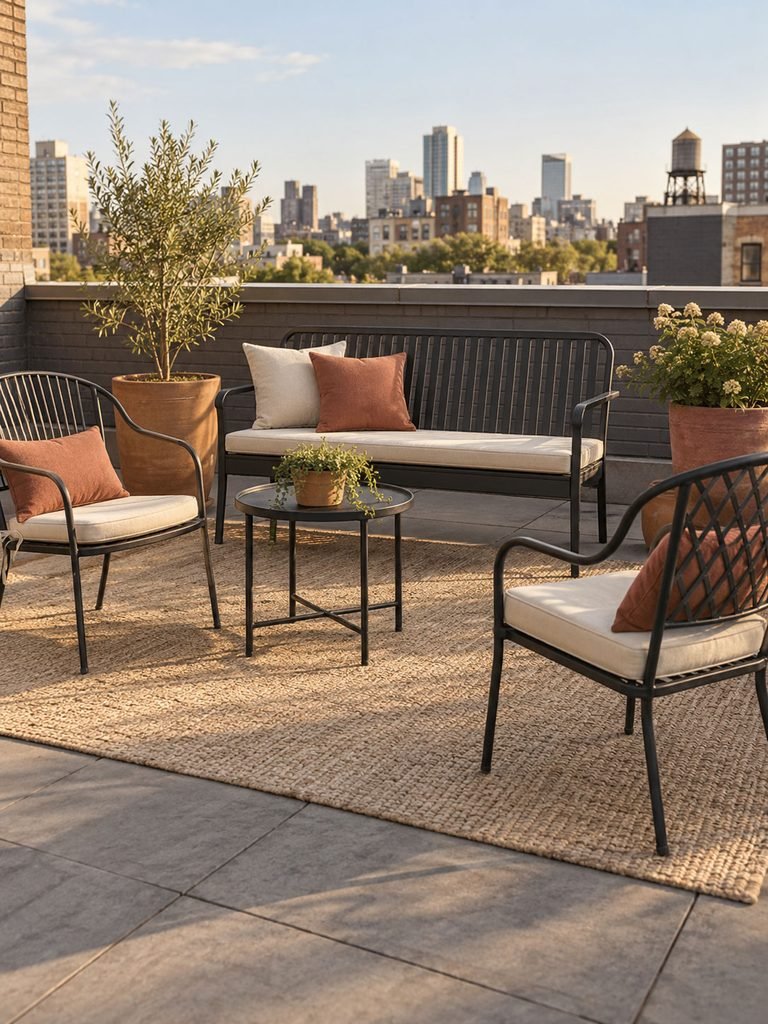
The fastest way to make budget furniture look random is to buy every cheap item that happens to fit. The better approach is to repeat a few visual decisions.
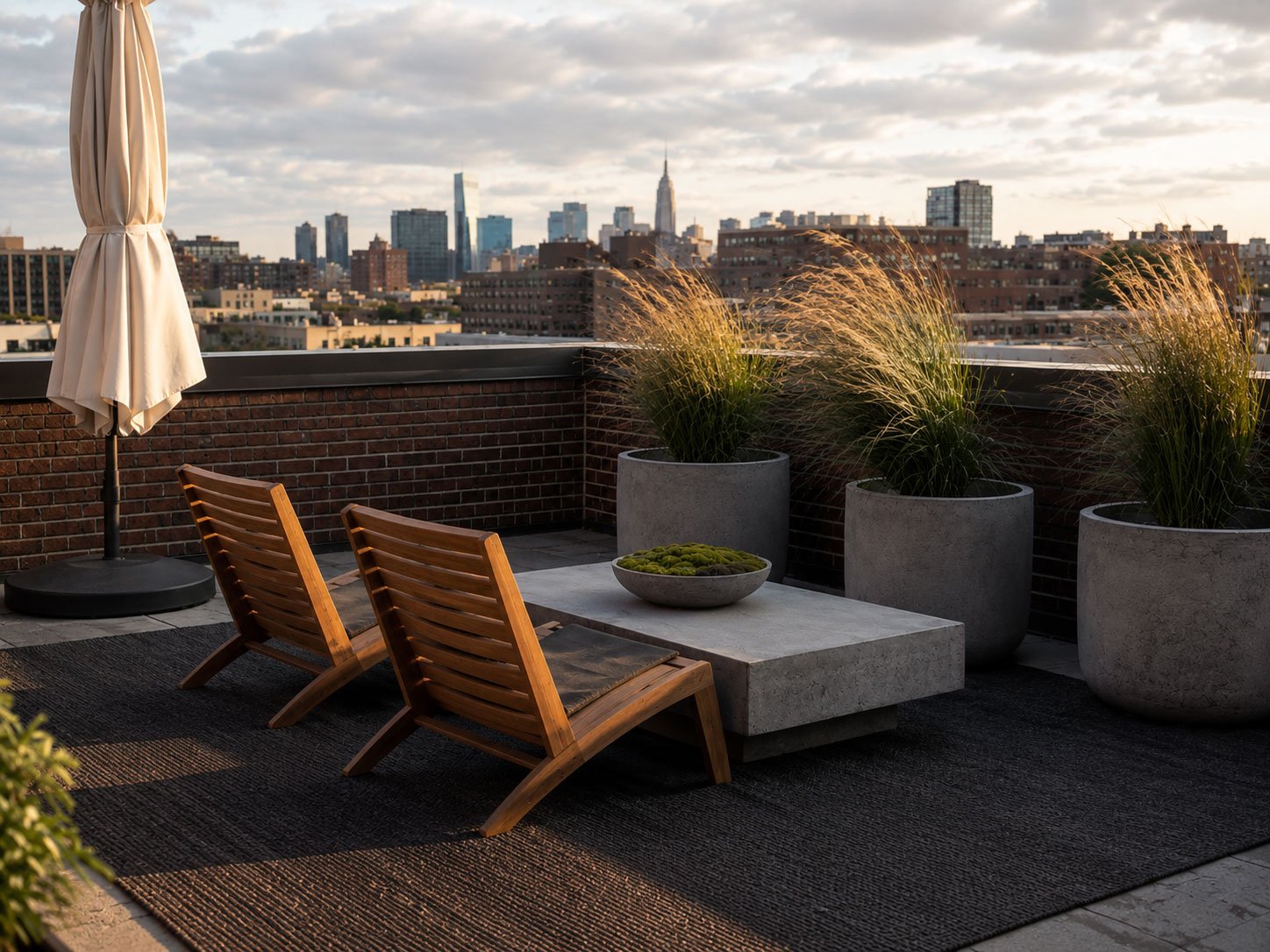
Choose a narrow palette for the largest visible surfaces. That might mean black metal frames, cream cushions and terracotta colored planters. Another roof could use gray furniture, muted green textiles and dark containers. The exact palette matters less than repetition.
Secondhand furniture can save more money than small decorative accessories, especially when the frame is structurally sound and intended for outdoor use. Inspect joints, corrosion, cracked plastic, loose fasteners and unstable legs before deciding that a low price is a bargain.
Scale also matters. One useful planter often has more visual impact than several tiny pots. One properly sized rug can make a seating group feel deliberate. One good lantern looks calmer than a collection of small decorative objects that need to be brought inside whenever the weather changes.
Do not spend your limited budget trying to make every surface decorative. Let the skyline, plants and open sky do some of the work.
Choose materials that can live outside
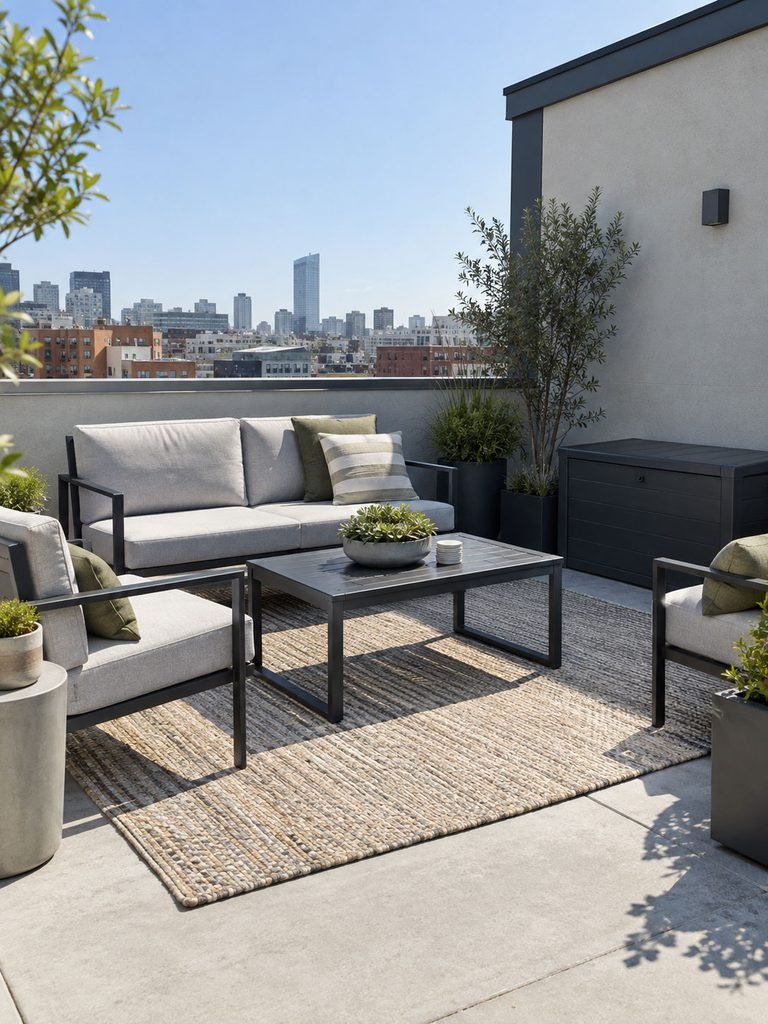
Buy for the environment you actually have. An exposed roof may receive intense sun, rain, temperature swings, dust and more wind than a protected ground level patio.
For rugs, choose a product specifically sold for outdoor use and check its cleaning and drying instructions. A natural fiber rug that looks appealing in a covered porch photograph may be frustrating on a roof that gets direct rain.
The same principle applies to cushions. Removable covers and a realistic storage plan matter more than having six coordinating pillows. If you do not have protected storage, reduce the number of soft items you have to rescue when weather changes.
Furniture should be outdoor appropriate and easy enough to maintain. On a rented rooftop, movable pieces are usually more practical than anything that requires drilling, permanent anchoring, built in framing, or changes to the roof surface.
A large shade sail, tall freestanding screen or broad umbrella may look inexpensive online but behaves very differently when exposed to rooftop wind. Do not install one until you know how it is meant to be secured and whether your building permits it.
Use lighting and plants as the finishing layer
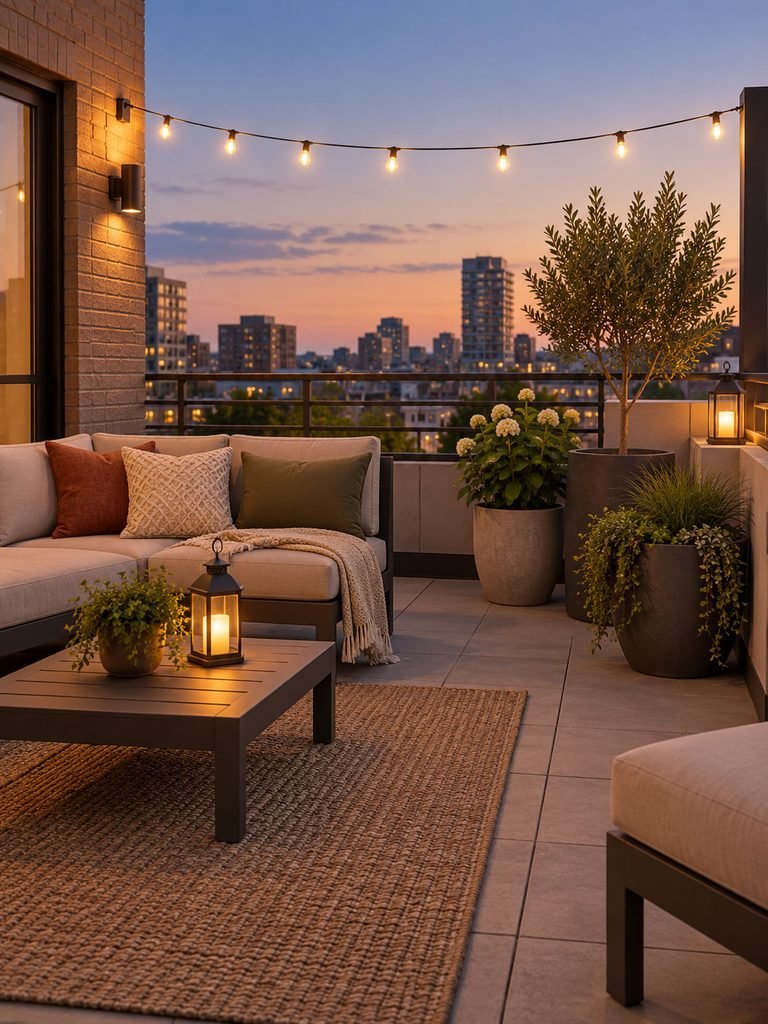
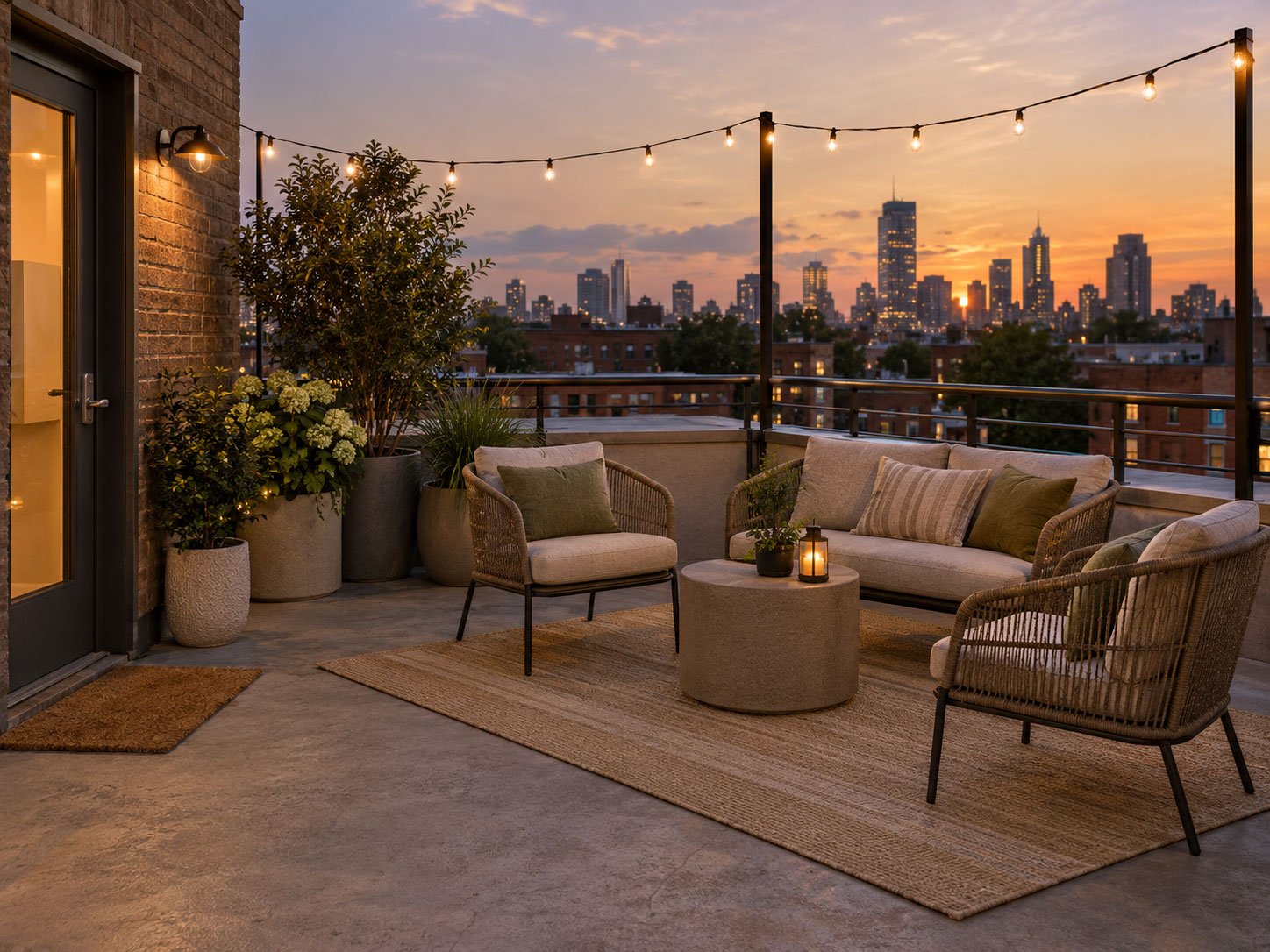
Lighting gives inexpensive furniture more atmosphere after dark, but it should still be treated as outdoor electrical equipment. Use light strings and extension cords marked for outdoor use, inspect them for damage, and use appropriate protected outdoor electrical connections.
The Electrical Safety Foundation International advises using outdoor rated cords and decorations, GFCI protected circuits, secure attachment points, and keeping cords and light strings clear of standing water. ESFI outdoor decoration safety guidance
For a simpler setup, battery lanterns can provide a softer layer of light without adding another long cord to the floor. Warm light is often a good aesthetic choice for a lounge because it feels softer in the evening, but choose brightness and color temperature according to how you actually use the space.
Plants work best when you select for conditions rather than appearance alone. Observe how many hours of direct sun the roof receives, where wind is strongest, and how frequently you can water. Then choose container suitable plants for your climate and exposure.
Do not assume a large planter is harmless decor. Soil and water add weight. At the opposite extreme, a very light planter can become difficult to manage in strong wind. The right container has to make sense for both the plant and the roof.
Skip the cheap ideas that create expensive problems
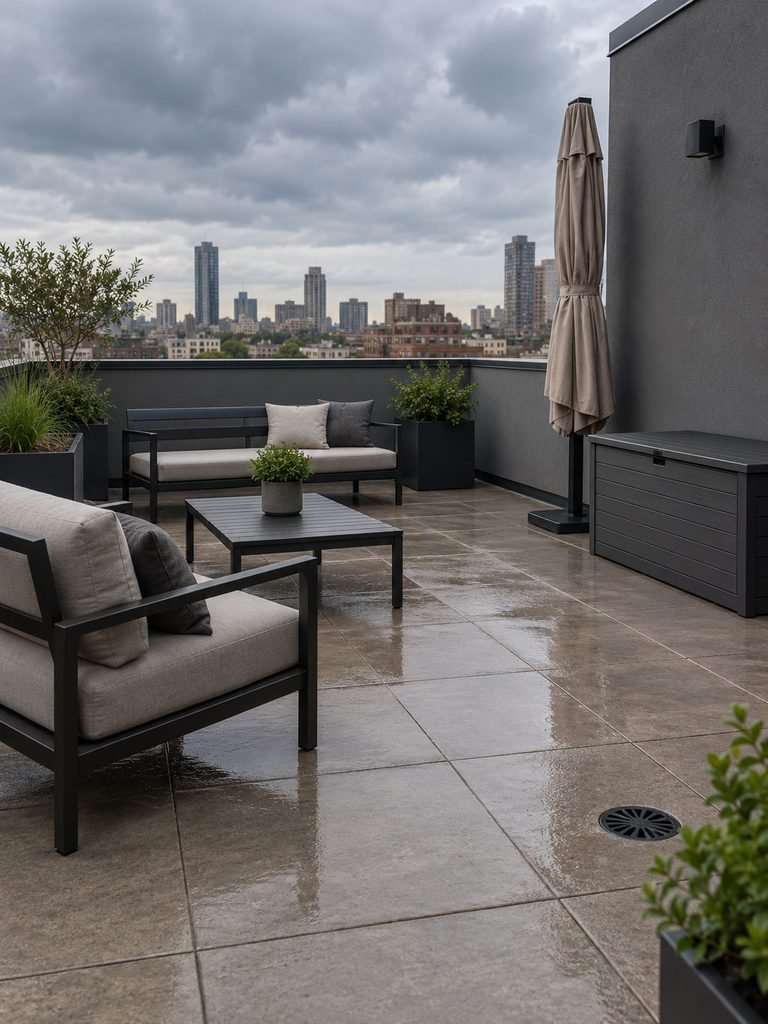
Some inexpensive rooftop ideas cost more because they fail quickly, need constant handling, or create a safety problem.
Pallet furniture is one example. It can look inexpensive in photographs, but it is bulky, may be awkward to move, and reclaimed pallets can have an unknown history. If the goal is low seating, a used outdoor bench or compact metal frame may be simpler to maintain.
Loose curtains are another. Fabric can soften a protected patio, but an exposed roof may turn a long curtain into a constant wind problem. Privacy is better solved according to the actual sight line and the building conditions rather than automatically hanging more fabric.
Do not buy numerous tiny accessories simply because each one is inexpensive. Rooftops already have strong visual elements, including railings, mechanical equipment, neighboring buildings and the skyline. Small decorative clutter can make the space busier rather than richer.
Wind should also influence every lightweight purchase. Femorias has a separate guide to windproof rooftop decor for exposed city roofs, which is the better place for detailed guidance on stability and takedown planning.
Finally, do not assume a fire bowl, grill or similar heat source is acceptable on a roof. Fire codes and building rules vary, and NFPA guidance demonstrates that grills and similar equipment can be restricted on balconies and other elevated outdoor areas. Check your building and local fire requirements before bringing any open flame or cooking appliance onto a rooftop. NFPA guidance on grill location and fire code requirements
Questions to answer before you start
What makes affordable rooftop decor look more expensive?
Clear layout, consistent materials and restraint do more than a large accessory budget. Finish one seating area, repeat a limited color palette, use an outdoor rug at the right scale, then add a few substantial plants and evening light.
What should I buy first for a bare rooftop?
Start with the furniture needed for the roof’s primary use. A comfortable chair or compact seating group is more useful than buying pillows, planters and lights before you know where anyone will sit.
Can renters decorate a rooftop?
Only if the rooftop is an approved usable space and the building permits the changes you want to make. Favor movable furniture and removable accessories. Ask before drilling, attaching screens, hanging overhead structures or altering any building surface.
Is an outdoor rug worth buying?
It can define a seating area and visually soften concrete, but use a rug intended for outdoor conditions and keep roof drainage fully accessible.
What works best on a windy rooftop?
Low, stable furniture and decor that does not present a large surface to the wind are easier to manage. Anything light enough to move unexpectedly should have a clear storage or takedown plan.
If you are starting with bare concrete, mark one seating footprint first. Bring up one useful piece you already own and live with the layout before adding the next layer. A rooftop becomes more expensive looking when each purchase solves a real problem, not when every empty corner gets filled.