Windproof rooftop decor ideas for exposed city roofs

Most rooftop decor advice was written for a backyard. It assumes soil you can stake into, a fence that breaks the wind and a shed for the cushions. A roof gives you none of that. It also hands you faster air than the sidewalk below. Wind speeds up with height, and buildings squeeze it around their corners.
So the useful question up there is not which style you like. It is what stays put when the forecast turns.
Windproof rooftop decor means choosing pieces heavy, low and open enough to sit still in gusts. Weight beats straps. Wide bases beat tall silhouettes. Mesh beats solid panels. Anything you cannot bring in within five minutes will eventually be out in weather you did not choose.
What windproof rooftop decor means
Windproof rooftop decor is furniture, textiles, planting and lighting picked so that everyday gusts move nothing. It also includes a plan for the pieces that cannot take a storm. Nothing outdoors is truly windproof, so treat the phrase as a planning standard rather than a product claim.
Three properties decide how anything behaves up there. Weight resists sliding. A wide, low footprint resists tipping. Openness, meaning slats, mesh or a vent, gives moving air less to push.
Most rooftop failures involve a piece that scores well on one property and badly on the rest. A tall fiberglass planter has a wide base and no mass. A folding bistro chair sits low and stays hollow. Judge each purchase on all three.
The wind numbers worth knowing on your roof
Two numbers matter. One is the speed where your roof stops being pleasant. The other is the speed where you start carrying things inside.
The National Weather Service publishes a plain visual guide to estimating wind speed from what you can see. Wind that lifts dust and loose paper and drives it along runs roughly 13 to 18 mph. Large branches in continuous motion, plus whistling in overhead lines, means 25 to 31 mph. That same guide notes umbrellas get difficult to use in that range. Whole trees moving puts you at 32 to 38 mph.
Watch your roof against those clues on a few breezy afternoons. Note what moves first. Usually it is cushions, then a rug corner, then anything with a canopy.
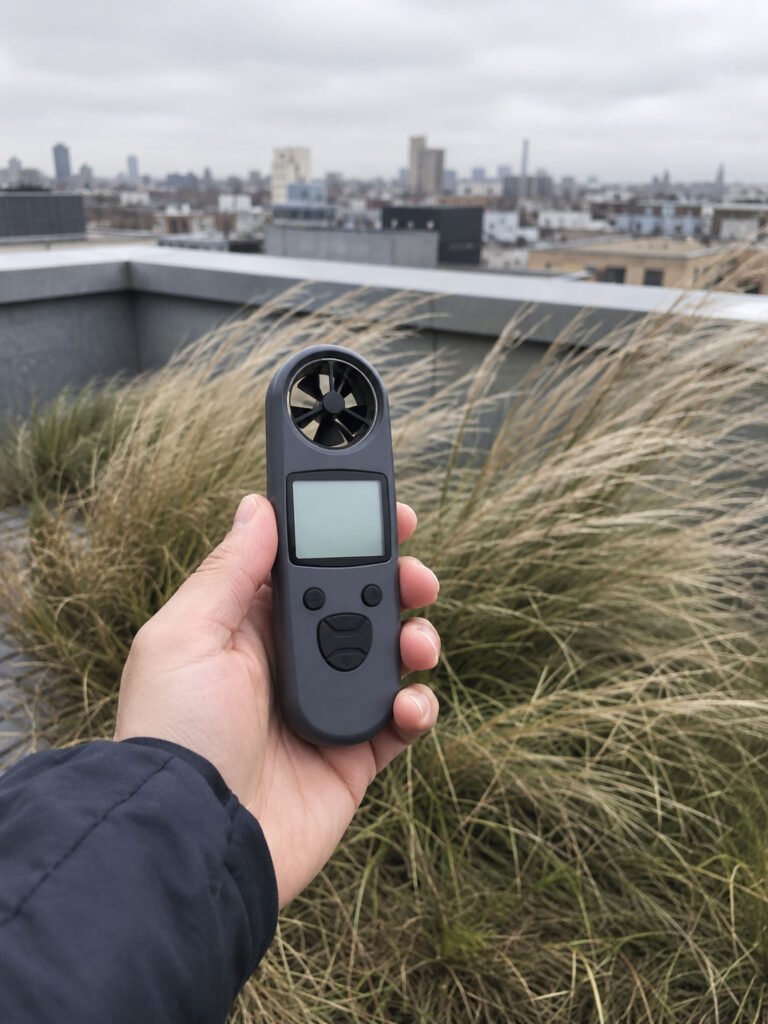
Then set your own takedown number. For most setups, forecast gusts near 25 mph is a sensible line for closing umbrellas and clearing loose pieces. A handheld wind meter is cheap and settles arguments. Weather apps report a nearby station, not your parapet.
Seating and tables that stay where you put them
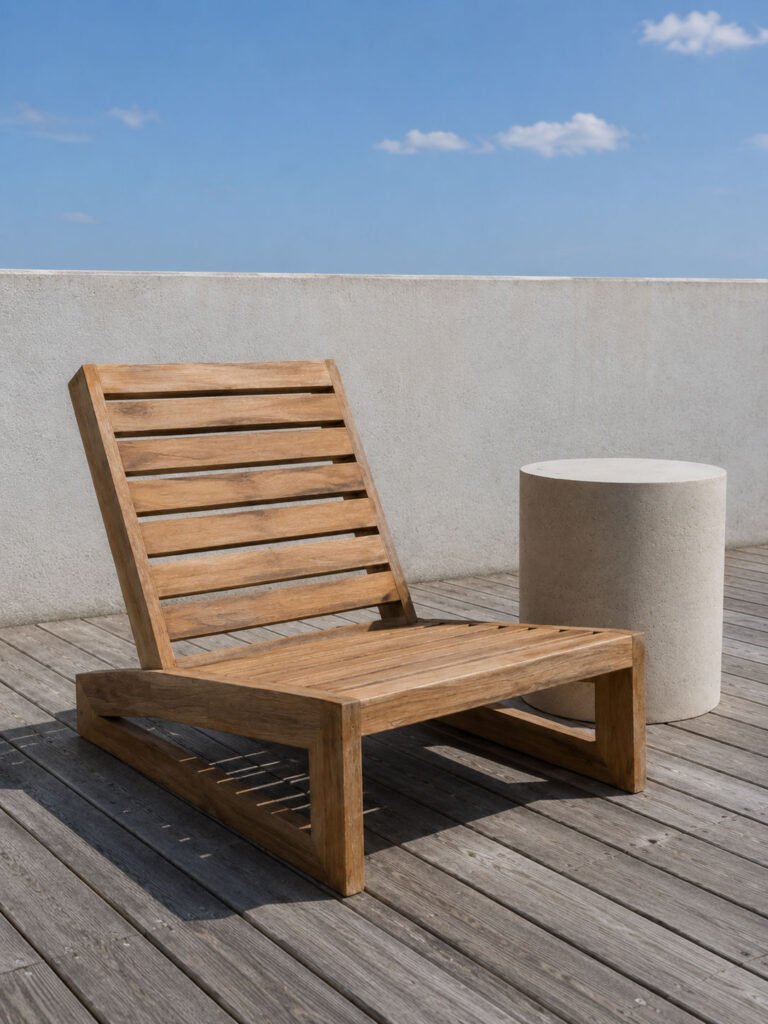
Buy seating you would find annoying to drag across the roof yourself. Weight is the whole answer here. No styling trick substitutes for it.
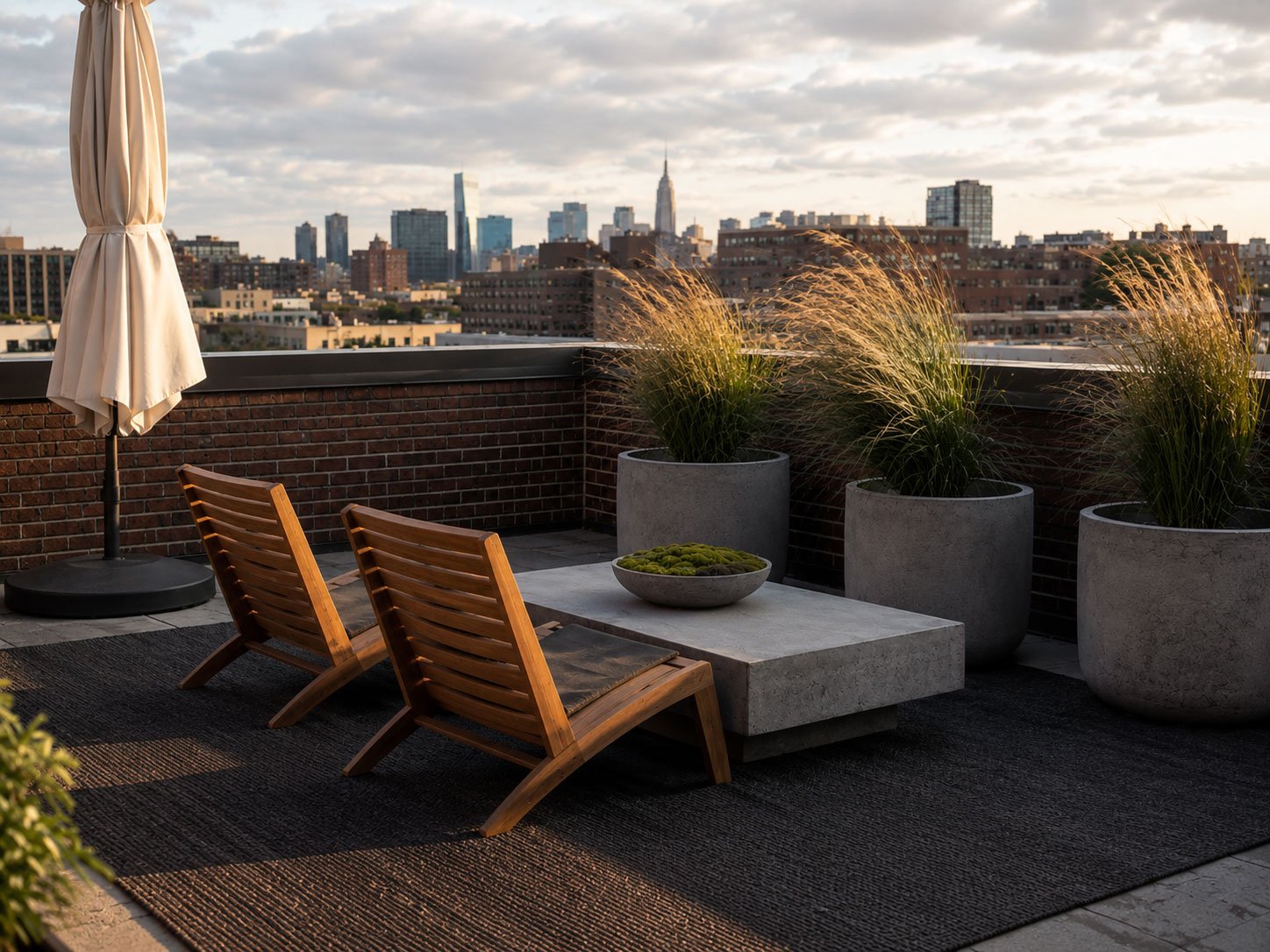
Teak, eucalyptus and other dense hardwoods work well. So do powder coated steel, concrete and stone. The pieces that end up in the alley are hollow aluminum frames, folding bistro sets, stacking plastic chairs and woven resin. Resin wicker in particular photographs as substantial and weighs almost nothing.
Shape does the rest. A slatted seat and back let air through, while a solid shell catches it like a paddle. Low pieces catch less than tall ones. That is why a lounge chair often rides out gusts that tip a dining chair.
Two moves help more than any purchase. Keep seating away from parapet edges and building corners, where air accelerates and swirls. Then link light pieces into heavy ones. Modular sofas that bolt together behave as one mass, and some makers sell ballast for hollow frames.
Cushions and textiles, the pieces that leave first
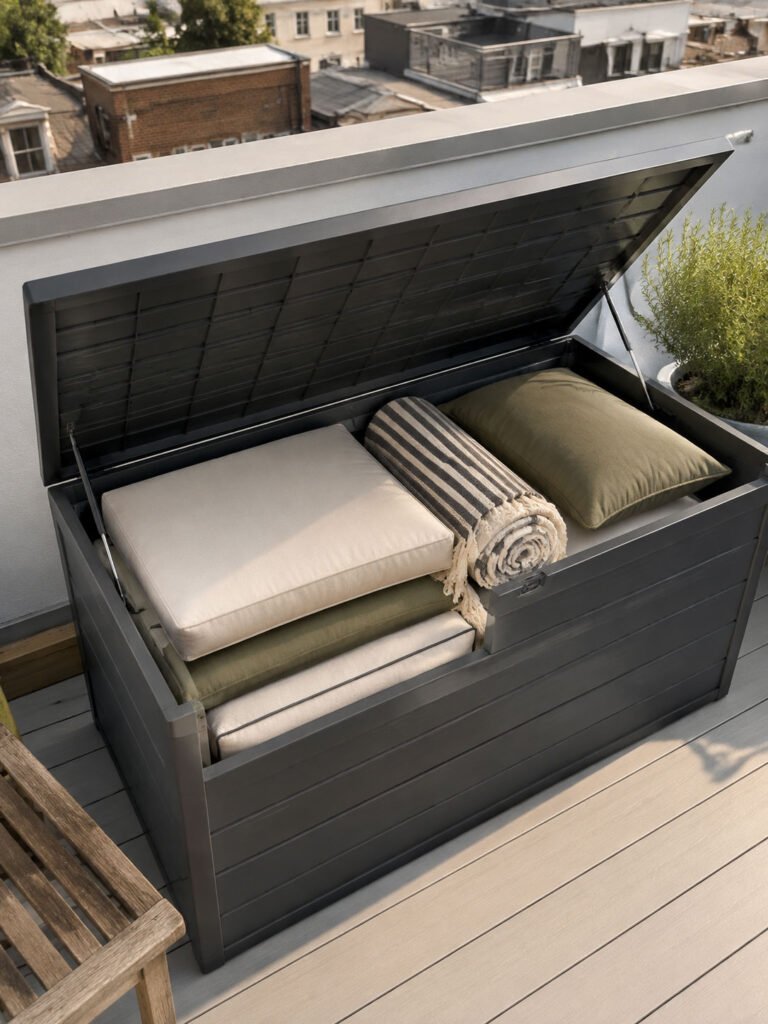
Cushions go over the edge long before the furniture does. Decide where they live before you buy them, because storage is part of the purchase.
A lidded deck box with weight in it works, and so does a bench with a storage seat. Bring cushions in at the end of the evening, the way you would bring in a book. For the hours you are out there, fabric ties, hook and loop straps or one bungee across the seat hold them in ordinary breezes.
Loose textiles are worse than cushions. They carry more area for less weight. Outdoor curtains, throws and tablecloths all need tying down or taking in. Table covers should clip to the rim, and tablecloth weights cost very little.
One material note. Quick dry foam with a mesh bottom sheds water in hours, which matters when dry storage is three floors down.
Rugs on a windy roof
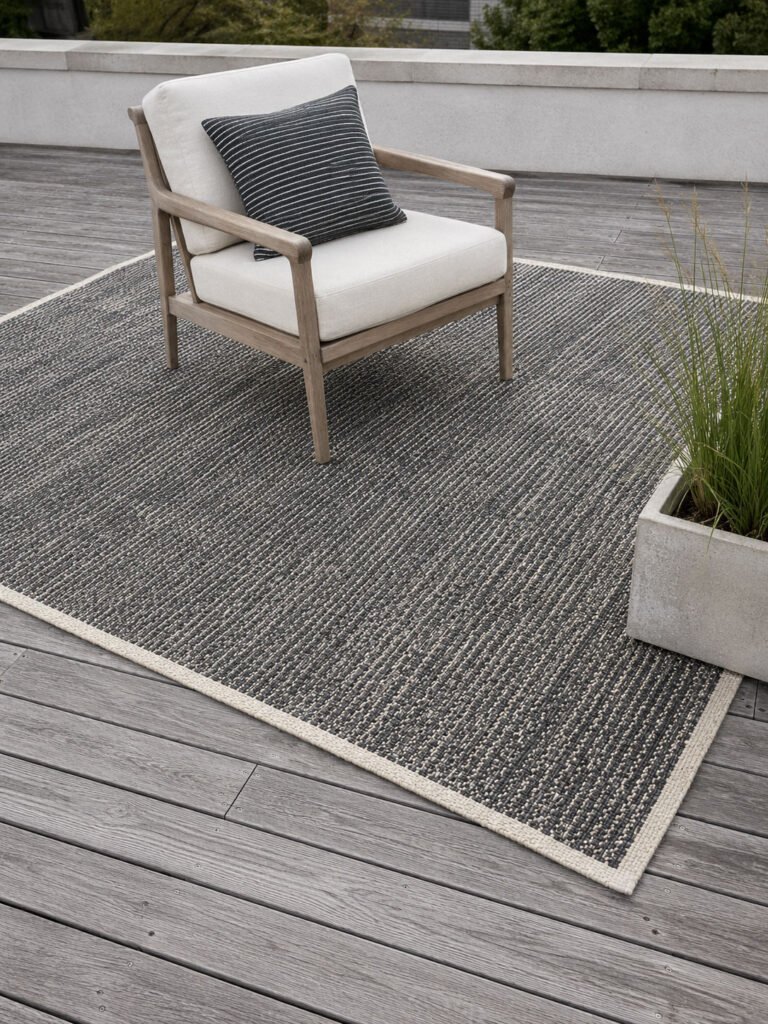
A rug on a roof fails at its edges. Wind slips under one corner, lifts it like a page and takes the whole thing. So every rug up there needs weight sitting on it.
Put all four legs of the seating on the rug where the layout allows, rather than only the front legs. Choose a flat weave with real mass instead of the lightest option in that size. Thin printed rugs curl at the corners within a season. Rug weights or a pair of heavy planters hold the corners furniture cannot reach.
Treat a rug as fair weather decor on an exposed roof. Roll it and bring it in for storms and for the off season. It also traps water against whatever it covers, and our guide to outdoor rugs on grass, concrete or decking covers that surface by surface.
Never glue, tape or fasten a rug to a roof. Adhesives and fasteners can damage roofing, so ask building management first.
Planters that stay upright and slow the wind

Planters are the most useful windproof rooftop decor you can own. A heavy pot does two jobs. It stays put, and it breaks the flow of air for everything behind it.
Choose wide over tall. A container roughly as wide as it is high resists tipping. A tall narrow pot gives the wind a lever. Glazed ceramic, concrete and thick composite carry useful weight. Fiberglass, resin and thin plastic need ballast or a heavier outer container.
Soil weight changes with water. A pot that felt immovable in spring can go over in August after a dry week. Regular watering is a stability habit as well as a plant care one.
Plant for the conditions. Narrow leaves and flexible stems handle steady wind, which suits ornamental grasses, rosemary and juniper. Broad soft foliage shreds and browns by midsummer.
Line the heaviest planters along the side the wind arrives from. A low run of solid containers takes the edge off the air crossing the seating area behind them.
Shade you can take down in two minutes
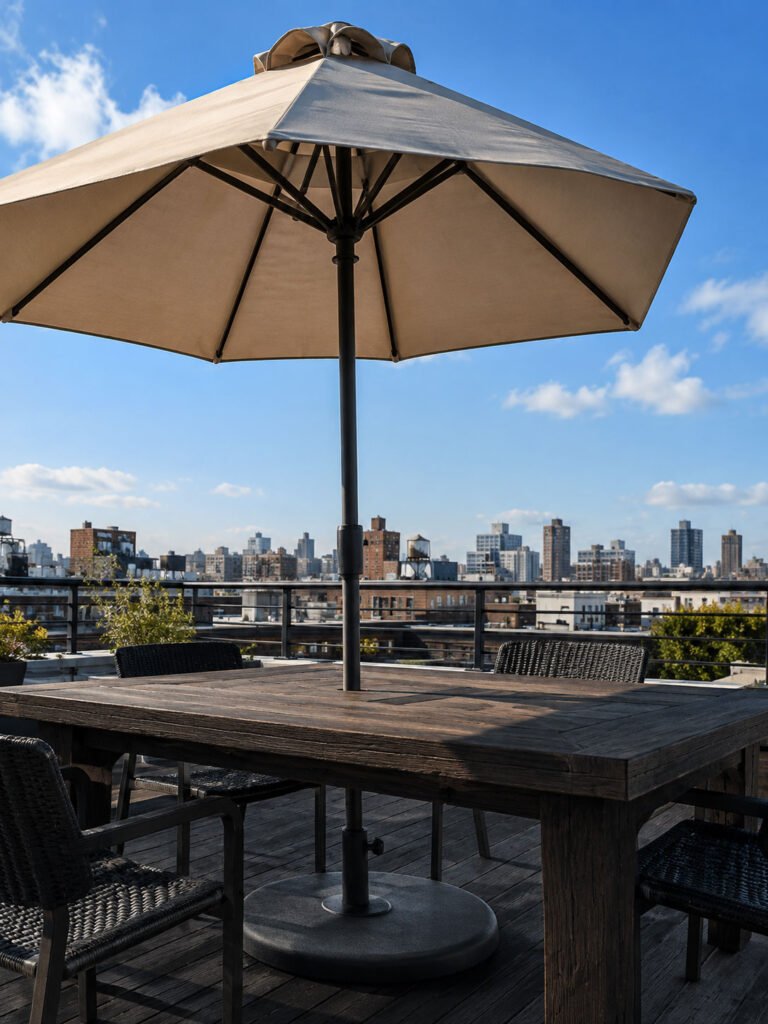
Every canopy on a roof is a sail. So the goal is shade that comes down fast, not shade that fights the weather. Choose the version you can close alone, quickly, in the dark.
A market umbrella through a heavy table is the steadiest common option, because the table shares the load. A cantilever umbrella needs a much larger base. Manufacturers publish a minimum base weight for each model, and that figure is a floor rather than a target. Add a vented canopy and a tilt mechanism.
Close the umbrella every time you leave the roof, even for ten minutes. Gusts arrive faster than you can get back up the stairs.
Shade sails and pergolas need anchor points fixed into building structure. That means permission, an installer who works on roofs and a written sign off. Nothing rated for a backyard fence line is rated for a parapet.
Lighting that survives a gusty evening
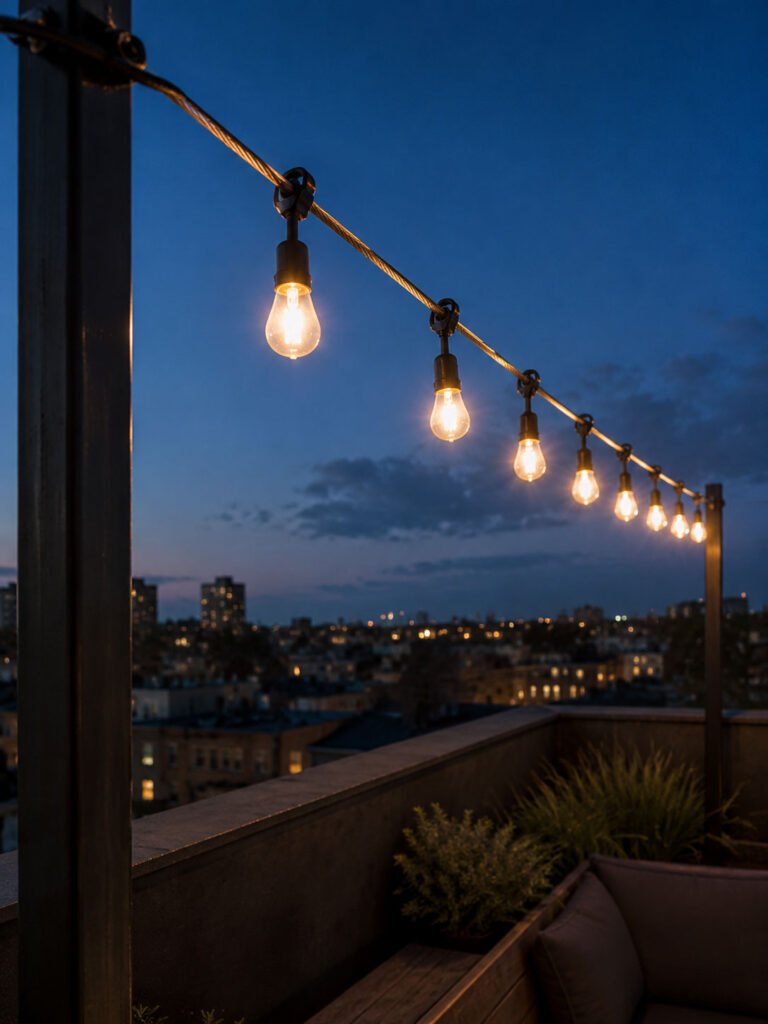
Rooftop lighting needs tension and weight. Strung lights fail when a long span swings freely and works its fastenings loose.
Run a stainless steel guy wire between two solid points and tension it. Fasten the light strand to that wire with UV rated cable ties. Keep spans short and take the sag out. Bulbs that thread into a socket cage survive more than bare glass, and shatterproof bulbs are worth the small extra cost.
Lanterns need weight in the base or a hook that closes. Paper shades, hanging glass and light metal lanterns become projectiles. Keep them for calm evenings or skip them.
Open flame belongs in a different category. Candles blow over and embers travel. Fabric plus wind is a poor combination in a space with one exit. Flameless candles give the same low glow, and any fire feature needs building permission and calm conditions.
Screens, privacy and the sail problem
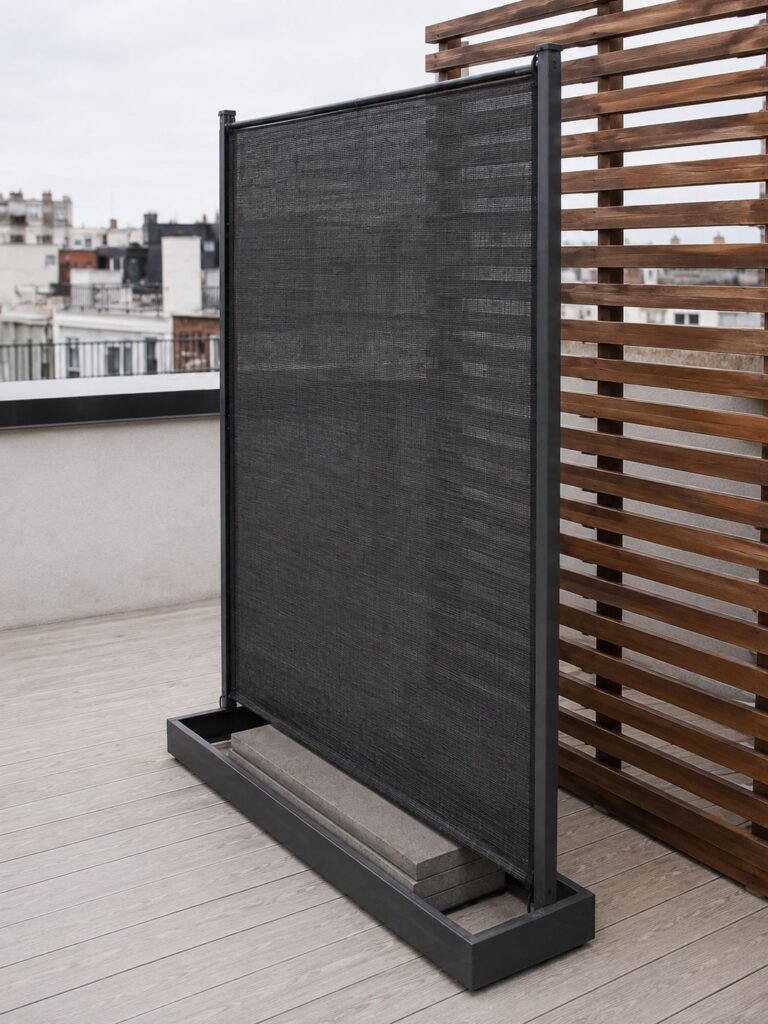
A solid privacy screen is the riskiest object on an exposed roof. It presents a flat face to the wind and usually stands on a narrow base. Air that passes through a screen cannot push it over.
Pick materials that breathe. Privacy mesh, slatted panels with real gaps and reed fencing all flex and let gusts through. Mesh is normally sold by the percentage of view it blocks. Solid boards, plastic sheeting and tight canvas do the opposite.
Weight the base within the screen’s own footprint, using pavers or sandbags. Keep the panel low and long rather than tall and narrow. Tall plants in heavy containers do the same job with less risk.
The angles work the same way one floor down. Our guide to balcony privacy from neighbors above walks through the sight line test that decides where a screen needs to stand.
A five minute takedown routine
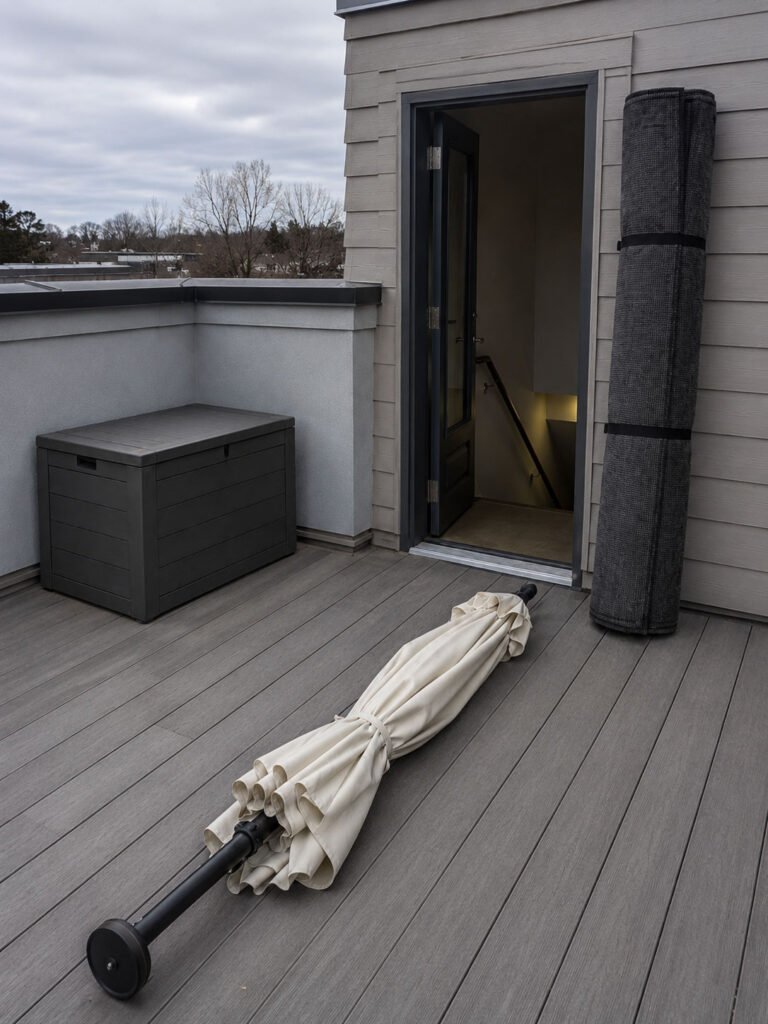
Build one routine and run it whenever gusts are forecast above your number. Order matters, because the fastest wins come first.
- Close and lower the umbrella, then lay it flat or take it inside.
- Put every cushion, throw and tablecloth in the storage box and shut the lid.
- Roll the rug and stand it inside the stairwell door.
- Move light pots, lanterns and small decor to a wall away from the parapet.
- Group light furniture into a corner, or stack and strap it.
- Walk the roof once for loose items: cups, plant labels, tools and anything on a ledge.
The circuit takes about five minutes on a small roof once you have done it twice. Keep the storage box near the door, so step two never becomes a trip.
Mistakes that cost people furniture
- Buying the lightest furniture in the showroom because it was easy to carry upstairs.
- Leaving an umbrella open while running down for ice.
- Choosing a solid privacy screen for an exposed corner.
- Relying on grip gel or adhesive pads, which resist sliding but do nothing against lift.
- Storing cushions in a box too light to stay shut.
- Hanging anything from a railing so that it overhangs the street.
Rules, safety and the person on the sidewalk
Anything that leaves your roof lands where people are. A cushion can hurt someone from six floors up, and you may be held responsible for it.
Ask building management in writing before anything is attached, drilled or hung. Keep the reply. Leases and association rules commonly ban items fixed to railings, changes visible from the street and anything that blocks roof maintenance.
Keep the roof drain and any scupper clear. A planter or rolled rug parked over a drain leaves standing water behind. Keep the path to the door open, and check that furniture near a parapet cannot be climbed by a child.
If your roof is not designed and permitted for people, decorating is not the first question. A roofer or your building manager can tell you what the surface and structure allow.
Frequently asked questions
How much wind does it take to move patio furniture on a roof?
Light hollow pieces start sliding and tipping in the range that visibly moves large branches, roughly 25 to 31 mph. Cushions go earlier than that. Heavy teak, concrete or steel furniture generally stays put well past that point. Height and building shape change the picture, so watch your own roof rather than trusting a street level forecast.
What is the best furniture for a windy high rise balcony or rooftop?
Look for dense material, a low profile and open construction. Slatted teak or eucalyptus works, as does powder coated steel with an open frame, plus concrete for tables and side pieces. Modular seating that bolts together adds effective weight without bulk. Skip folding aluminum, stacking plastic and resin wicker, which are the pieces most often lost from upper floors.
Can I use a patio umbrella on a rooftop deck, or is it a bad idea?
You can, with the right setup and the discipline to close it. Use a market umbrella through a heavy table, a base at or above the stated minimum weight, a vented canopy and a tilt function. Close it whenever you leave. Take it down entirely when gusts near 25 mph are forecast, since an unattended open umbrella is the most common rooftop loss.
Do furniture anchors or grip pads work on a roof deck?
Grip pads and non slip gel resist sliding, which helps a chair stay square on a smooth deck. Neither resists lift, and lift is what carries furniture over a parapet. Straps to a structural railing post work better, provided the railing is sound and your building allows it. Nothing should be fastened into the roof surface without professional advice.
How do I stop rooftop planters from blowing over?
Choose containers roughly as wide as they are tall, in glazed ceramic, concrete or thick composite. Keep soil evenly moist, because dry pots weigh far less than they did in spring. Set light pots inside heavier outer containers. Group them in a row along the windward side, and keep tall plants well inside the railing line.
Start with the two heaviest things you own
Place your two heaviest pieces first, usually a table and a pair of planters. Everything lighter can then sit in their shelter, and the layout stops being a guess.
Then run the takedown routine once on a calm day and time it. Anything slow or awkward is the piece to change. That single test does more for a roof than another shopping list.
Windproof rooftop decor gets simpler from there, because you know what stays and what comes down. The rooftop ideas on femorias.com assume that groundwork is in place, including our guide to affordable rooftop decor with a high end feel.