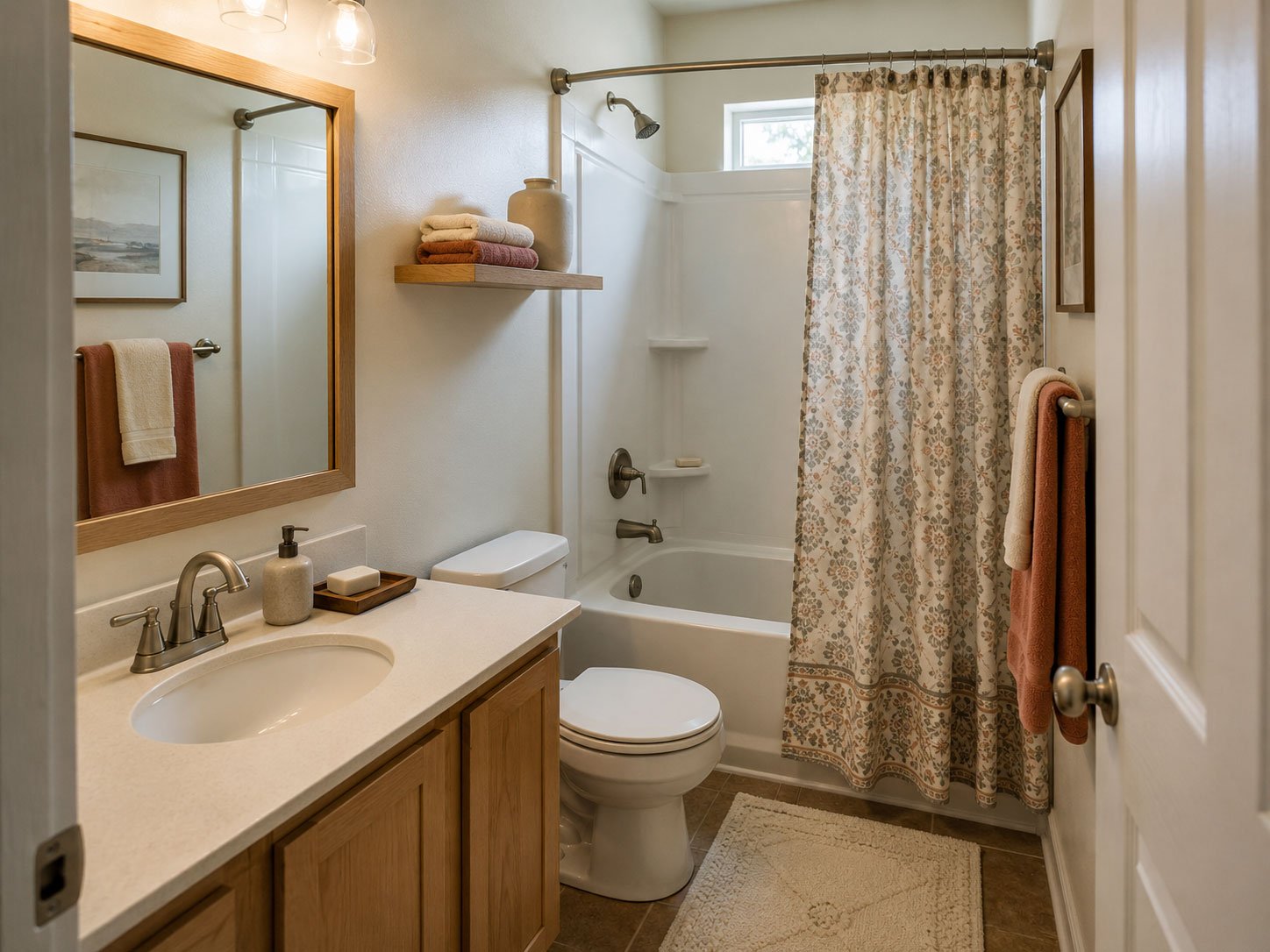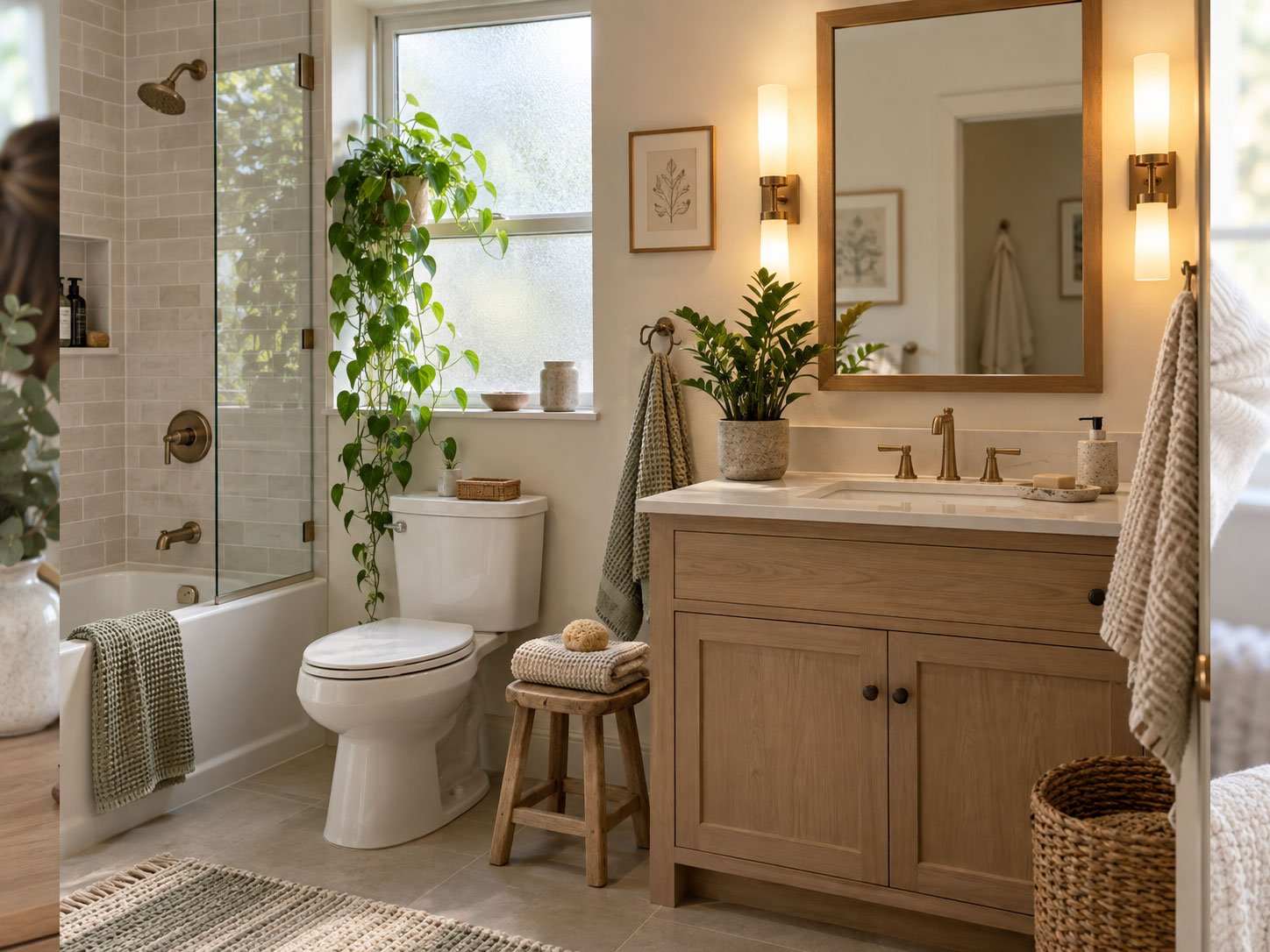
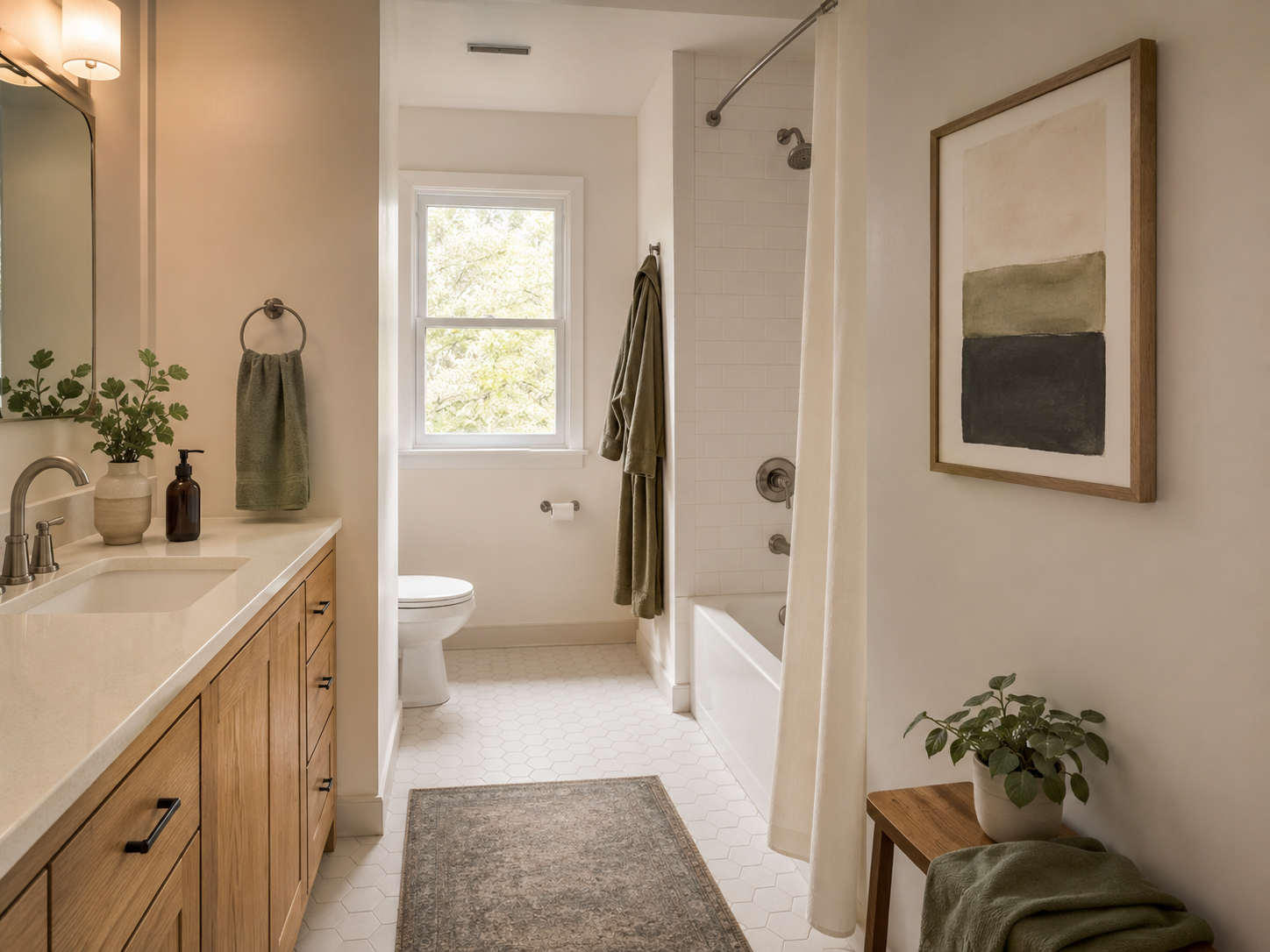
Bathroom Wall Art That Can Handle Humidity: What to Hang and Where

Bathroom wall art can work in a humid room, but the safest choice depends on where you hang it and how long moisture stays in the air.
A hard, easy to wipe decorative piece such as ceramic, glass or an appropriately finished metal piece is usually a more forgiving candidate for a damp bathroom than exposed paper or fabric. Framed prints can also work on a relatively dry wall when the bathroom has good ventilation. Valuable photographs, watercolors and original works on paper deserve a more stable room.
The biggest mistake is treating the whole bathroom as one environment. A wall near the door may stay dry while another wall collects droplets every time someone showers. Choose the wall first. Then choose the art.
Check how damp the wall gets before choosing art
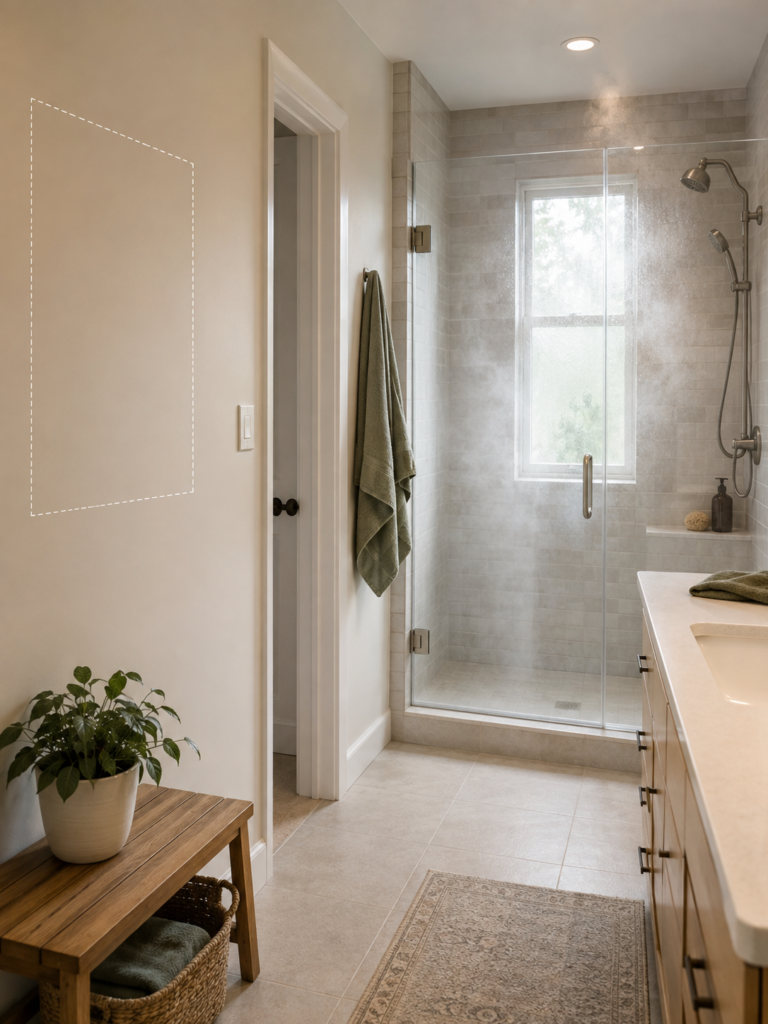
You do not need special equipment to make the first decision. Look at the bathroom shortly after the longest shower it normally gets.
Ask four questions:
- Are there visible droplets on this wall?
- Does the mirror stay fogged for a long time?
- Does the wall or frame location feel damp afterward?
- Is the proposed spot close enough to the shower, tub or sink to receive splashes?
If the answer to the first, third or fourth question is yes, paper art is a poor choice for that location. Move the artwork to a drier wall or choose a less absorbent decorative object.
The U.S. Environmental Protection Agency recommends keeping indoor relative humidity below 60 percent when possible and ideally between 30 and 50 percent. It also recommends using a bathroom fan or opening a window while showering to reduce humidity. You can read the EPA’s guide to moisture and mold control for more detail.
A bathroom does not have to meet museum conditions before you hang an inexpensive print. The important distinction is that a room with persistent condensation is a harder environment for porous artwork than one that dries quickly.
Which bathroom wall art materials make the most sense?
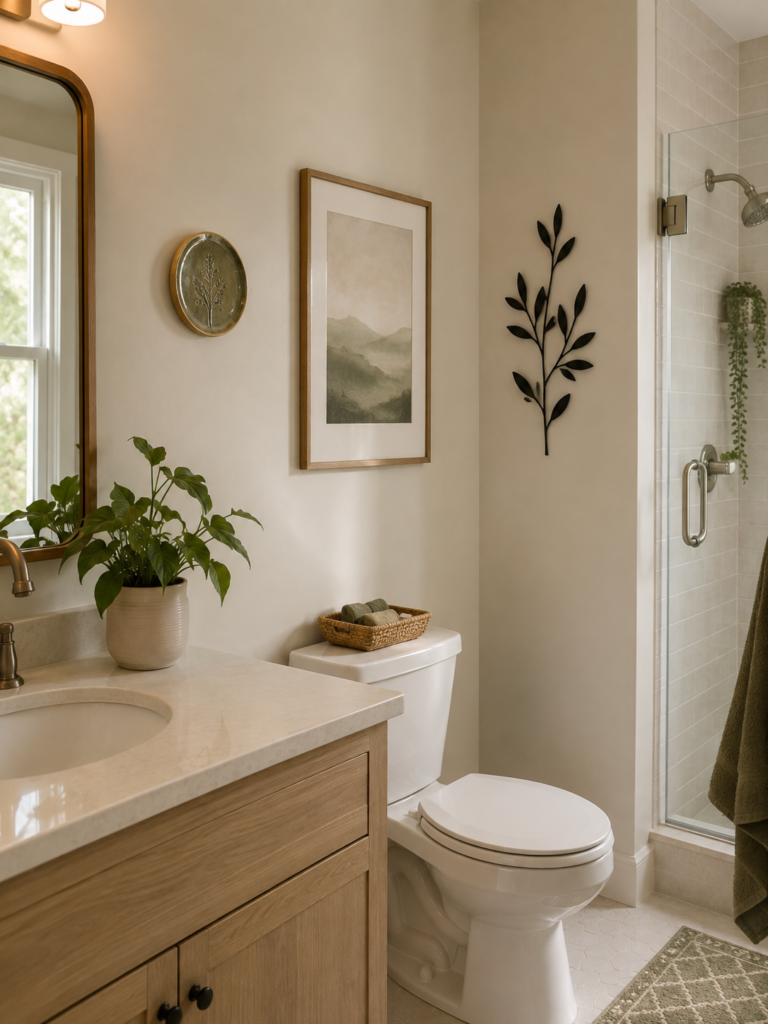
No decorative material should be described as automatically waterproof unless its manufacturer specifically rates it that way. Bathroom conditions vary too much.
A better approach is to consider how absorbent the art is, how it is constructed and whether water can reach it.
| Type of wall art | Practical bathroom use | Main concern |
|---|---|---|
| Ceramic or glazed decorative pieces | Good candidate for damp rooms when securely mounted | Hanging hardware and grout or wall condition |
| Glass wall decor | Good on dry walls with secure installation | Breakage and water spots |
| Finished metal wall decor | Often practical outside direct splash areas | Some finishes or fasteners can corrode |
| Solid synthetic or acrylic decorative panels | Potentially practical if the maker approves humid room use | Printing layers, adhesives and mounting systems vary |
| Framed paper prints | Suitable mainly on dry walls with good ventilation | Paper can absorb moisture and distort |
| Photographs | Better in a dry zone with protective framing | Humidity, condensation and image deterioration |
| Canvas and textile art | Use cautiously in bathrooms with showers | Fibers and backing materials can respond to moisture |
| Original or valuable paper art | Better displayed elsewhere | Long term humidity and light exposure |
The EPA’s broader advice for damp areas is to favor materials that do not absorb water and remain stable when wet. That principle is useful when comparing decorative options, although it does not mean every metal, glass or plastic art product is designed for direct water exposure.
Paper deserves more caution. The Canadian Conservation Institute notes that paper absorbs moisture quickly and that prolonged high relative humidity can contribute to swelling, distortion and mold growth. Its basic care guidance for works of art on paper is written for preservation rather than bathroom decorating, but it explains why valuable paper art and persistently damp rooms are a poor combination.
Can you hang framed prints in a humid bathroom?
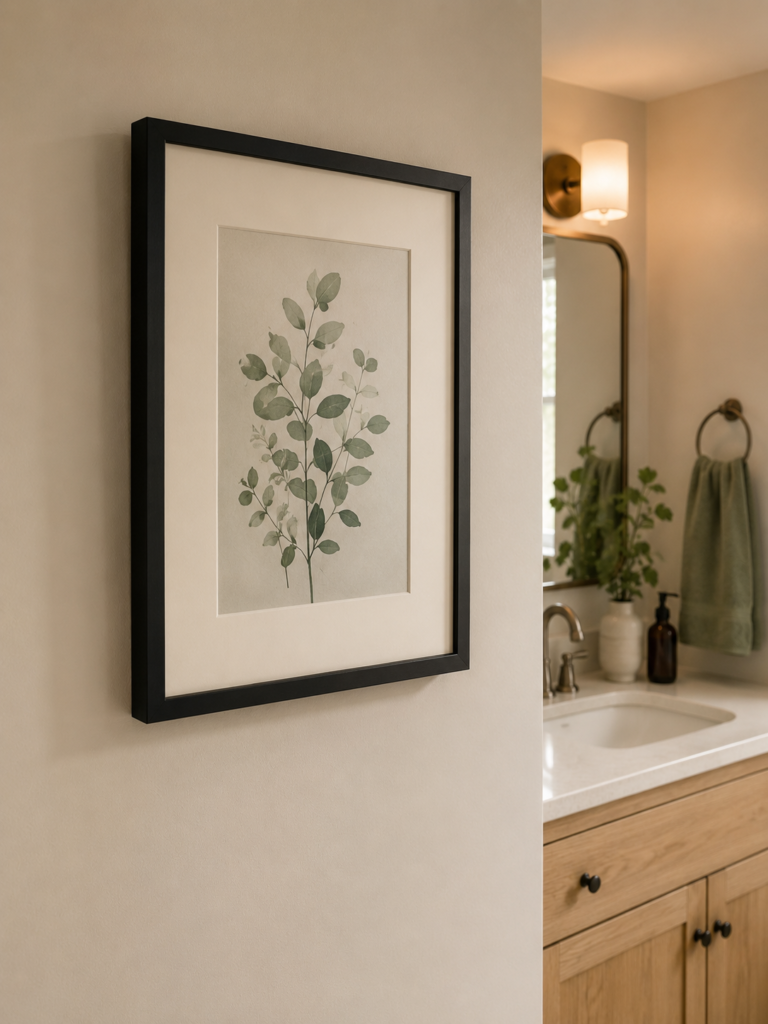
Yes, in the right location.
A framed print is most reasonable when the wall remains dry, the room clears steam effectively and the print is replaceable if the environment eventually affects it. Do not assume that putting paper behind glass makes it humidity proof.
Proper framing does help. The Canadian Conservation Institute explains that glazing protects art and recommends leaving a space between the artwork and the glass or acrylic. Its guidance notes that moisture can condense on the inside of glazing, which is one reason the paper should not touch it. See its detailed advice on glazing materials for framed works on paper.
For an inexpensive bathroom print, look for:
- Glass or acrylic glazing
- A mat or spacer that prevents the print from touching the glazing
- A sound backing board
- A frame material and finish appropriate for the room
- Secure hanging hardware
Acrylic glazing is lighter and less brittle than glass, but it can scratch more easily. Glass is more rigid and scratch resistant, but it is heavier and breakable. Neither choice fixes a bathroom that leaves the artwork wet after every shower.
Do not hang a sentimental watercolor, signed print or irreplaceable family photograph simply because the frame looks sealed. The Library of Congress recommends relatively dry, stable environments for works on paper and advises extra caution with items of personal, monetary or historic value. Its care guide for works on paper gives useful preservation guidance.
Where should bathroom wall art go?
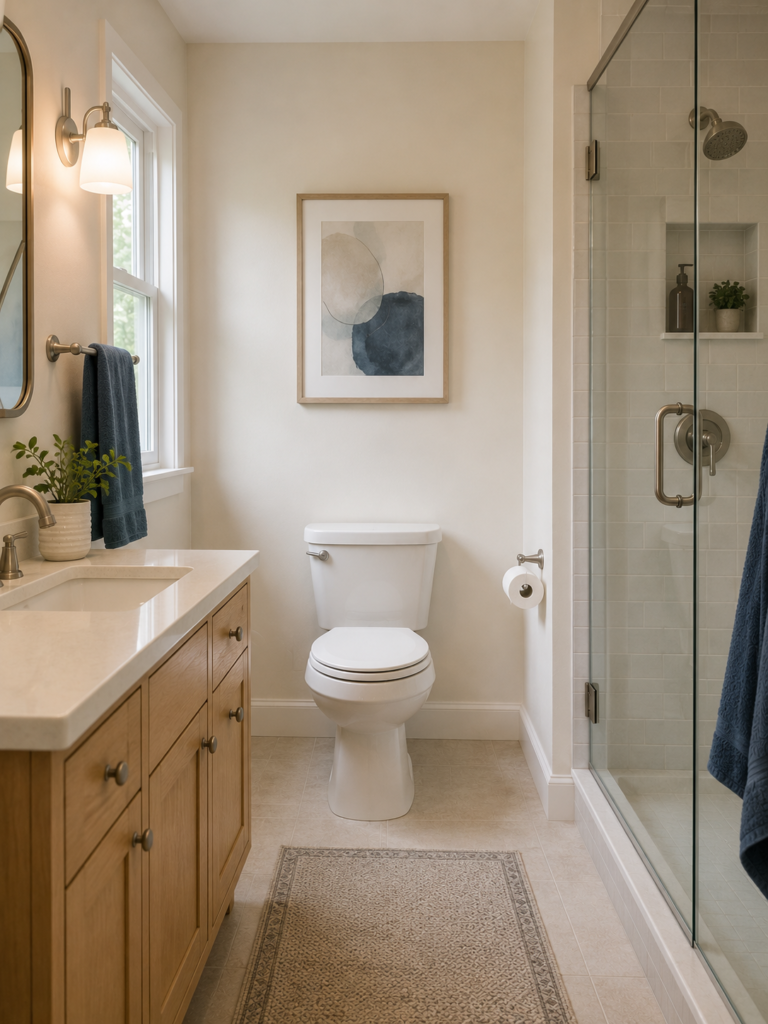
Placement matters as much as the material.
Above the toilet
The wall above a toilet is often useful because it can be away from direct spray. Check the actual layout first. A toilet next to an open shower can still sit in a high moisture area.
Choose one piece that relates to the width of the toilet area rather than filling every inch of wall. Leave enough open wall around it so the composition does not feel crowded.
Beside the vanity
A vanity side wall can work well when it stays outside the sink splash area. Avoid putting absorbent artwork directly where wet hands, toothbrush spray or cleaning products regularly reach the frame.
On the entrance wall
The wall near the bathroom door is often worth checking first. In many layouts it sits farther from the tub and shower than the main decorative wall.
Across from the shower
Do not assume that “across from the shower” means dry. Watch the wall after bathing. If it collects condensation, treat it as a damp wall even if no water is physically sprayed toward it.
Directly above a tub or shower
This is a poor location for paper, canvas and other moisture sensitive artwork when steam or spray reaches the piece. A photograph may look attractive above a freestanding tub in a styled room, but your own bathroom conditions matter more than the inspiration photo.
Match the artwork to the type of bathroom
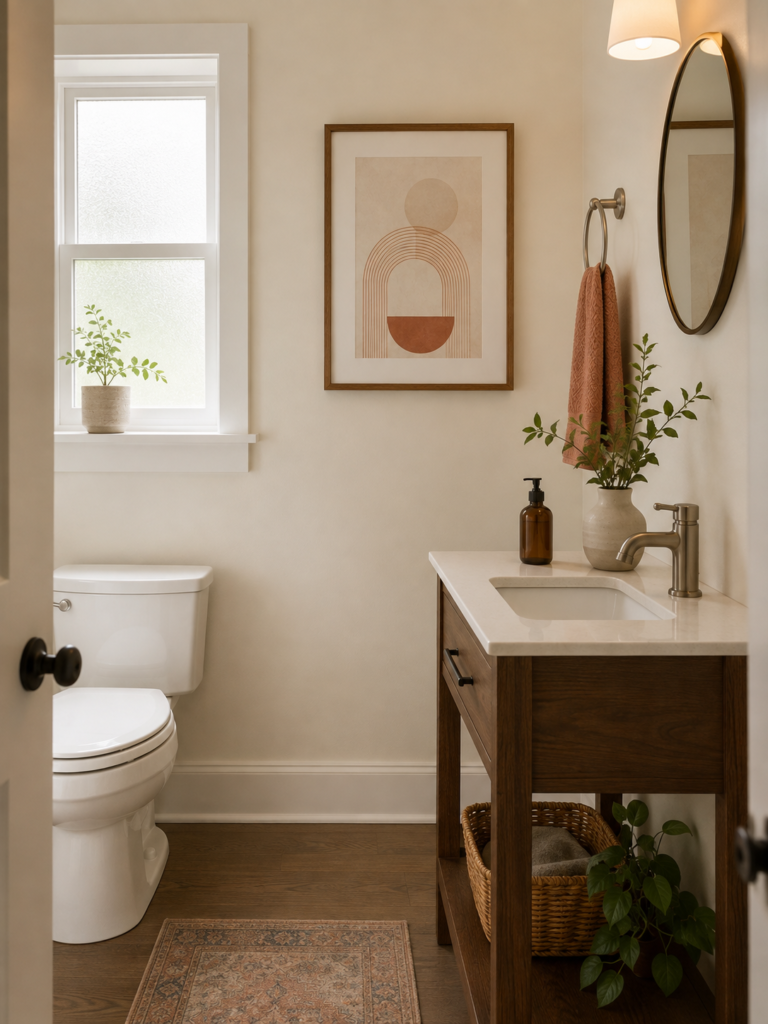
The same framed print may be a reasonable choice in one bathroom and a poor choice in another.
Powder room
A powder room without a shower or tub normally avoids the large bursts of steam created by bathing. You still need to think about sink splashes, but the room gives you more freedom to use conventional framed prints.
This is the bathroom where a small gallery arrangement, vintage reproduction or framed photograph is easiest to consider.
Full bathroom with effective ventilation
You can use a mix of hard surface decor and inexpensive framed art on dry walls. Run the exhaust fan while bathing and deal with any persistent condensation rather than expecting the frame to solve the moisture problem.
If you are refreshing more than the walls, Femorias’ guide to bathroom decor using plants, light and texture can help you coordinate the artwork with the rest of the room.
Bathroom that stays damp
If droplets remain on multiple walls or surfaces stay damp long after showers, address the moisture problem before spending money on paper art. Hard surface decor is a more practical decorative direction in the meantime.
Family or kids bathroom
Think about impact as well as humidity. Lightweight decor with secure mounting can make more sense than a large glass framed piece in a tight room where towels, doors and people regularly pass close to the wall.
Bathroom wall art styles that do not feel generic
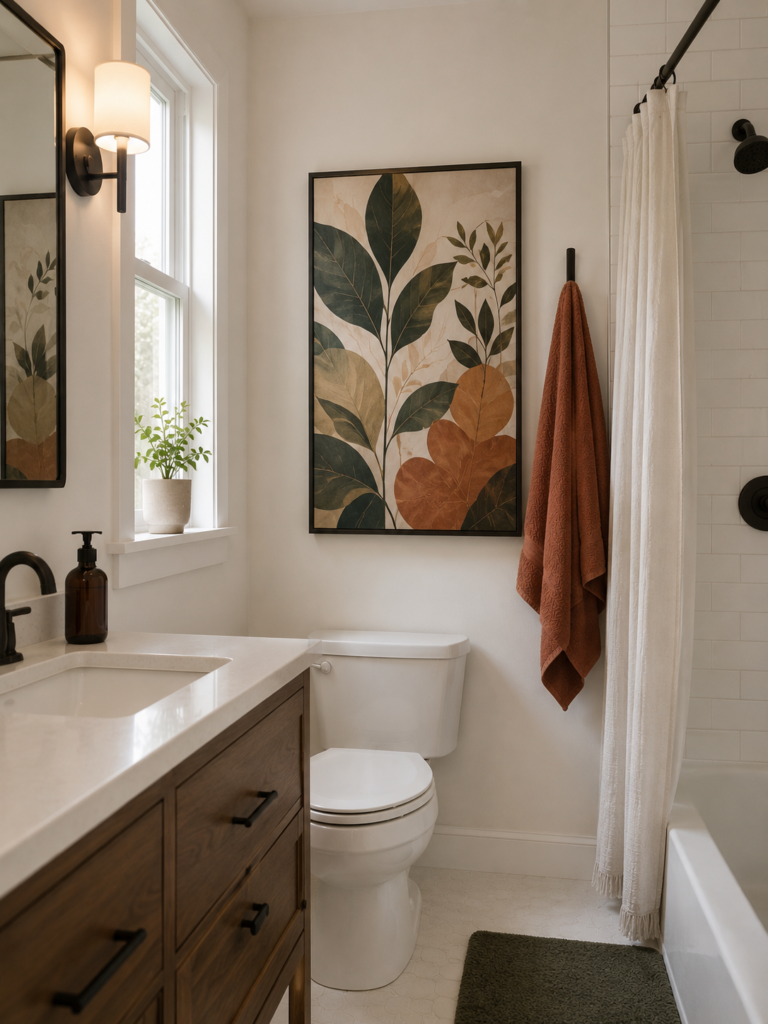
Once you have the material and placement sorted, choose the image for the room instead of defaulting to bathroom themed signs.
A white bathroom can take stronger art than many people expect. Deep green botanicals, rust colored abstracts, charcoal line work or muted landscape photography can break up a room full of white tile.
Warm beige bathrooms work well with olive, clay, brown, muted blue and cream. If the room already has patterned tile, let the artwork repeat one color from the tile without copying its pattern.
For a black and white bathroom, art does not need to stay monochrome. A single dusty blue, burgundy or warm ochre piece can stop the room from feeling overly matched.
Small bathrooms often look calmer with one clearly scaled piece than several unrelated tiny frames. A narrow vertical print can also make better use of the wall beside a vanity or above a toilet.
The image itself does not need to reference water. Landscapes, simple abstracts, botanical subjects, architectural photography and personal prints can all work when the colors suit the room.
Common bathroom wall art mistakes
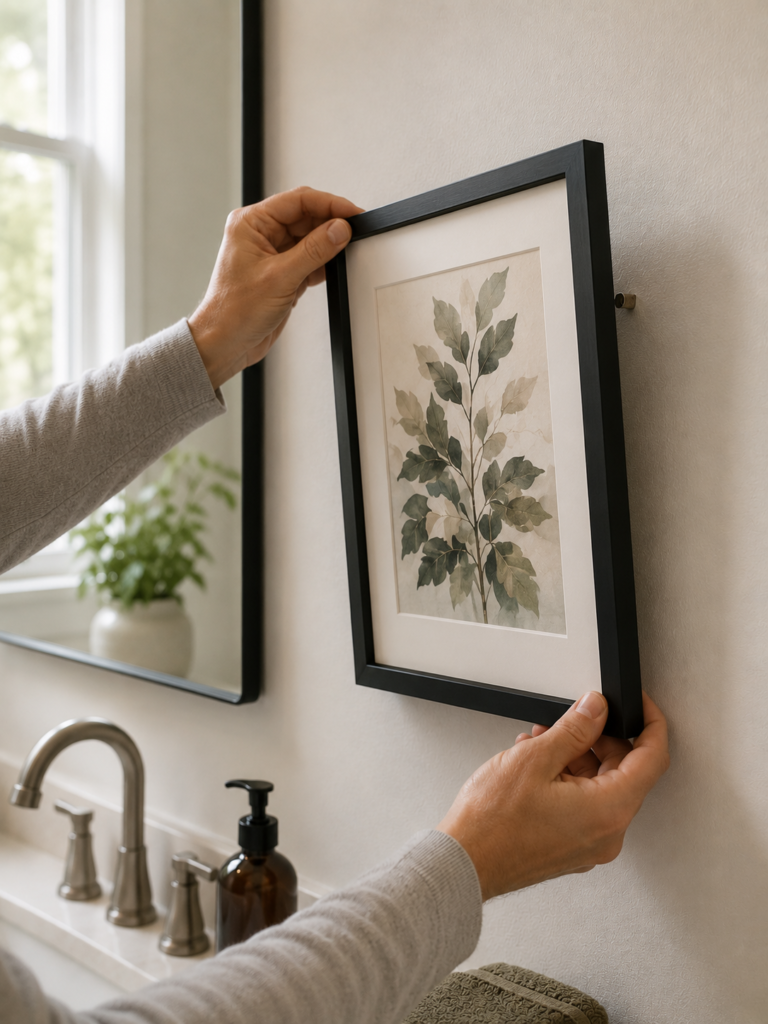
Calling any framed print moisture proof
Glazing provides protection, but a normal frame does not turn paper into a waterproof object. Persistent humidity can still affect the frame package over time.
Hanging the best artwork in the hardest room
Use a reproduction or inexpensive print when you want the look of paper art in a full bathroom. Keep valuable originals and irreplaceable photographs somewhere with more stable conditions.
The National Archives advises storing family papers and photographs at relatively low humidity because moisture encourages deterioration and mold. Its family archive preservation guidance is useful when deciding where sentimental photographs belong.
Letting paper touch the glazing
A mat or spacer keeps the print away from the glass or acrylic. This matters because condensation can occur on the inner glazing surface.
Ignoring the back of the frame
Check the wall behind the frame from time to time. A front surface can look fine while the backing begins to ripple, discolor or smell musty.
Spraying cleaner directly onto framed art
When cleaning glazing, apply the appropriate cleaner to a cloth instead of spraying the frame directly. The Library of Congress gives the same advice for glass and acrylic glazing because liquid can otherwise reach surrounding materials.
Choosing art before fixing persistent condensation
If walls remain wet after normal bathing, better ventilation and moisture control will do more for the room than a special frame. EPA guidance recommends reducing humidity and drying damp surfaces rather than allowing moisture to linger.
A simple bathroom art checklist
Before hanging anything, confirm that:
- The wall normally stays dry
- The art is outside the direct splash area
- Steam clears reasonably well after bathing
- The artwork is not irreplaceable
- Paper is separated from glazing
- The mounting method suits the weight of the piece and the wall material
- The frame is not resting against a visibly damp surface
- You can remove the piece periodically to inspect the back
If several of those conditions are missing, choose a different wall or a less absorbent type of decor.
Frequently asked questions
Can you put framed pictures in a bathroom?
Yes. Put ordinary framed pictures on a wall that remains dry and in a bathroom with good ventilation. Use glazing and keep the paper separated from it with a mat or spacer. Avoid direct splash areas.
Can canvas art go in a bathroom?
Canvas can be used in some bathrooms, but it is not automatically resistant to humidity. Because canvas, stretcher bars, coatings and printing methods vary, check the maker’s care guidance and keep it away from direct steam and water. In a bathroom that stays damp, a hard surface decorative piece is a more conservative choice.
Is art above the toilet safe?
It can be. The important issue is the toilet’s position relative to the shower or tub. If the wall above it stays dry, it is often a useful location for one medium sized piece or a small coordinated group.
Is glass or acrylic better for a bathroom picture frame?
Both can protect a paper print. Acrylic is lighter and less brittle, while glass is more rigid and resists scratching better. Whichever you choose, leave space between the artwork and glazing and keep the frame away from condensation.
Can I put family photos in the bathroom?
A replaceable copy is a better choice than an original or sentimental photograph. Keep important family photographs in a more stable environment and display a duplicate in the bathroom if you want the personal look.
What should I hang in a bathroom with no window?
A missing window does not automatically make a bathroom unsuitable for art. What matters is whether mechanical ventilation clears moisture effectively. If the room remains damp after showering, favor ceramic, glass or another hard surface decorative piece on a dry wall rather than paper or textile art.
How do I stop moisture from getting behind bathroom wall art?
Start by reducing moisture in the room and keeping the art away from walls that collect condensation. Proper glazing, a spacer and sound backing can give framed paper some protection, but they cannot compensate for a persistently wet location.
Choose the wall before you choose the picture
Bathroom wall art that can handle humidity starts with placement. Check which walls stay dry after a normal shower, rule out splash areas and then match the art material to the conditions you actually have.
For a dry powder room, that may mean a framed print you already love. In a steamy family bathroom, it may mean ceramic or another hard surface piece instead. If an artwork is valuable or irreplaceable, give it an easier room.
Start by checking the bathroom after your next shower. The dry wall you barely noticed may be the best place for the art.