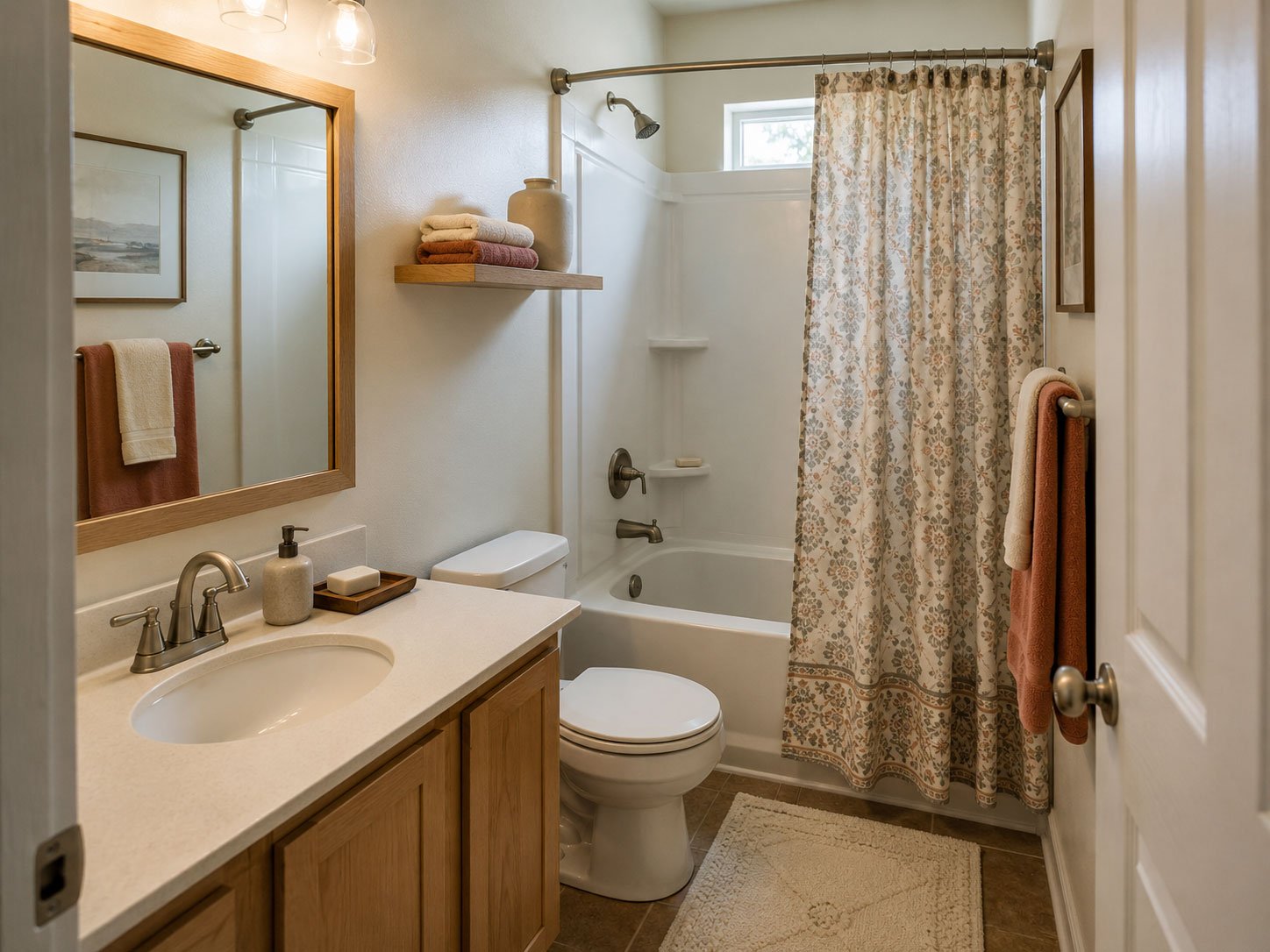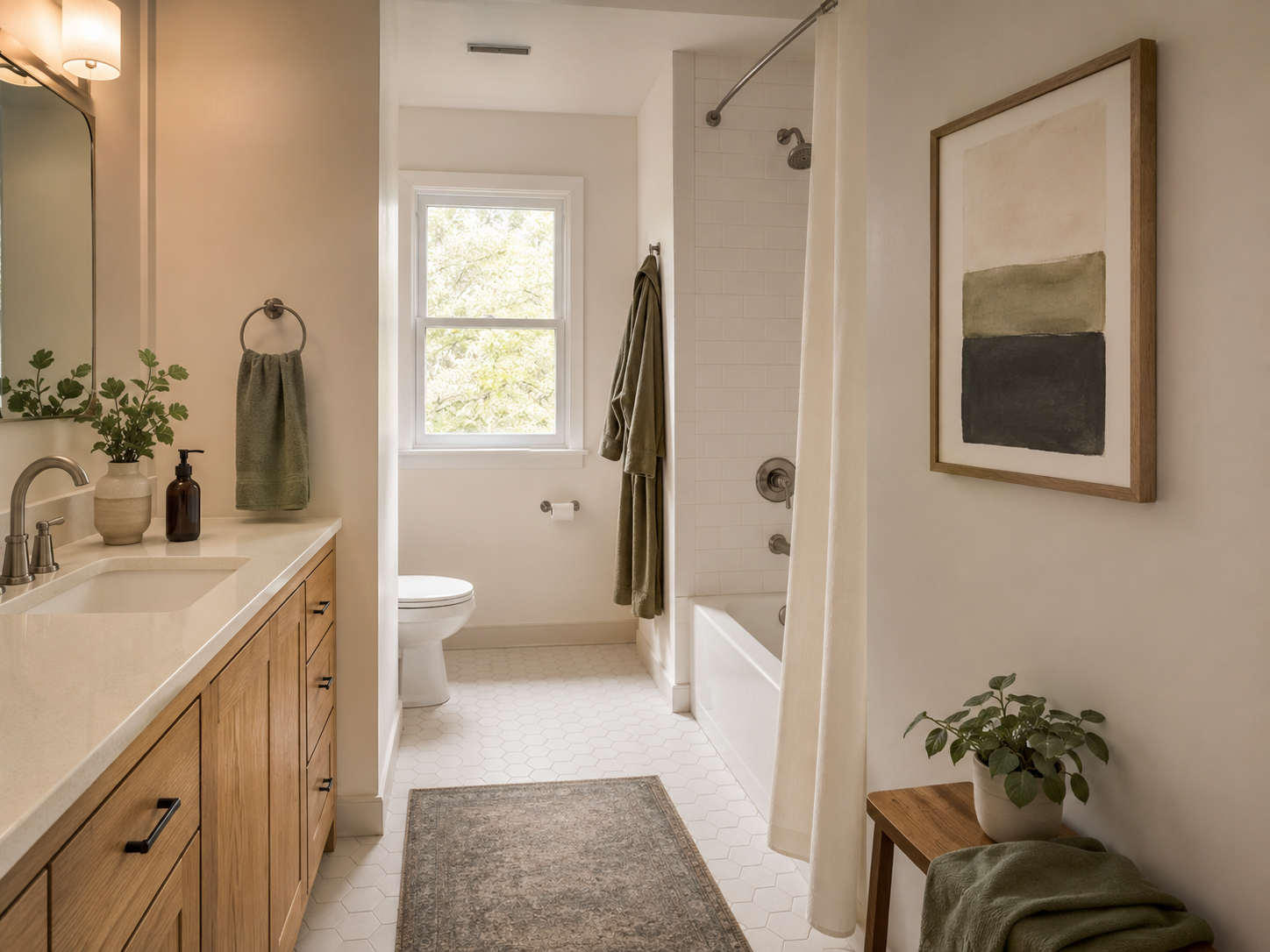
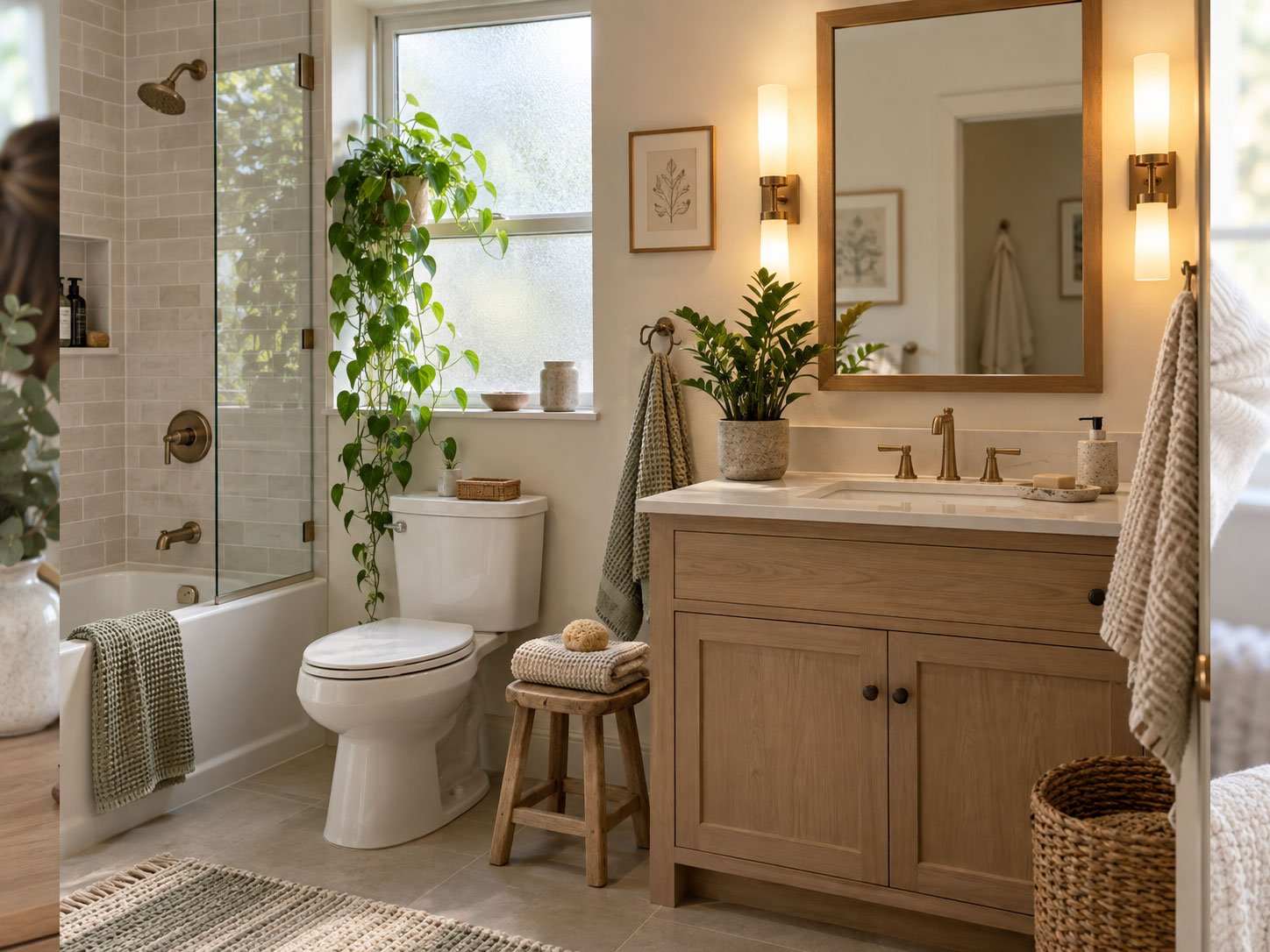
Bathroom Decor Ideas With Plants, Warm Light, and Natural Texture

A plain bathroom usually does not need more objects. It needs better contrast between all the hard surfaces already there. Greenery adds movement and color, warmer light softens tile and chrome, and tactile materials such as cotton, ceramic, wood, and woven storage keep the room from feeling flat.
The useful part is choosing those details for the bathroom you actually have. A living plant needs usable light. A textured rug needs somewhere to dry. A lamp or grow light needs to be appropriate for a wet room. Get those conditions right first, then the styling becomes much easier.
Read the bathroom before you decorate it
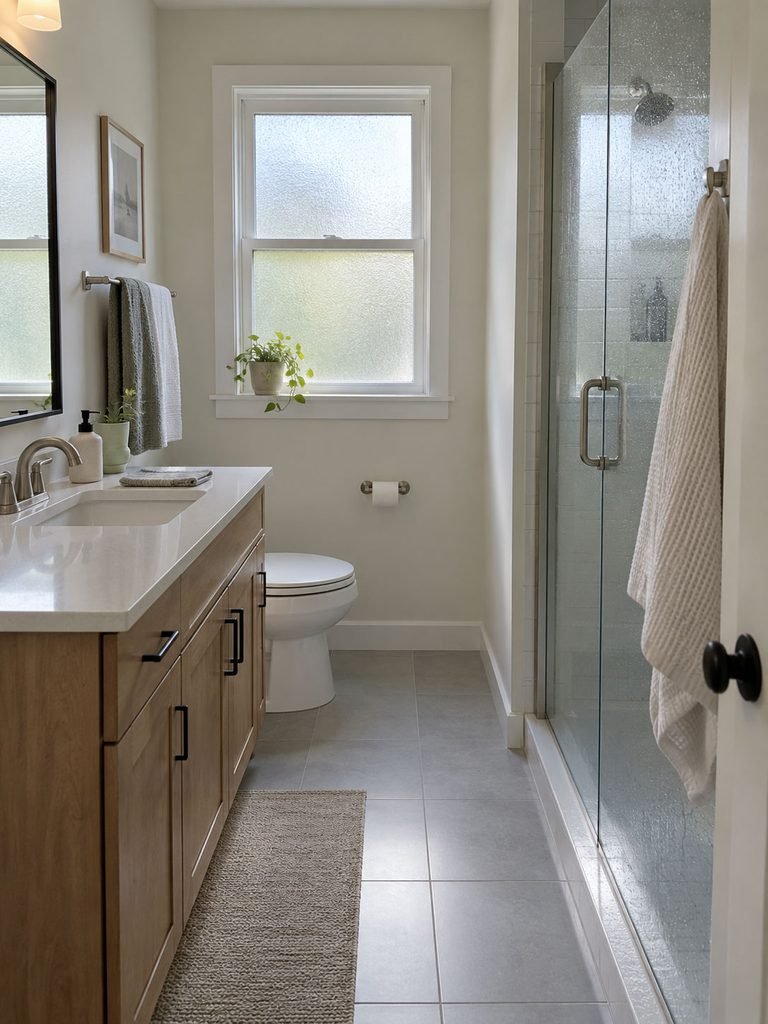
Start with three questions: where does daylight reach, where does moisture collect, and what is already visually crowded?
Check the room in the middle of the day with the electric lights off. A frosted window can still provide useful plant light, but a bathroom that looks dim even after your eyes adjust should not be treated as a bright room. Also look at which walls and surfaces stay dry after a normal shower. The wall by the door may behave very differently from the ledge beside the tub.
Then clear the sink and floor before buying decor. Toiletries, extra rolls, a hamper, a scale, a stool, baskets, and a bath mat all occupy visual space. If the room still feels cold after unnecessary items are removed, you have a much clearer idea of what it actually needs.
This simple check prevents a common decorating mistake: solving a light problem with more objects or solving a clutter problem with another shelf.
Put live plants only where the light can support them
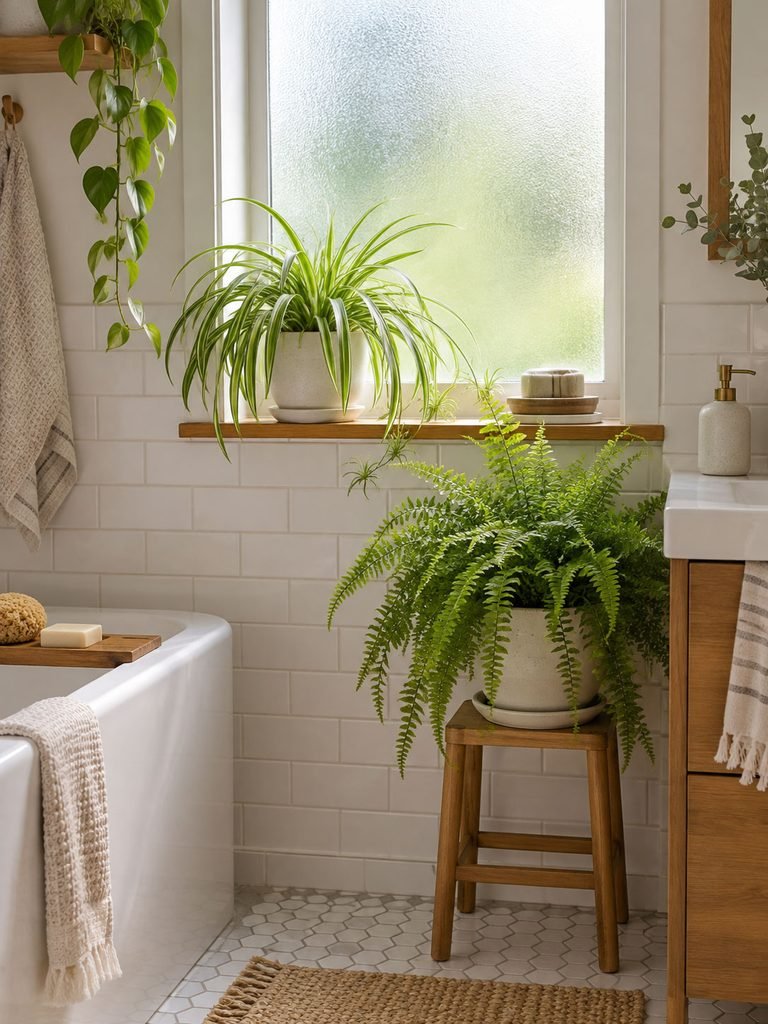
Choose the plant for the available light first and let humidity be the bonus. The Royal Horticultural Society notes that bathrooms can suit many leafy houseplants when they receive natural light, but it also states plainly that a bathroom without a window is not a suitable place for growing live plants without another light source. RHS bathroom plant guidance
In a bathroom with bright filtered light, a spider plant, fern, or another humidity tolerant tropical can make good visual sense. In lower indirect light, tougher foliage plants may cope, but “low light” still means some usable light reaches the leaves. It does not mean darkness.
Placement matters as much as species. Put the healthiest plant near the best window rather than scattering several plants around dim corners. A trailing plant can soften a high shelf if light reaches it. An upright plant can fill an empty floor corner near the window without creating clutter on the vanity.
Use containers with drainage and check the potting mix before watering. Bathroom humidity does not replace root water, but it also does not justify watering on a fixed schedule. Let the plant and potting mix tell you what they need.
If a pet can reach the plant, check the species before bringing it home. Several common foliage plants are irritating or toxic when chewed, so the prettiest option is not automatically the best household choice.
Use lighting in layers instead of making every bulb brighter
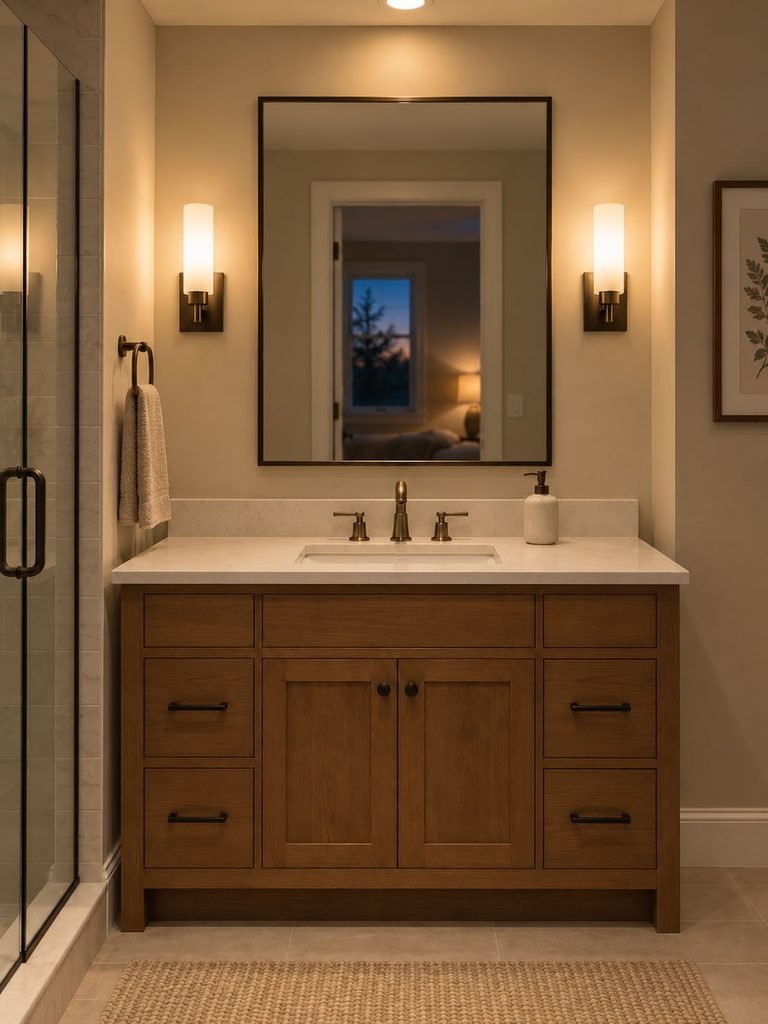
A bathroom usually feels better when one fixture is not responsible for every job. Use general light to illuminate the room, task light around the vanity for grooming, and softer ambient light when you want the room to feel calm.
Color temperature describes how warm or cool the light appears. Color rendering is a different quality. The US Department of Energy notes that CRI measures how accurately a light source renders color and that CRI of 90 or higher indicates excellent color fidelity. US Department of Energy LED lighting guidance
For a softer bathroom, warm white light around 2700 K to 3000 K often works well for the general mood. At the vanity, do not assume that moving all the way to a cold 5000 K bulb automatically makes makeup, shaving, or skin tone easier to judge. Good fixture placement and strong color rendering can matter more than simply choosing the coolest bulb on the shelf.
If you already like the fixtures, start by cleaning the shades, checking what bulb type and output the fixture is designed for, and replacing mismatched bulbs with a consistent set. A compatible dimmer can make the room more flexible, but hardwired fixture or switch changes should be treated as electrical work rather than casual decor.
Add texture where it can dry
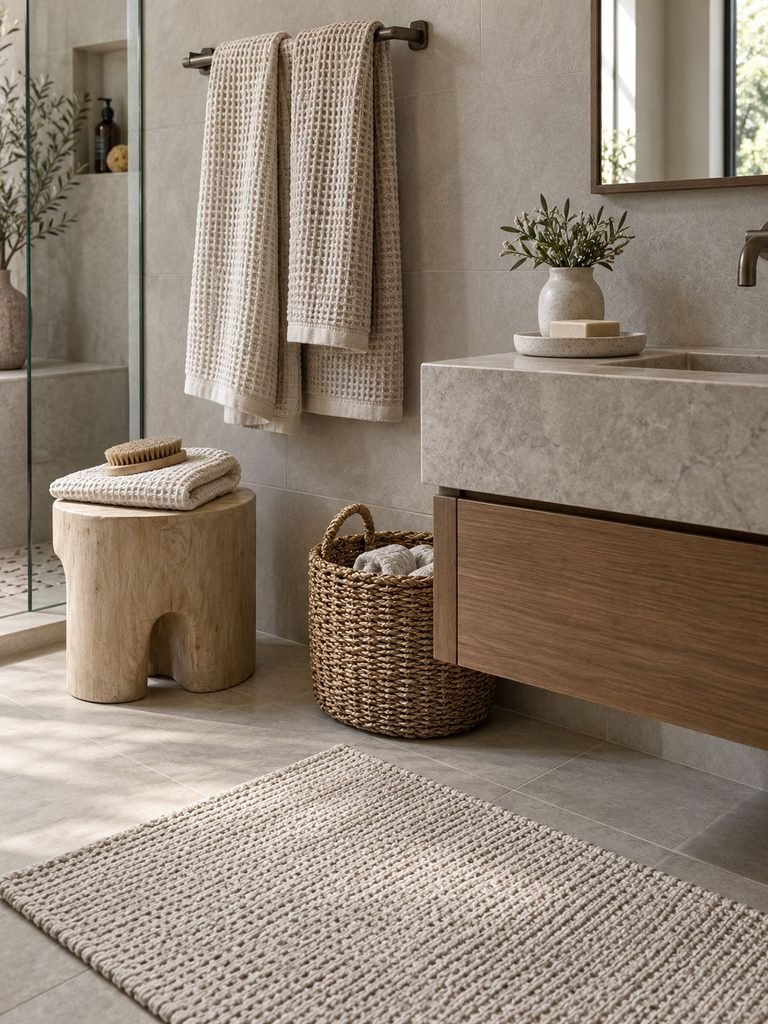
Texture works best when it comes from things the bathroom already needs. Towels, a bath mat, storage, soap dishes, trays, and a small stool can all soften tile without creating a collection of objects that exist only to decorate.
Start with washable textiles. Waffle weave towels, ribbed cotton, terry cloth, and a flat woven cotton bath mat create visible texture while remaining practical to clean. Keep thicker or slow drying natural fiber pieces away from locations that repeatedly get wet.
That moisture distinction matters. The US EPA recommends increasing ventilation in bathrooms and drying damp materials because persistent moisture encourages mold growth. EPA guide to mold and bathroom moisture
Use wood and woven materials in the drier parts of the room rather than assuming every natural material belongs beside the shower. A sealed stool, finished shelf, or small wood tray can bring warmth to a vanity area. Ceramic, stone, glass, and other wipeable materials are easier choices where splashes are frequent.
The same logic applies to artwork. A print on a dry wall near the door faces different conditions from paper mounted beside a steamy shower. Femorias’ guide to bathroom wall art and humidity goes deeper into choosing the location before choosing the artwork.
Use mirrors to spread light and calm visual clutter
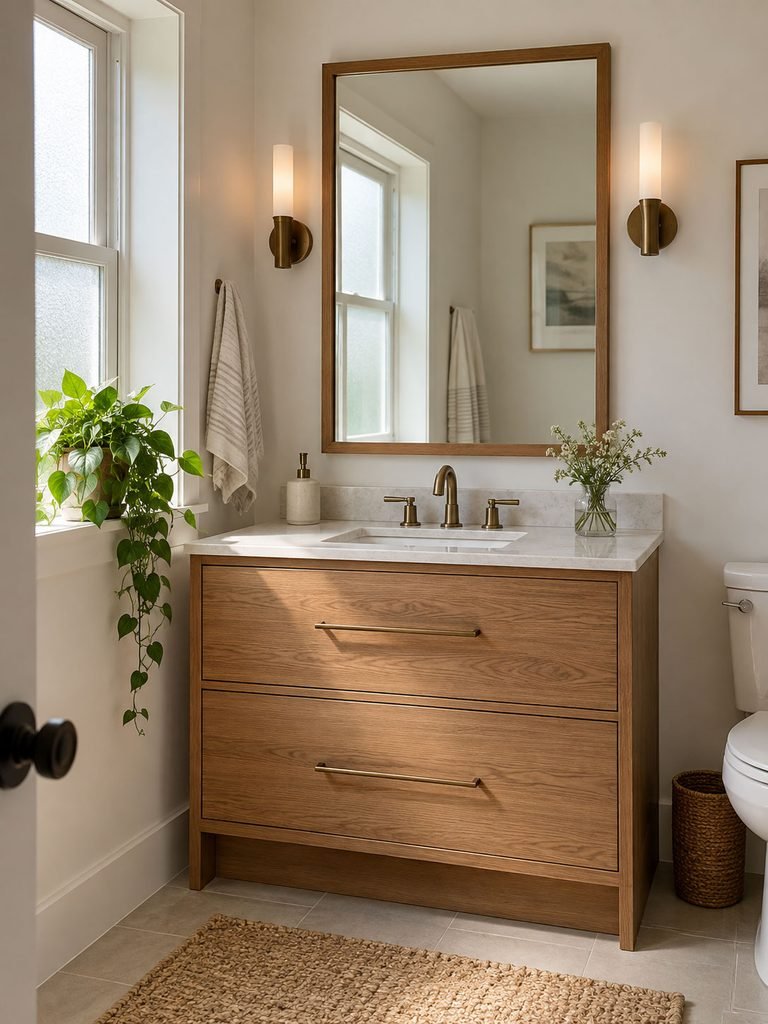
A mirror cannot literally double the size of a bathroom, but it can make the room feel brighter and less enclosed when it reflects a useful part of the space.
Pay attention to what the mirror sees. A mirror that catches daylight, a calm wall, or an uncluttered shower curtain contributes to the room. One that faces an overloaded shelf simply repeats the clutter.
Scale the mirror to the vanity rather than chasing the biggest size that physically fits. A better proportion often looks more finished than an undersized builder mirror, while a frame gives you another chance to repeat the material story. Warm wood, a restrained woven frame, aged metal, or a simple painted finish can all work depending on the rest of the bathroom.
Keep the material practical for its location. If condensation regularly covers the vanity wall, a delicate untreated natural frame is a poor trade for a few extra points of texture.
Style the room in three connected zones
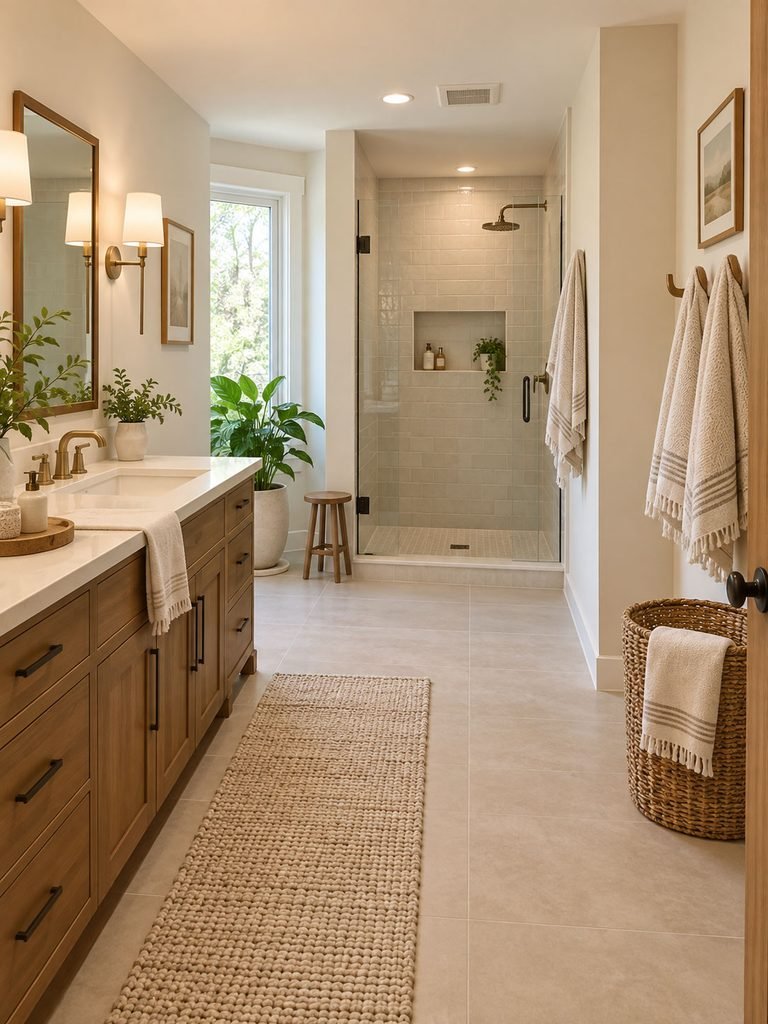
The easiest way to make plants, light, and texture look intentional is to repeat them across a few areas instead of piling everything onto one shelf.
At the vanity, let lighting do most of the work. Keep the counter mostly clear, use one tray or soap dispenser with a tactile finish, and add a small plant only if usable light actually reaches that spot.
Near the shower or tub, choose decor that tolerates splashes and is easy to wipe or wash. This is not the place for paper, slow drying fibers, unstable baskets, or decorative electrical accessories.
In the drier part of the room, bring in the softer layer. Towels, one basket, a framed piece of art in a suitable location, or a plant near the window can add character without interfering with bathing or cleaning.
Repeat one or two materials rather than introducing a new finish in every zone. If the vanity has warm wood, a small wood stool or mirror frame can echo it. If the towels are oatmeal and cream, a ceramic tray in the same quiet palette can connect the counter to the rest of the room.
The room starts to feel designed when those repetitions are visible but not obvious.
Adapt the same look for a small or windowless bathroom
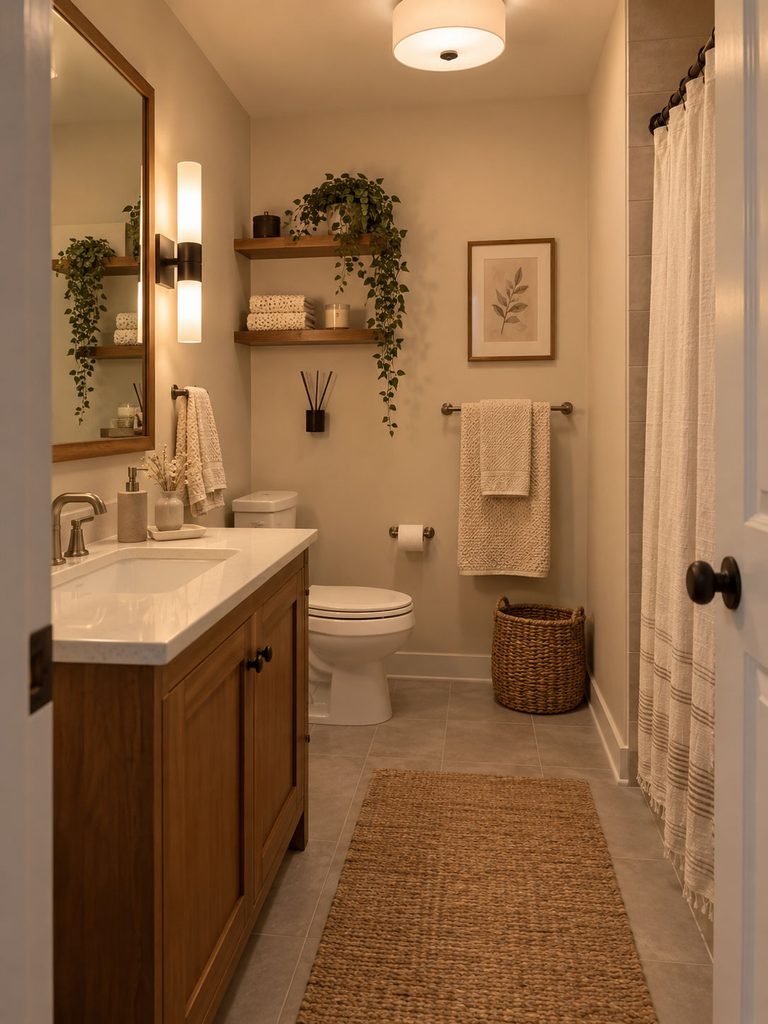
A small bathroom benefits from the same three elements, but each one needs to do more work. Choose fewer pieces, give the vanity wall more attention, and protect the limited floor space.
Femorias’ small bathroom decor guide covers the space and clutter side in more detail. For this particular look, one plant or botanical element, one strong lighting improvement, and one repeated textile texture are usually enough.
A truly windowless bathroom changes the plant decision. Use a properly selected grow light if you want to maintain a live plant there, or use convincing faux greenery if you do not want additional equipment. A realistic faux trailing plant on a high shelf is better decor than a real plant slowly declining in darkness.
Be conservative with plug in lighting and grow lights in a bathroom. The Electrical Safety Foundation International notes that GFCI protection is required in bathrooms and other wet or damp areas because it helps protect against electrical shock. Follow fixture instructions and local requirements rather than improvising with cords around sinks, tubs, or showers. ESFI guidance on GFCI protection
Renters can still make most of the visual changes without touching wiring. Coordinated bulbs in existing compatible fixtures, a better shower curtain, new towels, a washable mat, one basket, a framed mirror where allowed, and a healthy plant near an actual window can change the room without creating a restoration project for move out day.
Refresh the room in the right order
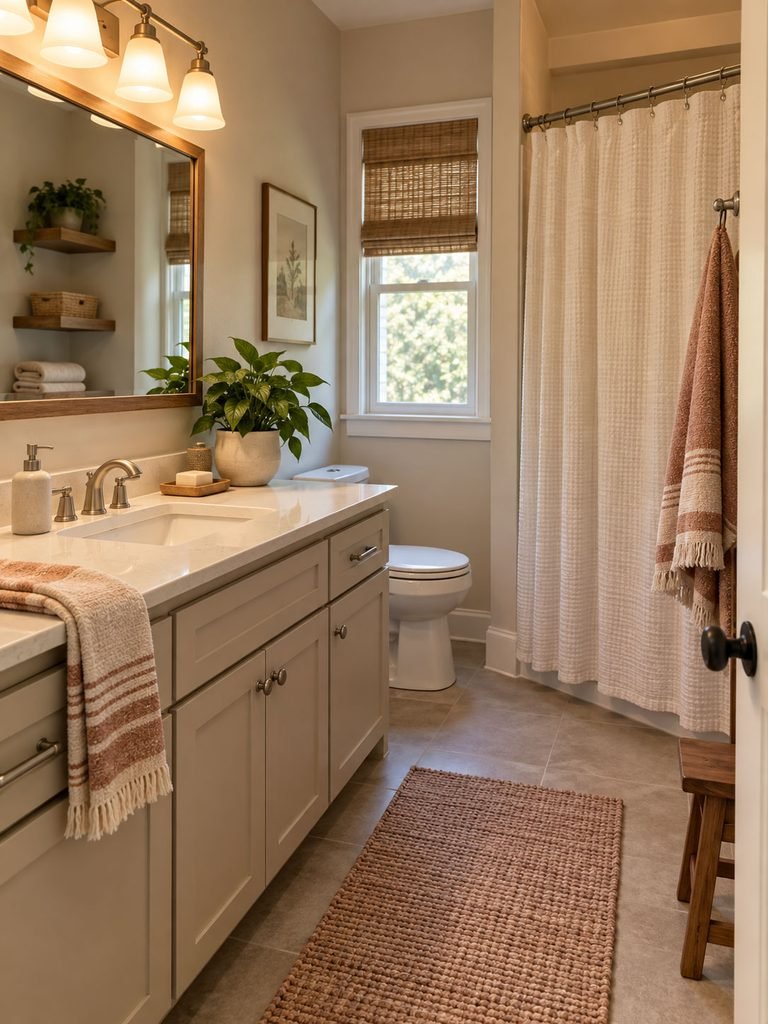
Do the changes in the order that lets each decision inform the next.
First, remove visible clutter and anything that makes the floor or sink harder to use. Then check the daylight and where condensation regularly appears. Choose the plant or faux greenery based on that reality.
Next, correct the lighting. Make the existing fixtures consistent before assuming you need new ones. After that, choose the textiles that will carry most of the color and softness: towels, shower curtain, and bath mat.
Add one or two harder textures last. A ceramic tray, finished wood stool, simple basket in a dry area, or framed mirror may be enough. Then stop for a few days.
The goal is not to make the bathroom look decorated from every angle. It is to make the permanent tile, glass, porcelain, and metal feel balanced by something living or botanical, something softly lit, and something tactile. When those three elements suit the room instead of fighting it, even a basic bathroom can feel warmer without becoming busier.