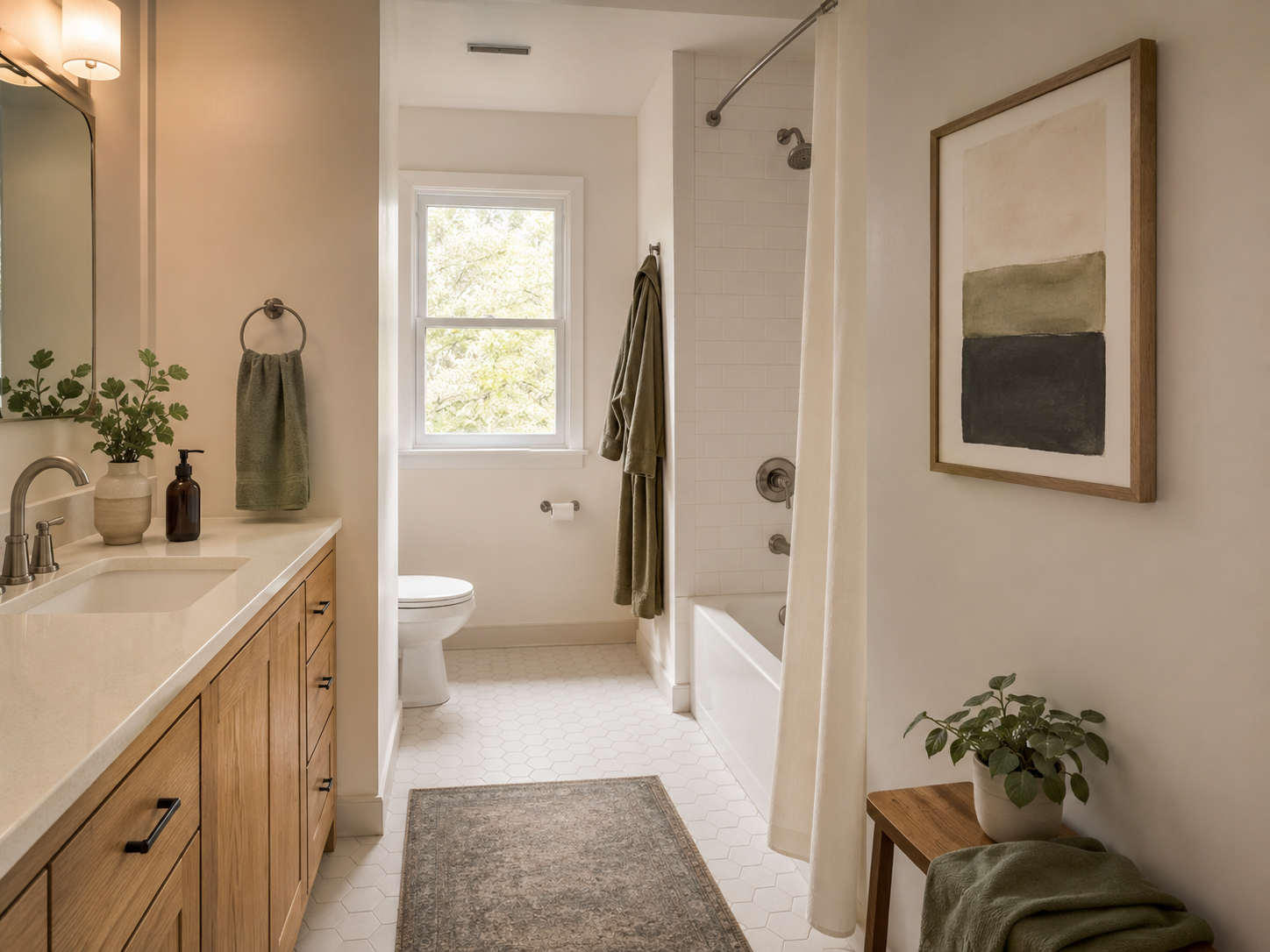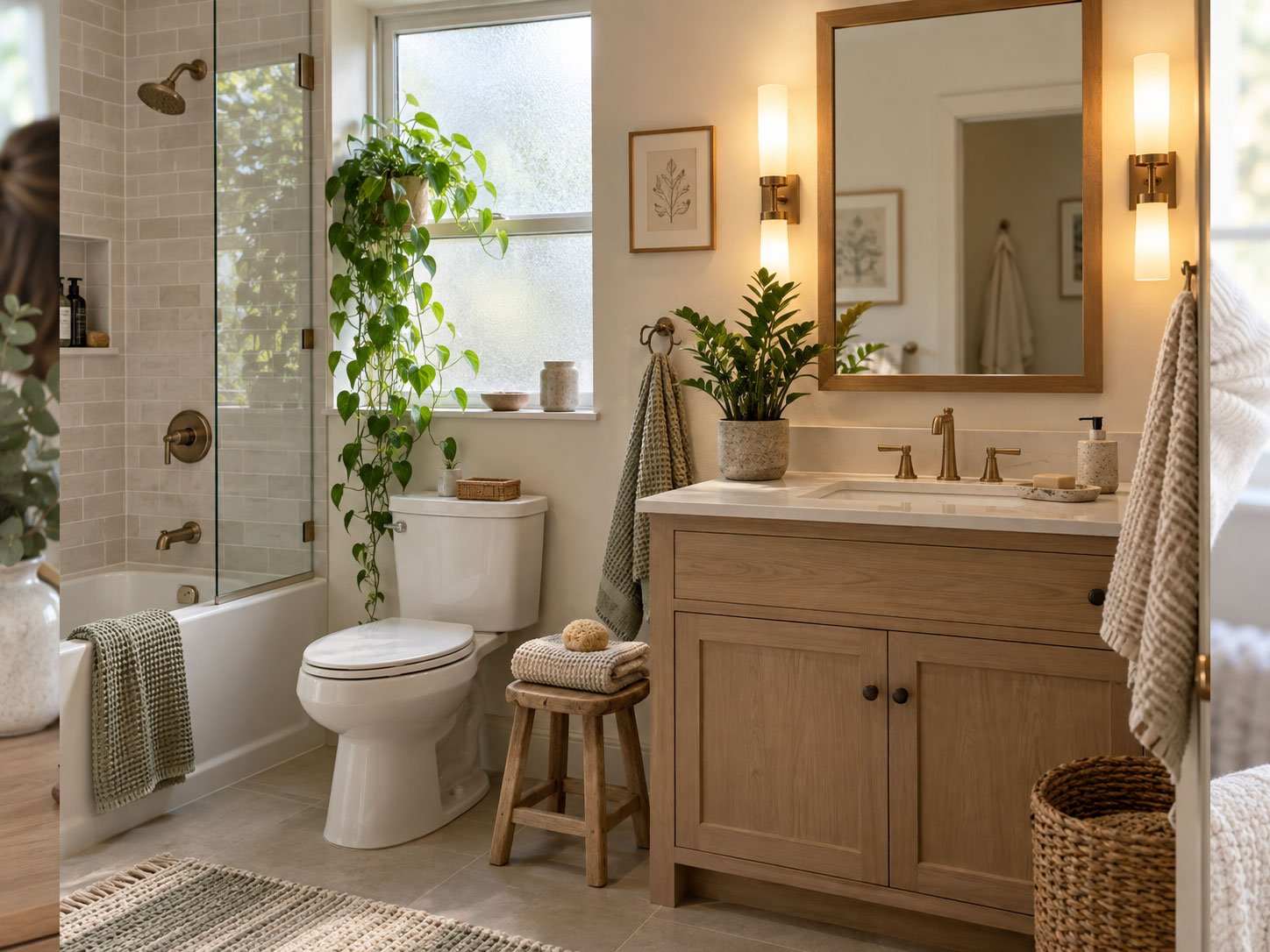
Small Bathroom Decor Ideas That Add Style Without Adding Clutter

A small bathroom usually does not need more things. It needs stronger decisions about which things deserve the limited space.
Start by clearing what is already crowding the sink, floor, toilet tank, and shelves. Then choose one visual anchor, make everyday storage look intentional, and add color or texture through pieces the room already needs. A mirror, shower curtain, towels, wall art, or shallow shelf can do more for a compact bathroom than five separate decorative accessories.
The goal is not to make the bathroom look empty. It is to give every visible item a reason to be there.
Start by making room for the decor you actually want
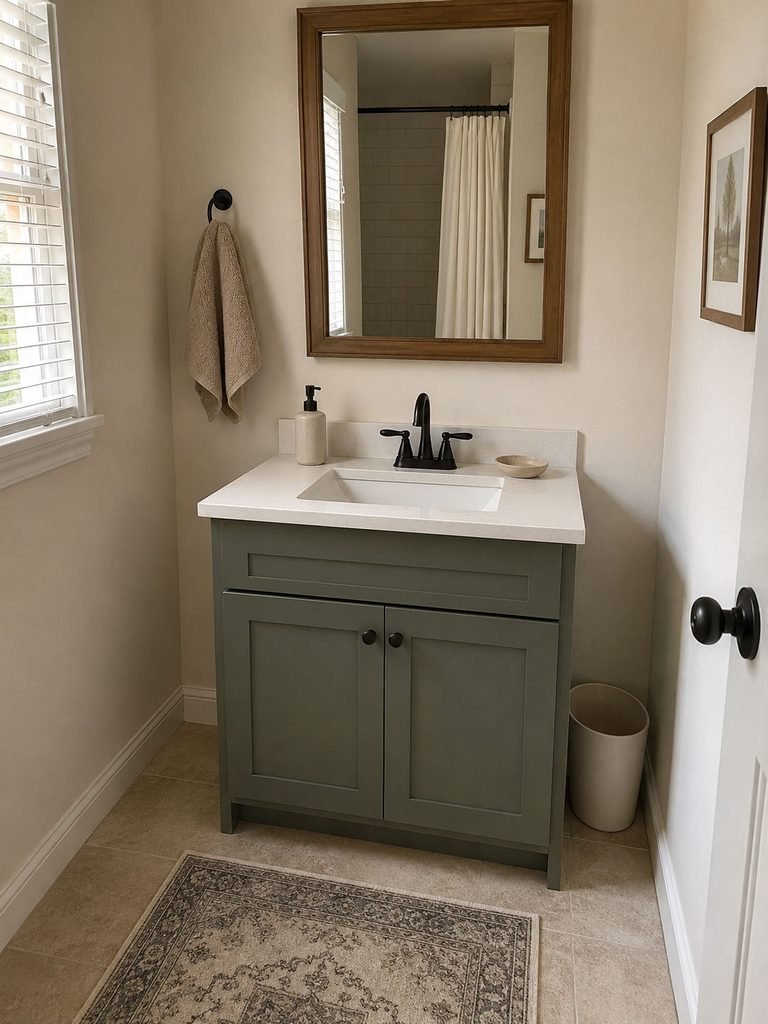
Before you buy a shelf, basket, vase, tray, or stool, remove the things that do not need to stay visible.
Start with the sink. Keep out what you use every day and store backups elsewhere. Five half-used products lined against the backsplash do more to make a bathroom feel busy than the wall color ever will. A soap dispenser and one small container can look intentional; a row of unrelated bottles reads as storage.
Do the same check at floor level. A hamper, scale, wastebasket, spare-roll holder, stool, bath mat, and freestanding shelf may all be useful individually, but together they can eat up the little open floor area the bathroom has.
Protecting usable space matters more than filling an empty corner. The current NKBA Kitchen and Bath Planning Guidelines cover fixture placement, clearances, storage, accessibility, and related planning considerations. You do not need to redesign the room to use the basic principle: if a decorative addition makes a door harder to open, narrows the approach to a fixture, or creates an awkward obstacle, it is the wrong addition for that spot.
A useful small-bathroom test is simple: subtract first, live with the clearer room for a day, and only then decide what still feels unfinished.
Choose one visual anchor instead of five small statements
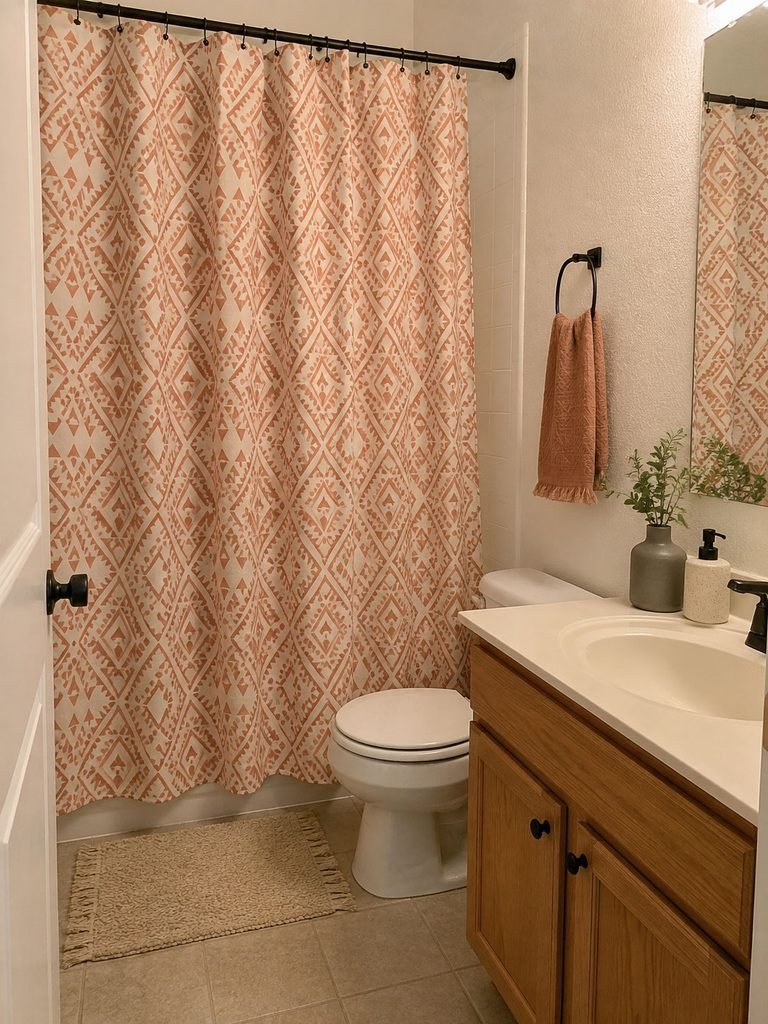
A small bathroom can handle personality. What it handles poorly is competition.
Choose one feature to carry most of the visual weight. In one bathroom, that may be a patterned shower curtain. In another, it may be an unusual mirror, a strong wall color, an existing patterned floor, or one properly scaled piece of art.
Then let the other visible pieces support it.
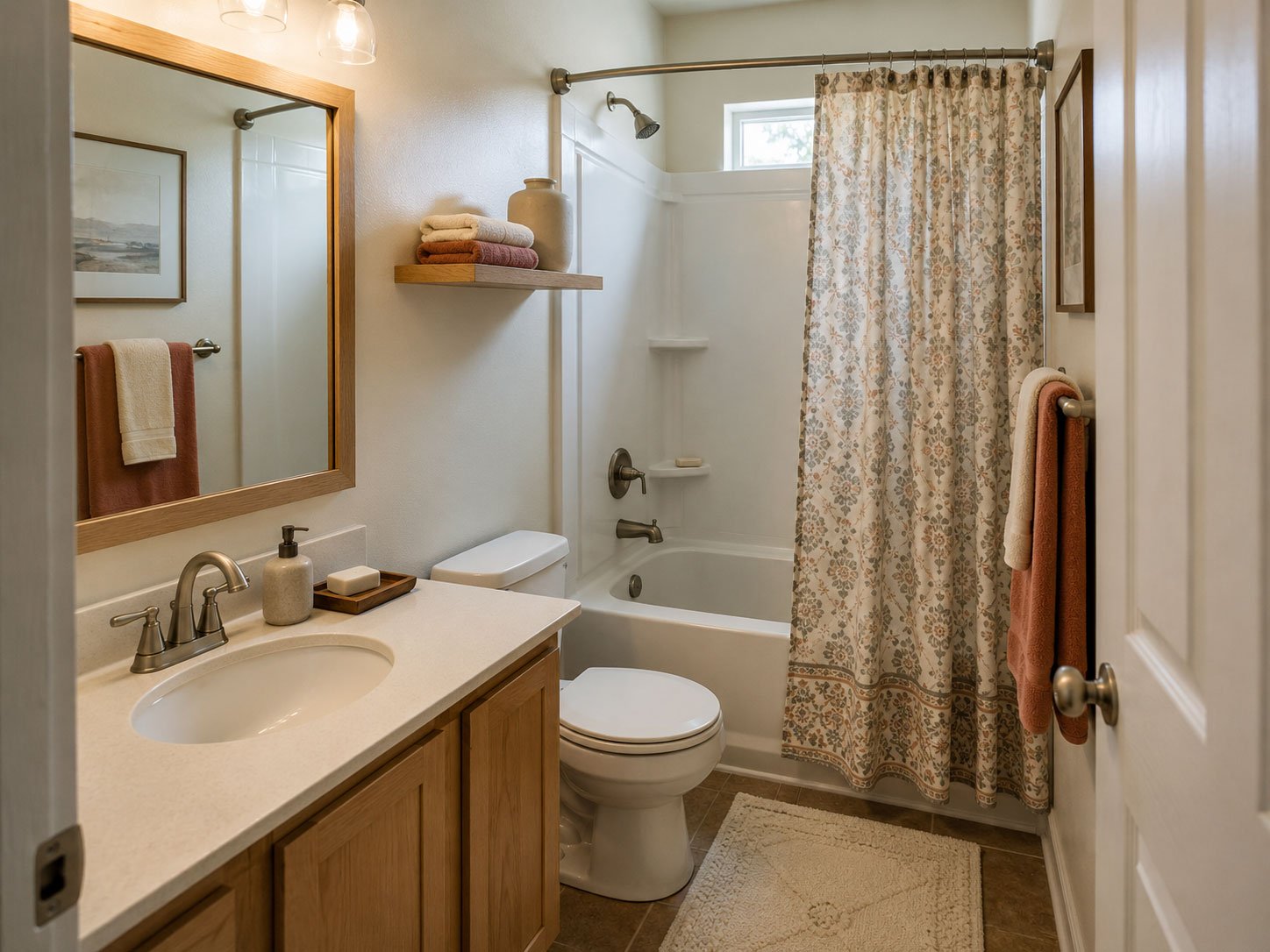
If the shower curtain uses rust, cream, and charcoal, you might repeat the rust once in a hand towel and the charcoal in a frame or soap dispenser. You do not also need patterned baskets, three framed prints, a striped mat, decorative jars, and a plant collection.
This is especially useful when the bathroom already has permanent finishes you cannot change. Instead of fighting beige tile or a blue-gray vanity, choose your anchor from colors that already exist in the room. The fixed finish becomes part of the palette rather than the problem you are trying to cover.
An empty patch of wall is not automatically a decorating emergency. In a compact room, bare space gives the feature you chose somewhere to breathe.
Use the vanity wall to make the room feel intentional
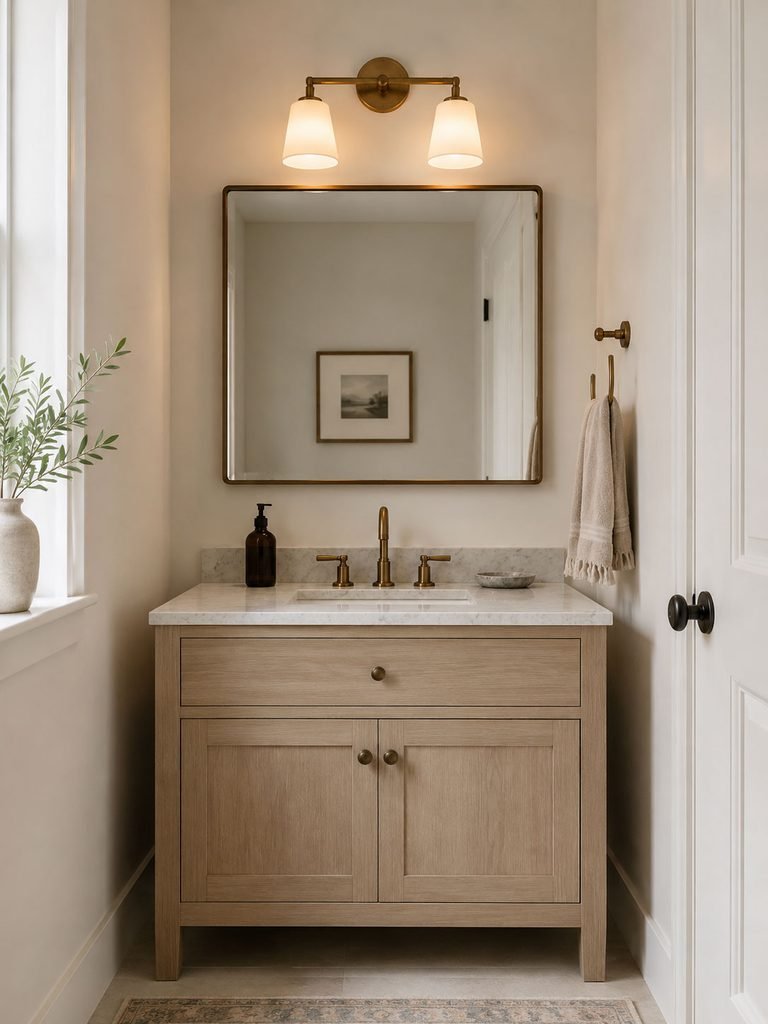
The vanity wall usually gives you the most decorative impact without asking for more floor space.
If the existing mirror feels undersized, replacing it with a better-scaled mirror can make the whole sink area read as one composition rather than a collection of little parts. You do not need an ornate frame; shape, proportion, and finish are enough to give the wall character.
Pay attention to what the mirror reflects. A mirror facing an overflowing shelf only repeats the visual noise. A mirror that catches a brighter wall, simple shower curtain, or clean doorway makes a calmer contribution.
Lighting also affects how finished this area feels. If you are working only with existing fixtures, even cleaning the shade and using a bulb appropriate for the fixture can improve the result without adding another object to the room. Electrical fixture changes should follow manufacturer instructions and applicable requirements rather than being treated as a casual decor project.
If the whole bathroom still feels hard or flat after you clear the vanity, Femorias’ guide to bathroom decor using plants, light and texture offers additional ways to warm the room without rebuilding it.
Keep wall storage shallow and useful
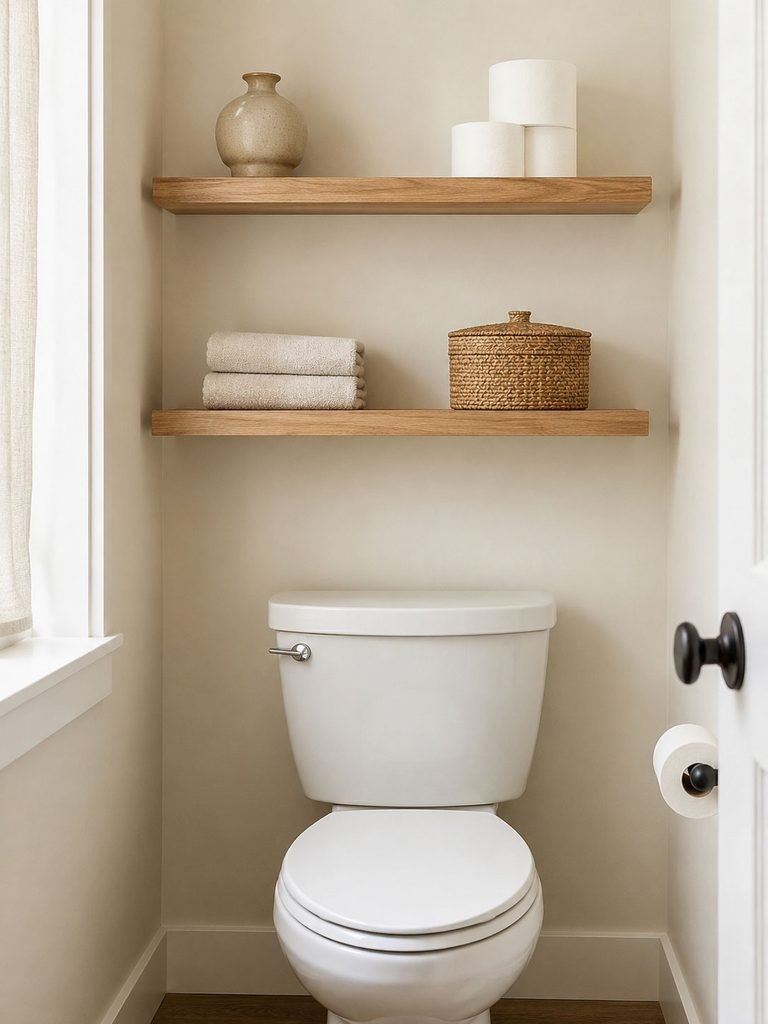
Vertical space is valuable only when using it does not make the room feel narrower.
Shallow shelves can work well above a toilet or on an unused wall because they hold necessities without taking floor area. The mistake is treating them as display cabinets.
Give each shelf a job. One might hold folded hand towels and a small lidded basket. Another might hold extra toilet paper plus one decorative object. If you need six containers and a row of bottles to make the shelf useful, closed storage may be a better fit.
Hooks are another low-volume option because towels, robes, and toiletry bags already need somewhere to go. Use the back of the door or an appropriate wall when that location does not interfere with the door swing or other fittings.
Keep safety and the wall construction in mind. Anything wall-mounted needs hardware appropriate to the item, load, and wall surface; follow the product’s installation directions. Renters should also check their lease or landlord requirements before drilling or changing fixed hardware.
The visual rule is the same as the physical one: use the wall, but do not make the wall feel thick.
Make textiles do the decorating
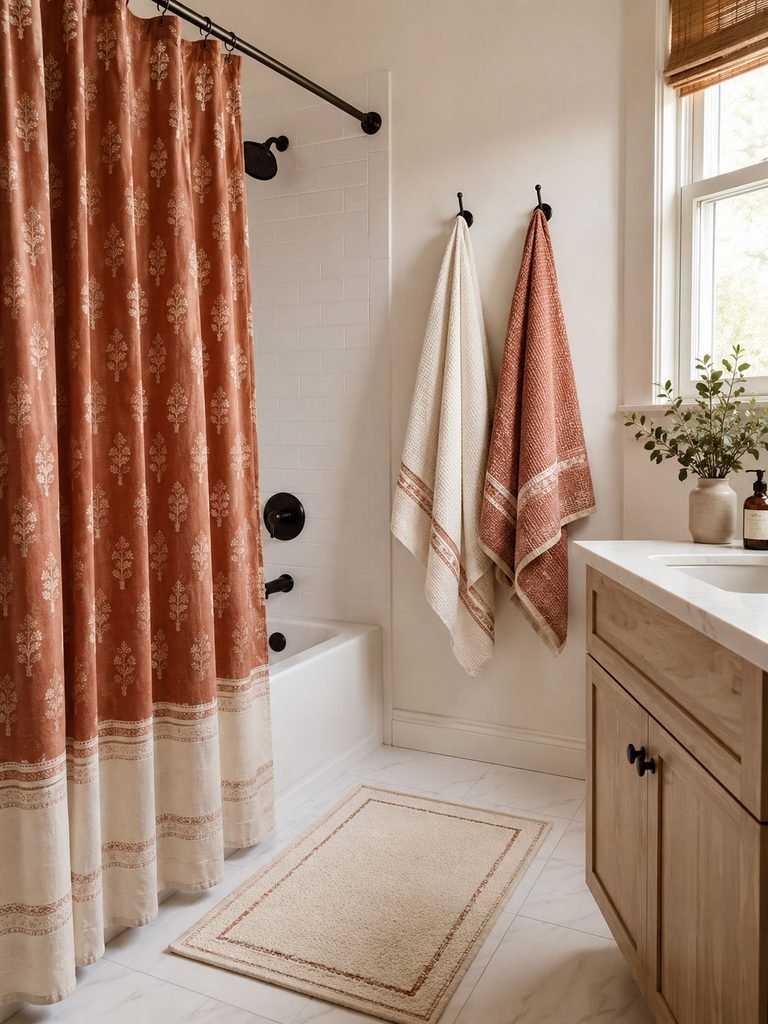
Towels, a shower curtain, and a bath mat already occupy visual space, so make them carry part of the decorating work.
This is one of the easiest ways to add color without creating another surface that needs dusting or another object that needs storage.
For a calmer look, choose a tight palette and repeat it. Cream towels, a clay-colored curtain, and a mat that picks up one of those tones will usually feel more connected than four unrelated “accent” colors.
For a stronger look, let the curtain do the talking. A stripe, oversized floral, block print, or geometric pattern can give a plain bathroom enough personality on its own. Keep the towels quieter so the room has a clear hierarchy.
Do not assume a small bathroom has to be pale. Deep blue, olive, burgundy, chocolate brown, or charcoal can all be attractive choices when used deliberately. The more important issue is how many unrelated visual breaks you create.
Also resist the temptation to layer the floor. One practical bath mat is usually easier to live with in a tight bathroom than several rugs competing with the door, vanity, and toilet.
Add art and objects only where the bathroom stays dry enough
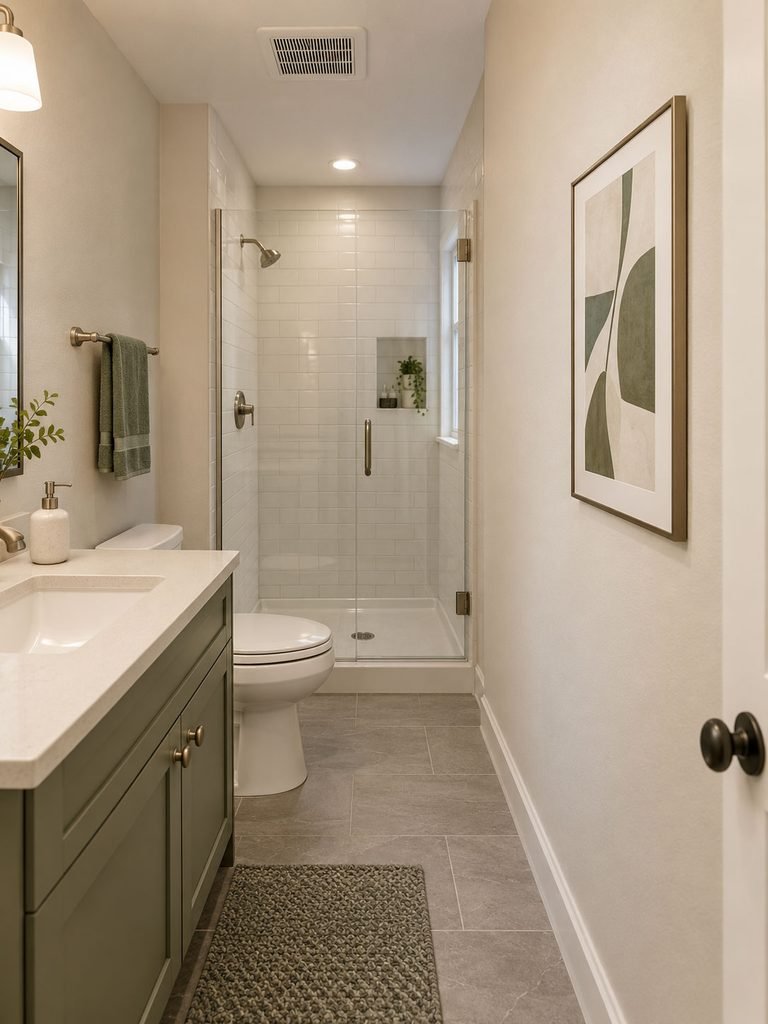
Bathroom art can work, but the wall matters as much as the artwork.
Look at the room shortly after the longest shower it normally gets. A wall near the door may stay dry while the wall beside the tub regularly collects moisture. Those two locations should not be treated the same.
The EPA identifies bathrooms as common moisture areas and recommends ventilation during bathing and drying damp surfaces. Its guidance on mold, moisture and reducing bathroom humidity includes running the bathroom fan or opening a window while showering.
For decorating, that means inexpensive framed art is easier to justify on a wall that stays comparatively dry than in a direct splash or persistent-condensation area. Hard, wipeable decorative materials can also be more forgiving than exposed paper in wetter locations, but materials, finishes, fasteners, and manufacturer recommendations vary.
Femorias’ dedicated guide to bathroom wall art that can handle humidity goes deeper into choosing the wall first, then matching the art material to the actual bathroom conditions.
For small rooms, one appropriately scaled piece is often easier to integrate than a cluster of tiny frames. The goal is to finish an empty wall, not turn every available inch into display space.
Use color and pattern without chopping the room into pieces
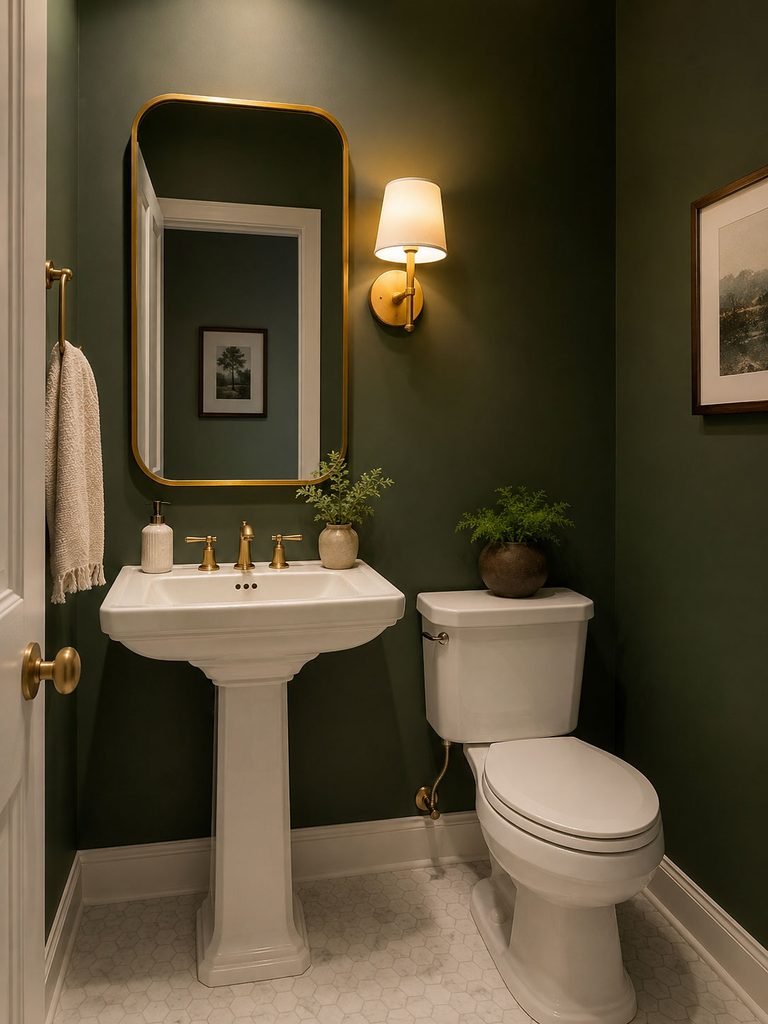
“Small bathroom” does not have to mean “white bathroom.”
Light colors are an easy choice when you want a bright, quiet background, but dark or saturated color can work too. The more useful question is whether the room feels visually connected.
There are two reliable directions.
The first is soft continuity: keep the wall, shower curtain, towels, and accessories within a close family of tones. Warm white, sand, putty, pale blue, or soft green can create a calm backdrop without demanding attention from every surface.
The second is controlled drama: choose one strong wall treatment or wrap a small powder room in one deeper color, then simplify the accessories. A tiny room can carry more color than people expect when you stop adding competing little statements.
Pattern follows the same rule. If the tile floor is already busy, a quiet curtain makes sense. If the room is plain, a patterned curtain or wallpaper can become the feature.
Try taking a phone photo from the doorway before buying anything. Small objects that seem harmless when you stand beside them often become obvious visual clutter in a photograph. Remove one item at a time until your eye knows where to land.
Small bathroom decor FAQs
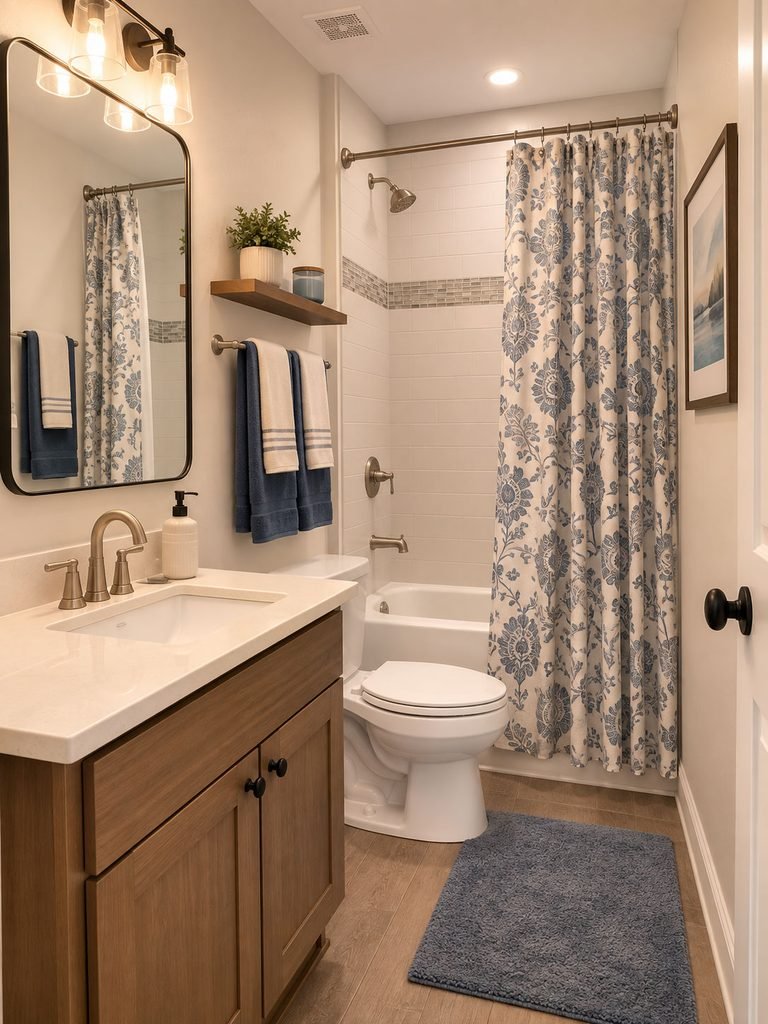
How do I decorate a small bathroom without making it look cluttered?
Remove visible extras first, then choose one main decorative feature. Let practical items such as towels, a shower curtain, mirror, storage basket, or soap dispenser carry most of the style rather than adding many objects that exist only for display.
What should I put on a small bathroom counter?
Keep it to the things you reach for constantly. Soap is an obvious candidate. A small tray can group one or two other daily items if needed. Store backups, cleaning products, seldom-used cosmetics, and unopened toiletries somewhere less visible.
What can I put above the toilet in a small bathroom?
A shallow shelf, one appropriately scaled artwork, or nothing at all can work. Avoid a deep shelf or heavy arrangement that projects awkwardly into the room. Secure anything wall-mounted correctly for its weight and wall type.
Do I have to use light colors in a tiny bathroom?
No. Light palettes are straightforward, but a compact powder room can also look intentional in a dark or saturated color. What matters is controlling the number of competing colors and patterns.
How can I decorate a small bathroom cheaply?
Start with changes that replace rather than add: edit the counter, coordinate the towels you already need, switch the shower curtain, move a better piece of art into the room if the location is suitable, and remove unnecessary floor items. Buying fewer pieces generally gives you more room to spend on the one element that matters.
Refresh the room in this order
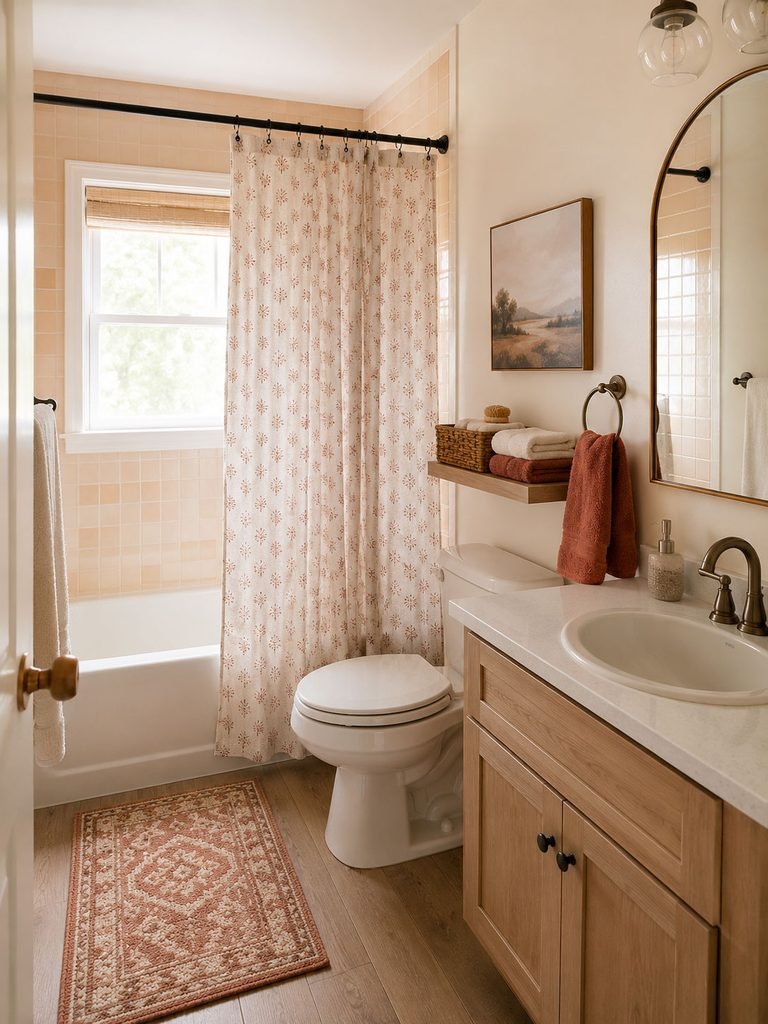
When a small bathroom needs help, work from space to style rather than from shopping cart to room.
First, clear the counter and floor. Next, decide which existing element is already strongest: the floor, vanity, tile, mirror, or shower curtain. Choose one decorative anchor that works with it. Then solve any storage that is forcing daily items into view.
After that, coordinate the textiles. Check the vanity wall. Add one piece of wall decor only if the room still needs it and the location suits bathroom conditions.
Then stop.
Live with the room for several days before adding anything else. A compact bathroom often looks most finished at the exact point where another accessory would begin to make it feel busy.
The best small bathroom decor ideas do not disguise the room’s size. They make that size easier to live with—and give the few things you choose enough space to look good.