Dining Room Wall Decor Ideas That Fix a Blank or Awkward Wall

A dining room wall usually looks wrong for one of four reasons: the decor is too small, the wall has no focal point, the wall competes with everything else or the objects on it have no relationship to the furniture below. Fix that problem first. Do not start by buying another small frame because the wall happens to be empty.
The most useful dining room wall decor ideas give the wall a clear job. One large artwork can add focus. A mirror can return light to a darker corner. A gallery arrangement can give a long wall enough presence. Shelves can add display space. Sometimes the best fix is to remove several small pieces and leave more of the wall visible.
Start with the wall problem, not the decor
Stand in the doorway and describe the wall in plain language before deciding what belongs there. Is it wide and empty? Dark? Too busy? Narrow and tall? Broken up by doors or windows? Anchored by a sideboard? Those conditions matter more than whatever decor style happens to be popular.
A useful first pass looks like this:
- Wide and empty: Try one generous artwork or one clearly defined gallery arrangement.
- Dark or visually closed in: Test a mirror where it can reflect useful daylight or an attractive part of the room.
- Tall and narrow: Use a vertical piece, stacked pair or slender decorative arrangement.
- Already busy: Leave more negative space or choose one quiet object.
- Above a sideboard: Treat the furniture and wall decor as one visual group.
- Short on storage: Consider a shallow picture ledge or display shelf only if it will not crowd circulation.
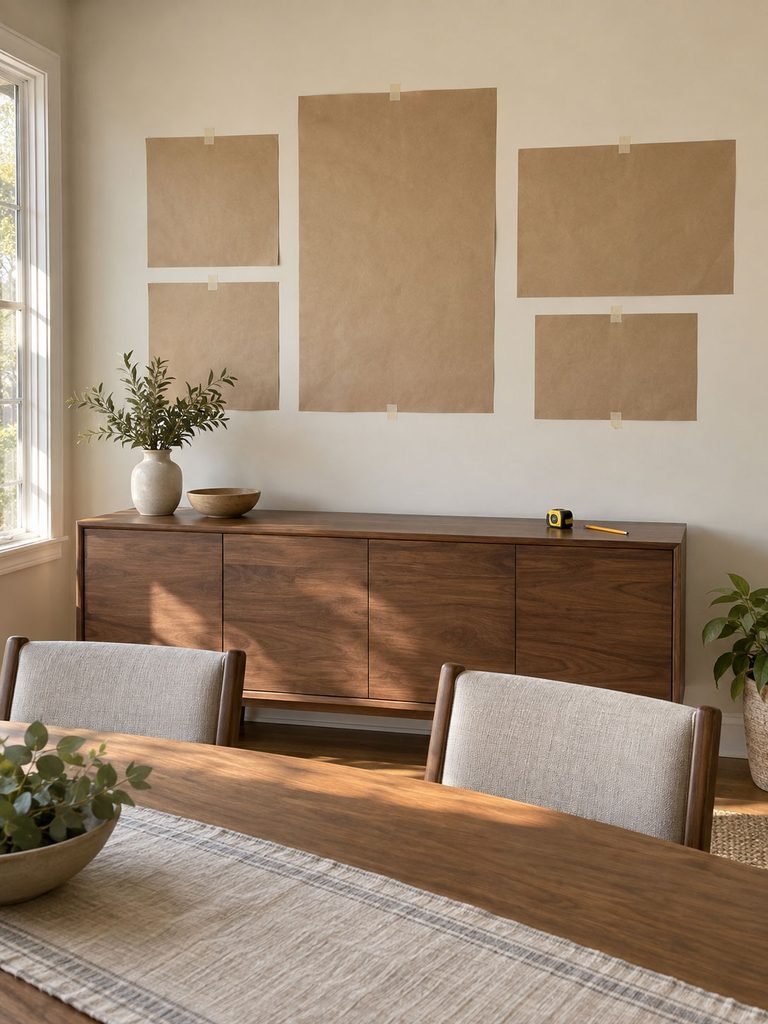
Before buying anything, cut kraft paper or newspaper to the approximate size of the piece you are considering and tape it to the wall. Look from the doorway, from a chair at the table and from any adjoining room. This simple test reveals undersized artwork faster than comparing dimensions on a product page.
For whole room planning, the Femorias dining room decor measurements guide covers the relationship between walls, furniture, lighting and clearances in more detail.
Use one large artwork when the wall needs a focal point
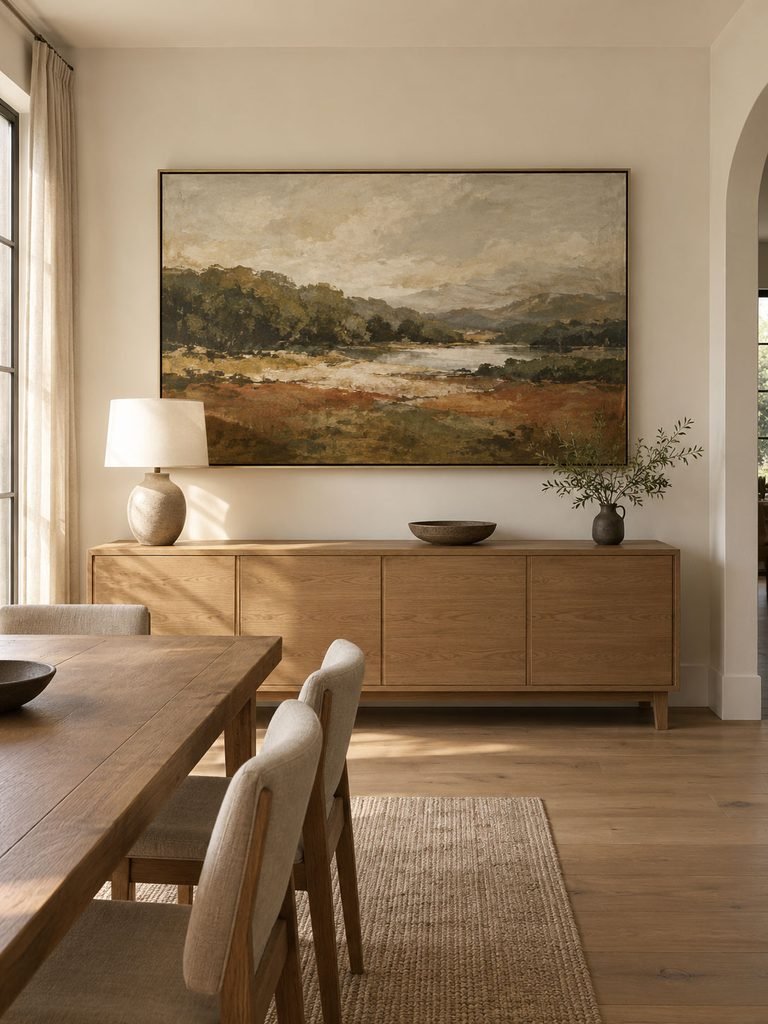
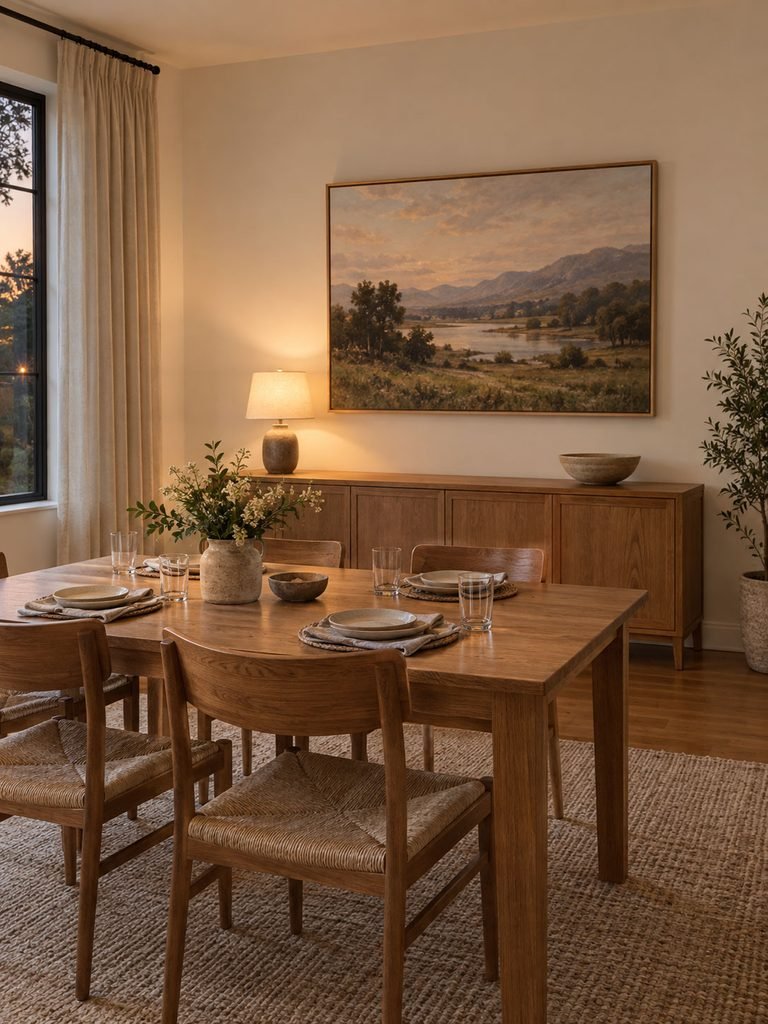
One large piece is often the cleanest answer when a dining wall feels empty because it gives the eye somewhere to land without introducing many small objects.
Choose the piece by its physical presence first. Color and subject matter come after scale. If a wide wall contains a broad sideboard or a large dining table, a postcard sized print will look accidental even when the art itself is beautiful.
Mock up several sizes with paper. Start with one that is clearly larger than your instinctive first choice, then compare it with a smaller option. The goal is not to cover the wall. It is to create enough visual weight that the artwork belongs in the same room as the dining furniture.
A single piece is particularly useful when the chandelier, rug, wallpaper or dining chairs already provide pattern. It gives the room one calm wall instead of adding another layer of small detail.
For valuable original works on paper or meaningful family photographs, placement matters beyond appearance. The Library of Congress advises keeping framed paper based materials away from direct sunlight and other intense light because light damage is cumulative and irreversible. Its preservation guidance for framed paper and artwork also recommends considering a reproduction for long term display when an original has personal, historic or monetary value.
Choose a mirror when the room needs reflected light or depth
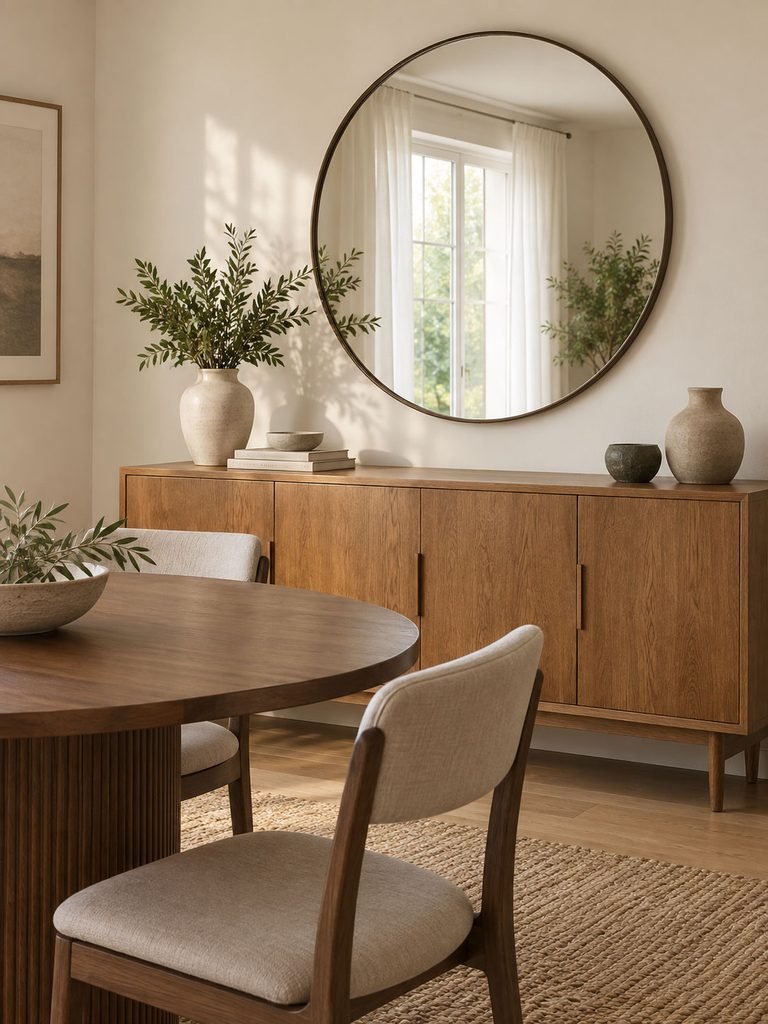
A mirror works best when you know what it will reflect.
Check the view from the table before mounting it. A mirror that catches a window, artwork, greenery or a softly lit part of the room can make the wall feel more useful. A mirror that reflects an open utility closet, a bright television or a cluttered kitchen counter simply repeats the visual problem.
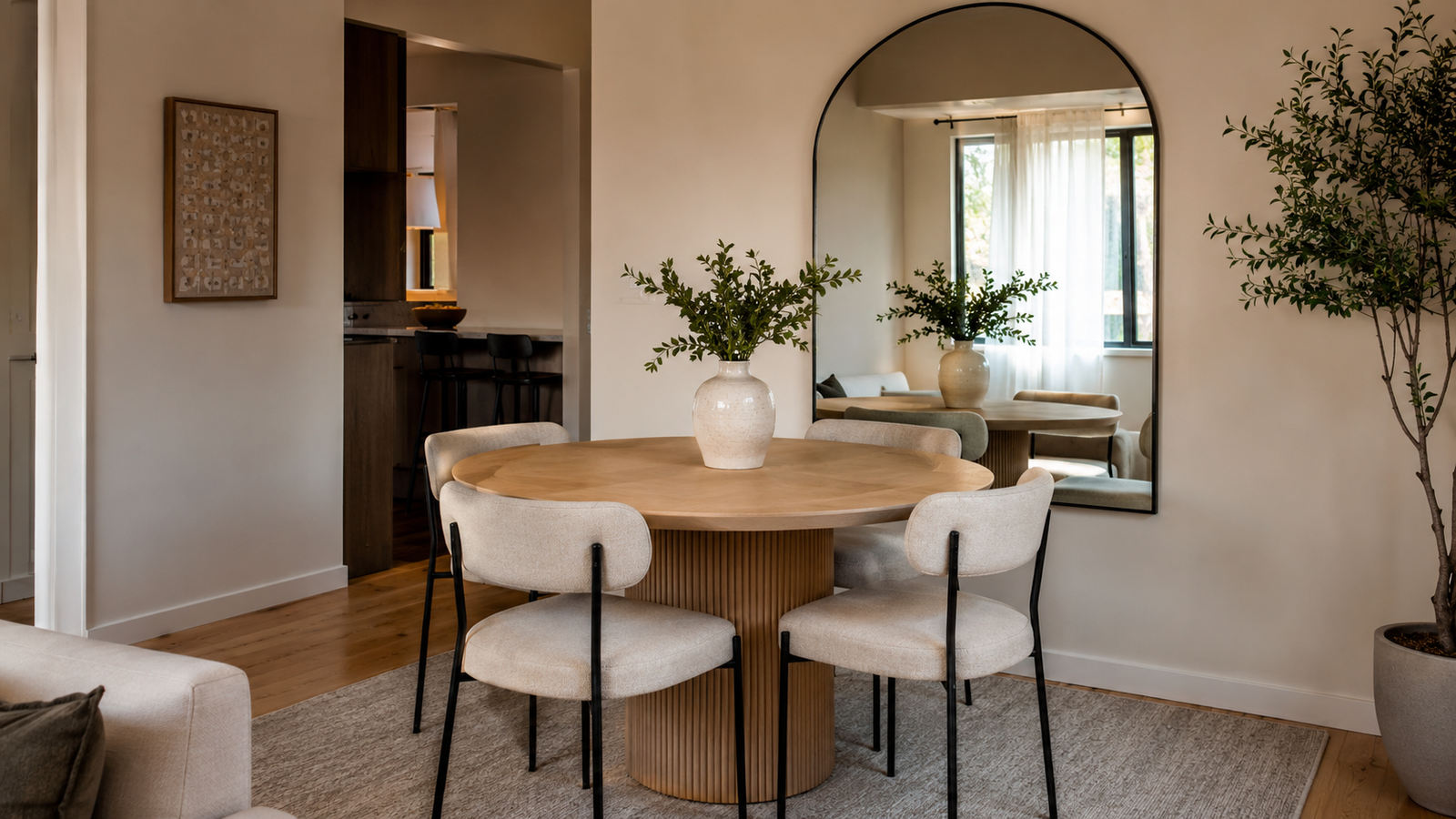
Shape also changes the effect. A round or arched mirror softens a room dominated by a rectangular table, rectangular sideboard and square frames. A tall mirror adds vertical emphasis to a narrow wall. A wide horizontal mirror can relate naturally to a long sideboard.
Do not choose a heavy mirror as though it were lightweight wall art. Use the mounting system specified by its manufacturer, confirm that the wall construction suits that system and make sure the hardware is appropriate for the mirror’s weight. A mirror is not the place to improvise with an unknown hook.
Build a gallery wall when one piece feels too small
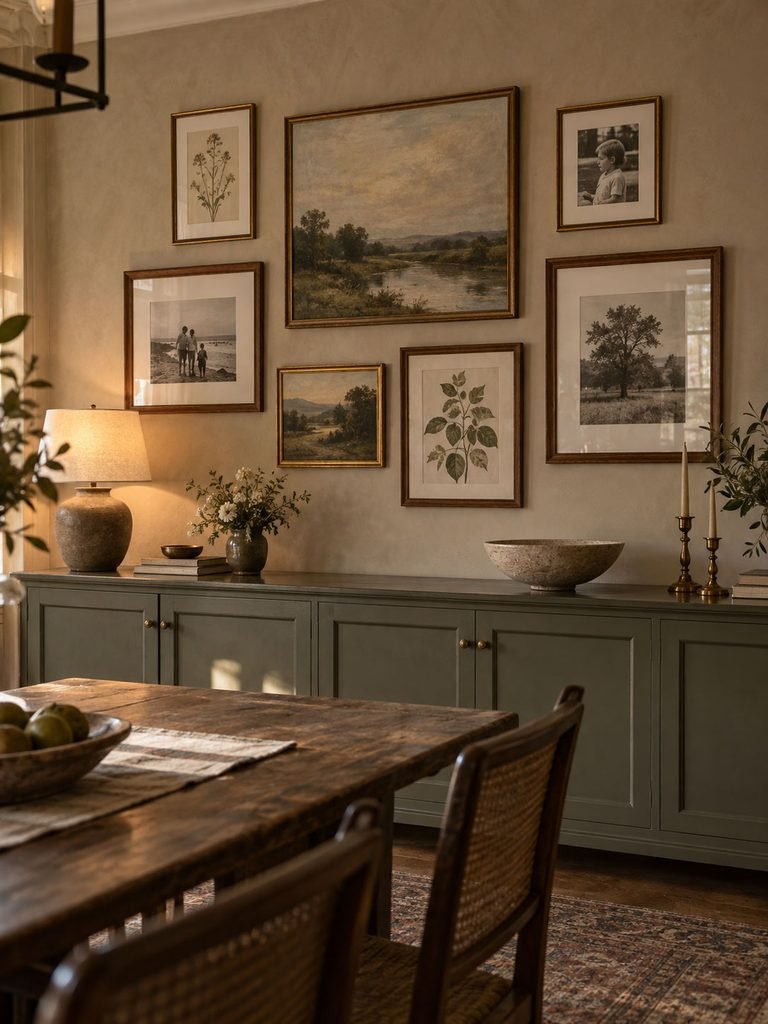
A gallery wall solves a different problem from one large artwork. It works when the wall needs width, when you have several meaningful pieces or when the room feels too polished and needs something more personal.
Treat the arrangement as one shape rather than a collection of unrelated frames. Lay everything on the floor first or make paper templates. Find the outside boundary of the entire group, then adjust the individual pieces inside it.
The easiest way to make mixed artwork feel intentional is to repeat something. It might be frame material, mat color, subject matter or overall tone. You do not need identical frames. You do need enough repetition that the eye understands why the pieces belong together.
Keep truly sentimental items in the mix. Family photos, a child’s drawing, a small inherited print or a framed menu from a meaningful restaurant can do more for a dining room than five generic prints bought as a set.
The tradeoff is maintenance. More frames mean more dust, more glass reflections and more visual information. If the dining room already has patterned wallpaper, an ornate rug and a sculptural light fixture, one larger piece may be the better choice.
Treat the sideboard and wall as one composition
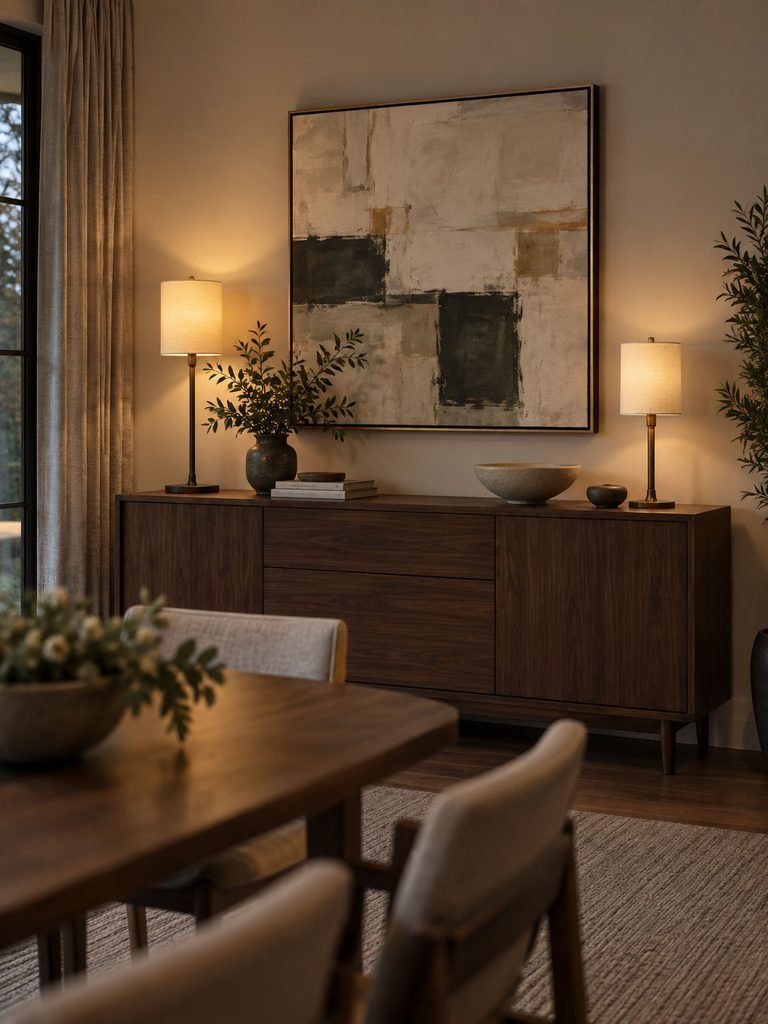
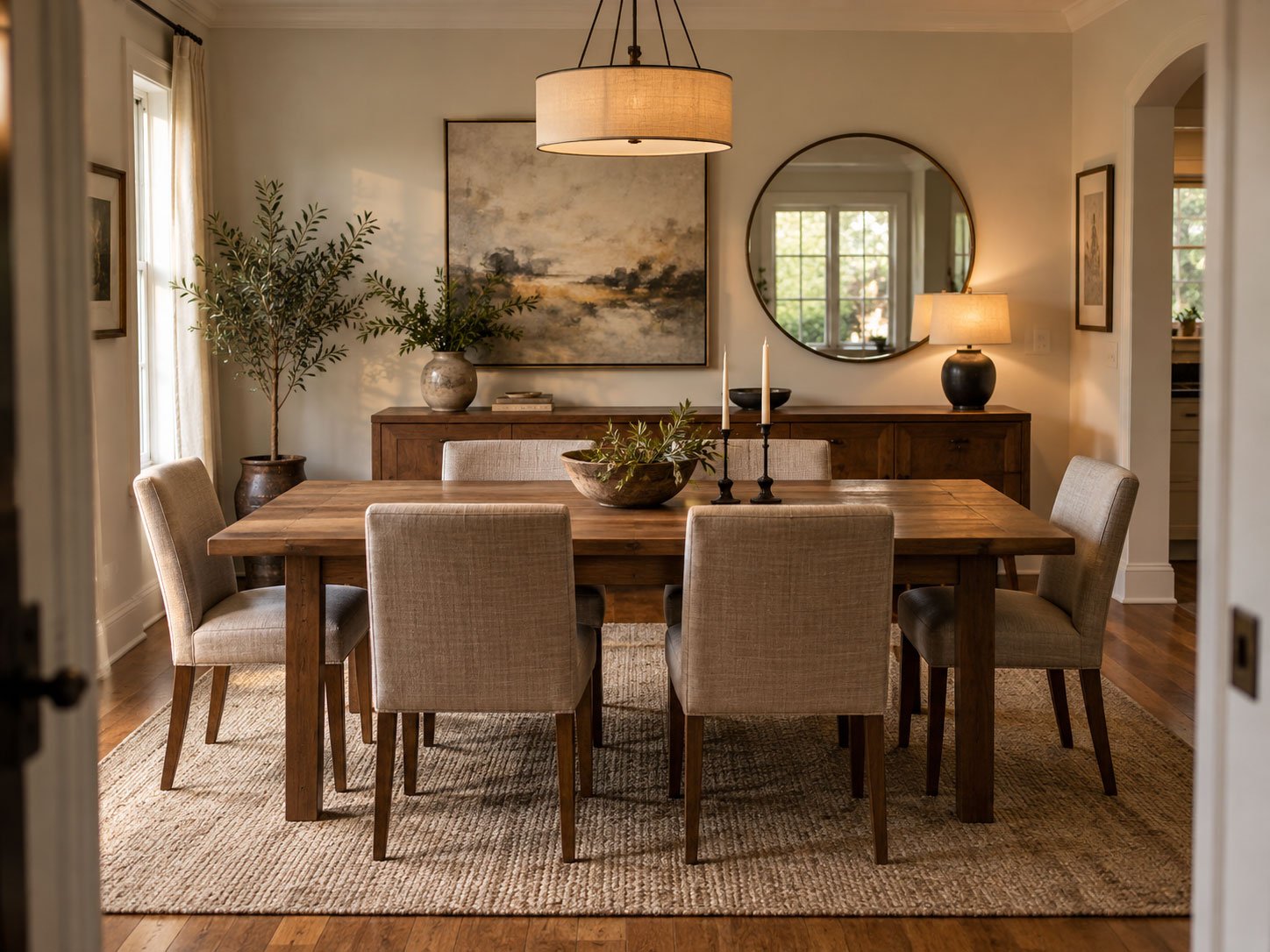
When a sideboard sits beneath the wall, use the sideboard as the anchor. The artwork, mirror or grouped frames should feel connected to that furniture instead of floating somewhere above it.
This is where paper templates are especially useful. Tape up the planned artwork, then style the sideboard lightly. Look at both together. If the wall piece feels weak, make the art larger before adding more accessories. If the combination feels top heavy, reduce either the wall decor or the objects on the furniture.
Also consider what the sideboard actually does. A serving surface needs empty space during meals. Filling every inch with tall lamps, plants and decorative objects may photograph well but becomes irritating when there is nowhere to set a platter.
One strong wall piece with two or three useful objects below it usually gives you more flexibility than an elaborate arrangement that has to be dismantled every time people come over.
Use shelves, plates or texture when flat art feels predictable
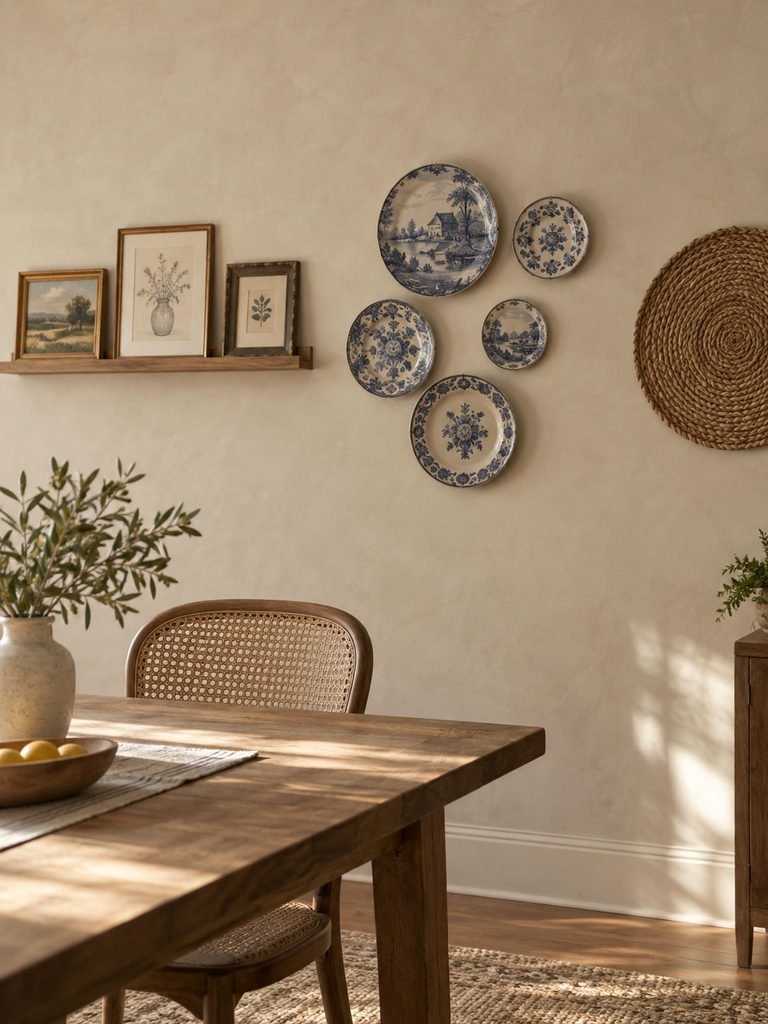
Not every dining room needs framed art. Dimensional pieces can make more sense when the room needs texture, flexible display space or something that breaks up a wall full of straight furniture lines.
Picture ledges work when you like changing art because the frames can move without creating a new pattern of nail holes. Keep the ledge shallow enough that it does not become a head or shoulder hazard near chairs.
Decorative plates can add color without taking floor space. They are especially effective when the room already contains ceramic serving pieces or a display cabinet, because the wall then repeats a material that belongs naturally in a dining space.
Woven pieces soften a room with hard wood, glass and metal surfaces. They work particularly well when the rug has been removed for easier cleaning.
Wallpaper, molding and paneling can be better than objects when the whole wall needs texture rather than another focal piece. In a room with a dramatic wall finish, allow the finish to do the work. You do not automatically need art on top of it.
The practical question is dust. Open ledges, baskets and raised textures require more cleaning than one framed piece. Choose them because you like the effect enough to maintain them.
Keep small rooms and rentals visually lighter
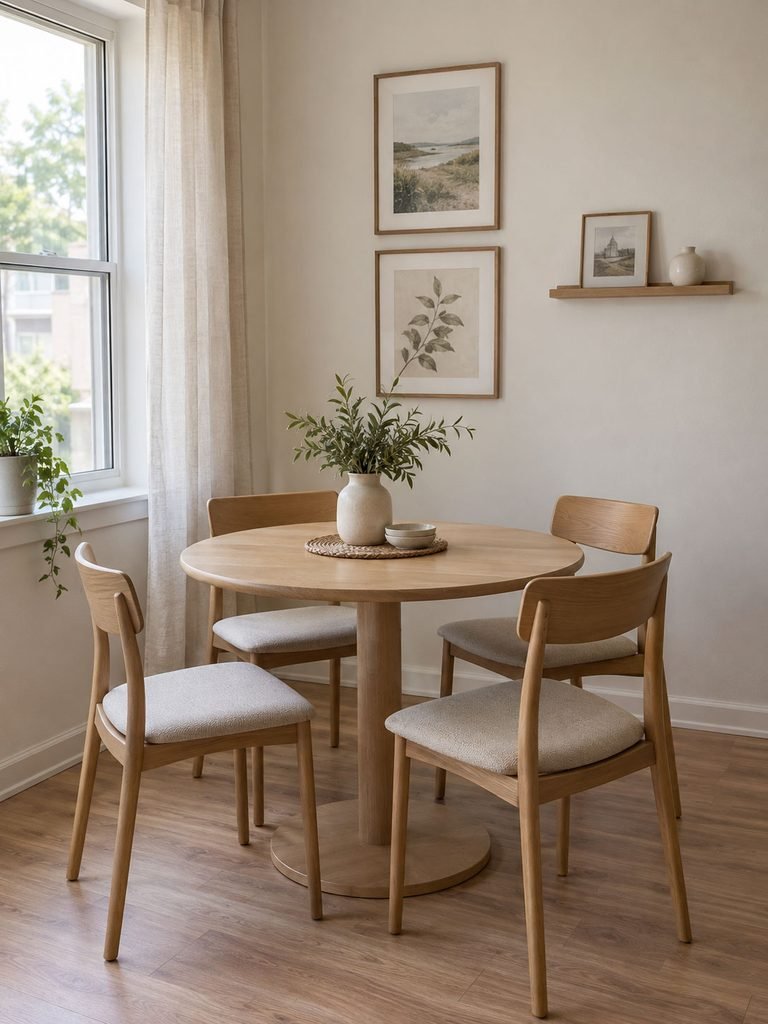
Small dining rooms usually need less wall decor, not smaller versions of everything.
A single medium or large piece can look calmer than six tiny frames. A mirror can help visually if its reflection is useful. Vertical art can draw the eye upward without using floor area. A shallow ledge can provide display space where a cabinet would make circulation worse.
The Femorias small dining room decor guide is useful when the wall problem is really a space problem because it deals with furniture size, circulation and using walls without crowding the floor.
Renters have an additional constraint: the wall finish and lease matter. If you use removable adhesive hanging products, check the exact product instructions instead of assuming every strip works on every wall. Command’s official picture hanging guidance says its picture hanging strips have specific surface, preparation, size and weight limits, and it specifically warns against several uses including wallpaper and valuable or irreplaceable items.
For a rental, a good sequence is to arrange what you already own, test wall scale with paper, confirm what the lease allows and only then choose the hanging method.
Dining room wall decor questions
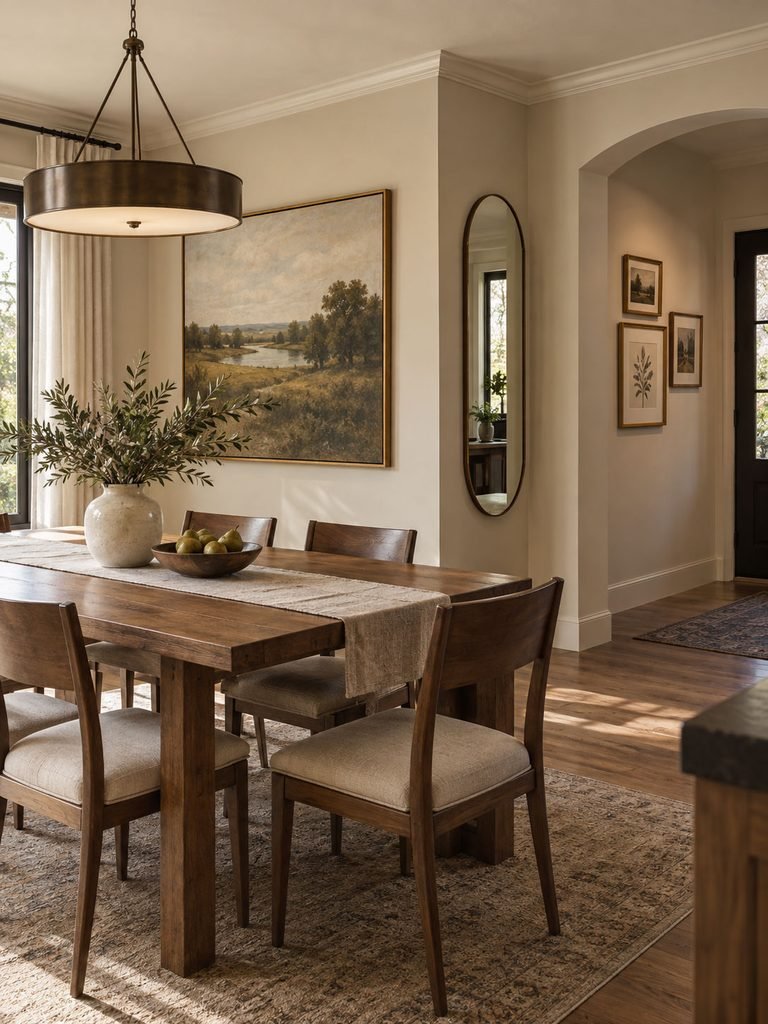
What should I put on a large blank dining room wall?
Start by testing one large artwork or one clearly bounded gallery arrangement. A large wall usually looks worse when it is filled with several unrelated small objects. Mock up the overall size with paper before buying.
What looks good above a dining room sideboard?
Large art, a mirror, a pair of coordinated pieces or a contained gallery arrangement can all work. The important part is making the wall decor relate to the sideboard beneath it rather than treating the full wall as an unrelated blank canvas.
Is a mirror a good choice for a dining room?
Yes when it reflects something worth repeating, such as daylight, greenery or an attractive part of the room. Check the reflection from the actual dining seats before deciding where to hang it.
Can a dining room have too much wall decor?
Yes. If the room already has patterned wallpaper, a noticeable rug, sculptural lighting, decorative chairs and a styled sideboard, another complex wall arrangement can make every surface compete. Leave some wall visible.
How can I decorate a dining room wall without making holes?
Start with lightweight decor and use a hanging product approved for the object’s weight and your wall surface. Follow the product instructions exactly and check your lease first. Do not assume removable adhesive is suitable for wallpaper, textured surfaces or valuable pieces.
Make one decision before you buy anything
Before ordering art, a mirror or another shelf, finish this sentence: This wall needs to add ______.
Maybe the answer is scale. Maybe it is light, personality, height, texture or storage. Once that answer is clear, most of the options that looked tempting online become irrelevant.
Then mock up the size on the wall and live with the paper outline for a day. Look at it in daylight and after dinner. Sit at the table. Walk into the room from the main doorway. If the shape feels right before the artwork exists, you are much less likely to end up buying three smaller things to fix one wrong purchase.
A dining room wall does not need to be full. It needs to look connected to the room around it.