
Bathroom Decor Ideas for Dated Bathrooms Without a Remodel

The tile is staying. The vanity still works. The bathroom just looks older than the rest of the house.
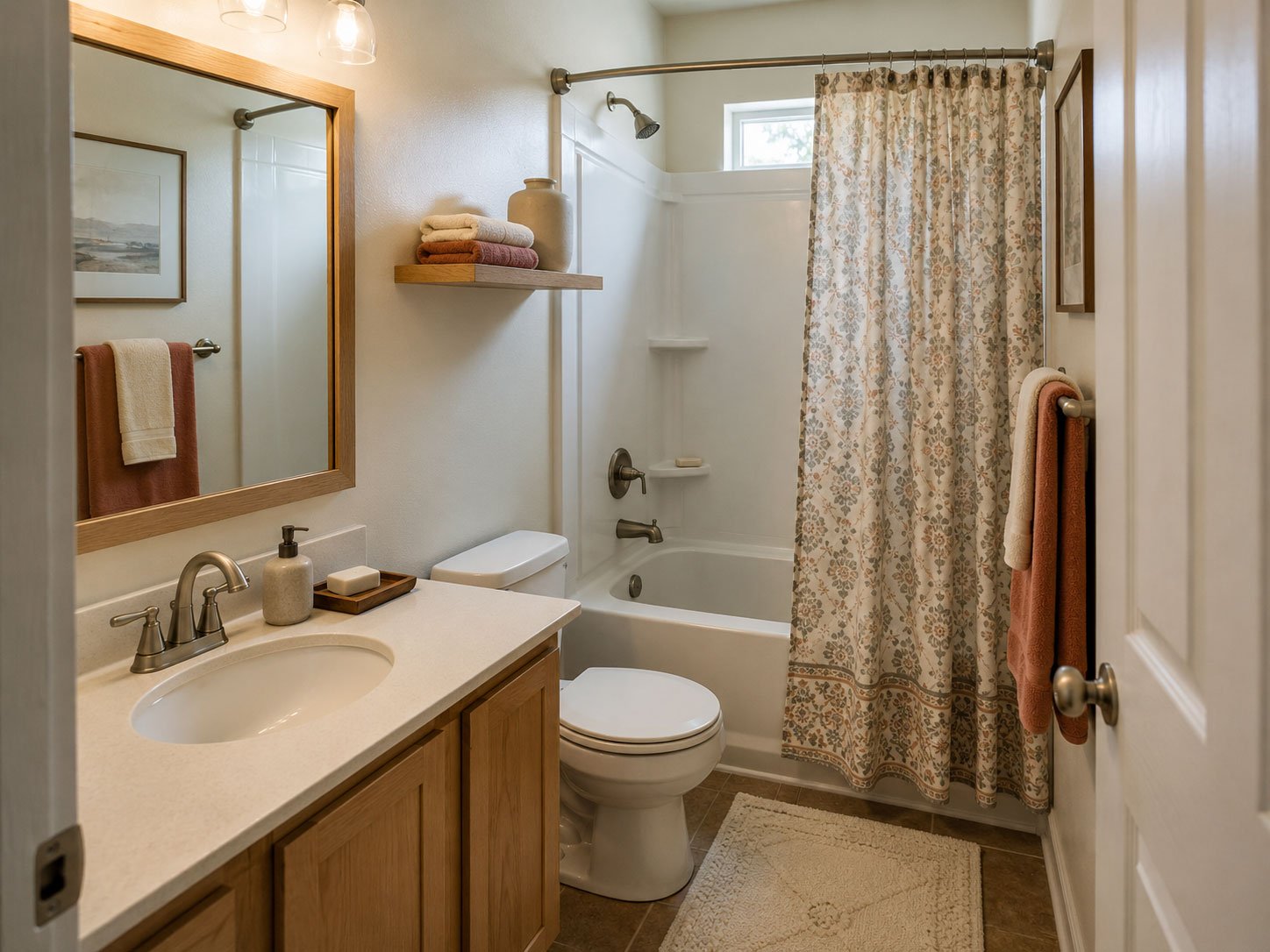
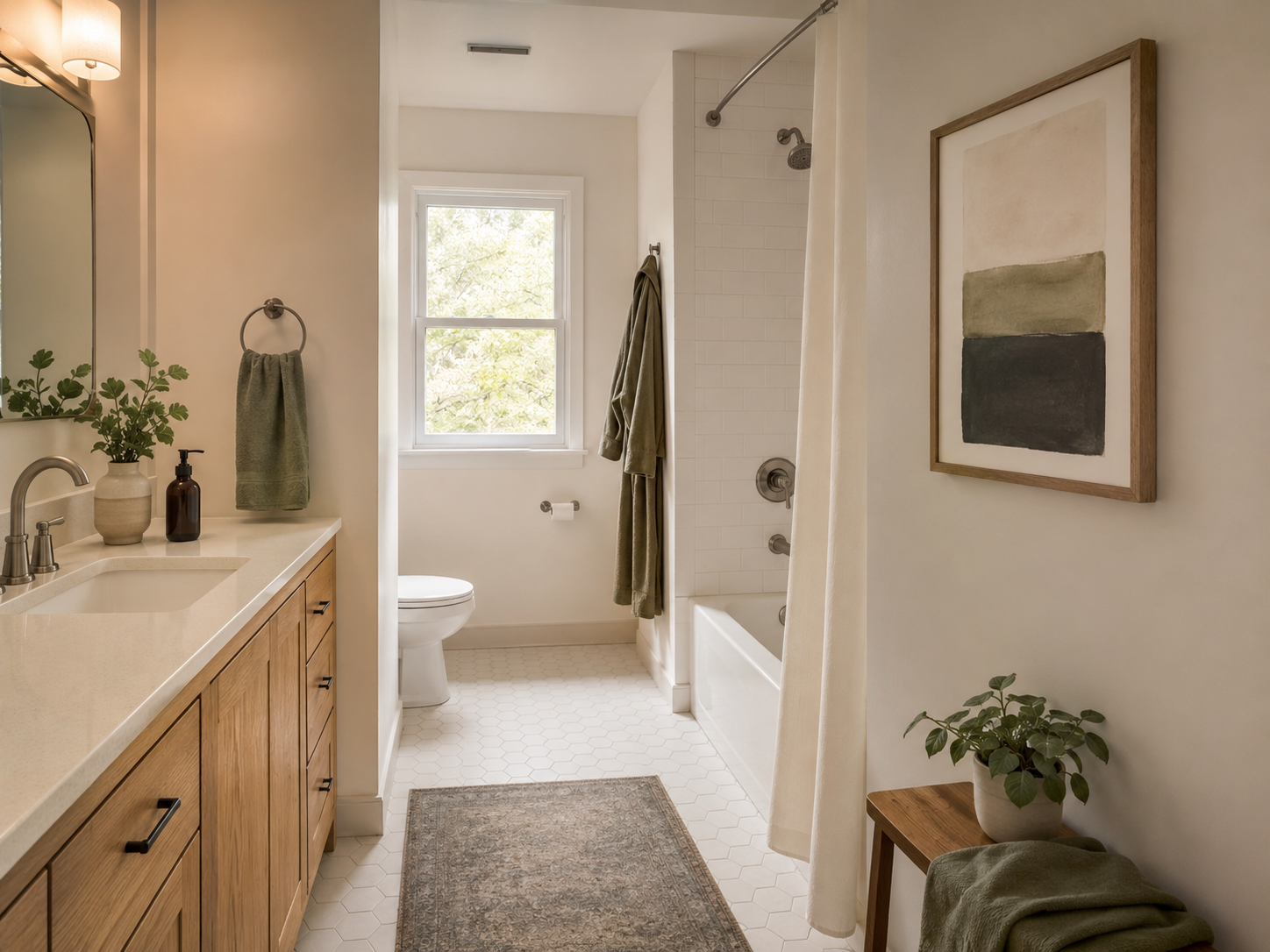
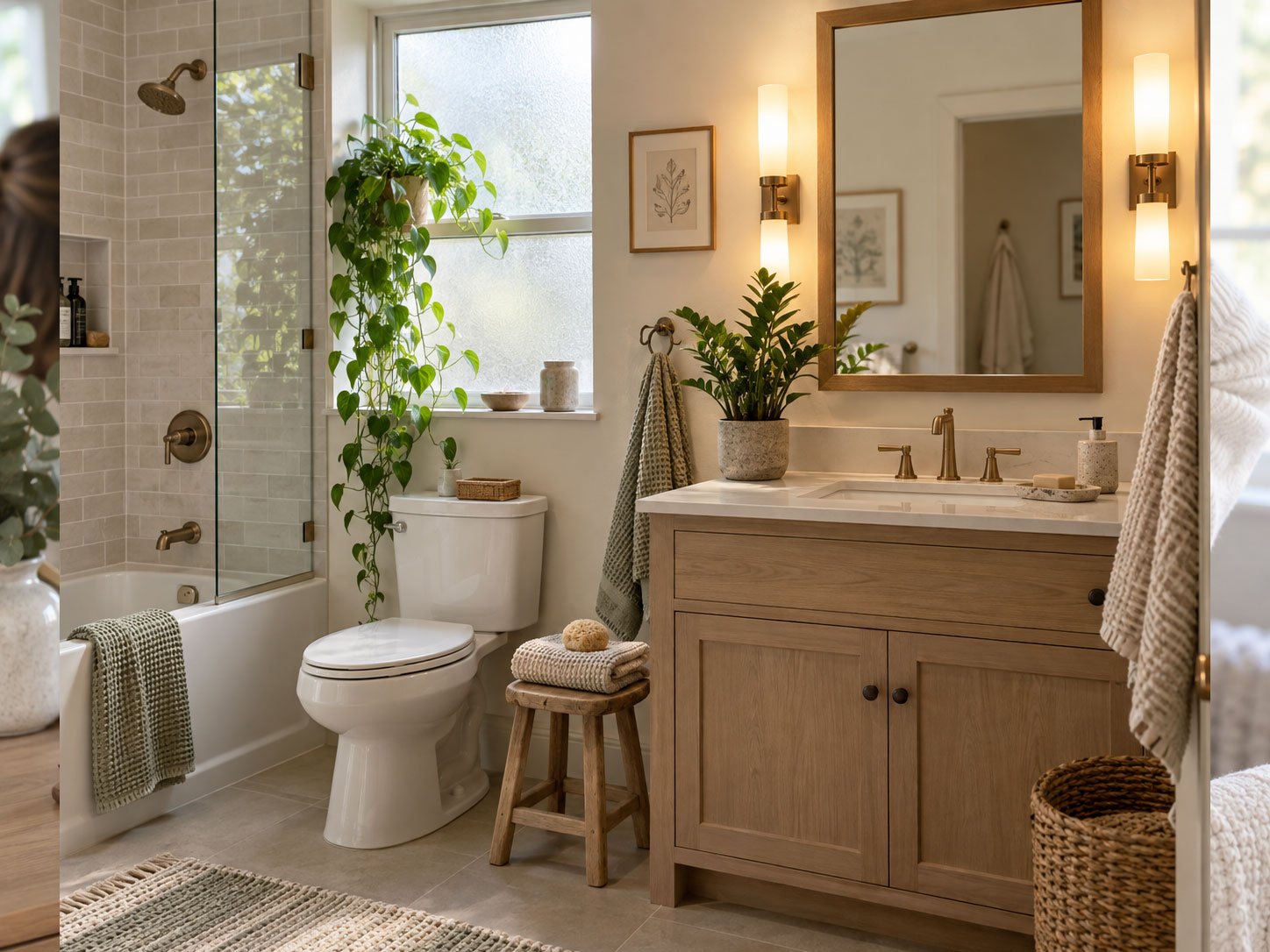
A dated bathroom does not always need a remodel to look better. Start with the finishes you cannot easily change, then choose a color palette that makes them feel intentional. A shower curtain can soften a busy tile pattern, coordinated towels can connect mismatched colors and a better mirror or wall color can change the balance of the room.
The most useful bathroom decor ideas for dated bathrooms work with existing tile, cabinetry and plumbing fixtures instead of pretending those features are not there.
Check the fixed finishes before you choose decor
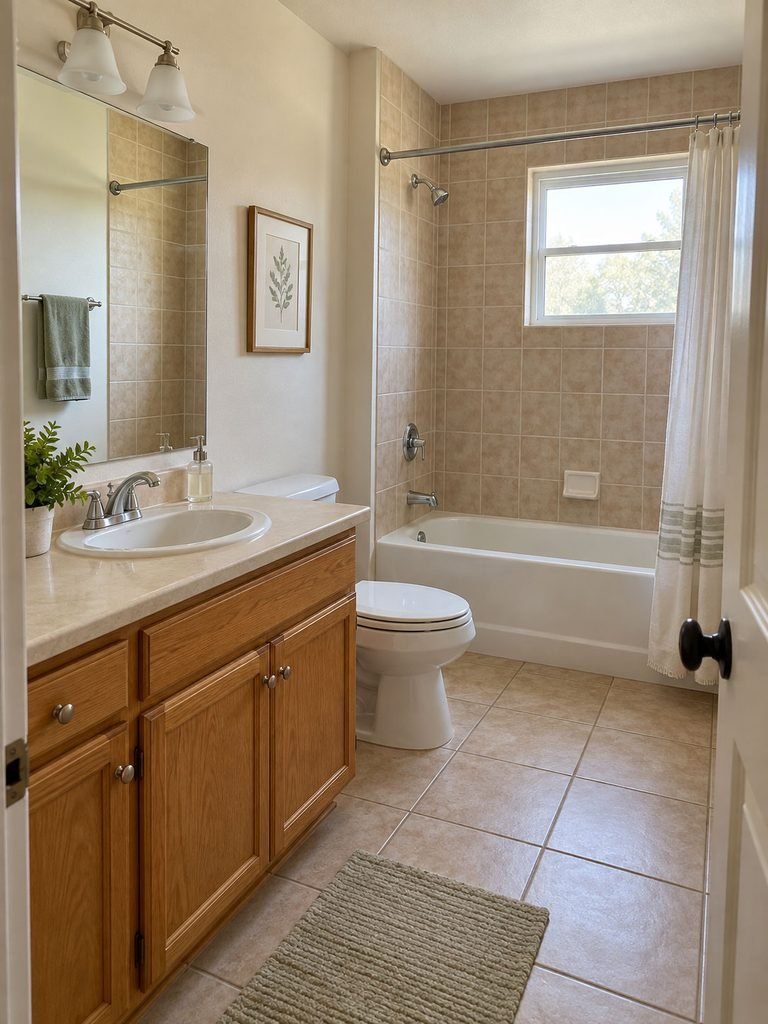
Before buying anything, identify the two or three permanent finishes that dominate the bathroom.
The floor may be gray while the countertop is cream. The tub might be white beside yellow beige tile. A dark brown vanity may sit below an old mirror with bright vanity bulbs.
These combinations are not necessarily bad, but they can make selecting new decor difficult.
Look at the room in daylight and with the bathroom lights on. Notice whether the tile appears warm, cool or neutral. Check which colors repeat between the floor, walls, countertop and cabinets.
Use this as a starting guide.
| Existing finish | Decorating direction to try |
|---|---|
| Beige or tan tile | Warm white, olive, muted clay and medium wood tones |
| Brown tile or dark trim | Cream, soft sage and restrained dark accents |
| Cool gray tile | Soft white, warm taupe, muted blue and natural wood |
| Pink vintage tile | Cream, dusty green, warm wood and restrained brass accents |
| Blue vintage tile | Warm white, navy, natural wood and soft gray |
| Dark wood vanity | Light textiles, a simple mirror and coordinated accessories |
| Busy patterned floor | Plain towels, solid curtains and minimal counter decor |
These are starting palettes, not mandatory color combinations. Compare actual samples against your finishes before committing.
One useful test is to take a photograph from the bathroom doorway. The photograph shows which surfaces occupy the most visual space.
Choose the largest decorating problem first. Do not spend money on small accessories while the main color combination remains unresolved.
Work with beige and brown tile instead of hiding it
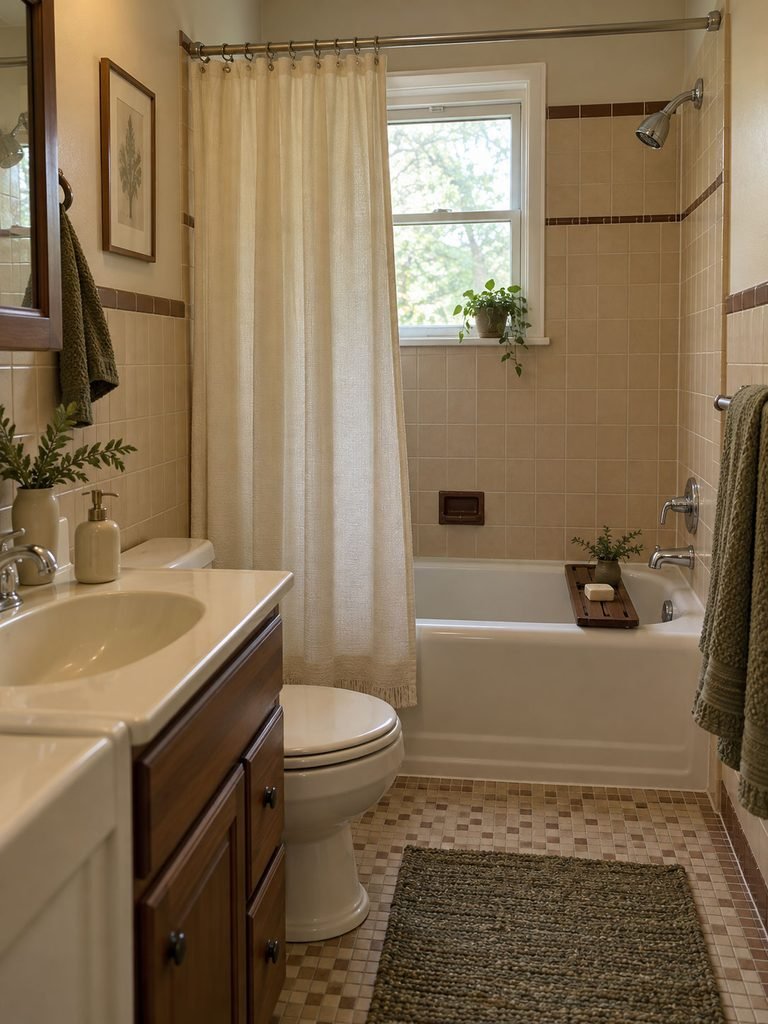
Beige tile often looks more dated when every new accessory introduces a different shade of white, tan or gray.
A stronger approach is to give the existing beige a clear supporting palette.
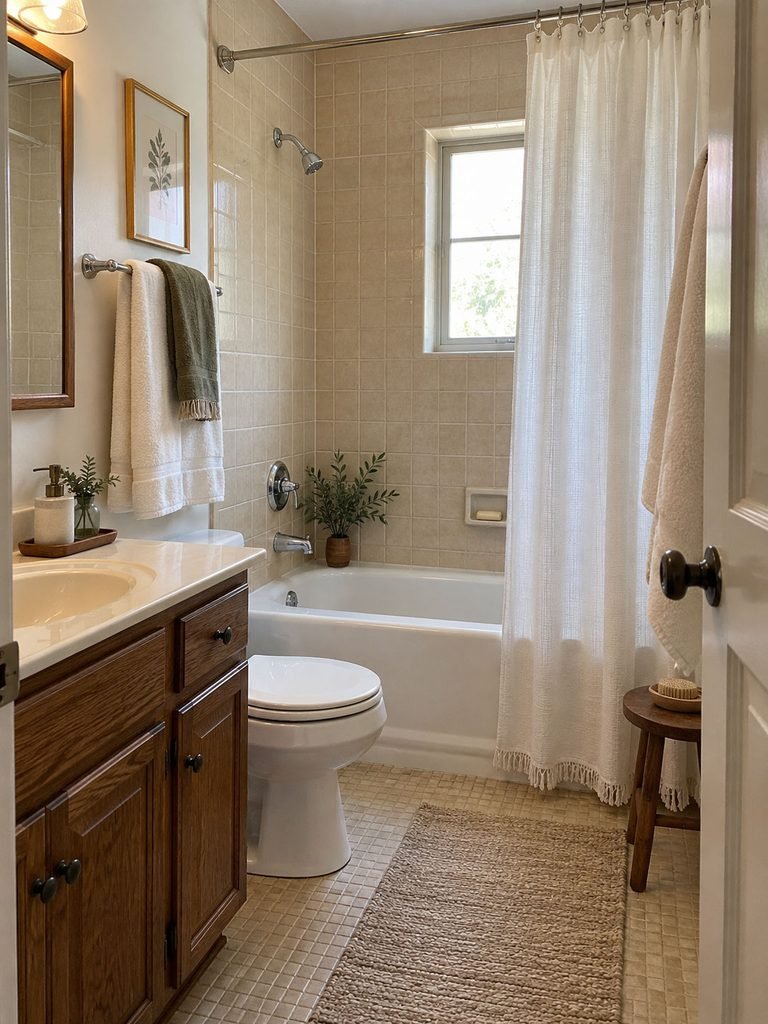
For a soft, natural bathroom, combine warm ivory towels with olive green accents and a medium brown wood finish. Beige tile then becomes part of a deliberate warm color scheme. For a cleaner contrast, keep the textiles light and use a small amount of dark brown or charcoal in a mirror frame, tray or soap dispenser. If the tile has a noticeably yellow undertone, compare your new fabrics against it in daylight. Brilliant blue white can make some creamy surfaces appear more yellow by contrast.
Try these combinations:
- Warm neutral: Beige tile, ivory shower curtain, cream towels and wood accessories.
- Earthy contrast: Tan tile, olive towels, dark brown mirror frame and a pale stoneware tray.
- Subtle color: Beige tile, muted blue green hand towels and soft white accessories.
Avoid buying five slightly different beige accessories. A bathroom with too many competing neutrals can look less coordinated than one with a single clear accent color.
Best for: Bathrooms with tan tile, brown trim or older cream fixtures that remain in good condition.
Use warm contrast to soften gray tile
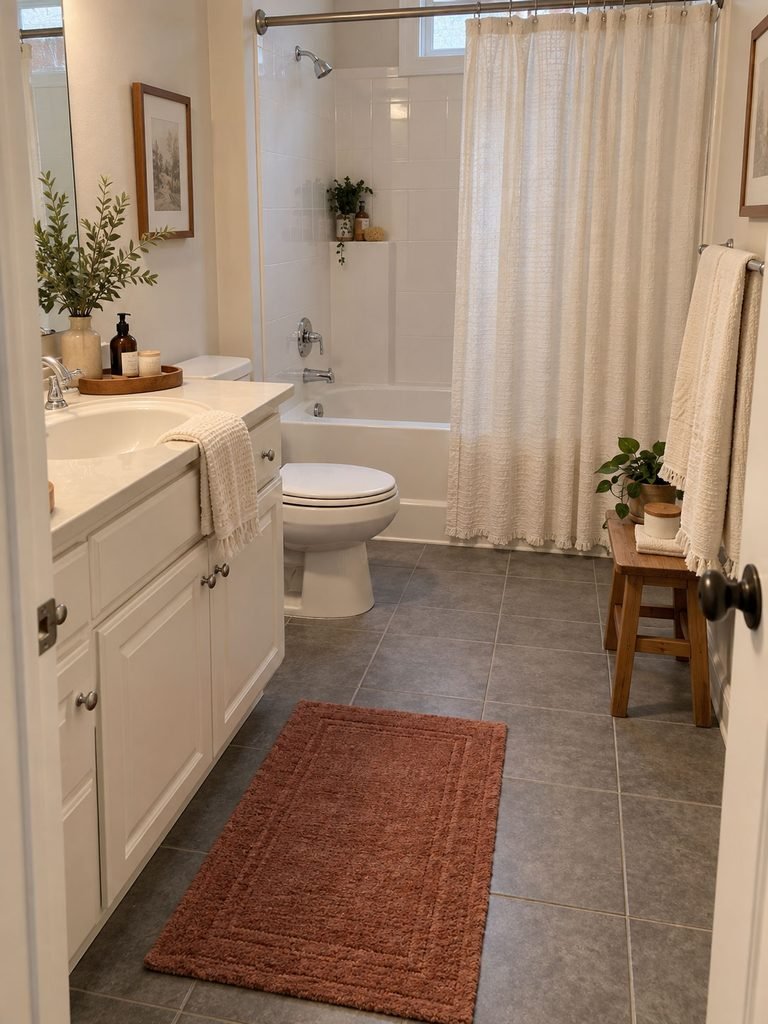
Gray tile can remain in place while the bathroom becomes warmer and less stark.
The key is to avoid introducing too many additional cool surfaces when the floor and walls already feel cold.
Soft white textiles, pale wood and muted clay accents provide contrast without demanding another major color change.
Consider the undertone of the gray. A blue gray tile may pair comfortably with navy, warm white and natural wood. A green gray tile may work better with putty, cream or a subdued earthy green.
If the countertop is also gray, choose an accent that shows up clearly against both surfaces. Warm towels or a contrasting shower curtain are often more noticeable than a collection of small containers.
A simple gray bathroom refresh might include a cream curtain, two matching warm white towels, a clay colored bath mat and a small wood tray on the vanity.
The wood should stay in a relatively dry location. An absorbent accessory that repeatedly gets soaked may become difficult to maintain.
Best for: Bathrooms dominated by gray floors, cool gray walls or gray countertops.
Give vintage pink or blue tile a clear point of view

Older colored tile can be the most memorable feature in a bathroom. Trying to neutralize it completely often makes the rest of the decor feel disconnected.
Pink tile can work with cream walls, dusty green towels and warm wood. The result feels softer and more intentional than adding unrelated gray accessories simply because gray is considered neutral.
Blue tile offers a different direction. Warm white, navy or muted sand can create a cohesive look depending on the strength of the existing blue.
If the bathroom has a colorful tile border, consider letting the tile be the main pattern.
Use solid towels and a quieter shower curtain instead of introducing several competing prints.
There is also no requirement to replace original chrome fixtures with brass. Existing chrome can work well with both pink and blue tile, particularly when it is clean and echoed elsewhere in the room.
To keep the styling balanced, repeat the tile color in only one or two small details. A blue hand towel or a pink ceramic accessory may be enough.
Best for: Midcentury bathrooms with original pink, peach, mint or blue ceramic tile.
Make a dark vanity feel like a design choice
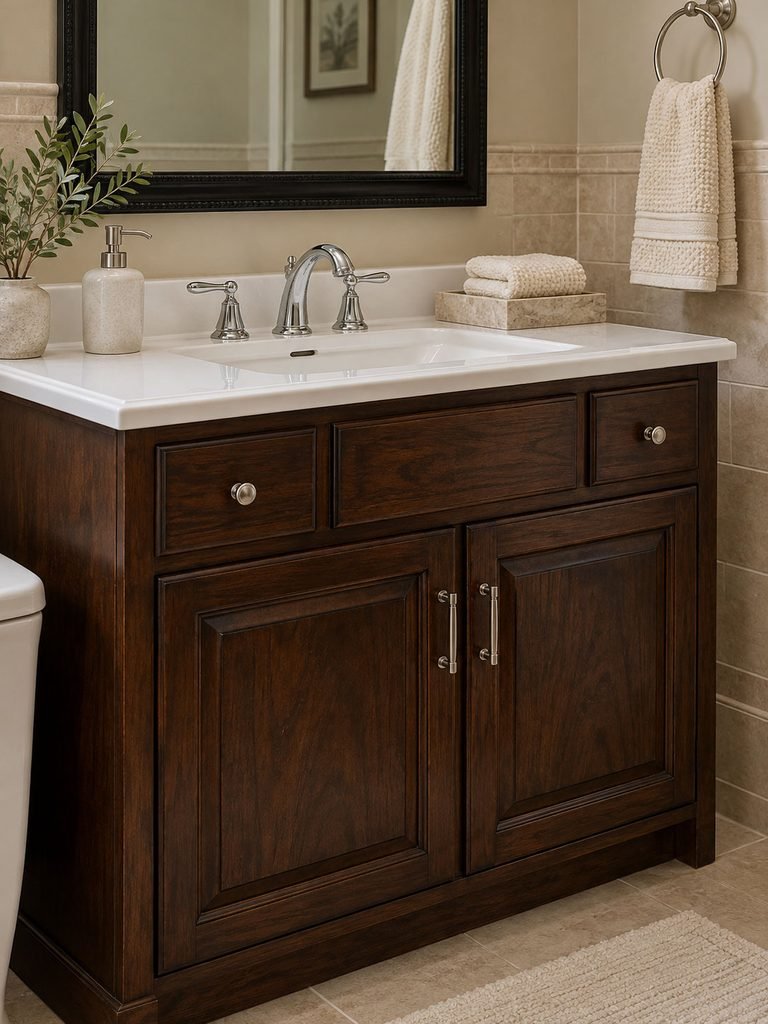
A dark vanity can look much better when the surrounding accessories provide a clear contrast.
Start by cleaning the existing cabinet and checking its actual condition. A dark finish is not the same thing as a damaged finish.
If the cabinet is sturdy and the wood is in reasonable shape, keep it.
Use a lighter tray, pale hand towels and a simple mirror frame to break up the dark visual weight. A framed mirror can make the sink area feel more complete, but replacement is not always necessary.
Where the existing mirror is large and functional, the simplest improvement may be removing unnecessary countertop accessories and using a more cohesive set of everyday items.
If you own the home and want to change cabinet handles, measure the distance between existing mounting holes before purchasing replacements. Using the existing holes avoids unnecessary extra drilling.
Keep the hardware finish connected to something already in the room, such as the faucet, towel bar or mirror.
Painting the entire vanity is a bigger project than swapping accessories. It may require cleaning, sanding, priming and a coating suitable for the cabinet material. Do not assume that every laminate, veneer or wood finish can be painted successfully with the same preparation.
Best for: Bathrooms with dark oak, espresso or brown vanities that remain functional.
Make the shower curtain the statement
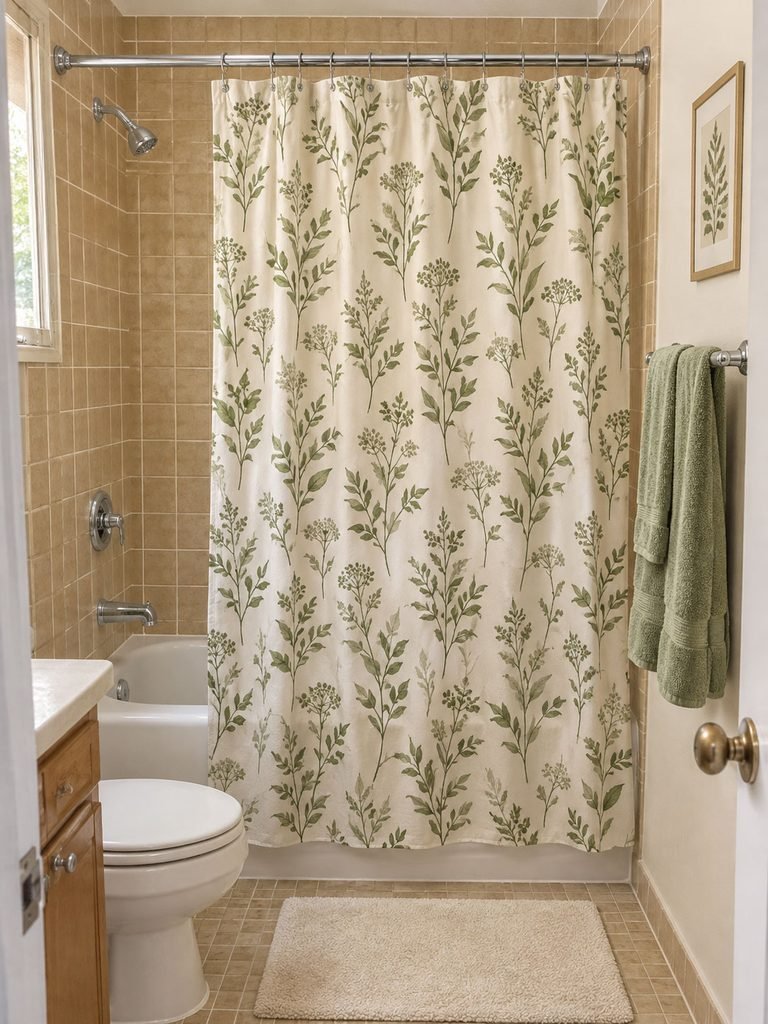
A new shower curtain can change the visual character of a tub bathroom without touching any permanent materials.
It often occupies more visible space than the artwork, soap dispenser or small decor on the vanity. That makes it a useful starting point.
Choose the curtain according to the existing tile.
With busy tile, a solid curtain in a coordinating color usually provides balance. With plain beige or white tile, a restrained pattern can create a focal point.
The curtain does not need to conceal every inch of the tub surround. Its color simply needs to look intentional beside the existing surfaces.
Then repeat one of its colors in the towels or bath mat.
For example, a cream curtain with a muted green print can connect to olive towels in a beige bathroom. A soft striped blue curtain may suit a bathroom with gray tile and white fixtures.
Keep the practical details in mind. The curtain and liner must fit the tub, hang properly and be easy to clean. Use a shower liner as specified by the product manufacturer and keep water directed into the tub.
A washable bath mat can add another layer of color, although it should have a suitable backing for the floor and be allowed to dry.
For more ideas on selecting practical textures and accessories, see Femorias’ bathroom decorating guide using plants, light and natural texture.
Best for: Bathrooms where a tub and shower curtain dominate the view from the doorway.
Rethink the mirror and bulbs before replacing fixtures
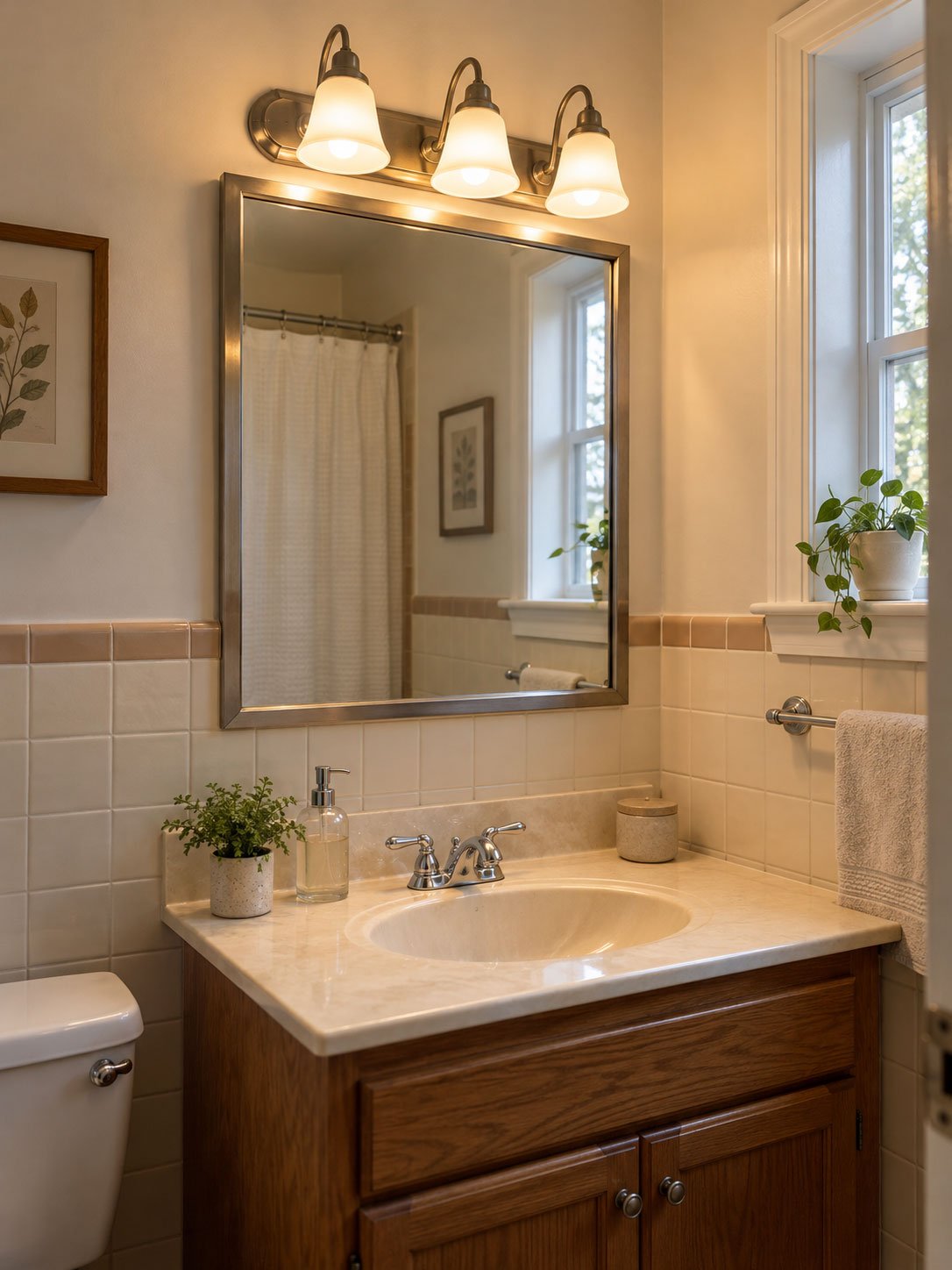
Unflattering light can make an otherwise reasonable bathroom palette look worse.
Before replacing a vanity light fixture, examine the bulbs already installed. Mixed bulb colors, dirty shades or poor light distribution may be the more immediate problem.
When replacement bulbs are appropriate, use a consistent color temperature across the fixture and stay within its electrical ratings.
The US Department of Energy’s light bulb guidance describes how color temperature affects the appearance and mood of a room. Bulbs around 2700K appear warmer, while those around 3000K provide a somewhat less yellow warm light.
A brighter or cooler bulb is not automatically better. Choose enough useful light for grooming without excessive glare.
The mirror also deserves attention.
A framed mirror may suit a dark vanity better than an unrelated decorative mirror. An existing frameless mirror can still work if its scale and placement are appropriate.
Replacing a large wall mirror requires checking how it is mounted, the wall construction and the load. A heavy mirror should not be attached with an ordinary decorative adhesive hook.
Where a fixture or wall wiring must be changed, use a qualified electrician and follow local electrical requirements. The same caution applies to installing new hardwired mirror lighting.
Best for: Bathrooms that feel harsh, unevenly lit or visually disconnected around the sink.
Use paint to connect the parts you cannot change
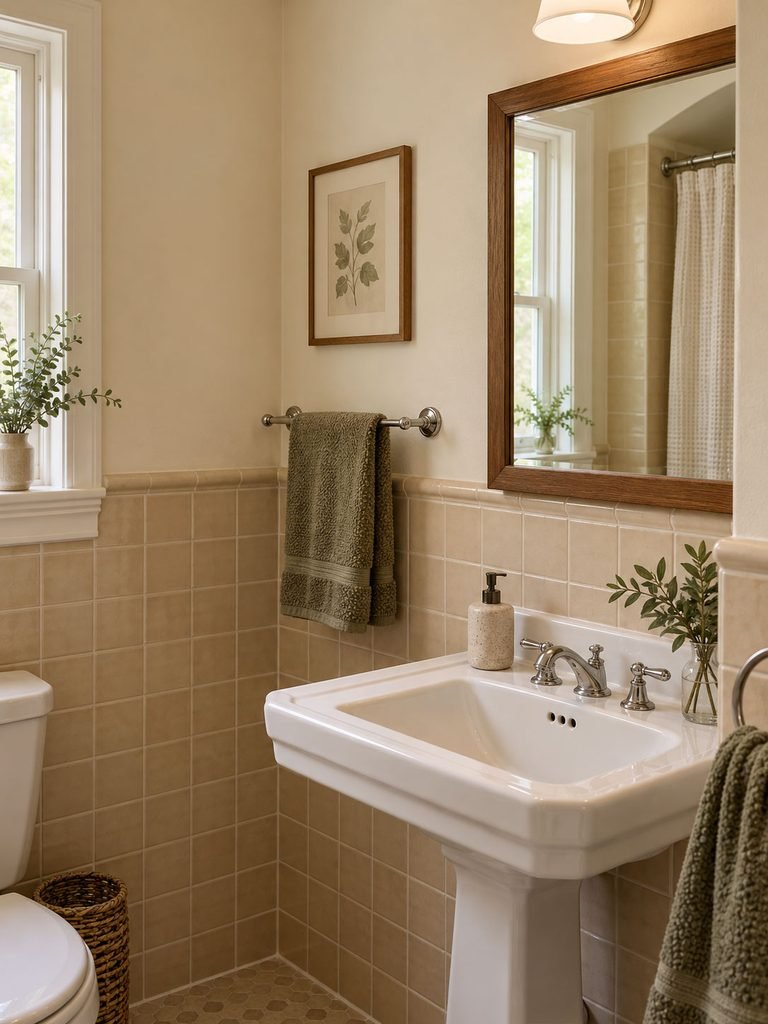
The right wall color can make old tile look less disconnected without replacing it.
Paint is especially useful when the room has an obvious break between tiled surfaces and painted walls. Instead of choosing a wall color in isolation, hold paint samples directly beside the tile in daylight and under the existing bathroom lighting. For warm beige tile, cream, soft putty or muted earthy colors can create continuity. For gray tile, consider warm white or a carefully chosen neutral that does not exaggerate the tile’s undertone.
For vintage pink tile, a warm cream or subdued green may produce a more coherent palette than stark white. A small painted sample is more useful than deciding from a phone screen.
Finish selection matters too. Sherwin-Williams’ paint sheen guide identifies satin and semigloss finishes as appropriate choices for bathrooms because of their moisture tolerance.
Choose paint specifically recommended for the room and follow the manufacturer’s preparation, ventilation and curing instructions. This guidance concerns suitable paintable surfaces, not putting ordinary wall paint over shower tile or damaged waterproofing.
If the existing paint is blistering or the wall remains damp, solve that problem before repainting.
Best for: Bathrooms where the existing tile and painted wall colors clash.
Repair dampness and worn surfaces before decorating
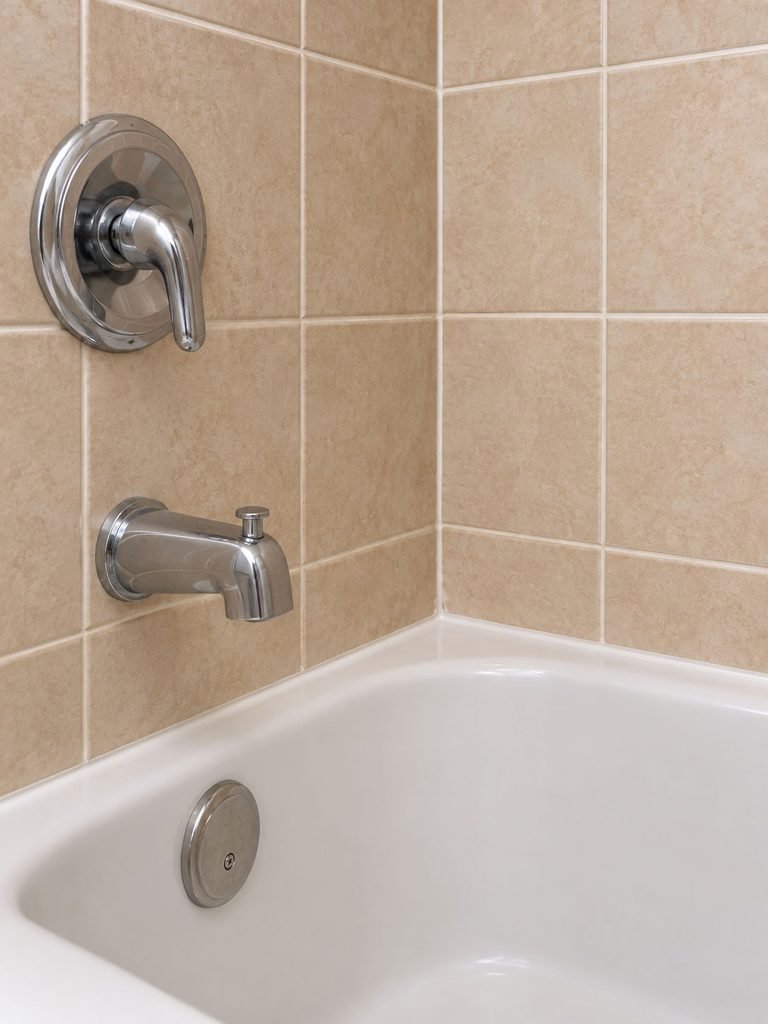
Decorating is the wrong solution for a bathroom with an active leak, persistent dampness or deteriorating wall materials.
Old tile can be worth keeping, but its condition matters more than its color.
Look for loose tile, damaged grout, soft surrounding materials, persistent dampness, water stains or repeated mold growth.
A curtain or decorative wall panel should not be used to conceal moisture damage.
The US Environmental Protection Agency’s guide to mold and moisture explains the importance of correcting water problems rather than simply covering affected surfaces.
Use the bathroom exhaust fan where provided and make sure damp materials can dry. If there is a leak, ongoing moisture problem or suspected hidden damage, address it before spending money on styling.
For wall decoration, location matters as much as the object itself.
A wall near a shower may receive considerably more moisture than a wall near the bathroom door. Femorias’ guide to bathroom wall art that can handle humidity explains how to select pieces according to the actual exposure conditions.
Be cautious with removable hooks and adhesive strips too. 3M’s bathroom mounting instructions list restrictions for surfaces such as wallpaper, rough walls and grout lines. Follow the specific product instructions and weight limits instead of assuming an adhesive will hold on every bathroom surface.
Best for: Any older bathroom, especially one with worn grout, unreliable ventilation or frequent condensation.
Spend in the order your bathroom needs
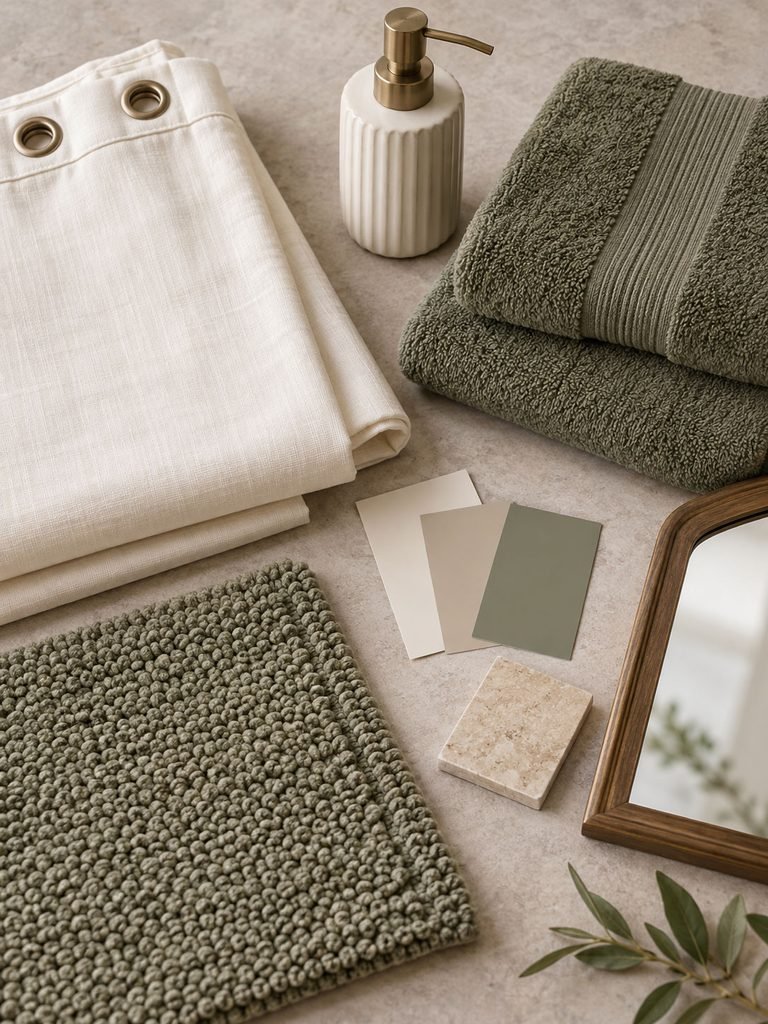
Start with the change that affects the largest visible part of the room.
That could be a shower curtain in a tub bathroom, paint on a large dry wall or better coordination around an old vanity.
Use this order as a decision guide, adjusting it to the room you have.
| Priority | Change | General spending level | Main limitation |
|---|---|---|---|
| First | Clean and edit existing surfaces and accessories | Low | Cannot correct actual damage |
| Second | Coordinate towels, curtain and bath mat | Low to moderate | New items must suit the existing palette |
| Third | Change soap dispensers, trays or small accessories | Low to moderate | Minimal effect if larger surfaces clash |
| Fourth | Repaint suitable dry walls | Moderate | Requires preparation and a sound surface |
| Fifth | Change the mirror or cabinet hardware | Moderate or more | Mounting, installation and compatibility matter |
| Last | Replace hardwired lighting or plumbing fixtures | More involved | May require qualified tradespeople and permits |
These are relative effort and spending categories, not fixed market prices.
Do not buy everything at once.
If the room has beige tile, start with a small palette made from warm white, olive and a medium wood tone. Bring those colors into the shower curtain and towels first.
If the room has gray tile, test warm white and a restrained natural accent before adding several competing colors.
If the original tile is pink or blue, let that color remain visible and simplify the new accessories.
The best purchase is the one that solves the room’s most obvious visual problem without creating a new maintenance problem.
Common questions about dated bathroom decor
Can you make an old bathroom look modern without replacing the tile?
Yes. A coordinated palette, a suitable wall color, updated textiles and a better arrangement around the vanity can create a cleaner, more current appearance. The tile will still be old, but it does not have to look accidental or mismatched.
What colors make a beige bathroom look less dated?
Warm ivory, muted olive, soft clay and medium wood tones can work with beige tile. Check the undertone first because some beige tiles lean yellow, pink or gray. Avoid choosing bright white accessories without comparing them against the existing tile.
Should all bathroom hardware finishes match?
No. Matching every finish is not required. Repeating one or two finishes can make the room feel more cohesive, but an existing chrome faucet can remain while a mirror introduces dark wood or another restrained accent.
Can peel and stick tile cover an outdated bathroom floor?
Some products are intended for suitable prepared floors, but that does not make them appropriate for every bathroom. Check the manufacturer’s water exposure requirements, substrate compatibility, preparation instructions and warranty. They are not a substitute for repairing a wet, unstable or damaged floor.
Is painting cheaper than replacing bathroom tile?
Painting suitable existing walls is generally a less involved project than removing and replacing tile, but actual costs depend on the surface condition, preparation and local labor. Painting ordinary walls and applying a specialized tile coating are different projects. Neither should be used to disguise moisture damage.
An outdated bathroom does not need every surface brought into the latest trend. Start with the fixed finish that occupies the most space, choose two or three colors that sit comfortably beside it and update one large visible element first.
Once the shower curtain, walls or vanity area looks connected to the existing tile, the smaller details become much easier to choose.