How to Strengthen Weak, Brittle Nails at Home

If your nails peel in layers, split at the tips, or snap before they gain any length, the most useful fix is usually not another supplement or a thicker coat of hardener. Start by reducing repeated water exposure, cleaning product contact, picking, peeling, and rough manicure removal. Keep fragile nails shorter, moisturize the nail plate and surrounding skin after washing, and leave your cuticles alone.
Those changes can reduce new damage fairly quickly. The damaged portion of a nail does not repair itself like skin, though. Healthier looking nail has to grow forward from the base, which makes consistency more useful than aggressive treatments.
Why weak nails keep peeling and breaking
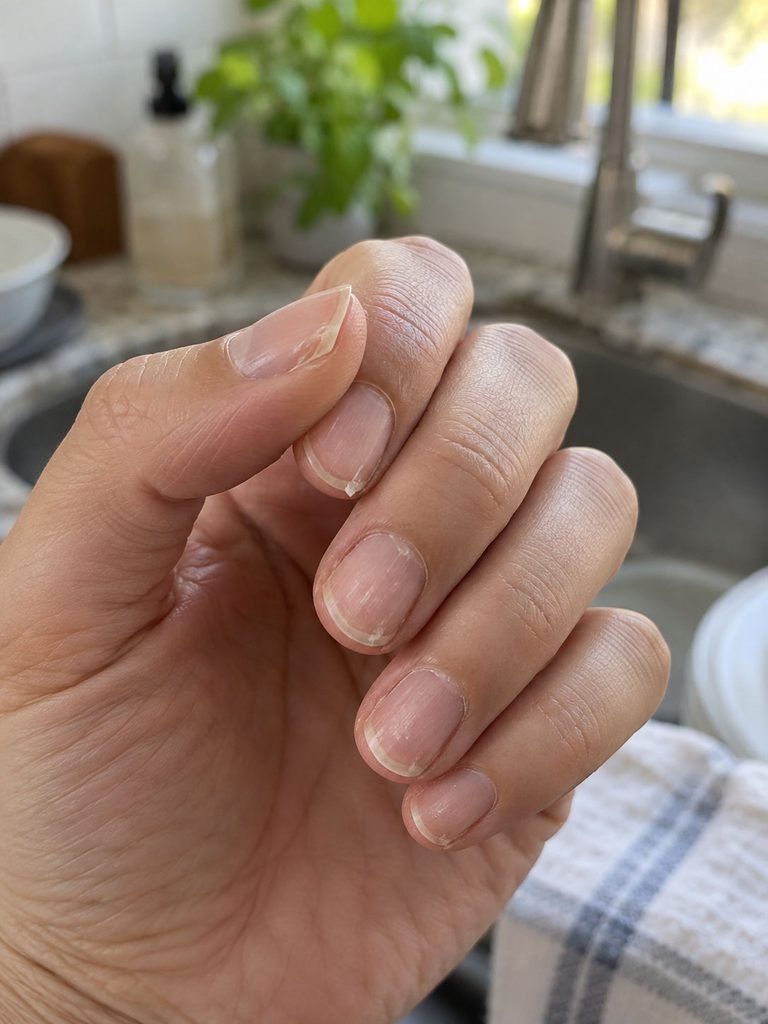
Brittle nails are often a wear problem before they are a product problem. Fingernails repeatedly absorb and lose water during hand washing, dishes, cleaning, and other wet work. That cycling can contribute to splitting and peeling, especially when it is combined with detergents, removers, filing, picking, or physical knocks.
That is why the same person can have nails that feel dry and brittle after one routine but soft and peelable after another. More moisture is not always the entire answer. The goal is to reduce extreme cycles and protect the nail plate while keeping it flexible.
Manicures can add another source of stress. Filing the natural surface for acrylic application, peeling off gel, repeated removal, and aggressive buffing can thin or roughen the existing plate. A nail can therefore feel “weak” because it has been mechanically worn down, even when new growth from the base is normal.
Age, skin conditions, infection, nutritional deficiencies, thyroid problems, and other medical issues can also affect nails. That does not mean every split nail signals illness. It means persistent or unusual changes deserve a different response from ordinary breakage.
The habits that protect nail strength at home
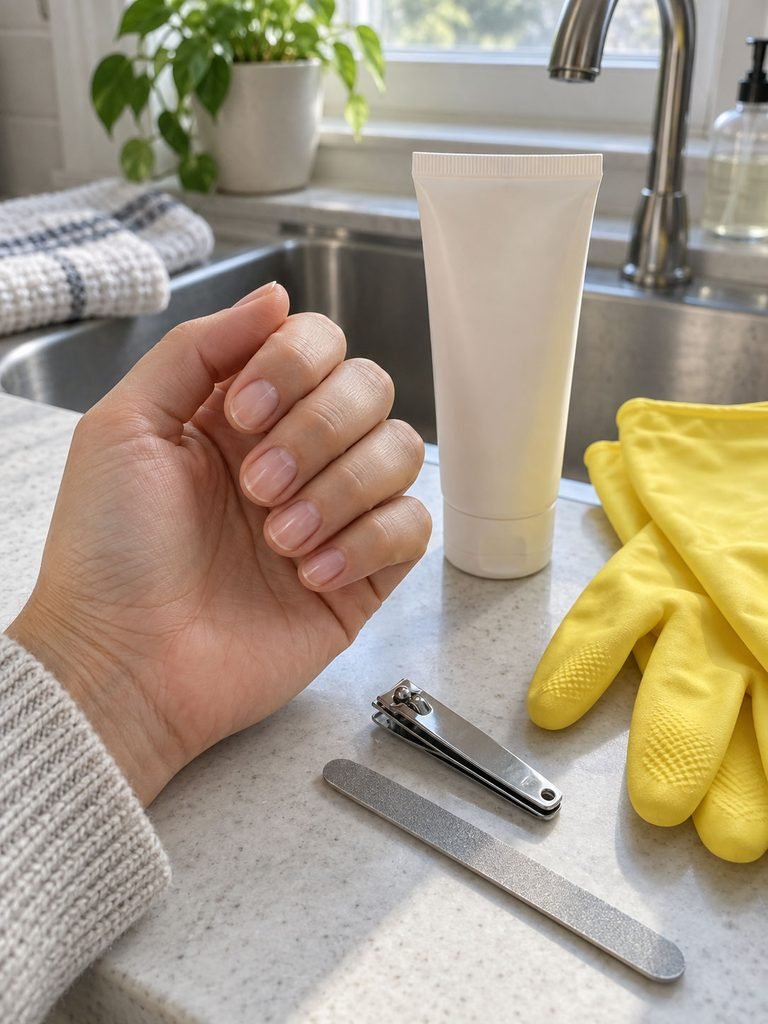
Most fragile nails benefit from reducing damage before adding treatments. The American Academy of Dermatology’s healthy nail guidance recommends protecting nails from excess water, moisturizing after hand washing, avoiding nail biting, and not using nails as tools.
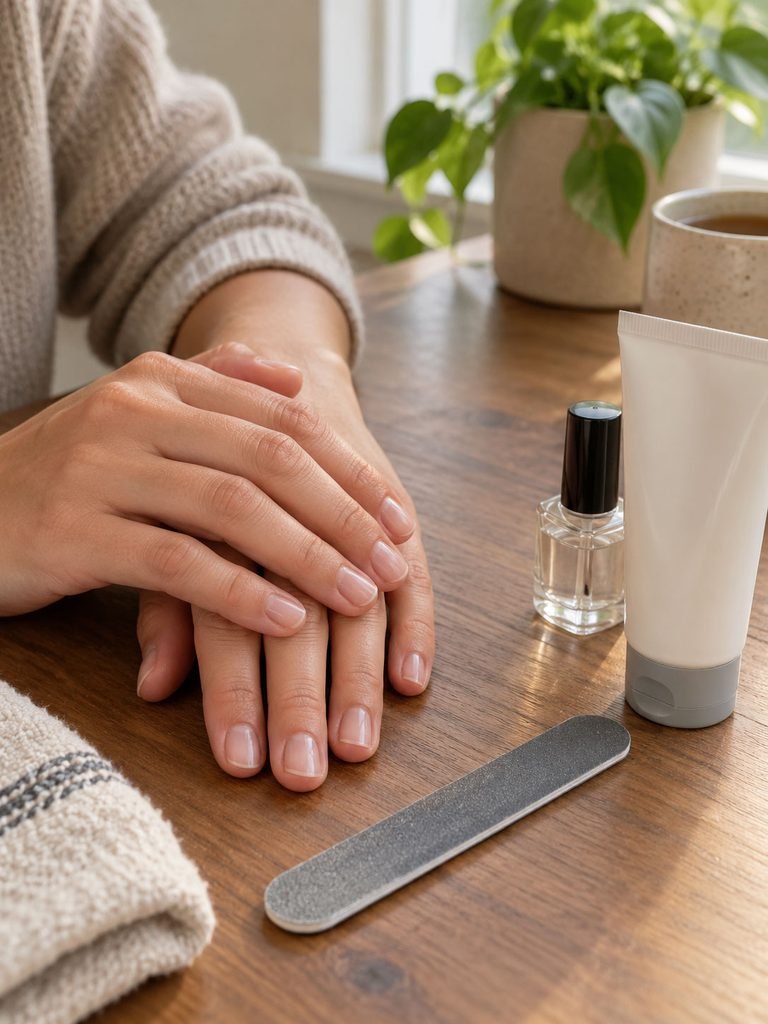
1. Moisturize after washing your hands. Apply hand cream to the nails as well as the surrounding skin. If your hands become very dry, a small amount of plain petroleum jelly around the nail and cuticle area before bed can help reduce dryness.
2. Wear gloves for dishes and cleaning. Waterproof household gloves reduce repeated contact with water and cleaners. Put them on with dry hands and replace or dry them if the inside becomes damp. Trapping wet hands inside gloves for long periods defeats part of the purpose.
3. Keep fragile nails relatively short. More free edge means more leverage when a nail catches on a drawer, fabric, keyboard, or packaging. Trimming damaged nails to a comfortable short length removes weak edges while healthier nail grows forward. Short does not have to look unfinished. Femorias’ office friendly nail designs include practical short and medium shapes that still look intentional.
4. Smooth snags before they become splits. A rough corner catches repeatedly until a small defect turns into a larger tear. Clip loose material carefully and smooth the edge with a fine file rather than pulling or tearing it away.
5. Stop using your nails as tools. Opening cans, scraping labels, prying lids, and separating tightly fitted objects put concentrated force on the free edge. Use scissors, a scraper, a bottle opener, or the appropriate household tool instead.
6. Leave your cuticles alone. The cuticle helps seal the space between the nail and surrounding skin. Cutting it aggressively increases the chance of irritation and infection, and current dermatology guidance also advises against pushing it back.
7. Stop picking, biting, and peeling. Biting stresses the nail and nearby skin. Picking at hangnails creates tears. Peeling polish or gel can remove surface layers along with the coating. If a manicure is lifting, remove it by the appropriate method instead of pulling it away.
8. Eat normally before reaching for supplements. Nails are made primarily from keratin, a protein, so an adequate overall diet matters. The useful goal is a varied eating pattern with enough protein and essential nutrients, not chasing individual “nail foods” or taking large supplement doses without a reason.
Make manicures less damaging
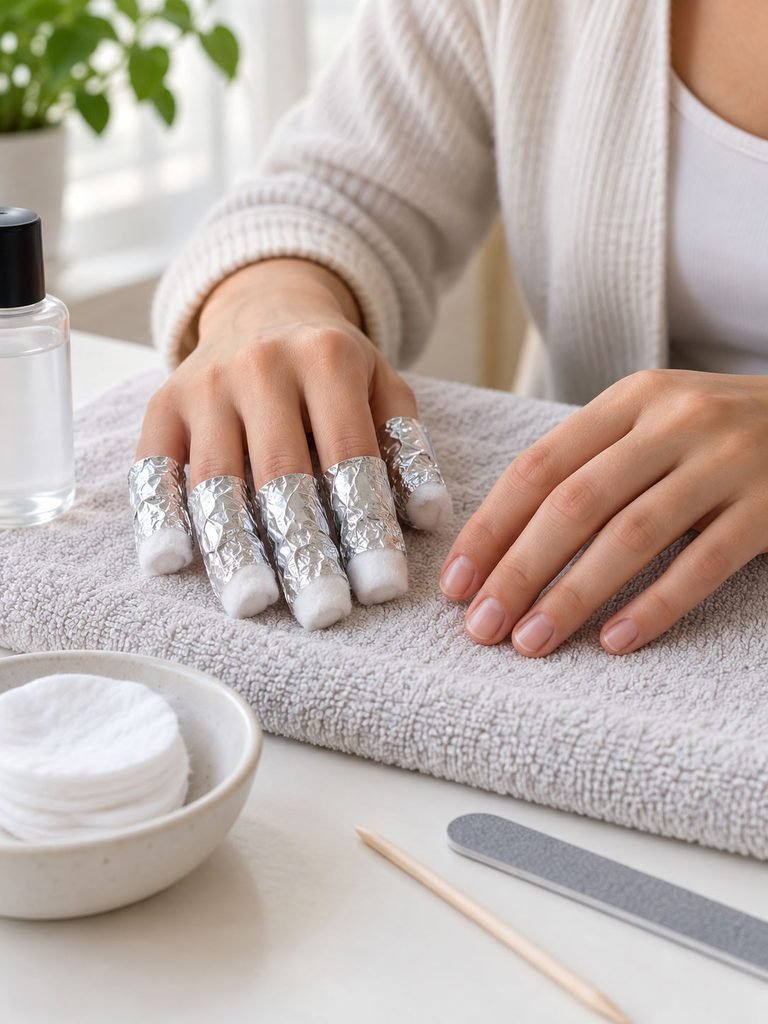
Nails do not need surface air to “breathe.” Taking a break from polish can still be useful when your nails are already brittle because it reduces removal, filing, and product exposure and gives you time to moisturize the nail plate.
Regular polish is usually easier to remove than gel or acrylic systems. If your natural nails are peeling or thin, simplifying your manicure for a while can reduce the number of things working against them.
Gel deserves particular care at removal. The American Academy of Dermatology’s gel manicure guidance advises against picking gel polish and recommends allowing damaged nails a polish break while moisturizing them regularly. If acetone is required, concentrate it on the nails rather than soaking more skin than necessary.
Acrylic nails create a different tradeoff. The natural nail surface is commonly roughened so the product adheres, and removal can involve filing or acetone. If your nails are already thin and peeling, repeatedly covering them can make it harder to see whether they are improving.
Do not compensate by aggressively buffing the natural nail smooth. Buffing removes material. A lightly uneven surface is generally preferable to making an already thin plate thinner.
Be careful with nail hardeners and biotin
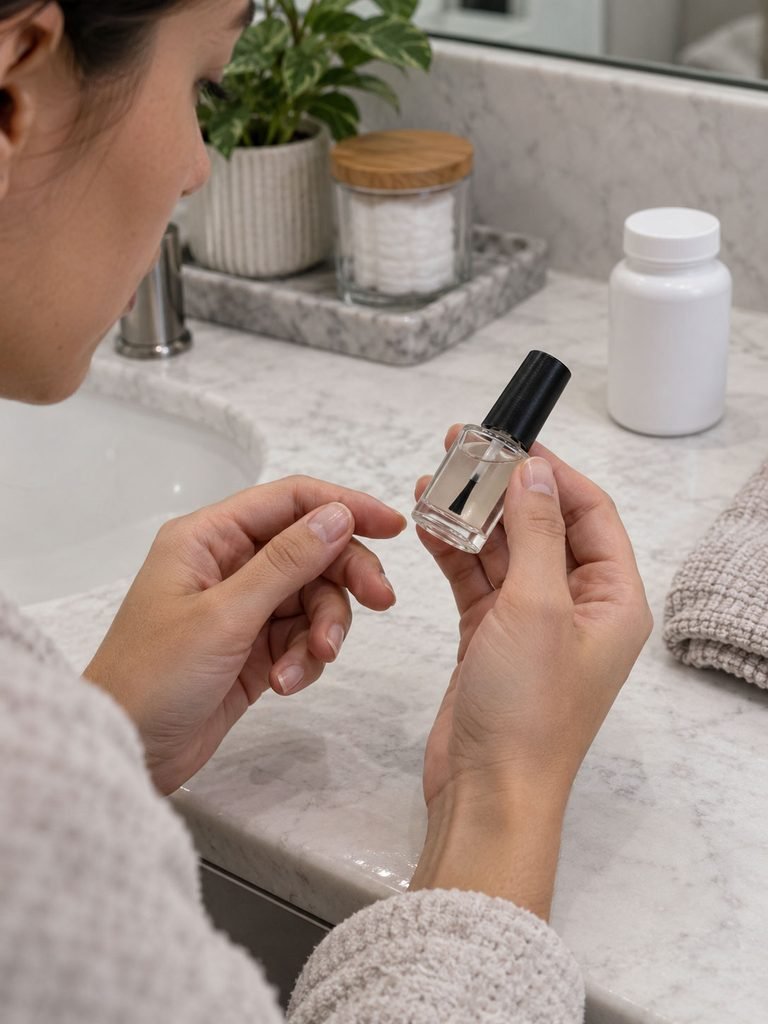
A nail hardener can be useful in the right situation, but harder is not automatically healthier. If a product makes the nail plate very rigid, the nail may become less able to flex when it hits something.
The FDA’s guidance on nail care products notes that some nail hardeners contain formaldehyde, which bonds with nail keratin and makes the nail harder. Frequent use of these hardeners can also make nails brittle and more likely to peel or break, and some people develop skin irritation or allergic reactions.
Read the label and follow the manufacturer’s directions rather than applying a hardener more often because your nails still feel weak. Stop using a product if the nails become noticeably more brittle or the surrounding skin becomes irritated.
Biotin deserves even more caution because it is often marketed as a default nail supplement. The NIH Office of Dietary Supplements’ biotin fact sheet says there is little scientific evidence supporting routine biotin supplementation for hair, skin, and nails. Small studies have reported harder nails in some people with thin, brittle nails, but the evidence is not strong enough to recommend biotin broadly for that purpose.
Most people already get enough biotin from food. Higher dose supplements can also interfere with some laboratory tests. If you take biotin, tell your health care provider and laboratory staff, particularly when blood testing is planned.
A persistent nail problem is a reason to look for the cause, not simply to keep increasing supplement doses.
When weak nails need a dermatologist
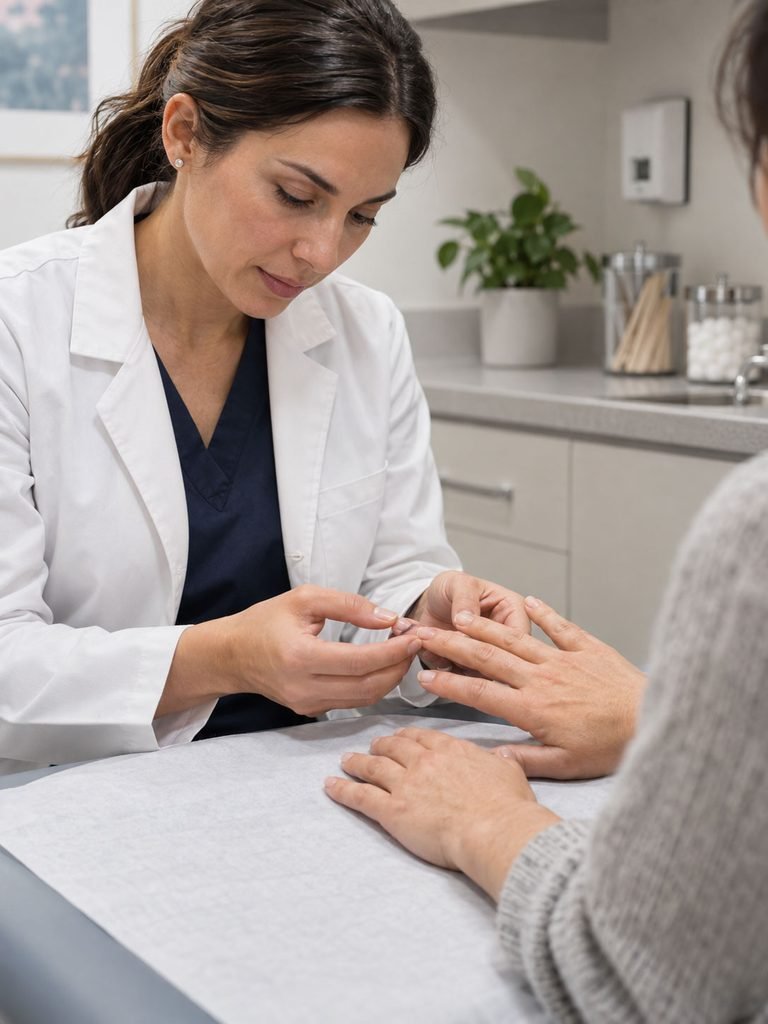
Home care makes sense when the problem looks like ordinary dryness, peeling, or breakage and there is an obvious source of repeated wear. A nail that changes in a new or unusual way deserves more caution.
Schedule a medical evaluation if you notice persistent pain or swelling, significant lifting of the nail, thickening or crumbling, a new or changing dark streak, unusual color changes, bleeding without an obvious injury, or a major change in nail shape or texture.
One abnormal nail can also deserve attention when the other nails look normal. Local trauma is common, but infection, skin disease, and other nail disorders can look different from ordinary brittleness.
If several nails remain markedly brittle despite months of reducing wet work, picking, harsh removal, and other obvious sources of damage, a clinician can decide whether an underlying condition or deficiency should be investigated.
Avoid diagnosing iron deficiency, thyroid disease, fungus, or another condition from nail appearance alone. Nail changes overlap too much for a single appearance to provide a reliable diagnosis.
What progress should look like
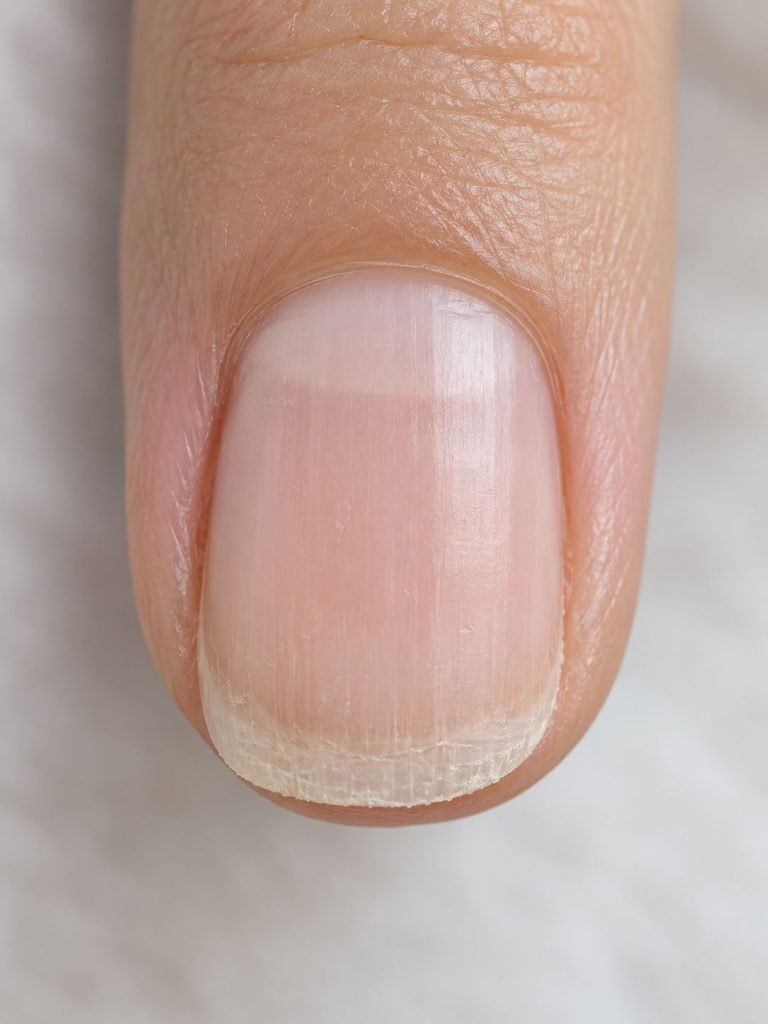
The first useful sign is often not a dramatic change in thickness. It is simply that the nails stop catching and breaking as often because you have removed some of the daily damage.
Watch the newest nail near the cuticle rather than judging only the old tip. The free edge may still peel until that damaged material has been trimmed away.
Fingernails grow slowly. Complete replacement commonly takes about six months, although growth varies between people. That is why a treatment that claims to transform the entire nail in a few days is setting the wrong expectation.
Take a clear photograph of your nails once a month in the same lighting if you have trouble noticing gradual change. You are looking for smoother new growth, less splitting, fewer broken corners, and a more manageable free edge.
If nothing is improving despite consistently removing the likely source of damage, that information is useful too. It is a reason to reconsider the cause rather than buying a stronger treatment.
Stronger nails: common questions
Do nails need to breathe between manicures?
No. Nails do not need surface air in order to grow. A manicure break can still be useful because it reduces repeated remover, filing, and coating cycles and gives dry or damaged nails time with fewer cosmetic stresses.
Can cuticle oil make nails stronger?
Oil can help condition dry nail and surrounding skin and may make a brittle nail feel more flexible. It does not permanently repair a split nail or change the nail matrix. Plain petroleum jelly or a basic moisturizer can serve a similar moisture barrier purpose.
Is acetone free remover always better for weak nails?
Not necessarily. Different removers use different solvents, and all removal involves some exposure. The more practical goal is to avoid unnecessary polish changes, use the remover as directed, limit prolonged contact, and moisturize afterward.
How long should I wait before deciding a routine is working?
You may notice fewer snags or breaks sooner because you have changed your habits, but completely new fingernail takes months to grow forward. Judge the newest growth rather than expecting the damaged tip to become new again.
Should nail hardener be applied every day?
Only if the product directions call for it. More frequent application is not automatically better. Some hardeners can make nails overly rigid or brittle when overused.
Start with the habits that remove damage
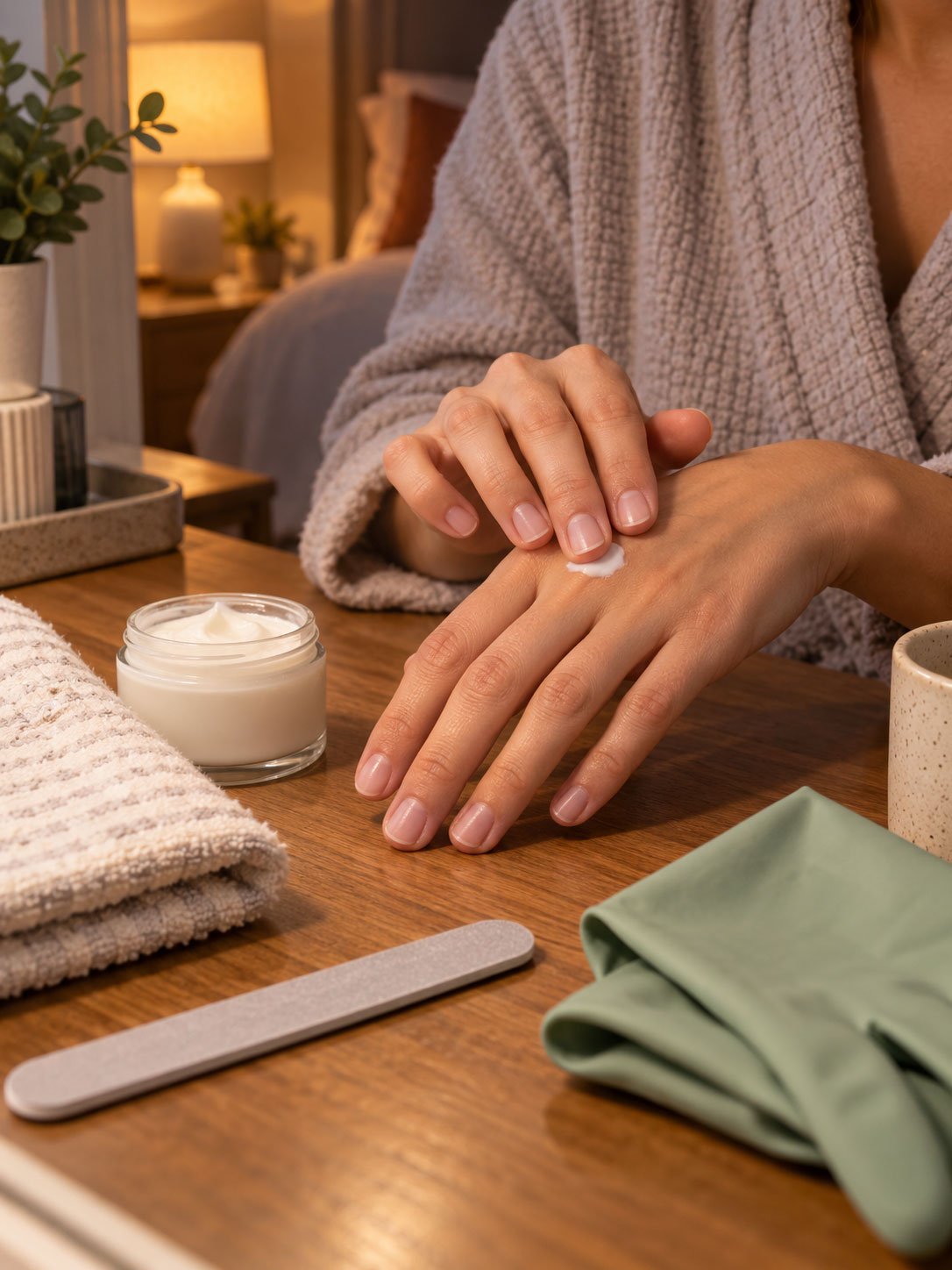
For the next two weeks, keep the experiment simple. Trim fragile nails to a practical length. Moisturize after washing. Wear gloves for dishes and cleaning. Stop using nails to pry or scrape. Leave the cuticles alone. Do not peel gel, polish, or artificial nails from the natural plate.
If your nails are already thin from repeated manicures, give them a quieter period instead of adding several new treatments at once. That makes it easier to tell whether reducing damage is helping.
Add a hardener only when you understand what it contains and how often it is meant to be used. Treat biotin as a supplement with limited evidence, not a routine beauty requirement.
Then watch the new nail growing from the base. Stronger nails are usually less about finding one remarkable product and more about giving new growth fewer chances to be damaged before it reaches the fingertip.