How to repair damaged nails after gel: what helps while they grow out

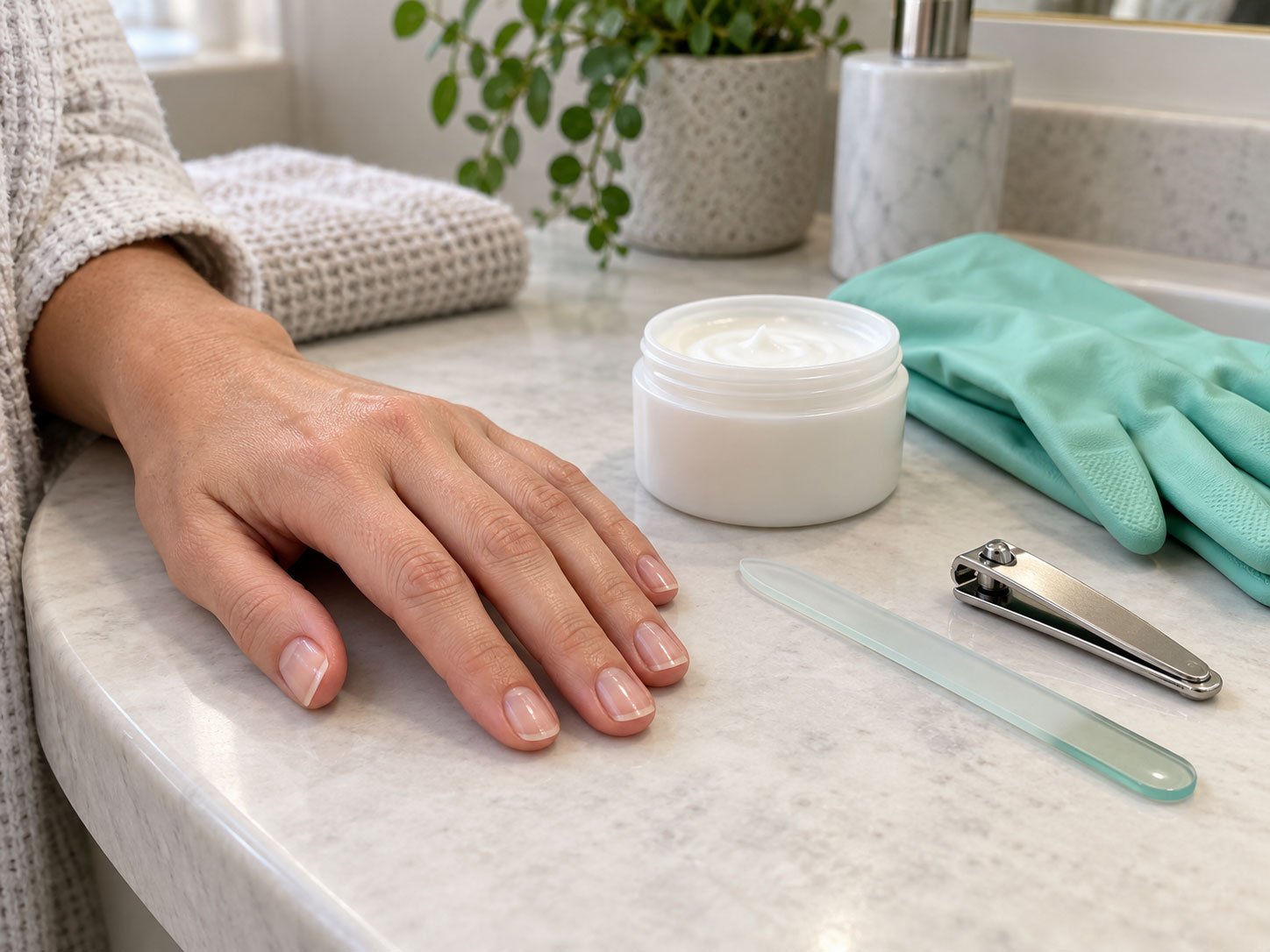
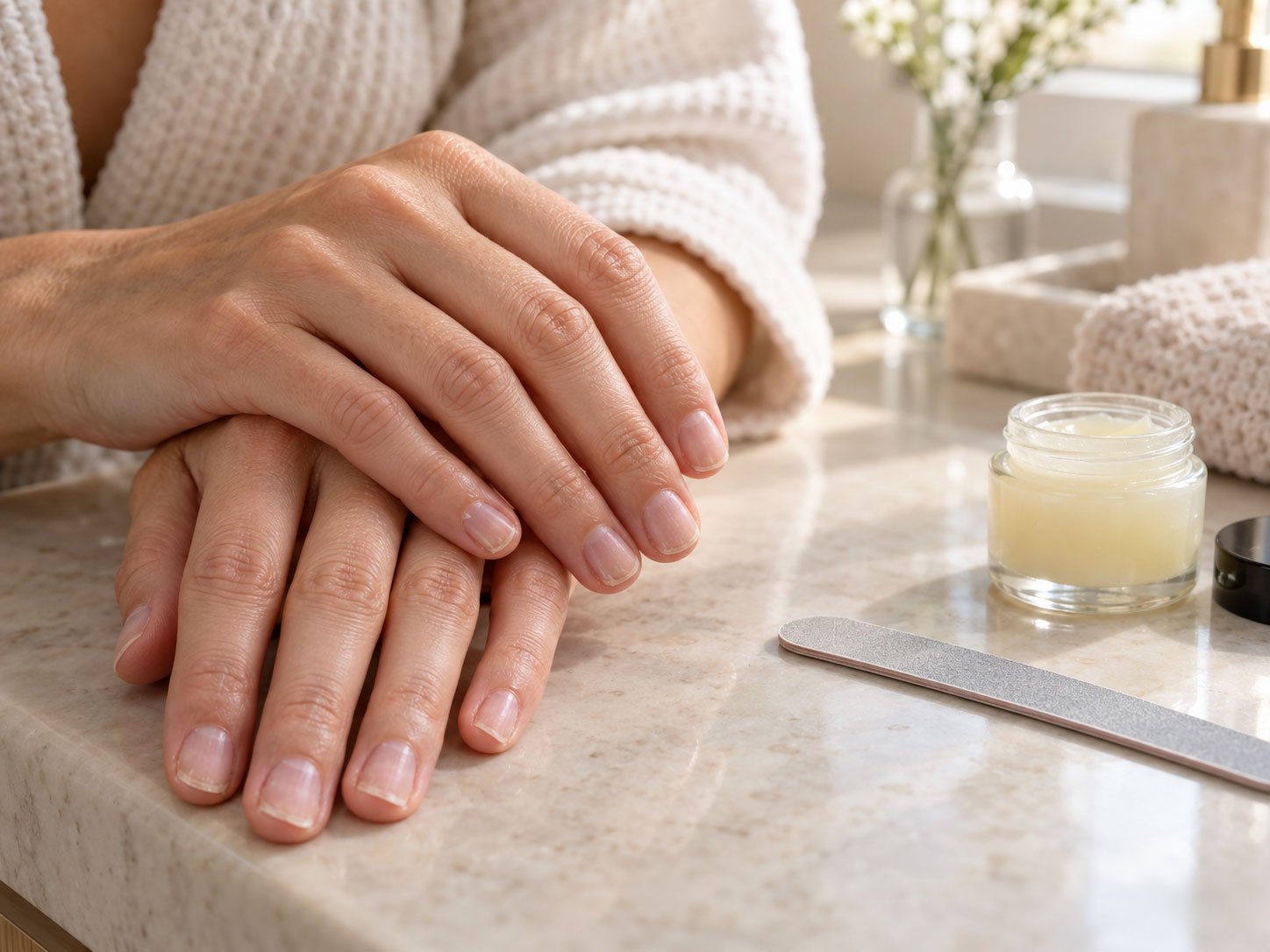
Thin, peeling or bendy nails after gel do not need an aggressive rescue treatment. The first job is to stop additional trauma, keep the nails protected and moisturize the nail and surrounding skin while healthier nail grows forward. Avoid peeling, scraping and heavy filing. Keep fragile nails short enough that they do not catch easily, moisturize them regularly and give them a break from another gel application while they are still visibly damaged. Dermatologists specifically recommend a polish break and regular moisturizing between gel manicures.
The frustrating part is that a nail plate does not bounce back overnight. If layers have been removed through peeling or aggressive filing, improvement depends partly on new nail growth. That makes a steady routine more useful than piling several treatments onto an already fragile surface.
What to do first after gel removal
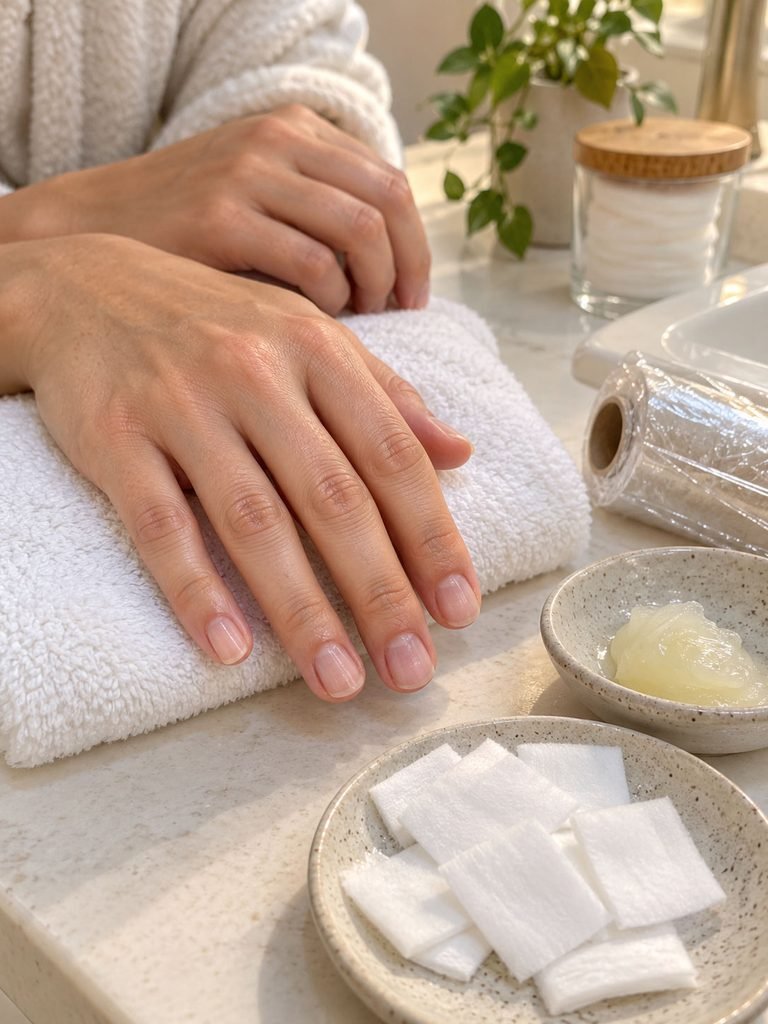
If gel is still stuck to part of the nail, do not peel, scrape or aggressively file it away. The American Academy of Dermatology warns that picking or filing gel off can significantly damage the nail. Its dermatologist guided removal method uses acetone on cotton sized to the nail, petroleum jelly around the surrounding skin and plastic wrap to hold the cotton in place. AAD dermatologist guide to removing gel polish
Once the gel is off, stop trying to make the surface perfectly smooth. A fragile nail does not benefit from extra buffing simply because a rough patch is visible. File only the free edge as needed to remove a snag.
Keep the cuticle intact too. The cuticle protects the area where new nail grows. Dermatologists advise against cutting or pushing it back because damaging that seal can make inflammation and infection more likely.
Why nails can feel thin, rough or peeling after gel
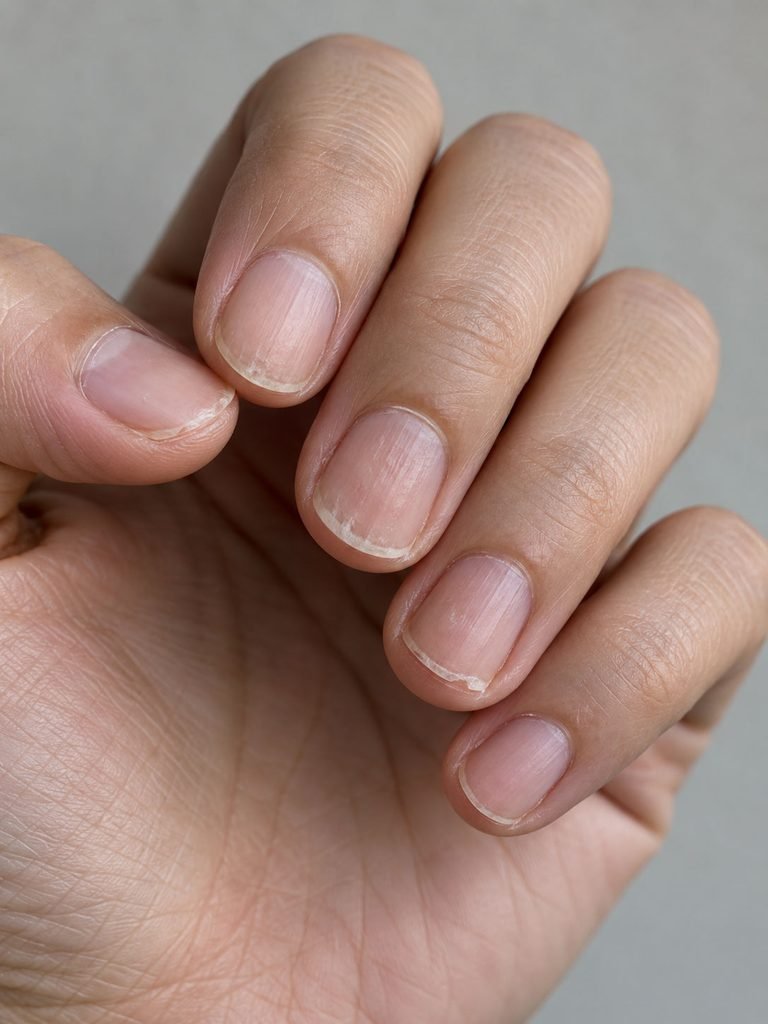
Gel manicure damage is not always caused by one single step. Application, preparation and removal can all expose the nail to physical or chemical stress. A small published case series documented weakness, brittleness, thinning and peeling after gel polish application and removal. published study on nail damage from gel polish manicure The study included only five people, so it should not be treated as a precise estimate of how often damage happens, but it does document the type of nail changes people can experience.
A separate 2022 study measuring nail structure before and after hybrid and gel manicure procedures found measurable changes to the nail plate and emphasized the influence of removal technique. The researchers identified substances used during manicure, acetone and filing as possible contributors to observed structural changes.
That is why it is too simple to blame only the gel sitting on the nail. Peeling off a coating can pull superficial nail layers with it. Repeated filing can thin the surface. Acetone is useful for removal but can irritate surrounding skin, especially when exposure extends beyond the nail.
The useful question is not just, “What product repairs this?” It is, “What caused the extra stress and how can I stop repeating it?”
The recovery routine that matters most
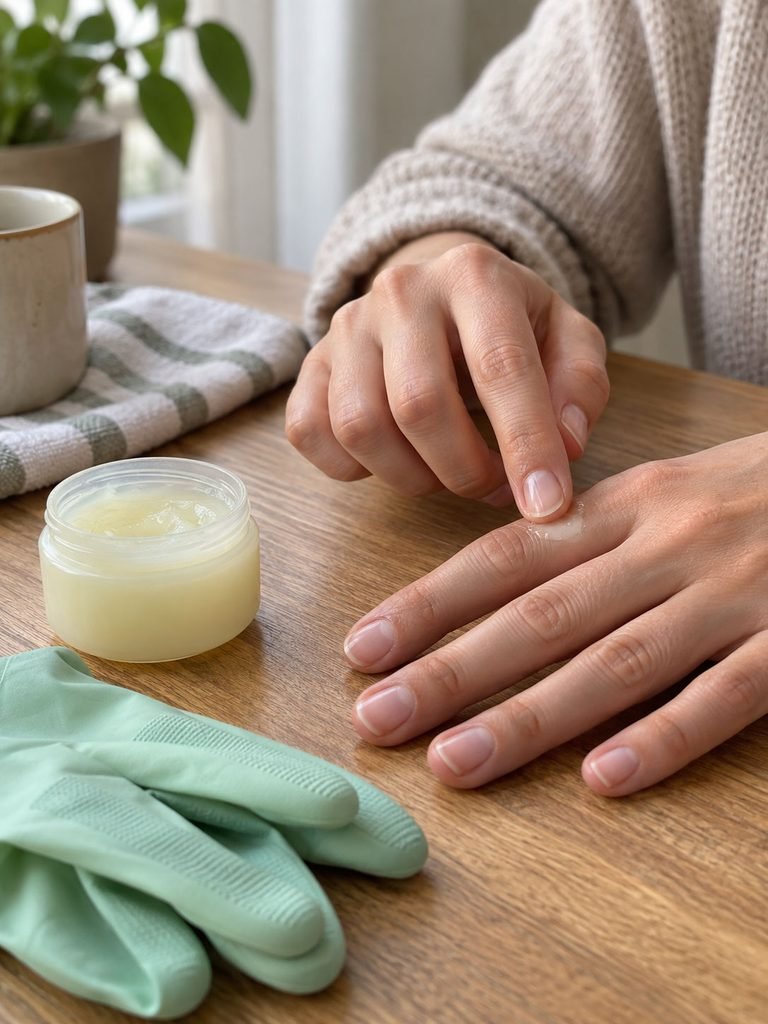
A useful recovery routine is simple enough to keep doing. Dermatology guidance consistently favors reducing trauma, limiting unnecessary water exposure and moisturizing fragile nails rather than relying on a complicated stack of treatments.
- Keep the nails comfortably short. Trim length that keeps catching, then smooth rough edges with a nail file. The goal is not to grind down the nail plate. It is to reduce leverage and snagging at the free edge.
- Moisturize nails and cuticles several times a day. The American Academy of Dermatology specifically recommends a moisturizing product such as petroleum jelly between gel manicures to help minimize brittleness and chipping. AAD guidance for healthier gel manicures
- Protect fragile nails from repeated water and cleaning exposure. Wear gloves for dishwashing and household cleaning. Dermatology guidance notes that too much water can contribute to splitting, peeling and breaking.
- Take a break from another gel manicure. The AAD suggests a polish holiday of one to two weeks or longer between gel manicures. If your nail plate is still visibly thin, peeling or uncomfortable at that point, use the condition of the nail rather than the calendar as the reason to wait longer.
- Leave the cuticle alone. Moisturize dry cuticles instead of cutting them. Avoid digging under the nail or cleaning beneath it with sharp tools.
This routine is not dramatic, which is part of why it works as practical advice. It removes the repeated stressors that can keep a fragile nail in the same cycle.
What oils, strengtheners and supplements can actually do
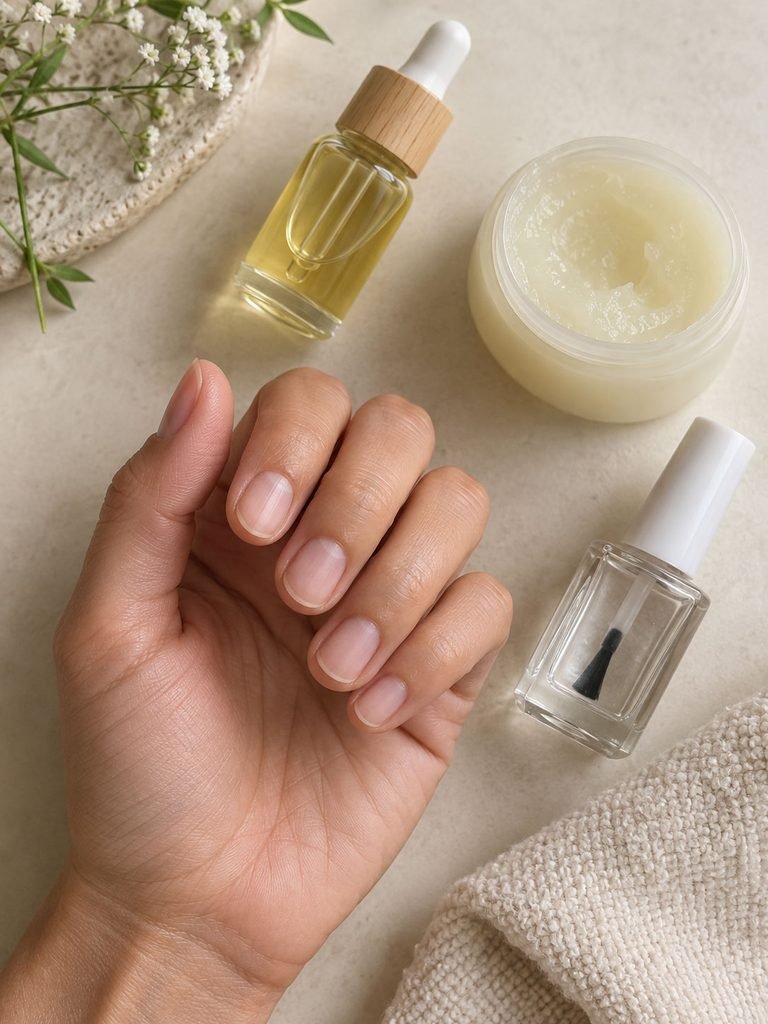
Cuticle oil can make dry skin around the nails feel better and help keep the nail area moisturized. Petroleum jelly is another inexpensive option and is specifically recommended by dermatologists for nails and cuticles between manicures. Neither product should be described as replacing layers that were physically filed or peeled away.
Nail strengtheners are more complicated. Some products create a protective coating or are marketed for fragile nails, but “strengthening” does not mean that a bottle can restore missing nail plate immediately. A dermatology review of brittle nails notes that moisturizers and some nail lacquers can be useful, while the evidence for several treatments remains limited. review of brittle nail care and treatment evidence
The same caution applies to supplements. The review found that studies of biotin and other supplements for brittle nails were generally small or had important limitations. That makes supplements a poor default answer to obvious manicure related trauma.
If you want one inexpensive place to start, regular moisturizing is more defensible than buying several specialty treatments at once.
How long damaged nails take to grow out
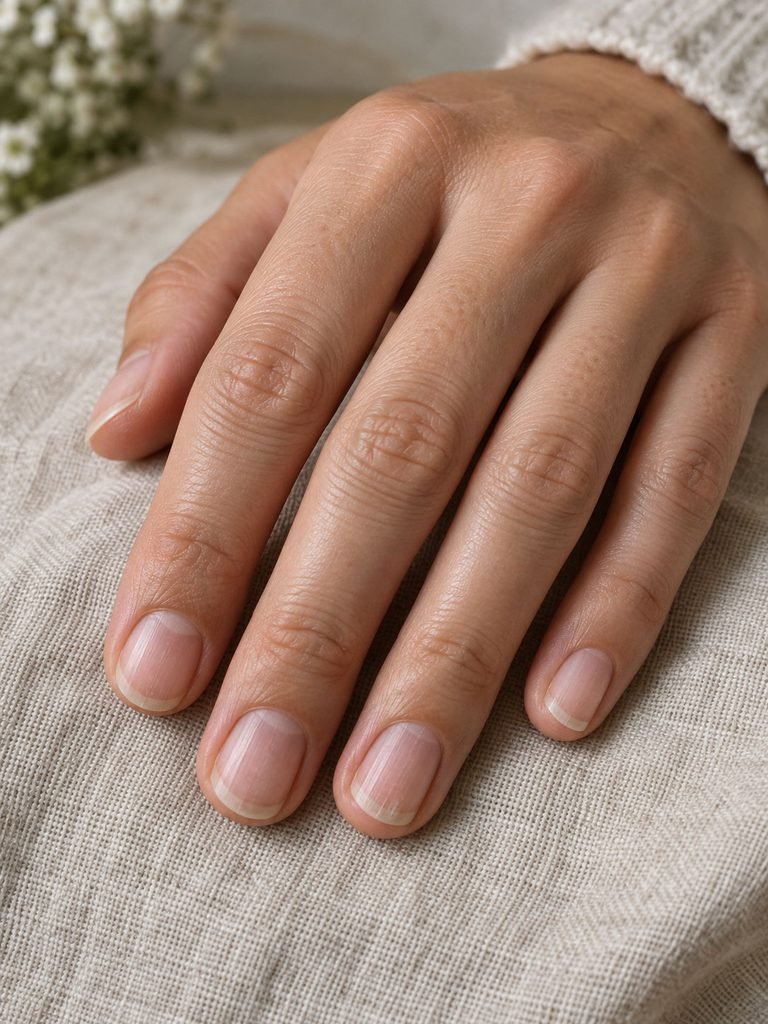
A full fingernail takes about six months to grow out, according to the American Academy of Dermatology. That does not mean every reader will spend six months with nails that look equally damaged. It means that completely replacing the visible nail plate is a slow process.
The AAD also recommends a break of one to two weeks or longer between gel manicures. These two pieces of advice describe different things. A short polish break reduces repeated manicure stress. Full grow out takes much longer.
Do not judge recovery only by how many days have passed. Look at what is growing from the base of the nail and whether the older damaged portion is gradually moving toward the free edge.
If the new growth looks healthy but the tips remain thin, the job is mainly protection. Keep those tips short enough that they do not split faster than they can grow forward.
When a nail change needs a dermatologist
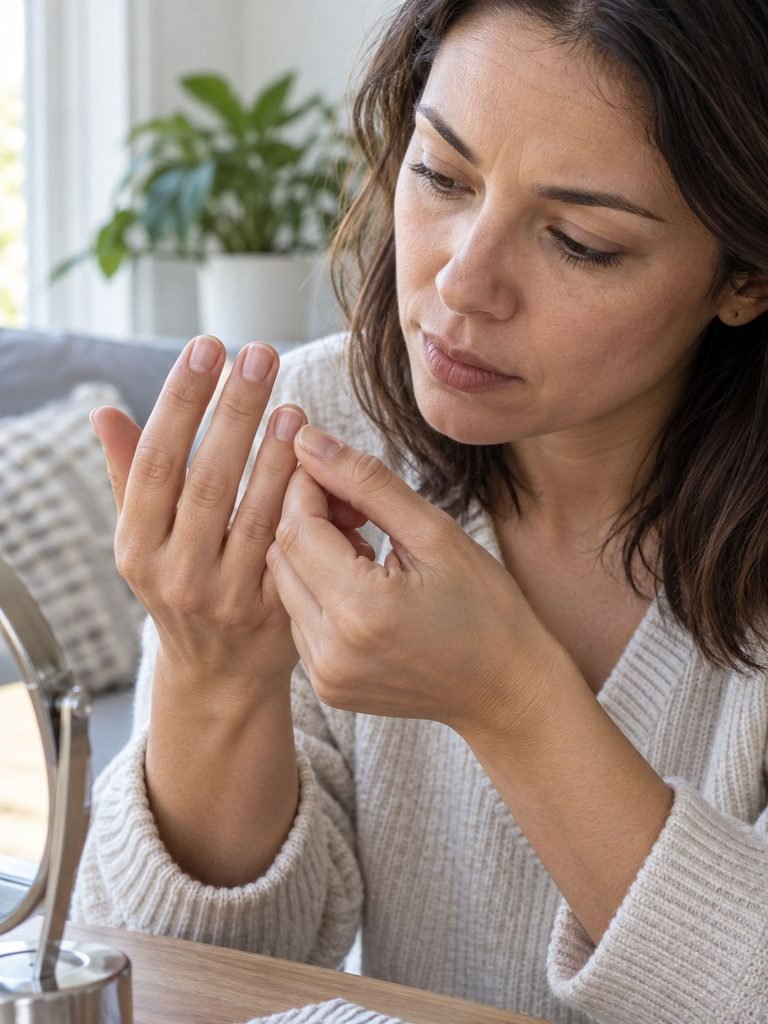
Thin or peeling nails after a rough manicure can be cosmetic damage, but do not assume every new nail change came from gel.
See a board certified dermatologist if a nail starts lifting away from the skin, if the area around a nail becomes red and swollen, if you develop unusual or changing discoloration or if a nail change causes pain or persists instead of improving. The AAD specifically recommends dermatologic evaluation for several changes in nail color, texture, shape and attachment.
That boundary matters because covering an abnormal nail with another opaque manicure can make it harder to watch what is happening underneath.
Frequently asked questions
Can I wear regular nail polish while my nails recover?
A period with bare nails makes it easier to monitor damage and reduces repeated removal. When your nails are comfortable and you want color again, traditional polish is an option the AAD specifically suggests considering instead of gel for people with recurring nail problems. If you want a simple shade after your break, the Femorias guide to nail colors worth keeping in a regular polish rotation offers lower commitment color ideas.
Does cuticle oil repair damaged nails?
Cuticle oil can moisturize the nail area and dry cuticles, but it does not recreate nail layers that were removed by peeling or filing. Think of it as supportive care rather than reconstruction. Petroleum jelly is another simple moisturizing option supported by dermatology guidance.
Should I avoid acetone completely?
No. Acetone is an effective gel remover and is part of the AAD method for home removal. The goal is to limit unnecessary skin exposure and avoid turning removal into scraping or peeling. Protect the surrounding skin, keep acetone contact focused on the nail and follow a gentle removal method.
Can I get another gel manicure after two weeks?
Two weeks is not a universal readiness test. The AAD recommends a polish holiday of one to two weeks or longer, but a nail that is still thin, peeling, painful or otherwise abnormal deserves more time and possibly professional evaluation.
Will my nails grow back normally after gel damage?
Cosmetic damage to the visible nail can move outward as the nail grows. A complete fingernail takes about six months to grow out. If new nail growth itself looks abnormal or the problem persists, a dermatologist can assess whether something other than manicure trauma is involved.
The practical next move is simple: keep the nail short enough to avoid snagging, moisturize it consistently and stop repeating the removal habits that caused extra trauma. A damaged tip does not need to look perfect this week. It needs enough protection to reach the edge of the nail without splitting again.