Long Hairstyles for Fine Hair That Keep the Ends Looking Full

Fine hair does not automatically need more layers. If the bottom six inches already look lighter than the hair above them, removing additional weight can make the ends look even thinner. A better starting point is to protect the perimeter first, then add only the movement your hair can visually support.
For many people with long fine hair, that means a blunt or softly rounded baseline, low layers rather than short stacked ones, and face framing that does not steal too much hair from the front corners. Styling can add lift and movement afterward. It cannot replace hair that has been cut away from the outline.
Fine hair and low density need different decisions
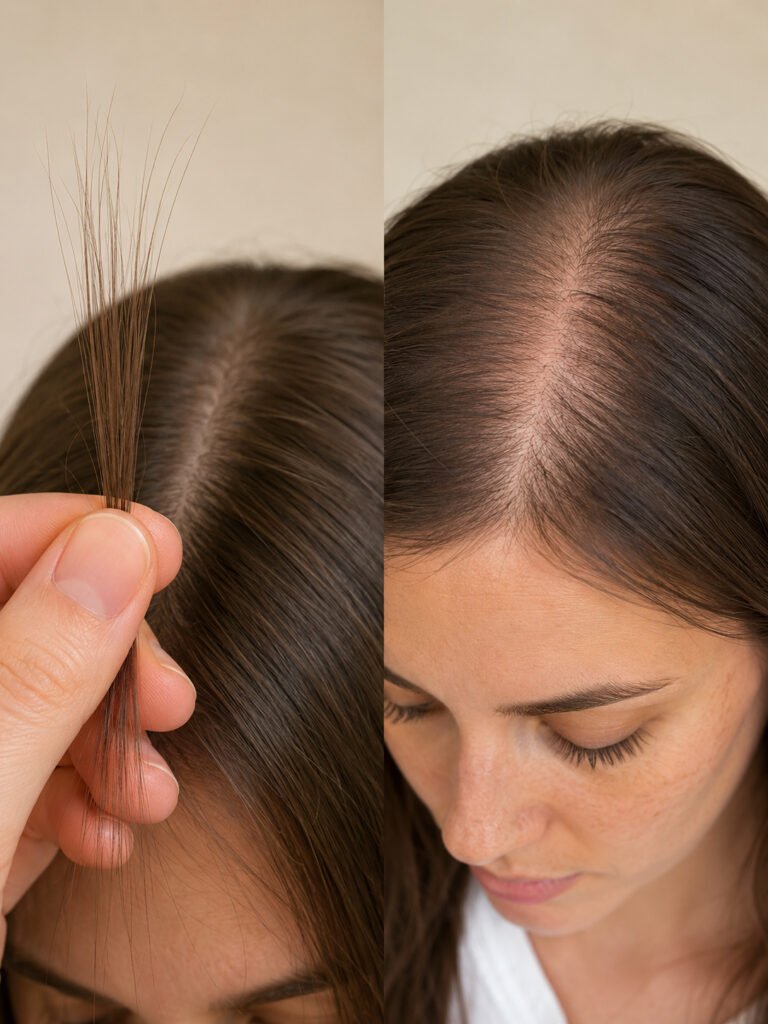
Fine hair describes the size of individual strands. Density describes how much hair is growing across an area of scalp. You can have very fine strands and plenty of them, or thicker strands with relatively low density.
That difference matters because two heads of “fine hair” may tolerate completely different cuts. Hair researchers also measure shaft diameter and scalp density separately; both can affect how much hair a person appears to have. peer-reviewed research on hair diameter, density and perceived hair amount
A simple home check is more useful than trying to assign yourself a technical category. Bring all your hair behind your shoulders and look at the final four to six inches against a plain shirt.
If the bottom remains relatively solid from side to side, you have more freedom to introduce layers. If you can clearly see large gaps through the ends, protect that lower section before asking for extra movement.
Also look at your part. Fine strands with a fairly narrow part create a different problem from a visibly widening part or a ponytail that has become noticeably smaller. The first may simply be a haircut and styling question. The second can involve changing density and deserves more care.
Choose the perimeter before the layers
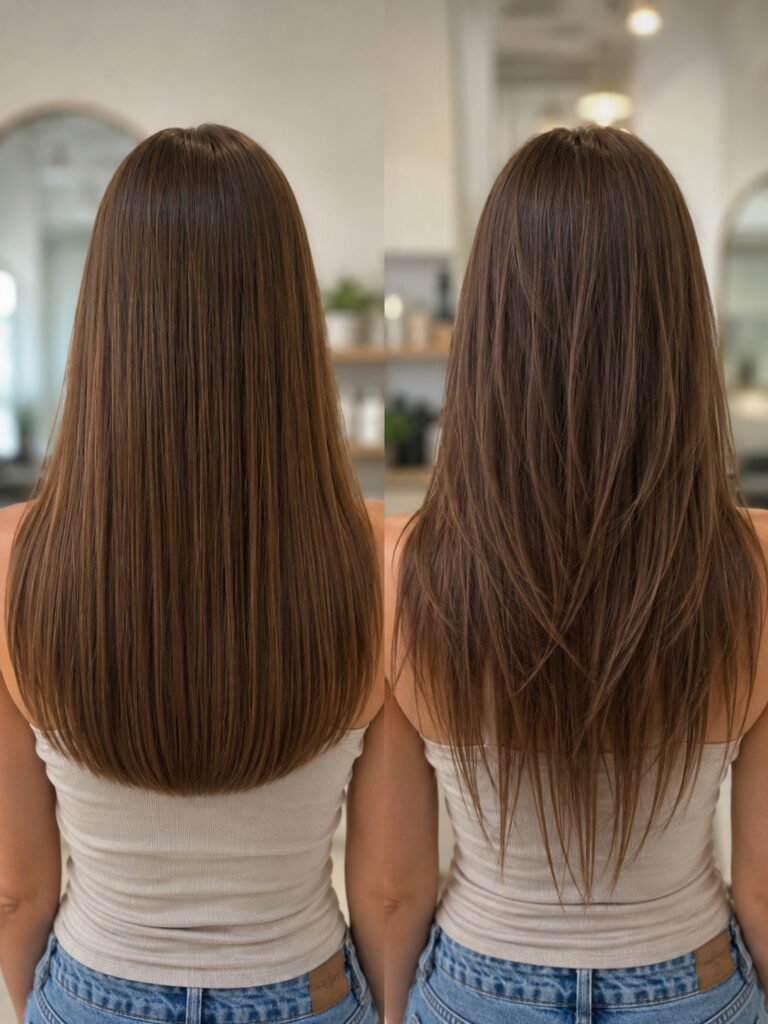
The perimeter is the outside line formed by your ends. On long fine hair, it does a disproportionate amount of visual work.
A strong baseline puts many ends near the same level. Heavy layering distributes those ends over a much larger vertical area. Neither approach is universally better. The question is whether your hair has enough density to spread those ends out and still leave the bottom looking substantial.
| What you see now | More conservative starting point | Main tradeoff |
|---|---|---|
| Full ends with little scalp showing | Long layers can start higher | More movement, less weight |
| Fine strands but a solid perimeter | Low rounded layers | Keeps most fullness while reducing a flat shape |
| Visible gaps in the bottom few inches | One length or very low layers | Less movement, stronger outline |
| Sparse front corners | Keep face framing long | Fewer short pieces around the face |
| Lots of hair but very fine strands | More layering may be possible | Styling becomes more important |
A blunt line is not the only answer. A soft U-shape often keeps enough weight while avoiding the rigid appearance of a completely straight baseline. A shallow V can also work if the center still has enough density, although a deep V concentrates length into fewer hairs at the longest point.
If your priority is fuller-looking ends, treat a razor-heavy finish cautiously. Deliberately wispy texture can be attractive, but it works against the goal when the bottom already looks transparent.
Long hairstyles that keep more visual weight at the ends
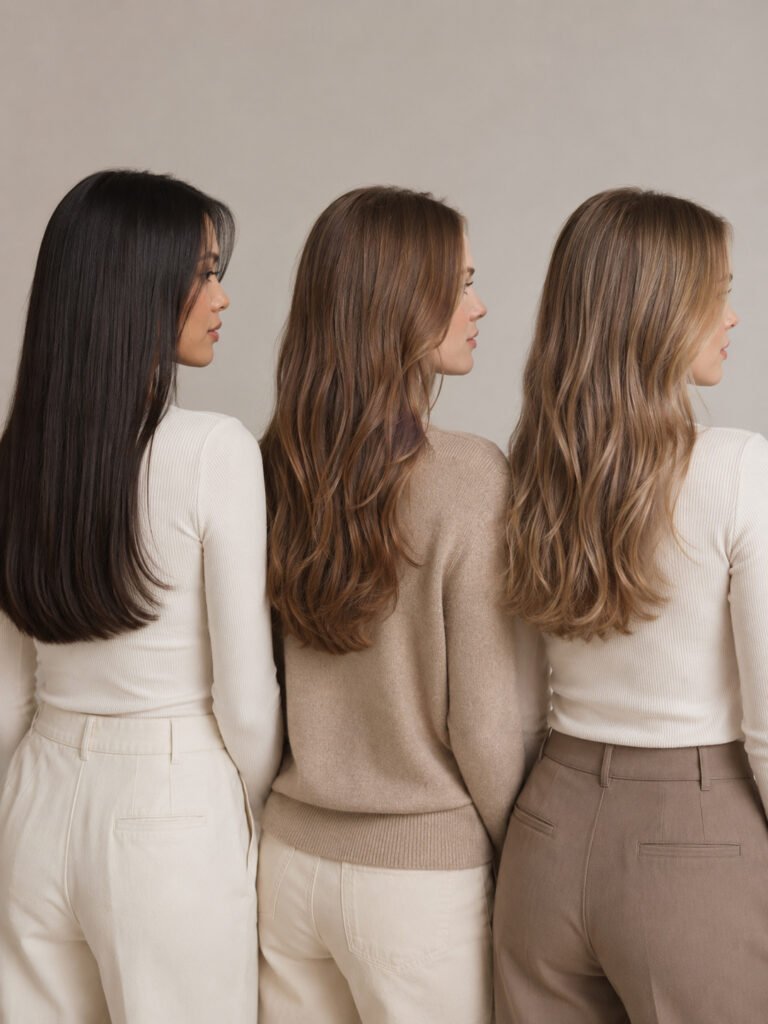
Several long hairstyles can work well on fine hair, but they do not solve the same problem.
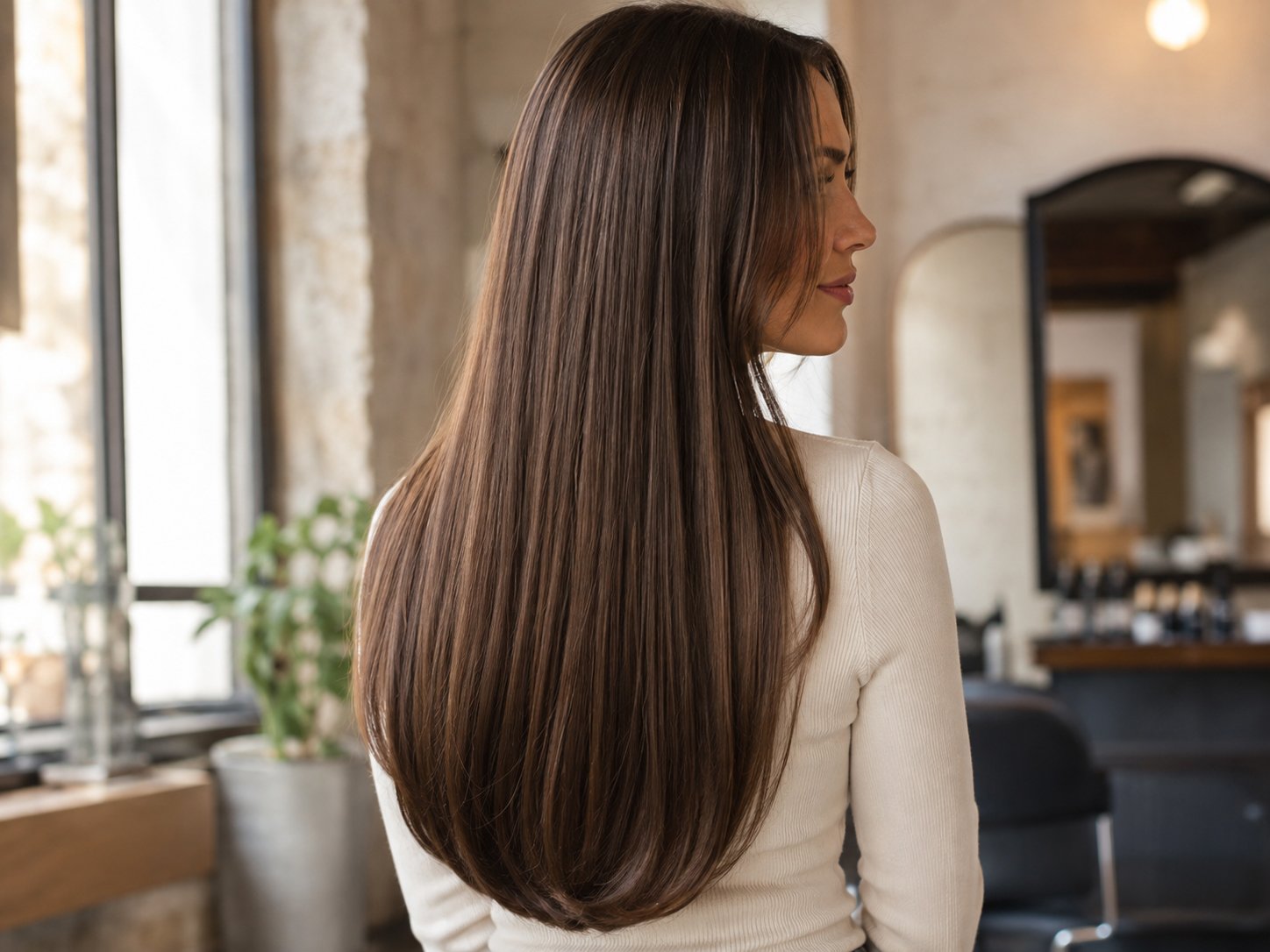
A nearly one-length cut gives the bottom the strongest possible visual line. It is useful when the final inches are your weakest area. The downside is that very long straight hair can lie flat, especially at the crown.
A soft U-shaped cut keeps most of the perimeter while removing the hard horizontal edge. This is often a good compromise for someone who wants length to move without creating lots of short internal pieces.
Low long layers work when the ends are reasonably full but the silhouette feels heavy. Ask for the layering to begin well below the shoulders rather than automatically starting around the chin. The exact starting point depends on your length and density.
Long face framing with a solid back concentrates movement around the face while preserving the majority of the hair behind the shoulders. This is useful when you want an obvious haircut change without sacrificing much of the lower perimeter.
Soft waves over a minimally layered cut create temporary width through the middle and lower lengths. The haircut stays conservative; the styling creates the movement.
A modified butterfly shape can work on fine hair with good density, but it needs restraint. A classic highly layered version removes a substantial amount of weight from the front and upper lengths. If your ends are already sparse, ask for longer transitions and fewer short layers rather than copying the most dramatic reference photo.
The common mistake is choosing a haircut from the finished blowout. Look at the underlying cut instead. Large round-brush volume can make a heavily layered haircut appear much fuller in a photograph than it will look after an ordinary air-dry day.
Face framing and bangs without hollowing out the length
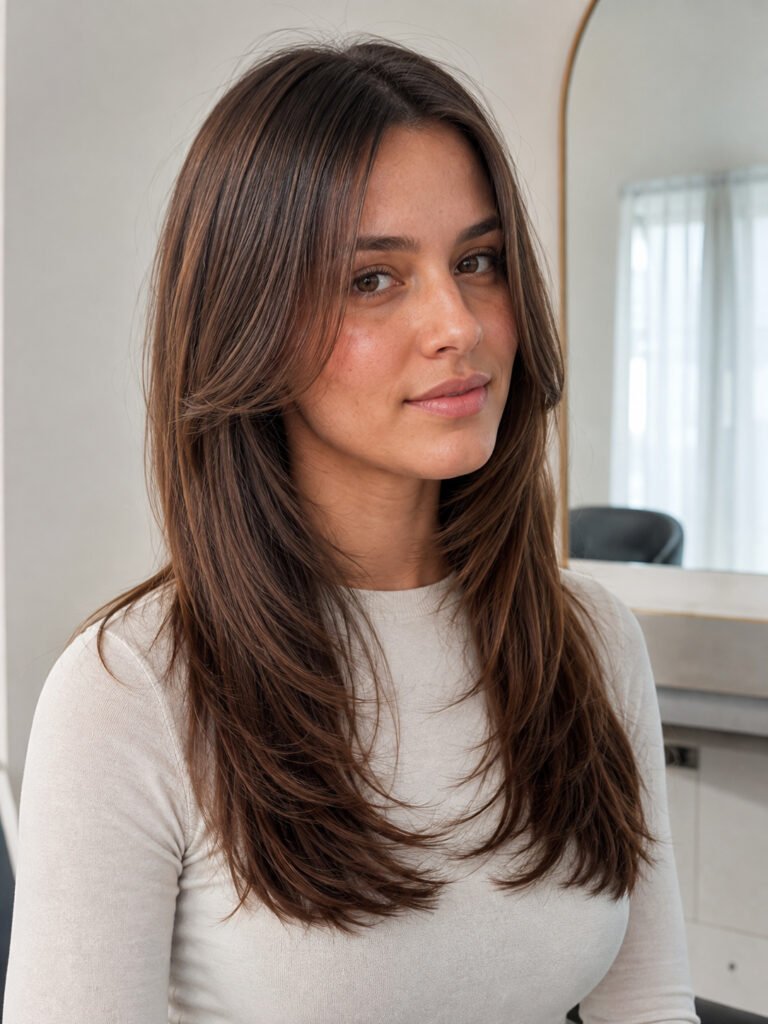
Face framing removes hair from the front perimeter, so the size of the section matters as much as the length.
If the front corners already look light, start conservatively. A few pieces beginning around the cheekbone or jaw can change the silhouette without turning the entire front third of the haircut into layers.
Curtain bangs require a larger section. They can work beautifully on fine hair when the front density is strong enough, but they are not a free source of volume. The hair used to create the fringe has to come from somewhere.
Before cutting bangs, separate the approximate amount of hair you would use and clip it forward. Then put the rest behind your shoulders. If the remaining front edge suddenly looks very thin, a smaller fringe section or longer face frame is the safer choice.
Wispy bangs use less hair, although extremely sparse bangs can separate into visible pieces on smooth fine hair. A slightly longer fringe is often easier to blend back into the haircut if you change your mind.
The useful salon question is not simply, “Will curtain bangs suit me?” Ask, “How much hair would you need to remove from my front perimeter to create this fringe?” That turns an aesthetic discussion into a concrete tradeoff.
What to ask for at the salon
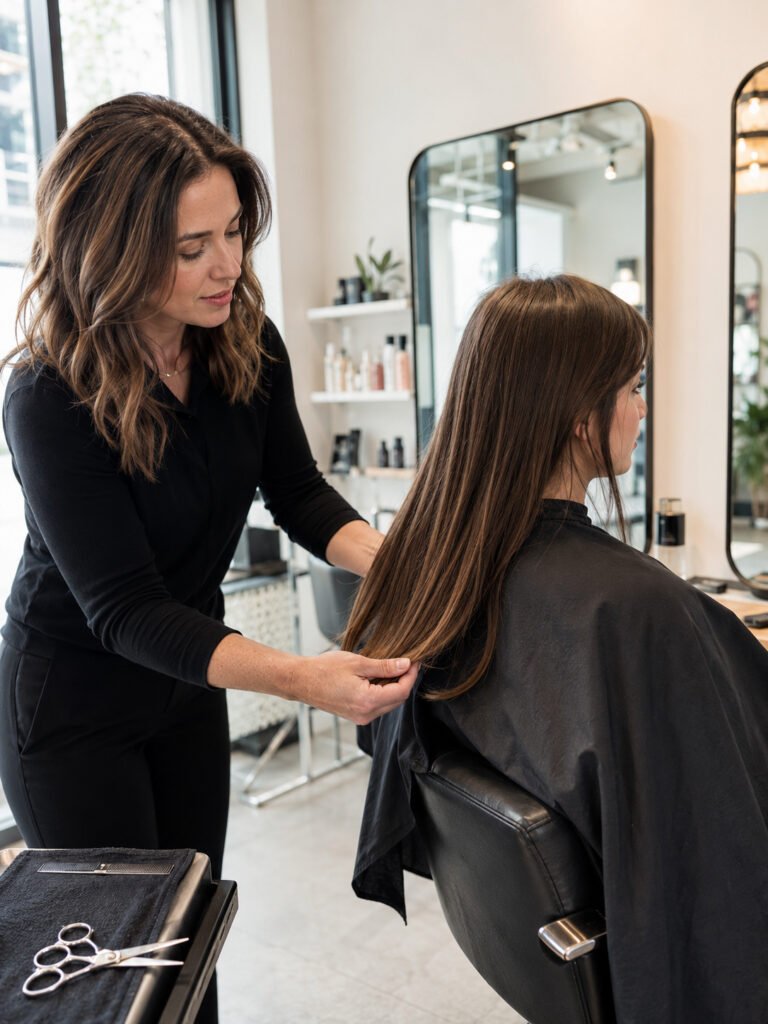
Bring reference photos, but describe the part of each photo you actually want. “Long layers” can mean anything from a few low pieces to a dramatic cascade beginning near the cheekbones.
Useful wording for fine hair includes:
- “I want to keep a strong perimeter.”
- “Show me how much density I would lose before you start the layers.”
- “Keep the shortest back layer long enough to blend into the bottom.”
- “I want movement, but I do not want see-through ends.”
- “Please keep the face-framing section small.”
- “Can we cut the perimeter first and decide whether it still needs more layering afterward?”
Ask the stylist to show you where the shortest layer will land before the cutting begins. On very long hair, a layer that sounds “long” can still remove a surprising amount of weight.
Also decide how much length is actually helping. Keeping another four inches has little value if those four inches consist of scattered, broken or heavily tapered ends. Sometimes trimming back to the point where the perimeter becomes noticeably stronger gives you a longer-looking shape, even though the tape-measure length is shorter.
Do not ask for thinning simply because your hair feels flat. Thinning shears remove bulk; they do not create new volume. On hair that already lacks a substantial lower edge, additional removal can be counterproductive.
Style for body without working the hair too hard
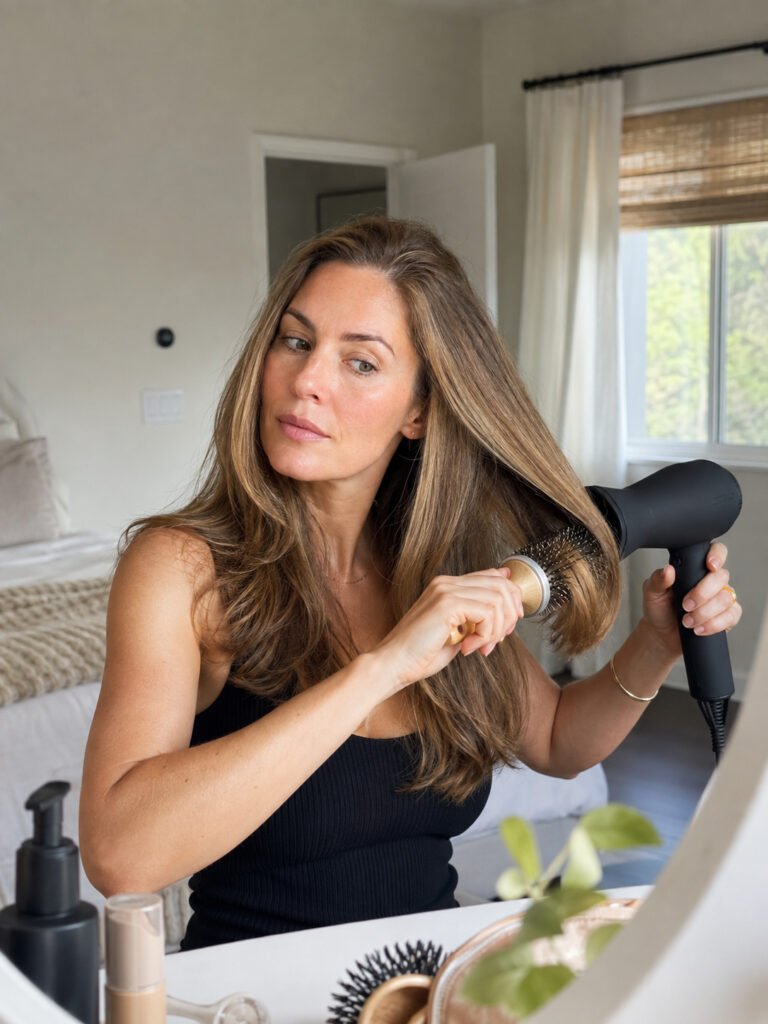
The easiest way to make a conservative haircut feel less flat is to put temporary movement into the hair instead of cutting permanent gaps into it.
Start at the roots. Change where you dry the part, lift the front sections away from the scalp, or switch the part slightly from its usual position. A bend through the mid-lengths can create width without needing many short layers.
Keep products proportionate to the hair. Fine strands can become separated and flat when coated with several creams, oils and heavy finishing products at once. Start with the smallest amount that solves the actual problem.
Heat also has a tradeoff. The American Academy of Dermatology recommends reducing repeated blow-drying and excessive hot-tool use and notes that excessive heat can damage hair. AAD guidance on styling hair without damage
On ordinary days, a loose braid, half-up style, low bun, or heatless wave can change the shape without requiring another haircut. Femorias’ easy long hairstyles you can style at home includes heatless waves and several controlled long-hair styles, including adjustments for fine hair.
Fine, smooth hair can also slip out of braids before the finished style has any chance to look full. The Femorias guide to braiding fine, slippery hair so it stays put explains how to build grip and widen a braid afterward rather than solving the problem with tighter tension.
That tension point matters. Repeatedly tight ponytails, braids and updos can contribute to traction alopecia. The AAD advises loosening hairstyles that pull and changing a style if it causes pain, stinging or visible tension. AAD guidance on hairstyles that pull
When styling is not the right answer
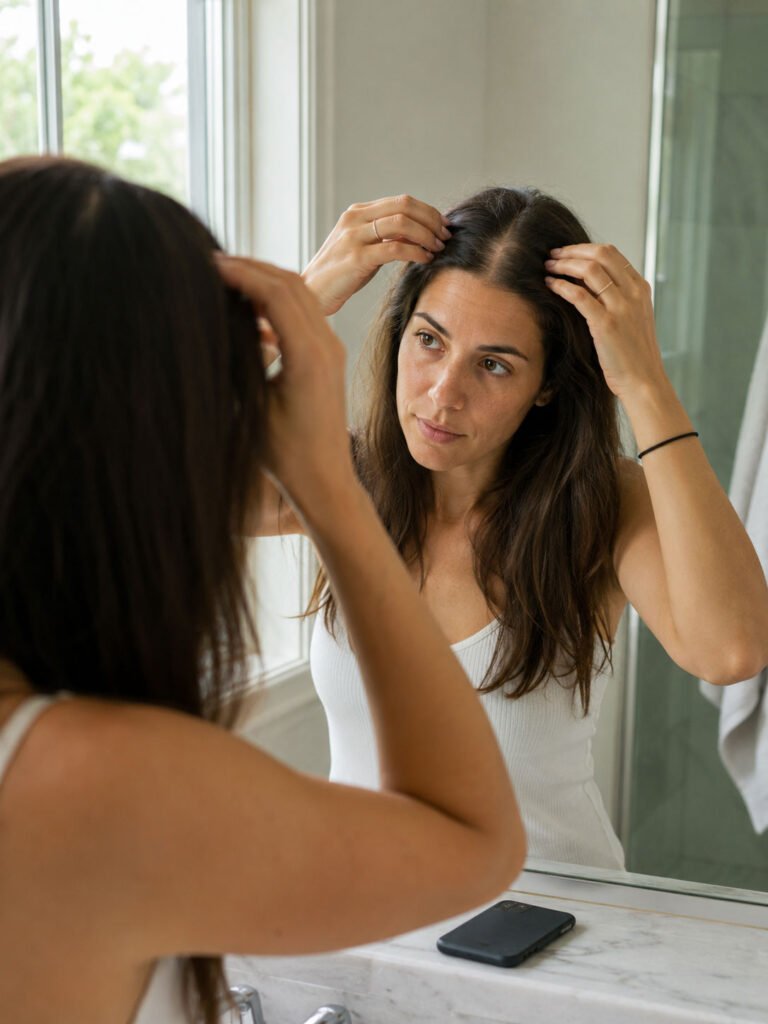
A haircut can change how existing hair is distributed. It cannot diagnose or correct a real loss of density.
If your hair has always been fine and the amount appears stable, this article is mainly a haircut and styling decision. If your part is becoming wider, your ponytail is noticeably smaller, you develop a new bald patch, or overall thinning is progressing, treat that as a separate question.
The AAD lists a widening part, reduced ponytail fullness, gradual thinning and bald spots among possible signs of hair loss. A board-certified dermatologist can evaluate the cause when the change is new or concerning. AAD signs and symptoms of hair loss
Do not respond to unexplained thinning by repeatedly asking a stylist to add more layers for volume. That can temporarily change the silhouette while making it harder to judge what is actually happening at the ends.
Frequently asked questions
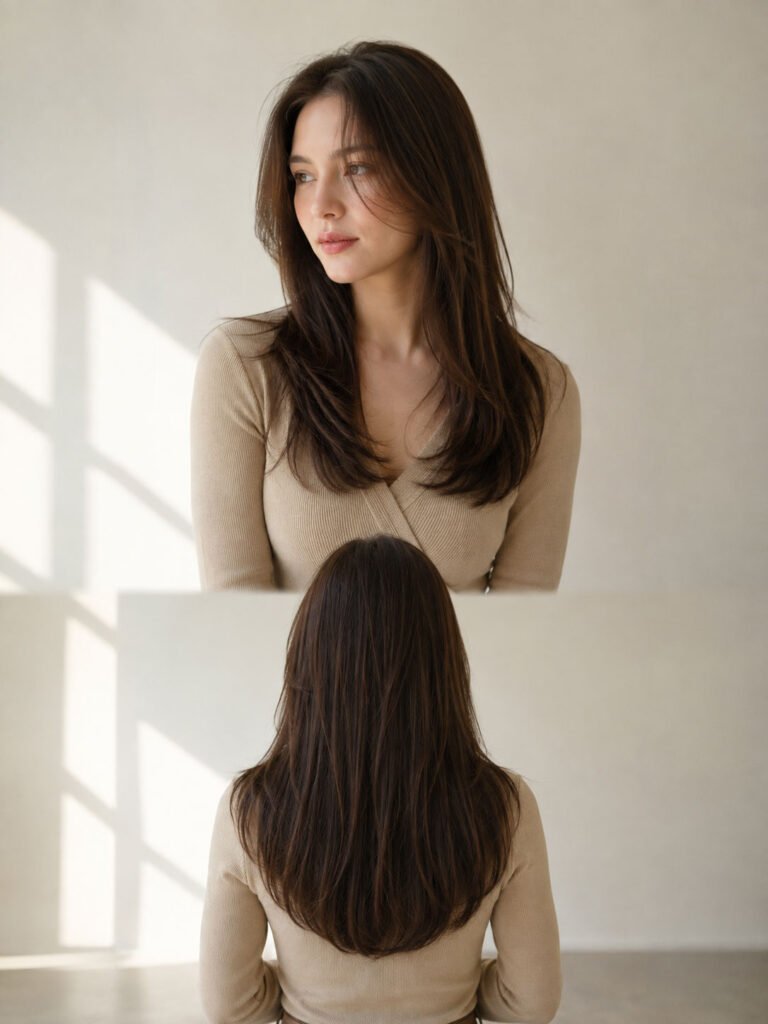
Should fine long hair be cut blunt?
Not always. A blunt or nearly solid perimeter is useful when end fullness is the priority, but a soft U-shape or restrained low layers can add movement while keeping most of that visual weight. The weaker your current ends look, the more conservative the layering should be.
Do layers make fine hair look thicker?
Layers can create movement and lift, which may make a finished style look fuller in some areas. They also remove hair from other areas. On low-density hair, too many layers can make the bottom look thinner even while the crown looks more active.
Where should layers start on long fine hair?
There is no universal measurement. Start from the condition of your perimeter. If the bottom is sparse, keep the shortest back layer low and close to the overall length. If your ends are strong and your density is good, the layers can begin higher.
Are curtain bangs good for fine hair?
They can be, especially when the front hairline has enough density to support the section. Keep the section smaller if removing a large triangle of hair would leave the front corners looking thin.
Is a butterfly cut good for fine hair?
A restrained version can work when fine hair also has moderate or high density. A very layered butterfly cut can remove too much weight from already sparse ends. Ask for longer transitions and preserve the lower perimeter.
How can I make long fine hair look fuller without cutting it shorter?
Keep the perimeter strong, introduce gentle root lift or broad bends, avoid overloading the hair with heavy product, and use low-tension styles that create shape. If the last few inches are extremely sparse or damaged, however, a modest trim may improve the overall silhouette more than keeping every inch.
Your best starting point is the bottom of your hair, not the current haircut trend. Look at how much weight is actually reaching the final few inches. Protect that line first, then spend your remaining “density budget” on the layers, fringe or face framing you care about most.