15 Hairstyles for Long Natural Hair: Comfortable Looks for Curls and Coils

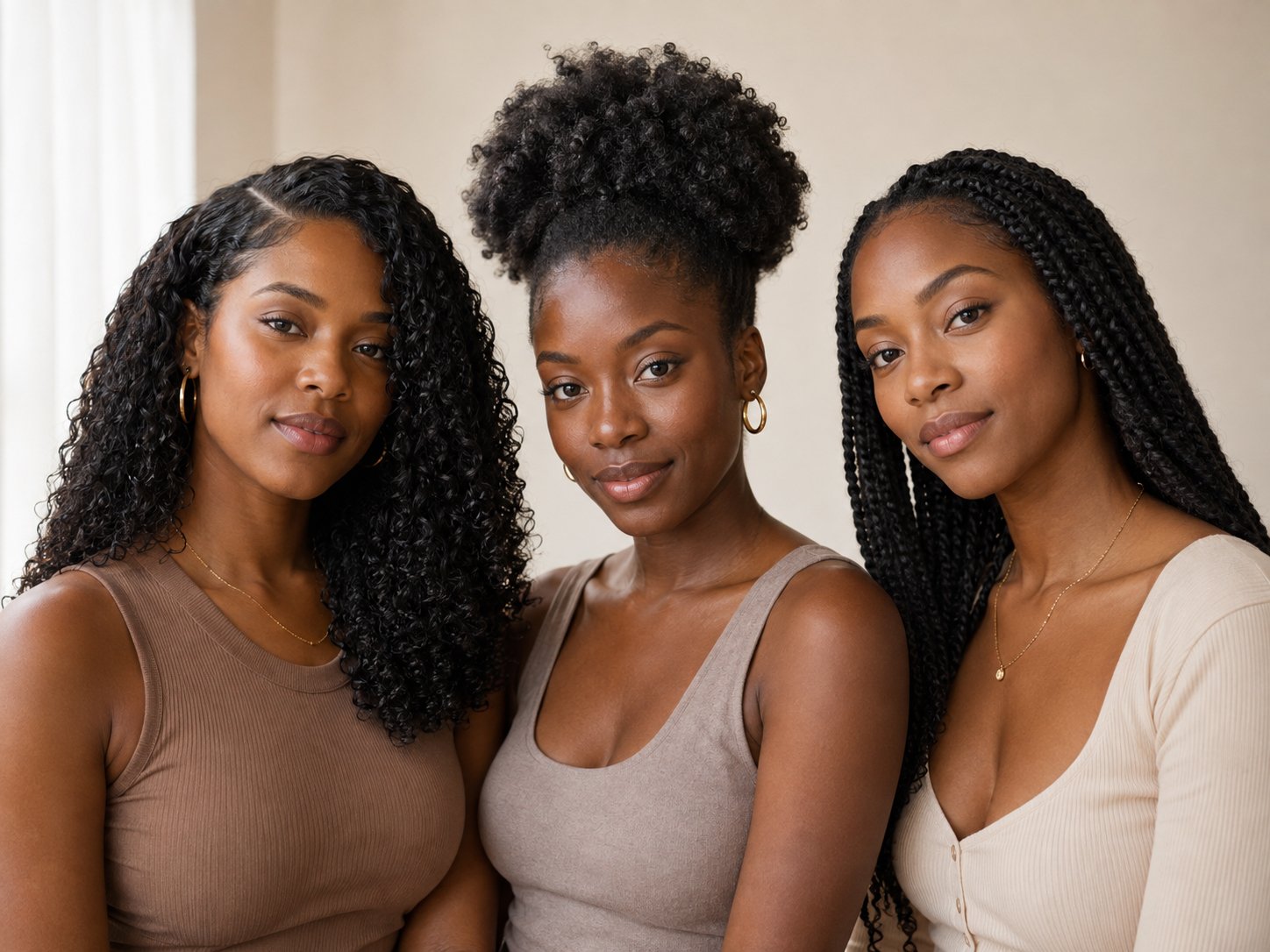
Long natural hair gives you options, but it can also turn a simple styling decision into an hour of detangling, stretching, or rebuilding a look your hair was not ready for. The easiest way to choose is to start with its current state: freshly defined, stretched or set, or already separated for a longer-wear style. The 15 no-extension looks below are grouped that way, with setup effort, tension points, and overnight care called out. No style should sting, throb, or leave the scalp feeling pulled. If it does, loosen it or take it down.
Start with your hair’s current state
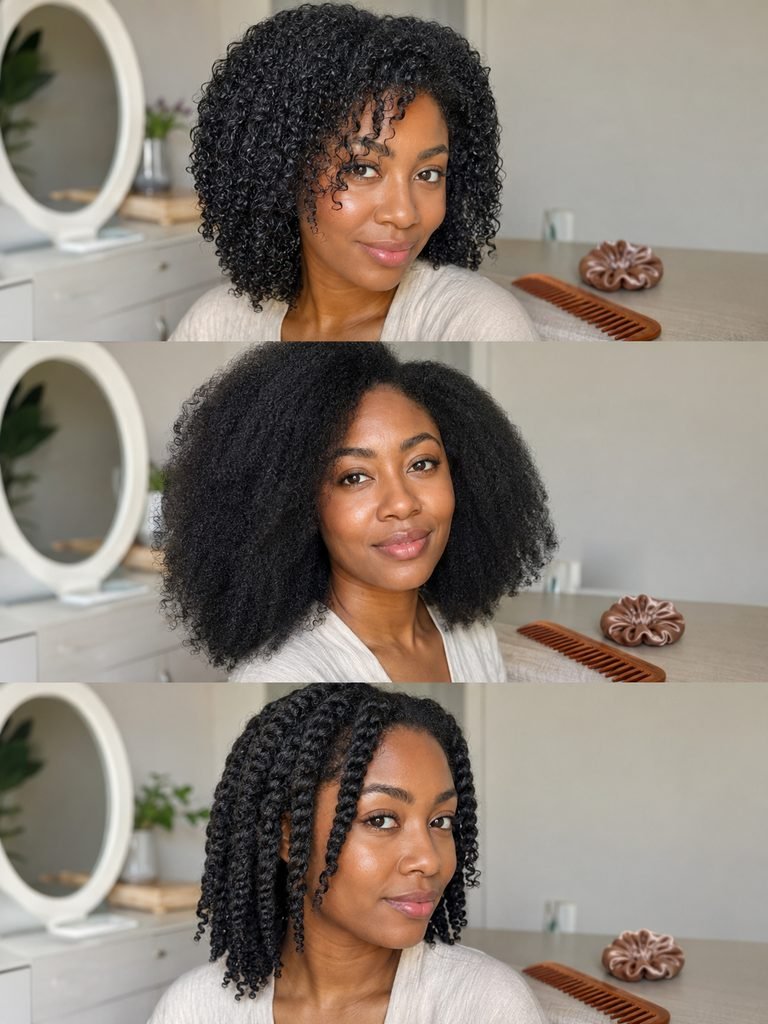
Choose from the state your hair is already in. That single decision can save more time than choosing by curl-number labels alone.
For this guide, “long” means approximately shoulder length or longer when the hair is gently stretched. “Natural hair” refers to Black or Afro-textured hair worn without chemical straightening; stretched hair can still be part of a natural-hair routine.
| Current state | Styles to consider | Setup pattern | Main tradeoff |
|---|---|---|---|
| Freshly washed or defined | Wash-and-go, side-part Afro, high puff, low puff, half-up puff | Low to moderate | Drying time, shrinkage, or concentrated puff tension |
| Stretched or set | Twist-out, braid-out, flexi-rod set, braided ponytail, face-framing braids | Moderate to high | Complete drying, definition loss, or optional heat |
| Detangled and sectioned for longer wear | Chunky twists, mini twists, mini braids, flat-twist crown, braided low bun | Moderate to high | More installation and takedown work |
If detangling is necessary, follow the American Academy of Dermatology’s curly and coily hair-care guidance: work on wet, conditioned hair in sections with your fingers or a wide-tooth tool, and avoid forcing a brush through dry curls.
Readers who need a refresher on ties, sections, clips, and simple construction can also use these easy long hairstyles you can style at home as a technique guide, then adjust each method for natural texture and comfortable tension.
Five styles for freshly washed or defined hair
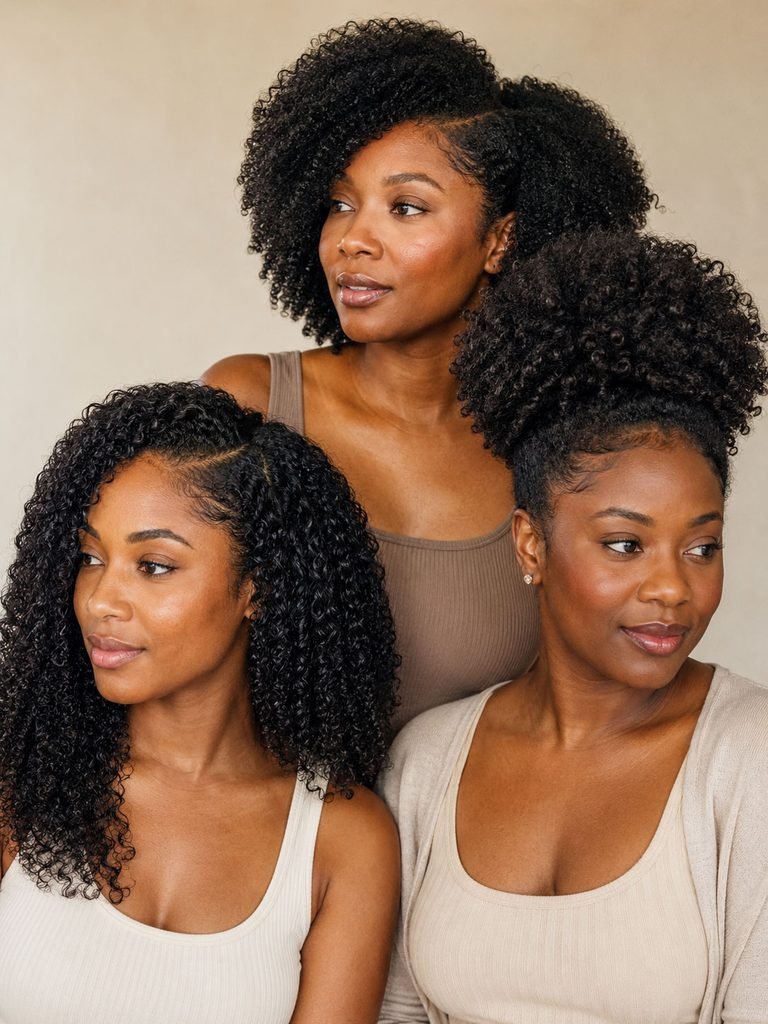
Fresh definition is best used rather than brushed away. These five styles preserve curl shape while changing the part, placement, or silhouette.
1. Wash-and-go with a deep side part. Best start: wet, freshly defined hair. Setup: moderate, depending on the usual product and drying routine. Overnight: divide the hair loosely or use a roomy pineapple once it is dry. Main tradeoff: long, dense hair can take time to dry, and a rushed wet style may not hold its intended shape.
2. Softly shaped side-part Afro. Best start: fully dry defined hair or a lightly stretched wash-and-go. Setup: low; lift only the roots with fingers or a wide-tooth pick and leave the ends alone. Overnight: make several loose twists or sections. Main tradeoff: the silhouette can change with humidity, and excessive picking can disturb the ends.
3. High puff with a soft base. Best start: second- or third-day definition. Setup: low; use a wide covered band or satin scrunchie and stop before the base feels tight. Overnight: remove the band rather than sleeping in a compressed puff. Main tradeoff: the hair’s weight is concentrated at the crown and hairline.
4. Low puff. Best start: older definition that still has usable texture through the ends. Setup: low; gather the hair toward the nape with a covered tie. Overnight: release the tie and cover the hair loosely. Main tradeoff: lower placement can feel more balanced, but it is not automatically low-tension and may rub against collars.
5. Half-up, half-down puff. Best start: fresh or lightly refreshed curls. Setup: low; gather a broad top section without repeatedly tightening it. Overnight: release the upper section and loosely contain the full length. Main tradeoff: a very small top section may be asked to support too much hair.
Five styles for stretched or set hair
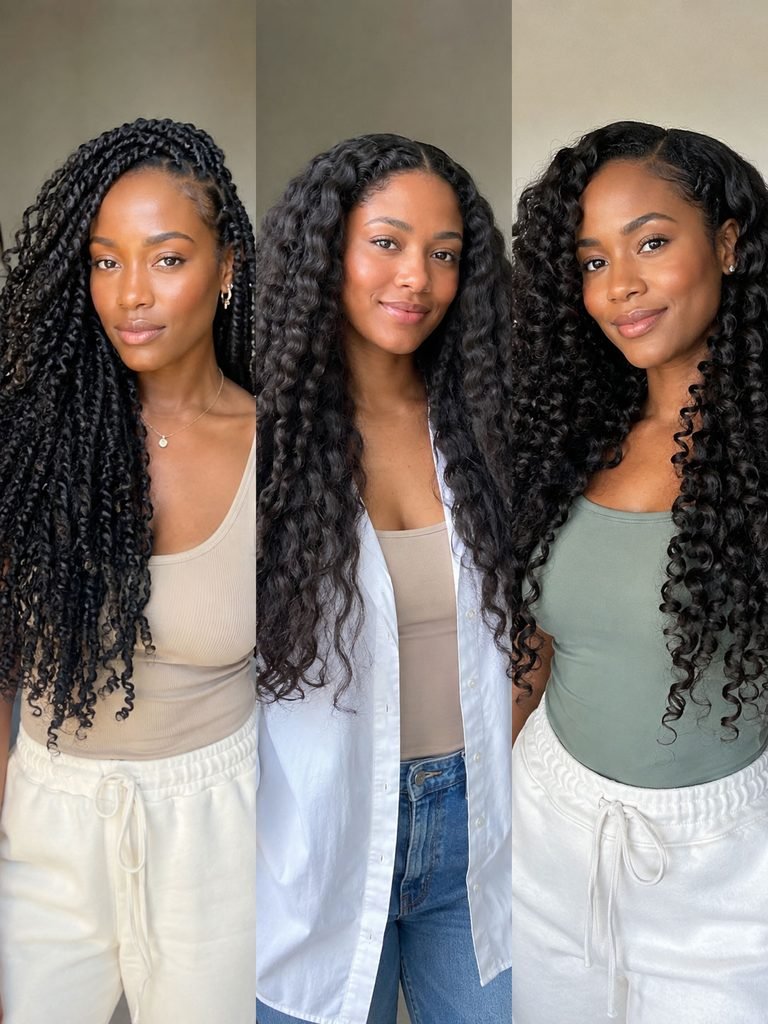
Stretched or set hair is ready for definition that does not require restarting wash day. Stretching can come from twists, braids, banding, rollers, or careful drying; it does not have to mean straightening.
When heat is used, the AAD’s everyday care guidance for Black hair recommends a heat-protecting product and the lowest effective temperature.
6. Elongated twist-out. Best start: detangled, damp, or previously stretched hair. Setup: moderate; make even two-strand twists and let them dry completely before separating. Overnight: retwist in larger sections. Main tradeoff: unraveling damp twists can blur the pattern and create more shrinkage than expected.
7. Braid-out. Best start: damp stretched hair or an older blowout that does not need to be straight. Setup: moderate; use a few plaits for broad waves or more sections for tighter definition. Overnight: rebraid loosely in large sections. Main tradeoff: the roots may dry flatter than a twist-out, while untreated ends can remain less defined.
8. Flexi-rod set. Best start: smooth, detangled sections that are damp rather than soaking wet. Setup: high; the ends need to be wrapped smoothly and every section must dry. Overnight: gather the curls loosely under a roomy bonnet. Main tradeoff: setup and drying demand patience, even when no direct heat is used.
9. Own-hair braided ponytail. Best start: dry stretched hair. Setup: low to moderate; secure one comfortable ponytail, then braid the free length without extensions. Overnight: remove the base tie while leaving the braid intact if that feels comfortable. Main tradeoff: one small elastic can concentrate the weight of long hair.
10. Face-framing mini braids. Best start: a twist-out, braid-out, or defined loose style. Setup: low; make two to four small braids slightly behind the most delicate hairline hairs and leave the rest loose. Overnight: loosely twist or pineapple the unbraided hair. Main tradeoff: gripping tiny sections too close to the edge can make a simple accent unnecessarily tight.
Five lower-manipulation styles for longer wear
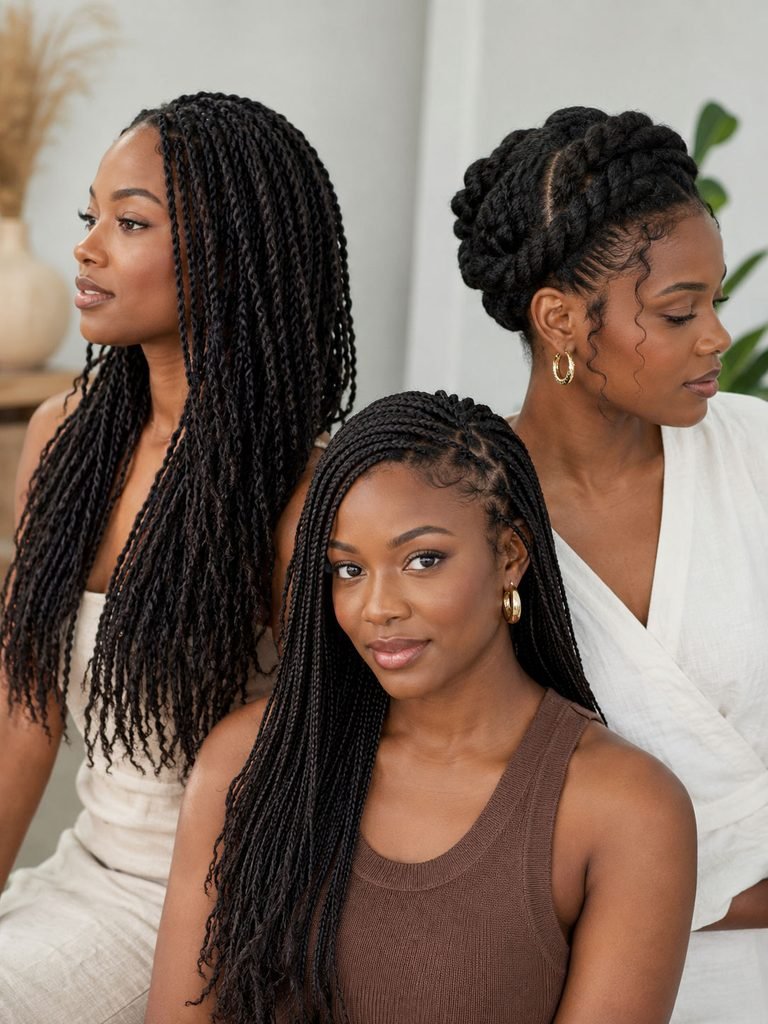
For fewer daily resets, choose a style that keeps the hair separated or contained without requiring a tight base. “Lower manipulation” describes the routine, not a guarantee against breakage or scalp stress.
11. Chunky two-strand twists. Best start: damp or stretched, detangled hair. Setup: moderate; use larger sections and begin each twist without pulling the root taut. Overnight: cover the twists with satin or loosely gather them if necessary. Main tradeoff: they install faster than mini twists but usually develop a softer, less uniform finish sooner.
12. Mini twists. Best start: dry or lightly damp stretched hair. Setup: high; smaller sections require more installation and careful takedown. Overnight: use a roomy bonnet or loosely gather the lengths. Main tradeoff: they have useful multi-day potential, but tiny, tight roots can defeat the purpose of a comfortable style.
13. Mini braids without added hair. Best start: stretched, fully detangled hair. Setup: high; braid each section gently and leave enough room at the scalp for natural movement. Overnight: cover the braids and avoid repeatedly pulling them into the same ponytail. Main tradeoff: installation and takedown take time, and product buildup or lint may be more noticeable during extended wear.
14. Flat-twist crown. Best start: damp or stretched hair that parts cleanly without force. Setup: high skill; direct broad flat twists around the head and secure the ends with pins. Overnight: cover the completed shape without tying a tight scarf across the hairline. Main tradeoff: an elegant flat finish can tempt the stylist to grip too firmly at the temples.
15. Loose braided low bun. Best start: dry stretched hair or an older braid-out. Setup: moderate; form two loose low braids, cross or fold them at the nape, and secure them with as few comfortable pins as possible. Overnight: release the bun and retain the braids. Main tradeoff: pins and folded lengths can press against the nape if placed too tightly.
Keep comfort ahead of polish
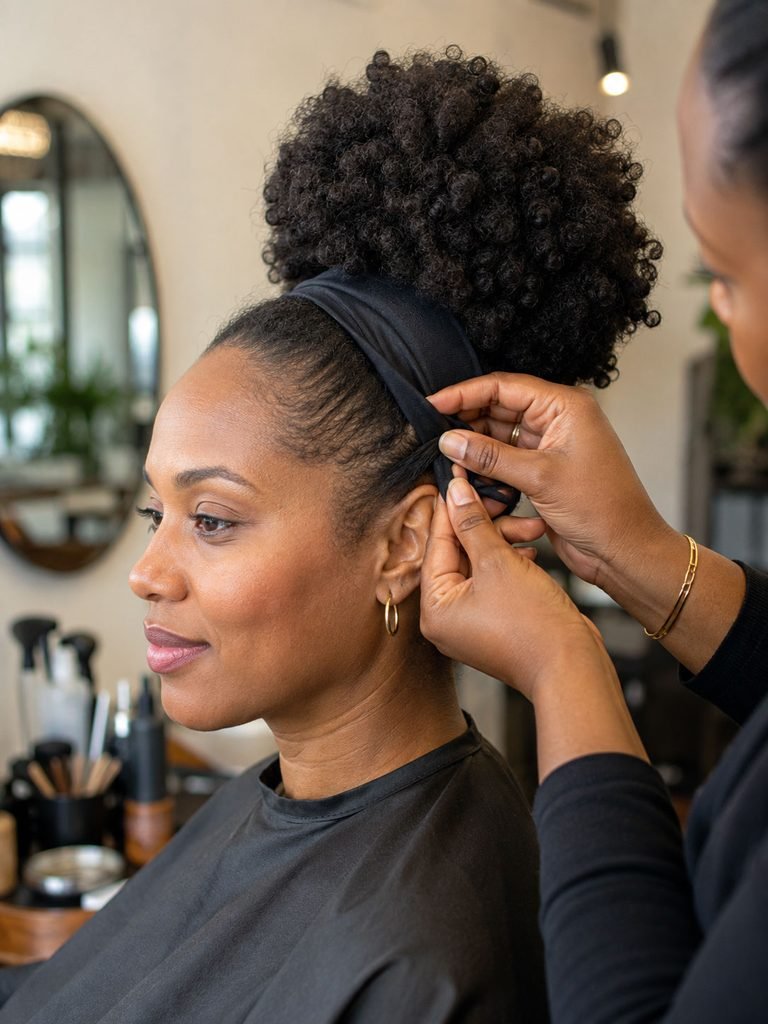
Comfort is a styling requirement, not a bonus. A sleek result is not worth pain, stinging, persistent pulling, or visible stress at the hairline.
The AAD explains that hairstyles that repeatedly pull can cause traction alopecia. Its warning signs include pain, stinging, crusting, scalp tenting, broken hairs around the forehead, a receding hairline, and localized hair loss.
Use these checks with puffs, ponytails, twists, braids, buns, and updos:
- Loosen or remove a style if it hurts. Do not wait for the discomfort to become familiar.
- Let the hairline remain soft instead of making every short hair reach the band or braid.
- Change the height and placement of puffs, buns, and ponytails rather than pulling the same area every day.
- Keep pins against the hairstyle, not digging into the scalp.
- Remember that long hair has weight. A style can look loose through the length while still pulling at one small base.
- See a board-certified dermatologist if thinning, hair loss, or persistent scalp changes develop. Styling advice cannot diagnose or treat those concerns.
Femorias’s real-life trial of 15 long hairstyles offers an additional way to compare styling time, hold, and scalp comfort before committing to a daily rotation.
Questions about long natural hairstyles
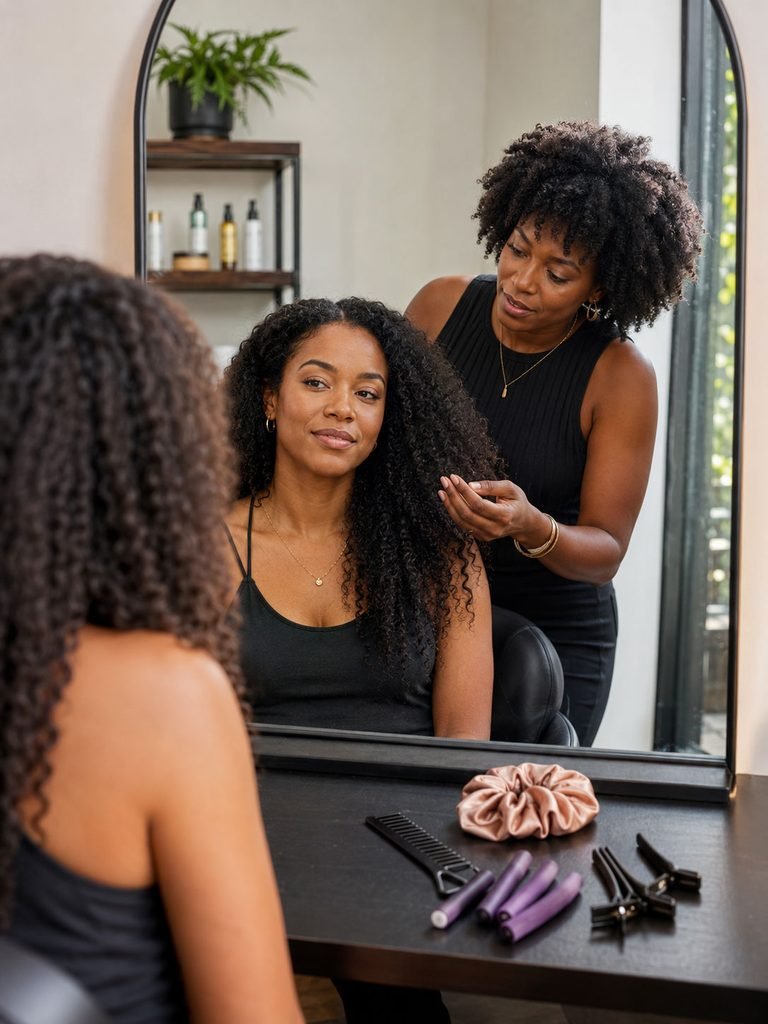
The most useful questions concern starting length, extensions, heat, wear, tension, and nighttime preservation.
What counts as long natural hair?
For this guide, it means approximately shoulder length or longer when gently stretched. Visible length can be much shorter when curls and coils shrink.
Can all 15 styles be done without extensions?
Yes. Every style in this guide is designed around the wearer’s own hair. Accessories such as covered ties, pins, rods, or a headband may still be used.
Which styles have the best longer-wear potential?
Mini twists and mini braids generally offer the strongest multi-day potential in this group. Chunky twists and a flat-twist crown may also reduce daily restyling. Results still depend on installation, moisture, activity, weather, and nighttime care.
Can these styles be done without heat?
Yes. Twists, braids, banding, rollers, and air-drying can create stretched or set results. Heat may shorten drying time, but it is optional rather than a requirement for these looks.
Is a puff automatically a protective style?
No. A puff may reduce handling through the loose ends, but a tight band, heavy length, or repeated placement can still pull at the base and hairline.
How should long natural hair be worn at night?
Release tight bands first. Depending on the style, use a loose pineapple, several large twists, a loose braid, or a roomy bonnet. Satin or silk contact can reduce friction, but the nighttime setup should not introduce new tension.
Build a three-style rotation
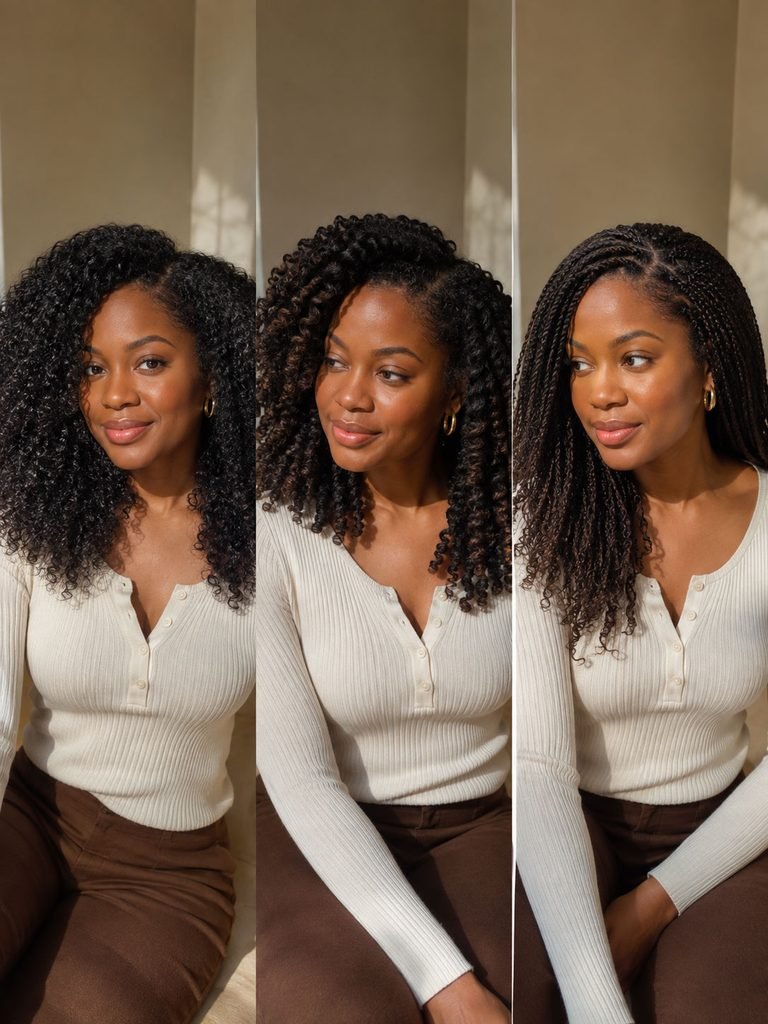
A practical rotation needs one style for fresh definition, one for stretched hair, and one for longer wear.
Start with three choices:
- A wash-and-go or side-part Afro for freshly defined hair.
- A twist-out or braid-out when the hair is already stretched.
- Chunky twists or loose-rooted mini twists when fewer daily resets matter more than installation time.
A wide-tooth comb, covered ties, a few smooth pins, and a satin bonnet are enough to support most of this rotation. Expensive product layers and extensions are optional, not prerequisites.
Write down which starting state, nighttime setup, and tension level worked for each look. Keep the styles that fit both your hair and your schedule. If one hurts, take it out of the rotation rather than trying to become accustomed to it.