15 Long Hairstyles Compared by Effort, Hold and Everyday Wearability

Long hair gives you options, but more options do not automatically make mornings easier. A claw clip twist and a crown braid can both look polished, yet they ask for completely different amounts of time, coordination, and hold.
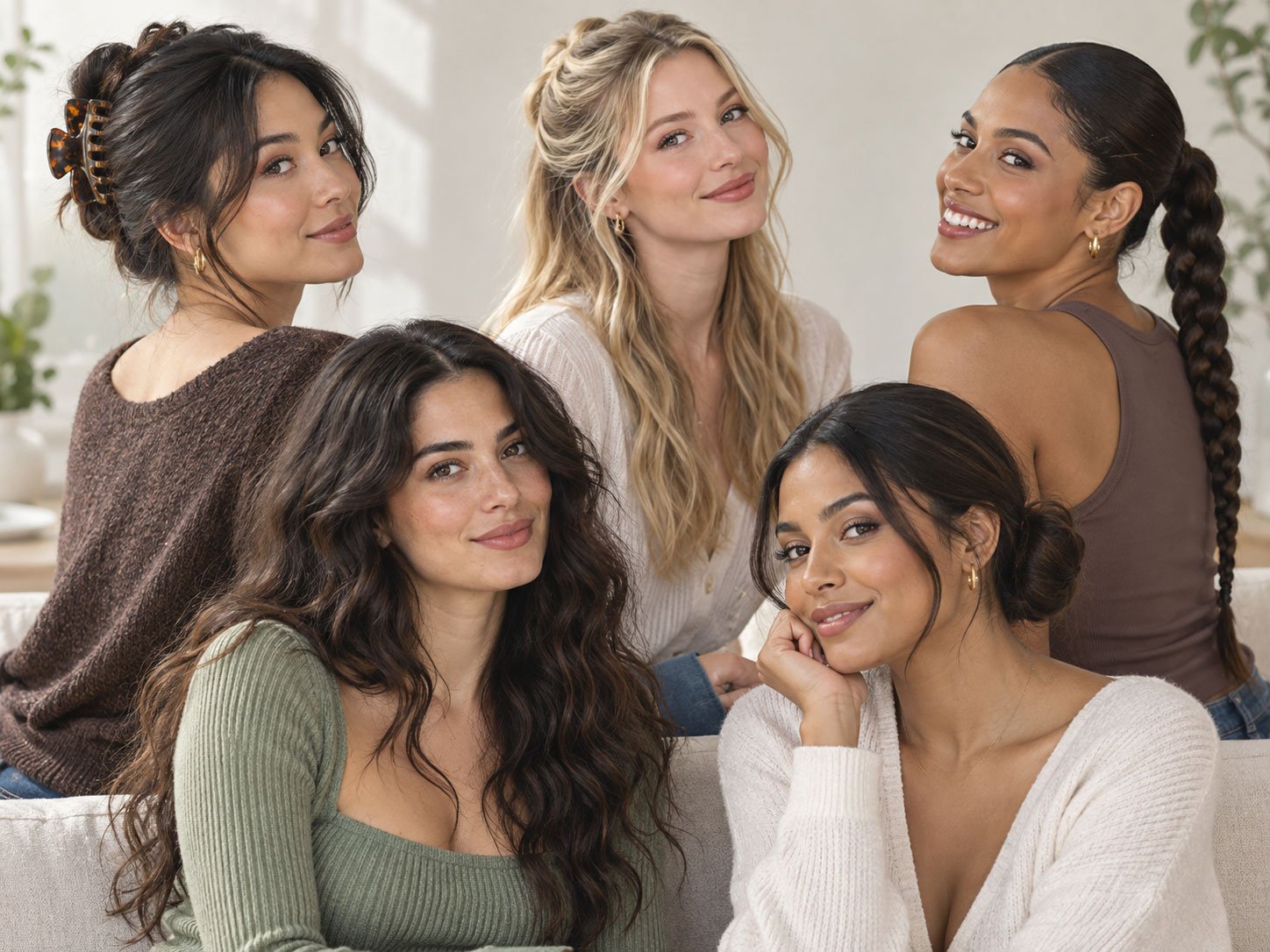
A useful way to choose is to start with three questions: What state is your hair in now? How secure does it need to be? How much styling do you want to do? The 15 long hairstyles below range from quick containment to more deliberate braids and heat styled finishes, with the main drawback of each option included.
Choose by effort, hair state and comfort
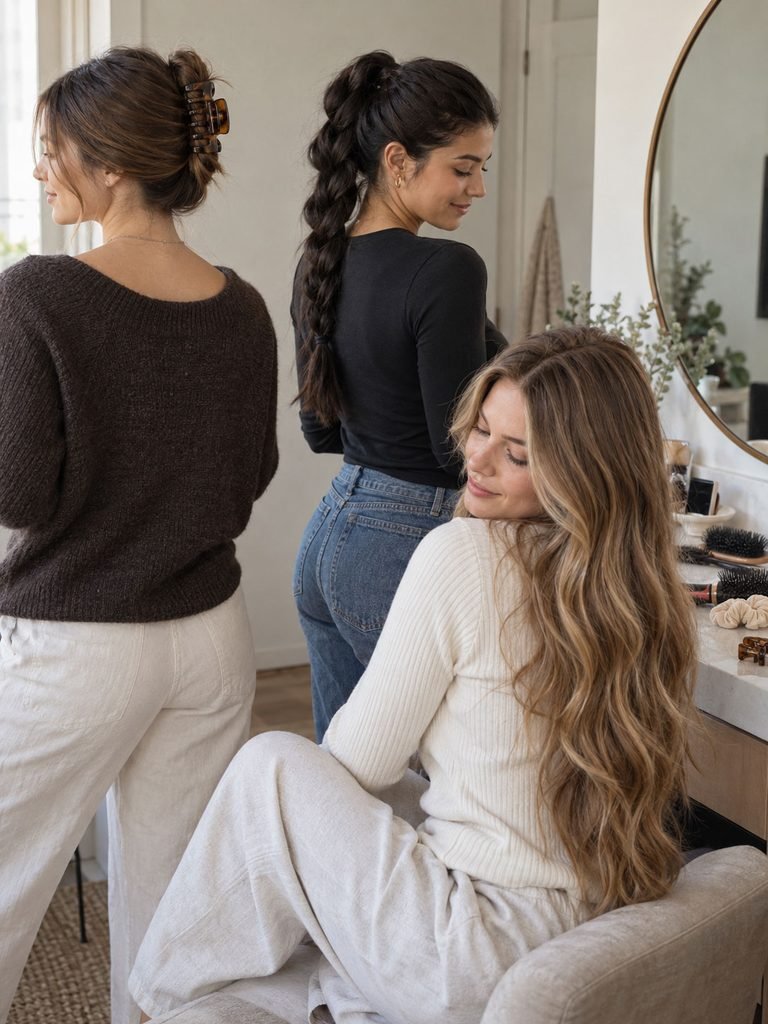
Start with the style your hair is already closest to. Dry second day hair often suits clips, ponytails, buns, and braids. Hair that already has waves or curls can be left visible in a half up style. A planned wash night creates a natural opportunity for heatless waves.
For detailed execution rather than comparison, Femorias’ guide to easy long hairstyles you can style at home covers step by step versions of claw clip twists, low ponytails, buns, bubble ponytails, braids, and heatless waves.
| Style | Effort | Useful when | Main tradeoff |
|---|---|---|---|
| Claw clip twist | Low | You want the length contained quickly | The clip must match your hair volume |
| Messy bun | Low | You need hair fully off your neck | Very long hair can make the bun bulky |
| Ribbon wrapped low ponytail | Low | You want a simple style to look intentional | Smooth ribbons can slip |
| High ponytail | Low | You want lift and secure movement | Tight placement can create uncomfortable tension |
| Sleek low bun | Moderate | You want a clean office or event finish | A very slick finish takes more preparation |
| Half up half down | Low | You want your length visible but your face clear | Short layers may escape |
| Braided ponytail | Moderate | You need long hair controlled during movement | Requires a secure ponytail base |
| Bubble ponytail | Low to moderate | You want structure without braiding | Several elastics are needed |
| Double Dutch braids | Higher | You need strong containment | Self braiding takes coordination |
| Fishtail braid | Moderate | You want a detailed braid without three sections | The repeated technique takes patience |
| Crown braid | Higher | You want a dressier pinned style | Pin placement and even tension matter |
| Face framing twists | Low | You mainly need the front sections controlled | Most of the hair remains loose |
| Heatless waves | Low active effort | You can prepare the night before | Results vary with moisture and texture |
| Straight and sleek | Higher | You want a smooth uniform finish | Requires heat for many hair types |
| Soft barrel curls | Higher | You want visible movement through the length | Hot tool styling takes more time |
These are practical categories, not fixed performance ratings. Hair density, texture, haircut, weather, accessories, and styling technique can change how easy or secure any style feels.
Low effort styles for busy days
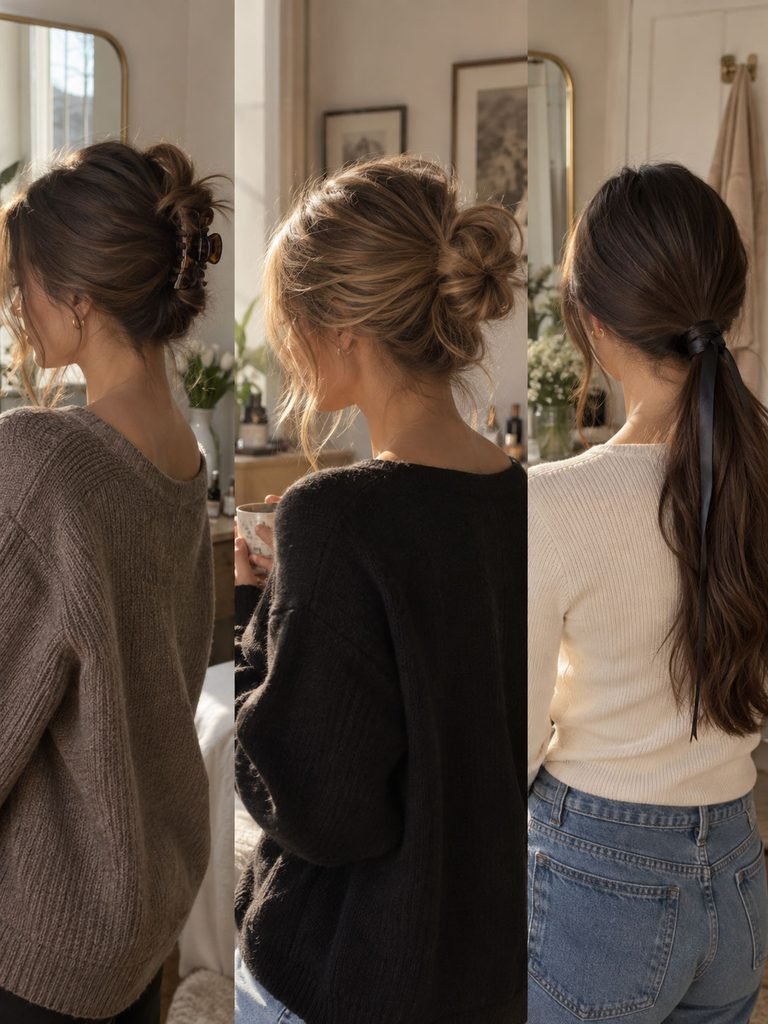
1. Claw clip twist
A claw clip twist is one of the simplest ways to get long hair off your face without building a ponytail first. The deciding factor is usually the clip, not a complicated technique. It needs enough length and spring strength to catch both the twist and some hair close to the scalp.
Very long hair may need its ends folded back down before clipping. Thick hair may work better in two smaller stacked twists if one clip cannot close comfortably. If the clip keeps opening, pulling the twist tighter is rarely the best solution. Use a larger clip or reduce the amount of hair inside it.
2. Messy bun
A loose bun works when appearance matters less than getting the length contained comfortably. Build it from a relaxed ponytail base rather than repeatedly twisting the entire mass tighter.
Very long or dense hair can make one large coil heavy. Dividing the ponytail into two sections and wrapping them separately spreads the bulk. The style can look intentionally soft even when shorter pieces escape, which makes it forgiving on layered hair.
3. Ribbon wrapped low ponytail
A low ponytail becomes more deliberate with almost no additional technique when a ribbon covers the elastic. Secure the ponytail first, then add the ribbon as decoration rather than asking it to hold the hairstyle by itself.
Smooth satin can slide on very silky hair. A knot around an existing elastic gives the ribbon something to grip while keeping the hairstyle simple.
Polished styles that still feel practical
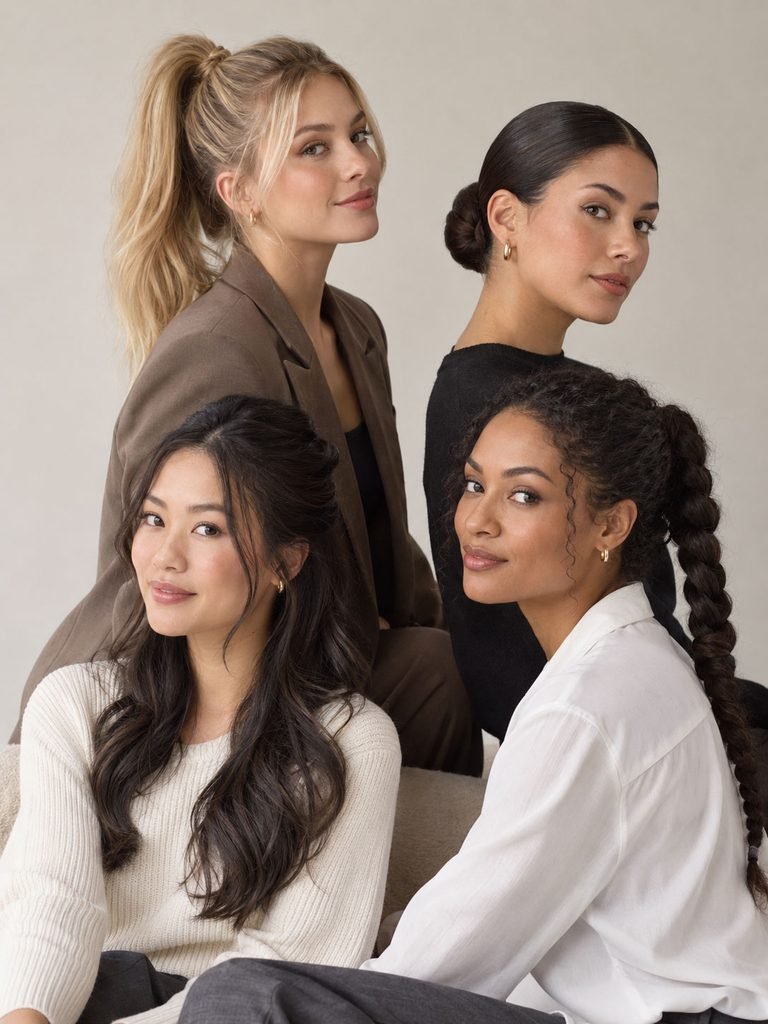
4. Classic high ponytail
A high ponytail creates lift and keeps the full length controlled, which explains why it remains a reliable gym and everyday option. The downside is concentrated tension around the base, particularly when heavy hair is pulled very firmly.
A secure ponytail should not require scalp pain. Dermatologists at the American Academy of Dermatology warn that repeatedly wearing tightly pulled ponytails, buns, braids, and similar styles can contribute to traction alopecia. If a ponytail feels painful or persistently pulls at the hairline, loosen it or lower the placement rather than accepting discomfort as part of the look. AAD guidance on hairstyles that pull
5. Sleek low bun
A low bun can look formal without the height of an updo. Start with a ponytail at the nape, then wrap the length around its base and pin the coil.
“Sleek” does not need to mean extremely tight. Smooth the surface selectively and let the base do the holding. If very long hair creates a thick center, widen the coil instead of stacking every turn directly on top of the last one.
6. Half up half down
This is a strong compromise when you want the length visible but do not want front sections falling into your face. A small claw clip creates a softer result, while an elastic or barrette gives a more defined base.
Heavily layered hair may leave shorter pieces around the temples. They can be pinned or left loose intentionally. Trying to pull every short layer backward often creates more tension than the style needs.
7. Braided ponytail
A braided ponytail controls long hair more completely than a loose ponytail because the lengths cannot swing and tangle as freely. It suits workouts, windy days, travel, and errands when you want the hair contained from root to tip.
The base still carries much of the weight. If the ponytail feels heavy, lowering it toward the middle or nape can make the style more comfortable without changing the braid itself.
Braids and structured styles when you want more hold
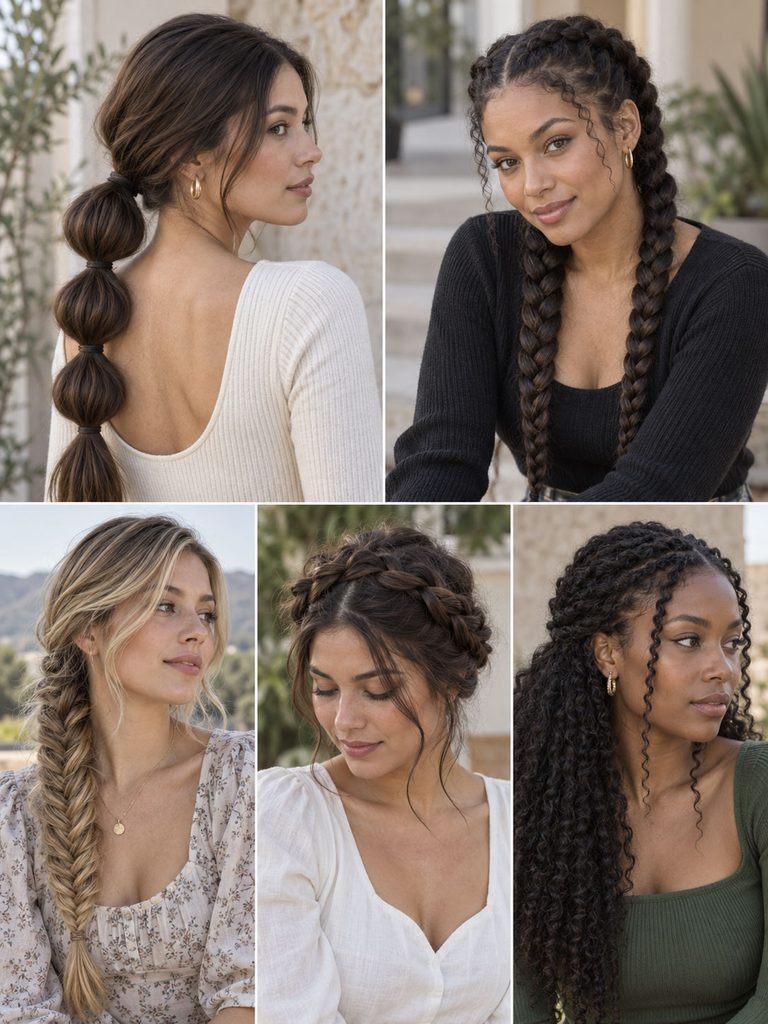
8. Bubble ponytail
A bubble ponytail gives long hair structure without requiring traditional braiding skills. Add small elastics down the ponytail and gently expand the hair between them.
Fine or heavily layered hair often behaves better with shorter spacing between elastics. Make adjustments gradually. Once a section has been pulled very wide, shrinking it evenly is harder than expanding it.
9. Double Dutch braids
Dutch braids provide some of the strongest containment in this group because new hair is incorporated as the braid travels down the head. That same structure makes them one of the more demanding styles to do on yourself.
Keep the sections clear and the tension consistent rather than tight. Uneven section size usually causes more visible problems than a braid that is simply a little loose.
10. Fishtail braid
A fishtail uses two main sections rather than three. The method is simple in concept but repetitive because small pieces keep moving from one side to the other.
A looser finish is forgiving on wavy or textured hair. Heavily layered hair may release short pieces along the braid, so a small amount of appropriate styling product can provide grip without forcing the braid tighter.
11. Crown braid
A crown braid is the dressiest option here and earns that finish with additional setup. The braid must curve around the head, stay balanced, and be pinned without creating obvious gaps.
Build security with pin placement instead of tightening the entire braid against the scalp. If you cannot keep the tension comfortable around the hairline, a lower braided bun is an easier alternative.
12. Face framing twists
Two small twists from the temples can change the outline of loose long hair without controlling the full length. They work especially well when the main goal is keeping front pieces away from your eyes.
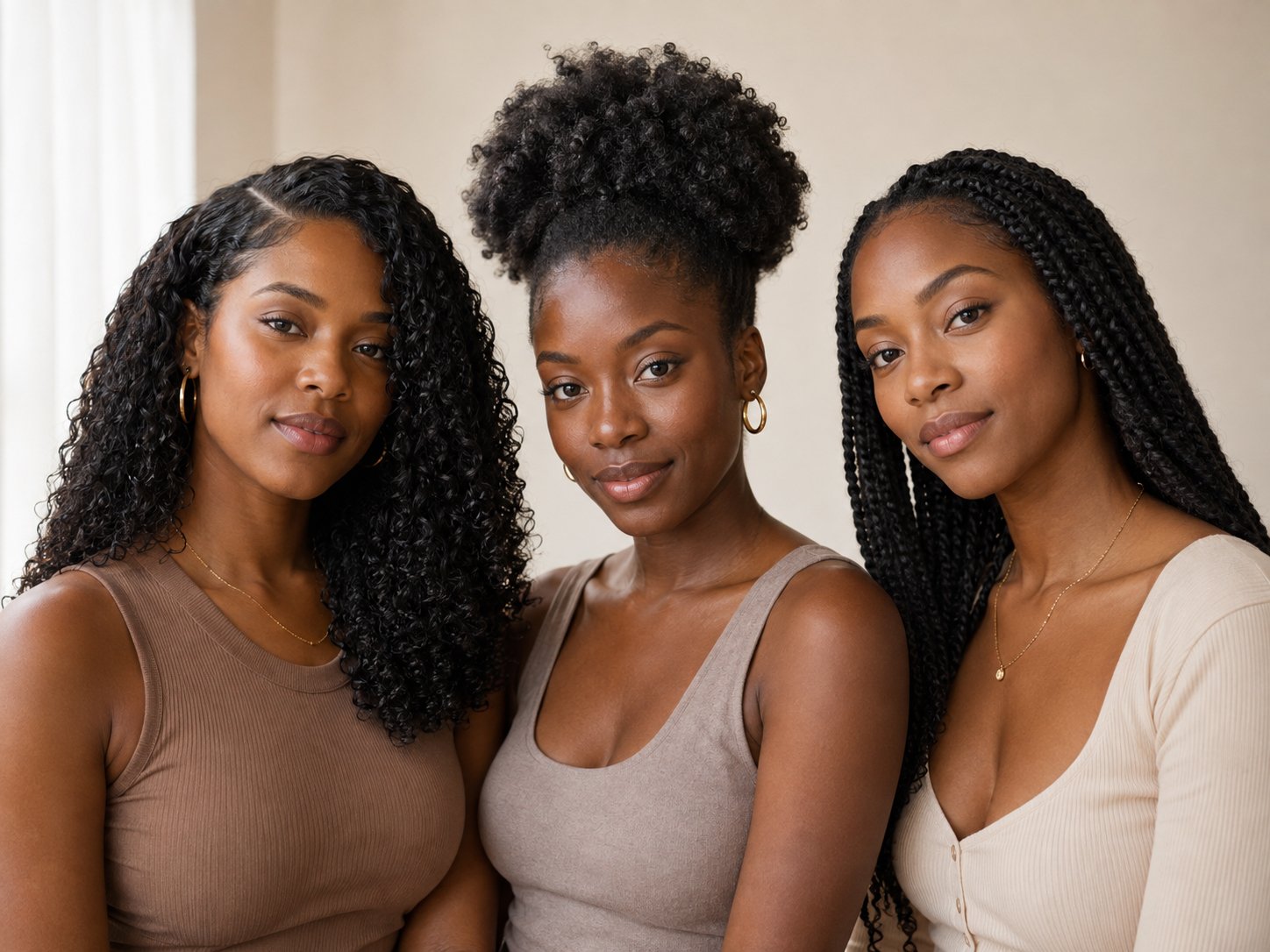
Curly and coily hair does not need to be brushed smooth to use this idea. Preserve the existing texture and twist only the sections you want to move. Readers looking specifically for curl and coil options can use Femorias’ guide to hairstyles for long natural hair, which organizes styles around the hair’s starting state.
Loose texture when you want the length to show
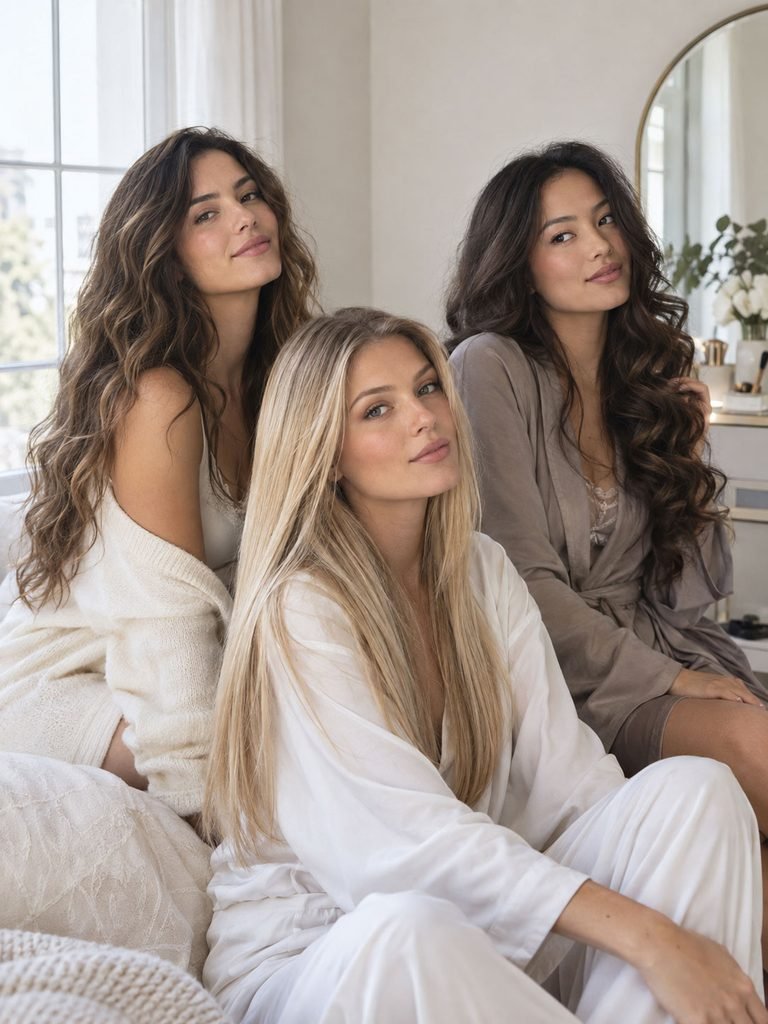
13. Heatless overnight waves
Heatless waves exchange morning styling time for preparation the night before. Hair that is slightly damp but nearly dry can be wrapped around a soft fabric form, then released after it has finished drying.
The result will not be identical on every texture. Larger sections generally create broader bends, while smaller sections encourage more definition. Very thick hair may need more drying time. If a wrapped section is still damp when you remove it, let it finish drying before separating it.
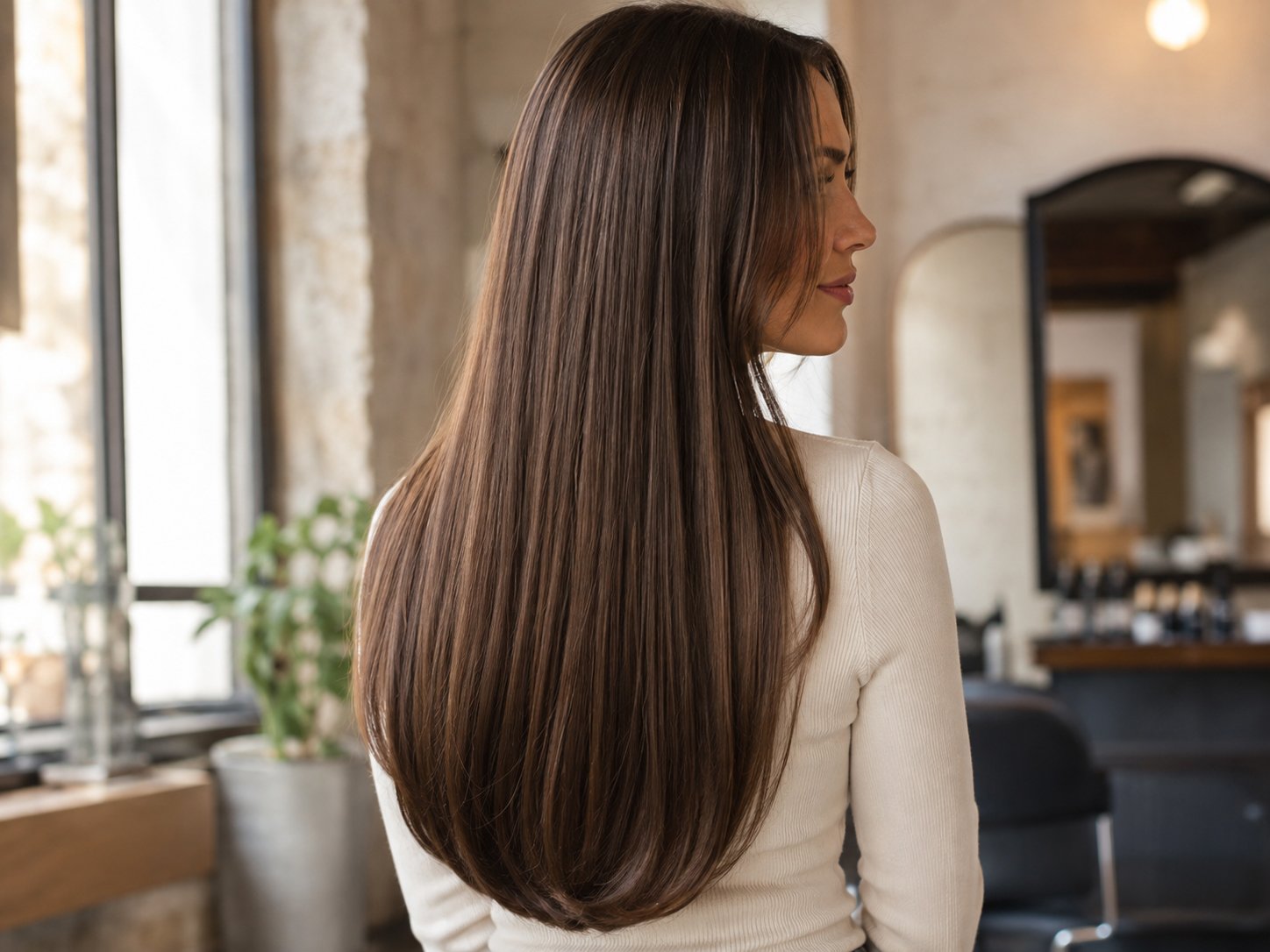
14. Straight and sleek
A sleek straight finish makes long hair look uniform from roots to ends, but it is one of the higher effort options when your natural pattern is wavy or curly. The cost of the finish is repeated heat exposure if it becomes an everyday habit.
The American Academy of Dermatology advises using flat irons on dry hair at low or medium heat and limiting excessive heat because it can damage hair. That makes this style better treated as an intentional option rather than something you have to recreate every morning. AAD hair styling without damage guidance
15. Soft barrel curls
Large curls show the full length while creating more visible movement than a straight finish. They usually require more active styling than heatless waves because the hair is worked section by section.
If you want stronger definition, let each curl cool before separating it. If your priority is speed rather than a uniform curl pattern, concentrate on the visible front and upper sections and allow the lower lengths to remain softer.
Protect your scalp and lengths while styling
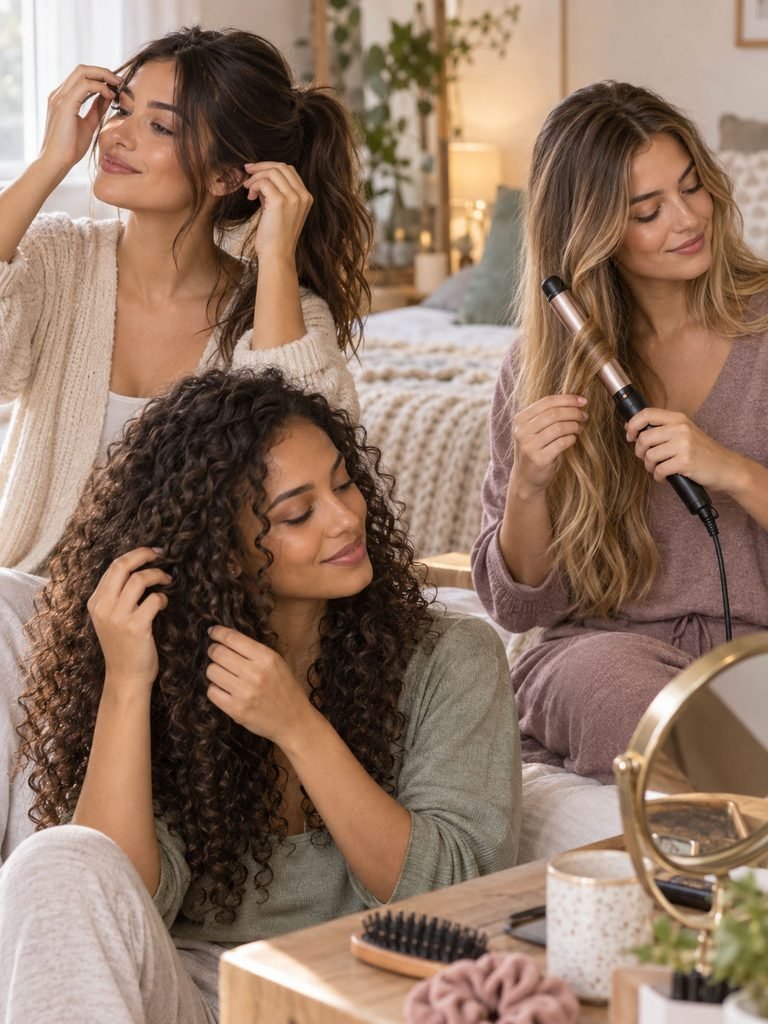
The hairstyle should fit your hair rather than forcing your hair to tolerate the hairstyle. Tightness is not the same thing as security. Better clip sizing, elastic placement, braid structure, and pin direction often improve hold without pulling harder.
Rotate where practical instead of putting the same high tension style in exactly the same place every day. If you use hot tools, moderate the temperature and frequency. If a style repeatedly causes scalp pain, broken hairs around the hairline, or noticeable thinning, stop treating it as a cosmetic inconvenience and consider discussing the change with a board certified dermatologist.
Hair texture also changes the process. Straight hair may show every loose section in a braid. Waves can provide natural grip. Curly and coily hair usually benefits from preserving its natural grouping rather than repeatedly brushing the finished texture smooth.
Common questions about long hairstyles
How long does hair need to be for these styles?
Many become easier once the hair reaches roughly shoulder length or beyond, but overall length is only part of the question. Short face framing pieces or layers may still fall out of buns, ponytails, and braids even when the longest hair reaches far down the back.
Which long hairstyle is easiest for a beginner?
A claw clip twist, low ponytail, simple bun, half up style, or bubble ponytail demands less hand coordination than Dutch, fishtail, or crown braiding.
What works best for very long or thick hair?
Styles that distribute or contain the weight tend to be easier to manage. A braided ponytail, low bun built from separate sections, large claw clip, or bubble ponytail can keep the length from moving as one heavy mass.
What works when long hair has lots of layers?
Half up styles, softer buns, bubble ponytails, and loose texture allow shorter pieces to escape without ruining the structure. For braids, start lower when possible or accept a few intentionally loose face framing pieces.
Do I need heat for long hair to look styled?
No. Clips, ponytails, buns, braids, twists, and heatless waves all provide shape without hot tools.
Start with one low effort style and one more secure option rather than trying to master all 15 at once. A claw clip twist plus a braided ponytail, for example, covers two very different kinds of days. If a style needs constant pulling, reheating, or rebuilding to stay in place, another option on this list will probably suit that day better.