
Medium Hairstyles for Women: How to Choose the Right Cut for Your Hair

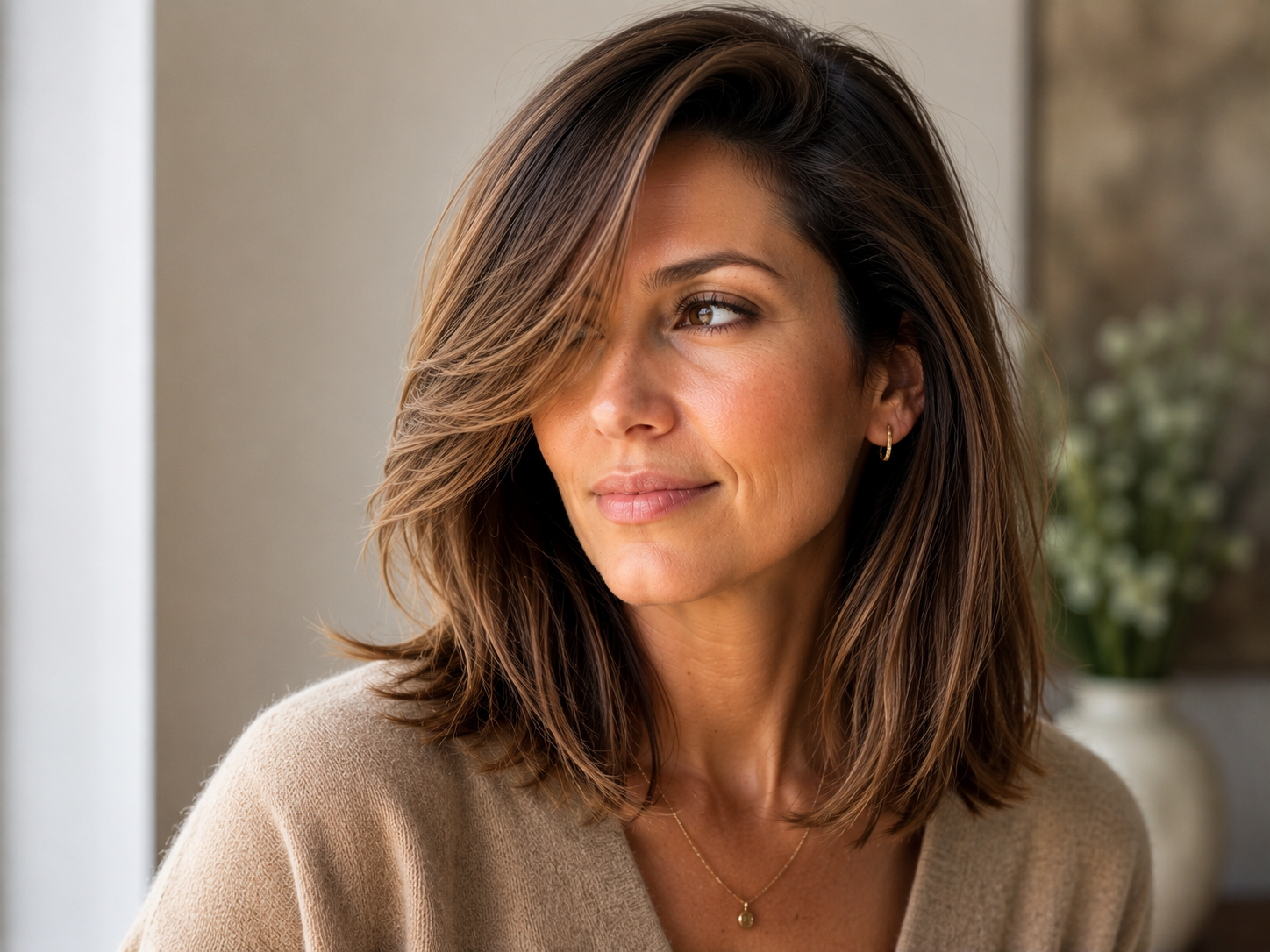
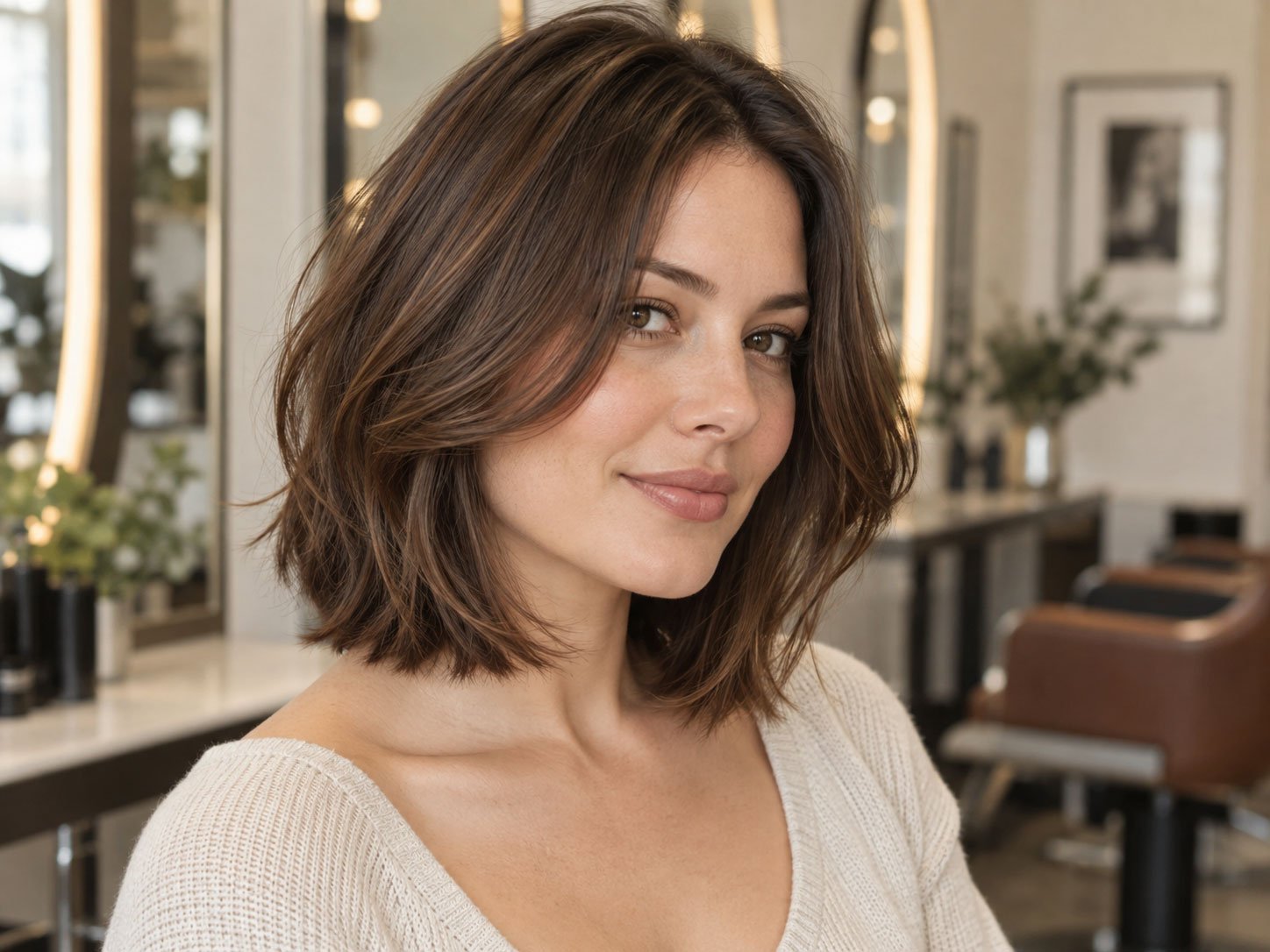
Medium hair is easiest to choose when you stop treating “medium” as one hairstyle. A blunt collarbone cut keeps more weight at the bottom. Long layers create movement through the length. Face-framing pieces change the front without necessarily changing the back. A shag deliberately creates more separation, while a curl-shaped cut has to account for how the hair sits when dry.
Before saving another reference photo, decide four things: how full you want the perimeter to look, how your natural texture behaves, how much styling you actually do, and whether you need the hair to tie back. Those answers will narrow the options faster than a trend name will.
Use these five filters before you choose a medium cut
Start with your actual hair, not the model’s face.
1. Perimeter
Look at the bottom two or three inches. Do you want a dense, obvious line, or are you comfortable with the ends separating into lighter pieces? The more hair that becomes part of shorter layers, the less of it remains at the lowest edge.
2. Density and strand diameter
These are not the same variable. Fine hair refers to the diameter of individual strands; density describes how many hairs occupy an area. Clinical hair research measures hair density and shaft diameter separately for exactly that reason. PubMed research measuring hair density and shaft diameter separately
That distinction matters at the salon. Someone with many fine strands may be able to support considerably more layering than someone whose individual strands are thicker but whose overall density is low.
3. Natural texture
Straight hair exposes every change in layer length. Waves soften transitions. Curls can spring to a considerably different position when dry, so a reference photo showing stretched or blown-out hair cannot tell you the whole story.
4. Styling time
Decide whether the cut must work after an air-dry, a five-minute rough dry, or a deliberate blowout. A haircut that only gives you the shape you love after twenty minutes with a round brush is not low maintenance for someone who normally air-dries.
5. Practical length
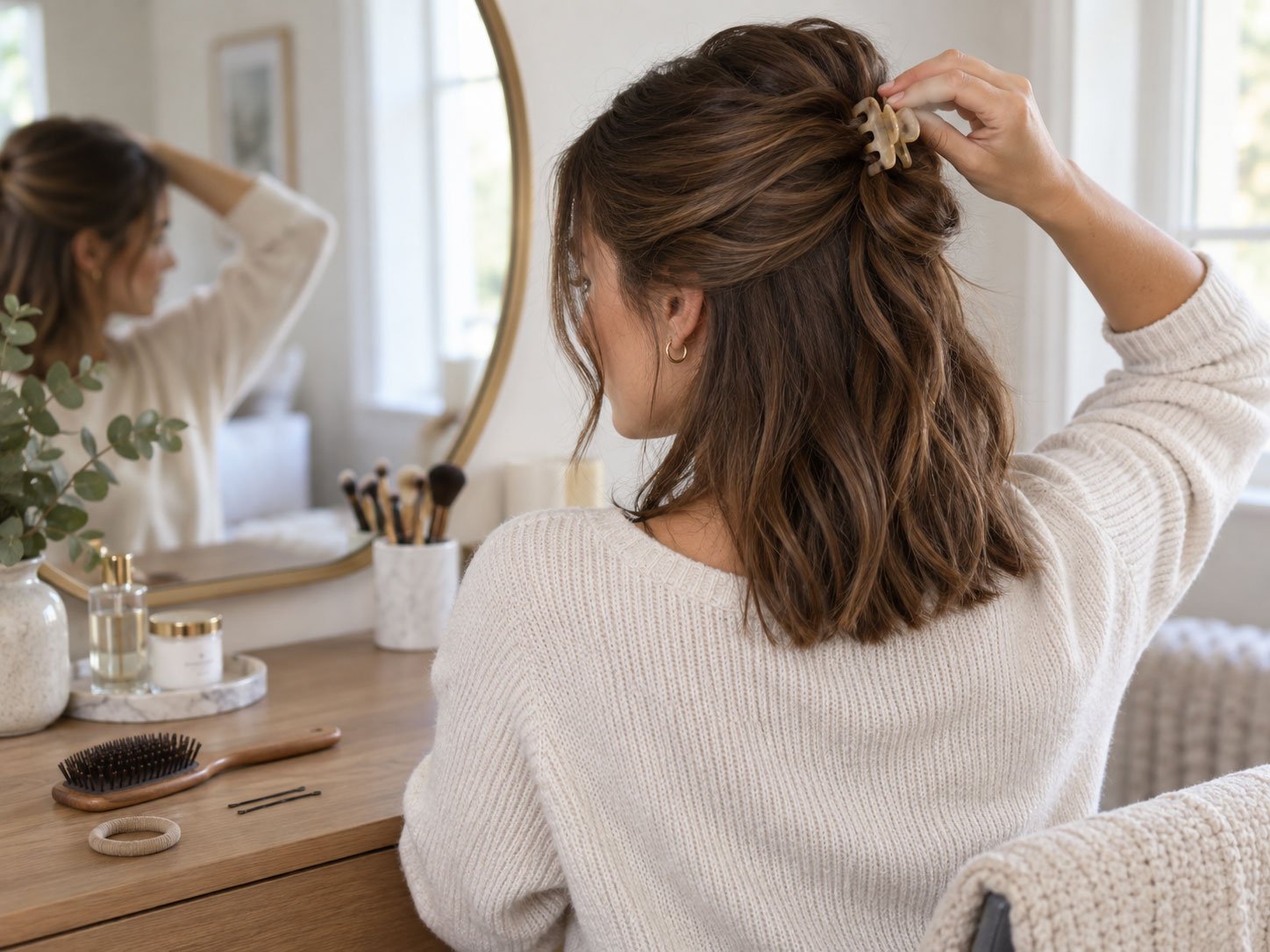
If a ponytail, low bun, workout style, or clip is part of your week, say so before anything is cut around the face.
Professional haircutting education also treats medium cuts as different structures rather than interchangeable labels. Milady’s haircutting system, for example, separates the A-line, layered bob, textured graduation, and mid-length layers into different medium haircut forms. Milady Standard Haircutting System
| Cut family | What changes most | A useful starting point when | Main tradeoff |
|---|---|---|---|
| Solid lob or collarbone cut | Perimeter | You want a strong outline and limited visible layering | Dense hair may feel heavy without internal adjustment |
| Long layers | Mid-lengths and ends | You want more movement through the whole cut | Higher layers remove more weight from the bottom |
| Face-framing layers | Front sections | You want a visible change near your face while keeping the back fuller | Short pieces may escape ponytails |
| Shag or wolf-inspired cut | Crown, front, and overall separation | Texture and visible layering are part of the look | The perimeter becomes intentionally lighter |
| Curl-shaped medium cut | Dry silhouette | You wear natural curls or waves most of the time | Straightened reference photos become less useful |
| Bangs or fringe | Forehead and front outline | You want the front of the haircut to change noticeably | Styling and grow-out become part of the routine |
A solid lob keeps the perimeter strongest
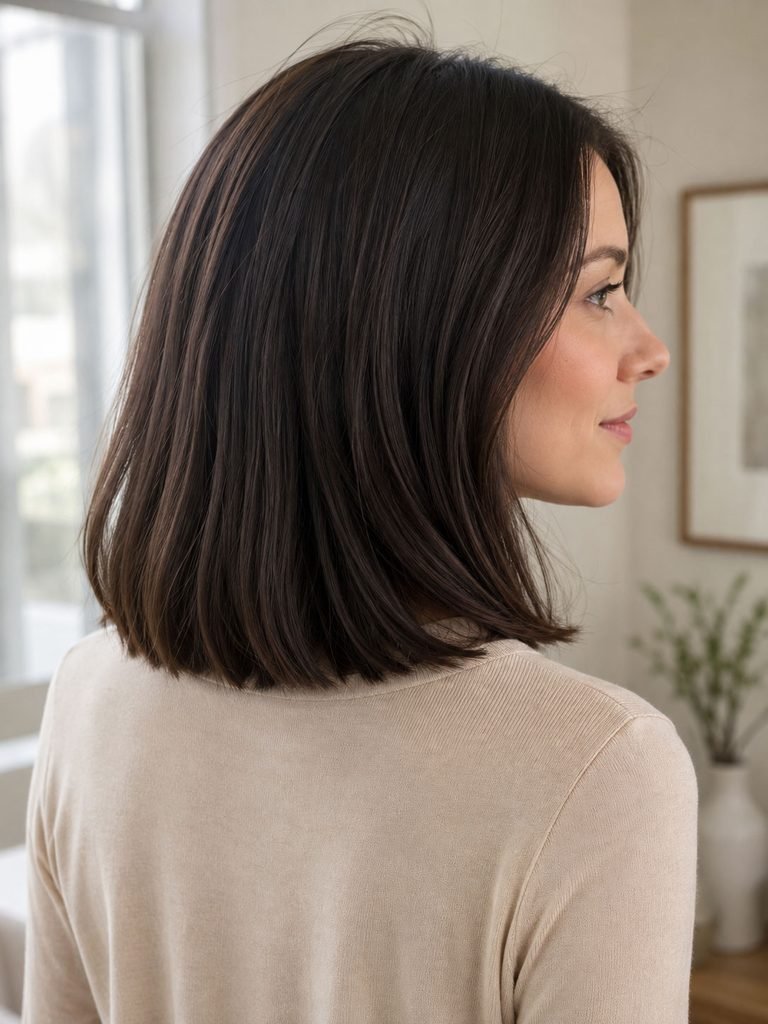
Choose a solid lob when the lower outline matters more to you than obvious layers. The hair can sit around the shoulders or collarbone, with most of the weight remaining at the bottom instead of being distributed through many shorter sections.
This is a useful starting point when your ends already look lighter than the hair above them, when you prefer smooth or softly waved finishes, or when you want most of the haircut to reach a ponytail.
A solid perimeter does not mean the haircut has to look severe. The ends can be softened slightly, the front can be angled, or a small amount of internal weight can be adjusted without turning the outside into obvious layers.
The tradeoff appears when the hair is very dense, coarse, or naturally expansive. Keeping every strand at almost exactly the same length may create more bulk than you want. In that case, the better conversation is not automatically “give me lots of layers.” Ask whether weight can be removed while preserving the outside line you like.
Also notice where the cut lands. Hair that sits directly on the shoulder can bend outward as it rubs against clothing. Moving the line slightly above or below that contact point can sometimes make the everyday shape easier to manage.
Useful salon language: “I want a strong collarbone-length perimeter. Keep the outside fairly solid, and tell me if you think I need any internal weight removal.”
Long layers add movement without turning the whole cut into a shag
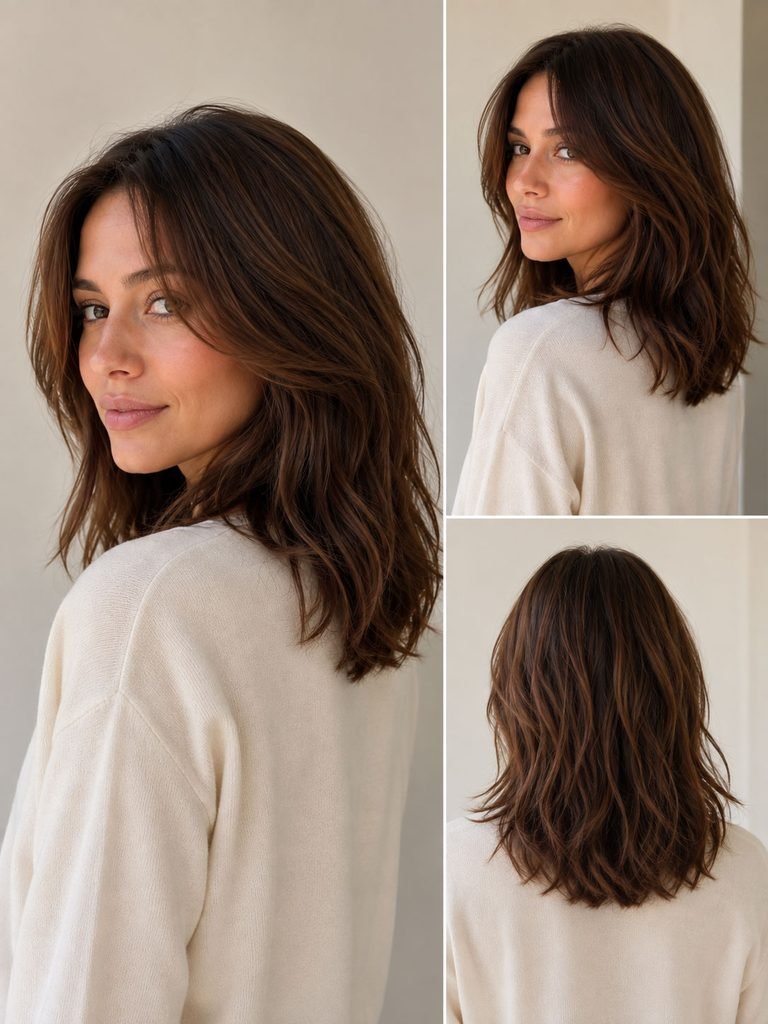
Long layers make sense when you want the entire haircut to move more but still want medium hair to read as medium hair rather than as a heavily layered silhouette.
The biggest decision is where the shortest layer begins. Low layers leave more hair in the lower half of the cut. Raising that starting point makes the layers more visible and increases the amount of hair that no longer reaches the perimeter.
That is why asking simply for “long layers” is not very precise. Femorias’s detailed comparison of face-framing, long, ghost, and butterfly layers explains how each approach changes a different part of the haircut.
For medium hair, a useful salon question is: “Where will the shortest back layer land when my hair is dry?” If the answer is much higher than you expected, stop and clarify before the cut begins.
Long layers are especially easy to misread in a reference photo because a round-brush blowout curves each section away from the one underneath it. The haircut may still have movement after an air-dry, but the large floating arcs in the photo can be mostly styling.
Useful salon language: “I want movement through the back and sides, but I still want the lower edge to look full. Show me where the shortest overall layer will sit.”
Face-framing layers are the smallest visible change
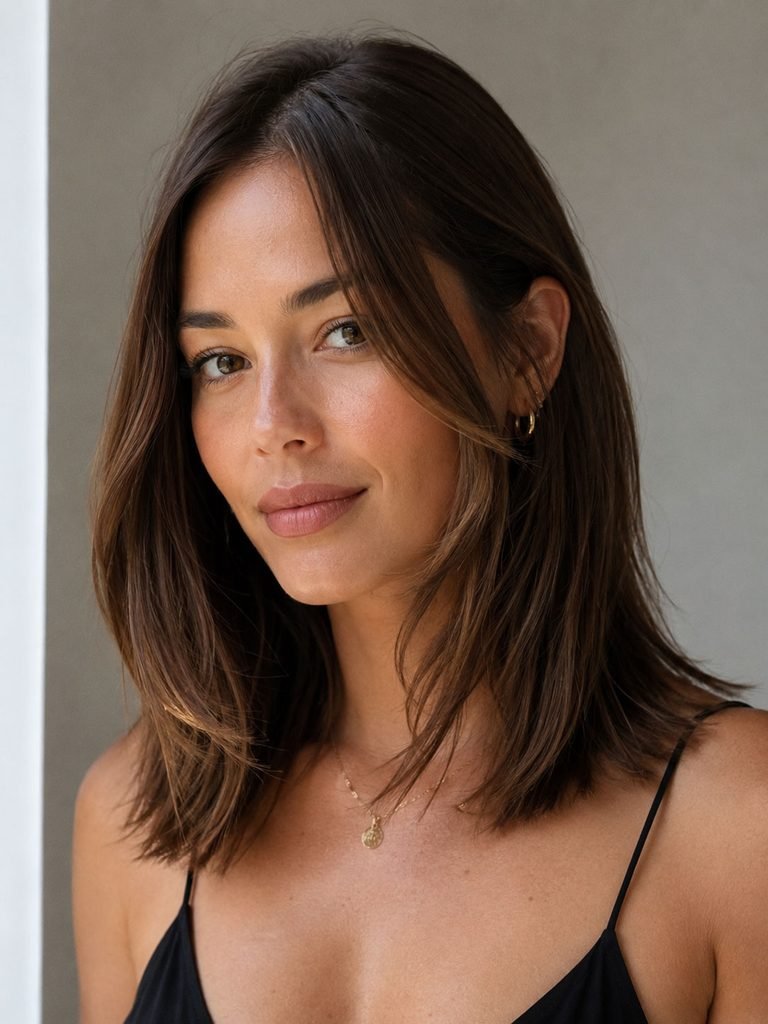
Face-framing layers are often the best first experiment if the back of your haircut already works.
Instead of distributing shorter pieces through the whole head, the stylist concentrates the change near the front. The shortest section might begin around the cheekbone, jaw, chin, or lower depending on how much framing you want.
Two details matter more than the trend name.
First, how short is the shortest piece? A cheekbone-length section creates a much stronger front change than one beginning below the chin.
Second, how much hair is included in the front section? A narrow section can add movement without dramatically changing the perimeter. A broad face-framing section that extends farther toward the sides uses much more hair.
That second point matters if your front corners already look light or if you rely on every piece reaching a ponytail. The attractive loose pieces around a reference model’s face may be the exact pieces that fall out when you tie your hair back.
Face framing also lets you test a more layered look without committing the entire haircut to it. You can always add more layering later.
Useful salon language: “I want the visible change around my face, but I want most of the back to stay full. Before cutting, show me how much hair you plan to include in the face-framing section.”
A shag or wolf-inspired cut works best when separation is the point
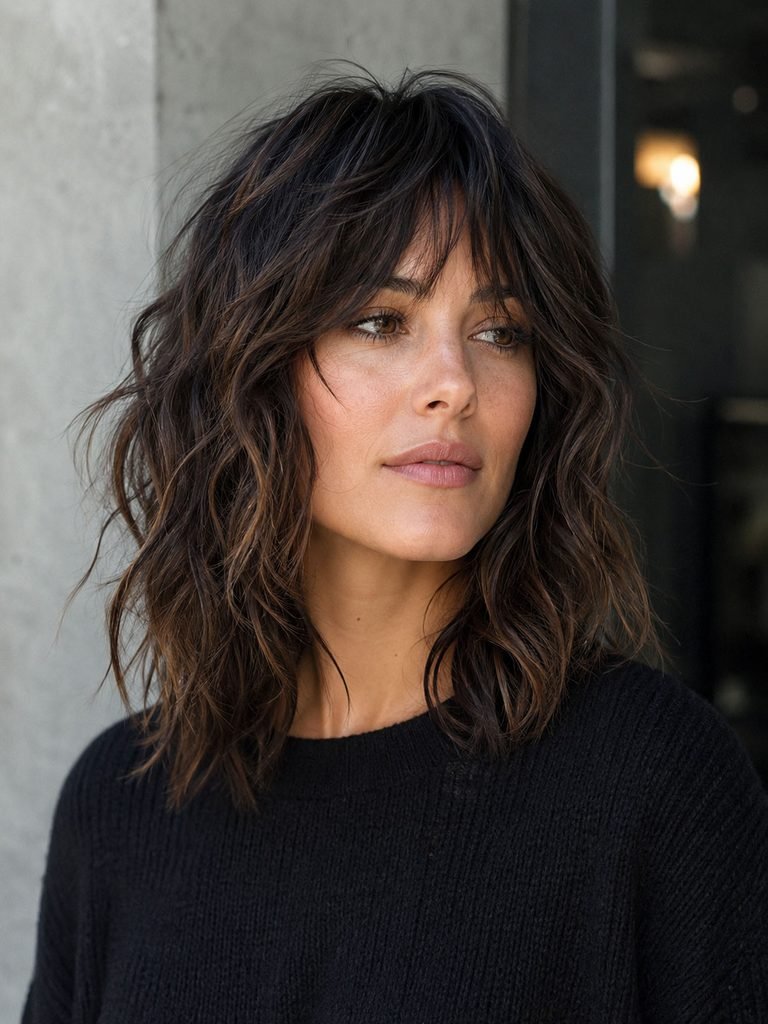
A shag is not simply a lob with extra texture spray. The haircut itself creates more separation.
Medium shags and wolf-inspired shapes generally rely on a larger difference between shorter upper sections and longer lower sections. That can create crown movement, a softer or more broken perimeter, and a front that feels noticeably more layered.
Choose this family because you want to see the layers.
It is particularly useful when your natural wave or curl already creates movement and you like a slightly separated finish. Dense hair can also benefit from a shape that does not keep all of its weight at the bottom.
The main tradeoff is fullness at the perimeter. If the bottom of your hair already looks sparse, removing considerably more length from the upper sections can make that lightness more obvious.
Straight hair creates another decision. A shag can look crisp, graphic, or deliberately piecey when worn straight, but a reference photo showing loose bends around every layer may require some styling to reproduce.
Do not choose a shag because someone called it low maintenance. Choose it if your natural texture and preferred finish make its separation useful.
Useful salon language: “I want obvious texture and shorter upper layers, but show me how much density will remain at the bottom before you take the crown shorter.”
Curly and wavy medium cuts should be chosen at their dry shape
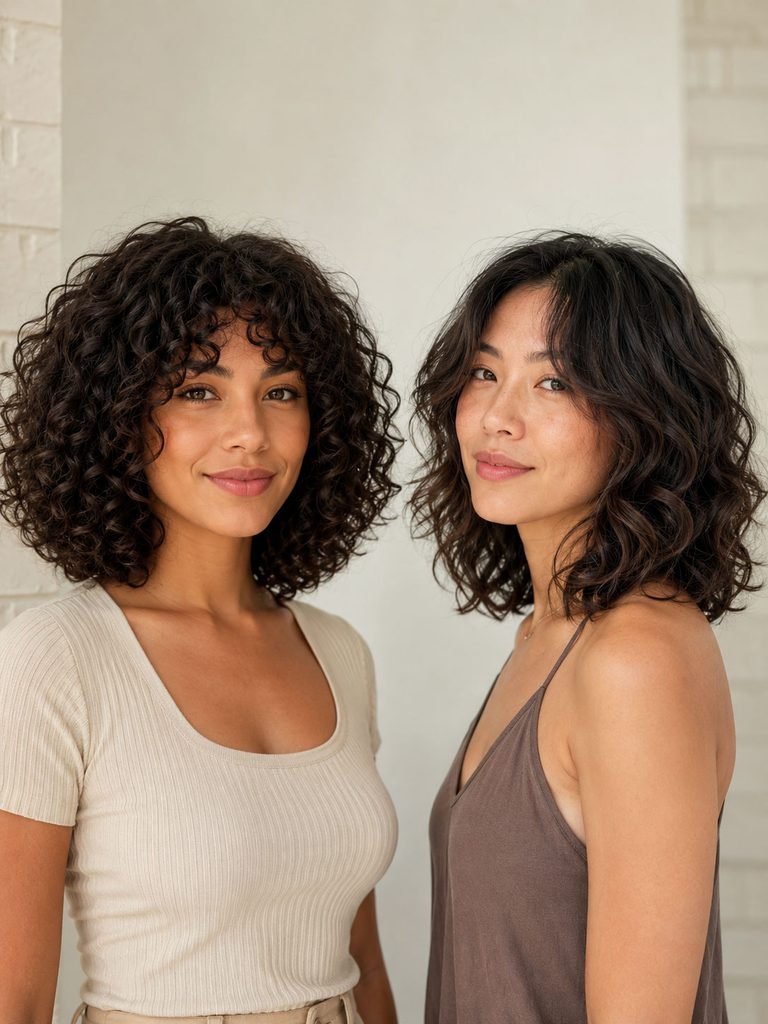
For curls and waves, the useful question is not where the hair lands when it is pulled straight. It is where the finished silhouette sits when the texture is dry.
Two curls cut to the same wet length can settle differently once dry because curl pattern, spring, density, and section placement change the result. That makes the shape around the head more useful than a single measurement.
If you wear your curls natural most days, bring photos of natural curly cuts, not only medium cuts that were stretched smooth before styling. Point out where you want width, where you want less weight, and how much length you are willing to lose after the hair settles.
For wavy hair, be equally clear about whether you want the waves to create the visual layers or whether you want a strongly layered haircut underneath them. Those are different decisions.
A solid medium outline can make curls feel bottom-heavy on some heads. A highly layered shape can feel too round or too light on others. Neither is automatically correct.
Ask for the finished haircut to be checked in the texture you actually plan to wear.
Useful salon language: “I normally wear my natural texture. Please judge the final shape dry, and tell me where the shortest sections are likely to sit once my hair springs back.”
Bangs can change the haircut more than another inch of length

If the rest of your medium cut feels fine but your overall look feels unchanged, fringe may create more visible difference than another round of layers.
Long curtain fringe leaves more flexibility. Shorter bangs create a stronger front boundary. Side-swept pieces can shift weight to one side. A full straight fringe changes the entire relationship between the haircut and forehead.
The maintenance question comes first: Will you style the fringe separately?
The front dries quickly and sits directly against the skin, so it can behave differently from the rest of the haircut by breakfast, after exercise, or in humid weather. A fringe that looks simple in a finished salon photo can become the only part of your hair that needs attention every morning.
Also think about grow-out. Long curtain pieces can usually blend into face framing more gradually. Shorter blunt bangs create a more obvious transition period.
And if you depend on pulling everything away from your face, bangs change that option immediately.
Useful salon language: “Show me where this fringe will land without a round brush, and show me how it will connect to the rest of the cut as it grows.”
Separate the haircut from the finish in your reference photo
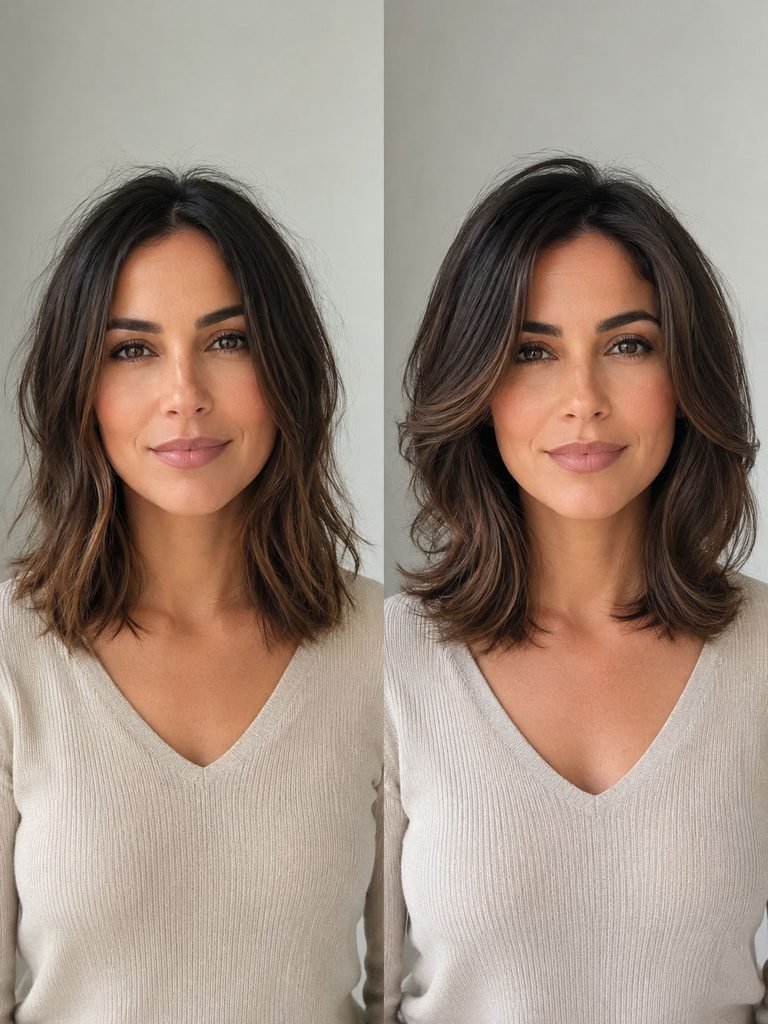
One of the easiest haircut mistakes is falling in love with a finish.
Look closely at a saved photo. Is the feature you like a piece of hair that was actually cut shorter, or was a long section simply curled away from the face? Is the crown fuller because of shorter layers, or because the roots were blown upward? Do the ends look thick because of the perimeter, or because they were bent together with a round brush?
Before your appointment, save at least one reference that shows the haircut in a relatively simple finish. If every example is heavily waved, ask your stylist what the same cut will do on an ordinary day.
That does not make blowouts or hot tools a bad choice. It simply makes their workload part of the decision. The American Academy of Dermatology advises limiting excessive heat, reducing blow-dryer frequency where practical, and using flat irons on dry hair at low or medium heat. American Academy of Dermatology guidance on styling hair without damage
If you enjoy styling, a cut that responds dramatically to a blowout may be exactly what you want. If you rarely touch a hot tool, choose a haircut whose basic silhouette already works without one.
Once the cut itself is right, Femorias’s guide to easy medium hairstyles you can style in under ten minutes covers the separate job of changing the day-to-day finish.
What to tell your stylist before the first cut

You do not need to know professional cutting angles. You do need to describe the result you want to protect.
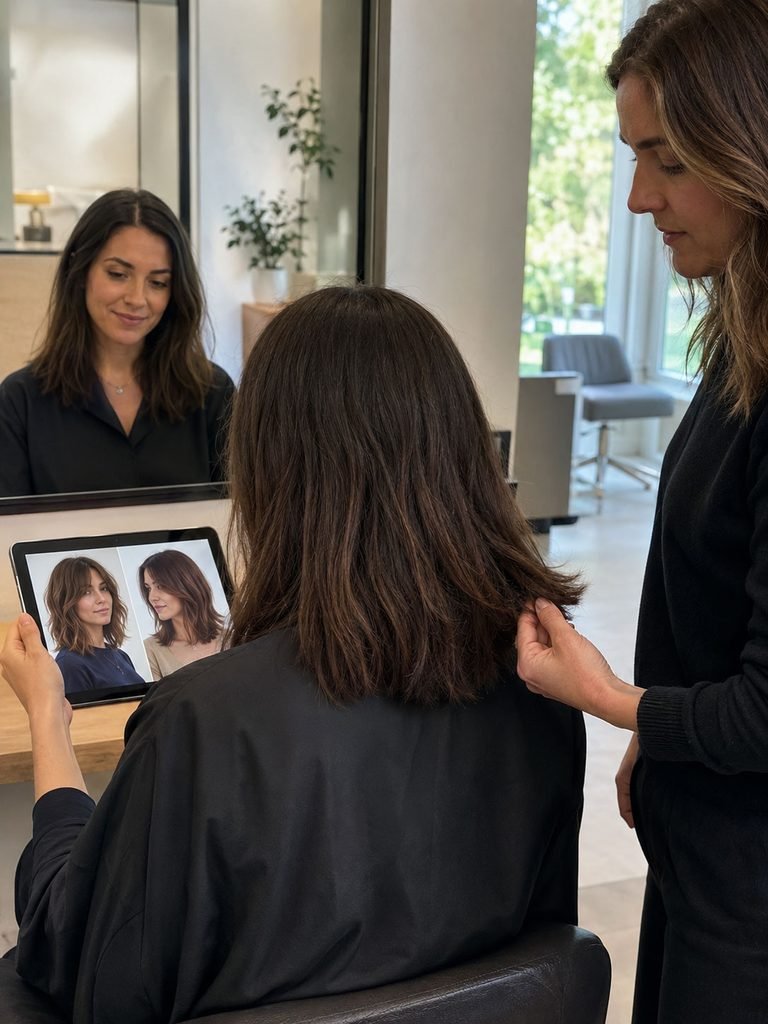
Bring two or three photos and point to a specific feature in each one rather than saying, “I like this haircut.”
Useful phrases include:
- “I want the bottom to stay visually full.”
- “I want movement, but I don’t want short crown layers.”
- “I want the biggest change around my face, not through the whole back.”
- “My shortest front piece cannot be shorter than my chin.”
- “I need the front to reach a ponytail.”
- “I air-dry most days. How will this sit without a blowout?”
- “My hair feels heavy, but I do not want the outside to look heavily layered.”
- “Show me how much hair will be removed from the perimeter if we copy this photo.”
- “Can we check the final shape dry before I leave?”
Mention any previous cut you disliked. “My last layers were too short at the crown” is more useful than “layers never work on me.”
Finally, tell the stylist what you are unwilling to style. That one sentence can eliminate a technically attractive haircut that would annoy you every morning.
Common questions about medium hairstyles

What counts as medium-length hair?
There is no single universal cutoff. In everyday haircut language, medium usually describes the area around the shoulders and collarbone, sometimes extending somewhat below it. The actual cut structure matters more than whether one stylist calls a length “medium” and another calls it “long.”
Is a lob lower maintenance than layered medium hair?
Not automatically. A simple lob can be easy if your natural texture settles into the shape, but a precise smooth lob may need more finishing than relaxed long layers on naturally wavy hair. Choose by your actual texture and finish, not by the haircut name.
Which medium haircut makes hair look fuller?
If the ends look light, keeping more hair in a strong perimeter is often the safest visual starting point. That does not mean every fine-haired person needs a blunt cut. Overall density, strand diameter, texture, and where you want movement all change the decision.
Which medium cut is easiest to tie back?
A lob or long-layered cut with sufficiently long front pieces gives you the most predictable tie-back. Face-framing layers, short fringe, and short shag sections are more likely to fall around the face.
How can I tell whether a reference photo is showing a great cut or great styling?
Look at the roots and ends. Large root lift, uniform curved sections, and every layer sweeping in the same direction usually signal deliberate styling. Search for another picture of a similar cut worn straight, air-dried, or in natural texture before deciding.
Choose the smallest haircut change that solves the problem

If you are undecided, do not begin with the most complicated version of medium hair.
Want the bottom to look stronger? Start with a solid lob.
Want the whole cut to move more? Add restrained long layers.
Want a change you notice mainly from the front? Start with face framing.
Want obvious separation and texture? Consider a shag or wolf-inspired structure.
Wear curls most of the time? Choose the dry silhouette before worrying about a trend name.
Want the biggest change without cutting much overall length? Look at fringe.
A good medium haircut does not need to solve every hair goal at once. Preserve the part you already like, change the part that is bothering you, and leave yourself room to add more at the next appointment. That is a much safer way to use inspiration photos than asking a stylist to reproduce every visible detail in one sitting.