
Medium Hairstyles for Fine Hair, 6 Cuts That Make Ends Look Fuller

Fine hair can look full at the roots and almost transparent at the ends. The solution is not automatically more layers or a shorter haircut. Often, the better choice is a medium style that keeps a clear lower outline, with just enough layering to create movement.
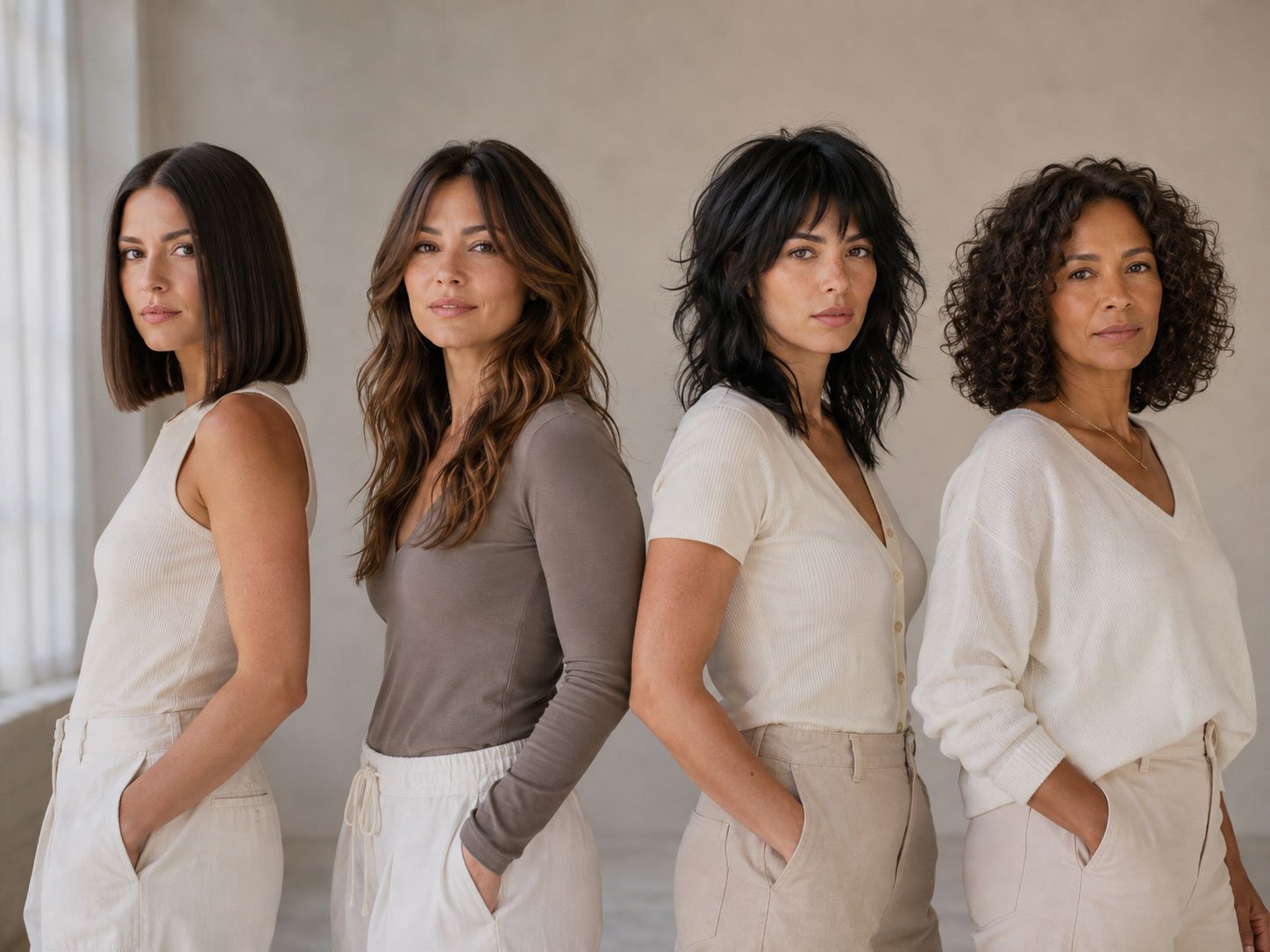
Some of the most useful options are a blunt collarbone lob, a softly rounded shoulder cut, a gentle angled lob and a cut with restrained lower layers. The right choice depends on how much hair reaches your ends, your natural texture and how often you style it.
Here are six medium hairstyles for fine hair worth comparing before your next appointment, along with what each cut can and cannot do.
What makes fine hair look full at the ends?
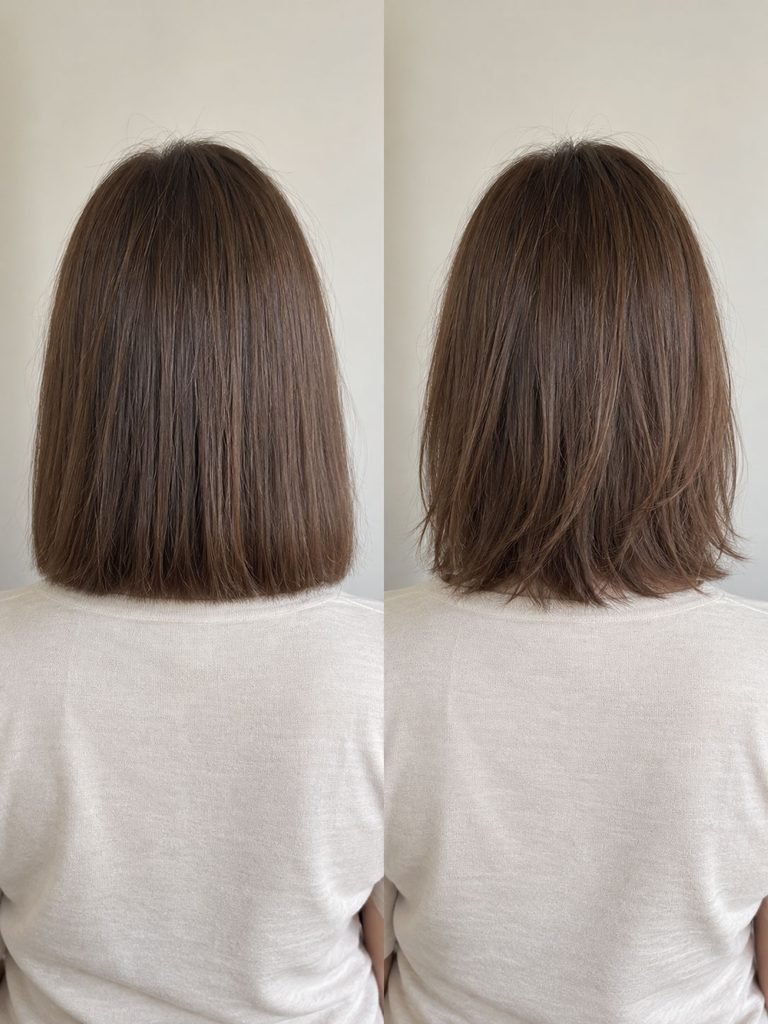
The lower outline of a haircut is called its perimeter. When plenty of strands reach roughly the same length, they create a more noticeable edge. When those strands are distributed across many shorter layers, the bottom can appear lighter.
That is why a haircut with spectacular movement through the crown may still have wispy ends.
There is another distinction to understand before choosing a photograph. Fine hair refers to the diameter of individual strands. Hair density refers to the number of hairs growing within an area of the scalp. Those are separate measurements, as demonstrated in research published in the British Journal of Dermatology.
Someone can have many fine strands and enough overall density to support visible layers. Another person may have fine strands and low density, making the same layers look sparse at the bottom.
For a useful home check, let your hair fall naturally against a plain shirt and examine the final couple of inches. Does the lower edge form a fairly continuous line, or does it break into scattered points? Then look at the front corners, where a large fringe section or dramatic face framing could remove even more hair from the bottom.
The goal is not to make every strand one length. It is to decide how much of the lower outline you want to preserve.
Six medium hairstyles that keep the ends looking fuller

These six haircuts create fullness in different ways. Some rely on a precise bottom line. Others introduce movement while keeping most of the weight near the shoulders.
1. A blunt collarbone lob for a strong lower line
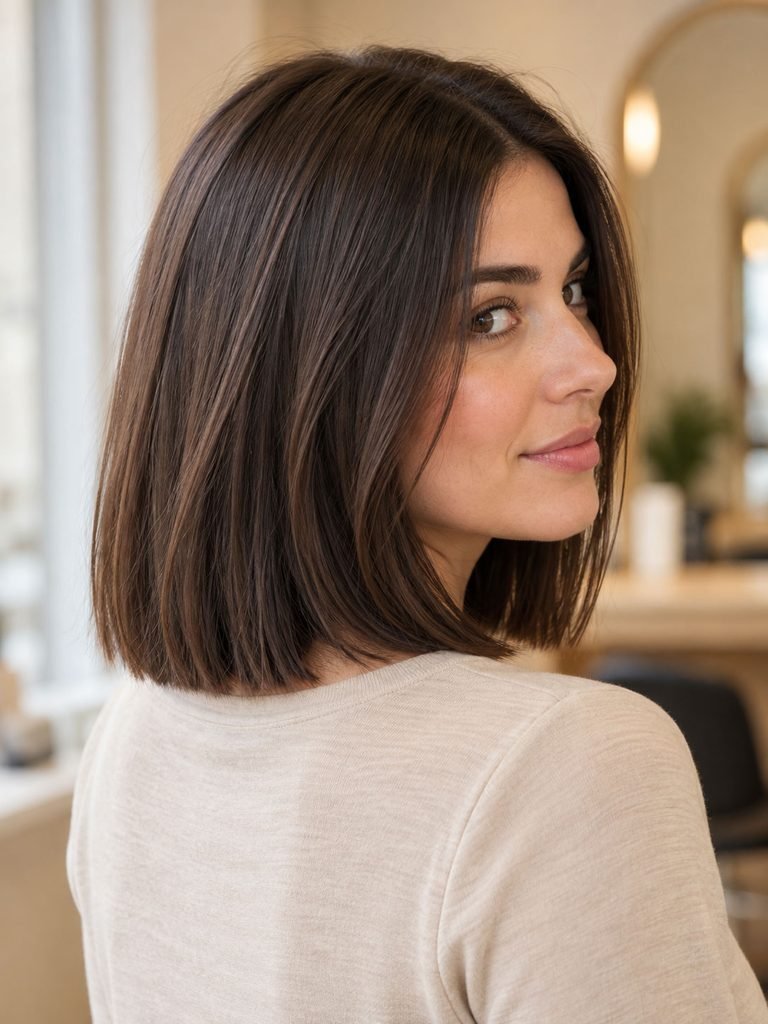
A blunt collarbone lob is a strong starting point when the bottom of your hair looks lighter than the rest. Most of the hair meets at the same lower line, creating a clear outline without depending on lots of styling.
It suits straight or gently wavy fine hair, especially when you prefer a smooth everyday finish. A little natural movement is fine. The style does not have to be pressed perfectly straight to work.
One detail can change the result: where the ends touch your shoulders. Hair that repeatedly catches on the shoulders may flip outward. A stylist can adjust the finished length so the lower edge sits where it behaves best on you.
Best for: Fine hair with a light lower edge and readers who want a clean, simple shape.
Tradeoff: It offers less internal movement than a layered haircut. Straight hair may also show small irregularities in the cutting line.
Ask your stylist: “I want a collarbone lob with a solid bottom edge. Please keep the outside looking full and avoid unnecessary thinning through the ends.”
2. A softly rounded shoulder cut for a gentler outline

A softly rounded shoulder cut keeps the visual strength of a nearly solid perimeter but avoids a rigid horizontal finish.
The rounding should be subtle. When it becomes too deep, fewer strands remain at the longest point and the center can start to look like a thin tail.
This cut is useful for fine hair that looks full enough at the ends but needs a less severe outline. It can also give the lower section a softer appearance when worn with a gentle inward bend.
Best for: Straight or slightly wavy fine hair when you want a natural outline rather than a sharp geometric lob.
Tradeoff: Significant rounding or extra layers can reduce the fullness you were trying to preserve.
Ask your stylist: “Keep the ends fairly solid, but soften the bottom line into a shallow rounded shape. I do not want a deep point at the back.”
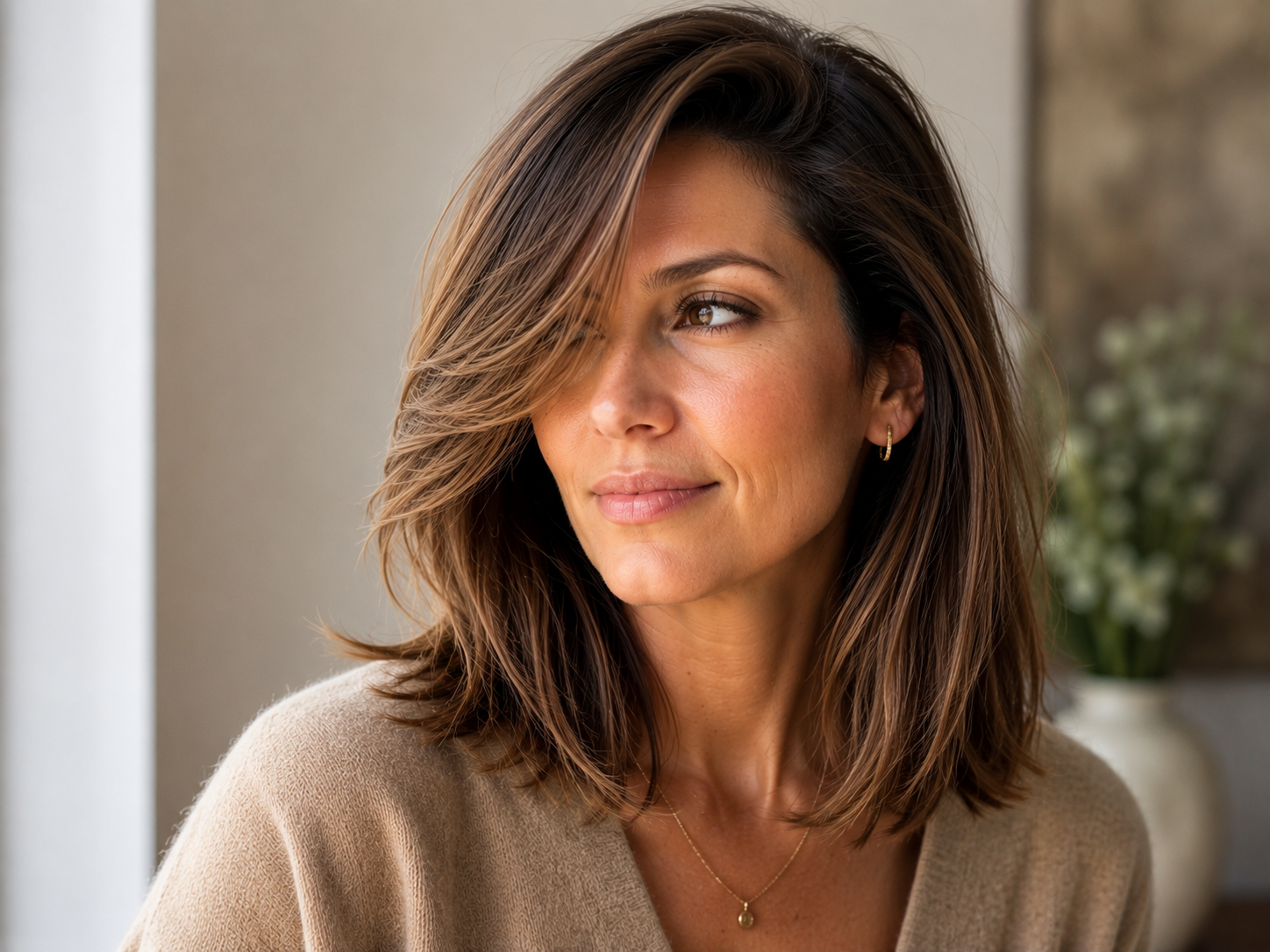
3. A gentle A line lob for a longer looking front
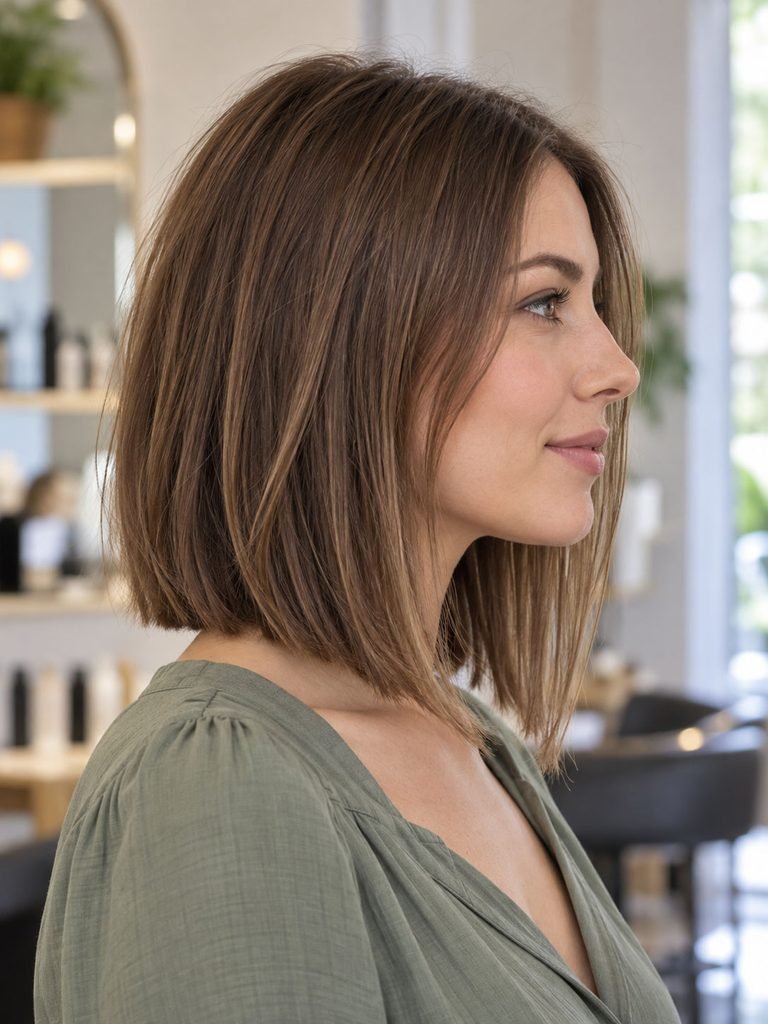
A gentle A line lob adds shape by keeping the front slightly longer than the back. This creates a visible design change without needing lots of short layers.
It is a practical option when you want the haircut to feel modern and defined but do not want the lower edge broken up. The longer front can also maintain some of the feeling of length around the face.
Keep the angle restrained if fullness is your priority. An extreme difference between the front and back can leave a few long points that look less substantial than a softer transition.
Best for: Fine straight hair that looks flat in a basic one length shape but benefits from a clean geometric outline.
Tradeoff: A precise angle is more obvious as the hair grows, and shorter back sections may limit certain ponytails.
Ask your stylist: “I want a subtle A line lob, slightly longer at the front, with a clean perimeter. I do not want a dramatically stacked back.”
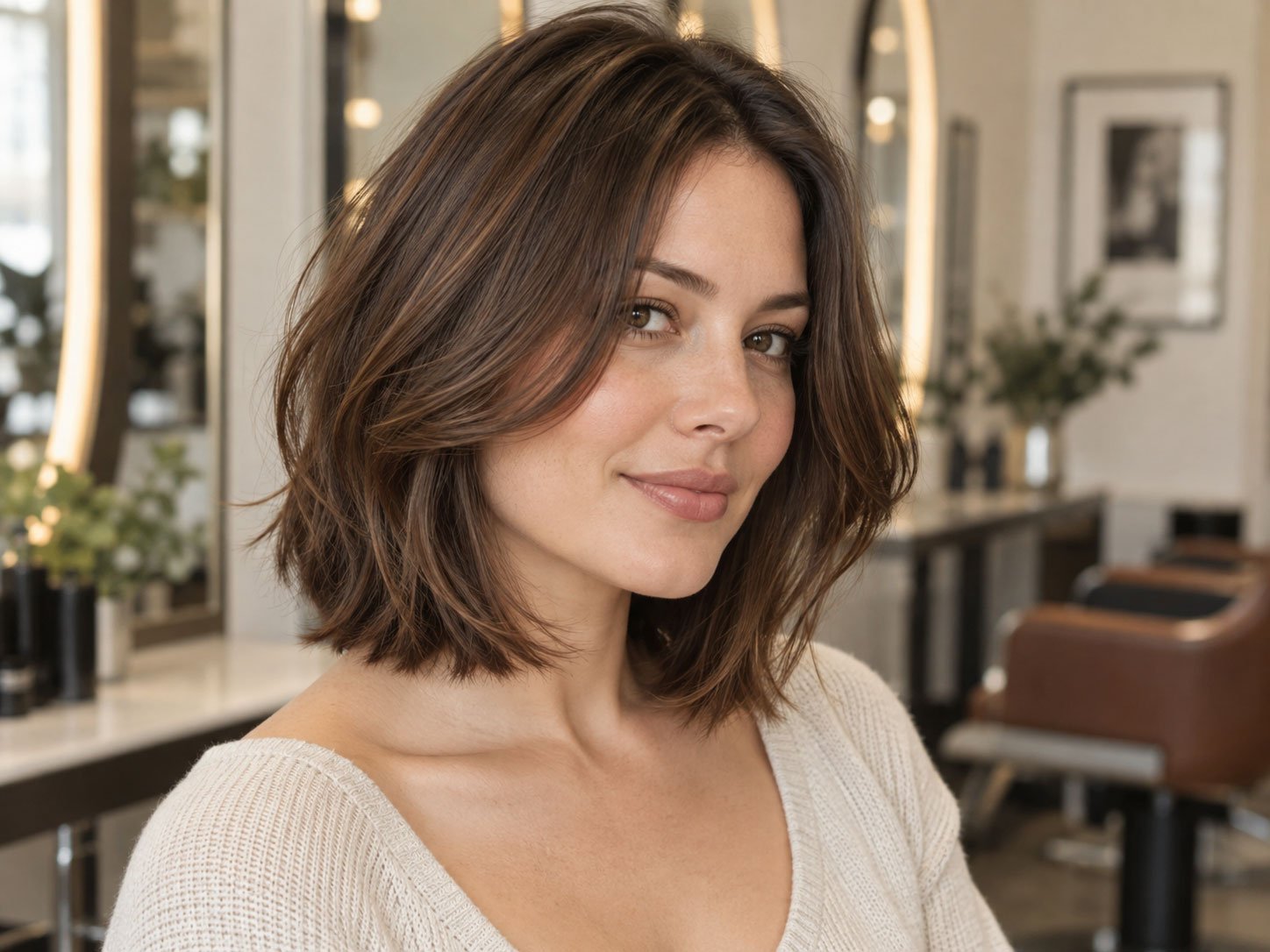
4. A low layered lob for movement without scattered ends
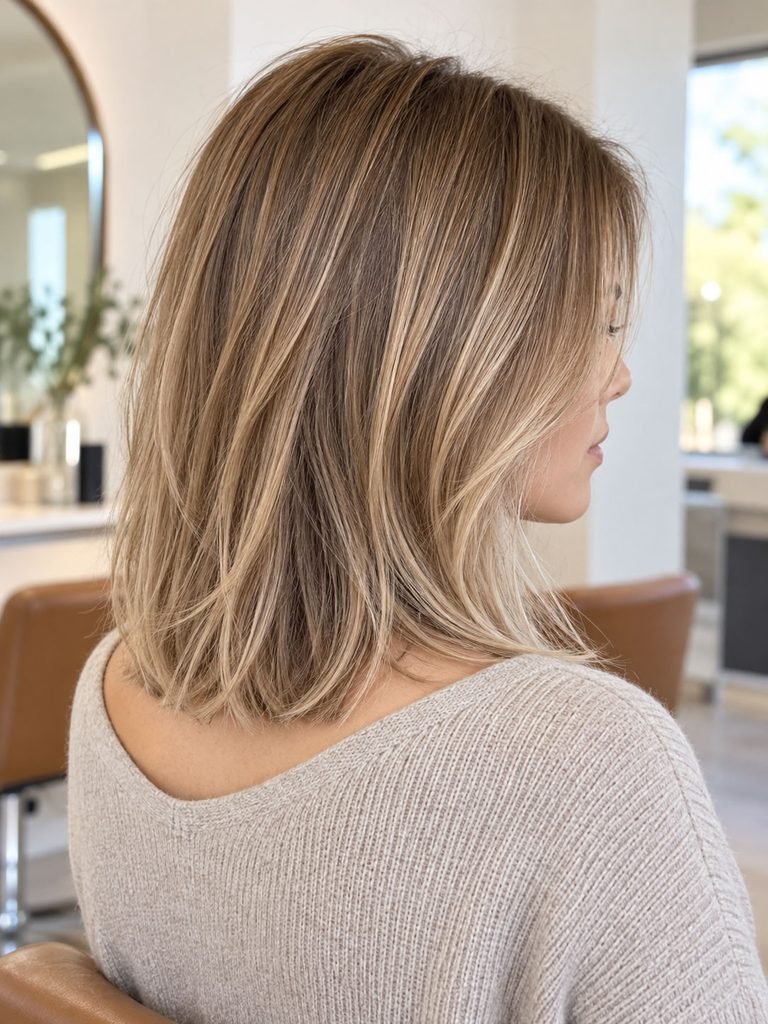
Low layers make sense when your ends already have a reasonably strong outline but a solid haircut feels too flat or heavy.
The difference is where the layers start. Keeping the shortest back layers closer to the overall length introduces some movement without distributing a large amount of hair far above the lower line.
This is where a photograph can be misleading. A big, rounded blowout may make layers look more dramatic than they are. Ask to see the cut when it is worn closer to your natural texture.
It also helps to be precise about the kind of layers you want. Femorias explains the structural differences between face framing, long and ghost layers, which can be useful before deciding how much layering to request.
Best for: Fine hair with moderate or good overall density that needs some movement through the bottom half.
Tradeoff: Too many short layers can leave the lower section thinner than expected.
Ask your stylist: “I want the layers to start low and blend into a full bottom line. Please show me where the shortest back layer will fall.”
5. A full backed medium cut with narrow face framing
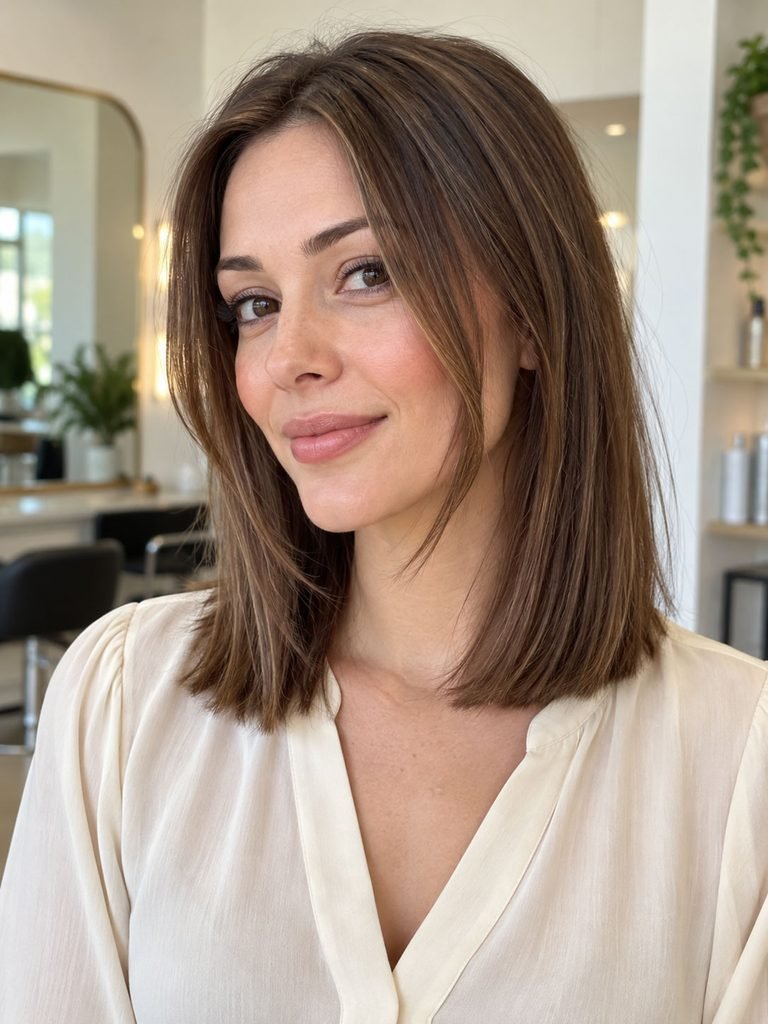
If you like how your hair falls at the back but want a change around your face, narrow face framing is worth considering before layering the entire cut.
A few front pieces beginning around the chin can add shape while leaving the majority of the perimeter intact. That can be especially useful when the lower front corners already look light.
Ask the stylist to show you how wide the front section will be. A narrow section changes less of the outline than a broad section that extends well behind the temples.
Best for: Fine hair with a reasonably strong back outline and someone who wants a subtle visible change near the face.
Tradeoff: Short front pieces may escape ponytails or clips, and broad face framing can reduce fullness around the sides.
Ask your stylist: “Keep the back close to one length and add only a narrow amount of face framing. I want the sides to stay full.”
6. A softly wavy medium cut with restrained lower layers
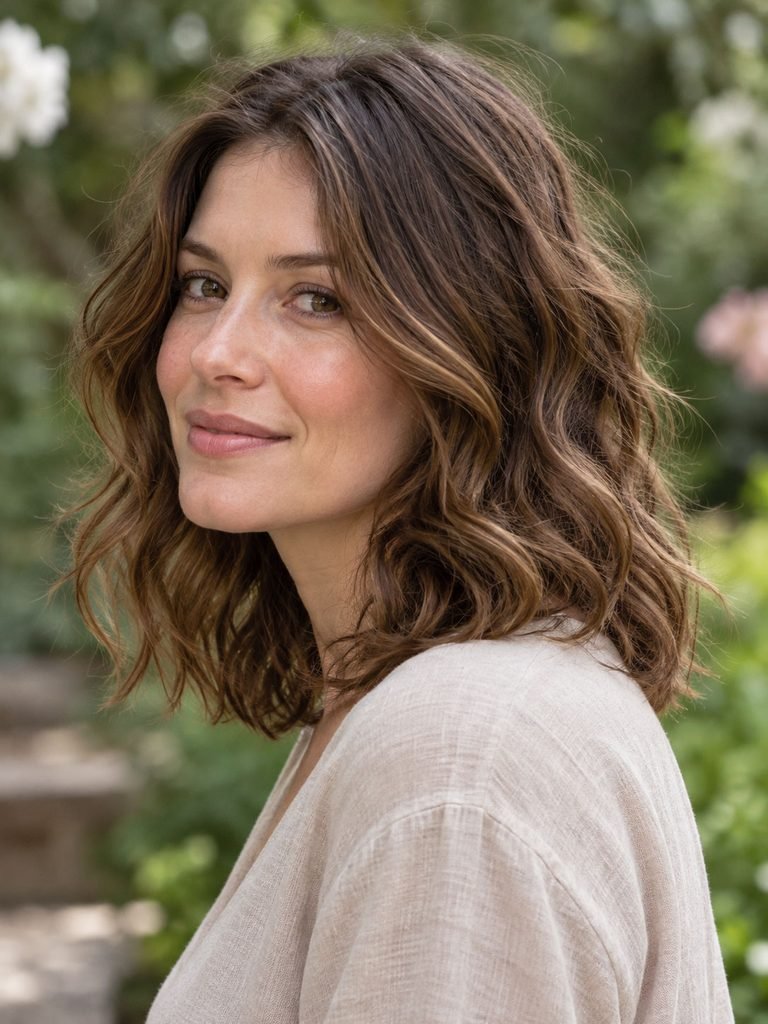
Fine wavy hair can look fuller through the middle lengths simply because the waves create width. The haircut still needs enough hair reaching the bottom to avoid a noticeably wispy finish.
A restrained cut with a softly defined perimeter is a useful starting point. If the waves naturally create movement, you may need fewer layers than a straight haired reference model.
This style works best when the stylist understands how your waves settle once dry. Cutting the layers too high can create more width around the sides while leaving less weight at the ends.
Best for: Fine hair with natural waves that you usually wear with minimal heat styling.
Tradeoff: Humidity, wave pattern and drying habits can change the finished shape. A polished reference photo may not reflect your ordinary air dried result.
Ask your stylist: “I wear my natural waves most days. Please keep a substantial lower edge and check how the cut settles when dry.”
Which medium haircut suits your fine hair best?
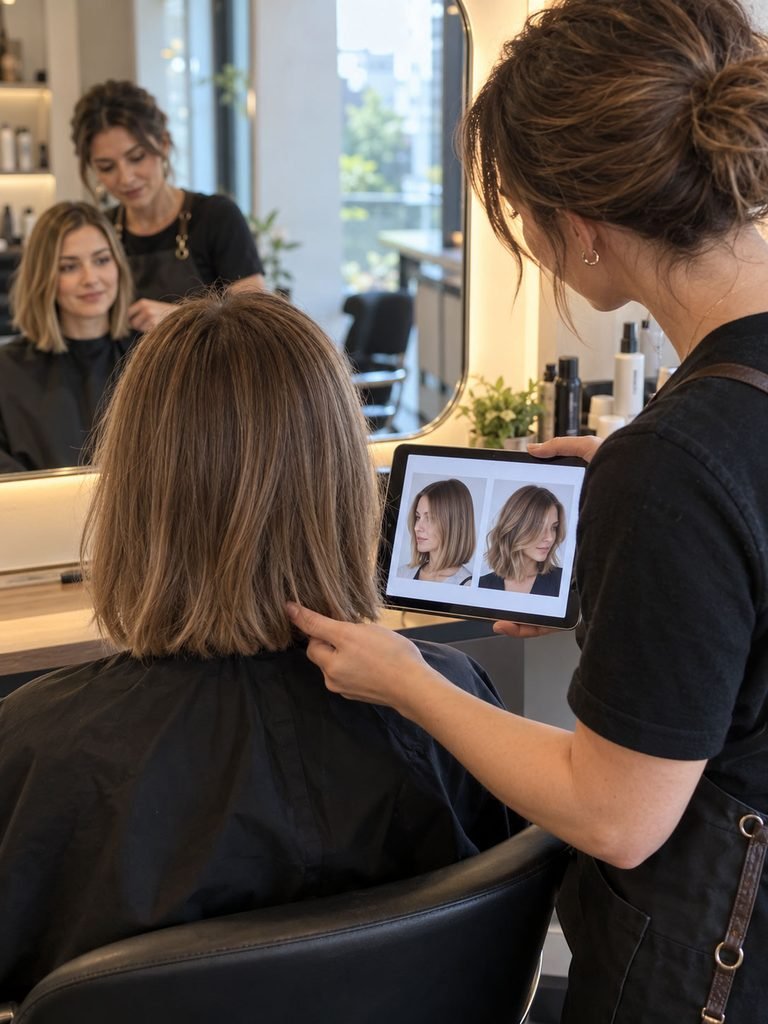
The most useful choice depends on where your hair looks light and how it naturally behaves. Face shape can influence where you prefer movement, but it does not override your hair’s density or the finished outline.
| If your main concern is | Consider starting with | Watch for |
|---|---|---|
| Sparse looking ends | Blunt collarbone lob | Cutting the line too long into the weakest ends |
| Wanting a less severe outline | Softly rounded shoulder cut | Too much rounding at the back |
| Wanting more shape without layers | Gentle A line lob | An extreme angle with thin front points |
| Flatness despite full ends | Low layered lob | Layers beginning too high |
| Wanting a change around the face | Narrow face framing | Removing too much hair from the front corners |
| Natural waves looking shapeless | Soft wavy medium cut | Too many layers breaking up the lower edge |
A simple comparison can help: look at photographs of similar haircuts worn straight, softly styled and with natural texture. If the cut only appears full after a large blowout, consider whether that styling routine fits your week.
Remember that a more dramatic shape is not always a better fit. On fine hair, a few thoughtful changes can be more useful than adding layers across the entire head.
What to ask your stylist before removing weight
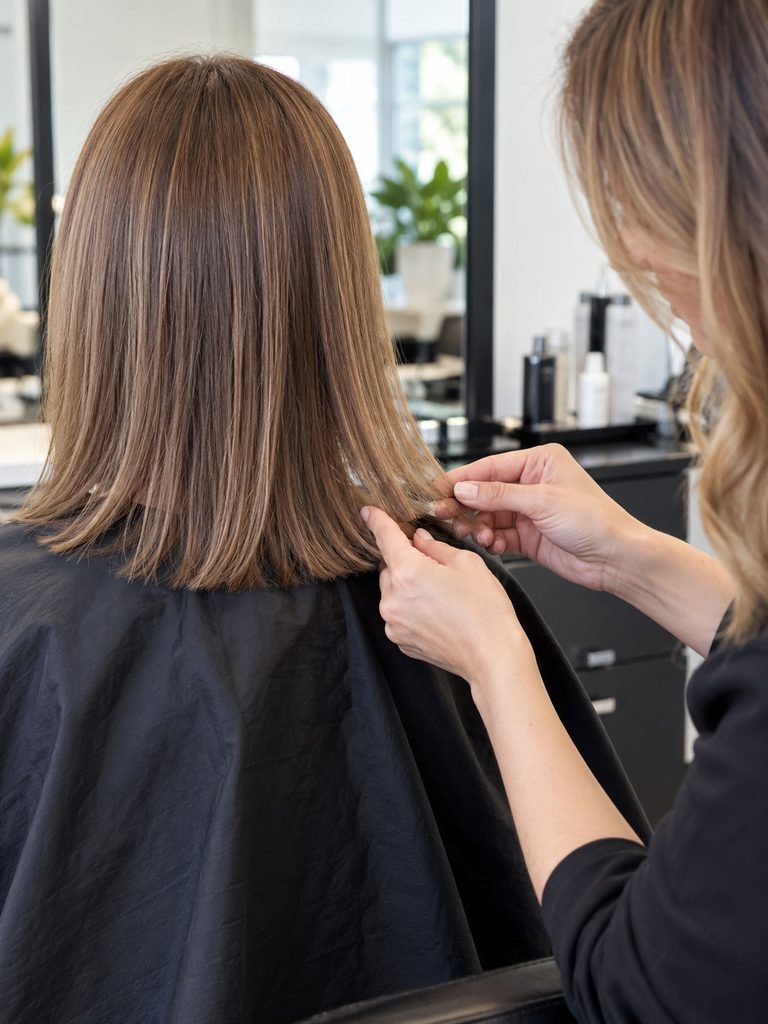
A good salon conversation should establish what you want to keep before discussing what to remove.
Begin with the length where your ends currently look strongest. If the last inch is noticeably separated, ask how the haircut would look with that section trimmed back to a more substantial line. Cutting the ends cannot increase the number of hairs growing from your scalp, but it can change the appearance of the outline.
Next, identify how much movement you want. If the answer is “a little,” that should not automatically turn into dramatic crown layers.
These are useful requests to bring to your appointment:
- “Please show me the proposed bottom line before we cut.”
- “I want the ends to look full when my hair is worn straight.”
- “If you add layers, where will the shortest one sit?”
- “Can we preserve the front corners?”
- “I need enough length for a low ponytail.”
- “I usually air dry. How will this haircut look without a blowout?”
- “I want movement, but I do not want the ends heavily thinned.”
It helps to bring a photograph showing the back or side of the desired cut. A front portrait may show attractive face framing while hiding a very light perimeter.
Be careful with vague requests for “more texture.” Texturizing can mean different techniques, and some deliberately create separated ends. Ask what the stylist intends to change and how the finish will look on your actual hair.
If your hair extends well beyond the shoulders and you want to keep that length, Femorias also has a separate guide to long hairstyles for fine hair that keep the ends looking full. The length tradeoffs are different from those of a collarbone cut.
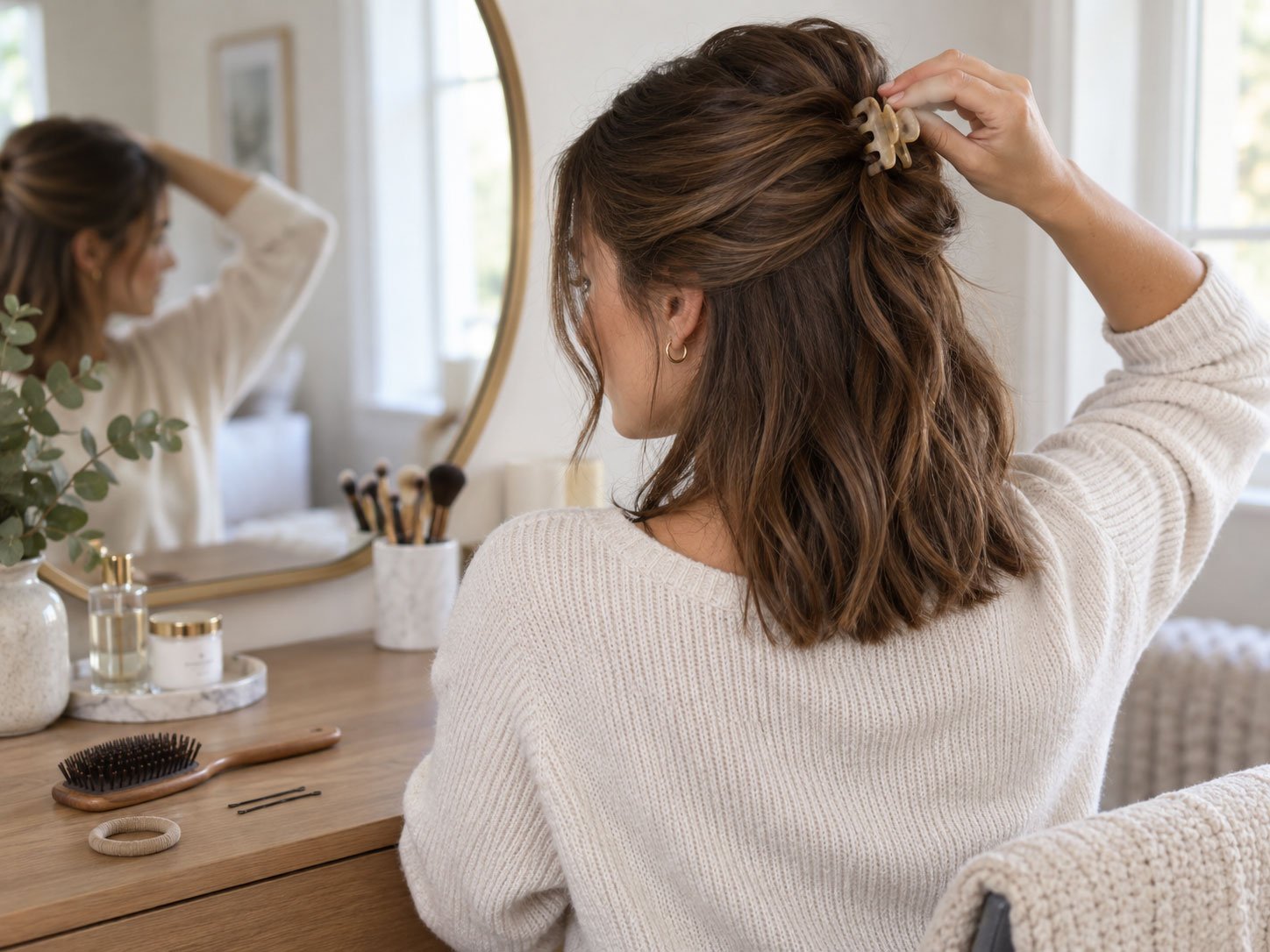
How to keep medium fine hair looking full between appointments
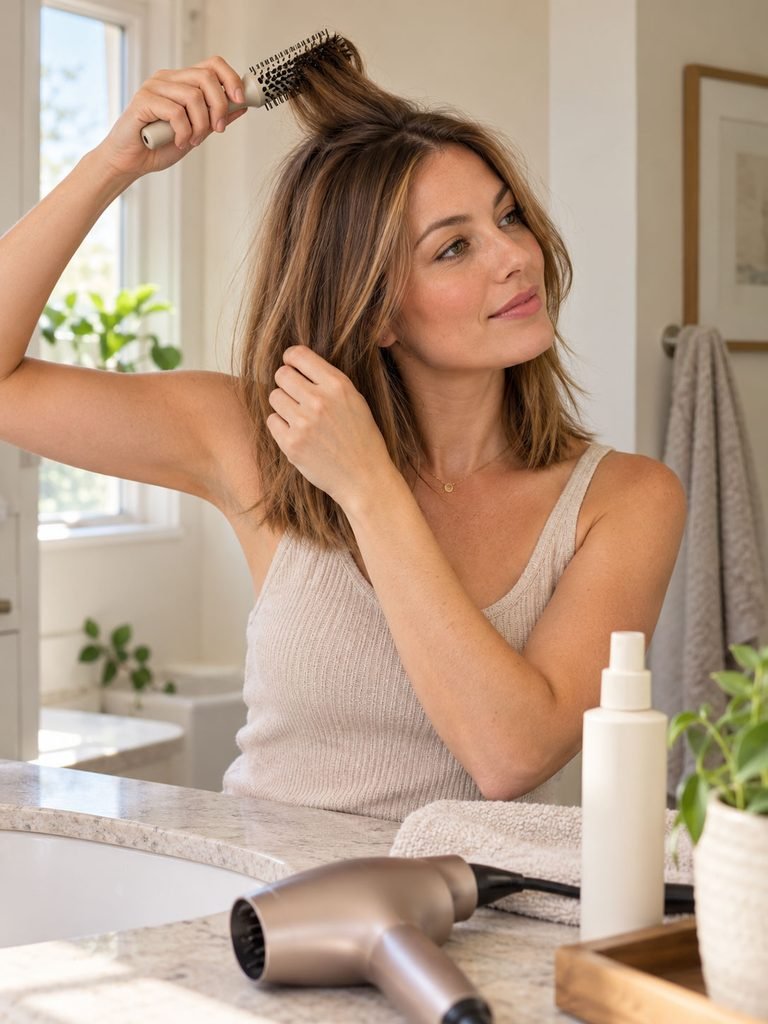
A haircut determines where your hair falls. Styling can add temporary lift and movement, but it cannot replace the strands removed from the ends.
Start with a routine that keeps the hair manageable without loading it with several finishing products.
Wash for your scalp, then condition where needed. Fine straight hair with an oily scalp may need washing more frequently than dry or textured hair. The American Academy of Dermatology’s healthy hair guidance recommends adjusting shampoo frequency to scalp condition, applying shampoo mainly to the scalp and using conditioner on the ends for fine or straight hair.
Apply styling products in small amounts. If your hair becomes flat or stringy after using several creams, begin with one lightweight product rather than layering more on. A small amount of mousse near the roots may help with temporary lift. If the ends are dry, apply a suitable lightweight conditioner to the areas that need it.
Create movement without separating the bottom. A gentle bend through the middle lengths can make a blunt lob look softer. Large uniform curls are not necessary. Keep the bottom edge relatively cohesive if fullness is the priority.
Use heat with restraint. Blow drying can shape the roots and ends, but repeated high heat has consequences. The AAD’s guidance on styling hair without damage recommends reducing blow dryer frequency where practical and using flat irons on dry hair at low or medium heat.
Maintain the lower outline. Check how the cut sits as it grows. On some hair, the first change is simply that the ends begin touching the shoulders differently. On other hair, the lower edge becomes less defined. Rather than following an identical trimming schedule for everyone, book maintenance when the shape no longer behaves as intended or the ends need attention.
The aim is a haircut that looks intentional on normal days, not one that only works when professionally finished.
Common questions about medium hairstyles for fine hair

Do layers make fine hair look thicker?
Sometimes they create more movement or root lift, which can make the overall hairstyle look fuller. But layers also reduce how much hair reaches the longest point. If your ends are already sparse, lower and less extensive layering may give you a better result than short layers throughout the crown.
Is a blunt cut always best for fine hair?
No. A blunt lower line is useful when the ends need a stronger outline. Fine hair with good overall density may support long layers, narrow face framing or soft waves without losing the appearance of fullness. The best choice depends on your actual hair rather than its strand diameter alone.
Is shoulder length or collarbone length better for fine hair?
Neither is universally better. Look at where your ends appear substantial and where they fall against your shoulders. A cut that sits directly on the shoulder may flip outward, while a slightly different finished length may behave more predictably. Choose by the shape you want and how your hair moves.
Can fine hair have curtain bangs?
Yes, provided the front has enough density for the section required. Curtain bangs use hair that would otherwise remain part of the side lengths. If your front corners already look sparse, a narrow face framing section may be a more suitable starting point.
How do I know whether my hair is naturally fine or actually thinning?
Fine strands may simply be your natural hair type. New changes, such as a widening part, a noticeably smaller ponytail or new bald patches, are a different concern. The AAD’s information on signs and symptoms of hair loss explains these changes. If you notice progressive or sudden hair loss, a board certified dermatologist can assess what is happening. A cosmetic haircut should not be treated as a medical solution.
Start with the cut that preserves what you like
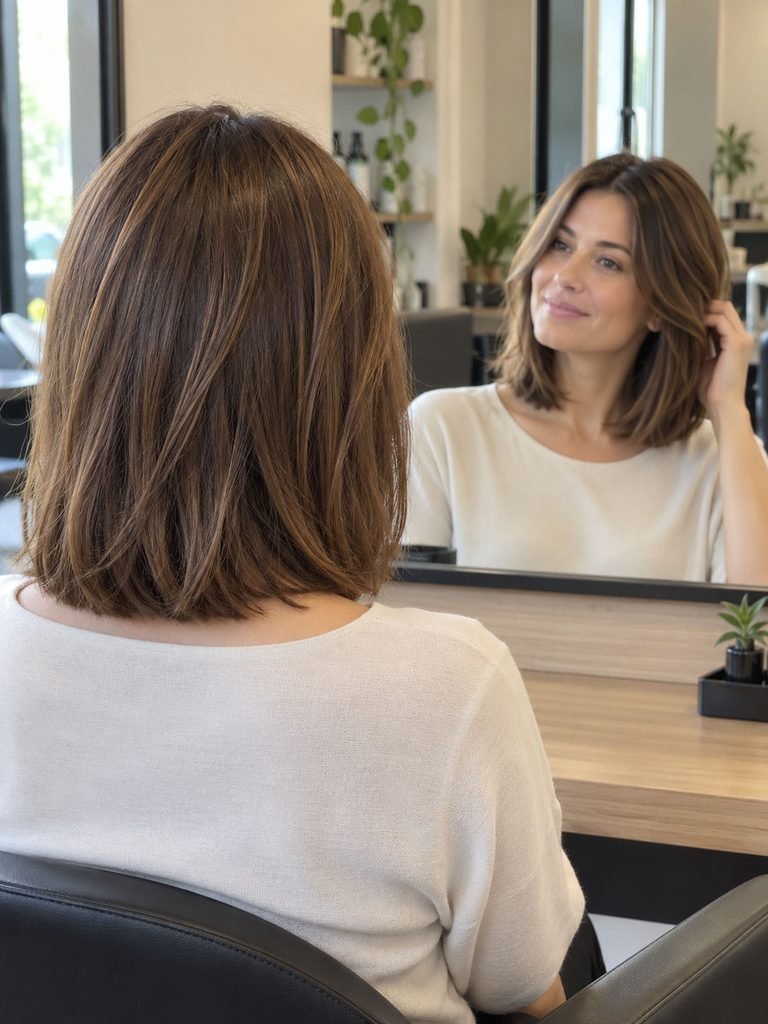
If your fine hair already looks sparse through the last couple of inches, begin with a blunt or gently rounded medium cut. For hair with a strong lower edge but a flat overall shape, consider restrained long layers or a subtle angle. Alternatively, narrow face-framing layers may be enough if you only want a change around your face.
Before the appointment, choose one reference photograph that clearly shows the lower edge and another that shows how you want the hair to sit around your face. Explain which details matter and which ones you are happy to change.
The best result is not necessarily the hairstyle with the most volume in a photograph. It is the cut that keeps the fullness you want and still works with your hair on an ordinary morning.