Face Framing vs. Long vs. Ghost Layers: Which Type Should You Ask For?

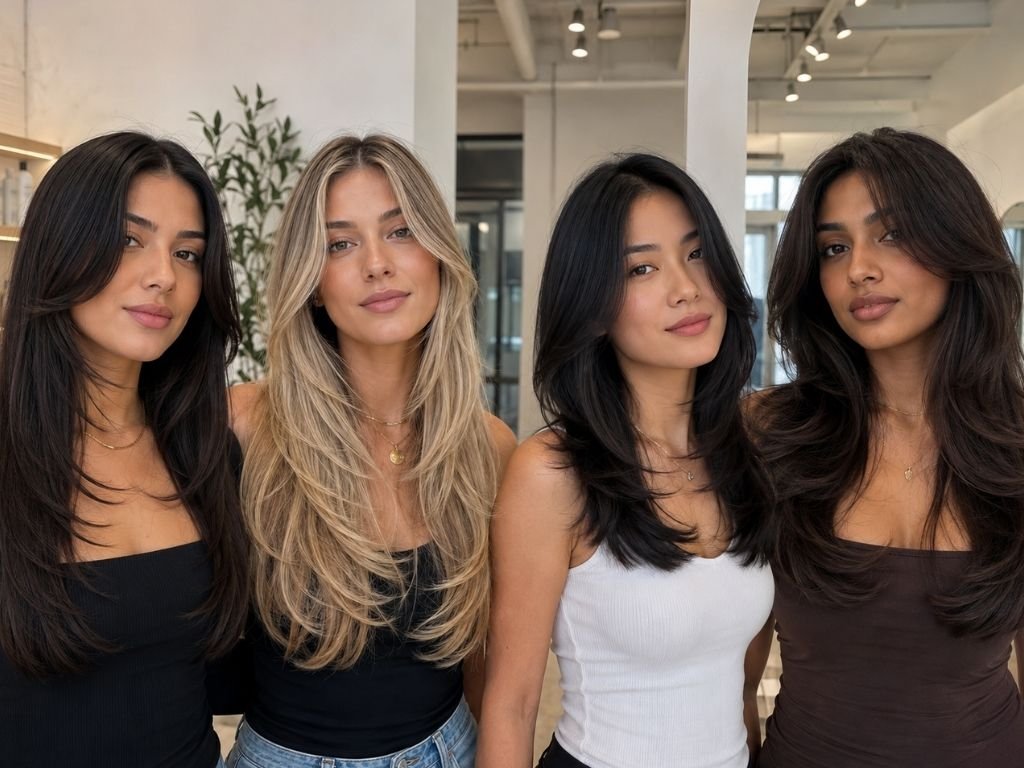
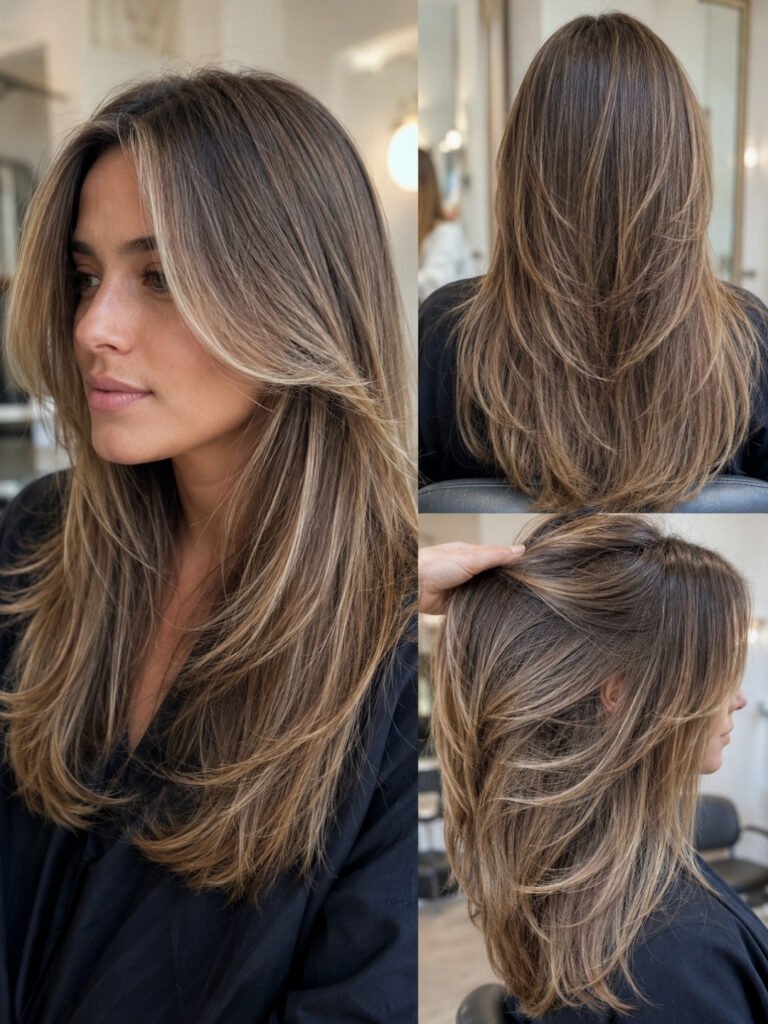
You can ask for “layers” and still leave the salon with a completely different haircut from the one you pictured. Face framing layers mainly change the hair around your face. Long layers create movement through more of the overall length. Ghost layers hide much of the layering underneath the surface. Butterfly layers make the contrast between shorter and longer sections more obvious.
You can also combine them. The useful question is not simply Do I want layers? It is Where do I want the haircut to change, and how visible do I want that change to be? If the terminology itself is new, Femorias’ beginner guide to layered hairstyles covers the broader basics first.
The quick comparison: what each type of layer actually changes
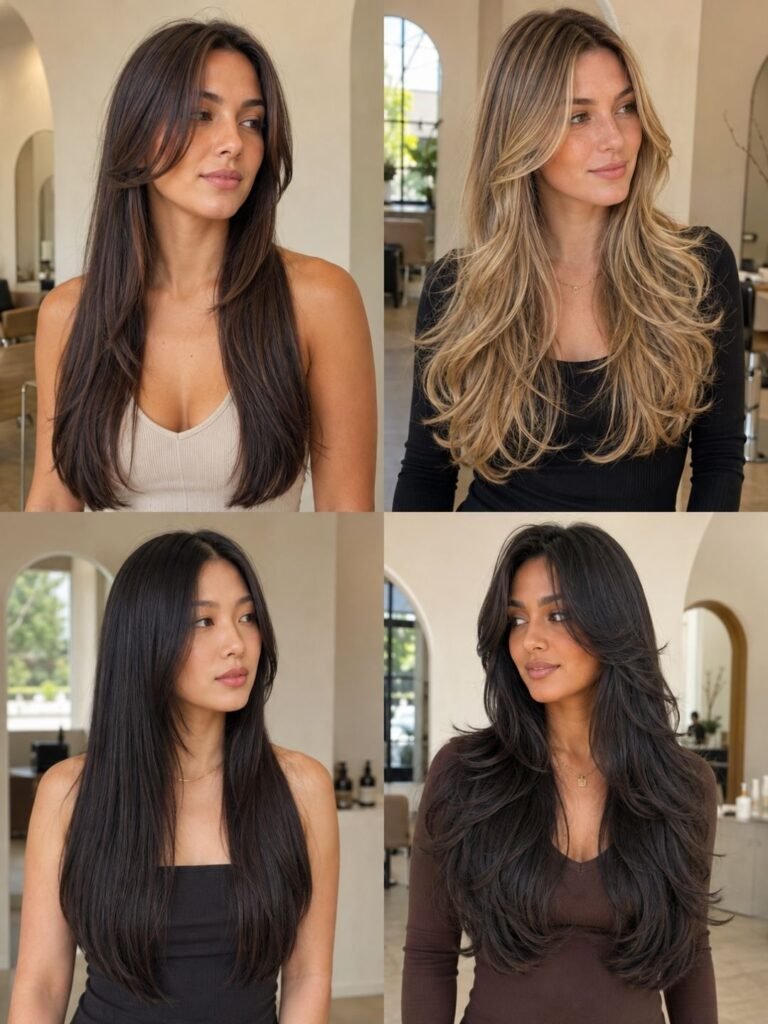
The simplest way to choose is to decide whether you want the biggest change around the face, throughout the length, underneath the visible surface, or across the whole silhouette.
| Layer type | Main area affected | Best starting point when you want | Main tradeoff |
|---|---|---|---|
| Face framing layers | Front sections | A visible change around the cheeks, jaw, or neckline without heavily layering the back | Taking too large a front section can reduce fullness around the front perimeter |
| Long layers | Mid lengths through ends | Overall movement while keeping substantial length | Higher or more aggressive layering removes more weight |
| Ghost/internal layers | Beneath the surface | Movement or weight adjustment without an obviously layered exterior | The result may look very subtle when the hair is completely still |
| Butterfly layers | Face, upper lengths, and long lower sections | A dramatic cascading shape with noticeable separation and bounce | The signature effect is often much stronger after styling |
Traditional long layered cutting is a recognized foundational haircut structure in professional cosmetology education; the visual result still varies considerably according to elevation, sectioning, length, texture, and density. Milady’s haircutting curriculum
The names therefore matter less than the structure you and your stylist agree on. Two people can both request “long layers” and receive very different amounts of weight removal.
Face framing layers change the front more than the whole haircut
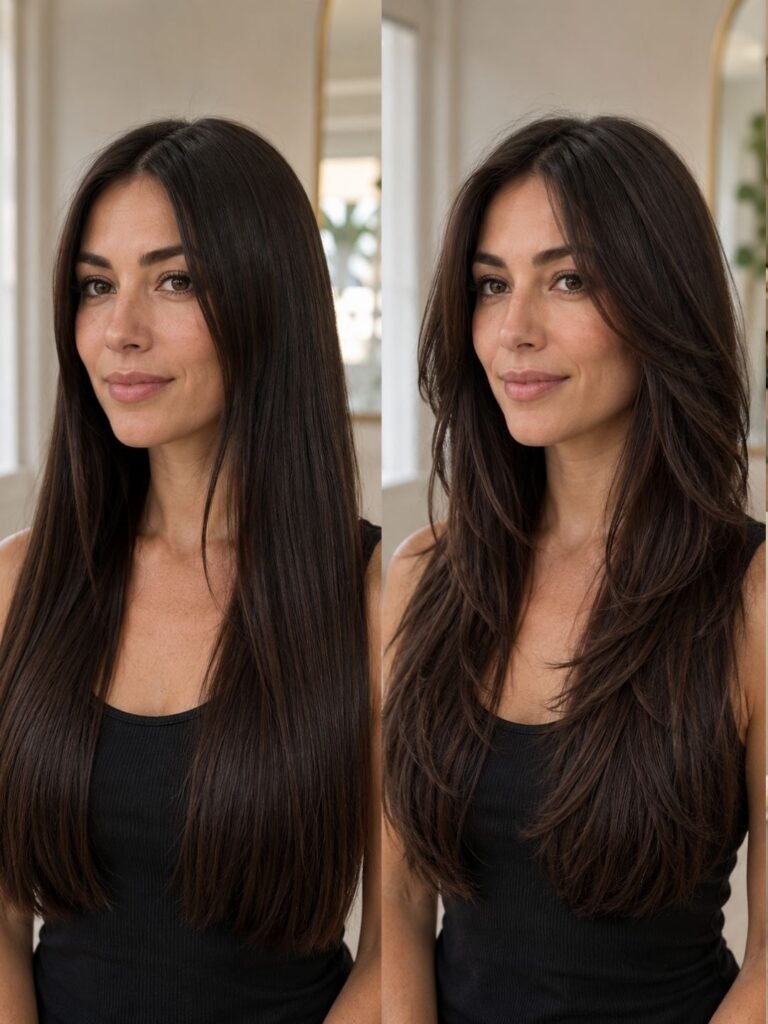
Face framing is the most targeted option in this group. The stylist isolates hair near the front and cuts shorter pieces that move back into the longer hair. The rest of the haircut can remain minimally layered or even close to one length.
That makes face framing useful when you like the fullness of your current perimeter but want the front to feel less heavy. The shortest piece might sit around the cheekbone, jaw, chin, or lower, but there is no single correct starting point for everyone.
The size of the section matters just as much as the length. A few narrow front pieces remove far less hair than a broad face framing section that reaches well behind the temples.
Professional haircutting educator Andrew Carruthers recommends deciding where the face framing section should end so it does not unintentionally extend too far into the perimeter. His consultation guidance also emphasizes adjusting the approach for texture and density and using reference photos to clarify expectations. Modern Salon’s face framing consultation guidance
Choose face framing first when: you want a noticeable front change but are not sure you want the back heavily layered.
Be more conservative when: your front corners already look light or you depend on a strong, dense looking perimeter.
Face framing and long layers are not mutually exclusive. You can have cheekbone length pieces around the face and much longer, lower layers throughout the back.
Long layers distribute movement through more of the hair
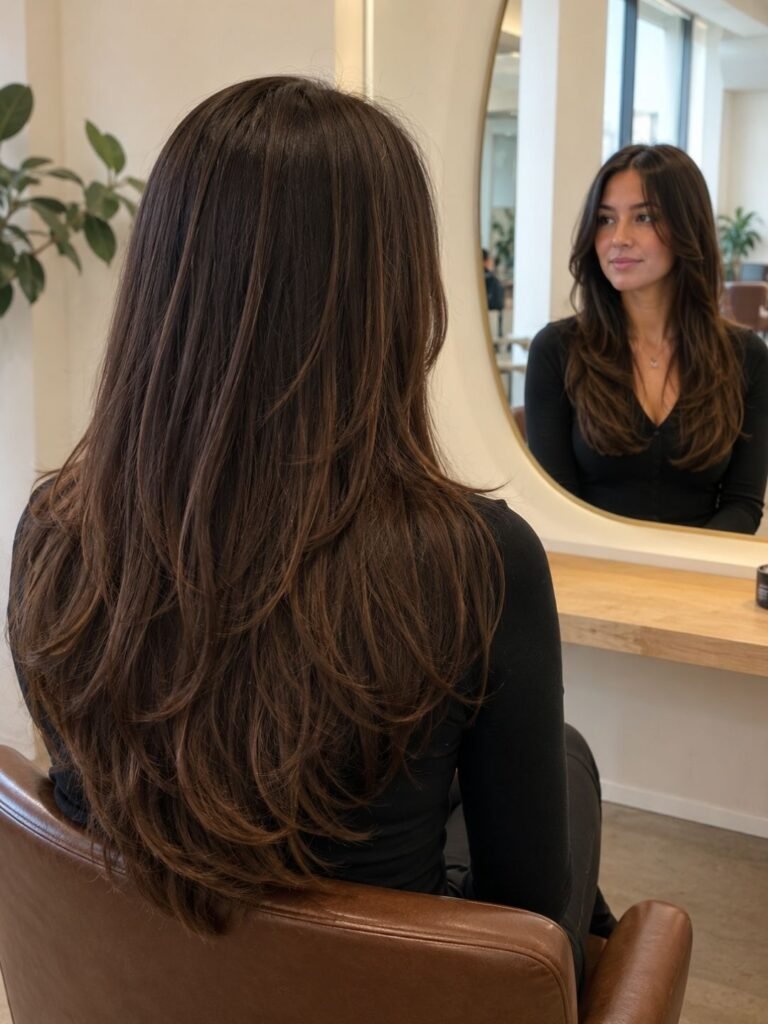
Long layers affect the body of the haircut, not just the pieces around your face. They distribute different lengths through the mid lengths and ends to create movement while preserving the overall impression of long hair.
The important variable is how high those layers begin. Low long layers keep more weight near the bottom. Higher long layers create a more obvious cascade and remove more hair from the lower outline.
That tradeoff gets hidden easily in a polished reference photo. A large blowout can make every layer look full and buoyant even when the unstylized perimeter is much lighter.
If your ends already look sparse, protect the outside line before asking for a large number of short pieces. Femorias’ guide to long hairstyles for fine hair that keep the ends looking full explains why strand thickness and overall density are separate considerations and why a conservative perimeter can matter more than simply adding extra layers.
Long layers are usually the better comparison point when: you want the entire haircut to move more, not just the front.
Ask to see where the shortest back layer will land. That one detail tells you far more than the phrase “long layers.”
Ghost layers hide the haircut structure beneath the surface
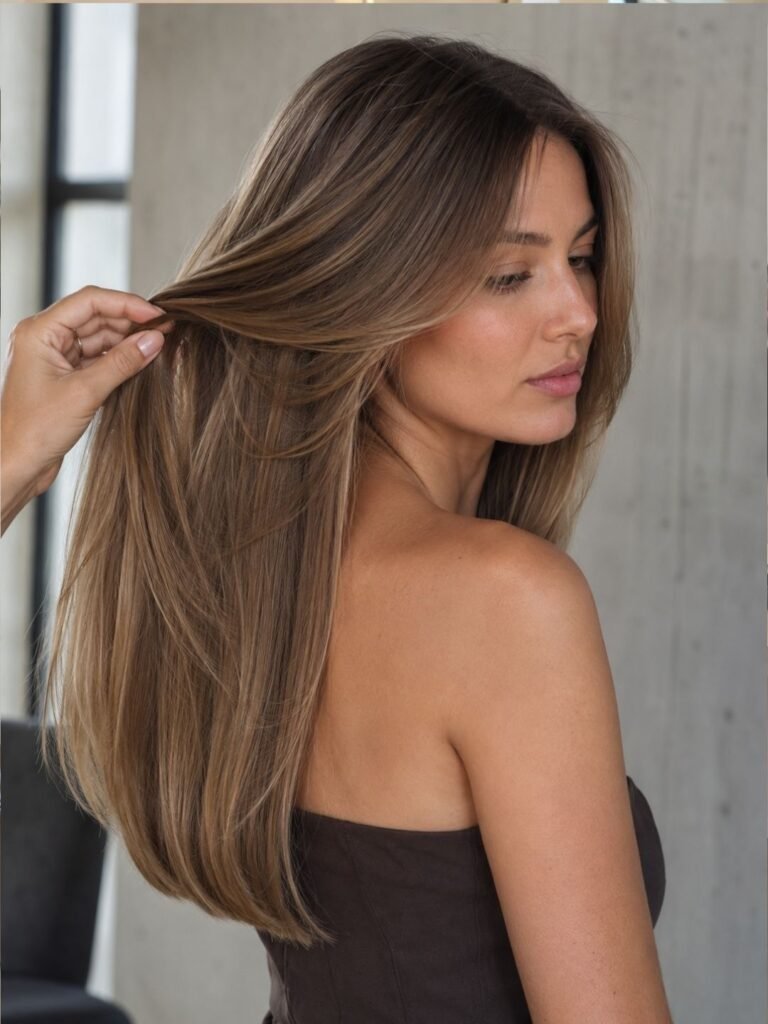
Ghost layers, also called invisible or internal layers, are for readers who want the hair to behave differently without necessarily looking heavily layered from the outside.
Professional Sam Villa education describes invisible or internal layering as a way to create fullness, movement, or body without leaving obvious visible layers. The technique can also be adapted differently according to density: professional education demonstrates approaches designed either to encourage movement/fullness or to reduce excess bulk in heavier hair. Sam Villa’s professional guide to invisible and internal layers
That is an important distinction. “Ghost layers” should not be treated as a promise that one identical technique will make every hair type fuller. The stylist still has to decide where to remove hair, how much to remove, and what must remain intact on the surface and perimeter.
Ghost layers make sense when you think:
- “I want movement, but I do not want obvious tiers.”
- “I like my solid outline.”
- “My hair feels heavy, but I do not want it to look shaggy.”
- “I am nervous about visible layers because I have had choppy ones before.”
They are less useful if your real goal is an unmistakable cascading shape that everyone can see from the front. In that case, traditional long layers or butterfly style layering will create a clearer visual change.
Butterfly layers create a more dramatic layered silhouette
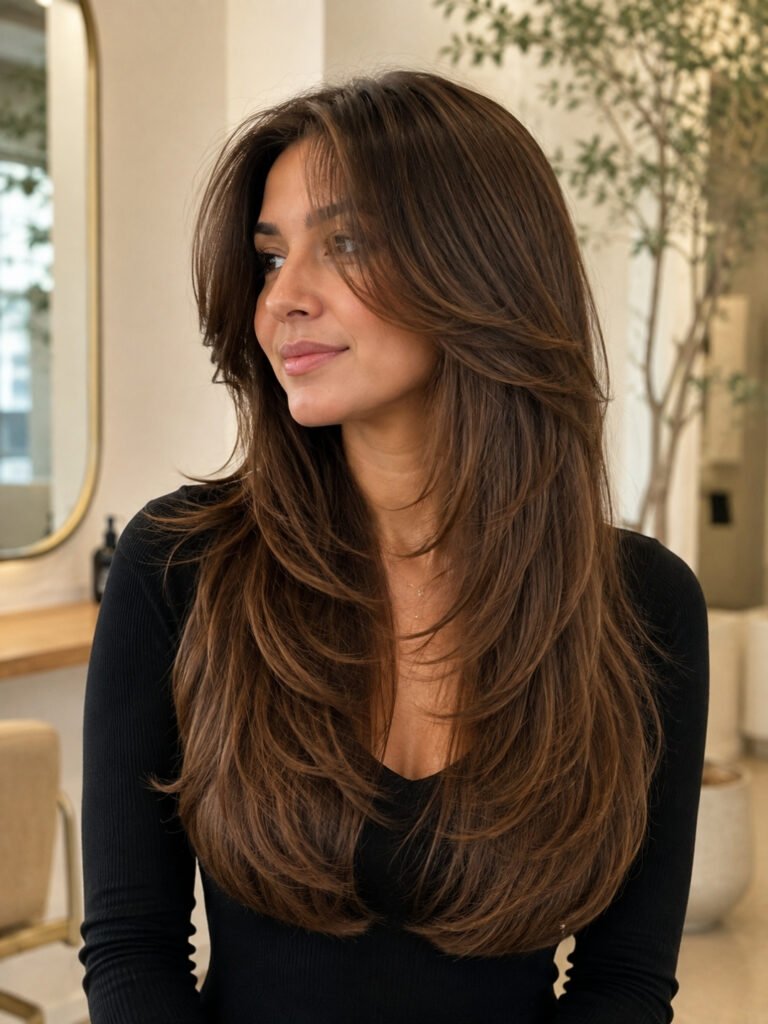
A butterfly haircut is layered by design, but it is not simply another name for long layers. The recognizable look comes from a larger contrast between shorter face and upper sections and the much longer hair underneath.
Current salon explanations distinguish butterfly cuts from conventional long layers by their stronger separation and more dramatic movement.
That is why butterfly reference photos often look so different from subtle long layer photos even when both models have similar overall length.
The catch is styling. The curved, winged pieces that make the cut immediately recognizable are frequently photographed after a round brush blowout or similar directional styling. The underlying layers will still exist after an air dry, but the dramatic sweep may not.
Choose butterfly-style layering when visible shape is the point and you’re comfortable with shorter front or upper pieces.
For movement through the length with a softer transition, standard long layers are usually the better fit.
If you prefer the outside shape to look comparatively solid, ghost layers may be the best choice.
Choose the haircut by density, texture, and your real styling routine

The best layer type is not determined by a trend name alone. Start with the amount of hair you can afford to remove from each area and the way your hair behaves when you style it normally.
For hair with a strong, dense perimeter, you generally have more freedom to move the shortest layers upward. If the bottom already looks thin or transparent, aggressive layering can distribute the existing ends over too much vertical space.
For thick or dense hair that feels heavy, internal layering may be useful because the stylist can work on weight inside the shape rather than turning every adjustment into an obvious exterior layer. Sam Villa’s training specifically demonstrates internal approaches for different densities.
Texture changes the result too. Straight hair exposes differences in layer length clearly. Waves can blend transitions visually. Curls can shrink to different dry lengths, so the same wet measurement does not automatically create the same finished placement.
Then consider the photo you are using as inspiration. Is the feature you love actually the cut, or is it the blowout?
If you rarely use hot tools, tell the stylist. A haircut should be selected with your ordinary routine in mind, not just the finish you receive before leaving the salon.
Repeated high heat has a genuine downside. The American Academy of Dermatology advises reducing blow dryer frequency when possible and notes that excessive heat can damage hair. American Academy of Dermatology’s heat styling guidance
That does not mean you cannot choose a style that looks great with a blowout. It means the amount of styling required to reproduce your reference photo belongs in the haircut decision.
What to ask for at the salon instead of saying “just give me layers”
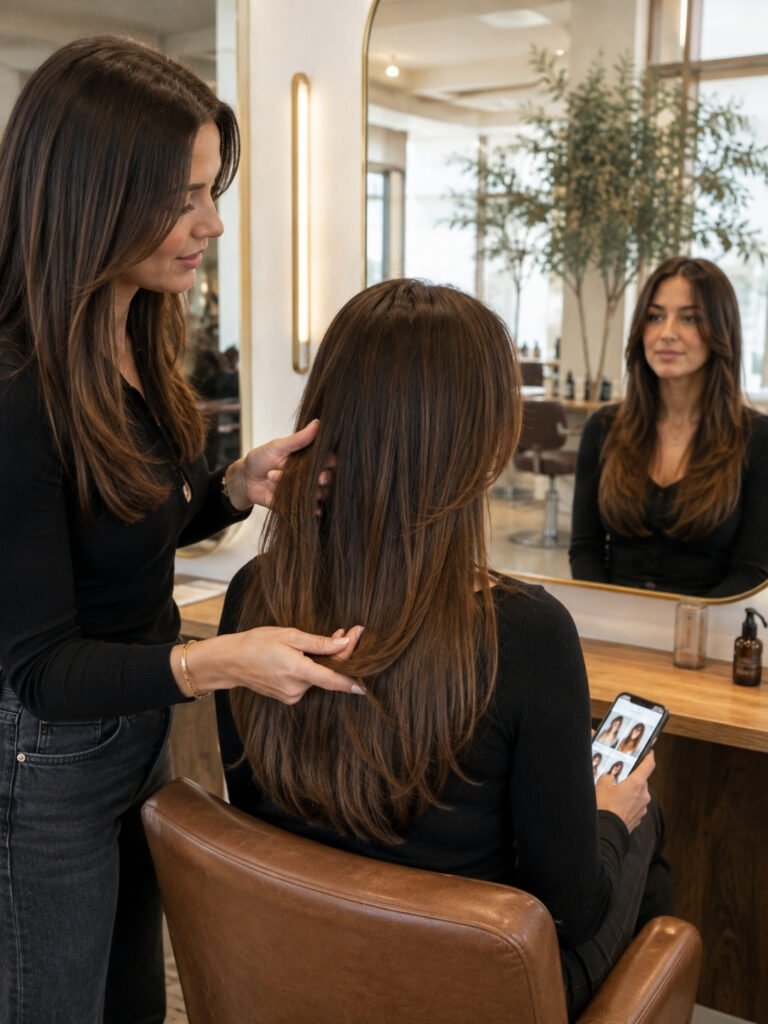
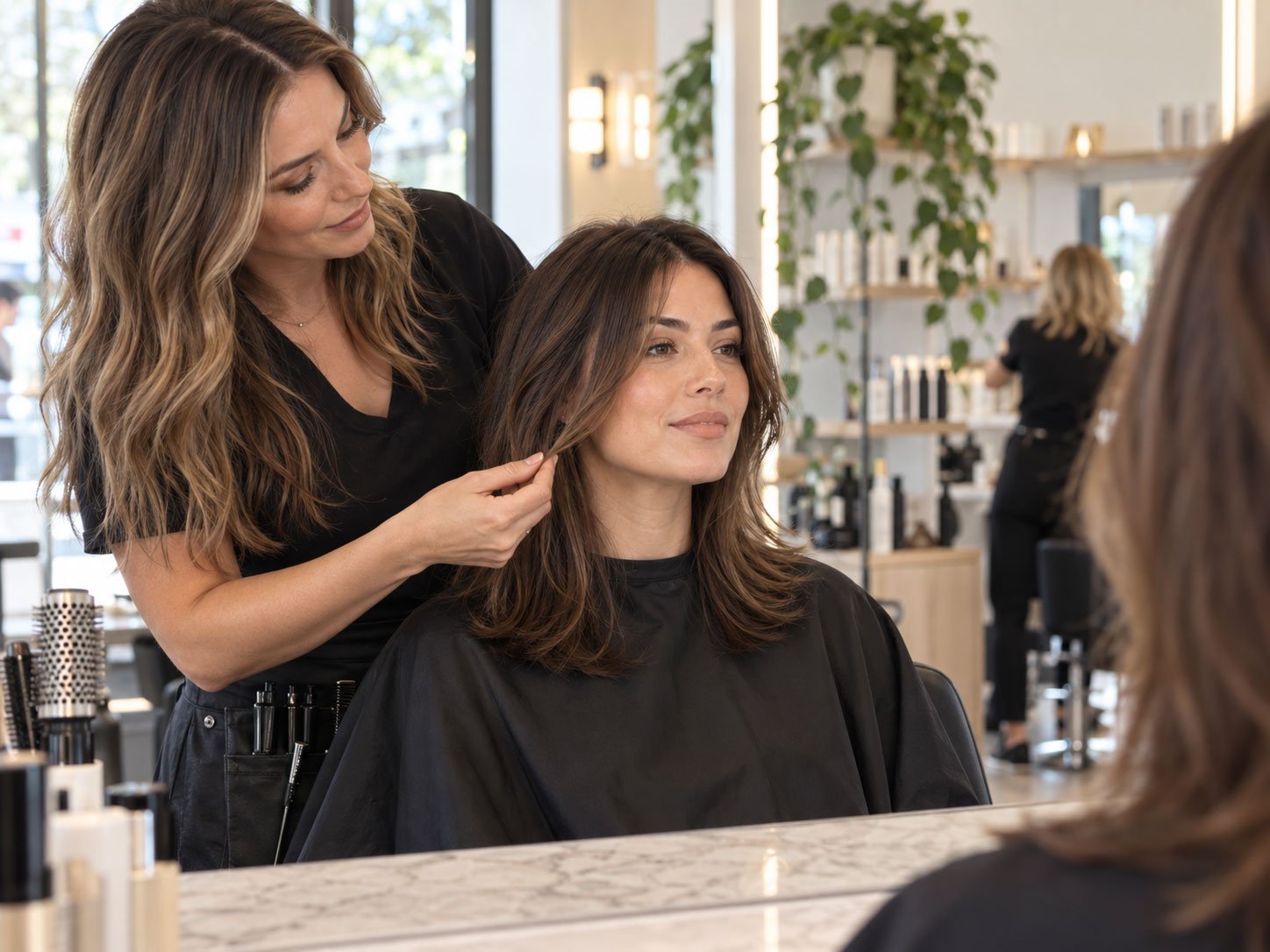
A useful consultation describes placement, visibility, perimeter, and routine. Those four things are more precise than a haircut name.
Bring two or three reference photos, but do not stop at “I like this.” Point to the specific part of each photo that you want. Professional consultation guidance recommends using photos to manage expectations because small changes in cutting choices can materially change a layered result.
Try language like this:
- For face framing: “I want the visible change concentrated around my face. Keep most of the back full.”
- For long layers: “I want movement through the overall length. Show me where the shortest back layer will land before we start.”
- For ghost layers: “I want internal movement, but I want the outer surface and perimeter to stay relatively solid.”
- For butterfly layers: “I want a noticeable shorter to longer contrast around the face and upper lengths. Show me how much hair will become part of that shorter section.”
- If fullness matters: “Please protect the lower perimeter and tell me if this reference photo would remove too much weight from my ends.”
- If you air dry: “I normally wear my natural texture. I want to know how this shape will sit without a round brush blowout.”
Also show the stylist where you are not willing to go.Cheekbone-length pieces may feel too short, so say so before the first section is cut.
Need all your hair to fit into a ponytail? Mention that during the consultation. And if see-through ends are your biggest concern, make protecting the perimeter a priority rather than an afterthought. A good consultation does not require you to know professional cutting angles. It requires you to describe the outcome you care about.
Common questions about types of hair layers
Can you have face framing layers and long layers together?
Yes. Face framing describes shorter pieces concentrated around the front, while long layers can continue through the sides and back. Combining them is common because they solve different parts of the haircut.
Are ghost layers the same as long layers?
No. Long layers are usually visible as changes in length through the overall haircut. Ghost or internal layers are designed so more of that layering stays beneath the visible surface. Professional training uses “ghost,” “invisible,” and “internal” for techniques intended to create movement without obvious exterior layers.
Are butterfly layers just face framing layers?
Not quite. Face framing can exist on otherwise minimally layered hair. A butterfly cut uses shorter front and upper layers as part of a broader cascading structure while keeping significantly longer lower sections.
Which layers are best for fine hair?
There is no universal winner. If the perimeter is already light, start more conservatively and protect the bottom. Fine strands and low overall density are not the same thing, so two people with “fine hair” may need very different amounts of layering.
Which type of layer is lowest maintenance?
Usually the one that works with your natural texture and does not depend on a dramatic directional blowout. Low long layers, restrained face framing, or subtle internal layers can be easier for some readers than a strongly shaped butterfly cut, but the answer changes with texture, length, and routine.
If you are still unsure, start with the smallest structural change that solves your actual problem. Add face framing before heavily layering the entire head if the front is all you want to change. Keep long layers low if you want movement but value a strong perimeter. Ask about internal layers if visible tiers make you nervous. Choose butterfly layering because you want the dramatic shape—not simply because the name is trending.