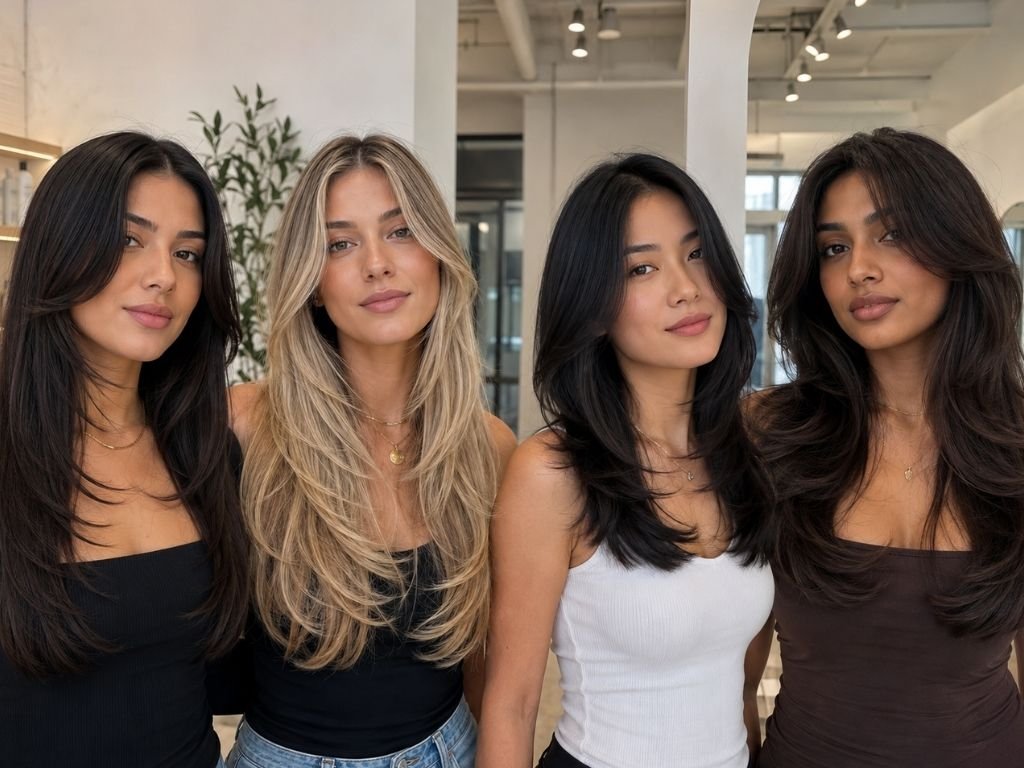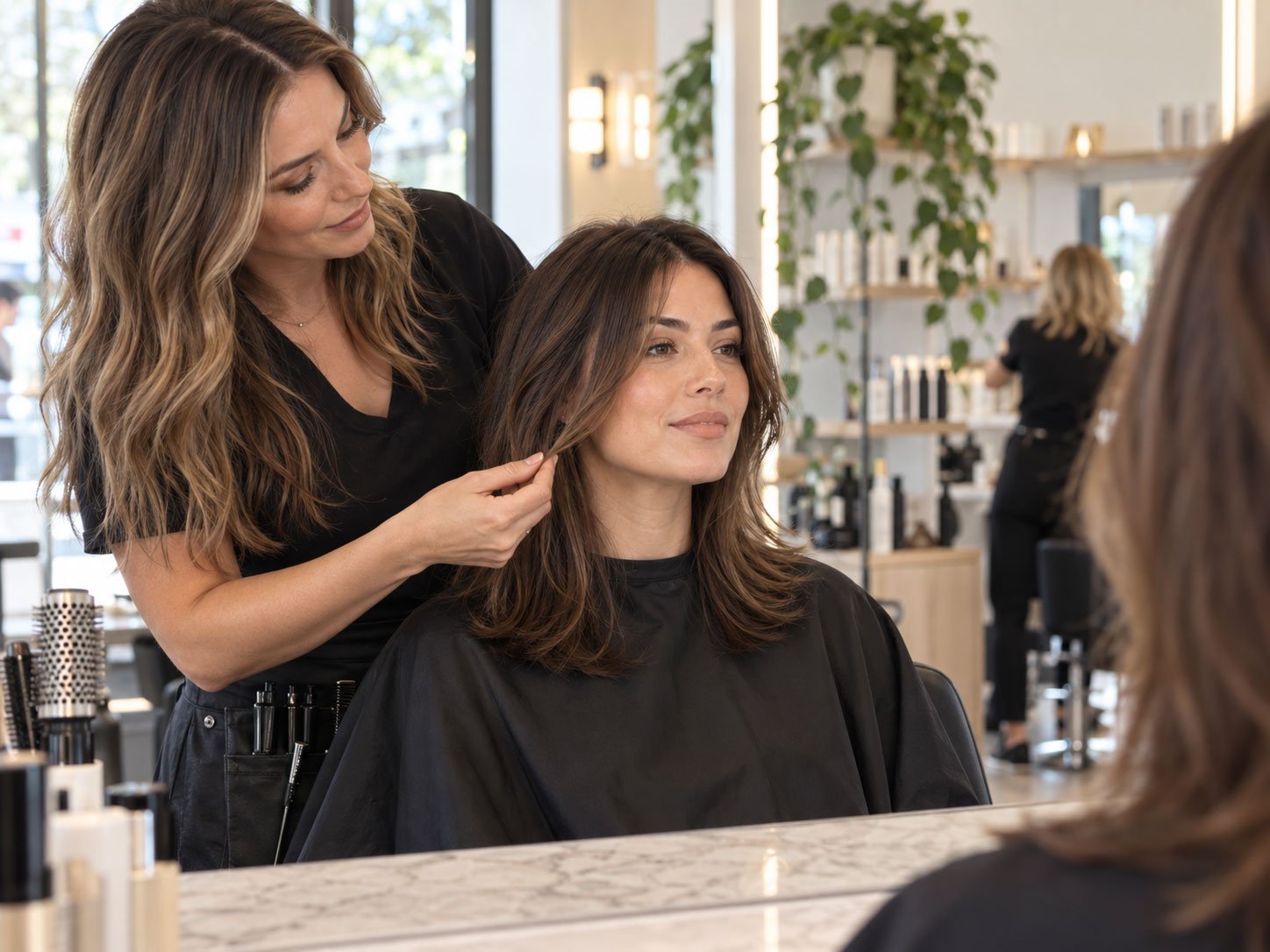

Layered Hairstyles for Beginners: How to Choose Your First Layered Cut

If you’re new to layers, don’t start by choosing the trendiest name. Start by deciding what you want your current haircut to do differently. Face-framing pieces can change mainly the front. Low long layers can add movement through more of the length. Internal layering can redistribute weight without making every layer obvious. If your ends already look thin, the best first step may be very little layering at all.
The safest beginner strategy is simple: make the smallest structural change that solves the problem, then add more layering at a future appointment if you want it.
What layers actually change and what they don’t
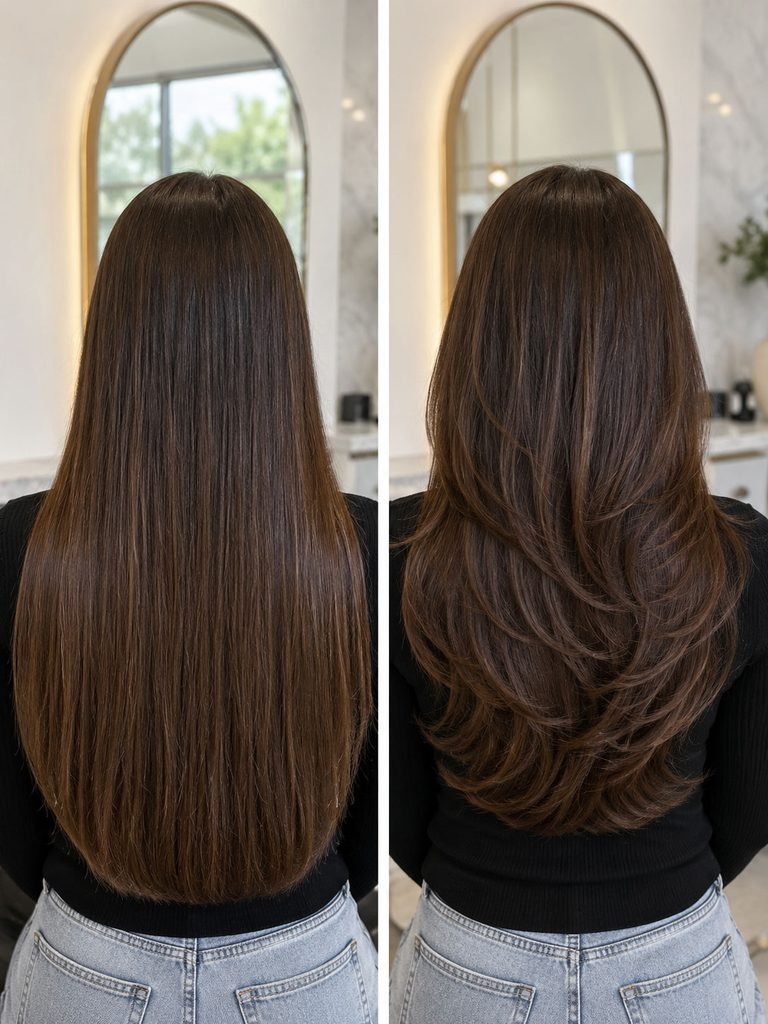
A layered haircut contains hair at different lengths rather than keeping every section at one uniform endpoint. Where those shorter pieces are placed changes the silhouette, movement, weight distribution, and amount of hair reaching the outside perimeter. Current professional guidance likewise distinguishes different cutting directions and techniques because they can alter density and texture in different ways.
Layers do not automatically create more hair. They redistribute the hair you already have. That matters most when the ends already look light. Hair research measures shaft diameter and scalp density separately, and both contribute to how much hair appears to be present. In practical terms, someone can have fine individual strands but plenty of overall density—or thicker strands with lower density. See the PubMed research on hair diameter and density
That is why “fine hair needs layers for volume” is too simple. Sometimes restrained layering creates welcome movement. Sometimes removing more hair from the outline makes the bottom look even thinner.
Choose layers by density, texture, and your real routine

Before choosing a photo, look at three things: how full your ends are now, how your hair naturally bends or curls, and how much styling you actually do.
If your bottom edge already looks transparent, start conservatively. Keeping a stronger perimeter may matter more than adding many short pieces. If your hair is very dense and feels heavy, you have more room to discuss strategic weight removal—but the goal still needs to be specific: less bulk underneath, more movement through the length, a softer front, or a more visibly layered silhouette.
Texture changes the result as well. Straight hair tends to show differences in length clearly. Waves can blend those differences into the pattern. Curly and coily hair can finish at substantially different positions from where sections appear while stretched or wet, so the dry shape deserves special attention during the consultation.
Curly and tightly coiled hair also benefits from care that respects its tendency toward dryness and breakage. The American Academy of Dermatology recommends detangling curly or coily hair while wet with conditioner and avoiding dry brushing that can increase breakage and frizz. Read the AAD’s curly-hair care guidance
Beginner-friendly layered hairstyles by length

Short hair: Layers become visible quickly because there is less length available to blend them. A softly layered bob or pixie can create texture and shape, but shorter crown pieces also change the silhouette more dramatically. If you are unsure, ask for a controlled amount of texture rather than “lots of short layers.”
Medium hair: Collarbone and shoulder-adjacent cuts offer room for subtle movement without the commitment of very short upper layers. Pay attention to exactly where the ends and shortest layers meet your shoulders, though. Hair that hits clothing or the shoulder can behave differently from the salon finish and may kick outward.
Long hair: Low long layers are often a manageable first experiment because you can keep the overall impression of long hair while introducing movement farther down the length. If you want only the front to change, face framing can be an even smaller commitment.
Length alone doesn’t decide the correct cut. A full, dense collarbone cut may tolerate much more layering than long hair with already-sparse ends.
The safest way to choose your first layer type
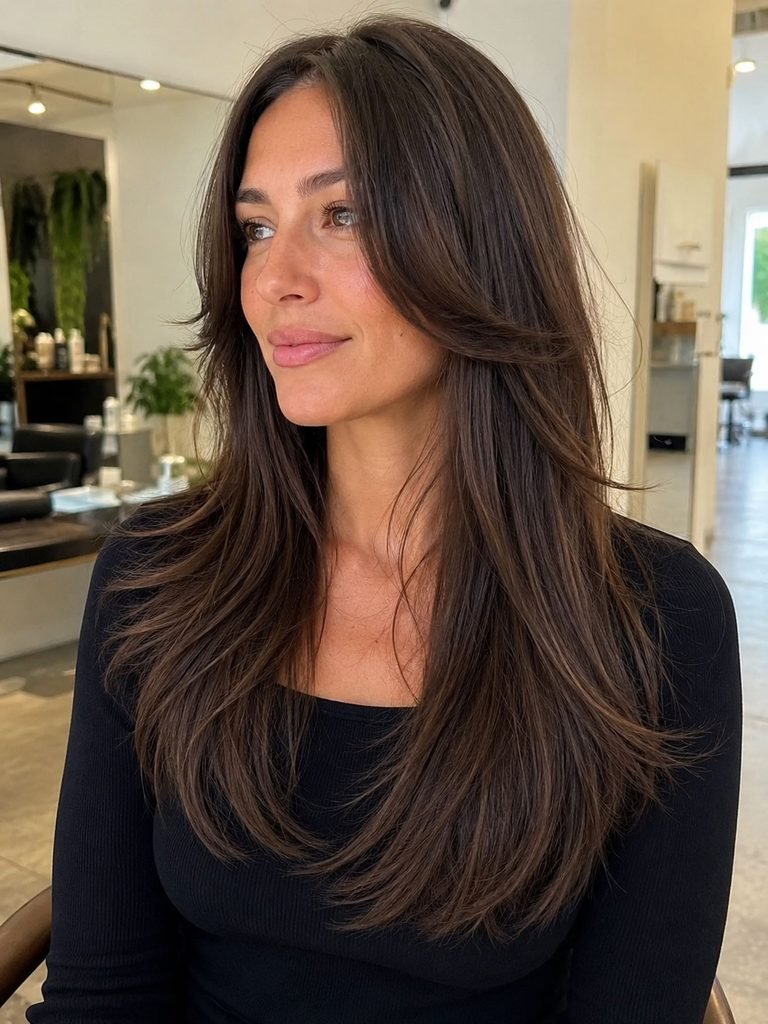
For a first appointment, think about location and visibility rather than chasing a haircut name.
Choose restrained face framing if the front feels heavy but you like the rest of your haircut. Choose low long layers if you want the entire length to move more while keeping a substantial bottom edge. Ask about internal or invisible layering when your hair feels bulky but you do not want obvious tiers. Choose a more dramatic butterfly-style shape only if the visible contrast between shorter upper pieces and long lower sections is what you actually want.
Femorias’ detailed comparison of face-framing, long, ghost, and butterfly layers explains those structures in depth. The most important beginner question is still simpler: Where will my shortest layer finish, and how much hair will remain in my perimeter?
If you cannot answer those two questions from your reference photo, you are not ready to copy the photo exactly.
What to tell your stylist before the first cut
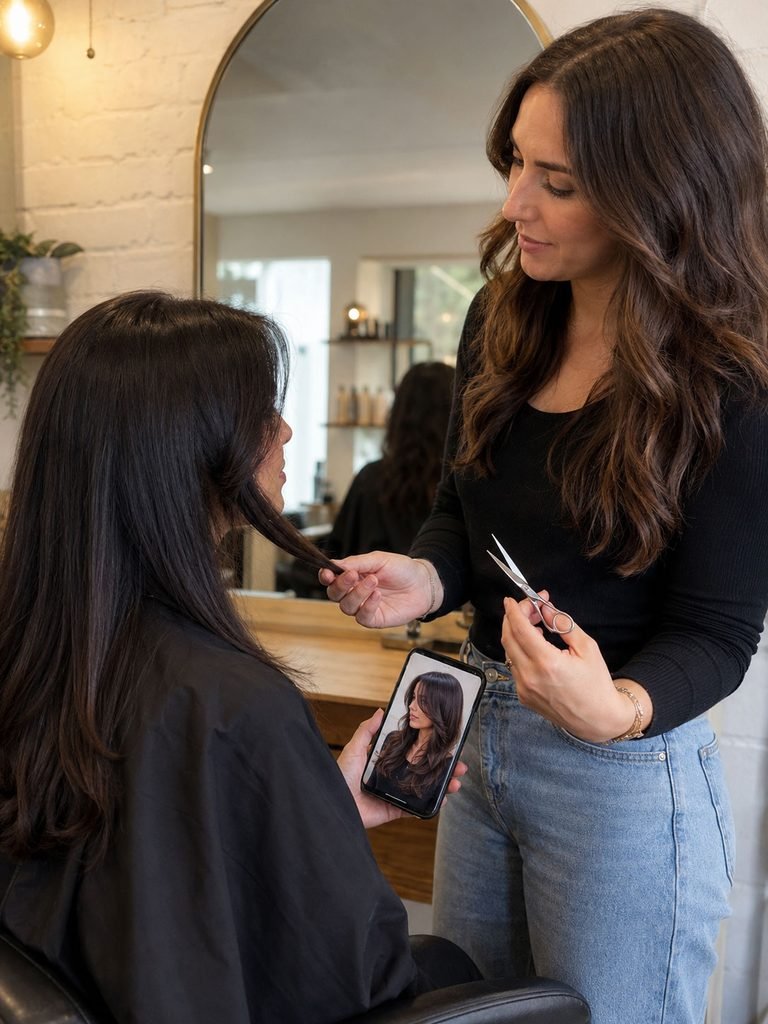
You do not need professional haircutting vocabulary. You need to describe the result and the limits.
Tell your stylist how much overall length must stay. Point to where the shortest front piece may finish. Ask where the shortest layer in the back will land when your hair is dry. Explain whether you want obvious separation between layers or a blended shape. If you care about a full bottom edge, say so explicitly.
Also mention the boring practical details—they are often more useful than trend names. Do you wear a ponytail for work? Do you tuck your hair behind your ears? Do you air-dry most days? Are you willing to use a round brush? Does your hair expand considerably when it dries naturally?
Bring two or three references with hair reasonably similar to your own length and texture. Then point out what you like: the movement at the ends, the short pieces around the face, the full perimeter, or the crown volume. Current professional advice similarly emphasizes customization by density, texture, length, face shape, and desired style rather than treating one layered haircut as universally best. See current professional layered-hair guidance from Hair.com/L’Oréal
One especially useful question is: “What will this haircut look like if I style it the way I normally style my hair?”
Style the haircut you actually wear at home
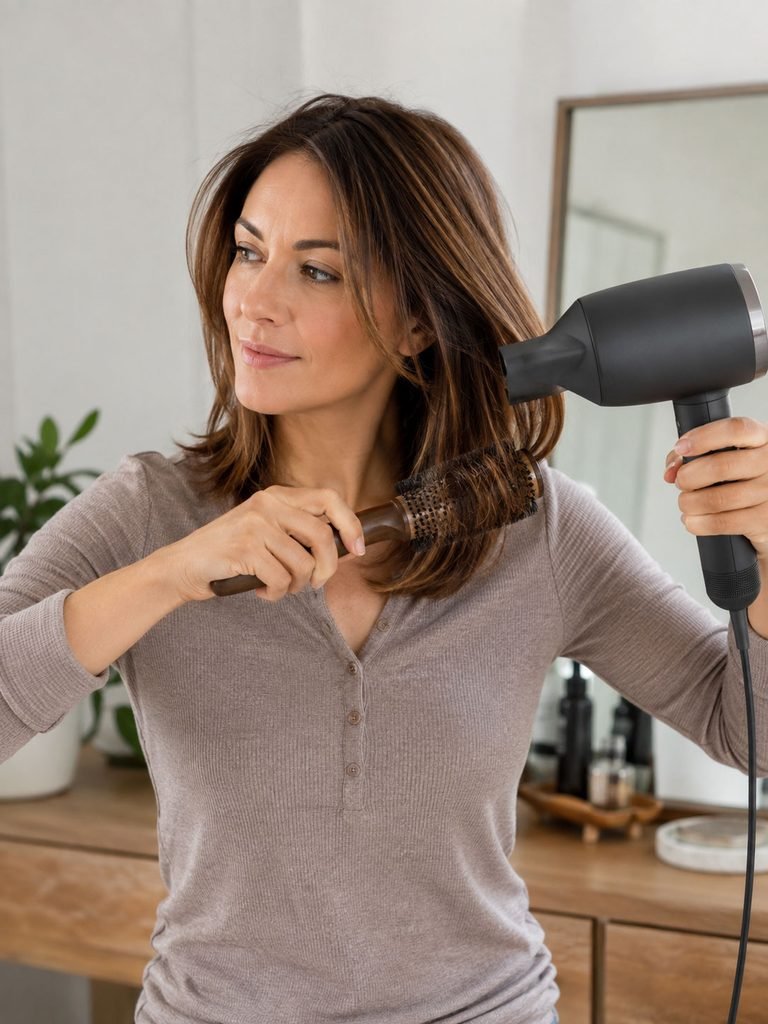
One reason layered hair photos can be misleading is that the haircut and the finish are doing different jobs. A round-brush blowout can make separate layers curve away from one another and look dramatically fuller. Air-dry the same haircut and the layers may still create movement, but they may not form those floating arcs.
Before committing to heavily shaped layers, decide whether you are comfortable recreating the styling that makes your reference photo recognizable.
For heat styling, use moderation rather than assuming more heat produces a better finish. The American Academy of Dermatology advises limiting blow-drying and hot-tool use, using low or medium heat, and applying a heat-protection product because excessive heat can damage hair. Read the AAD’s healthy-hair heat guidance
For an easier routine, work with your natural pattern. Straight hair may need only strategic drying at the roots and ends. Wavy hair can be encouraged with a lightweight styling product and minimal disruption while drying. Curly hair usually benefits more from preserving curl groupings than repeatedly brushing the finished texture.
If your new layers begin kicking outward after washing, Femorias’ guide to why layered hair flips out at the ends covers the specific drying, length, and perimeter issues that can cause it.
Common beginner mistakes that make layers disappointing
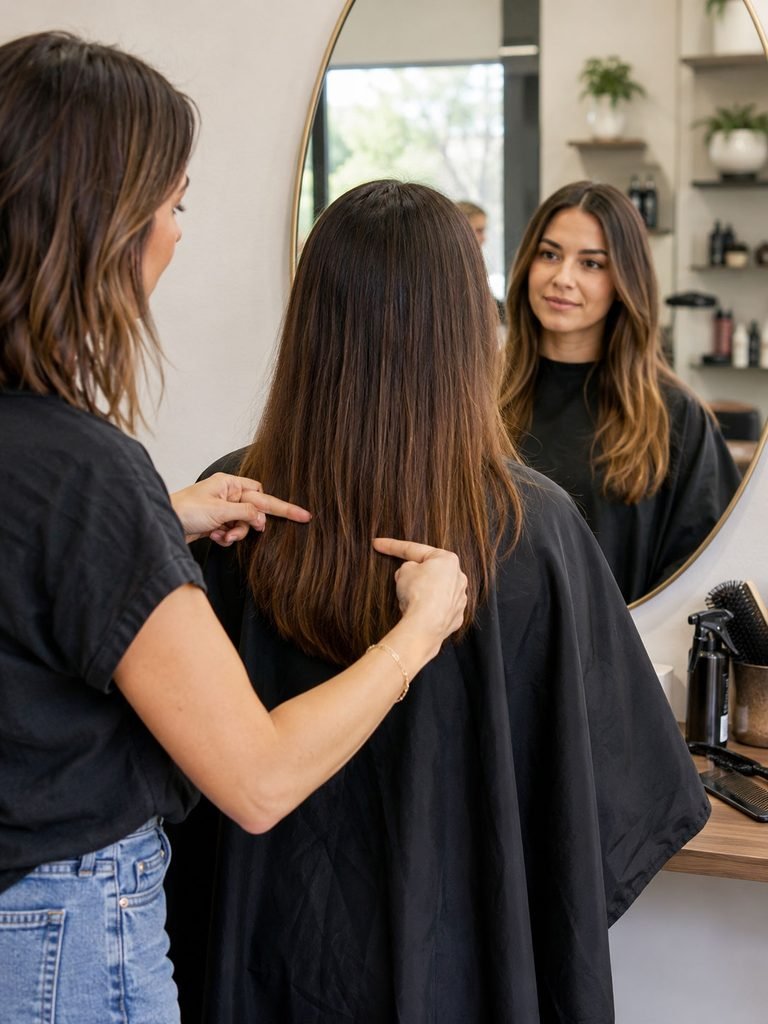
The biggest beginner mistake is asking for “layers” without defining the amount. That single word can describe a nearly invisible adjustment or a haircut with major contrast from crown to ends.
Another mistake is choosing a reference entirely for its styled volume. Look closely at the shortest pieces. Imagine them hanging straight downward rather than being swept outward by a brush. If that length suddenly feels too short, choose a more conservative version.
Do not ignore the perimeter either. If the bottom already looks light, adding numerous short pieces may sacrifice exactly the fullness you were hoping to improve. Conversely, very dense hair may need meaningful internal weight removal rather than a few decorative front pieces.
Face-framing sections deserve particular care because they affect everyday functions. A cheekbone-length piece cannot magically reach a low ponytail. Decide in advance whether that matters.
Finally, do not assume that more layers can correct every unsatisfying layered cut. Sometimes the better adjustment is less layering, more perimeter weight, or simply moving the overall length away from an awkward contact point.
How layers grow out and when to reshape them
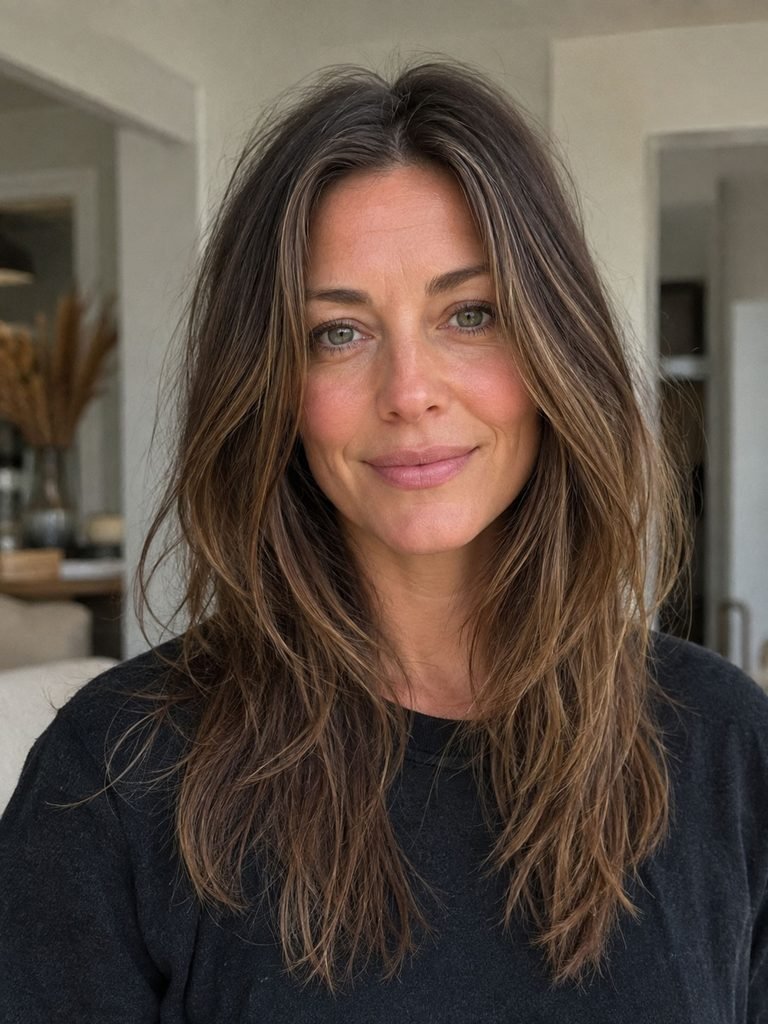
There is no single trim interval that fits every layered haircut. A short, strongly shaped cut can lose its intended proportions sooner than low layers on long hair, while someone actively growing layers out may deliberately wait longer between structural reshaping.
Instead of watching the calendar alone, watch the haircut. A reshape may be useful when the face-framing pieces no longer sit where you want them, the cut begins feeling bottom-heavy, your shortest layers stop connecting visually with the length, or previously intentional movement starts looking accidental.
If you are growing layers out, you normally do not have to cut all of your hair to the shortest layer. You can gradually reduce the difference by allowing shorter sections to grow while trimming the longest perimeter conservatively.
Tell the stylist whether your goal is maintaining the layered shape or reducing the amount of layering over time. Those require different trimming decisions.
Beginner questions to answer before you book

Are layered hairstyles good for fine hair?
They can be, but fine strands and low density are not the same thing. If your perimeter already looks sparse, keep the layering restrained and discuss preserving the bottom edge.
Do layered hairstyles work for curly hair?
Yes, but dry shape and shrinkage matter. Bring references with a similar curl pattern and discuss where the shortest pieces will finish in your normal texture rather than only when the hair is stretched.
Will layers make my hair easier to style?
Sometimes, but not automatically. The right layers can help your hair fall into a shape you prefer; a dramatic layered look that depends on a large blowout may actually add styling work.
Can I still wear a ponytail?
Usually, but sufficiently short face-framing or crown pieces may fall out. Tell the stylist which updos you rely on before deciding how short to go.
What is the safest first layered haircut if I’m nervous?
Start with the least amount of change that addresses your complaint. Keep face framing low if you only want movement around the front. Keep long layers low if you want overall movement but value a full edge. If you want weight removed without obvious tiers, ask whether restrained internal layering suits your density.
A first layered haircut does not need to prove how adventurous you are. Know where the shortest piece will land, protect any fullness you want to keep, and choose a shape that still makes sense on an ordinary wash day. You can always add more layering at the next appointment; putting removed length back is the part that takes time.