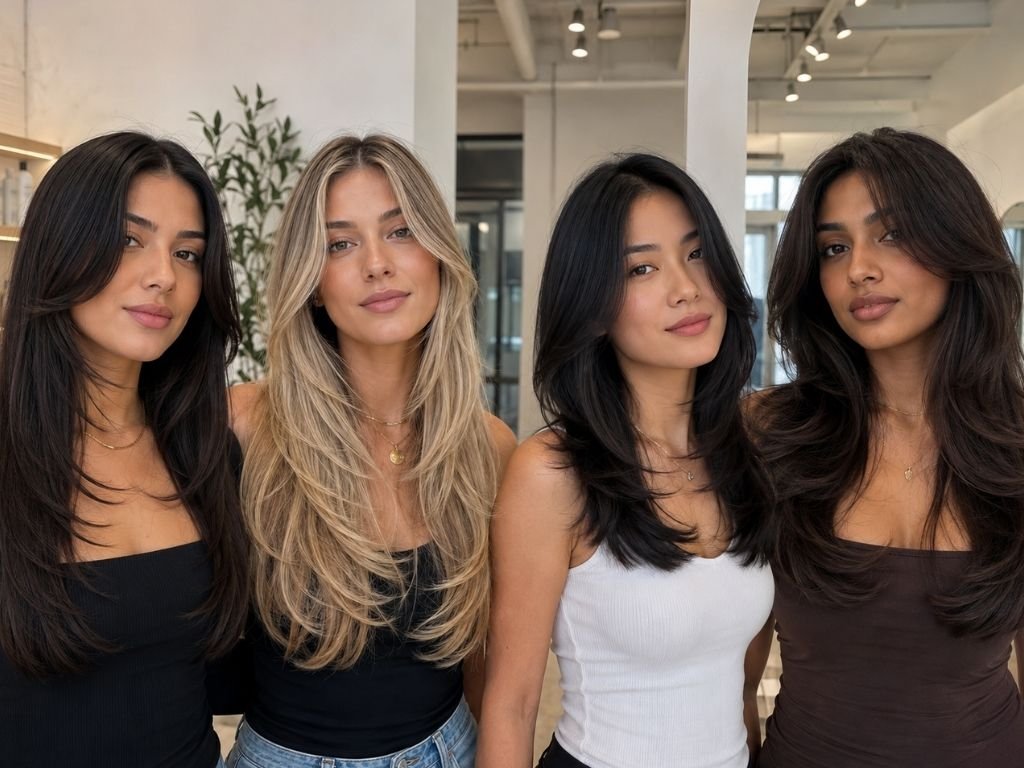
Layered Hairstyles for Your Face Shape: Where Your Layers Should Start

The most useful face shape question is not “Which layered haircut am I allowed to wear?” It is “Where should the shortest pieces and the fullest parts of the haircut sit?”
Face shape can help answer that, but it should not make the decision by itself. A round face may look more elongated with longer front pieces, while a long face may benefit from more movement around the cheeks. That guidance changes when the hair is fine, very dense, tightly curled, already thin at the ends, or usually worn without heat styling.
Start with the visual effect you want, then make sure the haircut works with the hair you actually have.
Start with layer placement, not a face shape rule
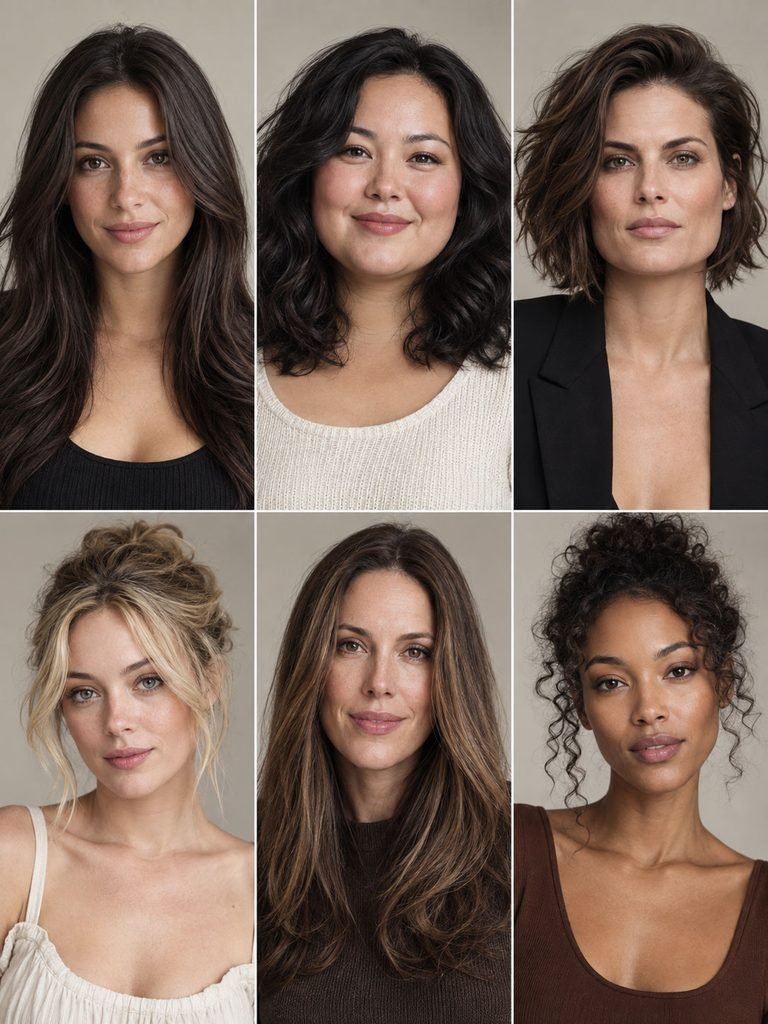
You do not need to fit perfectly into one face shape category. Many faces sit between two. Look at four things with your hair pulled away from your face: forehead width, cheekbone width, jaw width, and overall face length. Current professional beauty guidance uses those proportions as a practical way to approximate shape rather than treating the categories as rigid anatomy.
| Face shape | A useful starting point for layers | Watch for |
|---|---|---|
| Oval | Choose the start point by the feature you want to emphasize and by your hair texture | Too much height if your face already reads long |
| Round | Longer face framing near the jaw or below, with movement that falls downward | Extra bulk centered at the fullest part of the cheeks if your goal is less width |
| Square | Soft curved framing around the chin or below the jaw | Dense blunt weight ending exactly at the jaw if you want a softer outline |
| Heart shaped | Chin to collarbone movement that adds interest lower around the face | Heavy crown volume if you are trying to balance a wider forehead |
| Long | Movement around the cheek and jaw, with shoulder length width or fringe if desired | A very long, flat vertical silhouette if you want the face to read shorter |
| Diamond | Fullness near the forehead or lower jaw with restrained bulk at the widest cheek area | Heavy volume directly at the cheekbones when balance is the goal |
These are starting points, not restrictions. A hairstyle you love does not become wrong because your face does not match a beauty chart.
The other distinction that matters is whether you want to change only the front or the entire haircut. Femorias’ guide to face framing, long, ghost, and butterfly layers explains how those structures differ. You can have face framing around the jaw while keeping the back almost one length, or combine face framing with long layers throughout the rest of the hair.
Round and oval faces need different kinds of movement
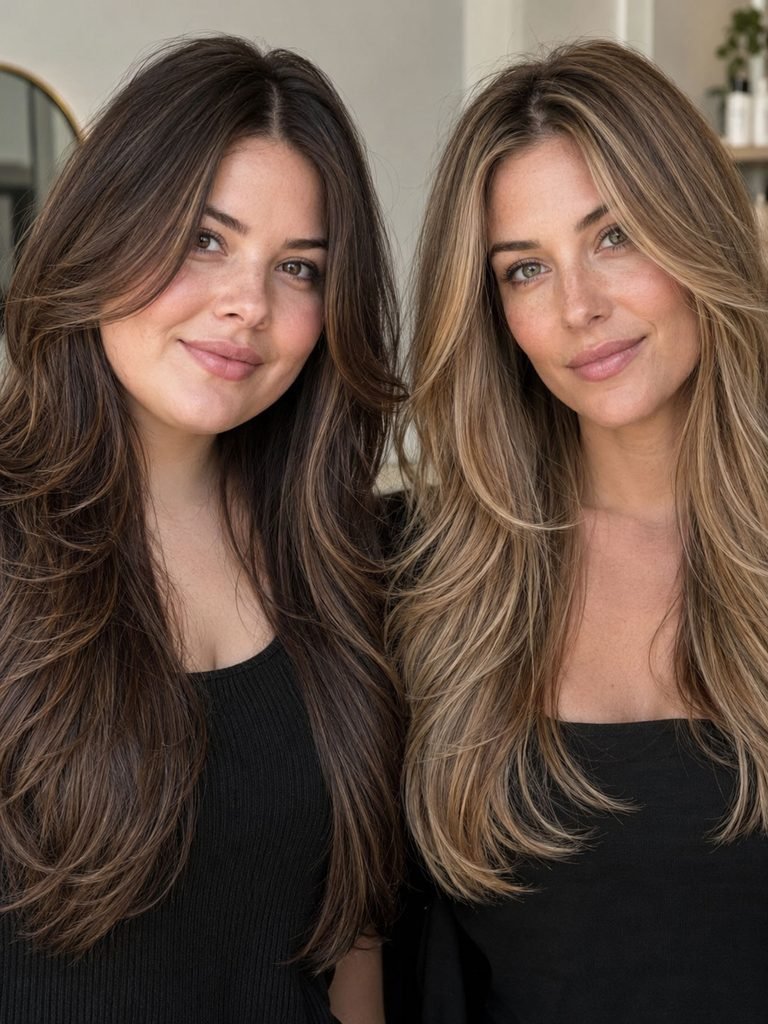
Round faces: If your goal is to make the overall silhouette feel longer, start the most obvious face framing around the jaw or below rather than building the greatest amount of volume across the middle of the cheeks. Long front pieces can create a more vertical line without requiring very long hair overall.
That does not mean cheek length pieces are forbidden. If you want to emphasize your cheeks, wear your natural curls wide, or prefer a shorter cut, extra width may be exactly what you like. The recommendation changes with the result you want.
Oval faces: An oval face generally gives you more freedom because there is no single width or angle that obviously dominates the outline. The more useful question becomes whether your hair needs movement, fullness, or a stronger perimeter.
If your face already reads long and your hair lies flat, adding height at the crown may exaggerate that length. In that situation, movement around the sides can be more useful than aggressively shortening the upper layers.
Square and heart faces benefit from softness in different places
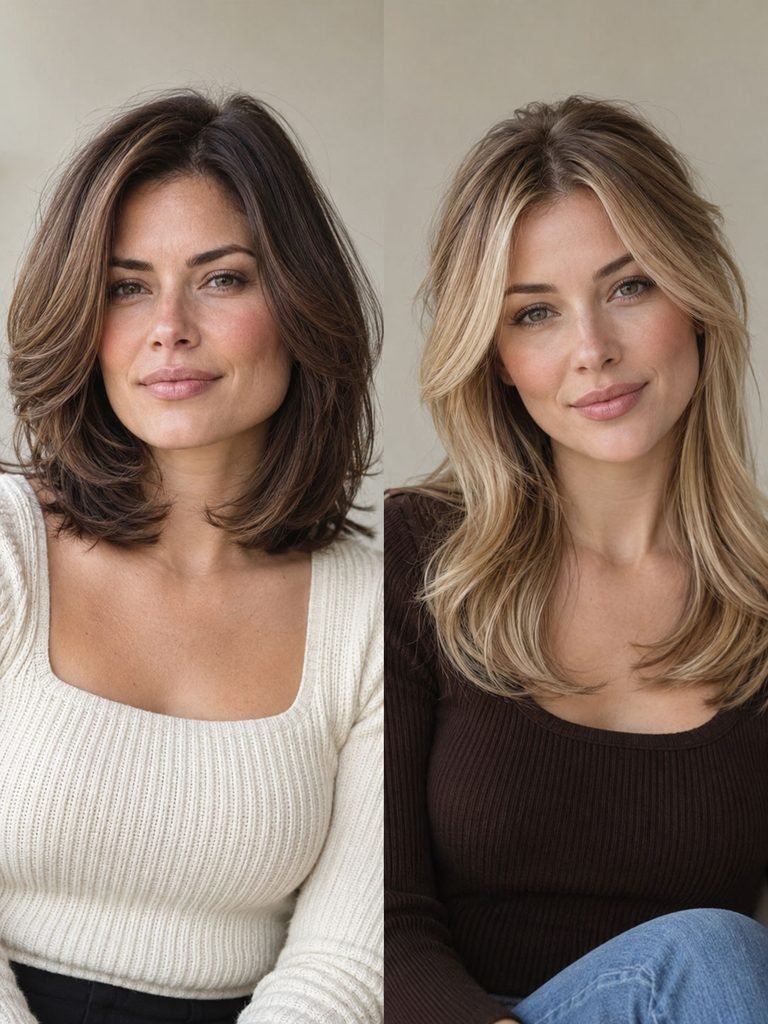
Square faces: A square face has more visible structure through the jaw and often the forehead. If your goal is to soften that geometry, use movement that curves around or passes the jaw rather than creating a heavy horizontal stop exactly at it.
Softness can come from the cut or the styling. Airy ends, waves, a side sweep, or a curtain shape can all reduce the visual severity of a straight line. You do not need to hide a strong jaw. The purpose is simply to decide whether you want the haircut to echo that structure or contrast with it.
Heart shaped faces: The forehead and cheek area tend to read wider while the chin is narrower. If you want more visual balance through the lower half, place noticeable movement around the chin, jaw, and collarbone.
Curtain bangs can work well, but they are optional. If bangs require more daily styling than you want to do, longer front pieces that open near the cheek and continue toward the jaw can create a similar sense of movement without committing to a fringe.
Long and diamond faces are mostly about where width sits

Long faces: If you want the face to appear less elongated, add interest across the sides instead of concentrating everything at the crown or letting the entire haircut fall in one narrow vertical line. Shoulder length movement, cheek level texture, waves, or a fringe can all create more horizontal interest.
Very long hair is still an option. The important difference is shape. Long hair with movement through the sides will read differently from long hair that stays completely flat and straight from root to ends.
Diamond faces: The cheekbones are usually the widest area, with a narrower forehead and jaw. If balance is your goal, place some fullness above or below the cheekbone rather than making the widest point even more dominant.
Chin length framing can give the lower face more visual presence. A side part, soft fringe, or gentle movement higher near the temples can do the same toward the upper face. If your cheekbones are the feature you most want to show, keep the section directly around them comparatively clean.
Hair texture and density can override the face shape recommendation

Face shape describes the frame. Hair behavior determines whether the proposed cut can create the shape you want.
Professional cosmetology education treats growth pattern, density, texture, and wave pattern as factors that influence how hair behaves during haircutting. That is a stronger foundation than applying the same face shape formula to every head of hair. Milady’s professional haircutting curriculum
If your ends already look light or transparent, protect the perimeter before asking for many short visible layers. You can still add movement, but a smaller face framing section or lower long layers may preserve more fullness at the bottom.
Dense hair gives a stylist more material to redistribute, but that does not automatically mean more visible layers are necessary. Internal layering can reduce or redirect weight while keeping the outside silhouette comparatively solid.
Curly and coily hair introduce another variable because the finished shape needs to be judged in the way the hair is normally worn. Instead of insisting that every curly haircut must be cut wet or dry, tell the stylist how much your texture changes as it dries and show where you want the shortest front curl to land in its finished state.
Choose a cut you can reproduce on an ordinary morning
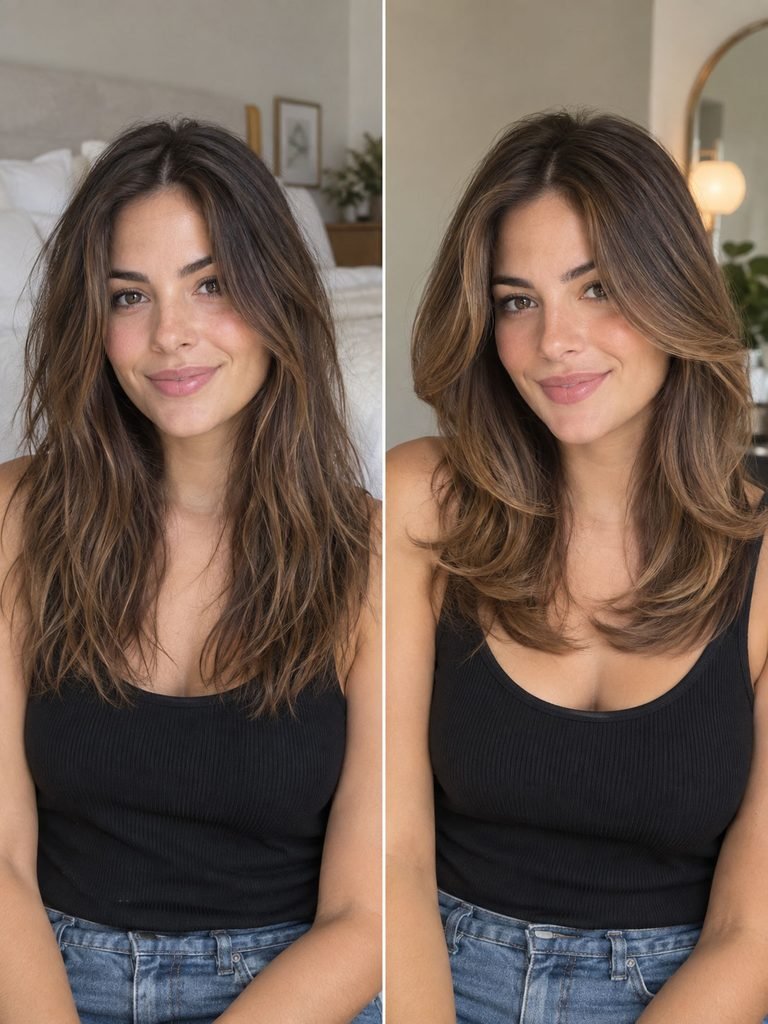
A reference photo may be showing you a styling technique as much as a haircut. A round brush can make a long layer sweep away from the face. A curling iron can turn quiet layers into a dramatic cascade. If you usually air dry, ask how the same cut will sit without that finish.
This matters for hair health too. The American Academy of Dermatology advises limiting excessive heat because it can damage hair. If the haircut you are considering depends on frequent high heat styling that you do not want to repeat, choose a structure that still looks intentional with your normal routine. American Academy of Dermatology healthy hair guidance
Also consider the boring details that become important on day three. Does every piece need to fit into a ponytail? Consider whether you wear glasses or regularly tuck your hair behind your ears. It also helps to think about whether you keep the same part every day. A layer that photographs beautifully can become annoying if it sits directly in the place you constantly move your hair away from.
What to tell your stylist before the first section is cut
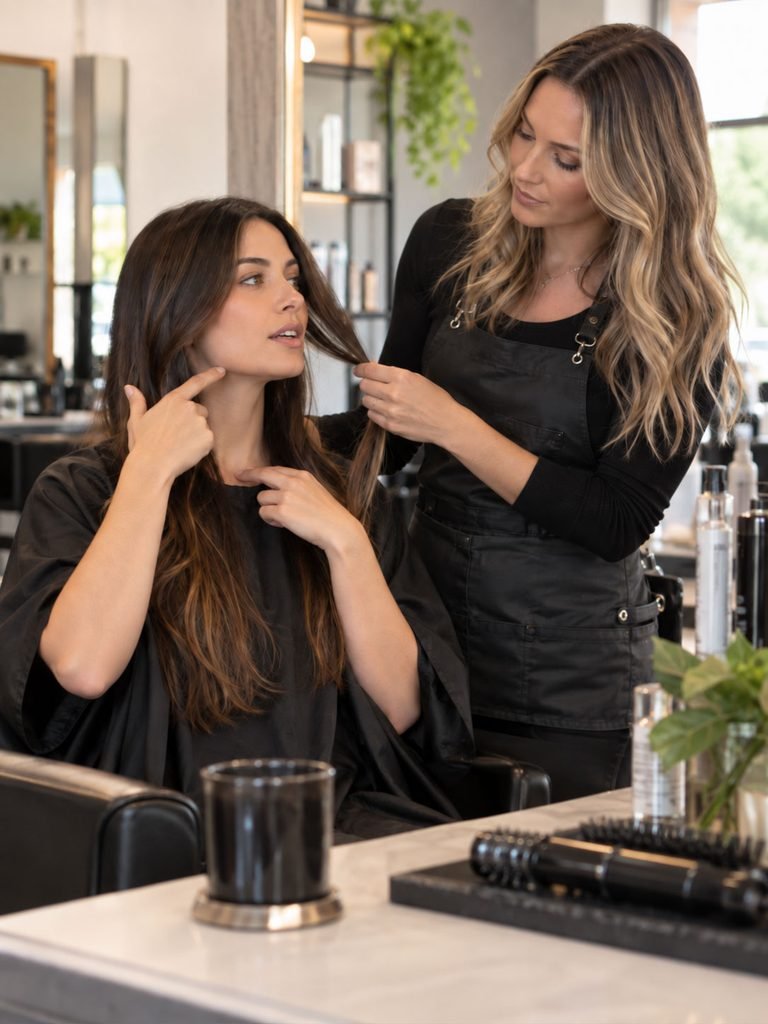
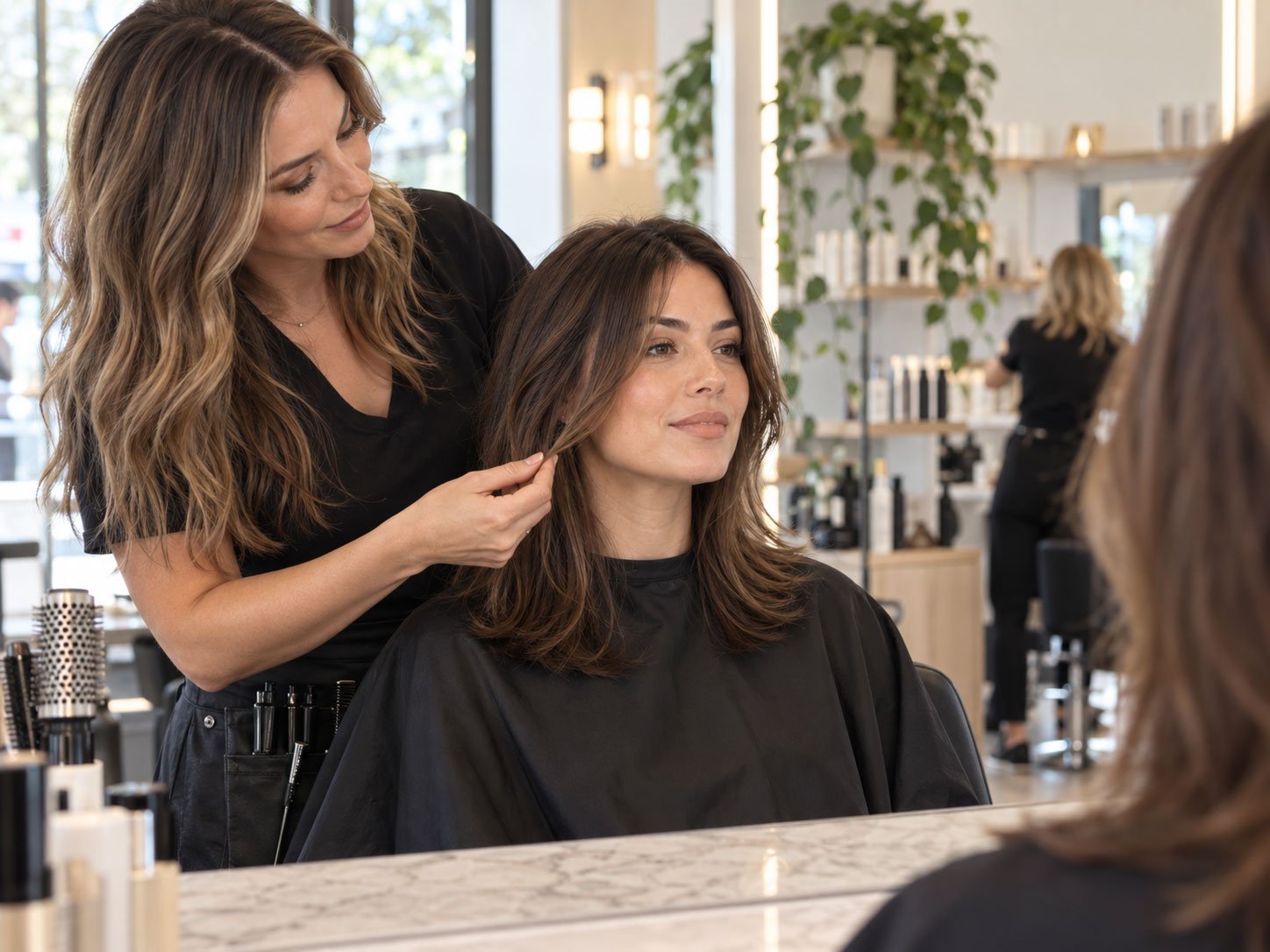
Bring reference photos, but explain what part of each photo you want. The phrase “I like her layers” is too broad because you may actually like the curved face framing, the amount of volume, the blowout, or the fullness left at the bottom.
A useful consultation can be very specific:
- “I want the shortest front piece to finish around my jaw.”
- “Keep the perimeter looking full.”
- “I want movement around my face but very little layering through the back.”
- “I normally air dry, so I want this to sit well without a round brush.”
- “I need the front pieces to reach my ponytail.”
- “Show me how much hair will become part of the shorter layer before you cut it.”
If this is your first layered haircut, Femorias’ beginner guide to choosing a first layered cut can help you decide how much structural change you actually want before the appointment.
The single best question to ask is simple: “Where will my shortest layer land when my hair is dry and worn normally?” That answer tells you more than a trend name.
Common questions about layered hairstyles by face shape
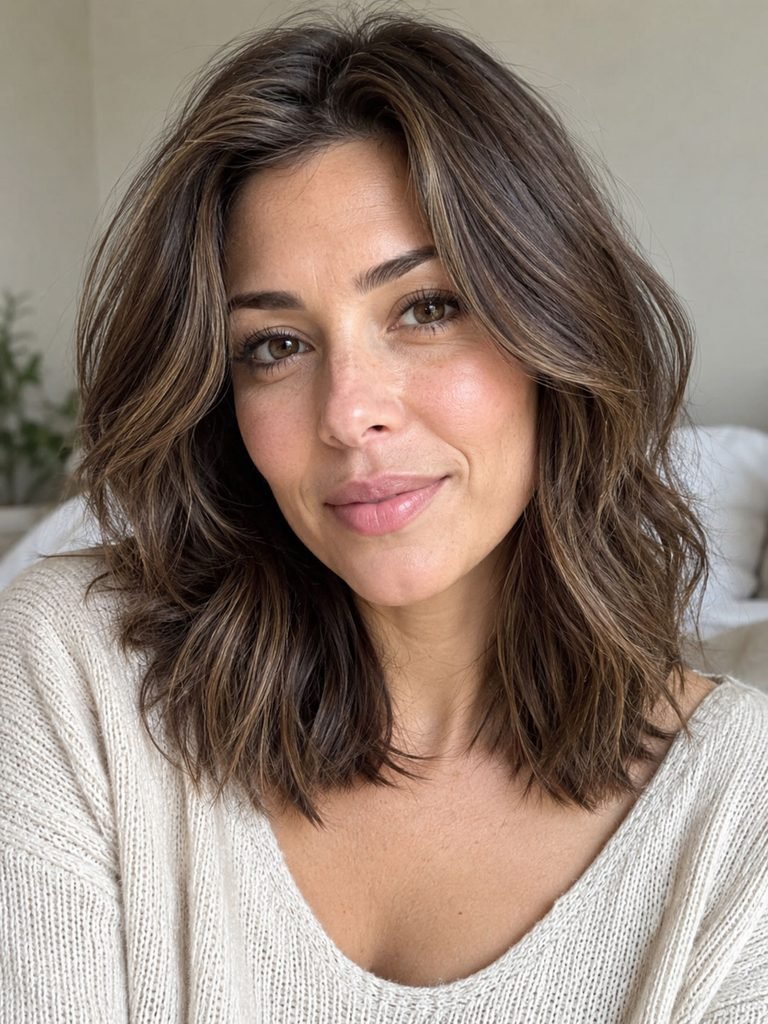
What if my face looks like two different shapes?
Choose the feature you care about rather than forcing a label. If your face is mostly oval but reads long through the forehead and chin, use the long face guidance for width placement. If it is mostly round but has a stronger jaw, borrow some of the softer square face ideas.
Do face framing layers have to start at the cheekbones?
No. They can start around the cheek, jaw, chin, collarbone, or lower. The correct point depends on what you want to emphasize, how much hair you can remove from the front, and whether those shorter pieces fit your routine.
Can fine or low density hair have layers?
Yes. The main concern is how much fullness remains at the perimeter. If the bottom already looks sparse, keep the first change conservative and avoid removing a large amount of hair simply to create more visible tiers.
Does curly hair have to be cut dry for layers to work?
No single cutting method is mandatory for every curl pattern. What matters to the reader is that the stylist understands the hair’s dry shape, shrinkage, density, and usual styling method before deciding where the shortest pieces should finish.
How often do layered hairstyles need trimming?
There is no useful universal interval. Rebook when the face framing no longer sits where you want it, the overall shape feels heavy or uneven, or the ends need attention. A subtle long layered cut and a short highly shaped cut will not need reshaping on the same schedule.
Before your appointment, make two decisions. Choose where you want the shortest visible layer to land, then decide what you do not want to sacrifice, such as perimeter fullness, tie back ability, natural texture, or an easy air dry routine. Those two answers will usually get you closer to the right layered haircut than a face shape label alone.