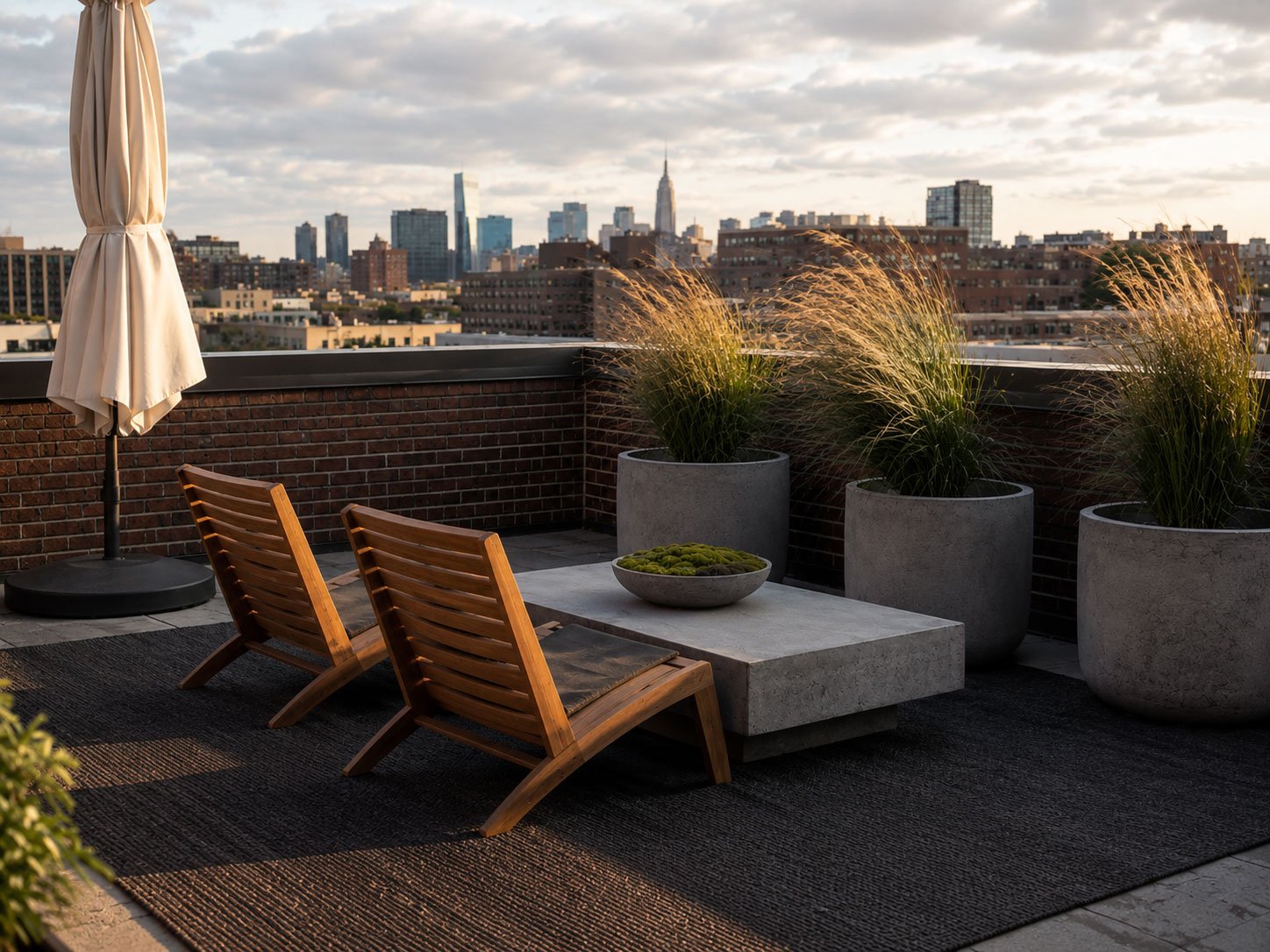
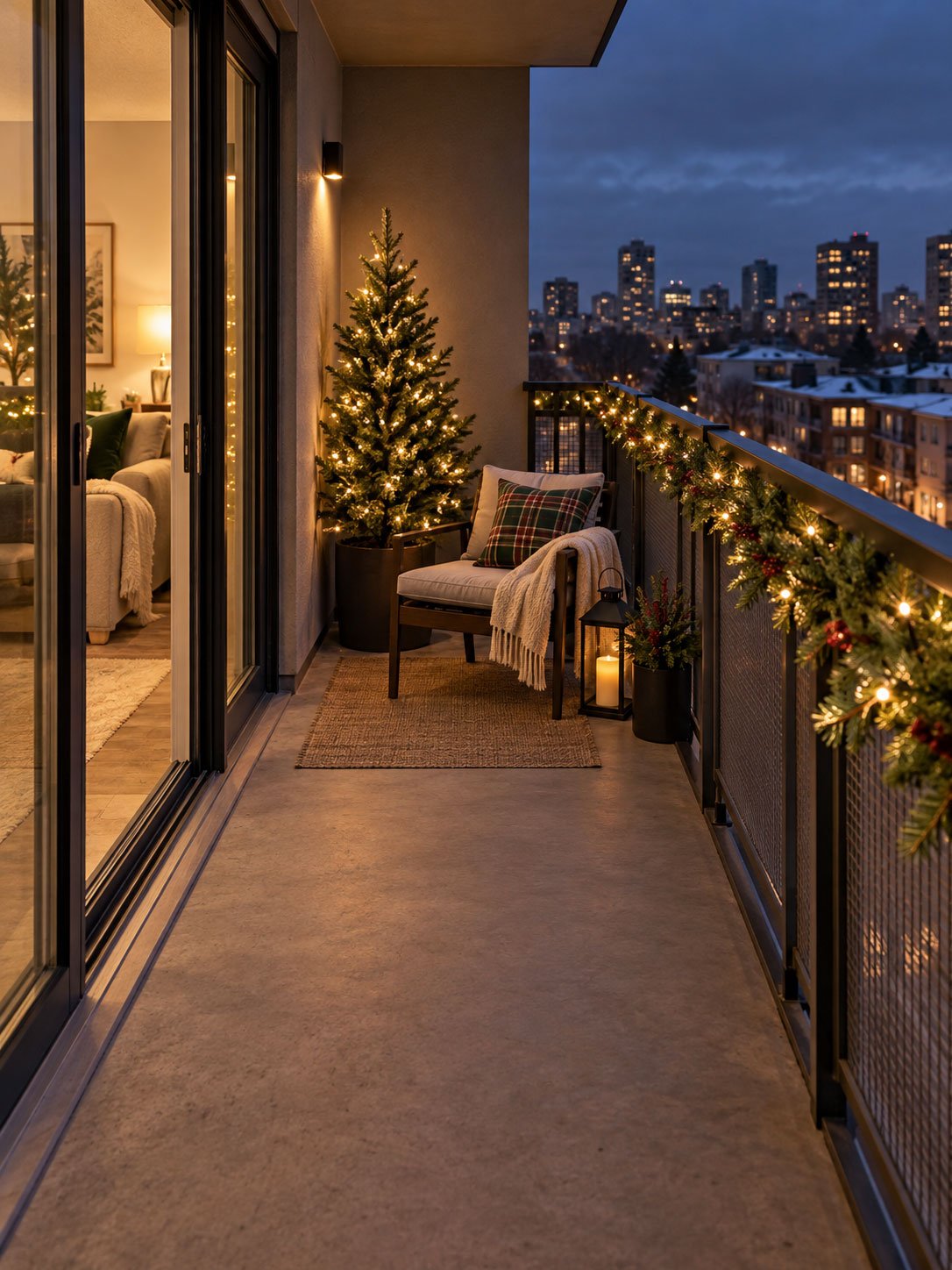
How to Light a Rooftop Terrace for Dining, Lounging and Safe Movement

A rooftop terrace usually needs less light than people expect. The useful plan is to light the places where something actually happens: the table where you eat, the seating where you relax and the route you use to reach the door or steps. Everything else can stay softer.
Start with one ambient layer, add focused light where people need to see clearly and use accent lighting sparingly for plants or architecture. Keep glare away from seated eye level and the skyline. Then make sure every permanent or plug in fixture is appropriate for its outdoor exposure.
That approach creates a rooftop that works after dark without turning it into a floodlit platform.
Start with the rooftop layout, not the fixtures
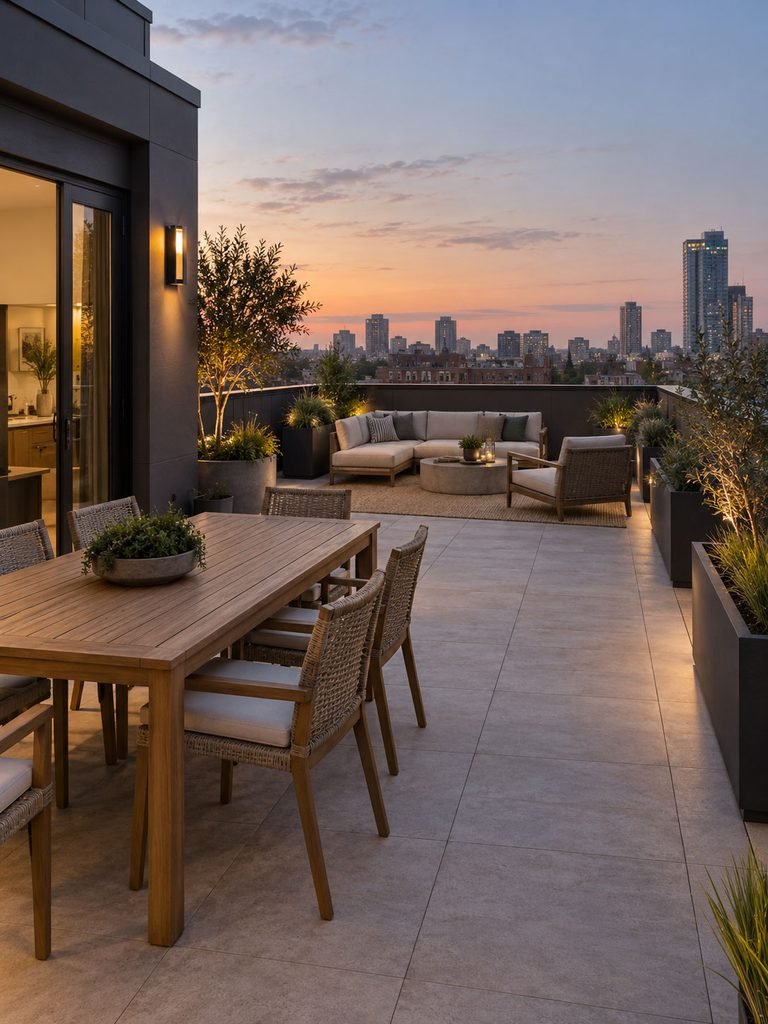
Decide where people will sit, eat and walk before choosing a single fixture. Lighting a layout that does not work simply makes the problems easier to see.
Mark the rooftop door first. Then identify the route from that door to the main seating area, dining table and any steps. Keep that line clear. Next, decide which activity matters most. A roof used mainly for dinner needs different useful light than a terrace built around conversation and city views.
If the furniture arrangement is still uncertain, work through the Femorias patio layout guide by size first. The same basic principle applies on a rooftop: furniture, doors and walking routes should work before rugs, lighting and decorative pieces are layered around them.
Once the layout is stable, identify four possible lighting jobs:
- General atmosphere around the main gathering area
- Useful light at a dining table, serving area or reading chair
- Low light at steps, level changes and important walking routes
- Accent light on one or two plants, walls or architectural details
Not every rooftop needs all four. A compact roof with one table may only need soft ambient light, a table lamp and enough illumination to make the route back to the door obvious.
Build the lighting in three layers
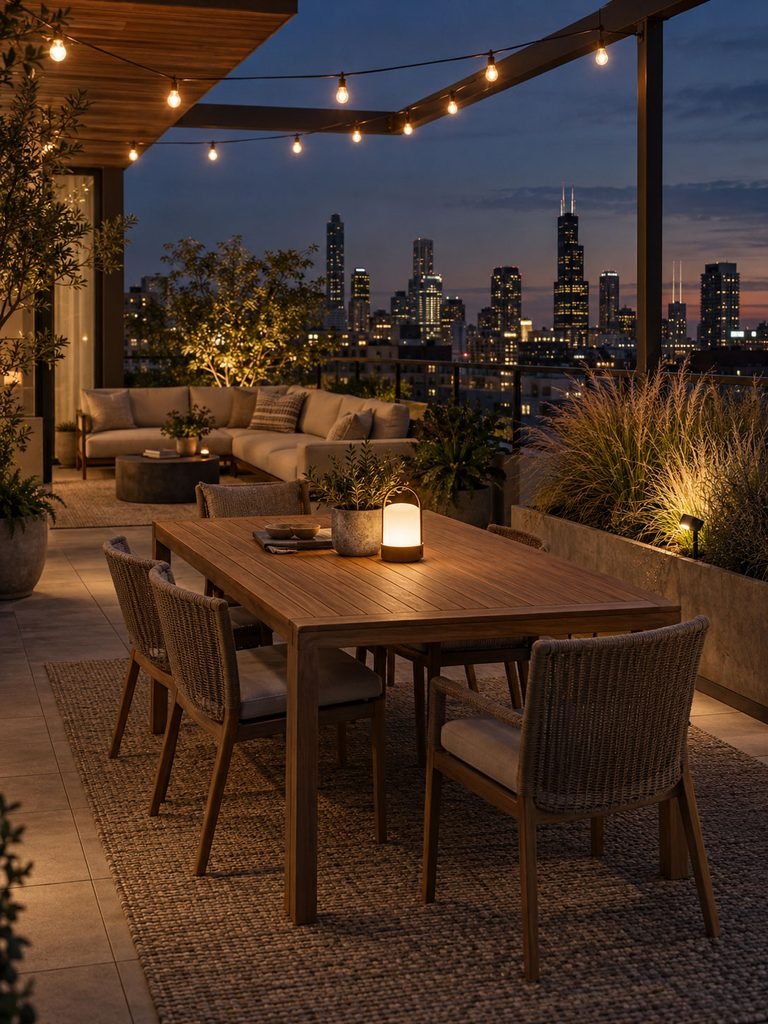
A balanced terrace usually uses ambient, task and accent light for different purposes. The mistake is expecting one fixture to do all three jobs.
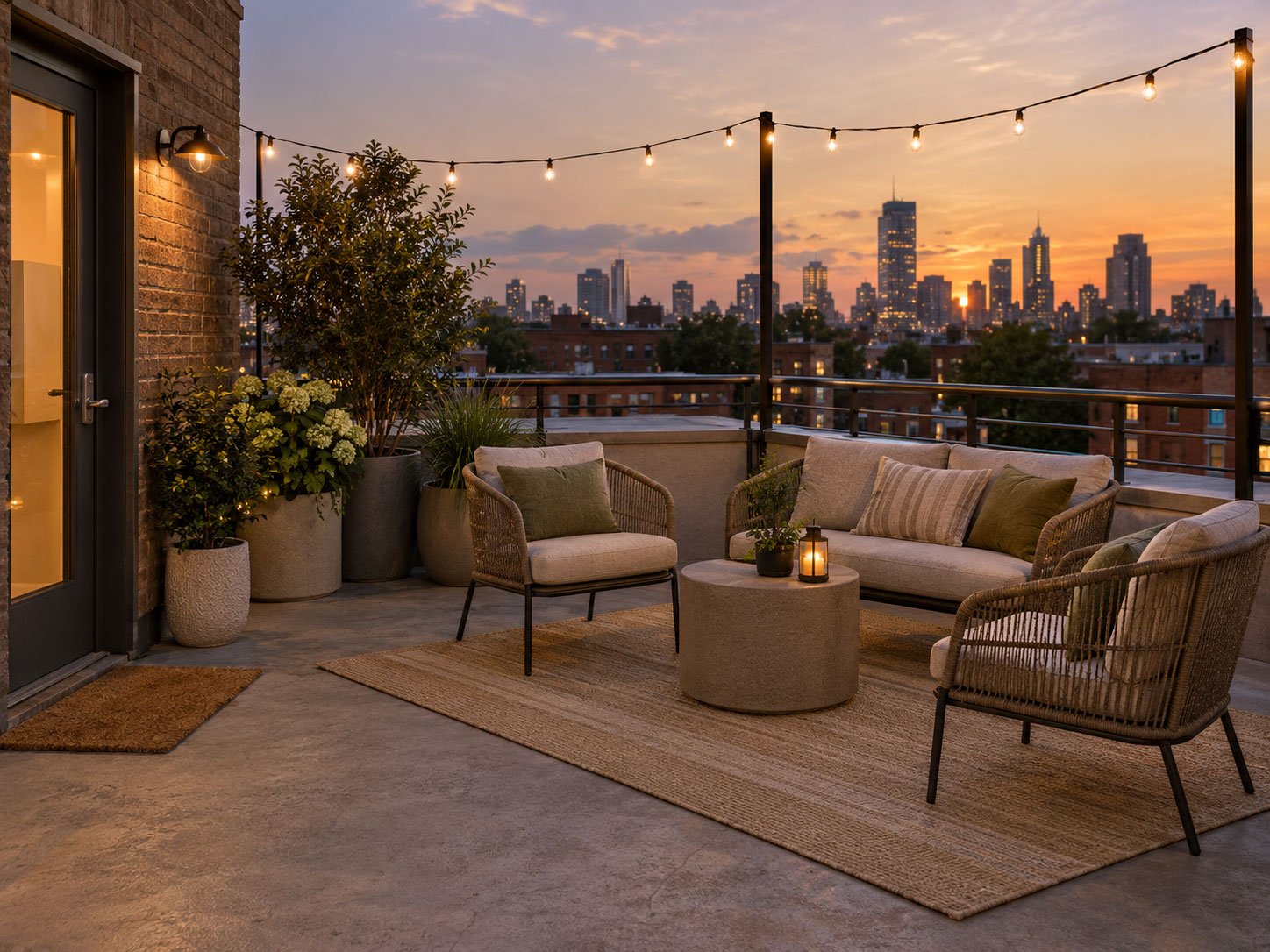
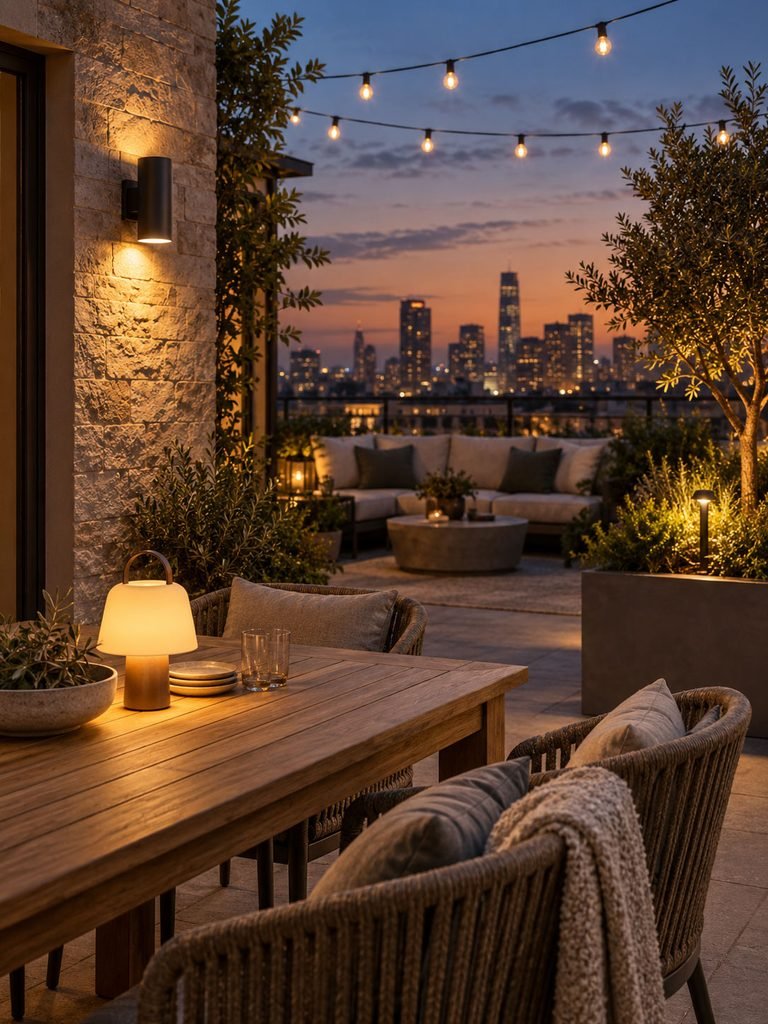
Ambient light gives the seating area enough general illumination to feel comfortable. This might come from a wall fixture, a restrained run of string lights or indirect light reflected from a wall.
Task light belongs where visibility matters more. A dining table may need a rechargeable table lamp, an appropriately installed overhead fixture or light from a nearby wall source. A cooking or serving area needs useful illumination on the work surface rather than decorative glow behind it.
Accent light is optional. Its job is to reveal a planter, textured wall or architectural feature. One well aimed accent can add more depth than five decorative fixtures scattered around the roof.
Build in that order. Ambient light establishes the setting. Task light solves what people actually need to see. Accent light comes last.
This also prevents a common buying mistake: collecting attractive solar lanterns, strips and string lights first, then discovering that none of them puts useful light on dinner.
Give dining, lounging and walking different light
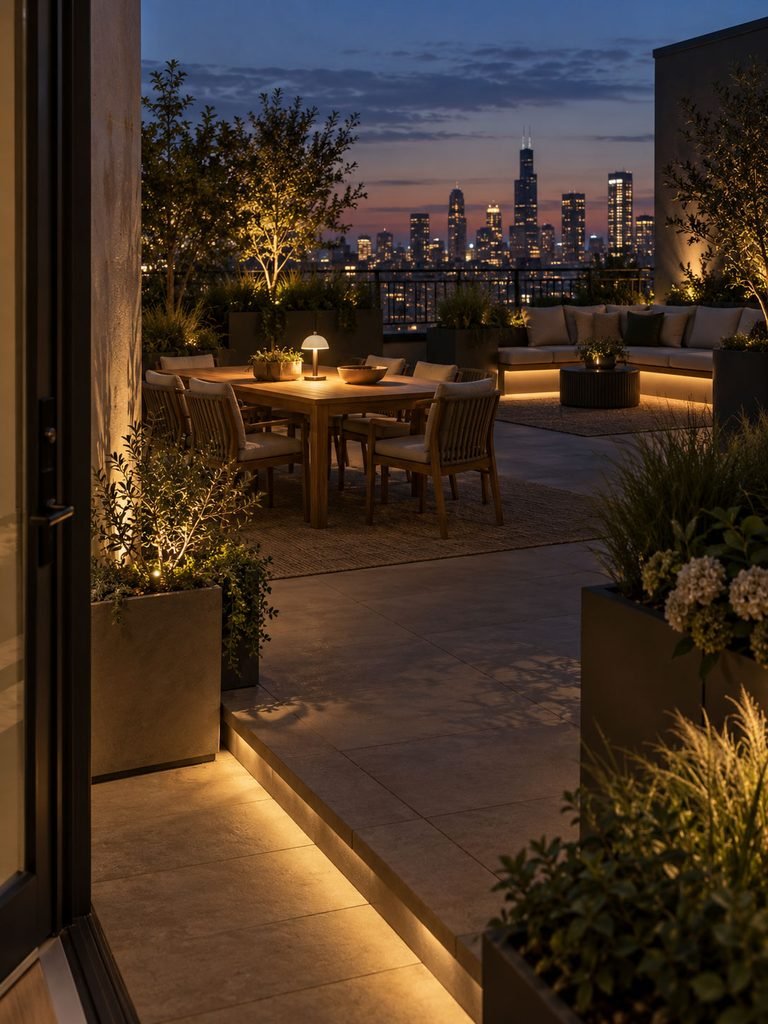
The easiest way to avoid overlighting is to give each zone only the light required for its job.
Dining: Put useful light on the table, not directly into diners’ eyes. A small rechargeable lamp is flexible because it can move with the table. A permanent wall or overhead fixture can work well too when its position already matches the furniture. The goal is to see food, glasses and the people across the table without making the rest of the roof equally bright.
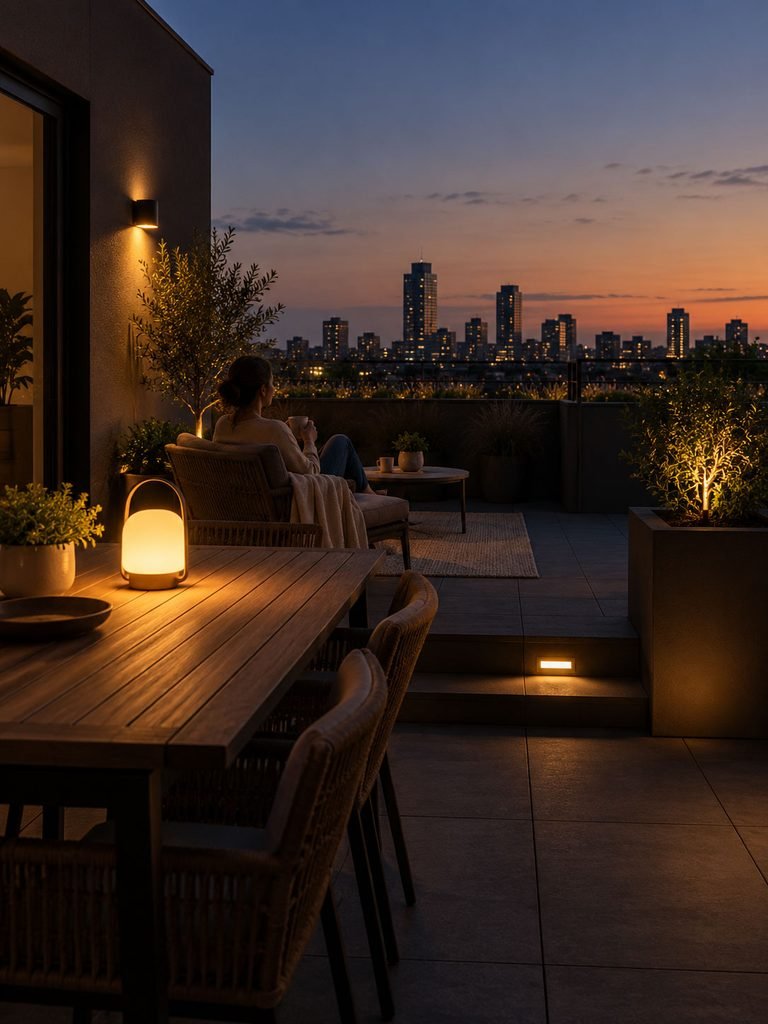
Lounging: Keep this area softer. Indirect wall light, concealed light beneath a bench or a low portable lamp can make the seating feel comfortable without competing with the view. A lounge area rarely benefits from a bright source aimed straight down at everyone’s heads.
Walking: Illuminate changes that can surprise someone after dark. A step, threshold or tight transition deserves more attention than an uninterrupted section of flat flooring. Light should help someone understand the route rather than decorate every foot of it.
If the rooftop has no convenient exterior receptacle, do not redesign the whole terrace around a temporary cord. Femorias has a separate guide to patio lighting without an outlet that compares solar, rechargeable and temporary power options.
Control glare before you add more brightness
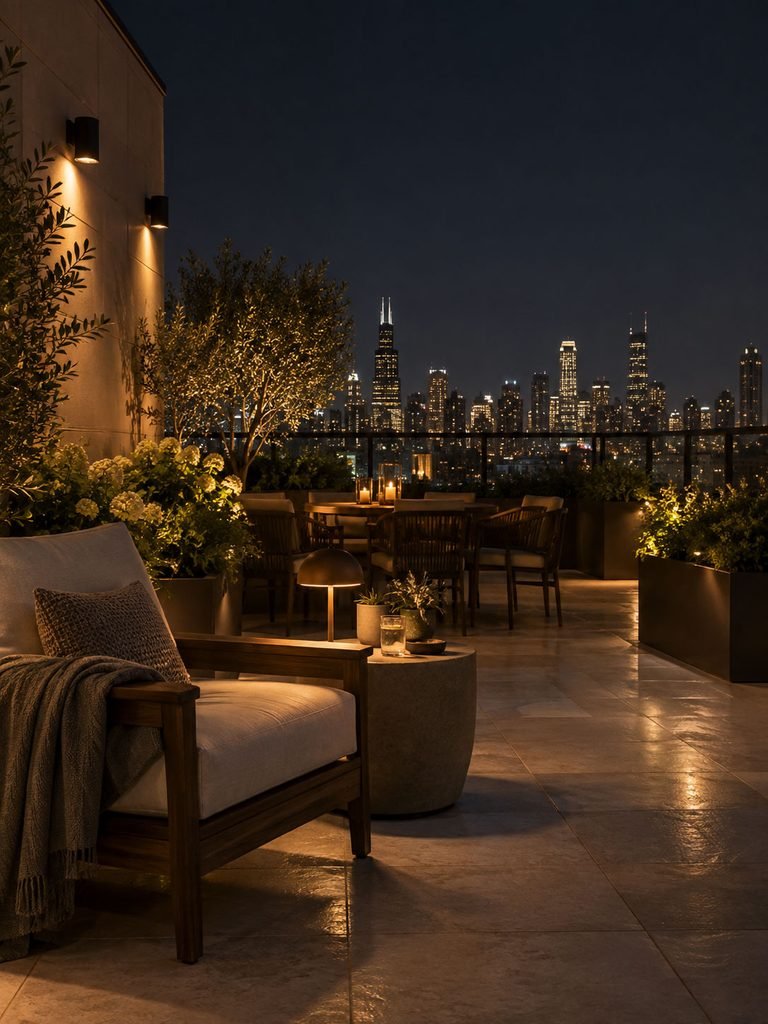
Before buying another light, sit in every chair after dark and look toward the fixtures you already have. If a bare source makes you squint, brightness is not the only problem. Direction is.
DarkSky International recommends outdoor lighting that is useful, targeted, no brighter than necessary, controlled and warmer in color where possible. Its guidance also recommends shielding and careful aiming so light falls where it is needed instead of spilling beyond the intended area. DarkSky International’s Five Principles for Responsible Outdoor Lighting
Those principles work especially well on a rooftop because the view is often part of the room.
Aim permanent lights toward the floor, wall, tabletop or feature they are supposed to reveal. Keep strong sources away from seated eye level. If a planter spotlight sends most of its beam into open sky instead of the plant, move or reaim it.
Controls matter too. Timers, dimmers and occupancy based controls can reduce the amount of time exterior lighting operates when nobody needs it. The US Department of Energy notes that exterior lighting controls can reduce energy use by switching or dimming lighting when it is unnecessary. US Department of Energy exterior lighting guidance
A useful night setting may be brighter during dinner and softer later when everyone moves to the lounge area. The rooftop does not need one fixed brightness for the entire evening.
Choose fixtures for weather, wind and electrical safety
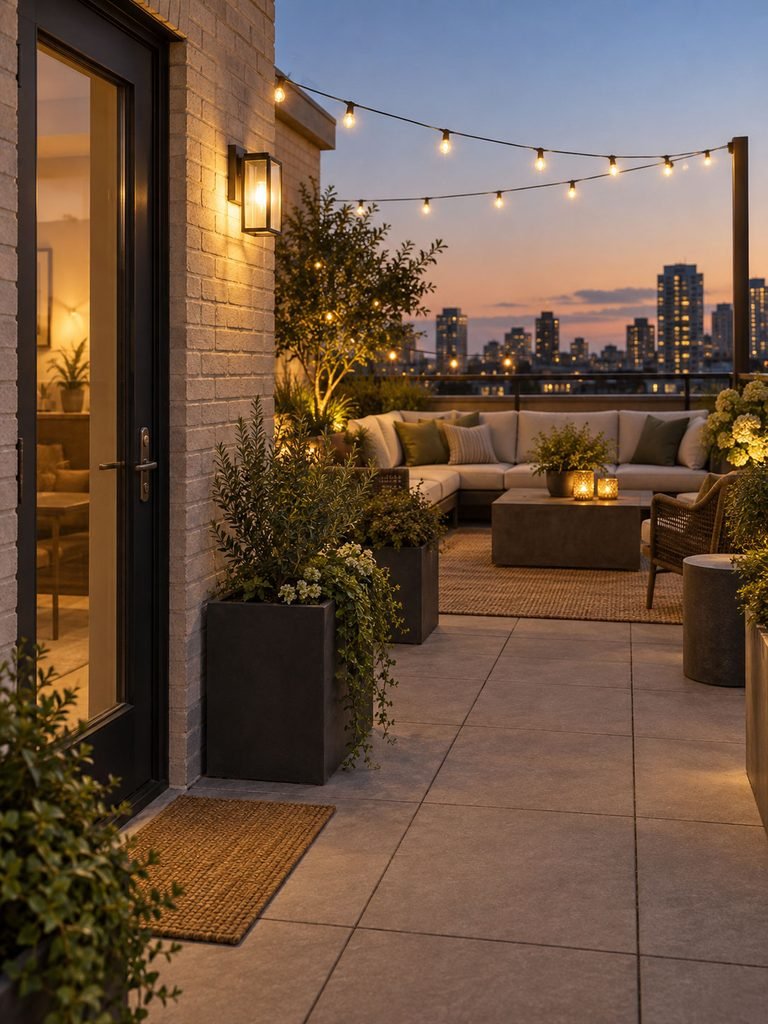
Outdoor appearance does not automatically mean a fixture is appropriate for every outdoor location. Exposure matters.
UL guidance distinguishes dry, damp and wet locations. A damp location can include a partially protected place that is periodically exposed to moisture or condensation. A wet location is one where water can drip, splash or flow on or against electrical equipment. UL states that fixtures installed in wet locations must be marked suitable for wet locations. UL Luminaires Marking and Application Guide
An open rooftop that receives rain directly therefore creates different conditions from a fixture mounted beneath a genuinely protected structure. Read the manufacturer’s location marking and installation instructions for the exact fixture rather than relying on a product photo that happens to show it outdoors.
Plug in lighting also needs outdoor appropriate equipment. The Electrical Safety Foundation International advises using extension cords and electrical decorations marked for outdoor use, inspecting cords for damage and using GFCI protected circuits for outdoor electrical lighting. ESFI also advises fastening outdoor lights to firm supports without damaging cord insulation. ESFI outdoor electrical decoration safety guidance
Treat an extension cord as temporary power, not permanent rooftop wiring. If a permanent fixture, new receptacle or other fixed electrical work is needed, follow local code and building requirements and use an appropriately qualified electrician.
Wind matters separately from electrical suitability. Long unsupported decorative light spans can move substantially on an exposed roof. Use only mounting methods permitted by the light manufacturer and the building, keep attachments secure and never puncture roofing, parapets or waterproofing membranes without proper approval.
Renters and condo owners should also check lease, association and building rules before fastening anything to exterior walls, railings or roof structures.
Questions people ask about rooftop terrace lighting
Are string lights enough for a rooftop terrace?
Usually not if people eat, read or need to see a step clearly. String lights can provide useful ambient light, but a dining table or transition may still need a more focused source.
Should every part of the rooftop be illuminated?
No. Light the areas people use and the transitions they need to recognize. Leaving less important areas darker can reduce glare and preserve contrast, particularly when the skyline or night sky is part of the view. DarkSky recommends using outdoor light only where, when and at the level it is needed.
Do rooftop lights need to be suitable for wet locations?
It depends on the fixture’s exact exposure. UL distinguishes partially protected damp locations from wet locations where water may drip, splash or flow against the equipment. A fixture directly exposed to those wet conditions needs the corresponding wet location marking.
Can an outdoor extension cord stay in place permanently?
It should not be treated as permanent wiring. ESFI describes extension cords as temporary solutions and advises using outdoor cords outdoors, inspecting them for damage and using proper GFCI protection.
What should I do if my rooftop has no outlet?
Plan around the positions that genuinely need light first. Solar and rechargeable fixtures can work well when selected by job rather than scattered around the space. The Femorias guide to patio lighting without an outlet covers those choices in more detail.
Start with this simple rooftop lighting plan
Do one evening test before expanding the system.
Turn on the smallest useful combination you can create, then walk through the rooftop as you actually use it:
- Enter through the rooftop door and follow the normal route to the seating.
- Sit at the dining table and check whether the tabletop is visible without a bright source in your eyes.
- Move to the lounge area and decide whether it feels softer than the dining zone.
- Walk every step, threshold and level change.
- Look outward from each seat and check whether a fixture is competing with the skyline.
- Turn off any light that does not improve visibility, comfort or the appearance of something you intentionally want to feature.
Only then add another fixture.
A practical rooftop terrace may end up with one ambient source, one useful table light, a little illumination at a step and one accent on a planter. That can work better than a roof covered with decorative lights because every source has a clear job.