Low Maintenance Short Hairstyles Ranked by Styling Time and Upkeep

The lowest maintenance short hairstyles are the ones that cooperate with your natural texture and still look intentional as they grow. For many people, that can mean a soft pixie, grown out pixie, bixie, French bob, blunt bob, textured bob or curl shaped crop. The important part is deciding which maintenance you want to reduce. A cut can be quick in the morning but need regular reshaping. Another can grow out comfortably but take more drying or smoothing. Choose by daily effort, heat dependence and grow out behavior, not by the word “short” alone.
Start by deciding which kind of maintenance you want to reduce
Start with four separate questions.
Morning effort: How much arranging, drying or product do you want to do before leaving home?
Salon upkeep: How much does the haircut depend on a precise neckline, fringe or perimeter staying in one place?
Heat dependence: Does the reference still look good when your hair is air dried, or is a smooth blowout doing much of the work?
Grow out tolerance: Does extra length simply soften the haircut, or does it change the entire silhouette?
Current expert coverage makes the same basic distinction. ELLE notes that short hair is not automatically easy and that density, growth pattern, natural texture and routine should influence the cut.
As an editorial starting point, rather than a measured universal ranking:
Very low morning effort: Grown out pixie, soft pixie designed around natural texture and curl shaped crop.
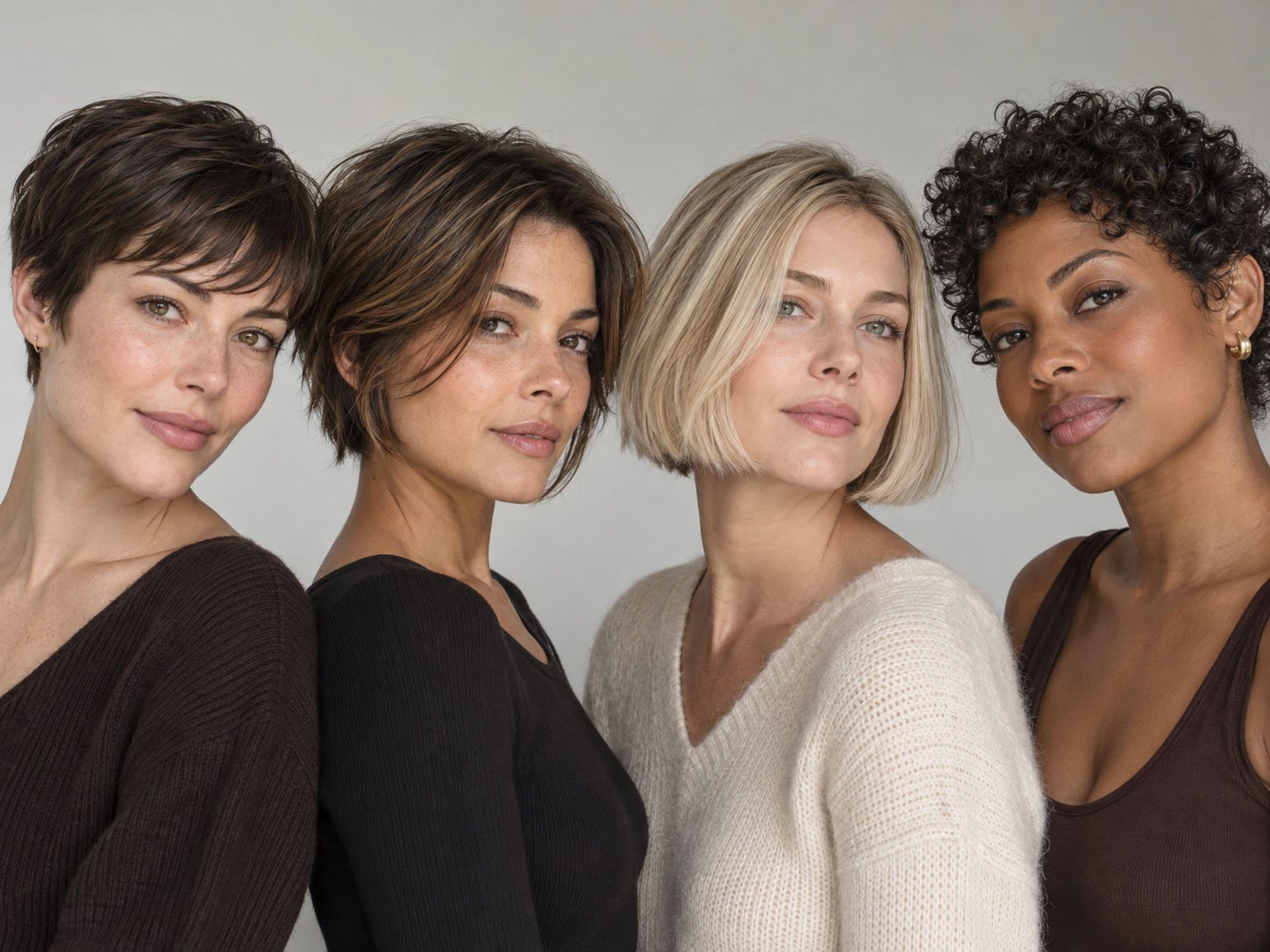
Low to moderate morning effort: Bixie, French bob and softly textured bob.
Moderate morning effort: Highly polished blunt bob, graphic micro bob or any cut that needs your natural bend straightened or redirected every day.
For broader inspiration before narrowing by maintenance, compare Femorias’ current short haircut families here: 12 Short Hairstyles Trending in 2026, From Bixies to Boy Bobs. The existing guide covers the trend landscape, while the sections below focus specifically on effort and upkeep.
The easiest cuts when you want less morning styling

If mornings are the main problem, favor a cut that already resembles the shape your hair wants to make.
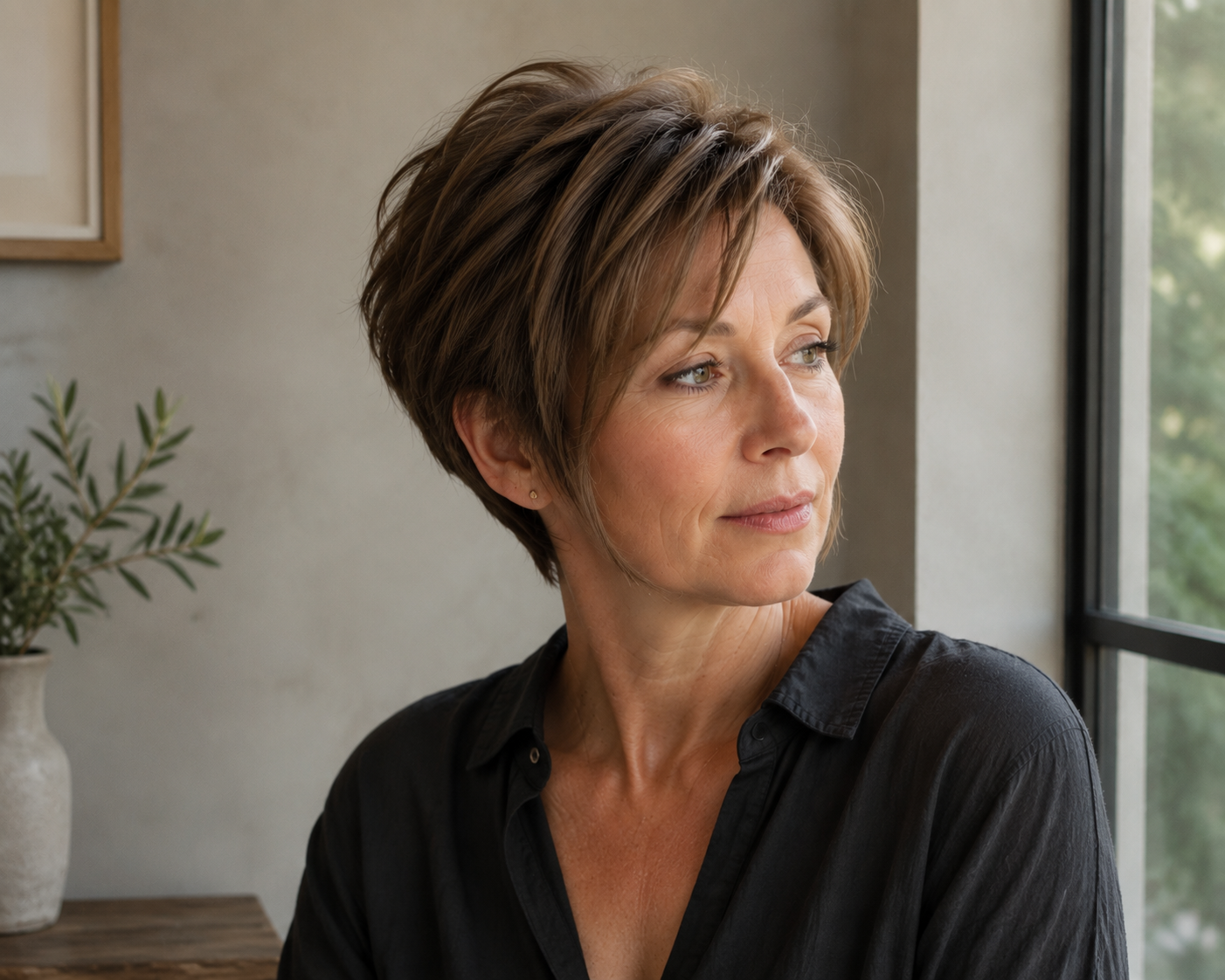
A soft pixie can be easy when the fringe, crown and sides are left flexible enough to follow your natural direction. The difficulty rises if the desired finish requires every piece to lie flat against a strong cowlick or bend.
A grown out pixie is often more forgiving because the slightly longer outline can absorb ordinary movement around the ears, crown and nape. Femorias already identifies this longer pixie family as one of the current short shapes that can transition toward a bob without an abrupt visual change.
A curl shaped crop can also reduce morning manipulation when the haircut was designed around the wearer’s normal dry texture. That does not mean curls require no care. It means the cut is not asking curly hair to behave like straight hair every morning.
The general rule is simple: a haircut that works with your normal texture usually asks for less correction than one that depends on creating a different texture before the shape appears. ELLE’s 2026 low maintenance guide makes the same point, noting that natural texture and daily routine should guide the haircut.
The easiest cuts when you care more about grow out
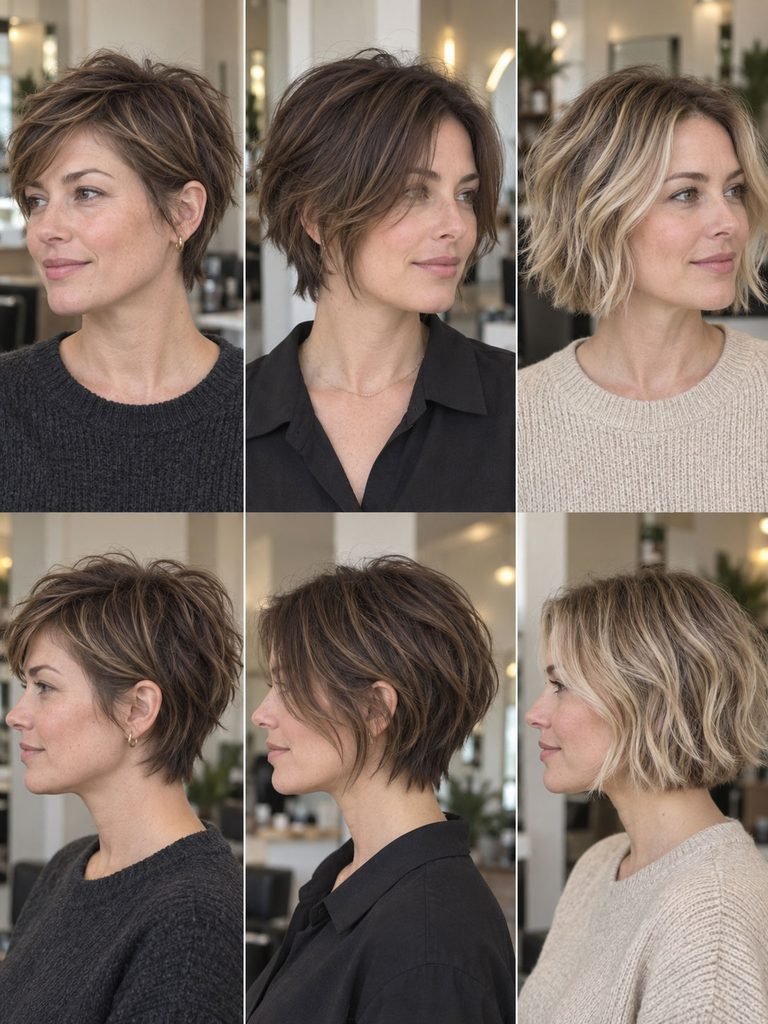
If you dislike booking a haircut the moment the outline changes, choose a shape that can tolerate extra length.
A grown out pixie is designed around softness, so some additional length can reinforce rather than destroy the idea.
A bixie keeps more perimeter than a close pixie. Current ELLE coverage specifically highlights the bixie as a short option that can grow out well without requiring the constant reshaping associated with some tighter crops.
A textured bob can also be forgiving when the perimeter is intentionally softer. A very precise geometric bob is different. The cleaner the line, the more obvious it can become when one area grows or bends differently.
Fine hair changes the bixie decision because removing too much weight can make the outline look sparse. Femorias has a separate guide for that situation: Bixie Haircut for Fine Hair: What to Ask For and How to Style It. It distinguishes strand thickness from overall density and explains why the location of weight removal matters.
Where low maintenance short hair quietly becomes high maintenance
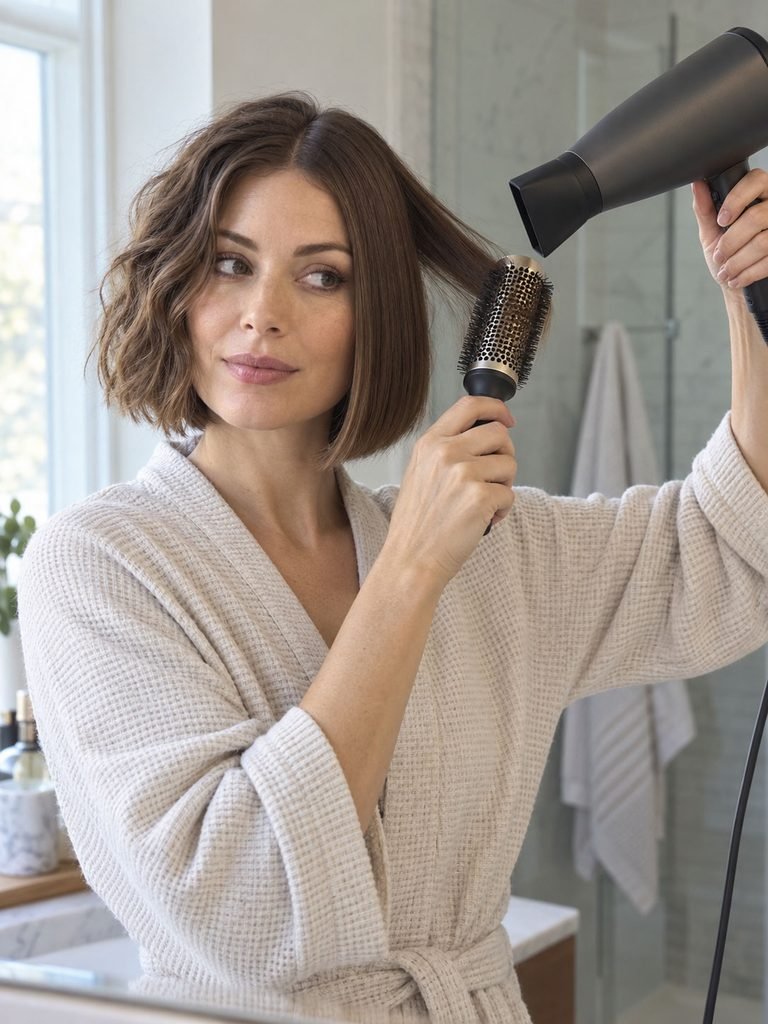
Short hair becomes higher maintenance when the haircut and your natural hair repeatedly disagree.
Common warning signs include:
- The reference is smooth and straight but your hair forms a strong wave in the same area.
- A blunt edge must sit at one exact point to create the look you like.
- A short fringe crosses a cowlick that naturally lifts or splits.
- Crown volume in the photograph comes mainly from deliberate blow drying.
- You like the polished finish but normally air dry.
- The style only feels finished after repeated flat iron or curling iron work.
Heat is not automatically forbidden, but it should be part of the maintenance calculation. The American Academy of Dermatology recommends limiting blow drying and other hot tools, using lower heat settings and protecting hair from excessive heat. American Academy of Dermatology guidance on healthy hair and heat
A laboratory study indexed by PubMed also found that hair surface damage increased as dryer temperature increased. In that controlled experiment, using a dryer at about 15 centimeters with continuous movement caused less damage than hotter, closer drying conditions. That study used hair tresses rather than real daily routines, so it should guide technique rather than be treated as a universal morning formula. Hair Shaft Damage from Heat and Drying Time of Hair Dryer on PubMed
The practical takeaway is not “never use a dryer.” It is to avoid choosing a supposedly easy cut that forces you into more heat styling than you actually want.
Match the cut to your hair, not only the photo
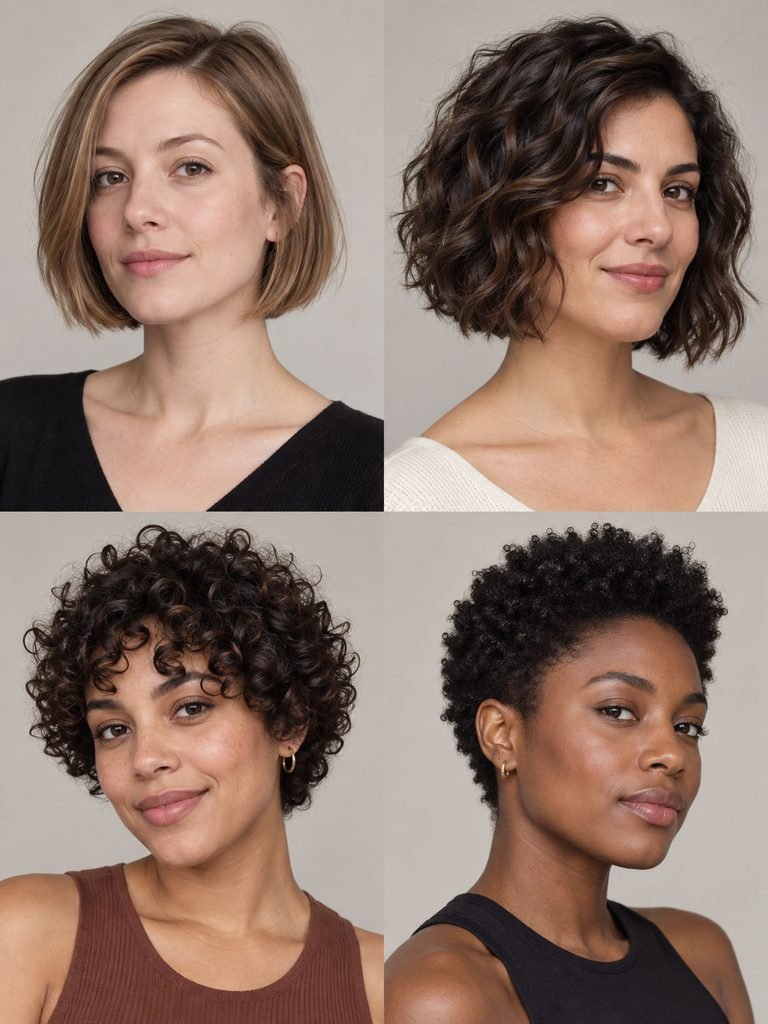
A haircut photo tells you what one person’s hair looked like under one set of conditions. It does not show how your own hair will dry.
Fine strands: Protect enough visual weight at the perimeter. Heavy texturizing can make an already delicate outline look lighter.
Dense straight or wavy hair: Ask where bulk will sit when the hair dries naturally. A bob that looks narrow after a professional blowout can expand differently at home.
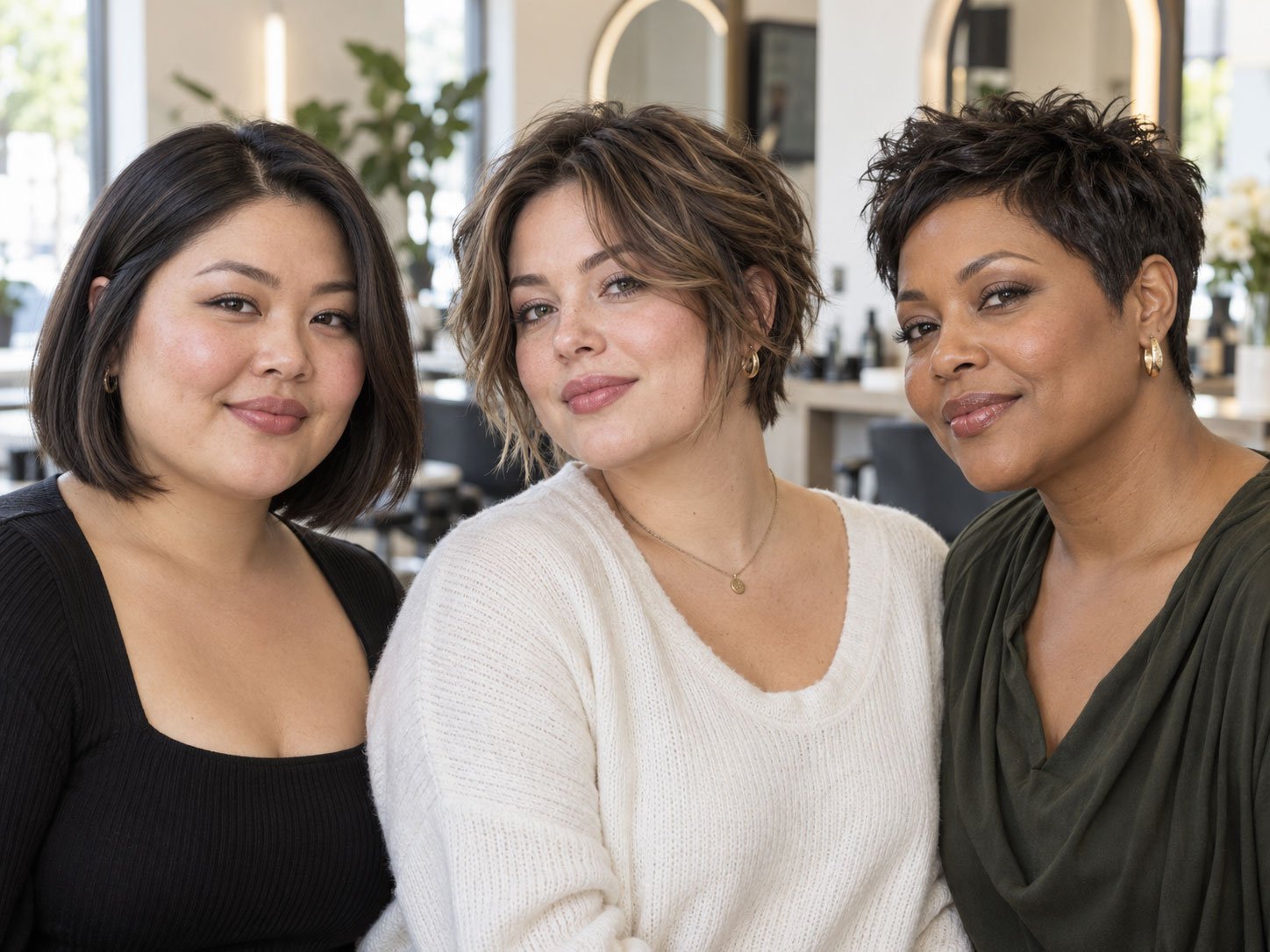
Curly hair: Decide by the dry silhouette and how much volume you want at the sides and crown. A straight reference cannot predict the final resting length of a curl.
Coily hair: Shape, shrinkage and moisture routine matter more than copying one fixed length from a photograph.
The American Academy of Dermatology recommends matching hair care to hair type and notes that washing, conditioning, detangling and heat habits can differ by texture. American Academy of Dermatology tips for healthy hair
That does not mean every person with one texture needs the same haircut. Texture narrows the practical questions. Density, growth pattern, desired outline and styling tolerance still decide the final shape.
What to ask your stylist before you cut
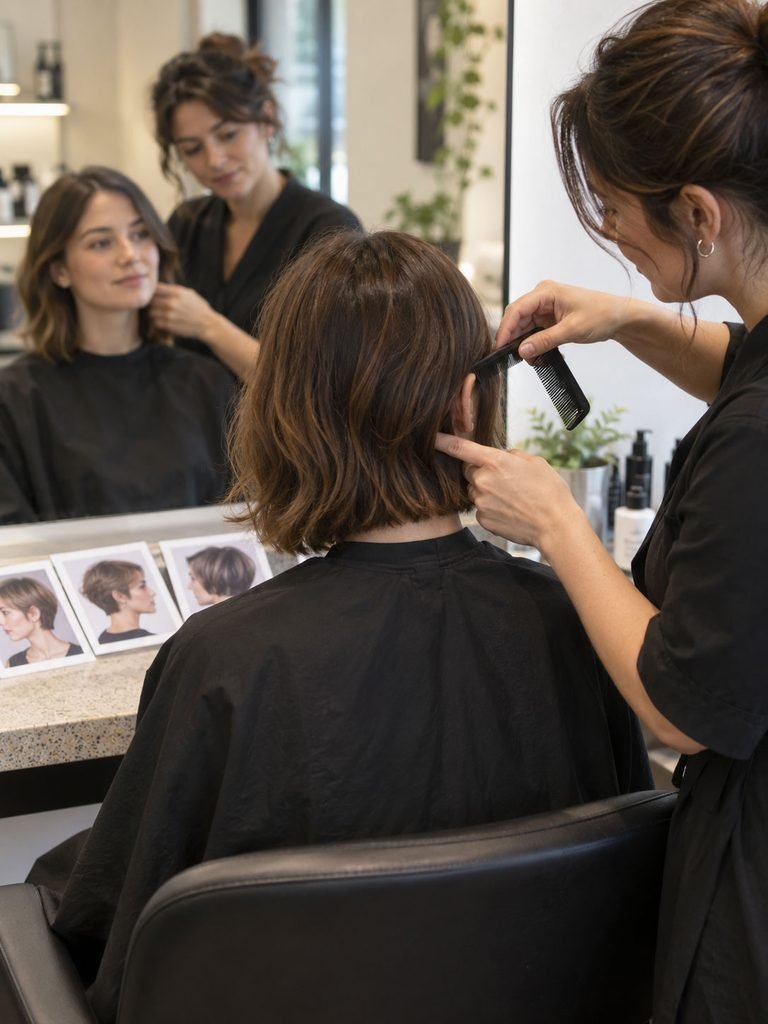
A useful consultation should expose the work the haircut will require after you leave the salon.
Ask:
- What will this cut look like when I air dry it? This quickly separates the haircut itself from the professional finish in the reference.
- Which part will need the most styling every morning? It may be the fringe, crown, ends or one stubborn side.
- What will lose its shape first as it grows? A tight neckline, short crown or graphic perimeter can all behave differently.
- Can we keep more length where my hair has a strong growth pattern? An extra amount of workable length can sometimes reduce the need to fight that section.
- Does this reference rely on heat? Ask what the same cut looks like without a round brush, iron or diffuser.
- How would you adapt this for my density and texture? The answer should be more specific than saying the cut “works for everyone.”
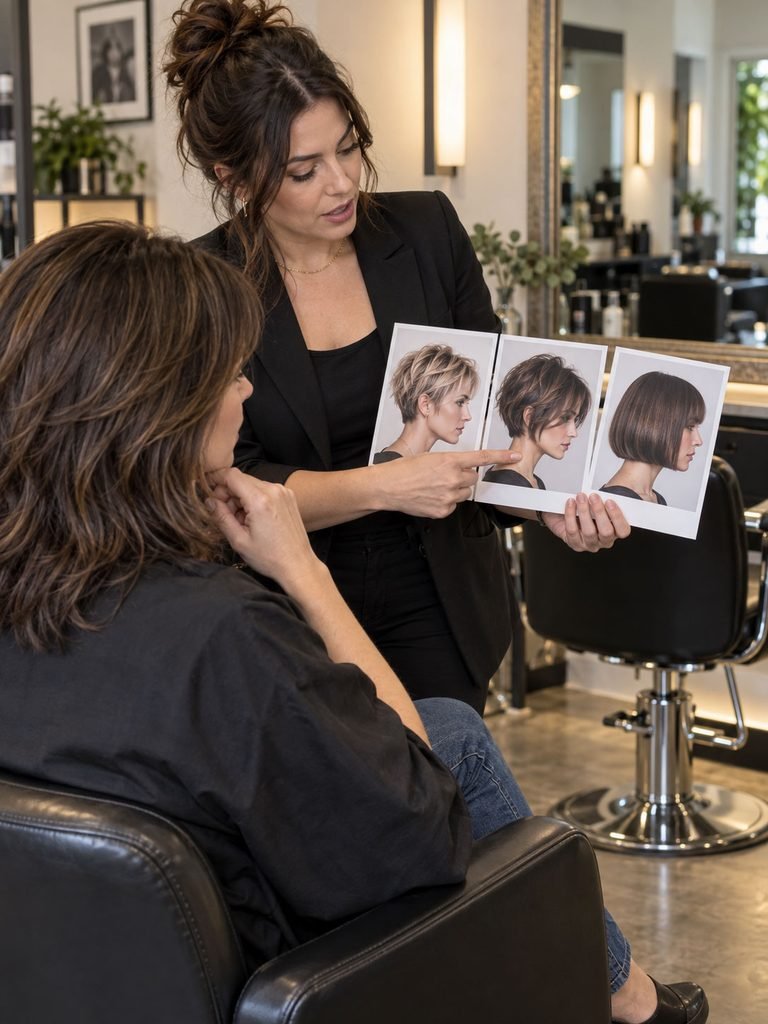
Bring at least two useful references. One should show the silhouette you want. The second can clarify the fringe, perimeter or amount of layering you do not want.
Quick questions about low maintenance short hair

Is a pixie always lower maintenance than a bob?
No. A pixie has less hair to dry, but a close, highly shaped pixie can show growth quickly. A bob may take longer to dry while tolerating more length before the basic shape disappears.
Which short haircut tends to grow out most comfortably?
Softer shapes such as a grown out pixie, bixie or relaxed textured bob usually have more visual room for change than a highly precise crop. ELLE also identifies grow out as an important part of choosing a genuinely easy short haircut.
Can curly short hair be low maintenance?
Yes, especially when the haircut is designed around the curl pattern the wearer normally uses. It becomes more demanding when the chosen silhouette depends on repeatedly stretching or smoothing the natural texture.
How often should a low maintenance short haircut be trimmed?
There is no useful universal calendar for every cut. Book a reshape when the part of the haircut that creates its identity stops behaving as intended. Femorias’ existing short hairstyle guide makes the same distinction between a precise shape and a more forgiving grown out crop.
Choose the cut you can repeat on an ordinary morning

The most useful low maintenance haircut is not necessarily the shortest one. It is the cut that still looks like your chosen haircut when you style it the way you normally do.
If morning time matters most, start with a soft pixie, grown out pixie or texture led crop that works with your natural direction. If grow out matters more, consider a bixie or softer bob. If you love a precise blunt line, keep it on the shortlist only if you are comfortable with the styling and reshaping that line may require.
Before the appointment, choose one reference for the shape and one for the amount of polish you realistically want. Then tell your stylist what you normally do on an ordinary weekday. That answer is more useful than simply asking for the easiest short haircut.