Braided Hairstyles for Black Women: Compare Length, Tension and Upkeep

A saved braid photo can tell you what looks beautiful, but it usually cannot tell you what that style will feel like on day four or what it will ask from you each morning. Start by deciding what matters most: a smooth root, visible scalp pattern, loose curls, shorter length, less added weight or the ability to restyle the braids easily. Then compare braid families within that priority. Knotless, box, boho, Fulani, cornrow and bob styles can all look striking, but they create different silhouettes and different maintenance routines.
Start with your real priority
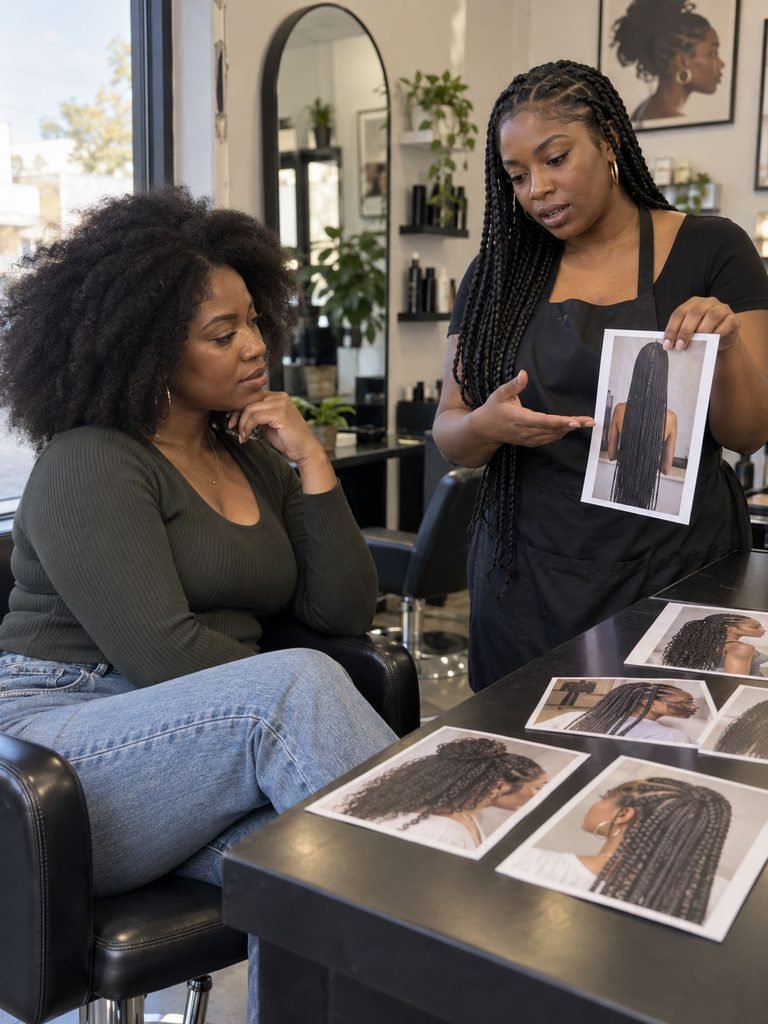
Choose the feature you care about most before choosing the style name. That makes a large inspiration board much easier to narrow.
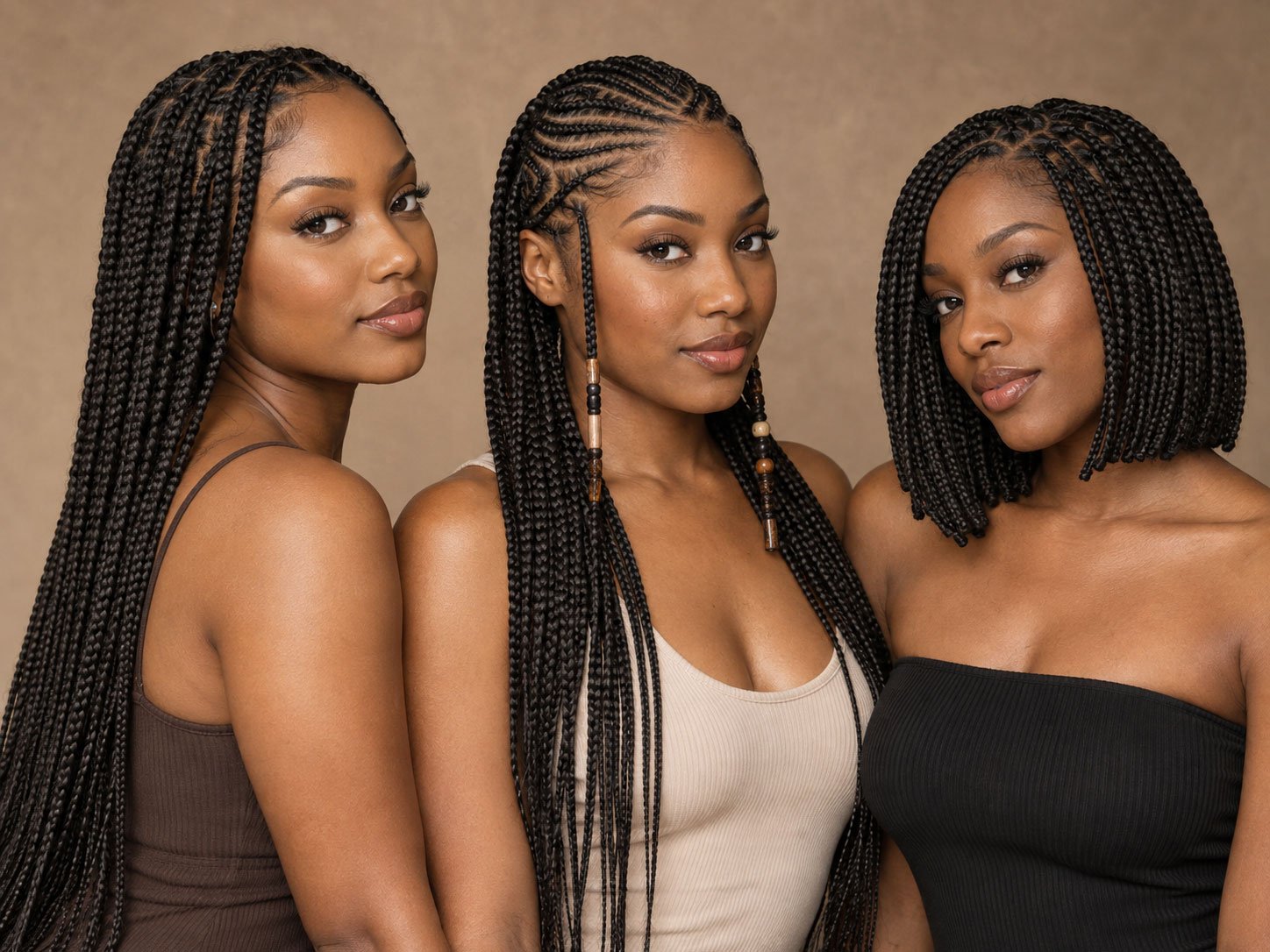
For a soft root that appears to flow directly into individual braids, look first at knotless styles. For a more defined grid of individual braids, compare traditional box braid variations. If you want visible curls and more movement through the length, boho braids deserve attention. If the scalp pattern is part of the design, Fulani braids, cornrows and stitch inspired patterns give the braider more room to create lines and sections.
Length matters just as much. A shoulder length or bob shape changes the silhouette and keeps far less hair hanging down the back than a waist length set. Long braids create more dramatic movement and more restyling options, but they also add material that you will carry, wash around and sleep with.
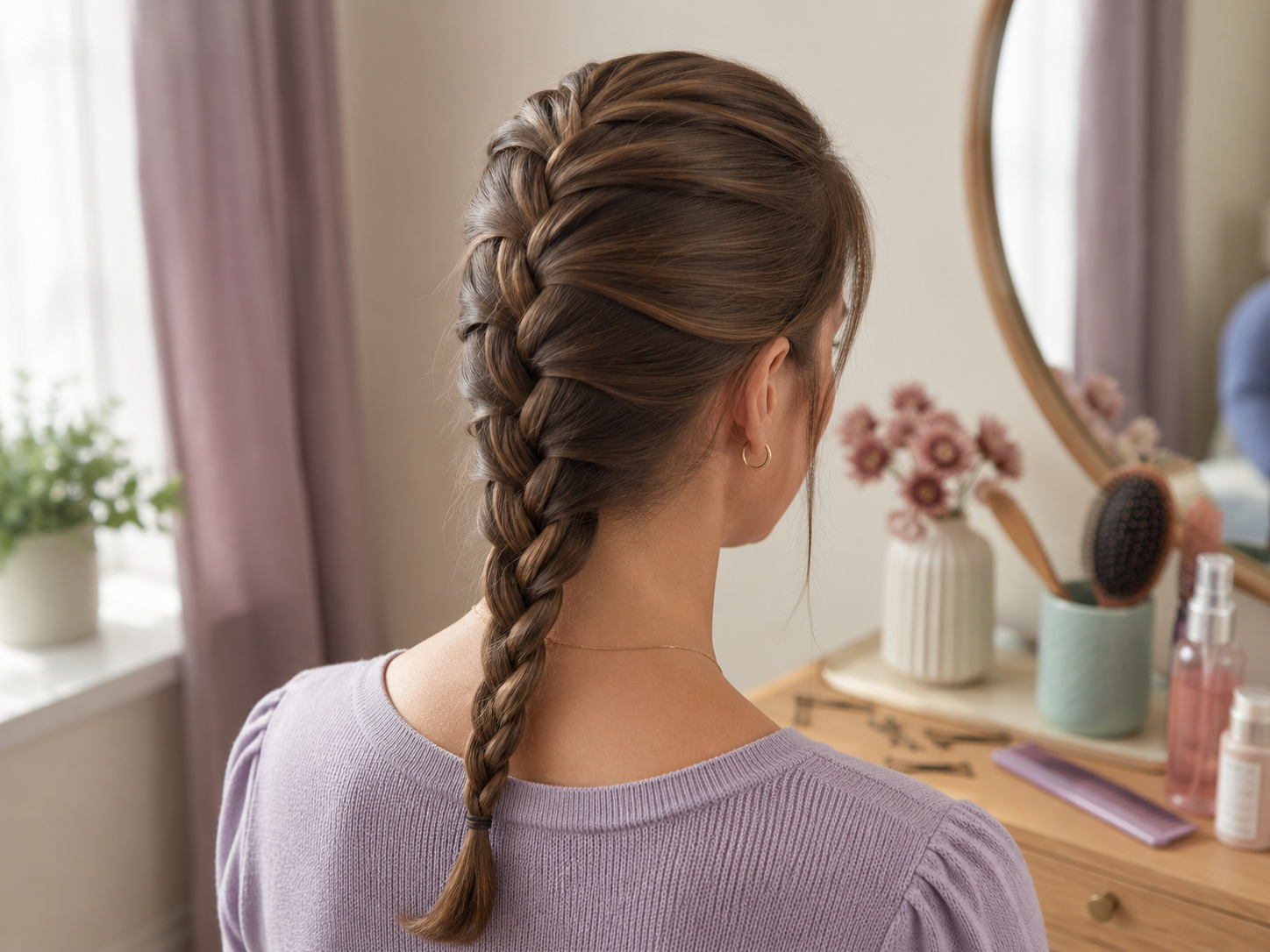
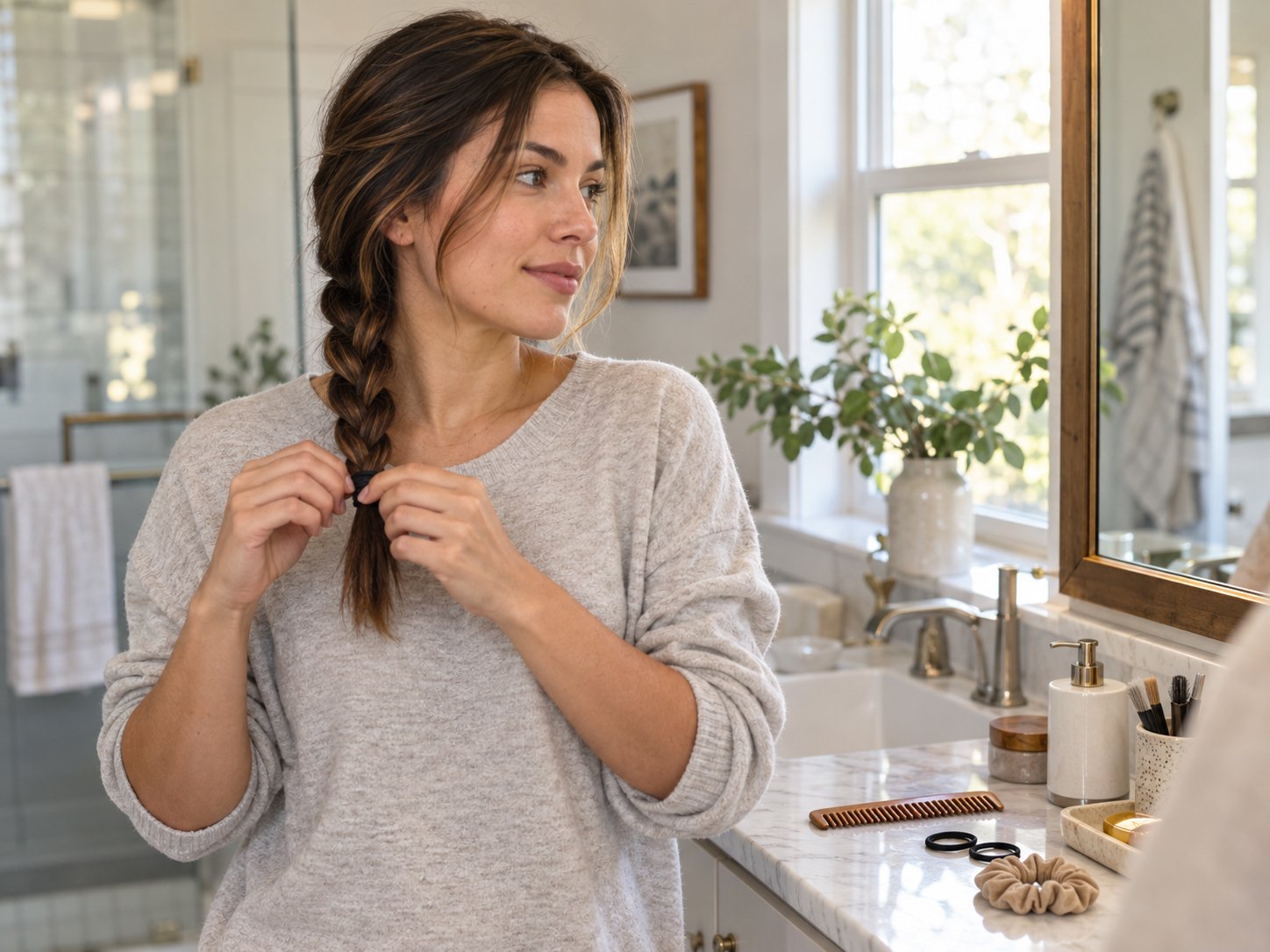
If you actually want something you can braid yourself before work rather than a salon installed set, the Femorias guide to easy braid hairstyles for busy mornings covers side braids, French braids, Dutch braids and other simpler options.
Knotless braids and box braids give different root finishes
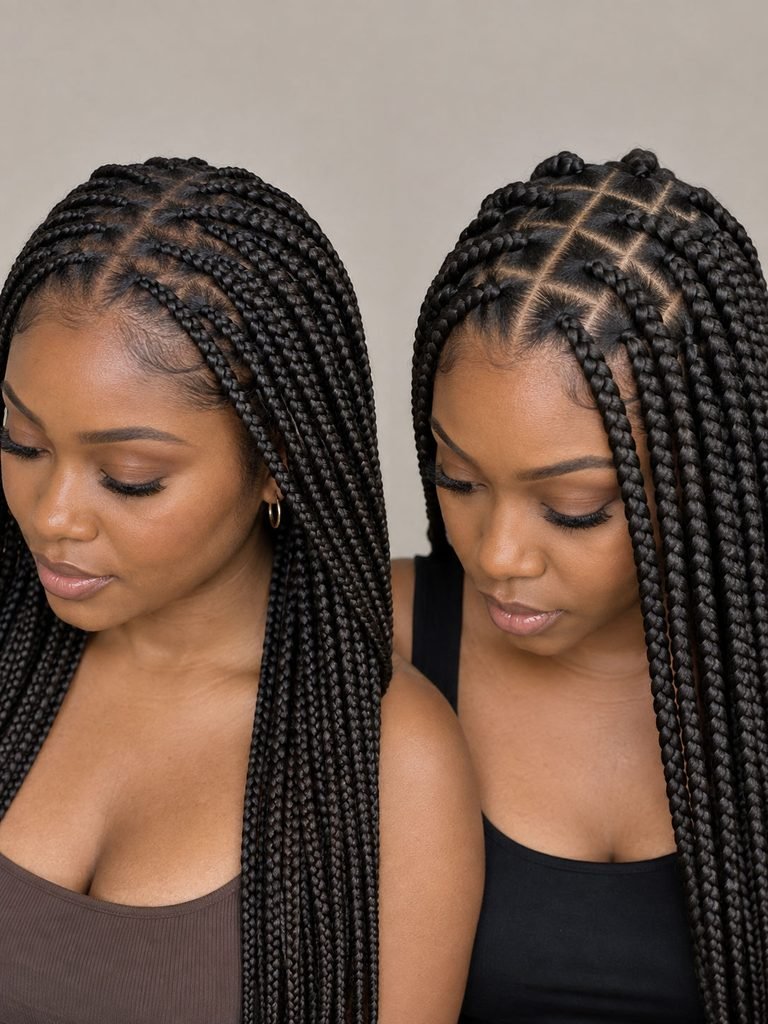
The biggest visual difference is at the root. Knotless braids begin with the natural hair before extension hair is gradually incorporated, which can create a flatter transition. Traditional box braid installations can produce a more distinct base where the extension is introduced.
Do not treat either name as a guarantee about comfort. Size, added hair, total length and the braider’s hand all affect the finished installation. A knotless set can still feel uncomfortable if too much hair is added or the root is gripped too firmly.
For an undecided first time client, medium braids at a moderate length are often easier to assess than an extreme choice. They show the braid pattern clearly without committing immediately to the smallest sections or the longest possible length.
Traditional box braids remain useful when you like a strong, graphic parting pattern and substantial individual plaits. Knotless braids suit readers who prefer a flatter root appearance and a gradual transition into added hair. Neither choice has to be permanent. Your next installation can change the size, part shape and length once you know what you liked about the first one.
Boho braids trade crispness for movement
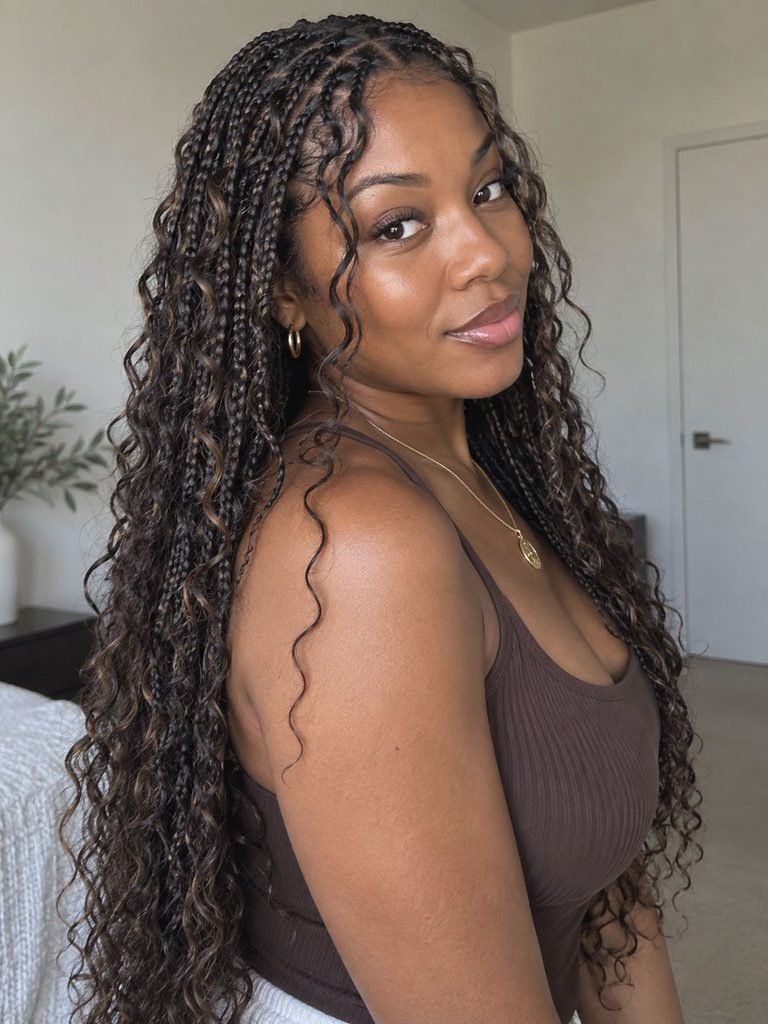
Boho braids are for the reader who wants structure without an entirely braided silhouette. Loose waves or curls are incorporated among the braids, so the hairstyle moves more like loose hair while keeping a braided foundation.
That softness comes with a tradeoff. Loose hair can tangle, lose definition and need more hands on maintenance than a style where every section remains braided. Current expert reporting on boho braid construction and maintenance notes that modern versions commonly mix visible braids with loose curls throughout the length rather than hiding a short braided base beneath loose hair.
Choose boho braids when you genuinely like that softer finish, not simply because the appointment photo looks romantic. If you prefer waking up and handling as little loose hair as possible, a fully braided knotless or box braid set may suit your routine better.
The amount of loose hair matters too. A few curls create movement without dominating the braid pattern. More loose hair creates a fuller flowing effect, but it also gives you more hair to separate and maintain. Bring a reference showing roughly how much curl you want rather than asking for boho braids and assuming every braider pictures the same result.
Fulani braids, cornrows and stitch styles put the scalp pattern on display
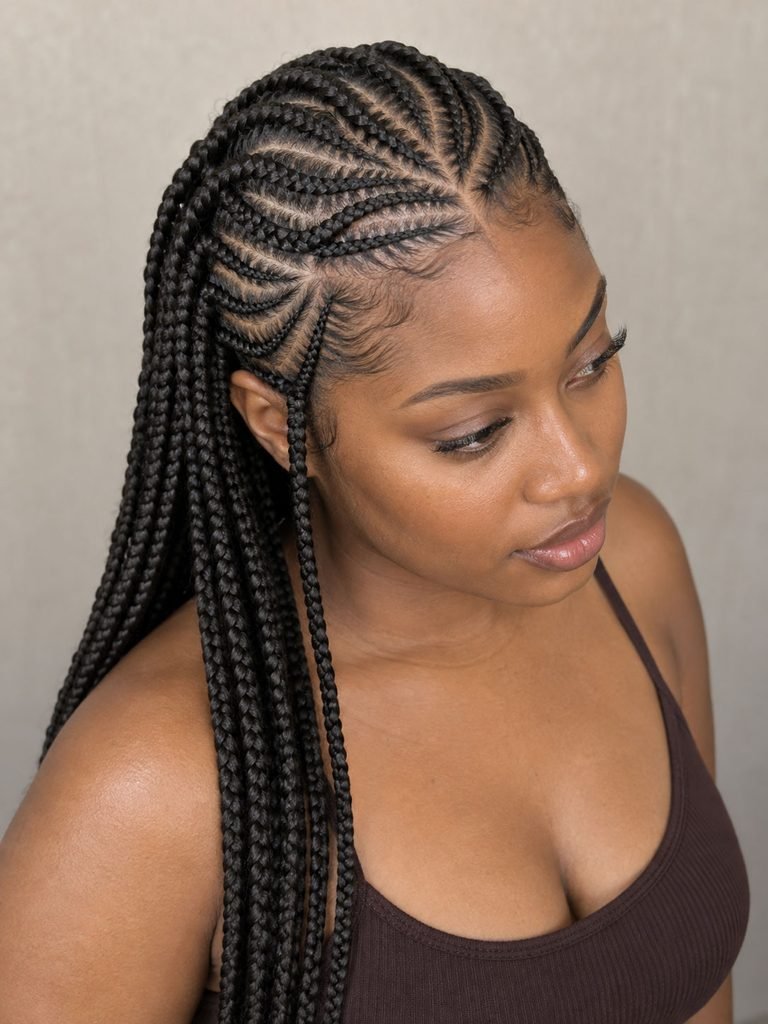
Choose a scalp based pattern when the design itself is a major reason you want braids. Cornrows can run straight back, curve around the head or become part of more customized arrangements. Stitch styles make the separated lines especially visible.
Fulani braid variations combine prominent cornrow work with individual braids or other lengths behind it. The style has roots in the hair traditions of the Fulani people and modern versions can vary substantially in parting, direction, braid size and adornment. A useful Fulani braid visual guide from Allure shows how much the front pattern can change while the broader braid family remains recognizable.
This is where a single reference photo becomes especially useful. Do not rely only on the phrase “Fulani braids” or “stitch braids.” Show the braider the front, sides and back you actually want. Two styles can share a category name while having very different scalp patterns.
Also decide whether the pattern or the loose length is the priority. A highly detailed front can remain the focal point with relatively simple braids behind it. If you also request a large amount of loose curl, extra length, beads and multiple colors, every element competes for attention.
A braided bob changes the entire silhouette
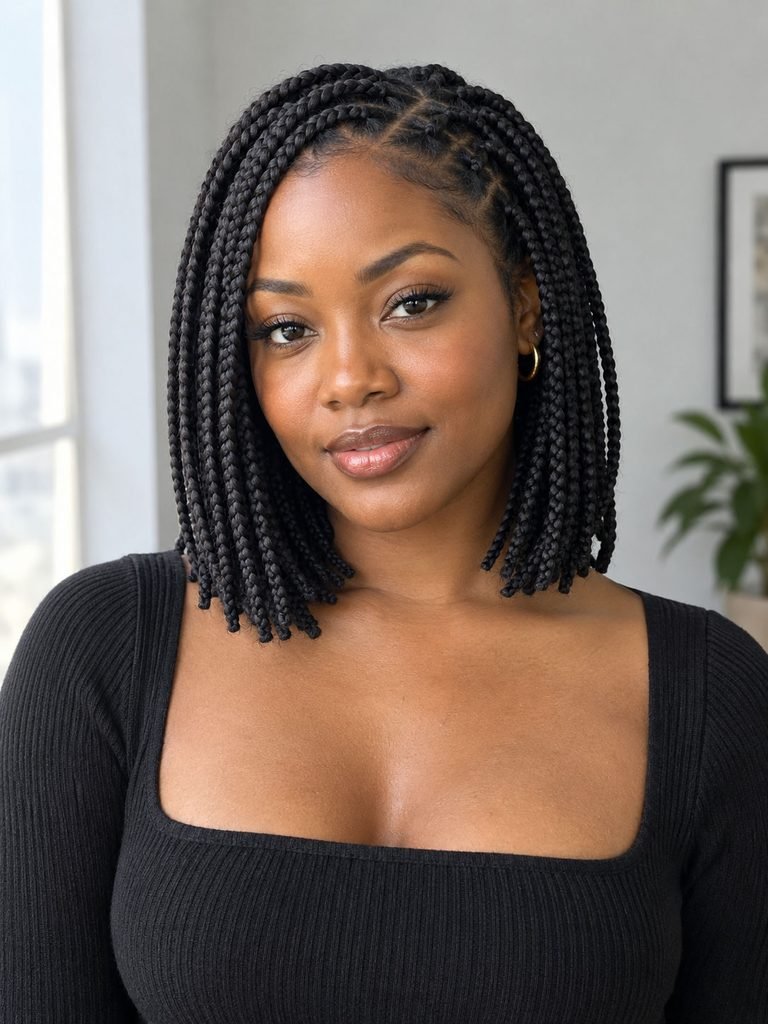
A braided bob is not simply a long braid style cut shorter. The shorter outline changes the balance of the entire look. It places more visual emphasis around the jaw, neck and shoulders and keeps the braid length from dominating your clothes.
Shorter braids can also make sense if you already know that very long hair annoys you while sleeping, exercising or carrying a bag. You still get visible braid texture without committing to a curtain of hair down the back.
The tradeoff is reduced length for restyling. Very long braids can be gathered into large ponytails, half up shapes and dramatic buns. A bob gives you fewer of those options, although the cut itself already creates a strong finished silhouette.
Think about where you want the ends to land. Chin length, shoulder length and collarbone length versions can read very differently. Bring a picture where the model’s braid length is clearly visible instead of showing only a close view of the front parting.
Length, braid size and added hair change upkeep and tension
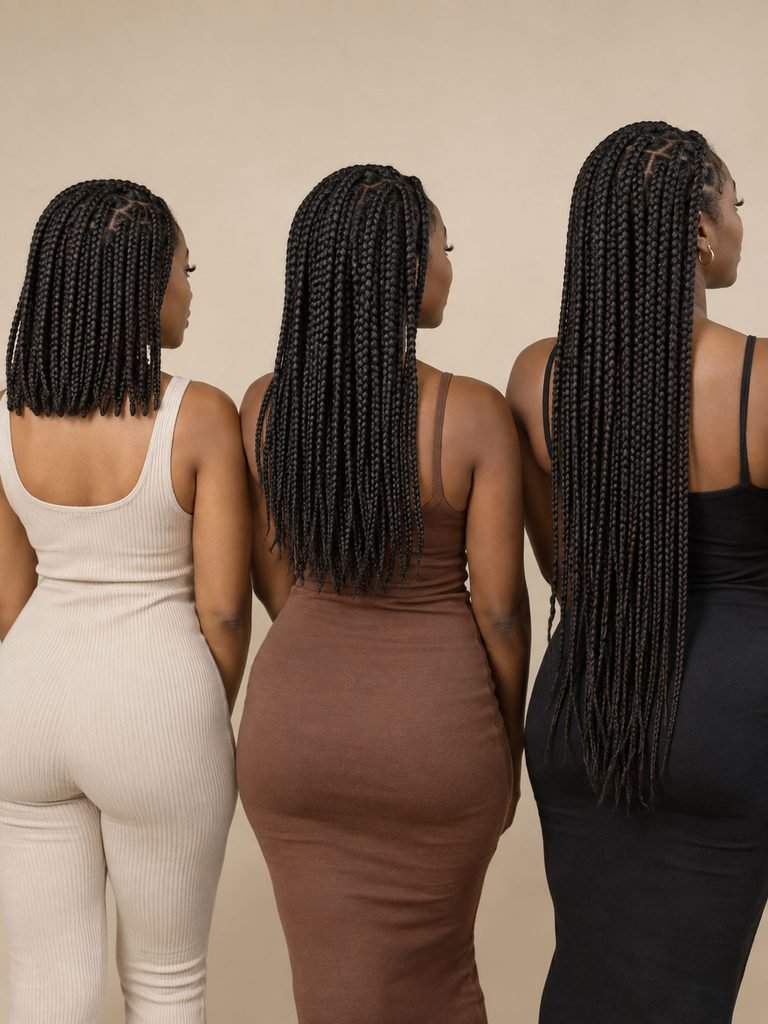
Size and length should be part of the first conversation with your braider because both change what you will actually wear home.
Smaller braids create more individual sections and a finer overall texture. Larger braids create a bolder pattern with fewer plaits. Neither is automatically better. The useful question is whether you prefer a finer or chunkier visual effect and how much sectioning you are willing to sit through and maintain.
Length also adds material. Moving from shoulder length to waist length means there is simply more braid or extension hair hanging from the head. The American Academy of Dermatology specifically advises that longer braids and locs create more weight and recommends loosening braids around the hairline rather than relying on tight pulling. AAD guidance on hairstyles that pull
That does not mean everyone needs short braids. It means length is a tradeoff rather than a free upgrade. If you love dramatic long braids, ask for the look you want while also discussing braid size, the amount of added hair and comfortable tension at the roots.
Comfort is part of the style choice
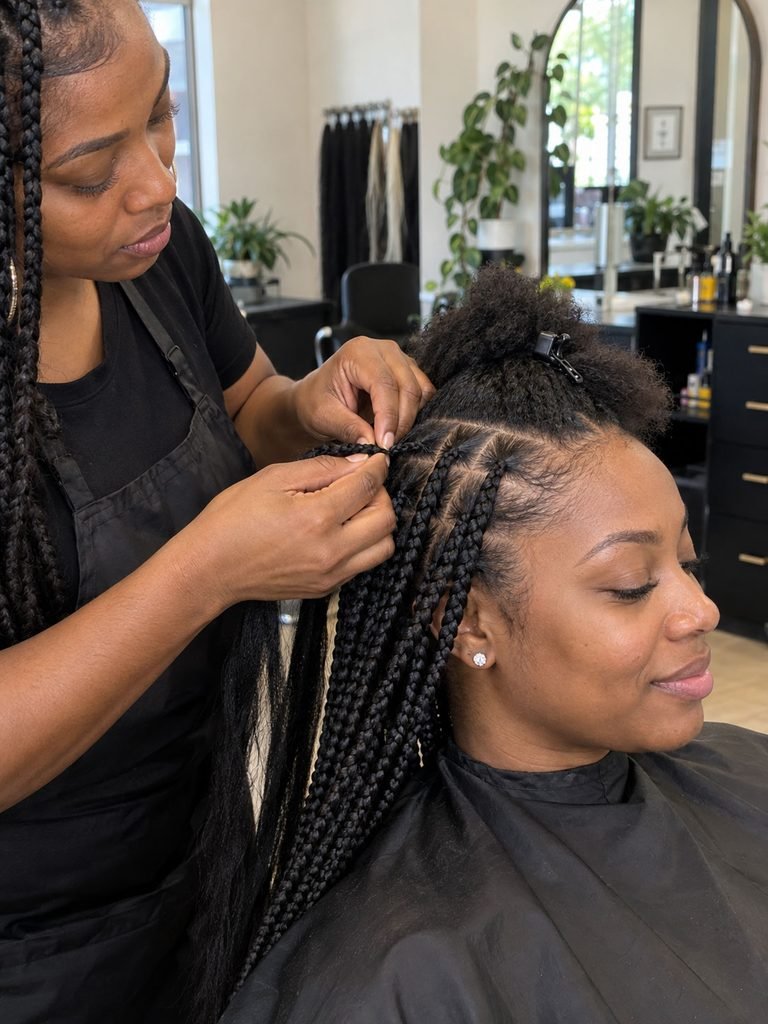
A braid should not have to hurt before it looks neat. If the installation causes sharp pain, strong pulling or obvious tension around the hairline, say so while the style can still be adjusted.
The American Academy of Dermatology explains that repeated pulling from tight braids and other hairstyles can contribute to traction alopecia. Dermatology literature also identifies the extent and duration of pulling as important risk factors. peer reviewed review of traction alopecia
This is one reason the exact execution matters more than calling one braid family universally safe. Knotless braids can have a softer looking root. Cornrows can be beautifully patterned. Box braids can be lightweight. Any of them can still be installed with more tension or more added weight than your scalp tolerates.
If you notice persistent hair loss, thinning around the hairline or concerning scalp symptoms, hairstyle advice is not a substitute for medical evaluation. A board certified dermatologist can determine whether the problem is traction alopecia or another form of hair loss.
Questions to answer before you choose
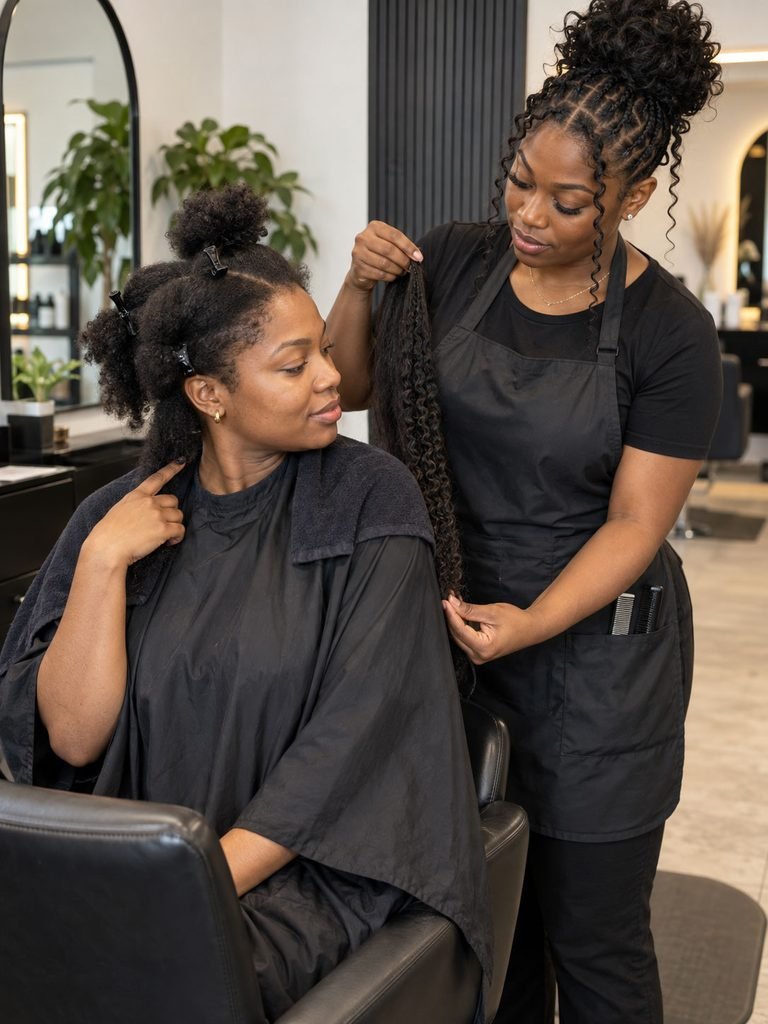
Before the appointment, settle a few practical questions. Decide where you want the braids to end, whether you prefer small, medium or large sections, how much loose curl you want and whether the scalp pattern or hanging length is the main feature.
Are knotless braids automatically better for the scalp?
No style name guarantees a comfortable installation. Knotless construction changes how extension hair is introduced, but the final tension and weight still depend on execution, braid size, length and the amount of added hair.
Are boho braids lower maintenance than regular box braids?
Usually not if your version contains a substantial amount of loose curly hair. The curls create the soft finish, but they also add loose strands that can need separation and refreshing.
How long should braids stay in?
There is no single perfect duration for every head and every braid style. The AAD advises wearing braids or locs for no longer than six to eight weeks in its traction prevention guidance, but discomfort, irritation or concerning hair changes are reasons to reassess sooner.
Which braid size is best if you are undecided?
Medium braids are a useful reference point because they sit between very fine sections and very large plaits. From there, you can decide whether your next set should look finer or bolder.
What if the braids are for a wedding, prom or formal event?
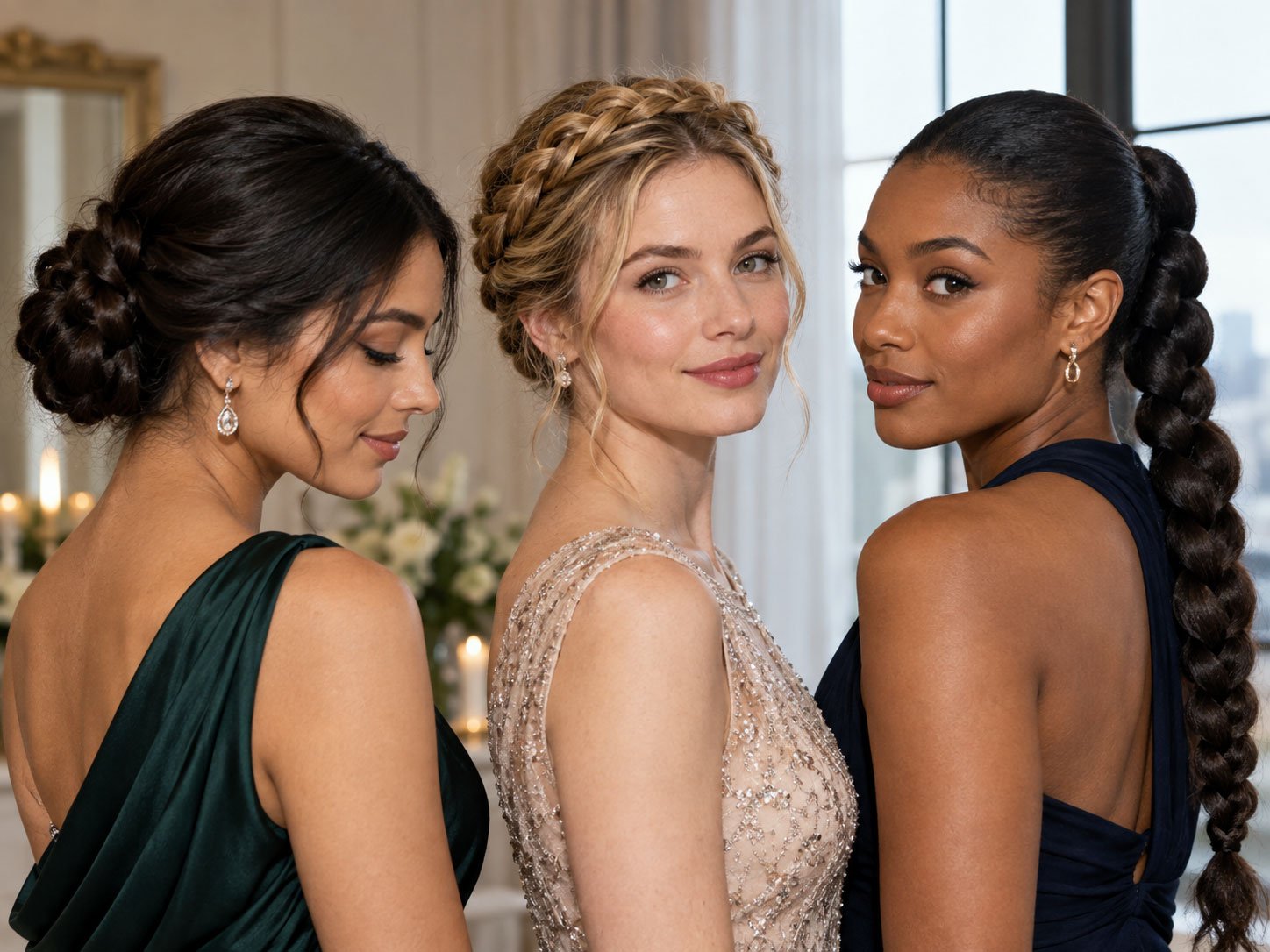
Think about the final arrangement as well as the installation. Femorias has a separate guide to braided hairstyles for special occasions that compares buns, ponytails, crown styles and other dressier ways to wear braids.
The most useful reference photo is not simply the prettiest one on your phone. Choose a photo that shows the root pattern, braid size and full length you actually want. Then decide what you are willing to maintain. That is the difference between selecting a braid style for one photograph and choosing one you will still enjoy wearing after the appointment.