10 Easy Braid Hairstyles for Busy Mornings

A rushed morning calls for a braid you already understand, not the most complicated style on your saved inspiration board. For the easiest options, start with a side braid, braided ponytail, rope twist, or small accent braid. French and Dutch braids are useful when you have practiced the hand pattern enough that sectioning no longer slows you down.
The goal is control without excessive pulling. Keep a comb or brush, a few suitable elastics, and several bobby pins together, then choose a style based on your hair length and how much sectioning you want to manage.
Set up your hair for a faster braid
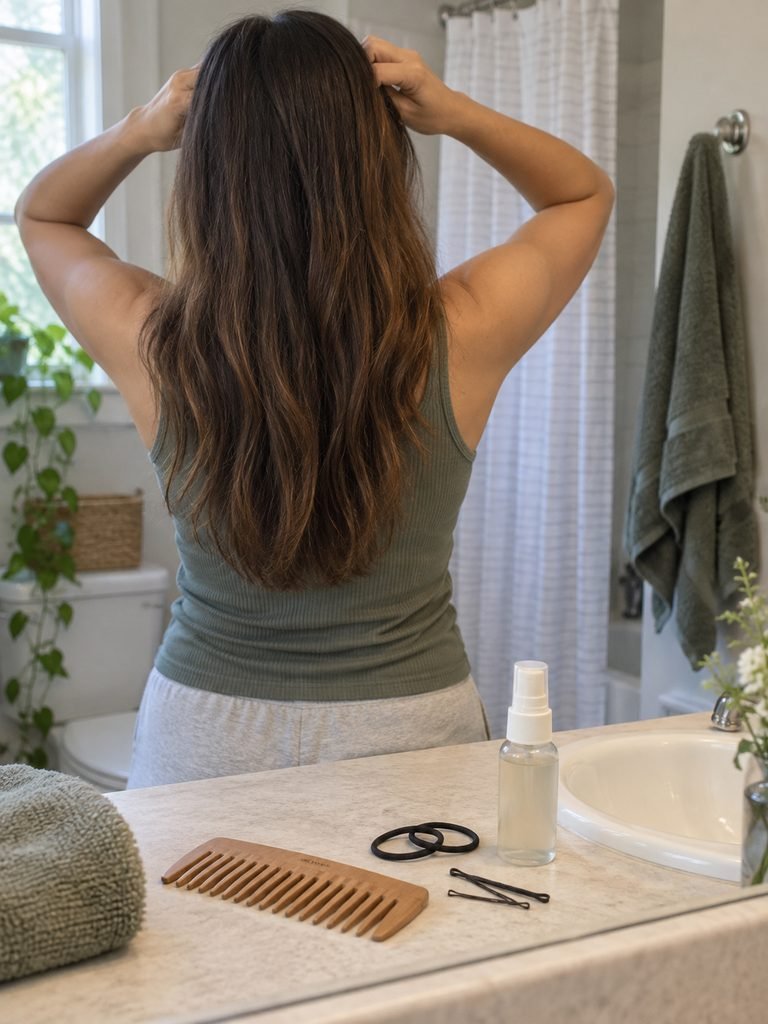
Detangle first because trying to separate sections around knots wastes time and encourages tugging. Work from the ends upward instead of dragging a brush through the full length in one pass.
Hair texture matters here. The American Academy of Dermatology advises gentle wet hair handling and notes that straight hair can be allowed to dry somewhat before combing, while thick curly hair may be easier to comb in the shower before conditioner is rinsed. AAD healthy hair guidance
Use product only when it solves a specific problem. Fine, smooth hair may need a small amount of lightweight grip product. Curly or coily hair may need moisture and careful sectioning rather than extra texture spray. Hair that already has enough grip may need nothing.
Fine hair that repeatedly slips deserves a more targeted fix than pulling the braid tighter. Femorias has a separate guide to braiding fine, slippery hair so it stays put, including section control and troubleshooting.
For a rushed morning, match the style to the simplest technique you can do confidently:
- Choose a side braid or braided ponytail when you want the fewest decisions.
- Choose a half up braid or mini accent braid when only the front needs control.
- Choose two low braids when you want simple, balanced sectioning.
- Choose a French or Dutch braid when you already know how to add hair as you work.
- Choose a fishtail when the pattern is familiar and you have enough length to manage smaller pieces.
10 easy braid hairstyles for busy mornings
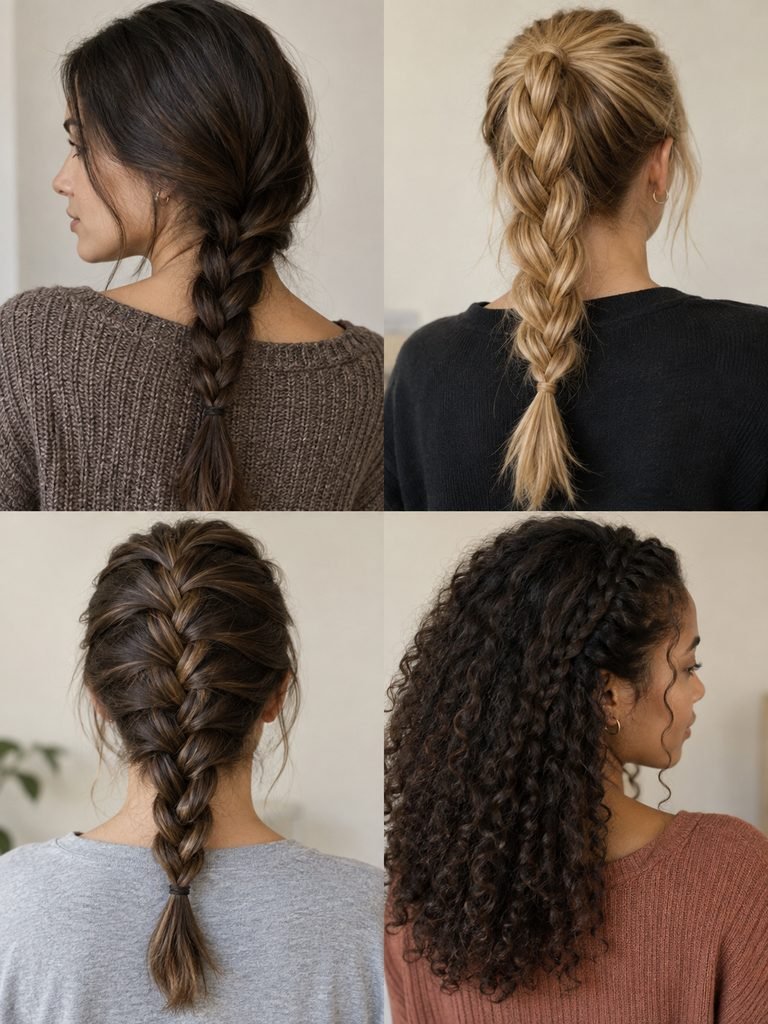
The first few styles use basic patterns. The later options need more hand coordination, so they become genuinely quick only after the technique is familiar.
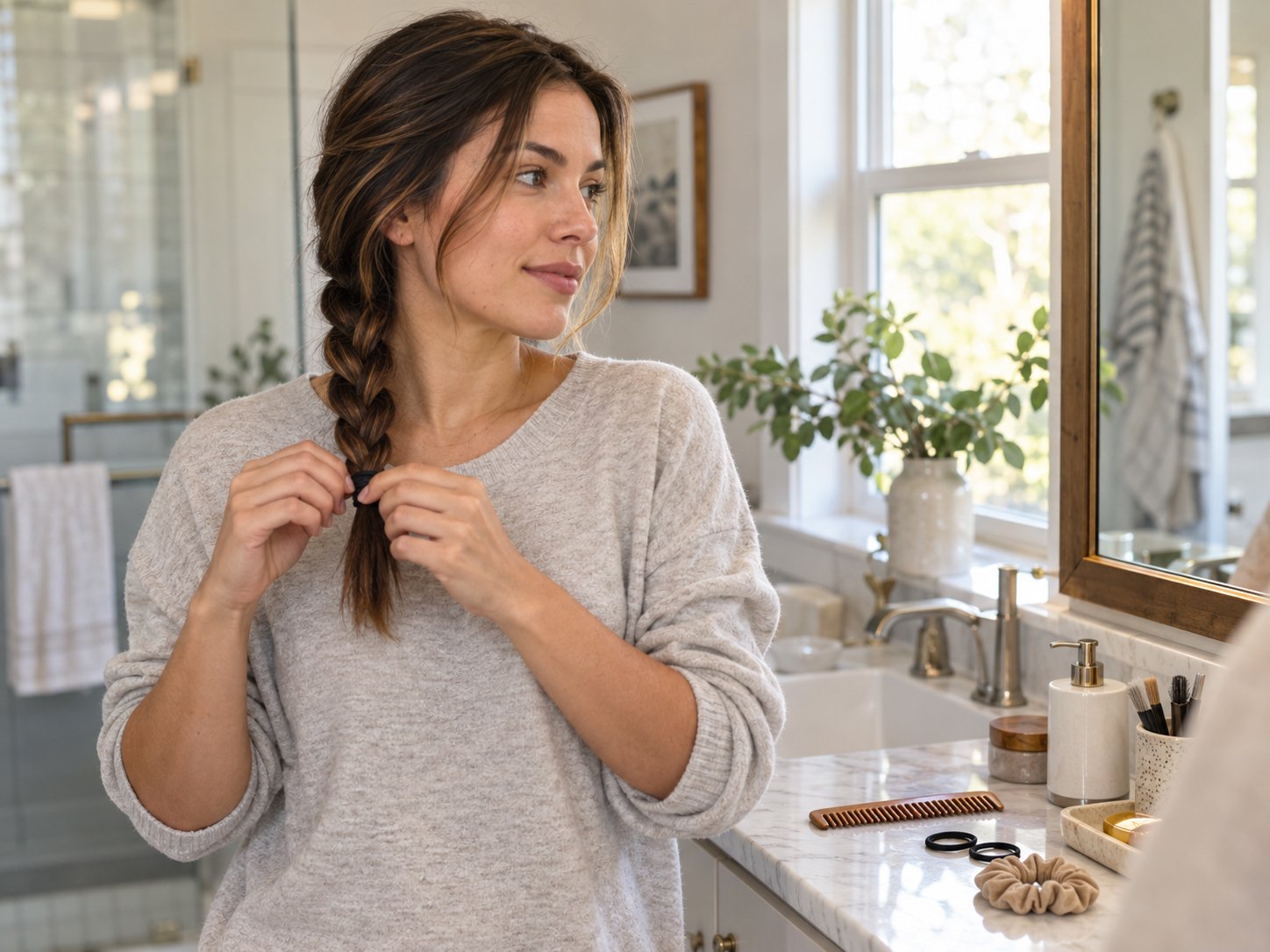
1. Classic side braid
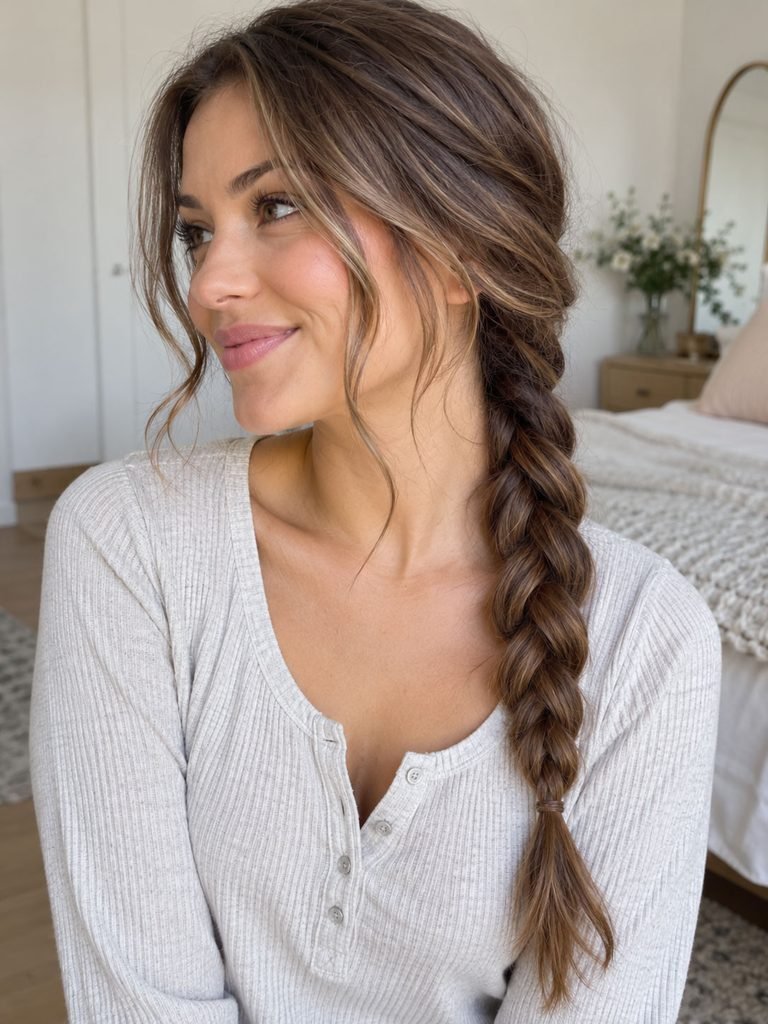
This is the easiest starting point when the hair is long enough to bring over one shoulder. It requires no scalp sectioning and can be done without creating a perfect part.
Bring the hair to one side and divide it into three sections. Cross the right section over the middle, then the left section over the new middle. Continue the pattern and secure the end. For a softer finish, hold the elastic and gently widen only the outside edge of several braid loops.
The tradeoff is root control. Because the braid begins below the scalp, shorter crown layers may loosen sooner than they would in a French braid.
2. Braided ponytail
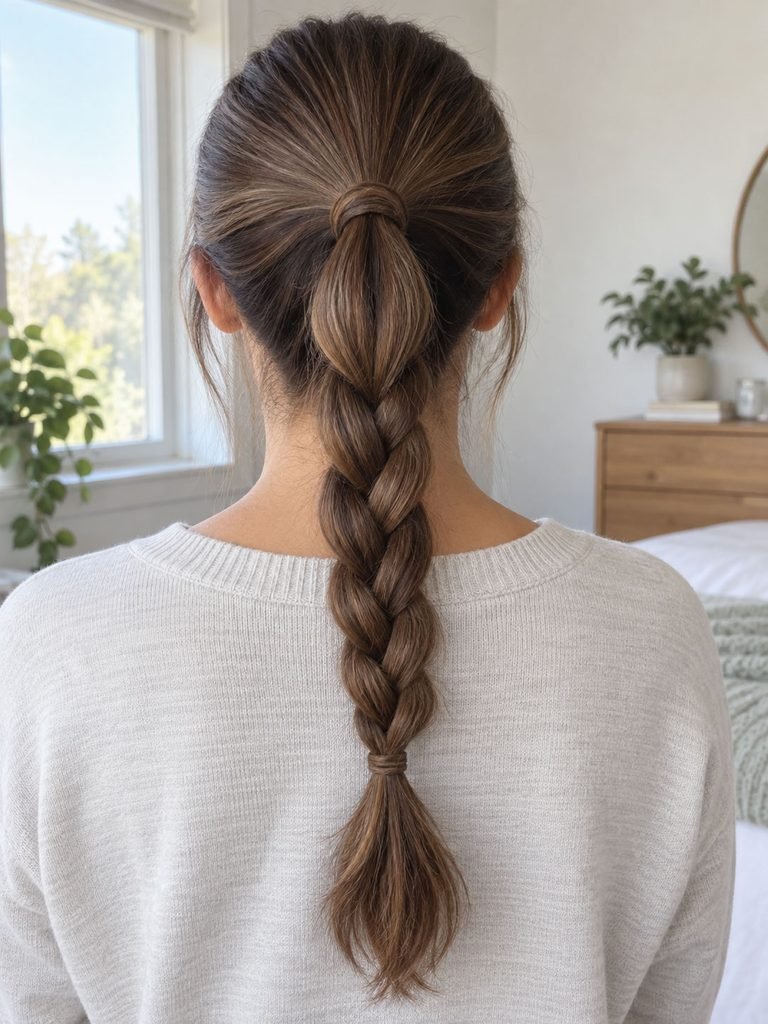
A base elastic makes this one especially useful for beginners because the loose hair is stabilized before the braiding starts.
Create a ponytail at a height that feels comfortable. Divide the ponytail into three parts, braid the length, then secure the end. A low or middle position usually needs less pulling at the hairline than a very high, tight ponytail.
This style needs enough length below the base elastic to create several braid passes. Shorter hair may work better with the mini accent braid later in this guide.
3. Half up double braids
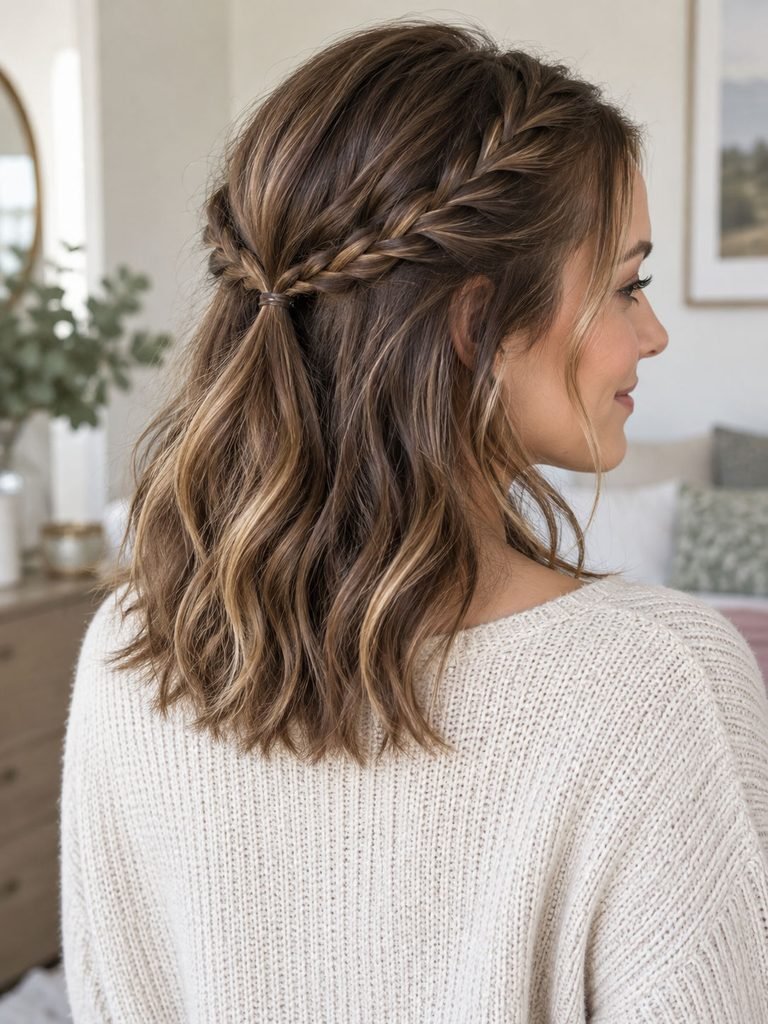
This works when you want hair away from your face but do not want to secure the full length.
Take a small section above each ear. Braid each section backward using a basic three strand pattern, then join the two ends with a small elastic or clip. Leave the rest of the hair in its natural texture.
The main advantage is scale. You are controlling two small sections instead of the entire head, which also makes this a useful option when shorter layers will not reach a full ponytail.
4. Rope twist braid
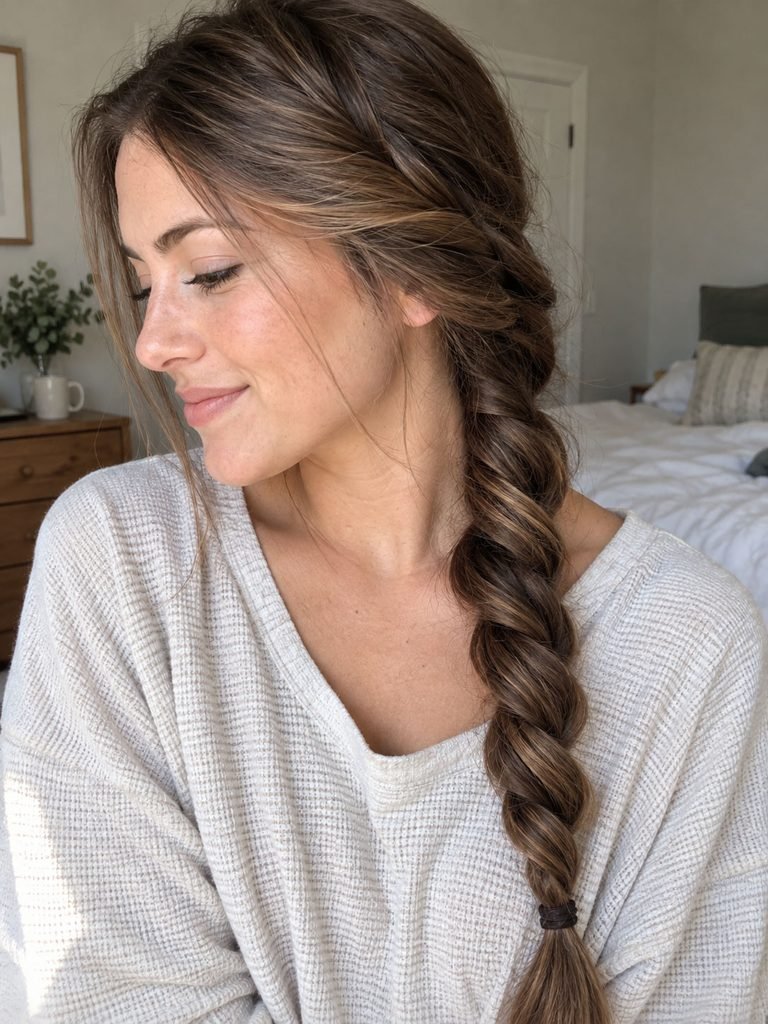
A rope twist uses two sections instead of three, which makes the pattern simple once the direction becomes automatic.
Divide the hair into two equal sections. Twist both sections individually in the same direction. Wrap them around each other in the opposite direction, then secure the end.
If both sections are twisted and wrapped in the same direction, the rope will tend to loosen. That direction change is the detail worth practicing before a rushed morning.
5. Two low braids
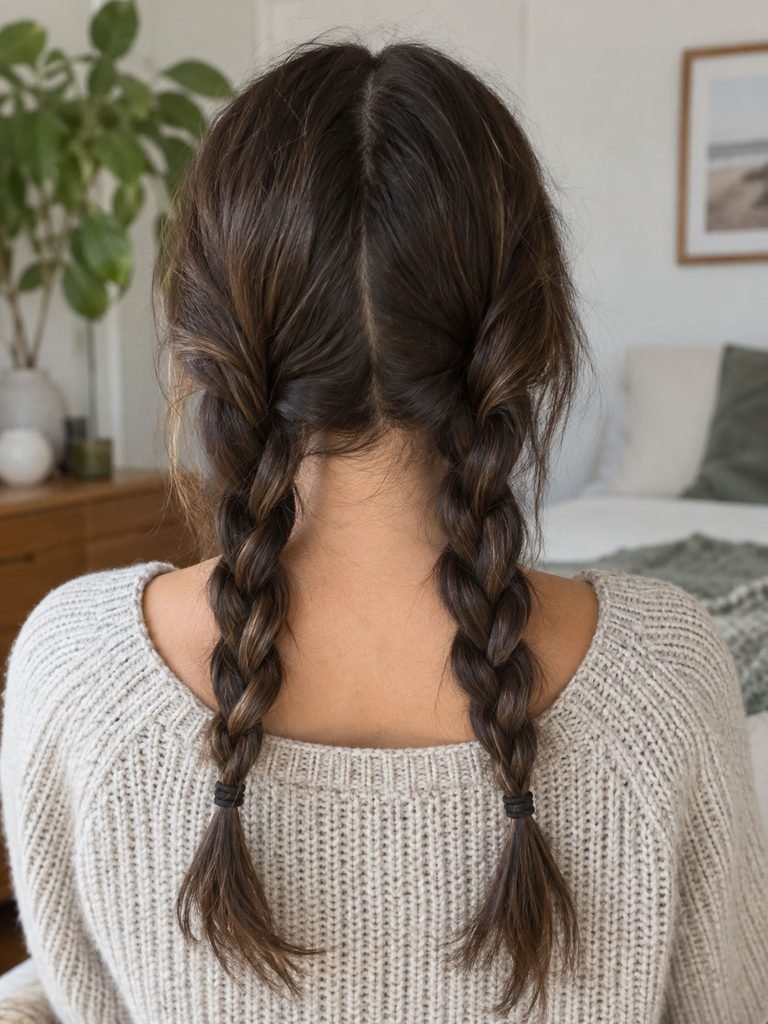
Two low braids are useful when one large braid feels bulky or when shorter pieces escape from a single center braid.
Part the hair into two main sections. Secure one side temporarily, braid the other from around the nape downward, then repeat. Keep the tension consistent instead of tightening sharply near the ears.
The extra parting step makes this slightly slower than one side braid, but each section is smaller and easier to control.
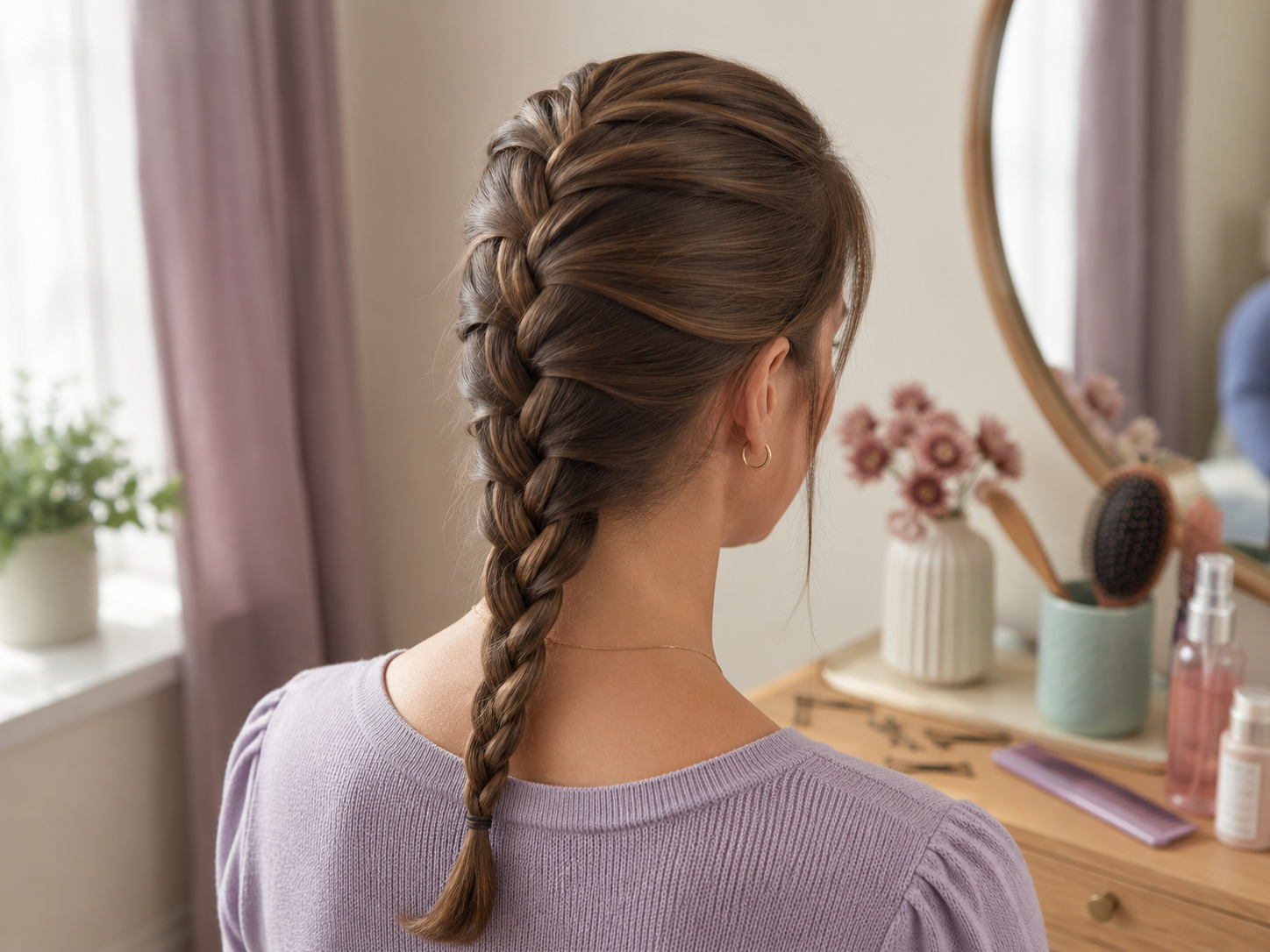
6. French braid
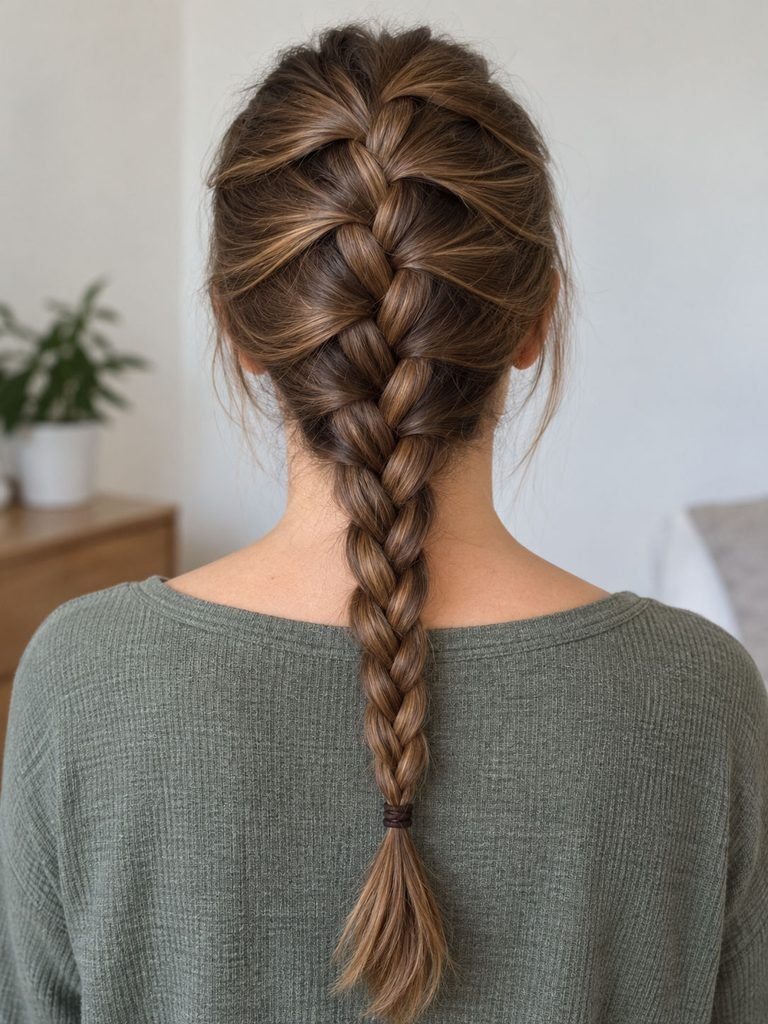
A French braid gives better root control than a loose braid because new hair is incorporated as the braid moves down the head. It is not the best first attempt when you are already late.
Start with three sections near the crown. Cross one outer section over the middle, then the other. Before each following crossover, add a small amount of loose hair to the outer section. Continue until all loose hair has been incorporated, then finish with a standard three strand braid.
Smaller, reasonably consistent additions usually create a cleaner result than grabbing large pieces when the braid begins slipping.
7. Dutch braid pigtails
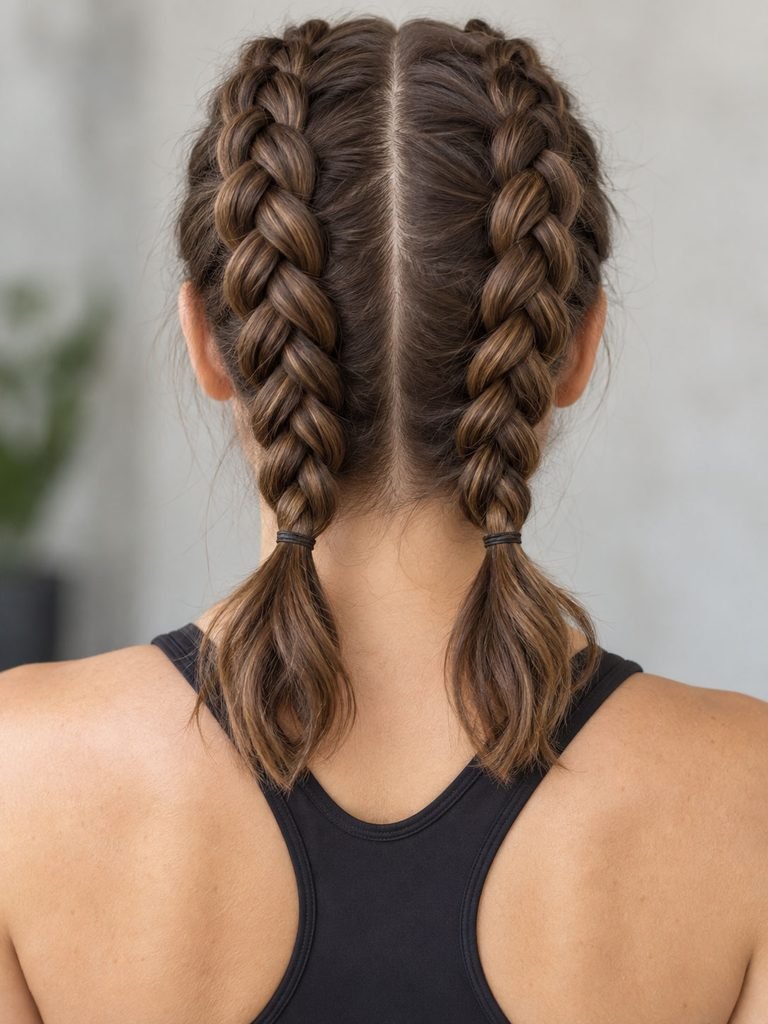
Dutch braids use the same three section logic as a French braid, but each outer section passes underneath the middle rather than over it.
Part the hair into two sections and clip one side away. Begin near the front of the first side, cross the outside strands underneath the middle, and add a little loose hair before each new pass. Finish the remaining length as a normal Dutch style braid, then repeat on the other side.
This gives strong control for active days, but doing both sides neatly requires more practice than a simple side braid.
8. Low ponytail fishtail
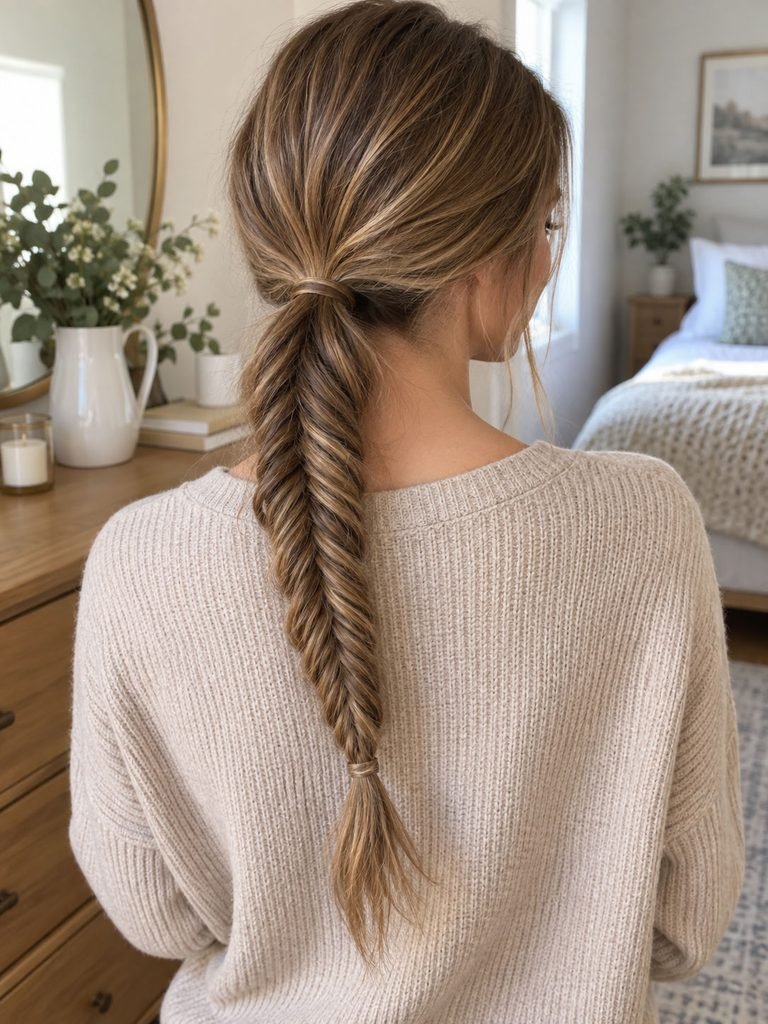
Starting a fishtail from a low ponytail removes one of its hardest parts: keeping two loose sections controlled at the beginning.
Split the ponytail into two large sections. Take a small piece from the outer edge of the left section and move it across to the right. Repeat from the right to the left. Continue alternating and secure the end.
A fishtail uses simple movements but many repetitions. Choose it on busy mornings only after the hand pattern feels familiar.
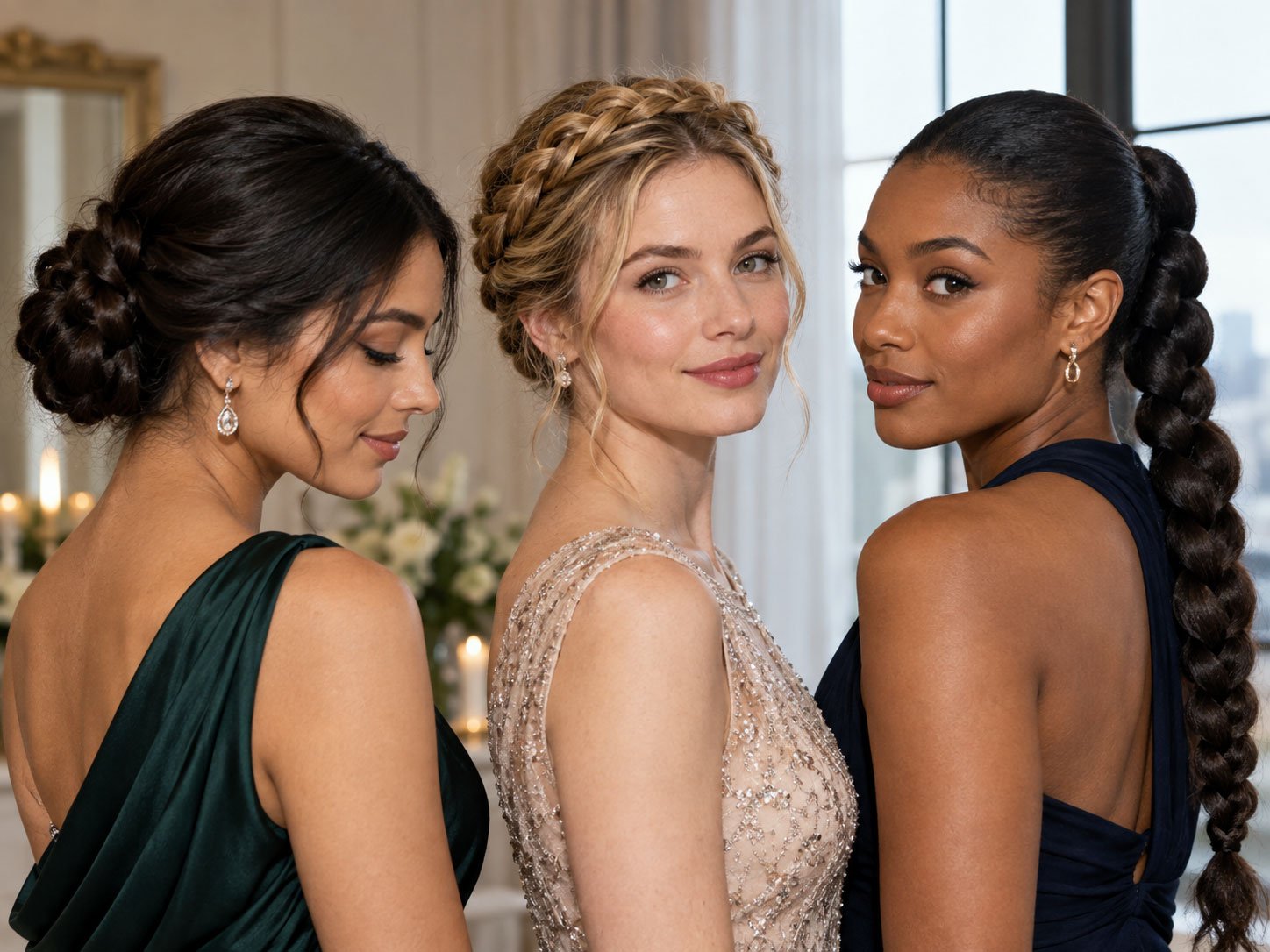
9. Braided low bun
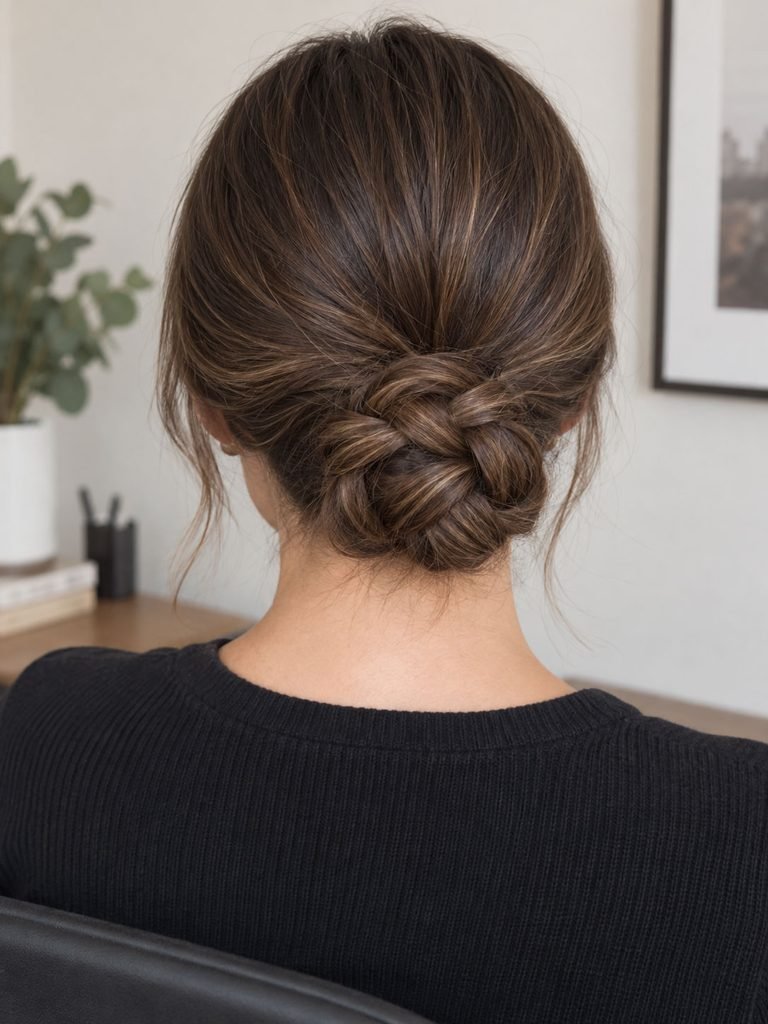
This looks more structured than a regular braid while relying on the same basic three strand technique.
Make a low ponytail, braid it, and secure the braid end. Wrap the braid around the ponytail base, tuck the end underneath, then insert several pins so each catches both the braid and some hair close to the scalp.
Very long or thick hair can create a bulky center. Wrap the braid in wider circles instead of stacking every turn directly on top of the previous one.
10. Mini front accent braid
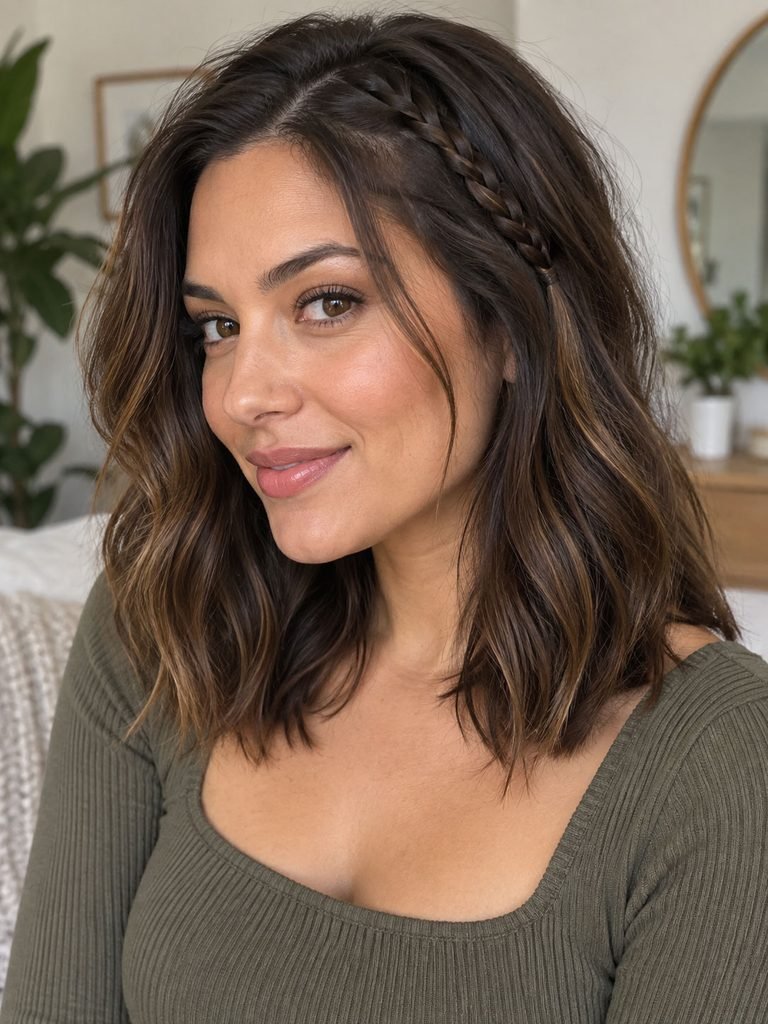
A mini accent braid is the most flexible option here for shorter hair because only a small front section needs enough length to cross over itself.
Take a narrow section beside your part or temple, divide it into three pieces, and braid downward. Secure it with a tiny suitable elastic, pin it beneath loose hair, or join it into a small half up section.
Keep the section modest. A very large front braid requires more length and may pull more noticeably at the hairline.
Make a quick braid last without pulling too tight
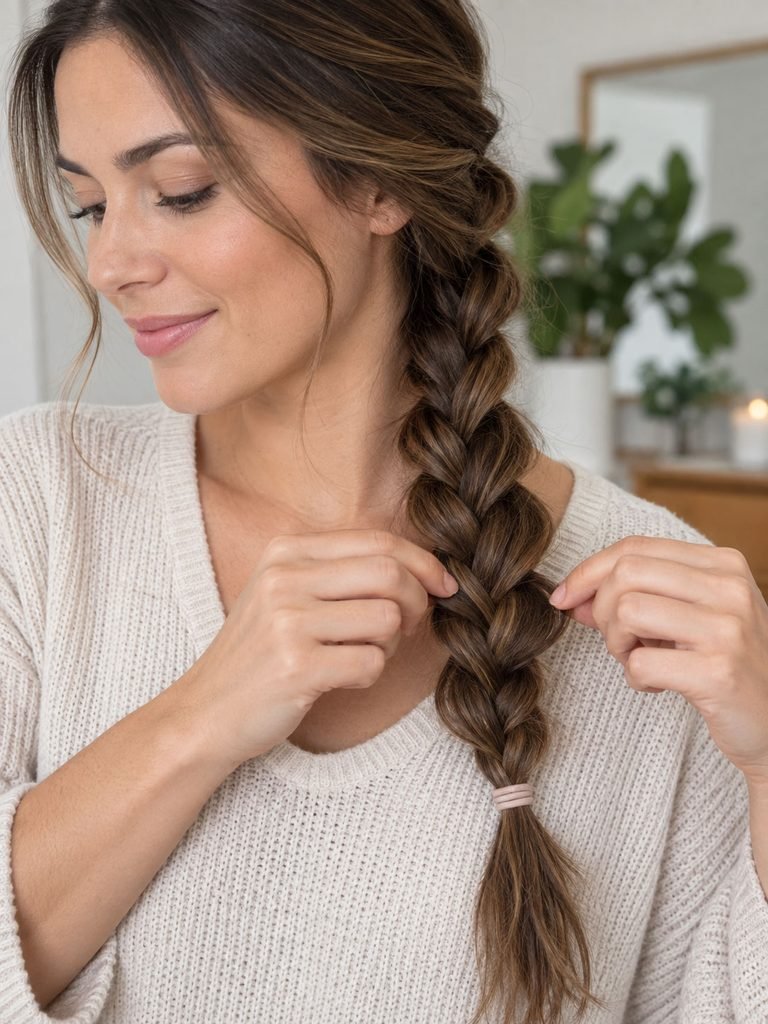
A braid that slips does not automatically need more tension. First check where it is failing.
When the roots loosen, make the starting sections smaller or keep your hands closer to the working braid. When the middle becomes uneven, compare the amount of hair entering each side. When the ends escape, finish the braid slightly higher rather than forcing very short strands into the last passes. For fine hair, secure the braid before widening it.
Comfort matters more than maximum tightness. The American Academy of Dermatology states that repeatedly tight braids, ponytails, and similar styles can contribute to traction alopecia and advises loosening styles that cause pulling. Pain, stinging, or visible tension are reasons to change the hairstyle rather than endure it. AAD guidance on hairstyles that pull
Change braid placement from day to day when possible. A low braid, half up style, and loose hair day put pressure in different places and also keep a weekday rotation from feeling repetitive.
Quick braid questions
Which braid is easiest for a complete beginner?
A basic side braid or braided ponytail. Both use the standard three strand pattern, and the ponytail version has the extra advantage of an elastic holding the starting point.
Which braid works on shorter hair?
A small front accent braid usually needs the least overall length. Half up braids can also work when the sections around the temples are long enough to meet at the back.
Can curly or coily hair use these styles?
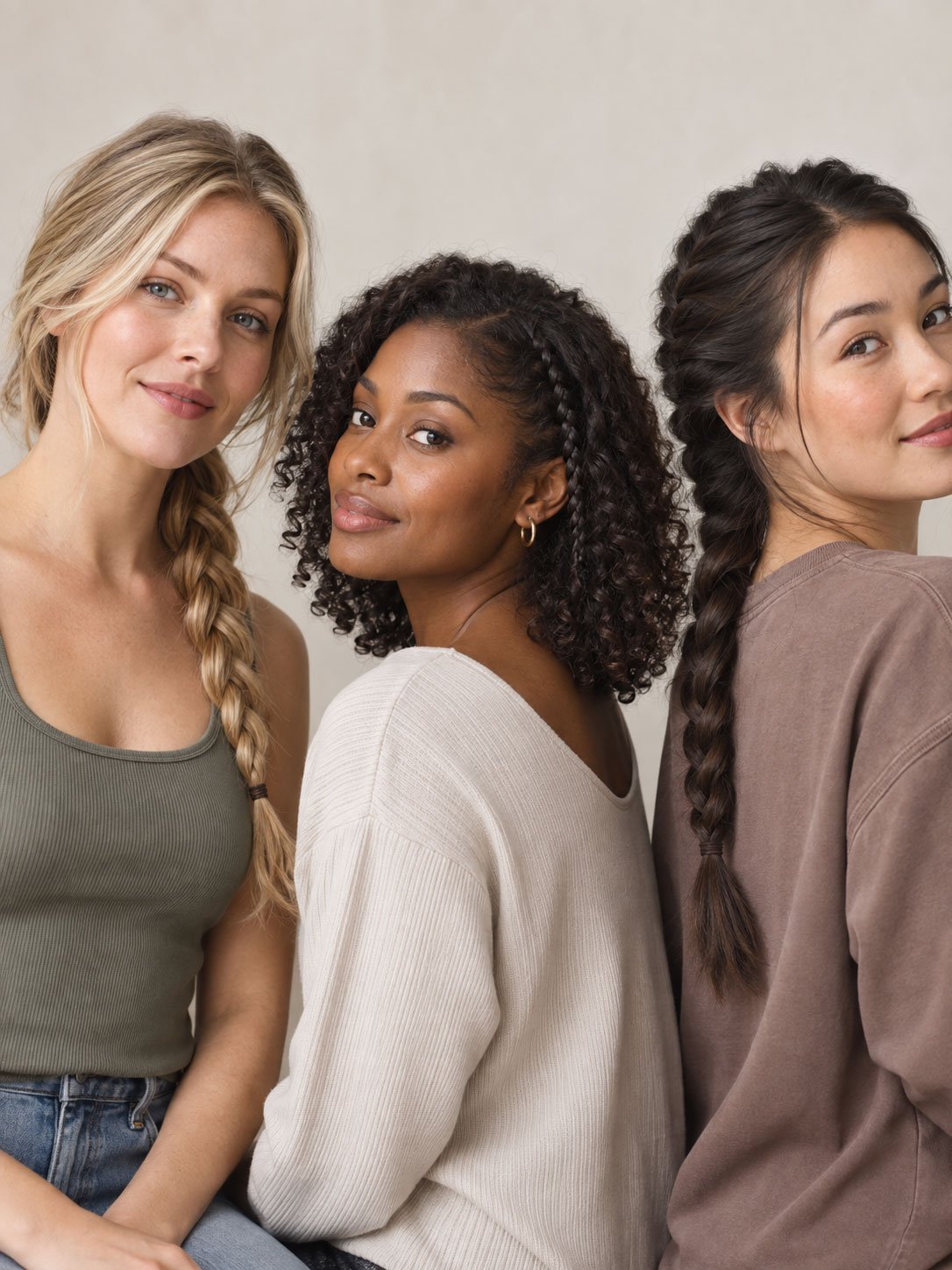
Yes, but preparation should respect the existing texture. There is no need to brush out curls simply to imitate a straight hair tutorial. Work in sections and use the detangling method that creates the least unnecessary pulling.
Why does fine hair keep slipping out of a braid?
Smooth strands, large starting sections, inconsistent hand placement, or too much product can all contribute. Solve the specific problem before increasing tension.
Do French and Dutch braids count as easy morning styles?
They can once the hand pattern is familiar. For a beginner, a side braid, braided ponytail, rope twist, or accent braid is a more realistic rushed morning choice.
Pick the braid that fits your morning

Start with the braid that removes the fewest obstacles. A side braid works when the goal is simply to control long hair. A braided ponytail gives beginners a stable base. A small accent braid handles shorter front pieces. French and Dutch braids make more sense after the sectioning pattern has become automatic.
Keep two or three styles in regular rotation instead of trying to master every option at once. For long hair days when a braid is not the best fit, Femorias also has easy long hairstyles you can style at home with buns, twists, ponytails, and other simple alternatives.
A useful morning hairstyle is the one you can repeat comfortably, secure without pain, and finish without turning five minutes of getting ready into twenty.