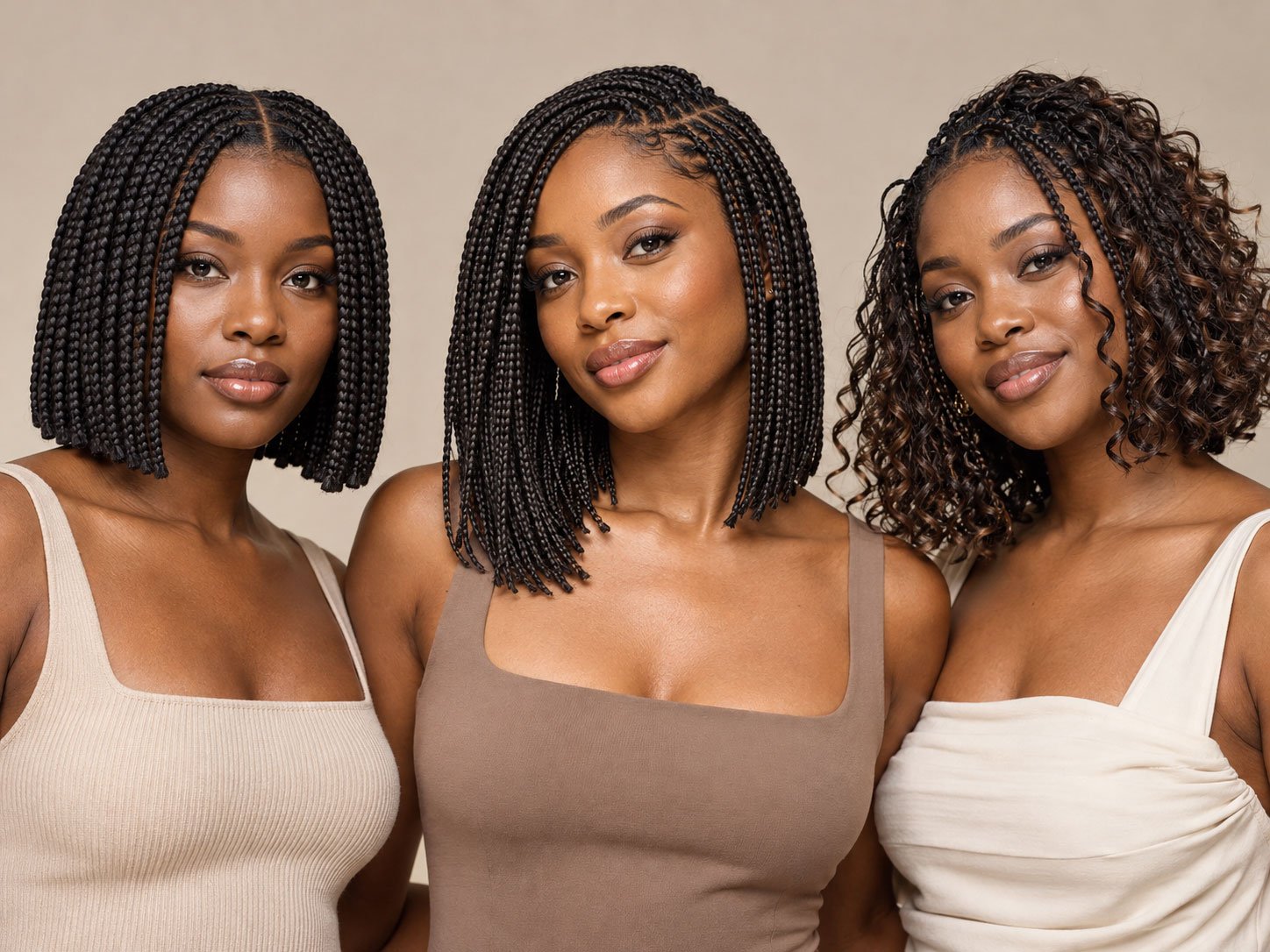
Braided Bob Hairstyles, 15 Looks to Choose by Length, Parting and Finish

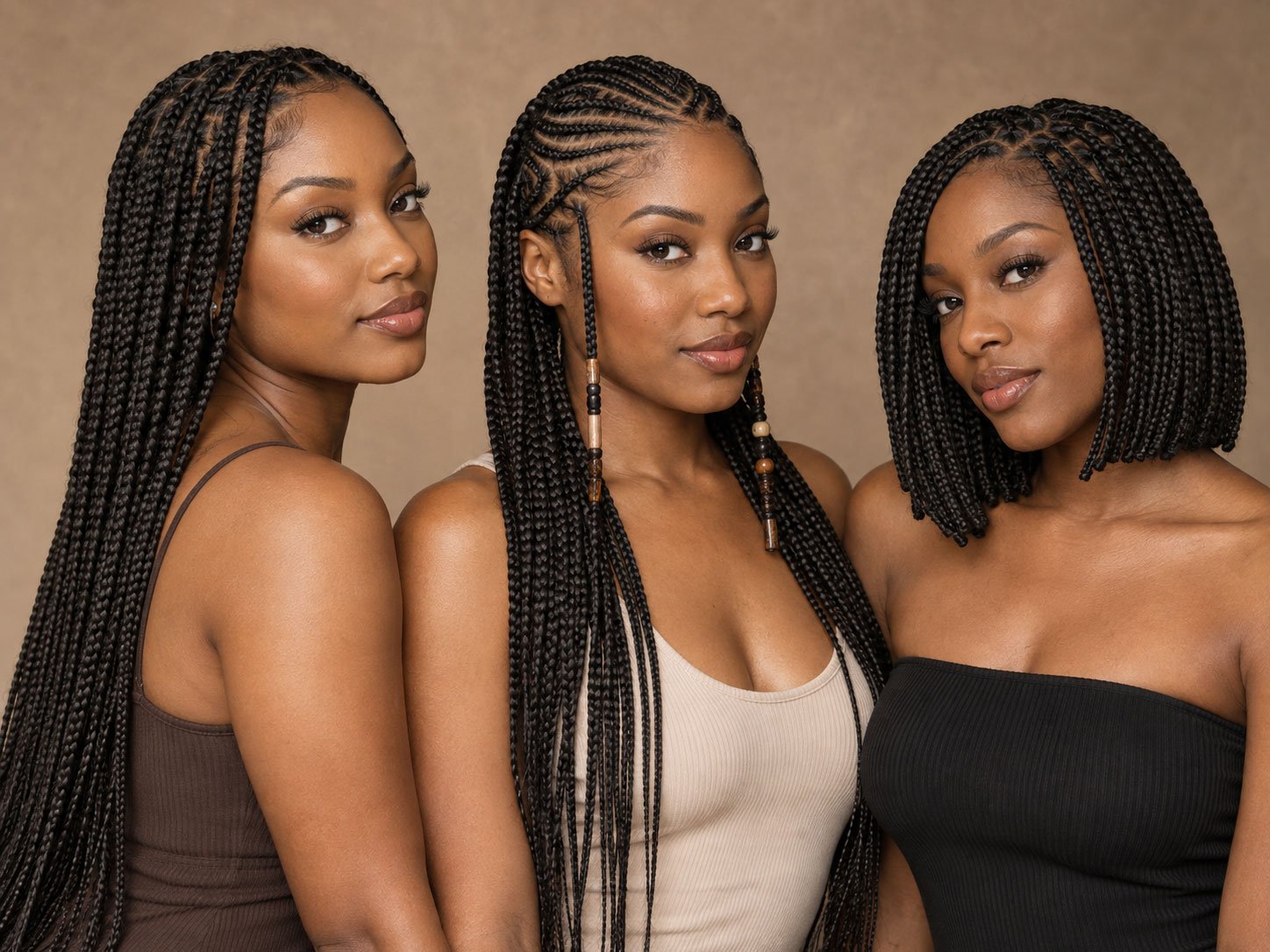
A braided bob can look sharp at the jaw, soft around the neck or almost like a long bob when it reaches the shoulders. The difference comes down to more than braid length. Parting, braid thickness, added curls and the shape of the ends all affect the finished style.
If you want a clean outline, start with a blunt box braid bob or a smooth knotless bob. For more movement, consider curved ends or a boho finish. If you want something less symmetrical, try an angled bob or a deep side part.
These 15 braided bob hairstyles show how to narrow your choices before your next salon appointment.
Choose your braided bob length first
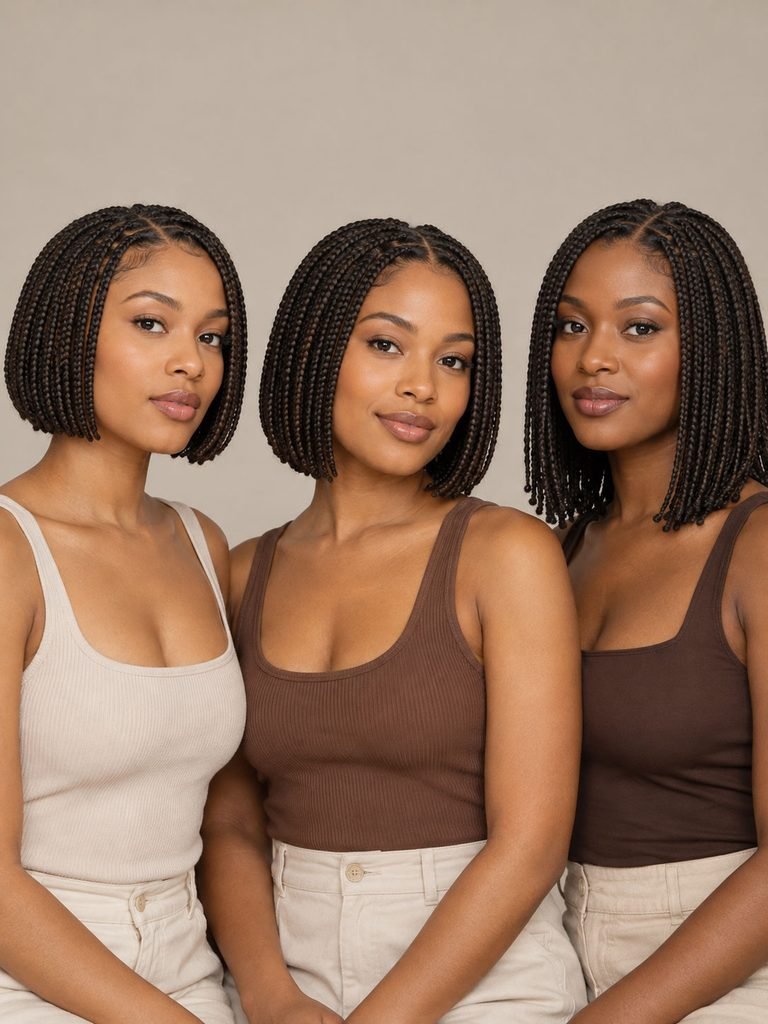
The easiest way to narrow down braided bob hairstyles is to decide where you want the ends to fall. A few inches can make a noticeable difference, especially when the braids form a defined outline.
| Length | Visual effect | Practical consideration |
|---|---|---|
| Jaw length | Strong, compact shape around the face | Fewer options for tying the braids back |
| Chin to neck length | Classic bob outline with a little more movement | Ends may brush the neck |
| Shoulder grazing | Softer, longer silhouette | Ends may rest against collars and clothing |
| Collarbone length | A braided lob with more hanging length | Greater potential for small ponytails and partial updos |
1. Blunt chin length box braid bob
This style creates a defined horizontal outline around the chin. Medium box braids with a tidy center part make the shape especially noticeable.
It suits someone who wants the braids themselves to create a strong hairstyle without much daily arranging. The tradeoff is limited flexibility for ponytails and larger updos.
Ask your braider to show where the finished ends will sit while the braids are hanging naturally. The cut line should be planned carefully rather than assumed from a cropped inspiration photo.
2. Rounded neck length braided bob
A rounded bob has a softer perimeter than a straight blunt version. The braids sit around the lower face and neck, creating a curved overall silhouette.
This is a useful direction if you like the compact shape of short braids but find a completely straight lower edge too severe.
The rounded effect requires deliberate length planning. It should not depend on trimming random braids after the whole installation is finished.
3. Shoulder grazing braided bob
Shoulder grazing braids offer a familiar bob silhouette without cutting the visible length extremely short. The ends sit around the shoulders, which gives the hairstyle more movement than a jaw length version.
This can be a comfortable visual starting point for someone who has worn long braids and wants a shorter look without losing too much styling flexibility.
Keep in mind that the ends may rub against collars or rest on the shoulders. The braid finish and how the hair settles matter as much as the nominal length.
4. Collarbone length braided lob
A braided lob extends toward the collarbone, combining a bob inspired outline with more visible length.
It works well if you want a neat shoulder framing shape and still hope to gather some braids into a low ponytail or simple partial updo.
The limitation is that a longer lob may not deliver the compact silhouette you liked in shorter reference photos. Compare images taken from the front and side before deciding.
Classic and knotless braided bob styles
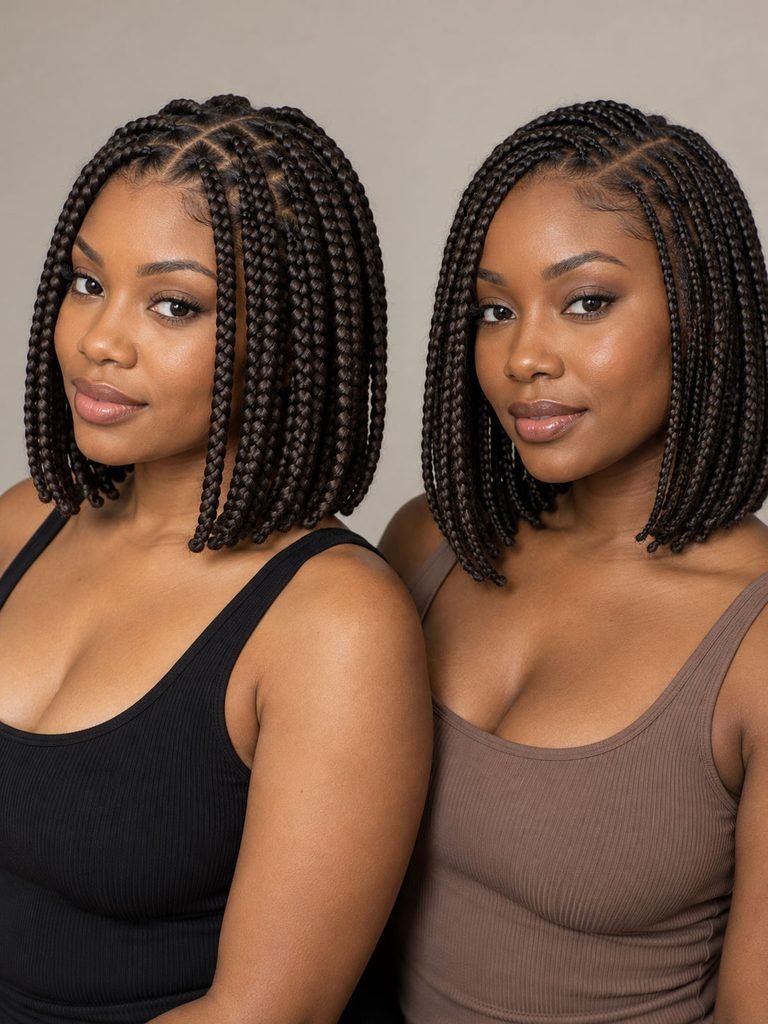
A braided bob can use different installation methods without changing its basic length. The root construction affects the appearance near the scalp, while braid size and length determine the overall outline.
5. Classic medium box braid bob
Medium box braids give a bob a clearly defined pattern of individual braids. The square or rectangular sections create an orderly grid that remains visible near the crown.
Choose this style if you like a structured braid pattern and a straightforward finish. A medium braid size can make the bob outline easier to distinguish than a mix of very small and very large braids.
Ask about the size of the sections, the amount of extension hair and how the added hair will be secured. The installation should never feel painfully tight.
6. Smooth knotless braided bob
Knotless braids begin with the wearer’s natural hair, with extension hair incorporated as the braid progresses. This creates a different root appearance from traditional braids that begin with an extension knot.
At bob length, the scalp parting and braid roots are particularly visible, making the smooth start a meaningful design detail.
Choose this look if you prefer an uninterrupted transition from the roots into the braids. However, knotless construction does not automatically guarantee a comfortable installation. Tension and added weight still matter.
7. Jumbo braided bob
A jumbo bob uses fewer, thicker braids to create a bold and graphic texture.
This look suits someone who wants the individual braids to be an obvious part of the design. The larger sections can also make a straight lower edge look especially defined.
The tradeoff is less flexibility in how the braids sit. Thick braids may not curve or gather as easily as smaller ones, and oversized or heavy extensions can place unnecessary stress on individual sections.
8. Small braid bob with a soft perimeter
Smaller individual braids produce a finer surface texture and more individual strands along the outline.
The result can feel visually lighter and more flexible than a chunky bob, particularly when the braids have a little movement near the ends.
More small braids do not automatically mean a better result. Extremely small sections combined with unsuitable extension weight may stress delicate hair, especially around the hairline.
For a broader comparison of root construction, styling choices and tension, Femorias’ guide to braided hairstyles for Black women explains the differences between major braid families.
Braided bobs with shape and parting details
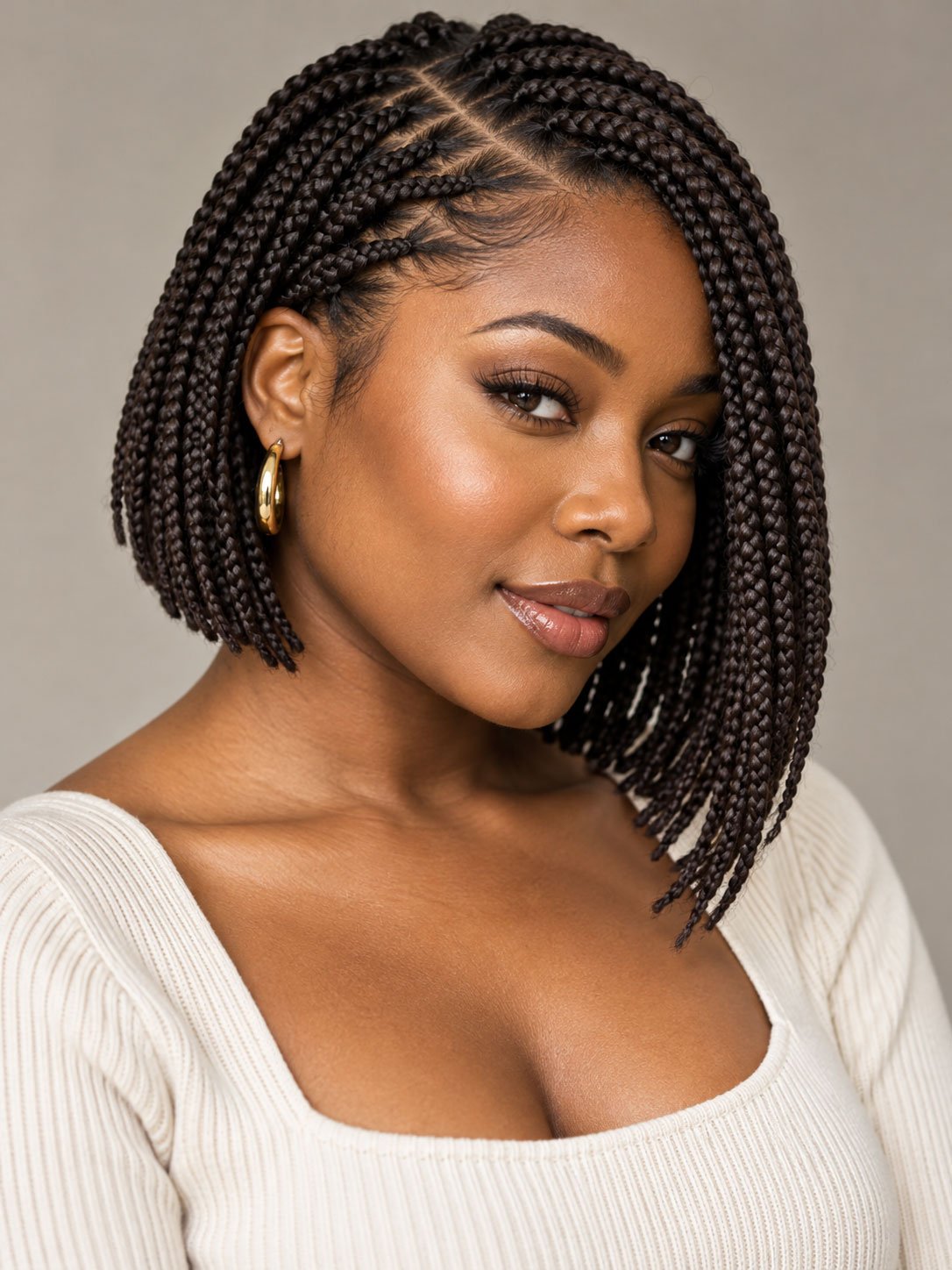
Parting and perimeter shape can change a braided bob even when the length and braid type remain the same. These details are worth deciding before installation because they affect where the hair naturally falls.
9. Angled braided bob
An angled bob is shorter toward the back and gradually longer near the front.
The result creates a diagonal outline that draws attention toward the face. It is useful for someone who wants a more sculpted shape without adding curls or elaborate accessories.
A successful angled bob needs planning around the back of the head. Show the braider a side view as well as a front view because the angle may be almost invisible in a face only photograph.
10. Deep side part braided bob
A deep side part shifts more braids toward one side of the face, creating a deliberately asymmetric arrangement.
The effect is softer and less centered than a traditional middle part. It can also change which features are emphasized by the hair’s outline.
For a specific side part effect, discuss where the part should begin and how far the braids should fall across the forehead. A permanent parting pattern may limit easy switching later.
If face framing is your main concern, Femorias’ guide to short hairstyles for round faces explains how part placement and the position of the ends change the visual balance of shorter styles. The same visual principles can help when comparing braided bob silhouettes.
11. Asymmetrical braided bob
An asymmetrical bob has visibly different lengths on the two sides rather than simply changing the part.
One side may finish around the jaw while the other extends toward the neck. This creates a distinctive outline even when all the braids share the same color and thickness.
Choose this design if you enjoy a deliberate fashion statement. However, the unequal lengths can reduce symmetry when gathering the braids away from the face.
Boho braided bobs and decorative finishes

Boho curls, beads and color can soften or personalize the outline of a braided bob. The decorative details should complement the basic shape rather than obscure it.
12. Boho knotless braided bob
Boho knotless braids combine a smooth knotless root with loose curly or wavy pieces incorporated through the hairstyle.
The curls make the bob appear softer and fuller than a completely braided version. This works especially well when the goal is movement around the cheeks and neck.
The important tradeoff is maintenance. Loose hair can tangle or lose definition differently from the braided sections, so the curl material and placement need to suit the reader’s routine.
Ask the stylist how much loose hair will be added, where it will be placed and which curl maintenance methods are appropriate for the material.
13. Braided bob with curled ends
This variation keeps most of the hairstyle neatly braided while adding a curved or curly finish near the bottom.
It is a good choice if you want some softness without loose curls appearing throughout the entire hairstyle.
Show a photograph of the exact result you want. Some curled end styles have compact, uniform curves, while others have soft ringlets. The suitable setting method depends on the hair material, and heat should never be assumed safe for every extension type.
14. Beaded box braid bob
A beaded bob adds decorative detail near the ends of individual braids.
Clear, wooden or colored beads can alter the character of an otherwise simple hairstyle. Their position also draws attention to the bottom edge.
Consider how many beads you want before installation. More beads create a stronger decorative effect but can add weight, make sound during movement and feel uncomfortable when sleeping.
Ask for securely attached accessories that do not snag or pull the hair.
15. Two tone braided bob
A two tone bob combines two selected hair colors in one short braided shape. A dark base with a small number of honey brown or copper braids can add contrast without changing the cut.
The shorter length keeps the overall color pattern concentrated around the face and shoulders. This works well for readers who want a more noticeable look without using an elaborate parting design.
Decide whether the second color should appear evenly throughout the hairstyle or only in selected sections. Bring a color reference as well as a length reference so the result does not depend on the stylist interpreting vague descriptions.
Match the bob to your hair and routine
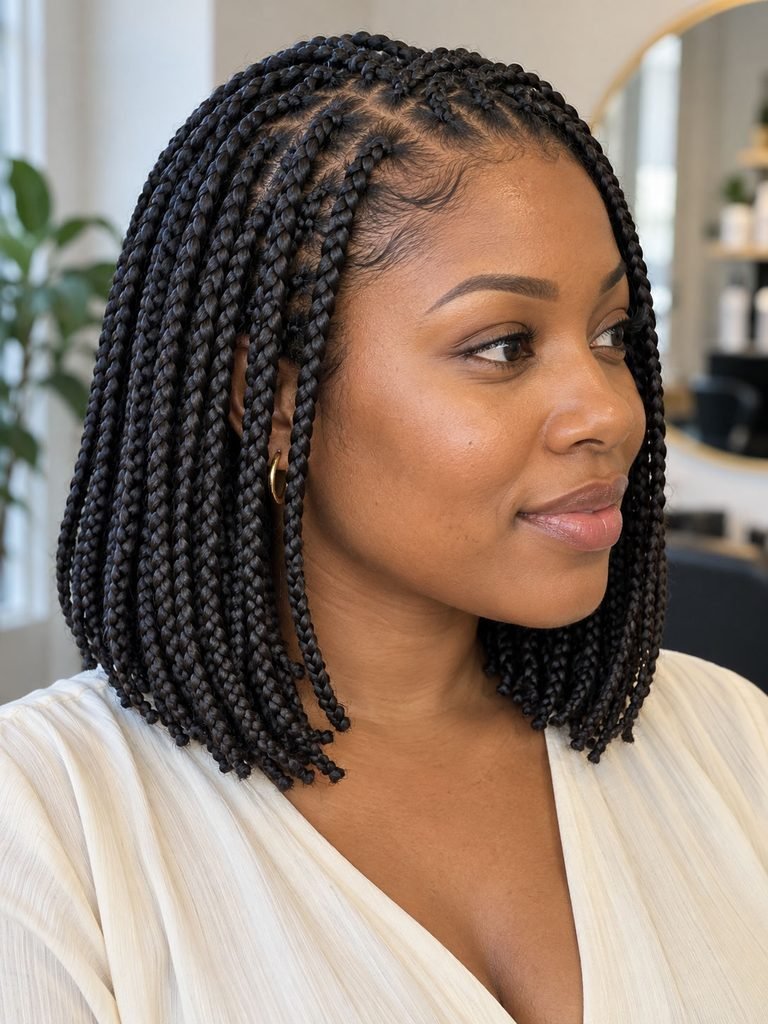
Choose the finished shape you like, then check whether the braid size, weight and maintenance demands fit your own hair.
A shorter style may use less added hair than a very long installation, but that does not make every braided bob automatically gentle. Heavy extensions, tight roots and excessive pulling can still cause damage.
The American Academy of Dermatology’s guidance on hairstyles that pull explains that repeated tension from braids, extensions and other pulling styles can contribute to traction alopecia.
For a practical starting point:
- Delicate edges or a sensitive hairline: Avoid tight sections and heavy extensions. Discuss comfortable braid size and whether the desired installation is suitable.
- A preference for easy daily styling: Favor a shape that already falls where you want it without frequent pulling into tight updos.
- A busy schedule: Consider neat, fully braided ends rather than loose curls that need additional attention.
- A preference for frequent restyling: Choose enough length to gather some braids comfortably, while recognizing that a short bob has limits.
- A love of detailed hairstyles: Consider smaller braids or precise parting, but ask about installation time, extension weight and how the style will affect your own hair.
Face shape can help you evaluate a silhouette, but it is not a rule. If you want the face to appear visually longer, a longer front section or diagonal part may create that effect. If you like a strong horizontal line at the jaw, a blunt bob can emphasize it intentionally.
The better question is where you want the style’s visual width, length and movement.
What to ask your braider before booking

The most useful salon reference shows the front, side and back of the hairstyle. A beautiful front facing photo alone may leave too much room for interpretation.
Before your appointment, clarify these details:
- Finished length: Should the braids stop at the jaw, lower neck, shoulder or collarbone?
- Braid size: Do you want small, medium or jumbo individual braids? Ask for visual examples of the stylist’s sizing.
- Root construction: Should the style be traditional box braids or knotless braids?
- Parting: Do you want a center part, side part or a particular decorative section pattern?
- Bottom edge: Should the outline be blunt, rounded, angled or softly curled?
- Hair material: What extension hair will be used, and how should its ends be finished?
- Comfort: How will the braider avoid unnecessary tension around the hairline?
- Maintenance: How should this particular installation be washed, dried and removed?
Discuss the expected cost and appointment length directly with the salon. Both depend on location, braid size, complexity, extension materials and the stylist’s service structure.
The American Academy of Dermatology’s advice for caring for Black hair recommends telling a stylist to stop and redo braids that hurt during installation.
A comfortable braid installation should not depend on enduring pain until the style loosens.
Keeping a braided bob neat without adding tension
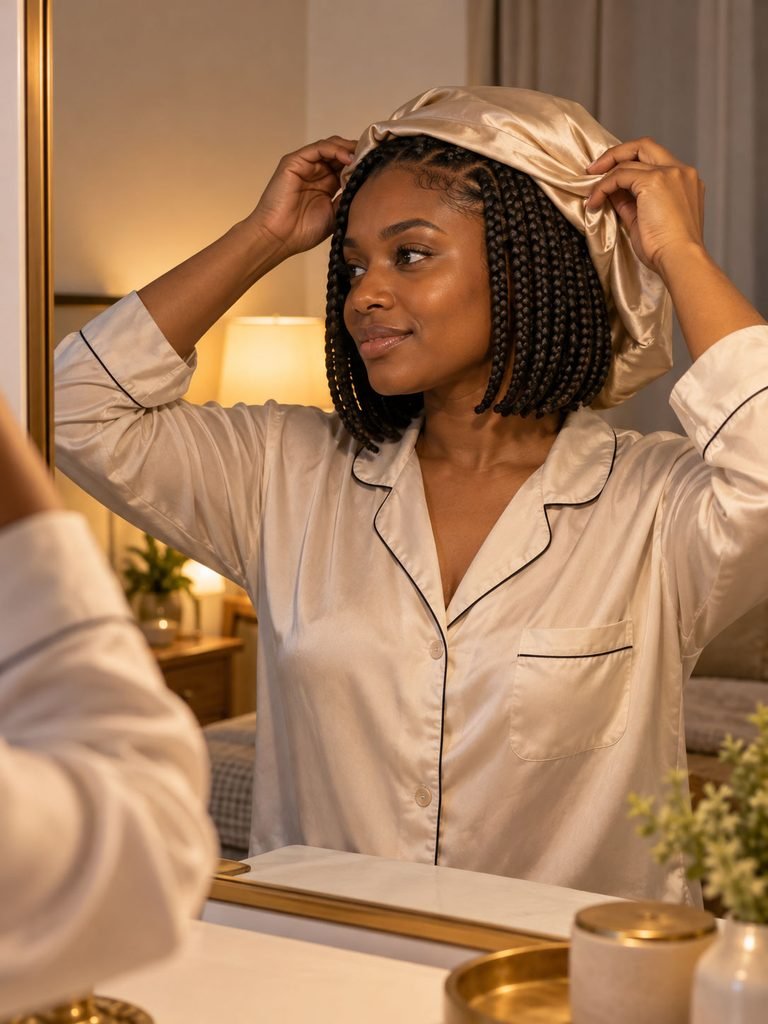
A braided bob looks its neatest when the scalp is cared for, the ends are handled gently and the braids are not constantly pulled into new shapes.
Covering the hairstyle with a suitable smooth scarf or bonnet at night may help reduce rubbing against bedding. Choose something that stays in place without putting pressure on the hairline.
Clean the scalp according to your hair and scalp needs instead of trying to preserve the appearance of the braids by avoiding washing altogether. The American Academy of Dermatology’s hair styling guidance also advises against continuously wearing tight braids and extensions because repeated tension can contribute to breakage and hair loss.
After washing, make sure the scalp and braided sections dry thoroughly. Handle loose boho curls according to their material and avoid repeatedly pulling at the braided roots to reshape them.
A braided bob should also be removed when the installation is no longer comfortable or appropriate for your hair. Persistent pain, developing bumps, noticeable thinning or a changing hairline should not be dismissed as ordinary styling discomfort. A licensed dermatologist can assess concerning symptoms.
Frequently asked questions about braided bobs
Are braided bob hairstyles suitable for short natural hair?
They can be, but the available natural hair length, density and condition affect what a braider can install securely. A consultation is more useful than assuming that every short hairstyle can hold any extension type.
Can knotless braids be styled into a bob?
Yes. Knotless braids describe the root construction, not a required finished length. A stylist can plan a knotless installation with a chin length, neck length or shoulder length bob shape.
What is the difference between a boho braided bob and a regular braided bob?
A boho version includes loose curly or wavy hair, while a regular box braid or knotless bob may be fully braided. The loose sections create additional movement but usually need more attention to prevent tangling.
Do braided bobs work with different face shapes?
Yes. Length, part placement, braid thickness and overall shape influence how the hairstyle frames the face. Choose the effect you prefer instead of treating face shape categories as strict rules.
Are short braids always lighter and safer than long braids?
No. Shorter extensions may reduce the total amount of added hair, but tension, section size and braid weight still matter. Any installation that pulls painfully should be corrected.
How long should a braided bob stay installed?
There is no single safe duration for every person or braid construction. The American Academy of Dermatology recommends that people concerned about traction avoid keeping braids in beyond six to eight weeks. Your scalp comfort, hair condition and the state of the installation may require earlier removal.
Choose the bob you can describe clearly
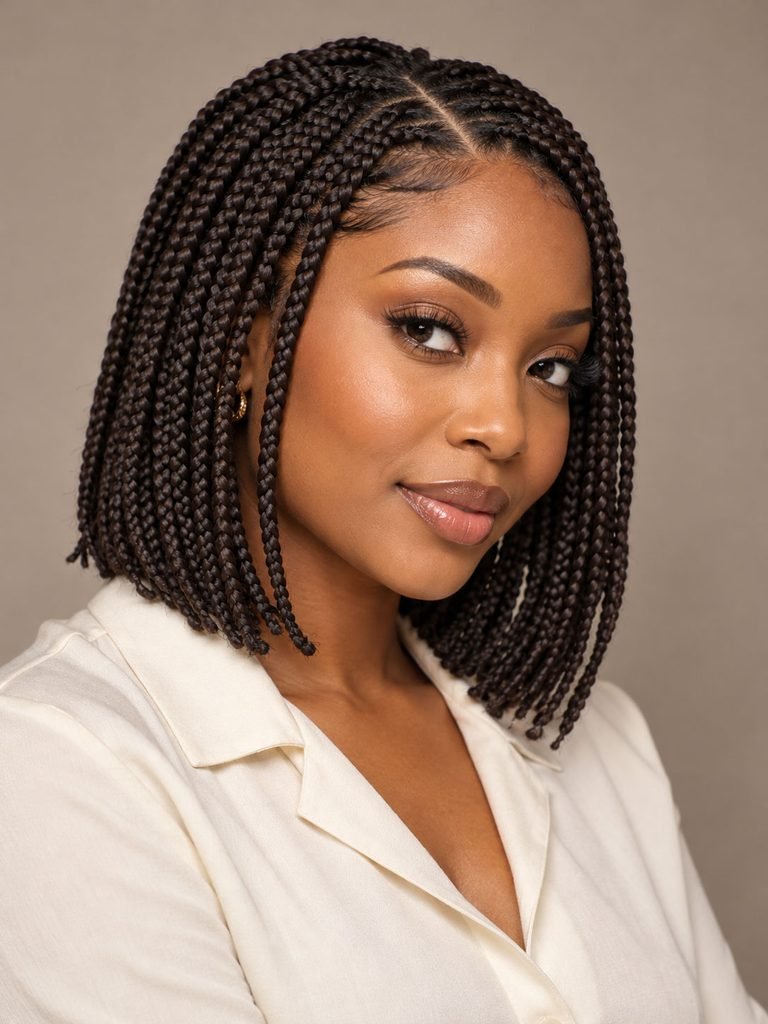
Start with the length that makes you want the style, then decide how neat, soft or dramatic the finish should look.
A blunt medium box braid bob or smooth knotless bob is a straightforward choice for a clean, polished shape. If you prefer movement, consider a boho finish or gently curled ends. Angled and asymmetrical versions offer a more distinctive outline.
Save at least one clear front view and one side view of your favorite design. Then confirm the braid size, parting, length and finish with your braider.
The right braided bob is the one whose shape you like, whose upkeep you understand and whose installation feels comfortable from the beginning.