Patio Design Styles, How to Pick the Look That Fits Your House and Climate

A saved patio photo shows a finished look, not the choices behind it. That is why furniture collected from three different boards so often ends up looking like none of them. Choose the style first, and let your house, your climate and the upkeep you will really do narrow the list. Then build it with four things: furniture shape, surface material, plants and color temperature. Those four carry most of what makes a patio read as modern, Mediterranean, coastal, cottage, boho or rustic. Everything else is optional.
Check your house, climate and upkeep time before you pick a look
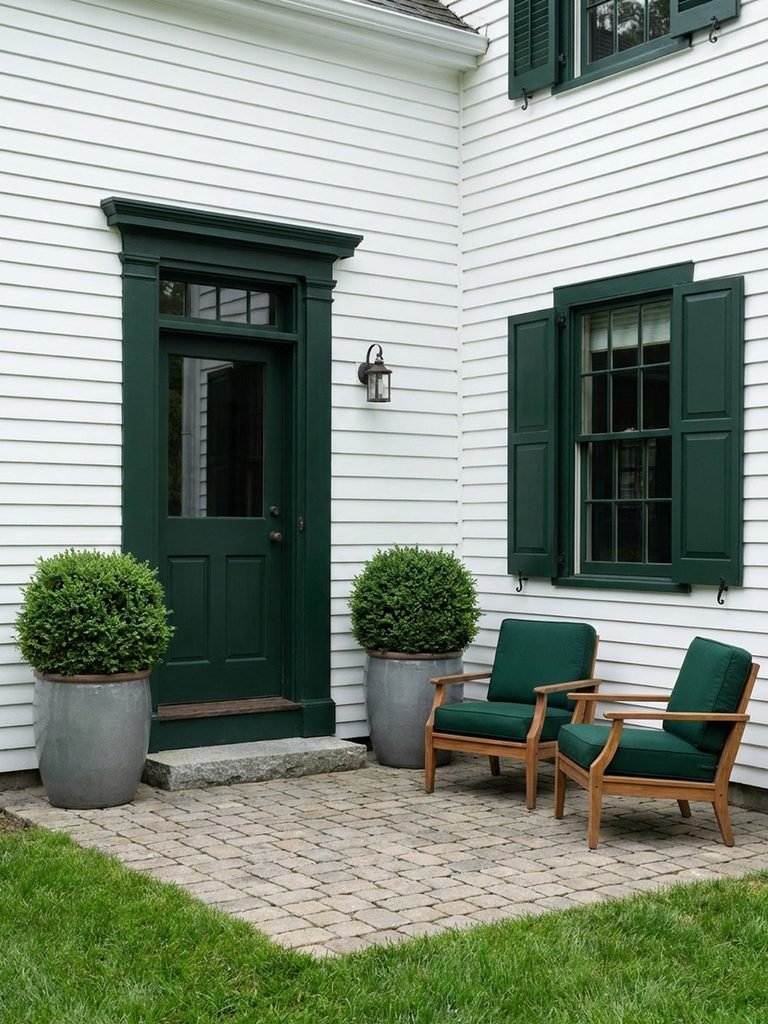
Your house decides what looks natural, your climate decides what survives, and your upkeep time decides what still looks good in August.
Start with the house. Look at the roofline, siding, trim color and window shapes, then borrow one or two of them. A patio that repeats the trim color in its cushions or the wall material in its planters looks connected even when the style differs from the house. You do not need a perfect match. You only need to avoid a patio that argues with the wall behind it.
Then look at climate. The U.S. Department of Energy’s consumer guide to home landscaping sorts its advice by region, including hot arid, hot humid, cool and temperate climates. It recommends plants adapted to your local climate and says native species need little maintenance once established. It also notes that a large bush or a row of shrubs can shade and cool a patio. For perennials, check the USDA Plant Hardiness Zone Map. Its zones reflect the average lowest winter temperature at a location, so a plant that looks perfect in a photo may not survive your coldest nights.
Last, be honest about upkeep. Natural wood, many small pots and pale fabrics all ask for regular attention. If you will not water often or store cushions before rain, choose a style that does not depend on them.
The four things that make a patio read as a style

Furniture shape, surface material, plants and color temperature do most of the work.
Furniture shape is the fastest signal. Slim, straight frames read modern. Rounded wicker reads relaxed or boho. Chunky slatted wood reads rustic. Surface material comes next, because poured concrete, tile, pavers, gravel and flagstone each push a patio in a different direction. Plants add personality, from one sculptural shrub to a crowd of flowering pots. Color temperature ties everything together. Cool whites and grays feel crisp, while terracotta, tan and brown feel warm.
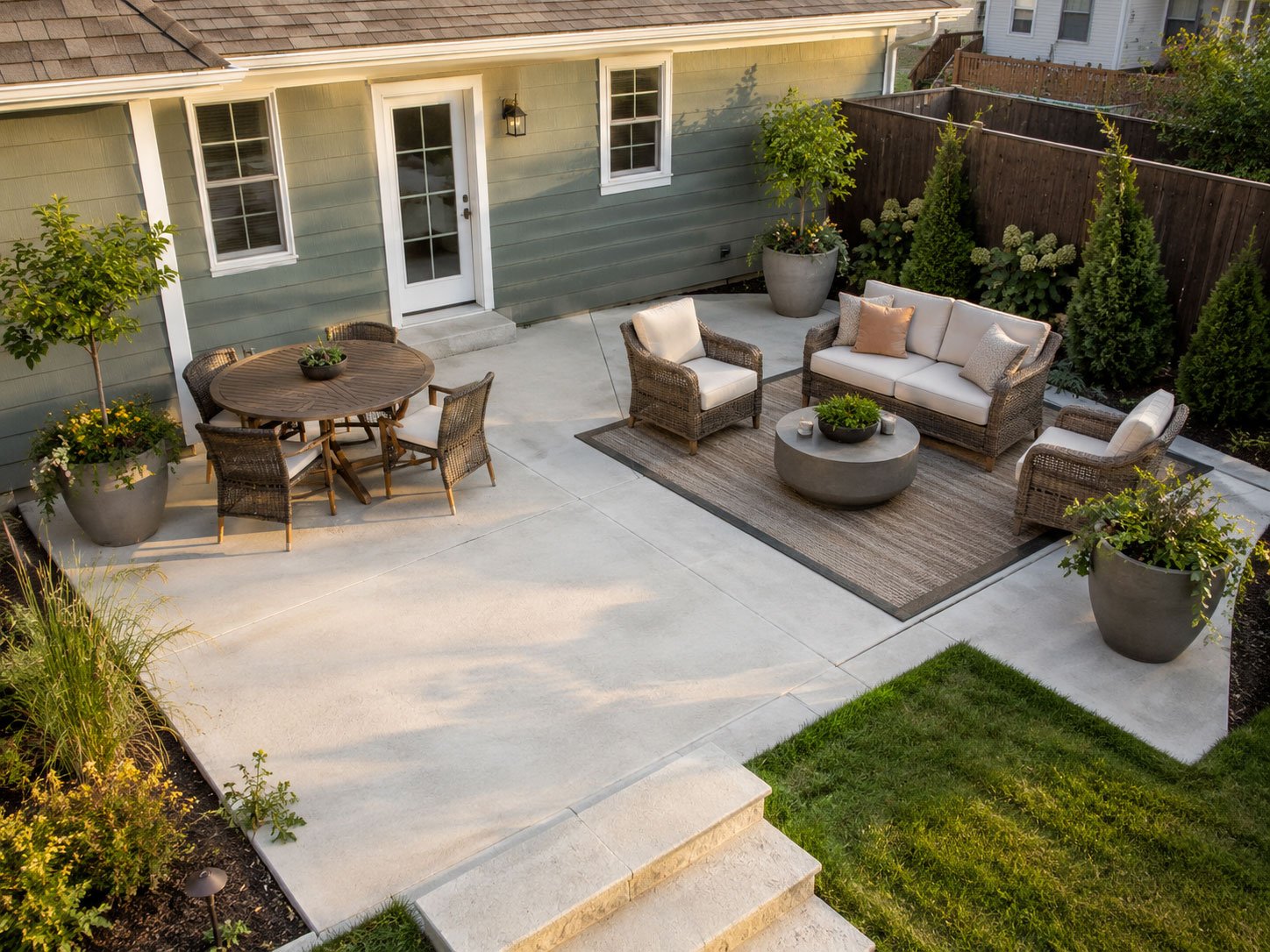
If your budget is tight, get furniture shape and color right first. Both are visible from across the yard, while plants and small accessories are easy to add later. Your existing slab matters too. Plain gray concrete suits cool, restrained looks without help, while warm styles need warm layers around it, such as pots, textiles and furniture finishes.
Six patio styles and what it takes to build each
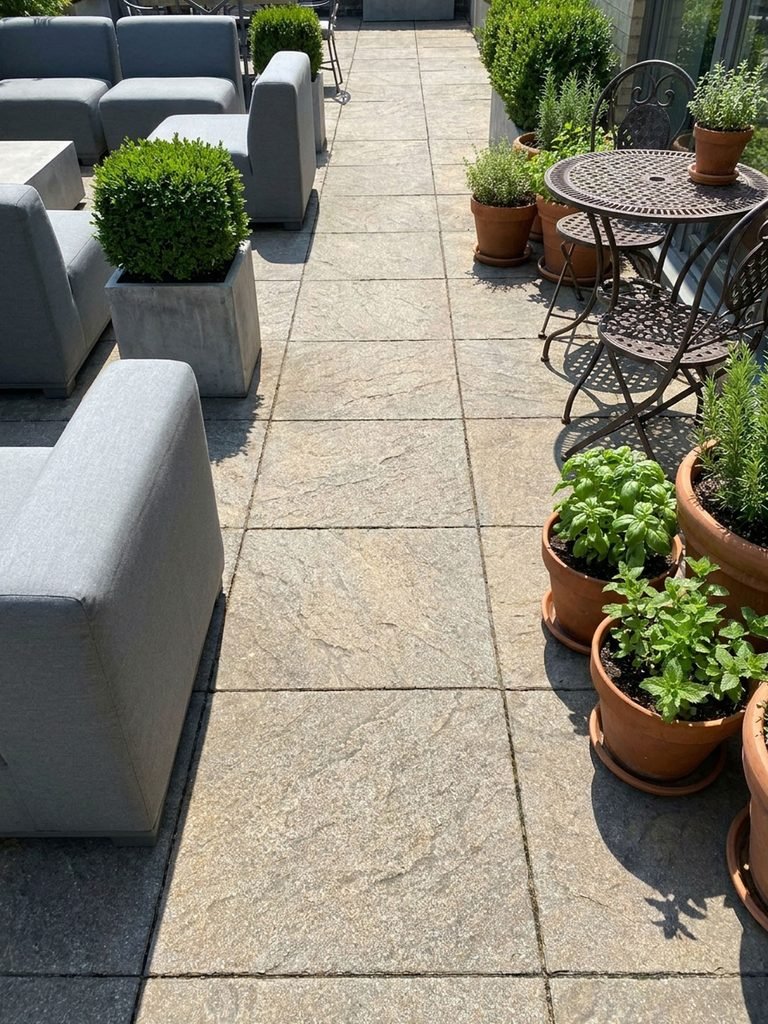
Each style below covers what defines it, how to build it and when to skip it.
Modern patio

Modern means straight edges, few materials, restrained color and room around each piece. Choose low profile furniture with clean frames in charcoal, black or white. Add one accent color at most. Use matching planters with one or two plant types, such as a clipped shrub or tall grass. A plain slab works well here.
This style suits houses with flat planes, large windows and simple trim, and it handles small patios well because it asks for fewer pieces. Skip it if you like collecting objects. The look depends on empty space, so clutter shows quickly.
Mediterranean patio
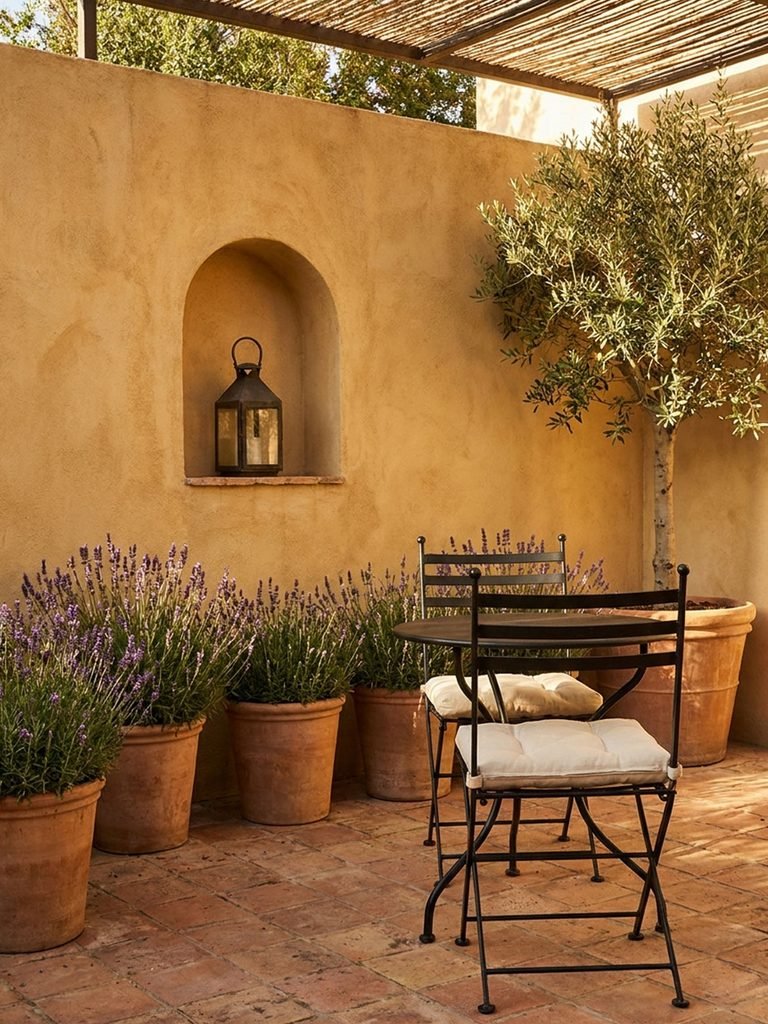
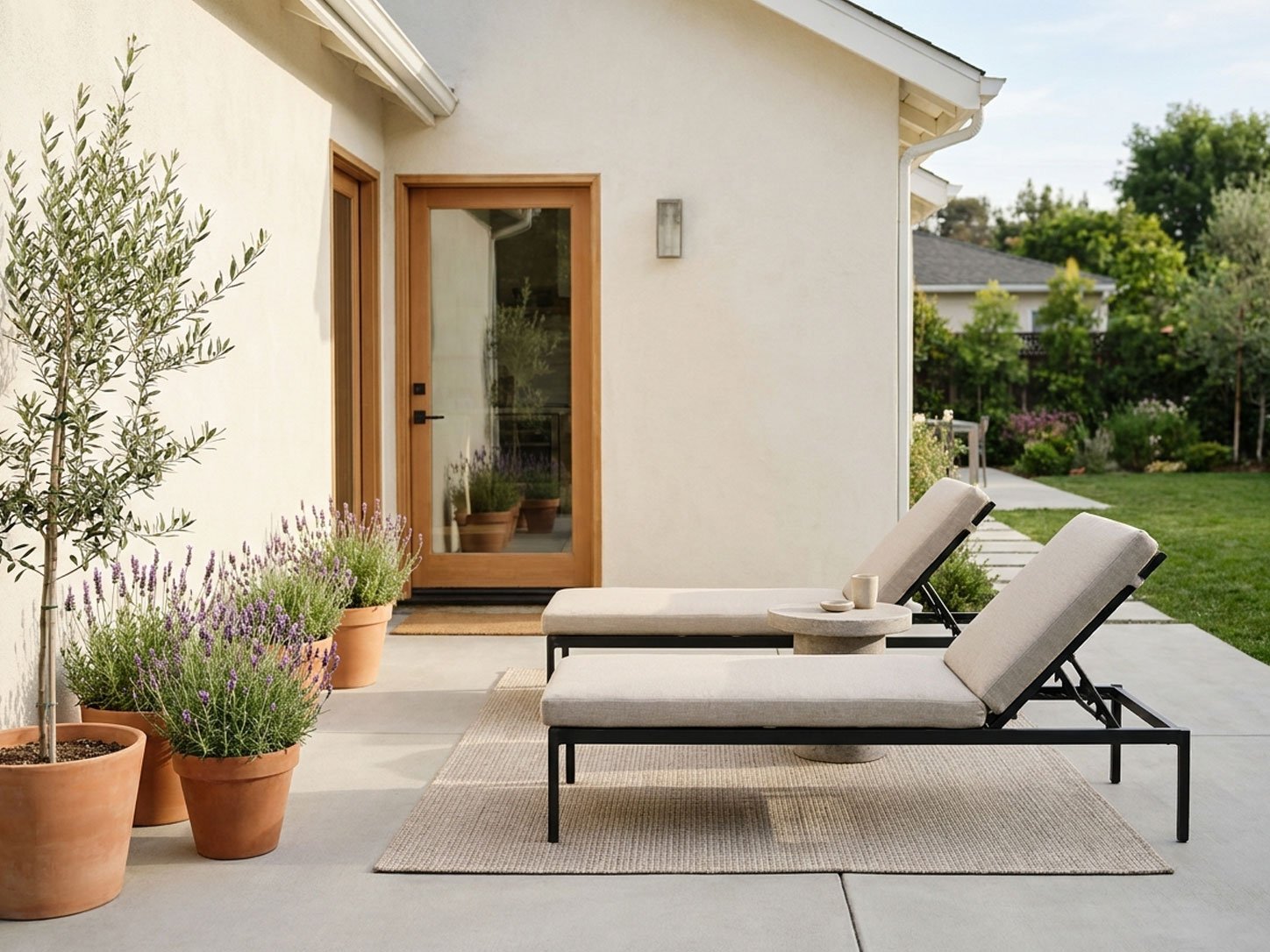
Think warm, textured and sunbaked. Terracotta pots or tile, stucco or warm stone, metal furniture with a wrought iron look and plants in olive green and gray green give the style its character. Herbs and lavender are the usual plant choices.
Lavender is fussy about conditions. The University of Delaware Cooperative Extension lavender fact sheet lists full sun and low fertility, well drained soil, and notes that it grows well in a container. Pots with drainage holes give you control over drainage, and you can move them under cover if your winters are cold and wet. Check your zone before buying any Mediterranean perennial.
This style suits stucco, brick or warm stone houses and sunny patios. Skip it if the patio sits mostly in shade, or treat the plants as seasonal.
Coastal patio
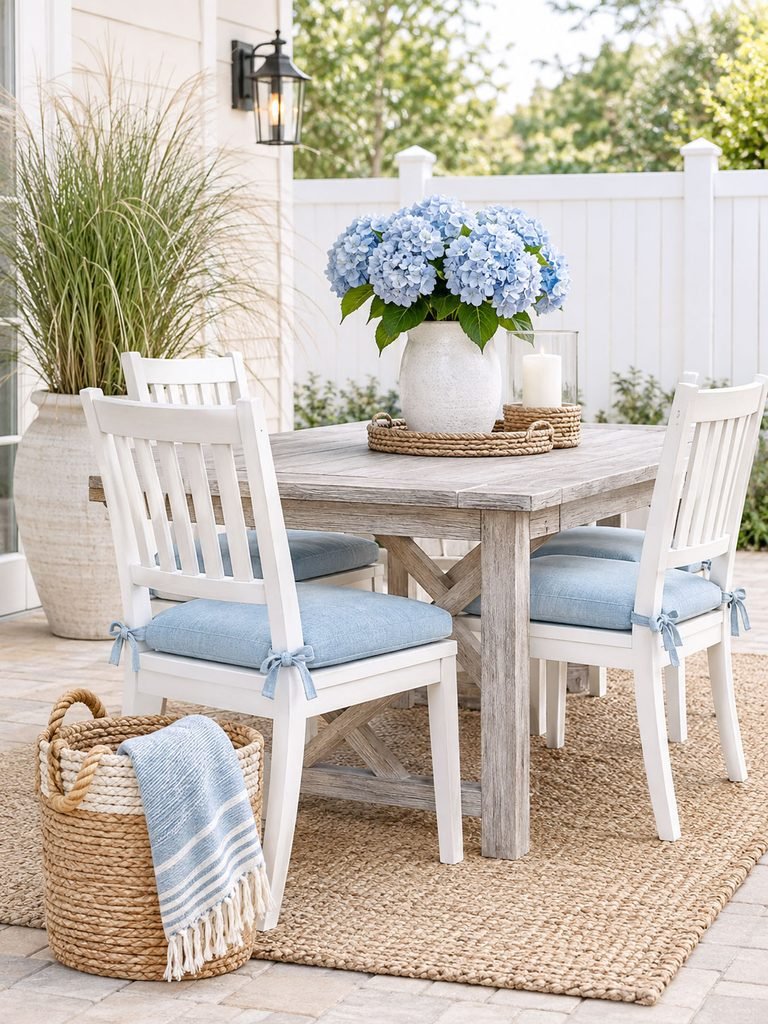
Coastal is light, airy and relaxed. Think white or pale painted wood, soft blues and sandy neutrals, weathered gray wood, rope or jute textures and loose, breezy fabrics. You do not need to live near water for it to work. A bright inland patio can carry the look with color and texture alone.
The tradeoff is upkeep. Pale cushions show dirt, and sun can fade fabrics over time. If you are close to salt air, check hardware and metal finishes before buying. Skip this style if you do not want to clean light colored upholstery.
Cottage patio
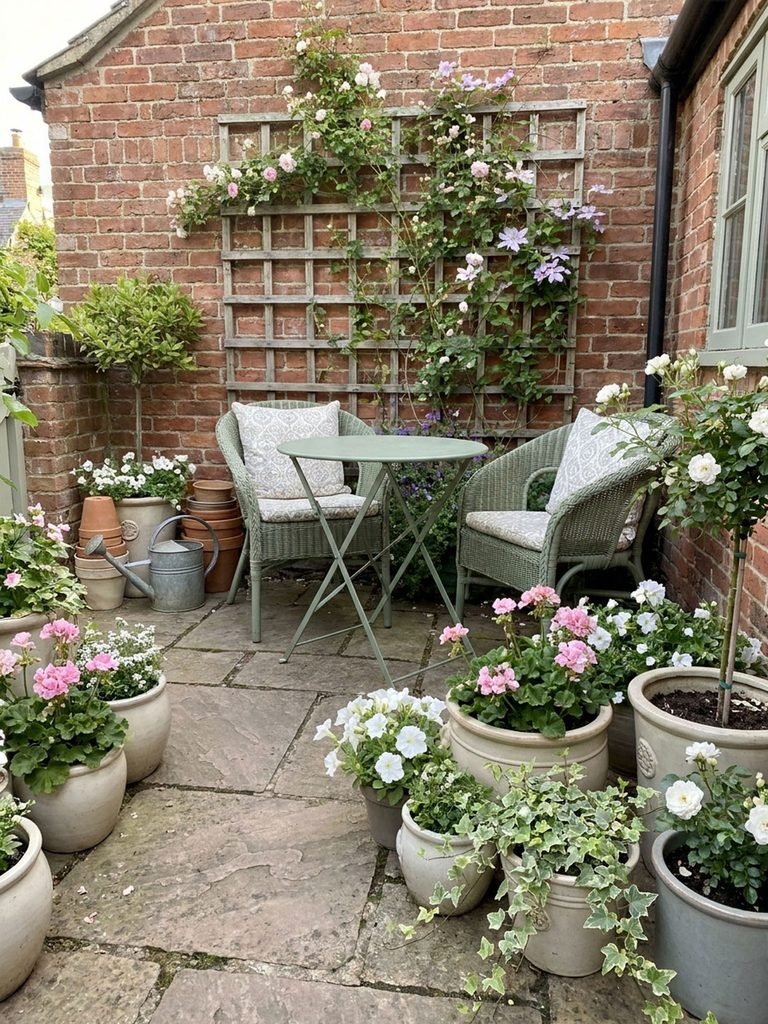
A cottage patio is informal and a little crowded on purpose. Painted wood or wicker furniture, a bistro table, soft colors and many pots of flowers and trailing plants create the look. Keep the pots in one or two colors so the abundance reads as planned.
It suits older and traditional houses and works well on small patios. The cost is a watering routine, because many containers dry out quickly in warm weather. Skip it if you want a patio that looks good with almost no care.
Boho patio

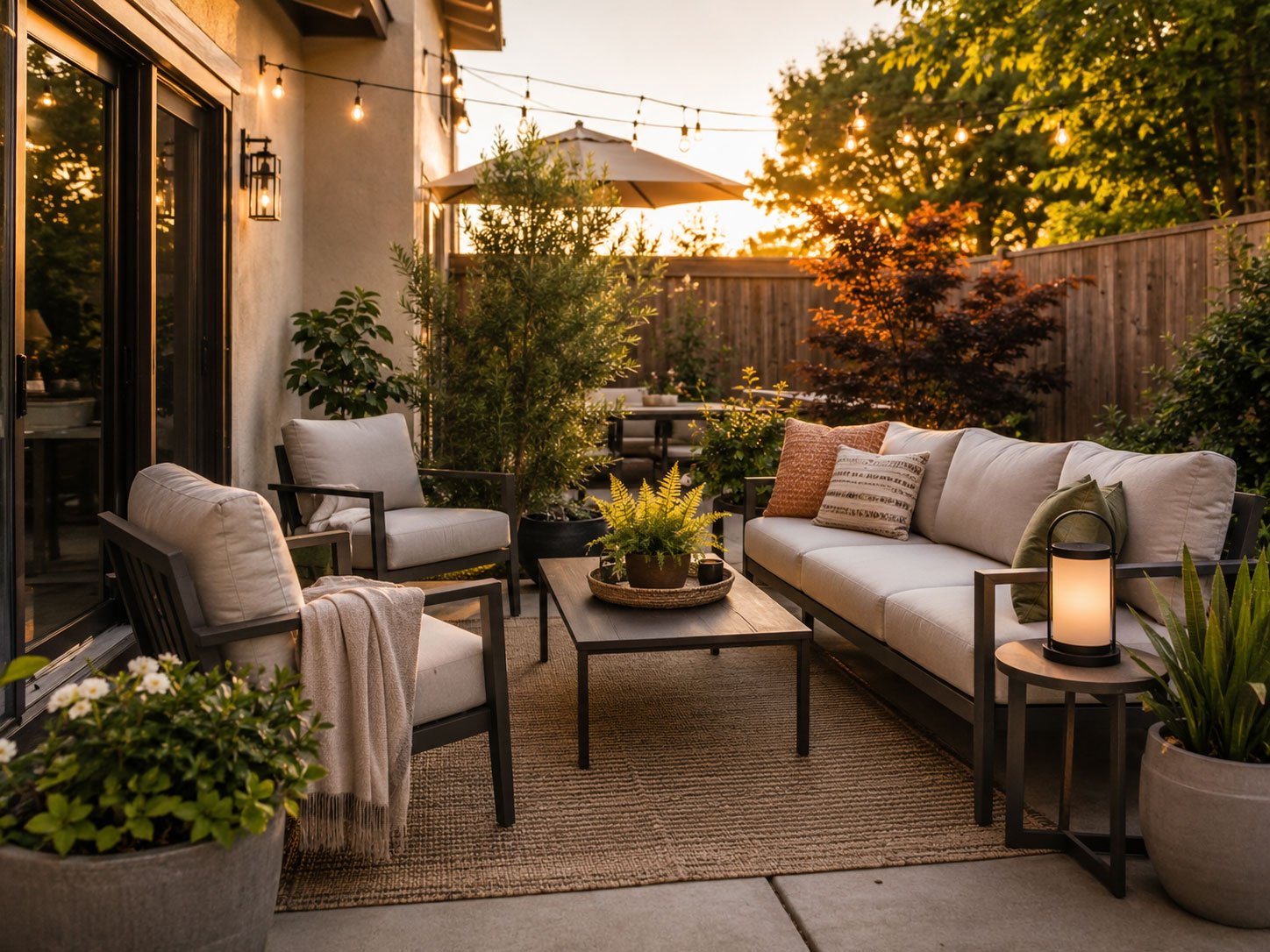
Boho is about layers: woven furniture, low seating, patterned textiles, lanterns and plants at different heights. The way to keep it from looking messy is limits. Use two patterns at most, repeat one or two colors and let the plants provide the variety.
The tradeoff is soft goods. Cushions, throws and rugs need dry storage or a covered patio, or they become chores. Skip this style in a wet climate if you have nowhere to put the textiles when it rains.
Rustic patio
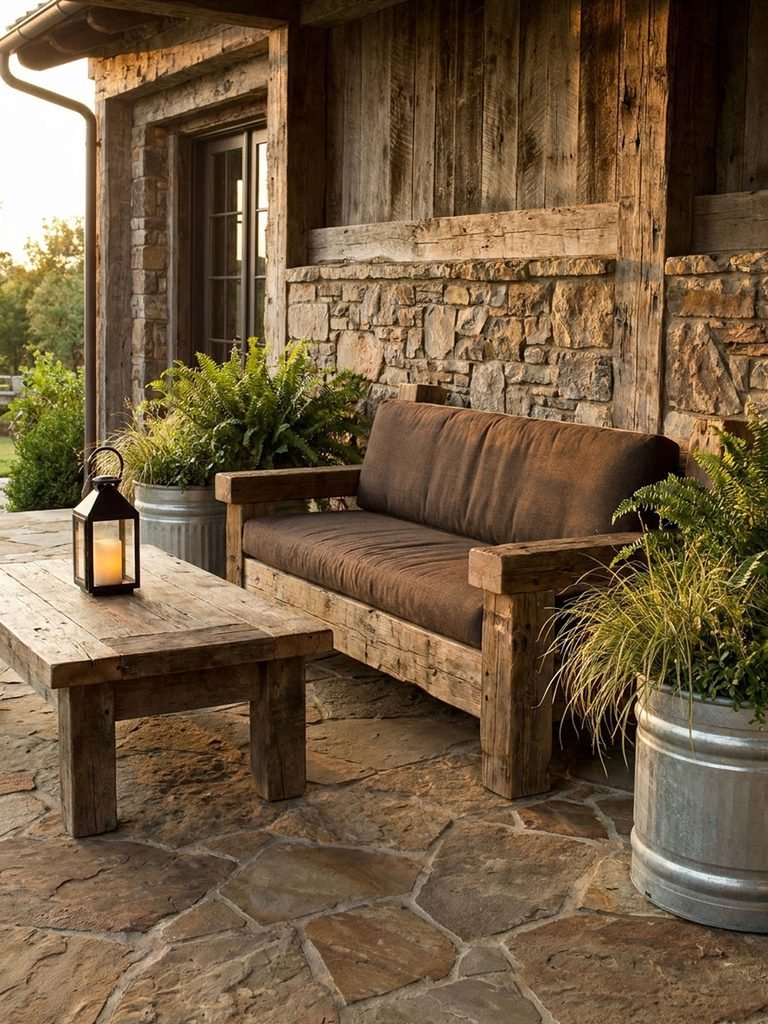
Rustic leans on natural materials: chunky wood, stone, iron and galvanized metal in earthy browns and deep greens. It suits wooded or country lots and brick or stone houses.
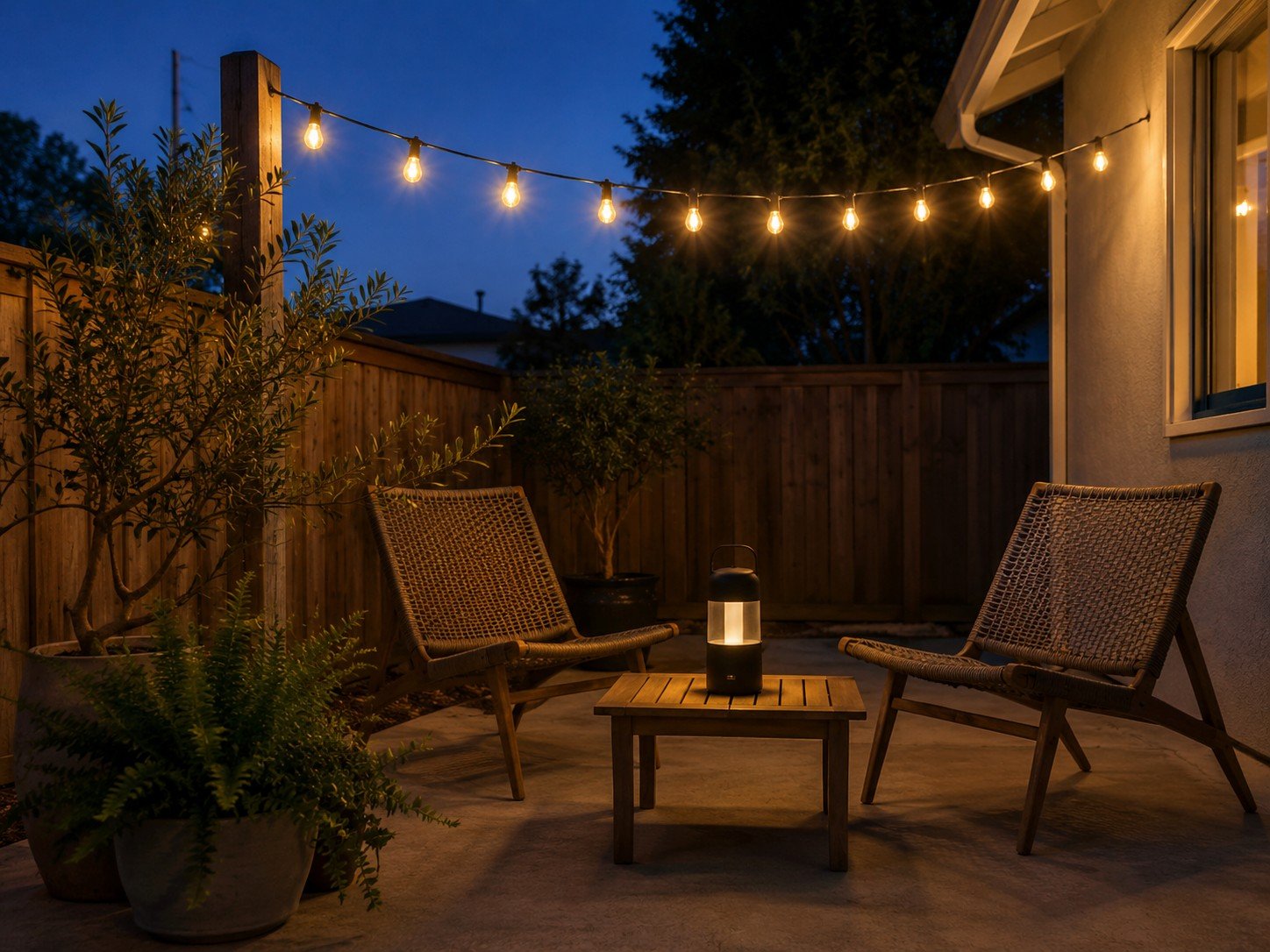
Natural wood weathers unless you keep a finish on it, so decide whether you want a silvered look or a maintained one. A fire feature fits the style, but only where clearance, local rules and the manufacturer’s instructions allow it. Lanterns can give a similar glow. Skip rustic if you want zero maintenance.
Patio styles compared at a glance

Use this table to narrow the field. The upkeep ratings are editorial judgments, not measured data.
| Style | Main look | Works best with | Upkeep | Watch out for |
|---|---|---|---|---|
| Modern | Clean lines, few materials | Flat planes, large windows, simple trim | Low to medium | Clutter shows quickly |
| Mediterranean | Warm, textured, sunbaked | Stucco, brick or warm stone | Medium | Cold, wet winters and shade for sun loving plants |
| Coastal | Light, airy, natural fibers | Light siding and bright sun | Medium | Fading and dirt on pale fabrics |
| Cottage | Informal, flowery, layered | Older or traditional houses | Medium to high | Watering many pots |
| Boho | Layered textiles and plants | Eclectic homes and covered patios | Medium to high | Soft goods and moisture |
| Rustic | Natural wood, stone, iron | Wood, brick or stone exteriors | Medium | Wood weathers without a finish |
How to mix two styles without making a mess
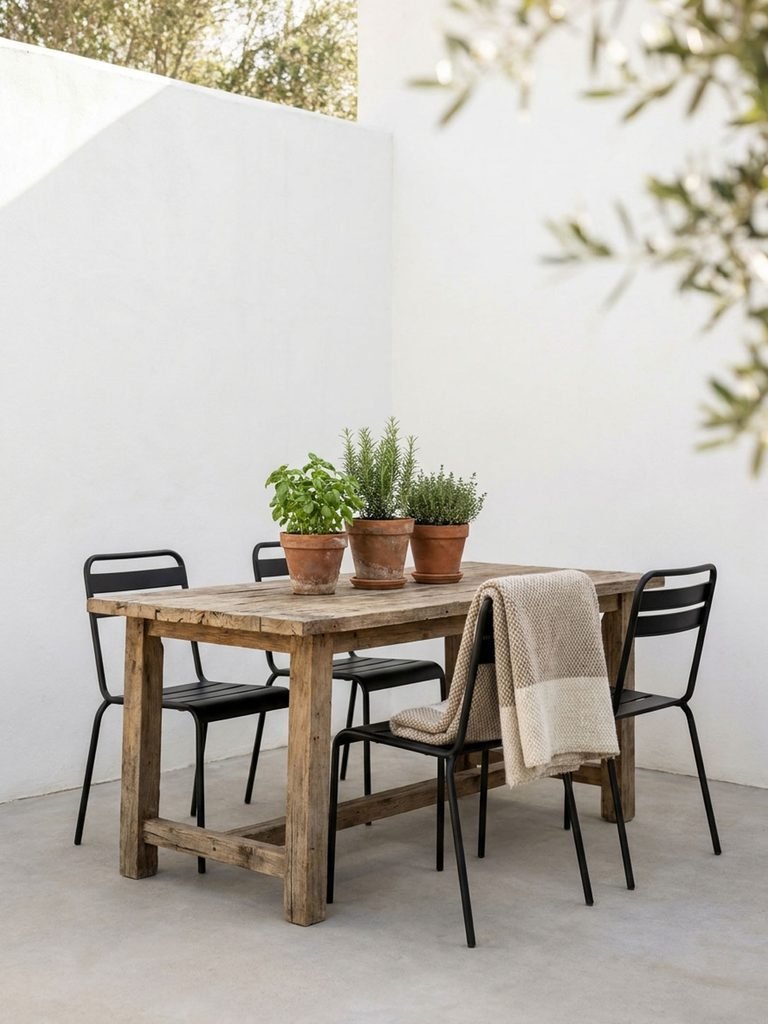
Pick one lead style and borrow from a second in no more than one or two elements.
Pairs that tend to blend well are modern with rustic, which share clean shapes and natural wood. Coastal and cottage share soft colors. Mediterranean and rustic share warm, earthy tones. Keep one thing constant across the whole patio, either furniture shape or color temperature. If both change at once, the patio stops reading as any style at all.
Patio style questions answered
What is the easiest style for a small patio?
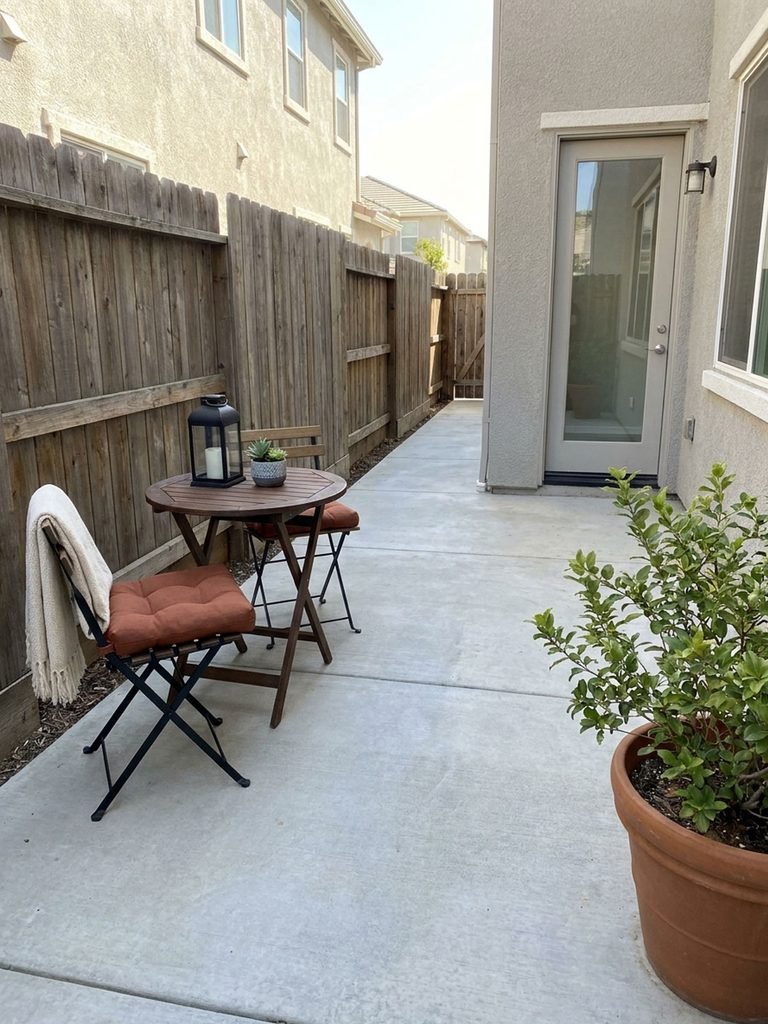
Modern and coastal tend to be easier because they rely on fewer pieces and lighter colors, which keeps a small space from feeling crowded. Whatever you pick, test the furniture footprints first.
What style works on a gray concrete slab?
Modern fits most naturally. For warmer styles, add warmth around the slab with terracotta pots, rust or tan cushions and wood toned furniture instead of fighting the gray.
Does my patio have to match my house?
No. It helps to borrow one thing from the house, such as the trim color or the wall material, so the patio feels connected even when the style is different.
How do I know a plant from a photo will survive my winter?
Look up your location on the USDA Plant Hardiness Zone Map and compare the plant’s listed zone range with yours. Then check the plant’s sun and drainage needs against your patio.
Buy in this order once you choose a style

Furniture first, main color second, surface layers third, plants fourth and accessories last.
- Tape out the furniture. Mark the actual footprints and check the walking route, as the Femorias guide to patio layout ideas by size explains.
- Choose one main color and one accent, and pull one of them from the house trim.
- Buy only as many cushions and throws as you can store before rain.
- Pick plants by sun, drainage and your hardiness zone.
- Add accessories one at a time, and stop when the patio still has room to move.
Once the style is set, the comfort basics of seating depth, light and shade are covered in the Femorias cozy patio guide.
Start this weekend with two photos you love. Write down the furniture shape, floor material and color they share, then check whether your patio can support those three things. That answer tells you which style to build and which to leave on the board.