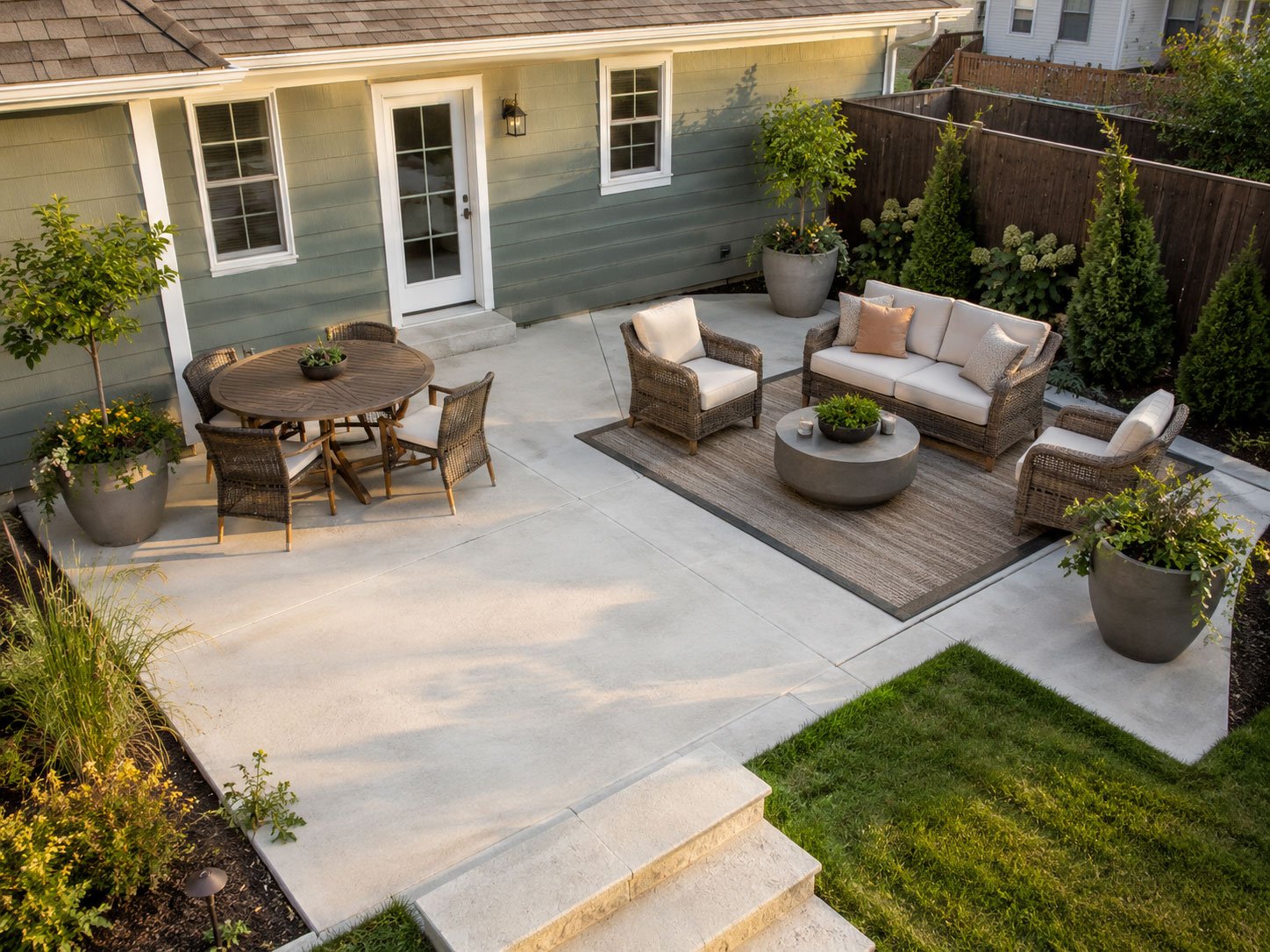
Cozy Patio Ideas for a Relaxing Outdoor Space You’ll Actually Use

A cozy patio is not built by adding as many decorative objects as possible. It comes from making the space comfortable to sit in, easy to move through, pleasant after dark, and sheltered enough that you want to stay outside.
Start with what you actually do there. A coffee patio needs different furniture from an outdoor dining area. A quiet reading corner needs different lighting from a space used for weekend gatherings. Once that purpose is clear, the familiar cozy details such as cushions, plants, rugs, lanterns, and warm color become much easier to choose.
Decide what the patio needs to do first
Before buying another pillow or planter, decide whether the patio’s main job is lounging, dining, reading, entertaining, or some combination that the space can realistically support.
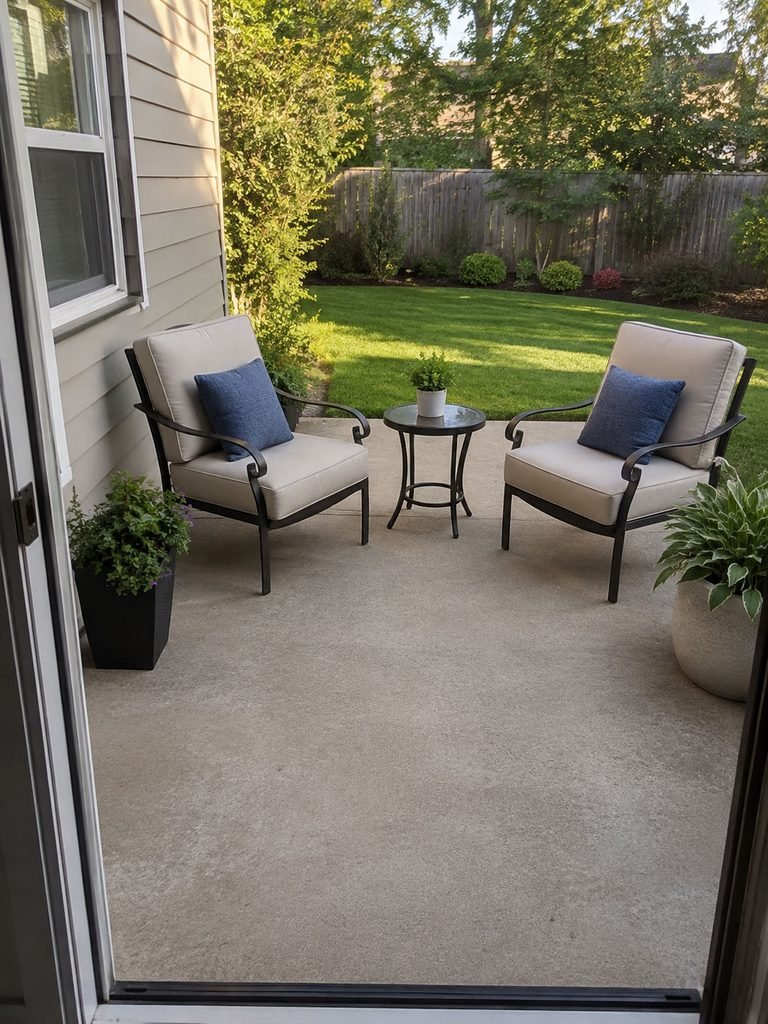
A small patio usually feels more comfortable when one activity clearly wins. Two generous chairs and a side table can be better than four cramped seats. A compact dining table can be more useful than squeezing in both dining and lounge furniture simply because both technically fit.
Pay attention to the route through the space. Open the exterior door. Pull dining chairs back as though someone is sitting in them. Walk toward the yard, grill, gate, or steps. The arrangement should still work after the furniture moves into its normal in use position.
For specific footprints and furniture arrangements, the Femorias guide to patio layouts by size goes much deeper into testing furniture before you buy it.
Once the layout works, decorating gets easier because every accessory has somewhere logical to go.
Build comfort from the seating out
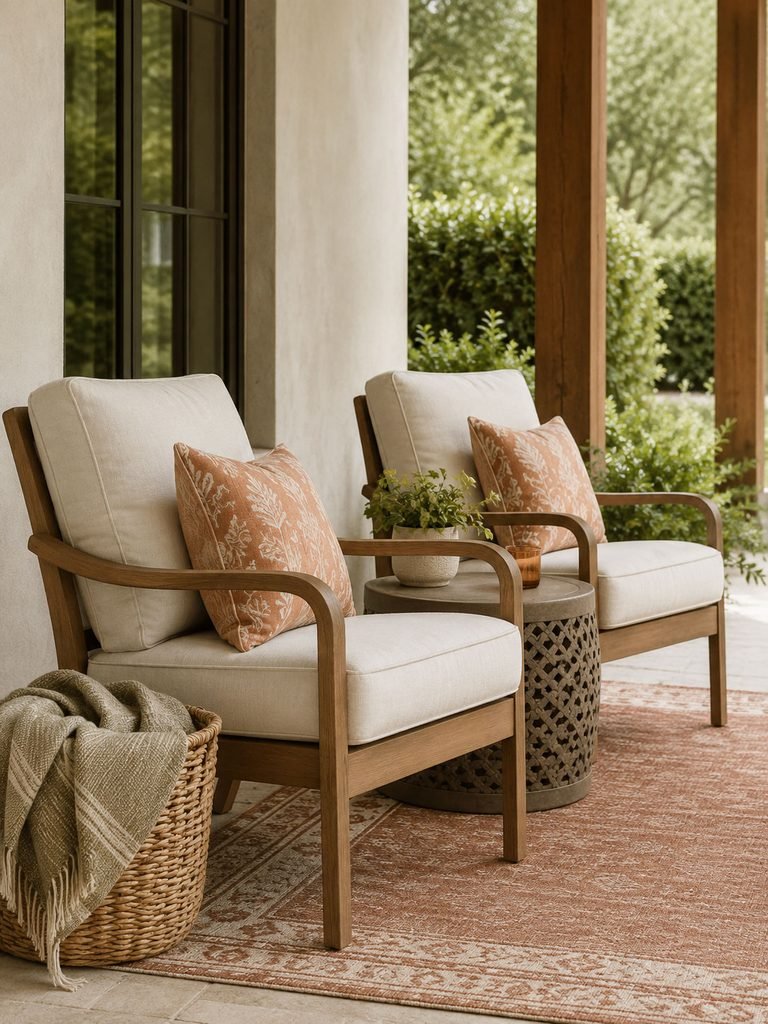
Comfort begins with the seat itself. A chair with attractive styling but an awkward depth, rigid back, or nowhere to set a drink will not become more usable because it has six decorative pillows on it.
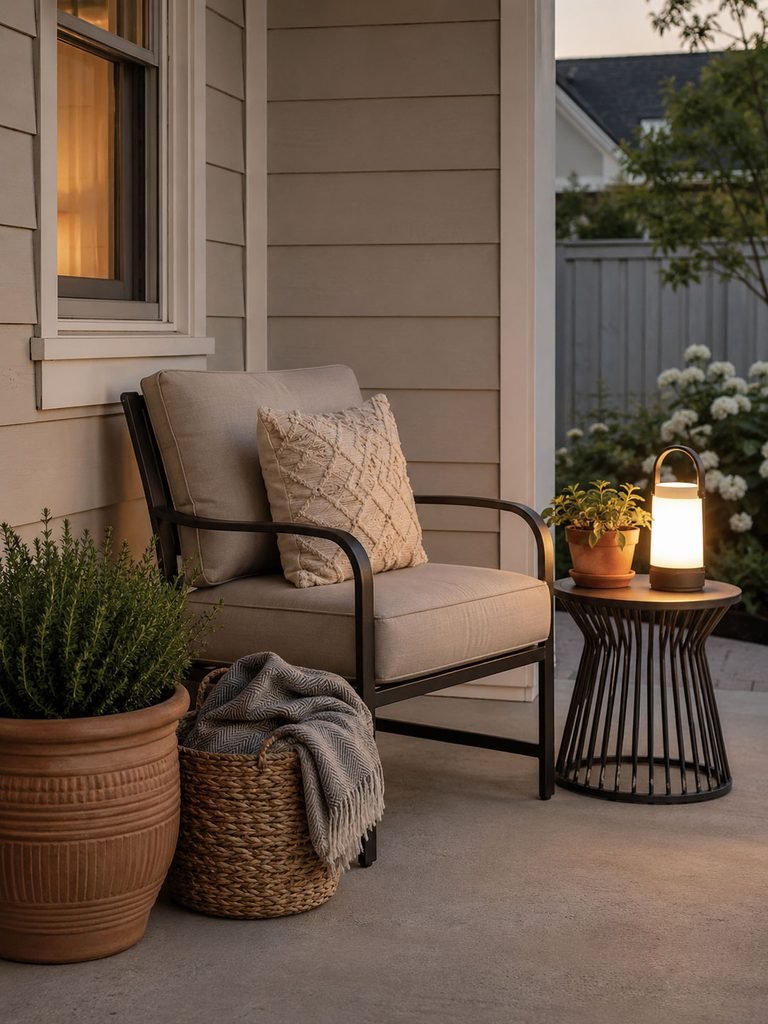
Choose the main seating first, then add softness selectively. One supportive cushion, a pillow at the back, or a lightweight throw can make a chair more pleasant without burying it in fabric that has to be stored every time rain approaches.
Place a usable surface beside the seat. On a small patio, a stool or compact side table can do more work than a large coffee table in the center because it keeps the walking route open.
Dining patios benefit from the same idea. The chairs should be comfortable enough to linger in after the plates are cleared. A table does not need elaborate styling every day. A planter, hurricane lantern, or small vase can give it a finished look without consuming the surface needed for dinner.
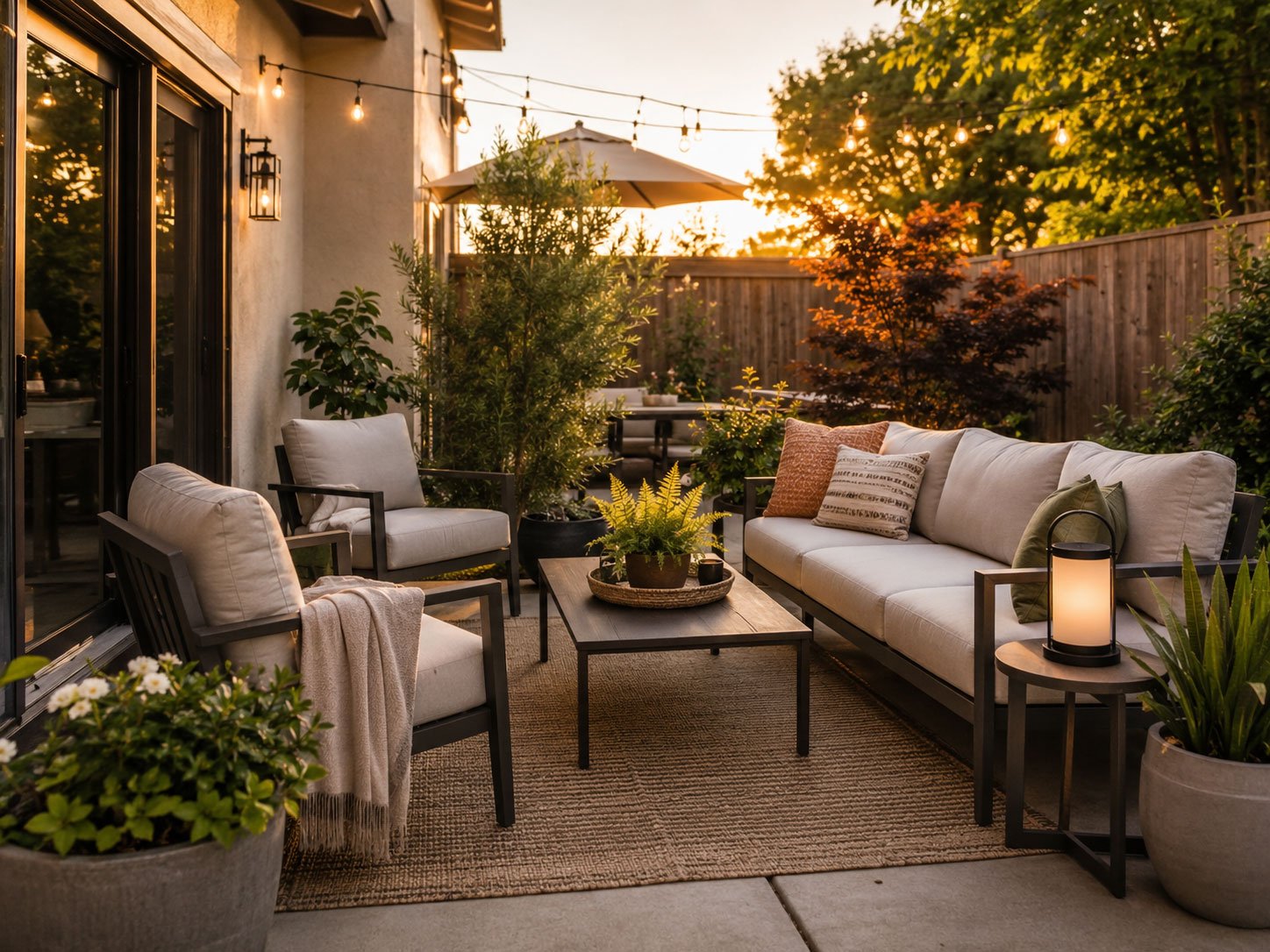
Color works best when it comes from a few repeated elements. Warm terracotta, rust, tobacco brown, olive, muted blue, cream, or soft clay tones can make a patio feel visually warmer. Repeating one or two of those colors in cushions, pots, and a rug generally looks calmer than introducing a different accent color with every purchase.
Layer light where people sit and move
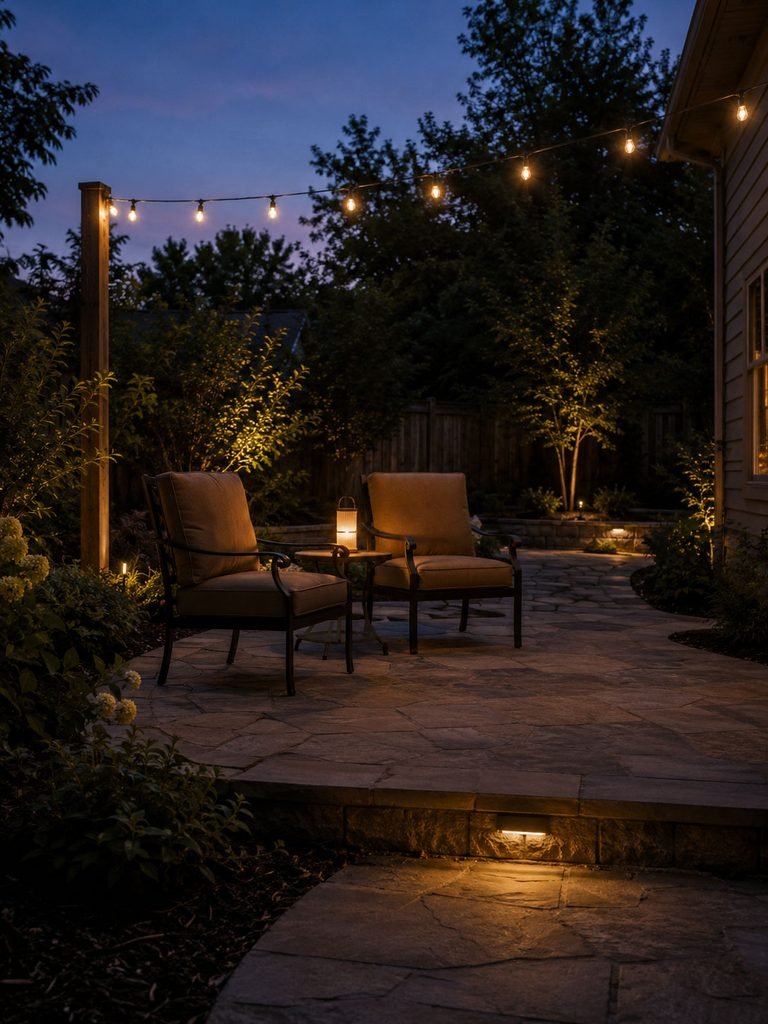
One bright fixture can make an outdoor area technically visible while leaving it uncomfortable. A softer patio usually comes from several modest sources placed where they have a job.
Use overhead light to establish the seating zone, table height light where people eat or read, and lower light where a step or change in level needs to be visible. You do not need to illuminate every fence panel or plant.
The U.S. Department of Energy’s guidance on responsible outdoor lighting recommends using light only where it is useful, directing it toward the intended area, keeping output no higher than necessary, and using controls when practical. Those principles happen to produce a more comfortable patio as well as reducing unnecessary nighttime light.
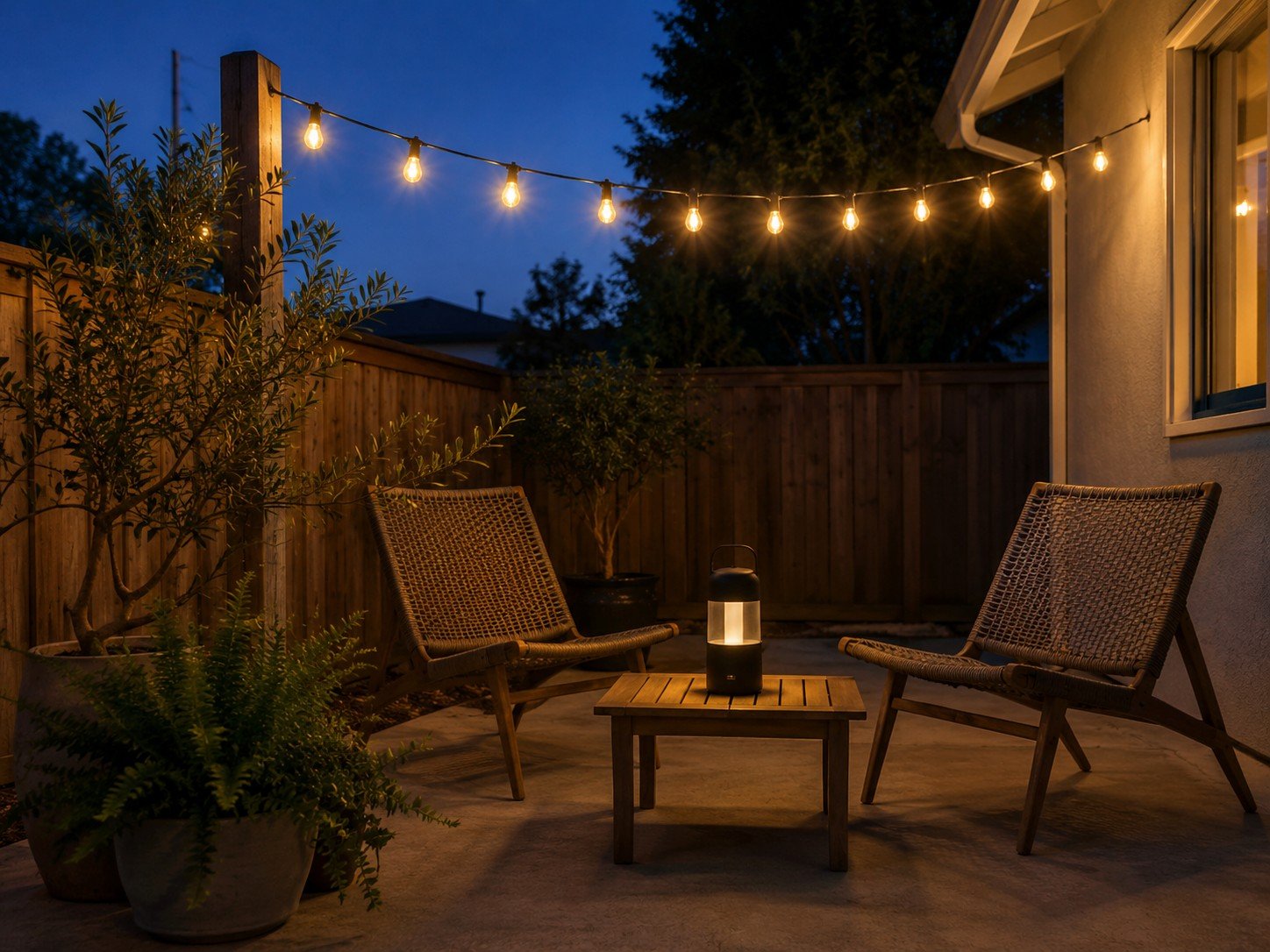
String lights work well when they visually lower the ceiling over a seating area. A rechargeable lantern adds light at face or table height. Small path or step fixtures can handle circulation.
If your patio has no exterior receptacle, do not turn an indoor cord into permanent outdoor infrastructure. The Femorias guide to patio lighting without an outlet covers solar lights, rechargeable fixtures, and temporary cord options in more detail.
When a temporary extension cord is necessary, use one intended for outdoor conditions and keep it accessible for inspection. The U.S. Consumer Product Safety Commission’s extension cord guidance identifies protective construction requirements for cords intended for outdoor use.
The visual rule is simple: light the places you use, not every square foot you own.
Use plants, shade, and privacy to soften the edges
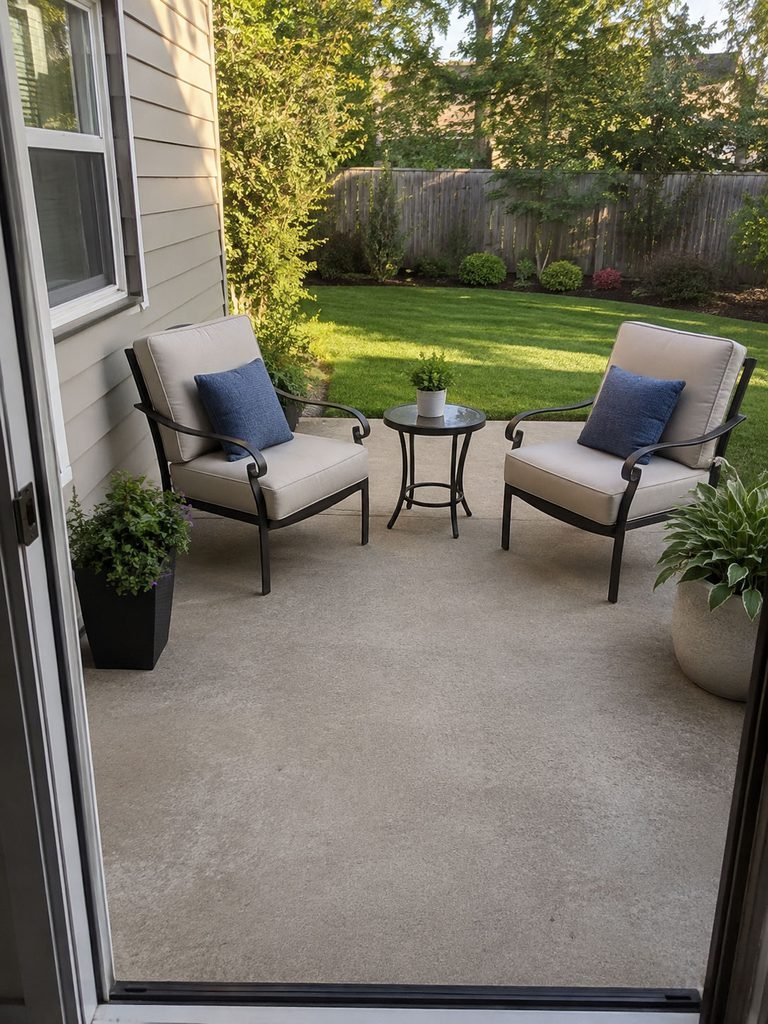
Plants make a hard patio feel connected to the yard, but more pots do not automatically produce a better result. A few containers with different heights usually create a stronger edge than a trail of small pots around every chair leg.
Begin with the conditions. Notice how many hours of direct sun the patio receives, whether reflected heat builds against a wall, how exposed the spot is to wind, and how often you are realistically willing to water.
Choose containers with drainage and group plants that have compatible needs. Penn State Extension’s container gardening guidance emphasizes drainage, appropriate container size, and suitable growing media as basic requirements for successful container planting.
Use greenery strategically. A taller planter can soften an empty corner. A climbing plant on an appropriate support can cover a stark wall without taking much floor space. A group of herbs near an outdoor dining area can be both useful and decorative if the light conditions suit them.
Shade can contribute to coziness just as much as privacy. An umbrella or existing covered area makes the patio more usable during hot parts of the day and visually creates a ceiling over the seating.
Privacy should solve an actual sight line. Do not surround a compact patio with screens unless the whole perimeter is genuinely exposed. Often a tall planter, umbrella, or seat moved closer to a sheltered wall blocks the view that matters without making the space feel boxed in.
Add rugs and textiles with weather in mind
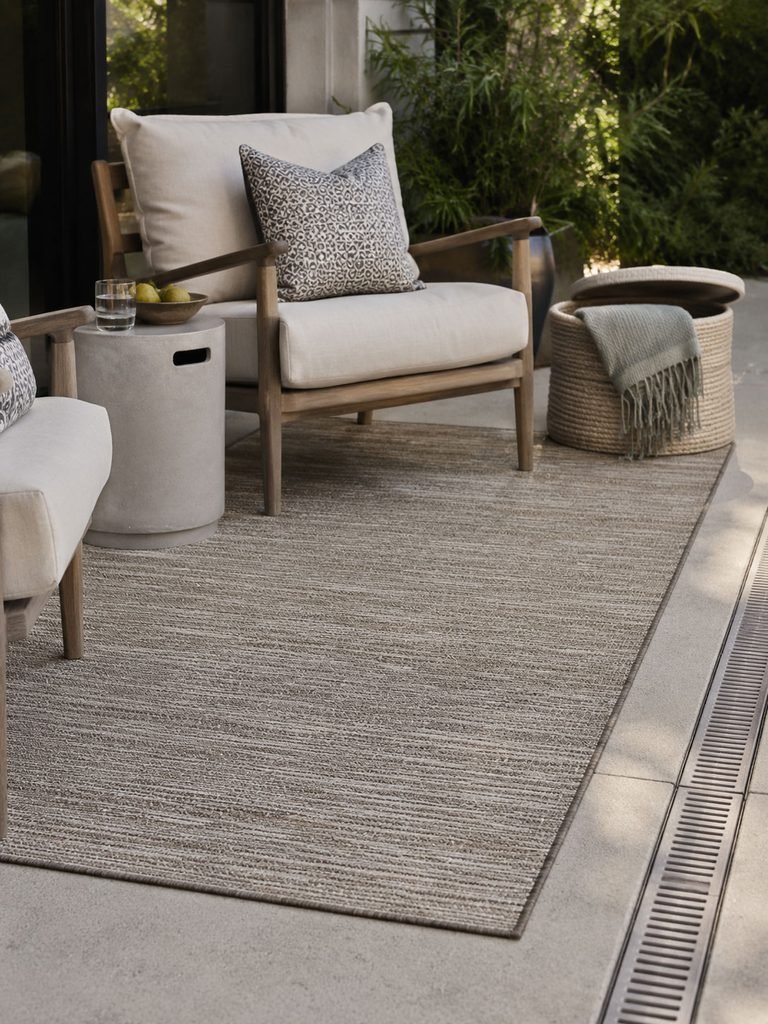
A rug is useful because it visually connects separate pieces of furniture. It is less useful when it introduces moisture problems, catches chair legs, or becomes another object you resent maintaining.
Choose a rug made for outdoor use and consider what is underneath it. Concrete, wood decking, composite decking, and grass do not behave the same way when a wet rug remains on top of them. If your patio stays damp after rain, being willing to lift and dry the rug matters more than finding the perfect pattern.
Keep its size connected to the seating arrangement. A tiny rug floating between chairs can make the furniture look more scattered rather than less. A larger rug that connects the main pieces usually reads as one zone.
Use cushions and throws with the same realism. If the patio is uncovered, have a dry place for soft items before you buy a large collection of them. A storage bench, deck box, closet near the door, or simple basket brought inside can make the difference between textiles you enjoy and textiles that become chores.
Outdoor curtains can soften a covered structure, but they need proper attachment and a plan for wind. On an exposed patio, plants or a slatted screen may require less daily attention.
Personal decor belongs here too. A ceramic pot, lantern, tray, weather suitable wall piece, or small sculptural object can make a patio feel individual. The best pieces are the ones that still look intentional after you remove everything that was added only to fill space.
Make a small patio feel intentional, not crowded
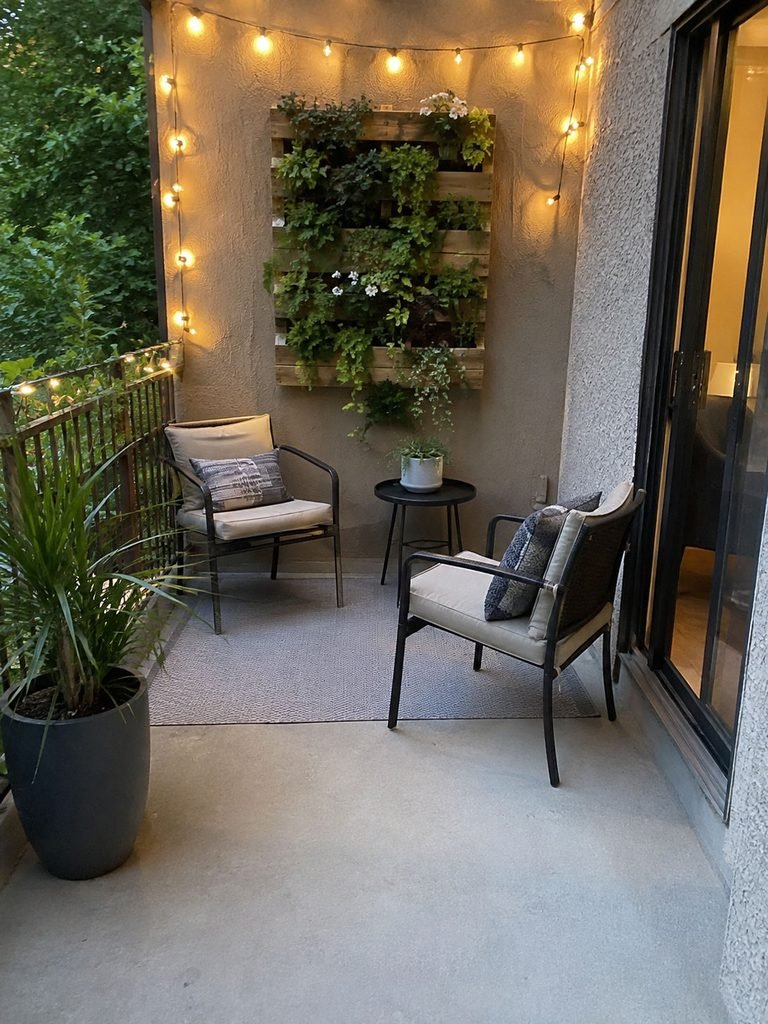
Small patios become uncomfortable when every good idea is used at once. The fix is editing rather than shrinking every object.
Choose one seating arrangement that fits comfortably. Put accessories around the perimeter when possible. Use walls, railings, or appropriate vertical supports for plants instead of placing every pot on the floor. Keep the middle available for movement.
Furniture that serves more than one purpose can help, but only if it performs both jobs well. A sturdy stool can act as a side table or occasional seat. A storage bench can hold cushions while providing seating. A folding bistro table is useful when you genuinely need the floor space for something else.
Avoid shopping by the advertised number of seats. A four piece set may consume more useful floor area than a loveseat and one chair. Measure the actual dimensions and test the arrangement before ordering.
One substantial planter often looks calmer than five tiny pots. One useful lantern is better than a group of decorative objects that occupy the only side table. One rug that connects the seating is stronger than several competing patterns.
The goal is not to make the patio look larger in a photograph. It is to make the real space easier and more pleasant to use.
Cozy patio questions, answered
How can I make a patio cozy without buying new furniture?
Rearrange what you already own before shopping. Move the most comfortable seats into a conversation arrangement, remove objects that interfere with circulation, then add a table lamp or lantern, one plant group, and a few textiles you already have that are suitable for outdoor use. Lighting and arrangement can change the character of the space more than another decorative object.
How can I make a patio cozy on a small budget?
Spend first on the problem that keeps you from using it. If the chairs hurt, improve the seating. If the patio disappears after sunset, address lighting. If it feels exposed, add strategic shade or screening. Trying to upgrade seating, lighting, plants, rugs, pillows, wall decor, and dining pieces at the same time is how a modest refresh becomes expensive.
What plants are best for a patio?
There is no single best patio plant. Choose for the actual amount of sun, heat, wind, winter temperature, container size, and watering schedule. A plant that thrives on a shaded covered patio may struggle against a hot west facing wall. Containers also need adequate drainage.
Can I put a fire pit on any patio?
No. The available clearance, surface, local rules, lease or building restrictions, and manufacturer instructions all matter. The U.S. Fire Administration says outdoor fire pits and similar fire features should be used outdoors and kept at least 10 feet from a home or anything that can burn. If your patio cannot provide appropriate clearance, use lighting to create the warm visual effect instead.
Do I need an outdoor rug for a cozy patio?
No. A rug is useful when it defines seating and suits the surface beneath it. On a damp or exposed patio, painted concrete, attractive pavers, wood decking, or simply a well arranged furniture group may be lower maintenance.
How can I make a patio comfortable in cooler weather?
Start with shelter from wind, a dry place to sit, and removable textiles you can store properly. A permitted heating or fire feature may extend the season in some locations, but climate and building rules set the real limits. Avoid treating “all year patio use” as a requirement. A space that works beautifully for eight comfortable months is more useful than one overloaded with equipment in an attempt to defeat the weather.
Start with three changes this weekend
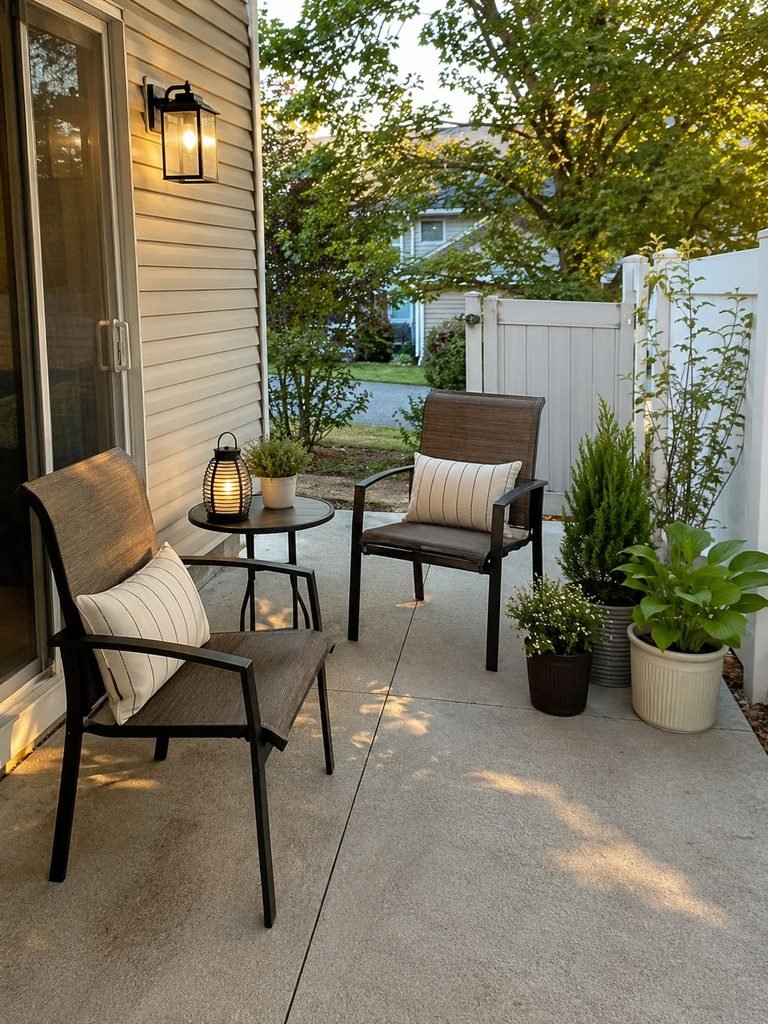
Do not begin by making a shopping list. Sit on the patio for ten minutes and notice what stops you from staying there.
Then make three changes in order:
- Fix the arrangement so the most important seats are comfortable and the main walking route stays open.
- Add light where you will actually sit after sunset.
- Add one softening layer, such as a grouped set of plants, an outdoor rug, or a few cushions that you can realistically maintain.
Use the patio that way for a few evenings before adding anything else.
A cozy outdoor space should feel easier to use after you decorate it, not harder to maintain. When the seating works, the light feels comfortable, and the space has just enough texture and greenery to feel sheltered, the patio has already done its job.