Short Hairstyles for Round Faces: 9 Cuts and How to Choose

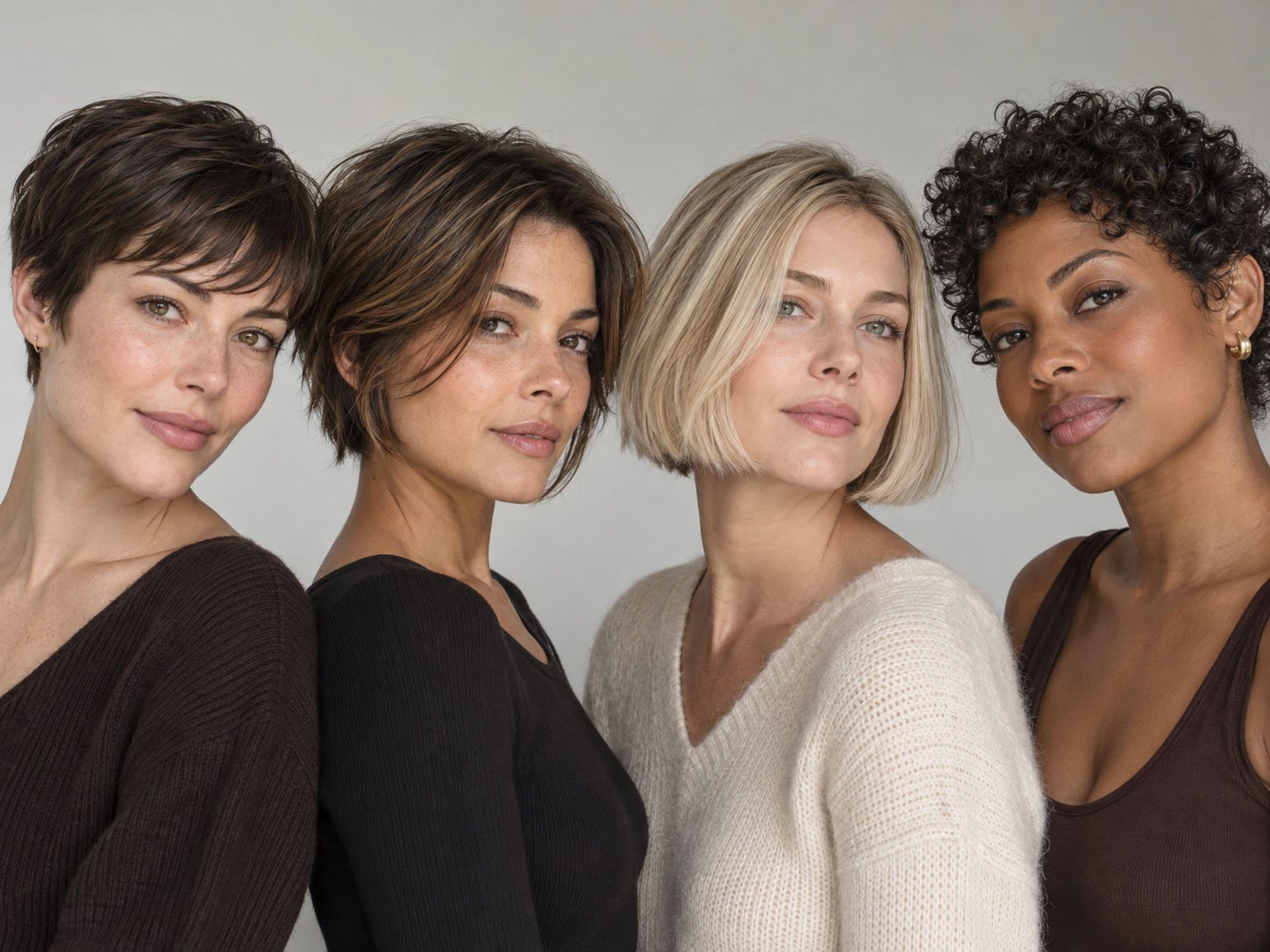
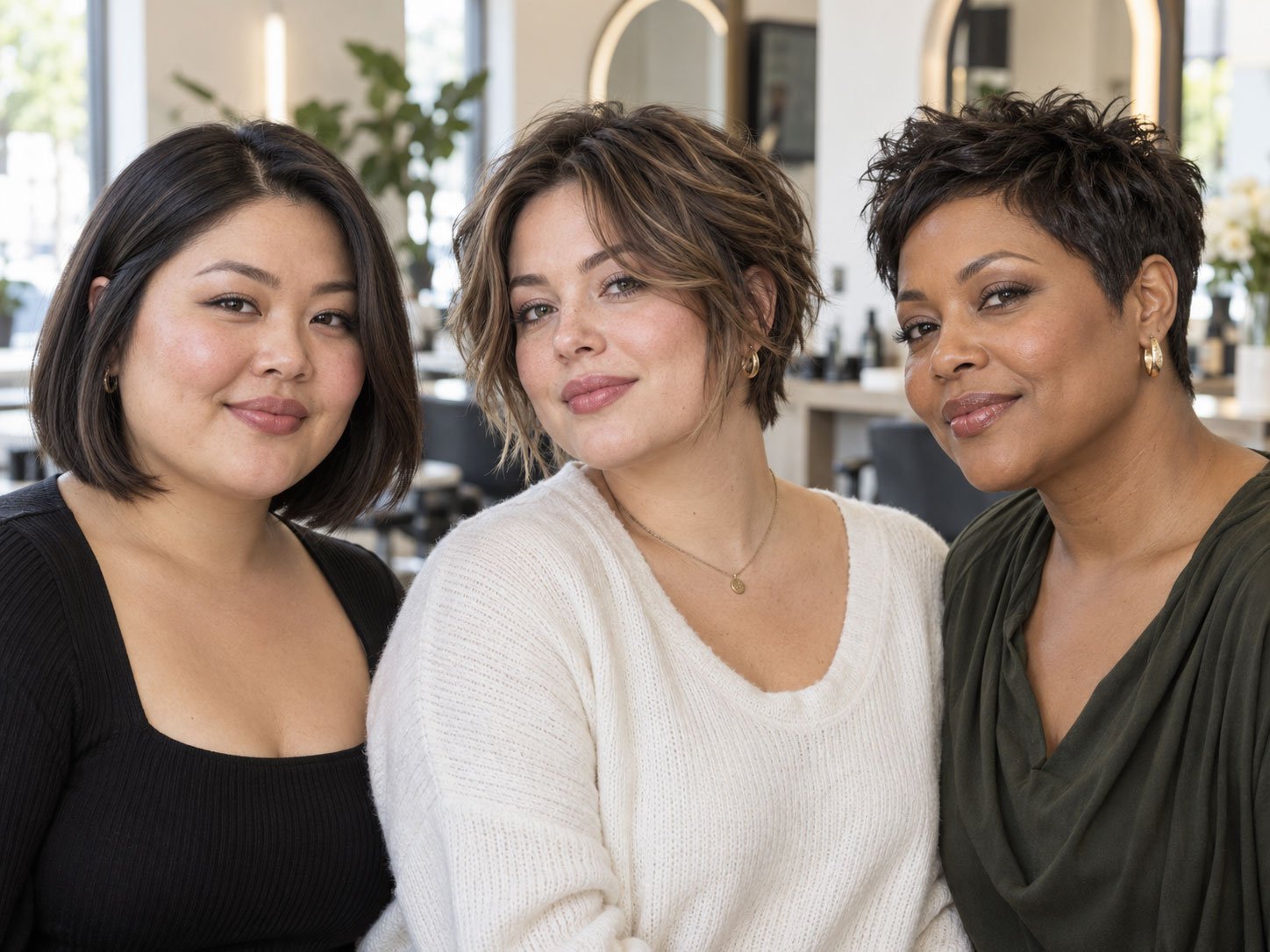
Short hair can work beautifully with a round face. The most useful question is not whether you are allowed to wear a bob or pixie. It is where you want the haircut to put its length, width, volume, and movement.
If you want your face to appear a little longer, look for some combination of height near the crown, longer pieces near the front, a diagonal part or bang, or a perimeter that does not create maximum width directly beside the fullest part of your cheeks. If you love the softness of your face and want to emphasize it, a blunt bob or fuller rounded shape can be just as intentional.
Your hair texture, density, styling routine, and favorite features matter at least as much as the label you give your face shape.
How to choose short hair for a round face
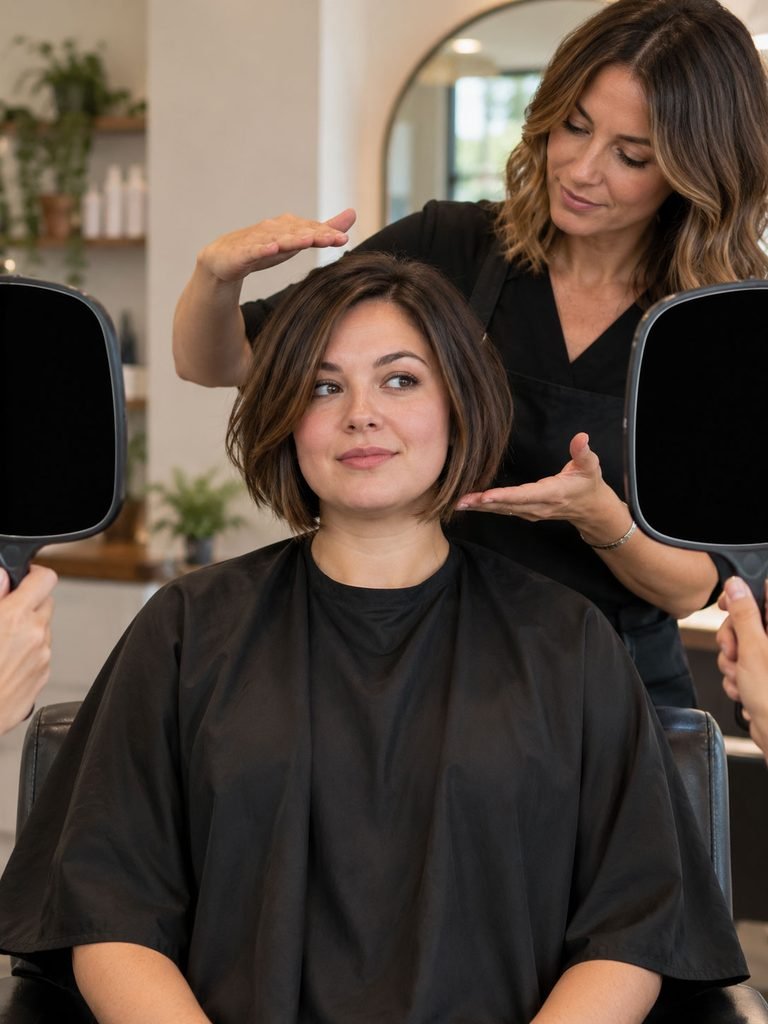
Face shape advice is most useful when you treat it as a visual tool rather than a beauty rule. Professional hairstylists interviewed for recent round face haircut guides repeatedly point to the same adjustable details: length around the jaw, crown height, tapered sides, asymmetry, and where bangs fall. Cosmopolitan’s expert guide to short haircuts for round faces
Use four questions before you pick a cut.
| Look at | Ask yourself | Why it matters |
|---|---|---|
| Perimeter | Where will the ends sit beside my face? | A strong line at the fullest cheek area creates a different silhouette from one that falls below it |
| Crown | Do I want height on top or a flatter shape? | Extra height can make the overall outline appear taller |
| Sides | Will my hair expand around the temples and cheeks? | Thick waves and curls may need a different shape from straight fine hair |
| Front | Do I want bangs, a side part, or longer face framing pieces? | The front of the cut changes the visual direction of the hairstyle |
Do not choose from a reference photo by face shape alone. Look at the model’s hair density, natural texture, amount of styling, and where the shortest and longest pieces actually fall.
9 short hairstyles for round faces worth considering
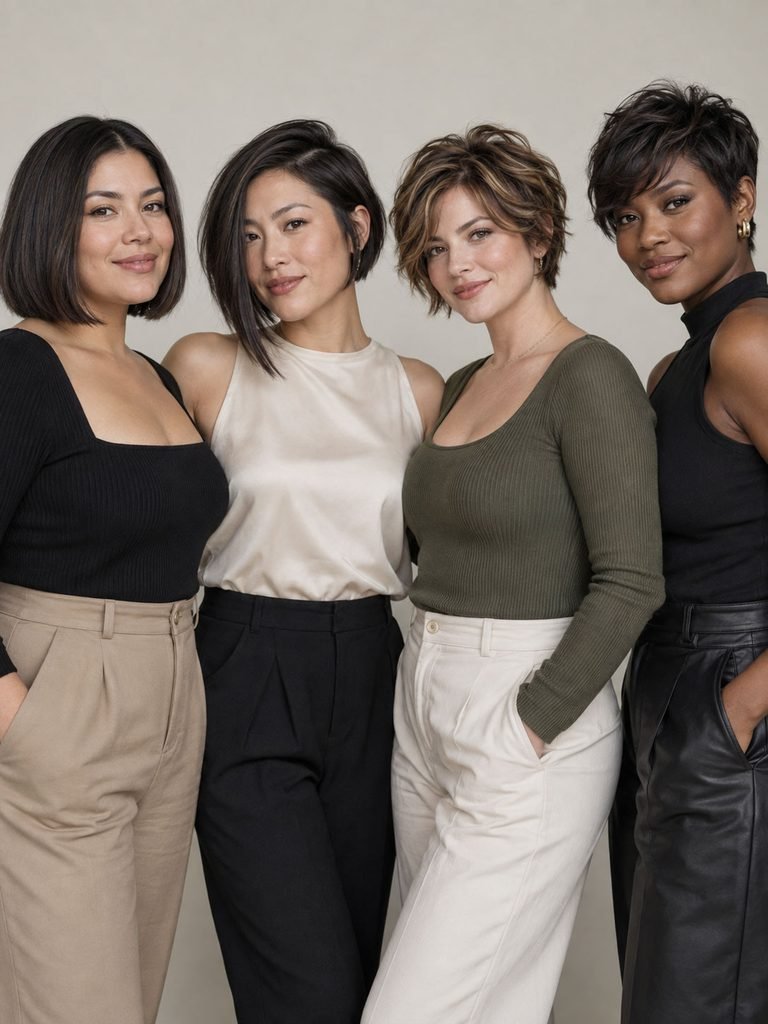
1. A bob that falls just below the jaw
This is a strong starting point if you want a clean shape without going extremely short. Keeping the front edge a little below the jaw creates visible space between the fullest part of the cheeks and the ends of the haircut.
A straighter perimeter gives the cut more graphic structure. Gentle internal movement makes it softer. Fine hair may benefit from keeping more weight at the bottom, while very dense hair may need some internal adjustment so the shape does not expand too far outward.
2. An angled or A line bob
An angled bob keeps the back shorter while the front travels slightly longer. That diagonal edge provides shape without requiring lots of layers.
This can be particularly useful if you like a polished bob but do not want a perfectly horizontal line beside your cheeks. The tradeoff is that a precise angle becomes more obvious as it grows out.
3. A soft asymmetrical bob
One side sitting longer than the other changes the symmetry of the entire haircut. It can be subtle enough to tuck behind one ear or dramatic enough to become the main feature.
Current expert haircut coverage also recommends asymmetry as one way to introduce a more angular outline around a round face.
4. A bixie with longer front pieces
A bixie sits between a bob and a pixie. It gives you the lighter feel of short hair while retaining enough length around the front to change the outline beside the cheeks and jaw.
This is especially useful when a full pixie feels like too large a jump. If your strands are fine, the placement of layers becomes important because excessive weight removal can make the perimeter look thinner. Femorias has a separate guide to choosing and styling a bixie haircut for fine hair.
5. A tapered pixie with crown lift
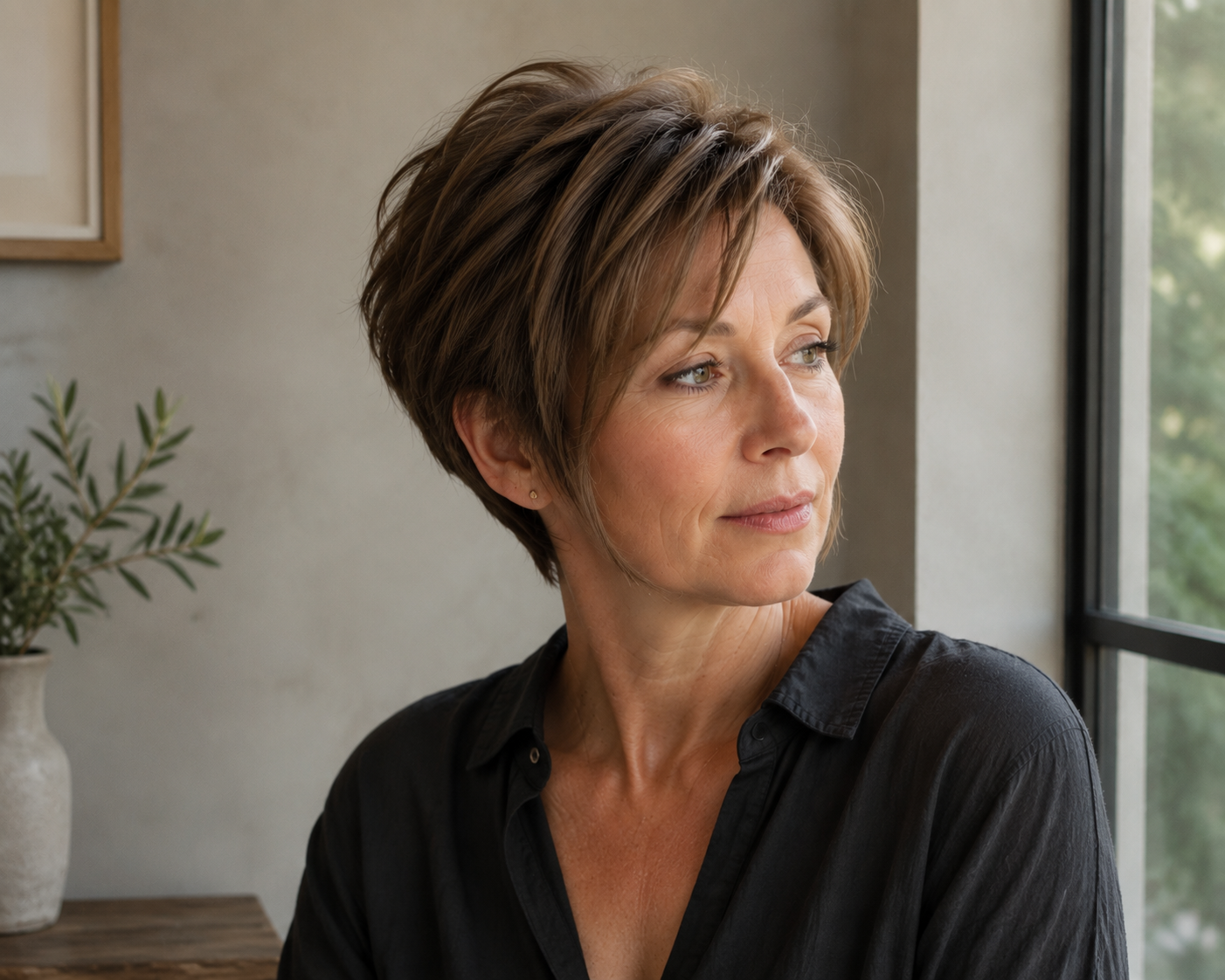
A pixie does not need to be avoided because your face is round. One of the most common approaches is to keep the sides relatively controlled and leave enough length on top for texture or lift.
This creates a more vertical hairstyle silhouette. Keep in mind that a pixie built around crown height is not completely styling free. If your hair naturally lies very flat, you may need a small amount of root drying or lightweight product.
6. A side swept pixie
Leaving the front longer gives a pixie more styling directions. You can sweep the front across the forehead, lift it away from the face, or tuck part of it back.
It is a useful compromise for someone who wants a short nape and easy overall length but does not want the entire forehead exposed.
7. A textured short shag
A short shag creates separation through the crown and sides rather than one solid outline. On wavy hair, this can work with natural movement rather than requiring a perfectly smooth finish.
The important decision is how much width the layers create beside the cheeks. A shag that looks airy in a professionally styled photo can become much fuller when naturally wavy or thick hair is left to dry on its own.
8. A curly bob with deliberate shape
Curly hair should be chosen according to its dry silhouette, not simply the wet cutting length. A bob can sit beautifully on a round face when the curl pattern is shaped intentionally and the widest point lands where you want it.
Do not assume curly hair needs to be flattened at the sides. Balanced volume can look excellent. The question is whether you want a taller shape, a fuller rounded silhouette, or something between the two.
9. A blunt bob if you want to emphasize structure
A blunt bob is sometimes placed on lists of cuts to avoid, but that is too simplistic. Precise lines can add visual structure precisely because they contrast with softer facial curves. A professional stylist quoted by Who What Wear specifically recommends sculpted blunt bobs as one option for round face shapes.
If the blunt edge lands directly beside the fullest part of your cheeks, expect the haircut to emphasize width more than a longer bob would. That may be exactly the look you want.
For broader inspiration beyond face shape, Femorias also covers short hairstyle trends being requested in 2026.
Pick the cut by hair texture and density
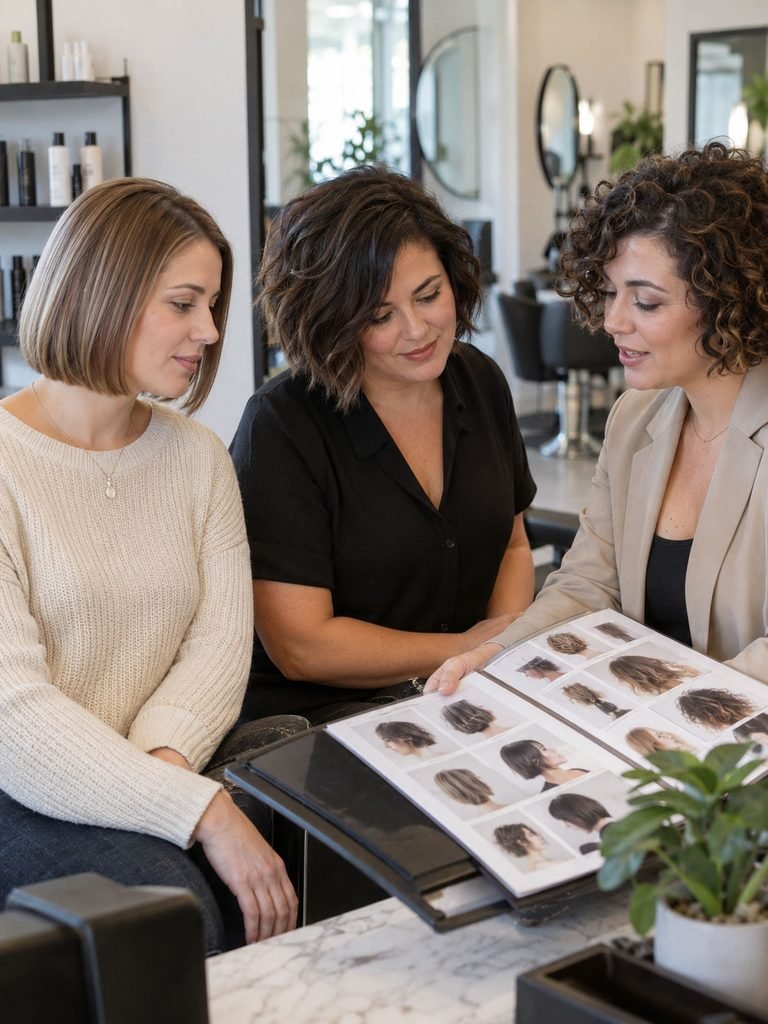
A haircut that works on dense curls may need almost the opposite construction from the same photographed shape on fine straight hair.
Fine hair with good density: Keep enough weight through the perimeter to make the edge look substantial. Layers can create movement, but they should have a purpose rather than being added everywhere.
Fine hair with lower density: Be conservative about thinning and heavily wispy ends. A solid bob may create a stronger visual outline than an aggressively textured pixie.
Thick straight or wavy hair: Internal weight removal can prevent a bob or bixie from becoming very wide through the sides. Ask where the stylist plans to remove bulk before assuming more external layers are the answer.
Curly or coily hair: Judge the finished dry silhouette and shrinkage. Where the curl expands matters more than copying the exact inch measurement from a straight hair reference.
Fine hair and lower density are not the same problem. Fine describes the strand itself. Density refers to how much hair is growing across the scalp. If your part has recently become wider, your ponytail has become noticeably smaller, or you are experiencing new shedding, treat that separately from haircut selection. The American Academy of Dermatology recommends professional evaluation when hair loss or thinning is a concern. American Academy of Dermatology guidance on hair loss diagnosis and treatment
Bangs and parts can change the whole haircut
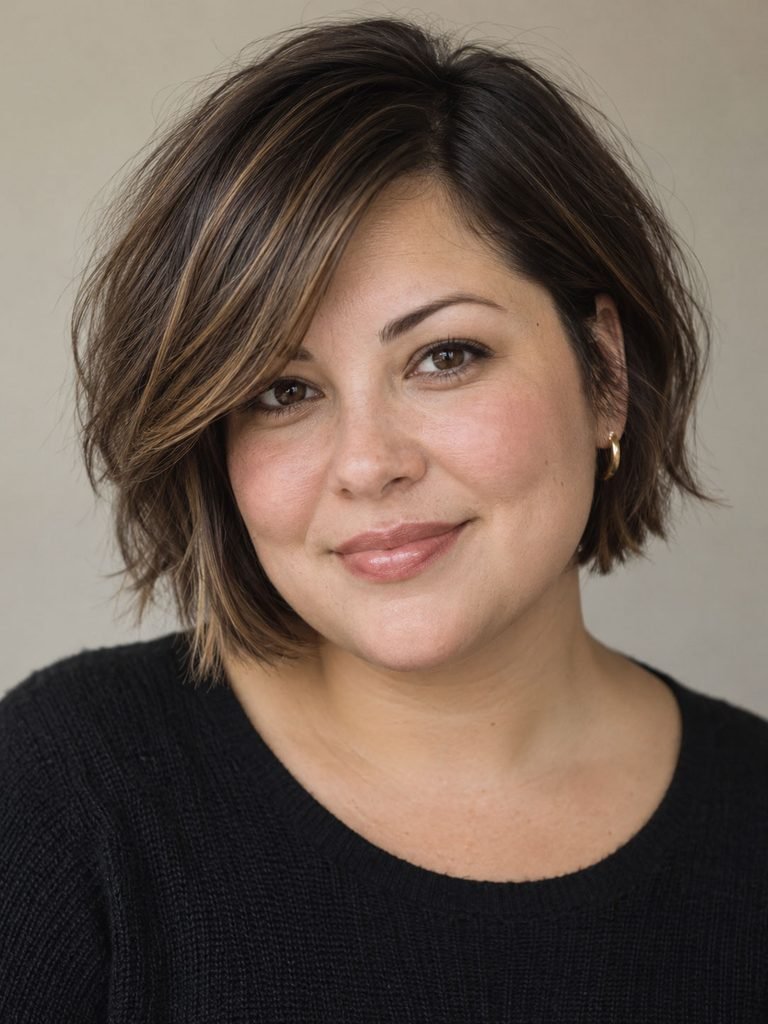
Side swept bangs are popular because they introduce a visible diagonal line. They also leave more forehead exposed than a dense straight fringe.
Curtain bangs can work too, but pay attention to how much hair must be removed from the front to create them. If your front hairline is already light, a large bang section may reduce the fullness available at the sides of your bob.
Blunt bangs are not forbidden. They simply create a different effect. A full horizontal fringe can emphasize the width and softness of the face, which may look graphic and striking with a precise bob.
The same applies to parts. A deep side part increases asymmetry. A center part creates stronger symmetry. Neither is universally better. Decide which visual direction you prefer and which part your hair will actually hold without constant correction.
What to ask for at the salon
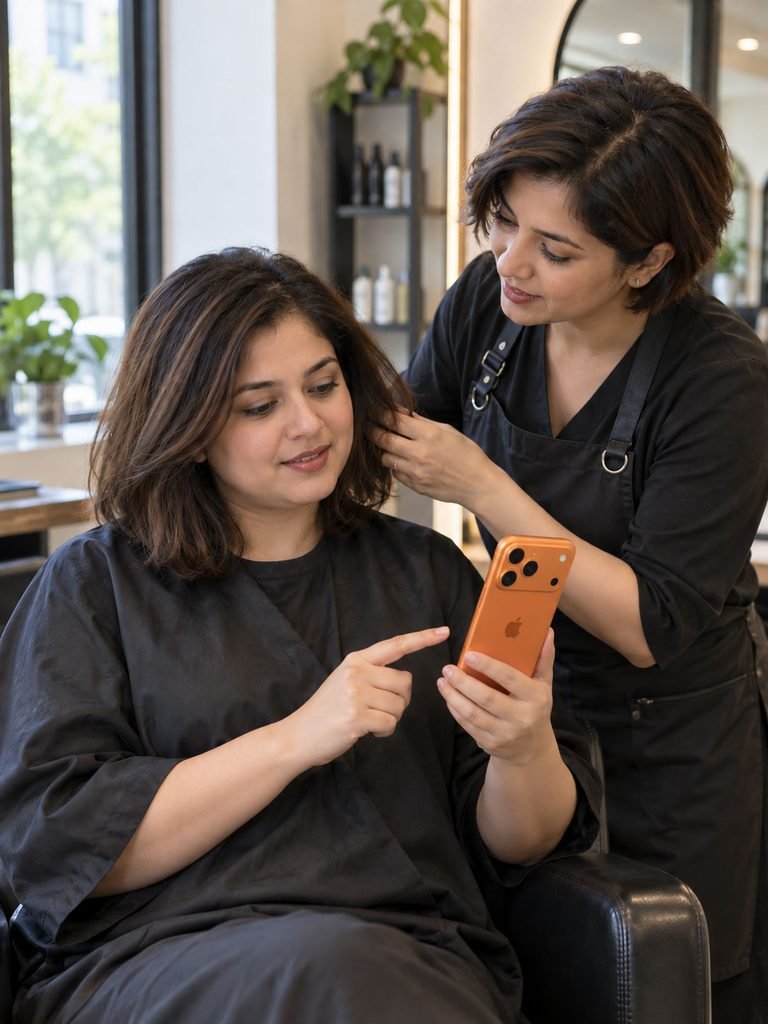
Bring photos, but do not stop at “I want this.”
Tell your stylist which part of the haircut you are responding to. Useful language includes:
- “I like the length in front, but I do not want this much width at the sides.”
- “I want the perimeter to stay fairly solid.”
- “I am comfortable with crown lift, but I do not want a lot of daily styling.”
- “Please show me where the shortest layer will land.”
- “My hair expands when it air dries, so I want the dry shape considered.”
- “I need enough length around the front to tuck behind my ears.”
- “I like the asymmetry in this photo more than the actual length.”
Also tell the stylist how you normally wear your hair. A cut designed around a polished round brush finish may look completely different when air dried.
One of the best reference photo tests is to ignore the face for a moment. Look only at the haircut. Where is the widest point? Where is the shortest layer? Is the crown actually cut high, or has it simply been blow dried with volume? Are the ends blunt, razored, curled, or tucked under?
Those observations make a reference photo much more useful.
Style for shape without overworking your hair

You do not need maximum volume everywhere. If your goal is a taller looking silhouette, concentrate lift near the crown and keep the side shape more controlled.
Start with the minimum product that solves the problem. Fine hair can lose movement under heavy creams and oils. Thick or coarse hair may need more smoothing or moisture before texture looks intentional.
For a bob, the ends make a major difference. Turning them slightly inward creates a compact polished outline. A loose bend creates more movement. Leaving natural curls fuller creates another silhouette entirely.
Heat should not be the price of making the haircut work. The American Academy of Dermatology advises limiting repeated blow drying and hot tool use and using lower heat because excessive heat can damage hair. AAD hair styling guidance
If a haircut only resembles your reference after twenty minutes of heat styling and you normally air dry, it is probably the wrong reference for your routine.
Maintenance and grow out matter before you cut
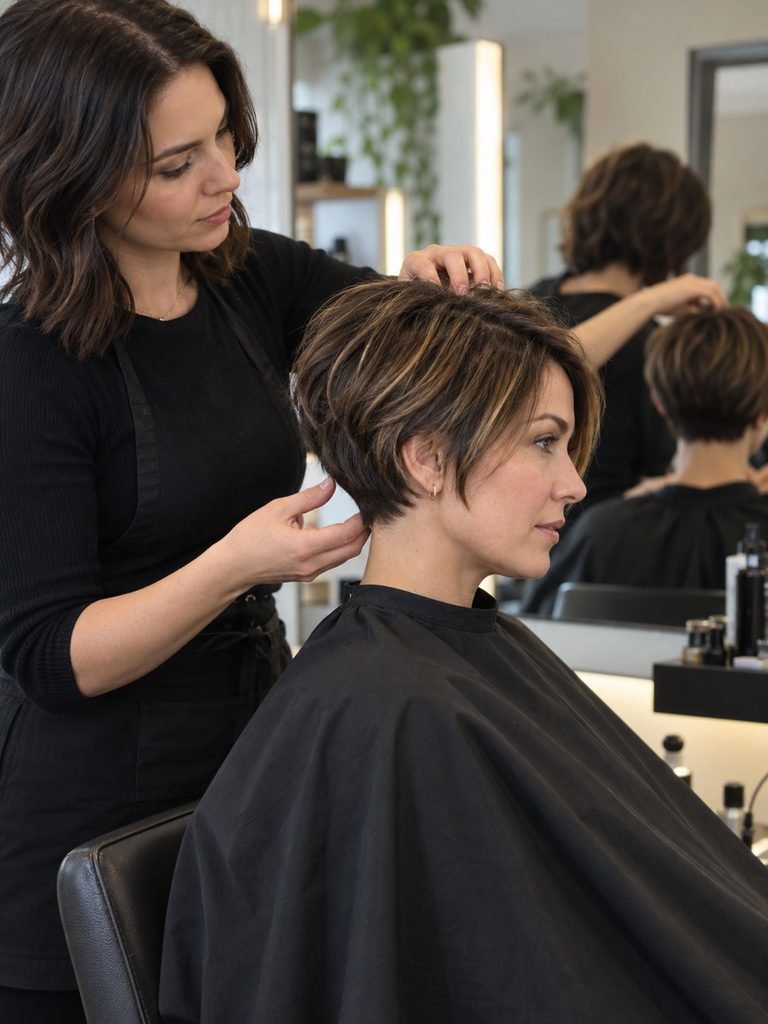
Short does not automatically mean low maintenance.
A closely shaped pixie shows growth quickly around the ears, neckline, and crown. A bixie usually gives you more room because its in between length can grow toward a bob. A blunt bob may tolerate more length before the overall idea of the cut changes, although a very precise line will become softer over time.
Instead of assuming every short haircut needs the same appointment schedule, ask your stylist what part of your chosen shape will lose its structure first.
If you are growing a pixie or bixie out, you also do not have to keep cutting every section equally. A stylist can sometimes tidy the nape or rebalance the crown while allowing selected front sections to gain length.
The best short haircut is not simply the one that photographs well on appointment day. It is the one whose normal version still works three ordinary mornings later.
Frequently asked questions
What is the most flattering short haircut for a round face?
There is no single best cut. A below jaw bob is a forgiving starting point if you want visible length near the face, while a tapered pixie works well when you prefer more height on top. Your hair texture, density, features, and styling routine should decide between them.
Can a round face wear a chin length bob?
Yes. A chin length bob may emphasize the width and softness of the face more than a longer bob, especially when the perimeter is very blunt. That is not automatically a disadvantage. If you want more visual length, ask for the front to fall slightly lower or introduce a little asymmetry.
Are bangs good for round faces?
They can be. Side swept bangs create a diagonal line, curtain bangs open the center of the face, and blunt bangs create a stronger horizontal frame. Pick the effect you like rather than treating one bang type as mandatory.
Is a pixie cut a bad idea for full cheeks?
No. A pixie can be tailored with tapered sides, longer bangs, texture, or crown height. Decide how exposed you want your cheeks and jaw to feel before choosing how cropped the sides should be.
What short haircut works well for fine hair and a round face?
A solid bob, restrained bixie, or pixie with carefully placed crown lift can all work. Avoid assuming fine hair always needs more layers. If the ends already look light, preserving some perimeter weight may be more useful.
How often should short hair be trimmed?
It depends on the cut and how precise you want it to remain. Pixies often show growth sooner than bobs. Ask your stylist which area of your specific cut will lose its shape first rather than following one universal schedule.
Short hair does not need to disguise a round face. A successful cut simply needs a clear shape and a realistic relationship with your hair. Decide where you want the eye to travel, decide how much styling you will actually do, and choose the cut that still makes sense after the salon blowout is gone.