
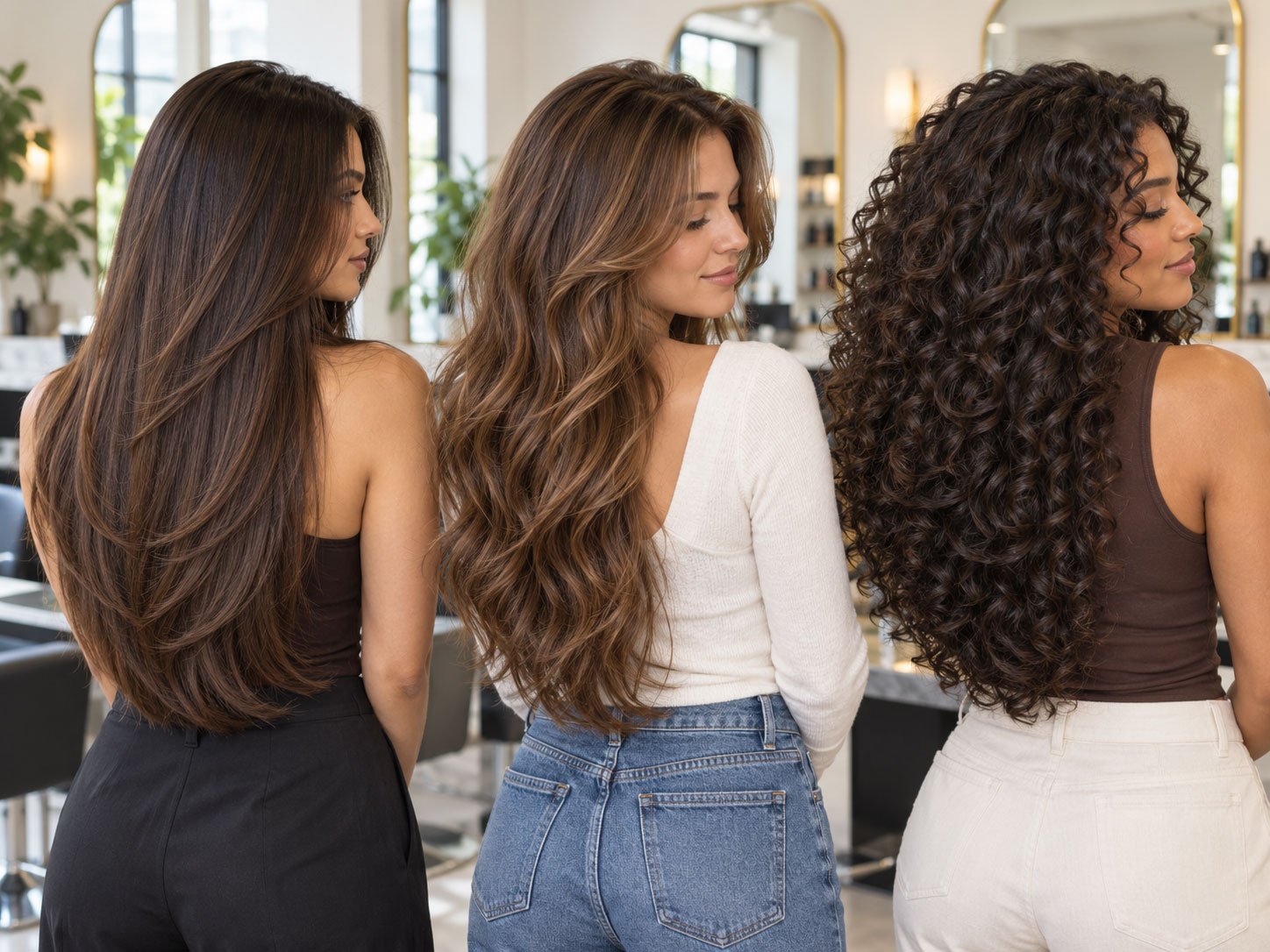
Long Hairstyles for Thick Hair That Remove Bulk Without Losing Length

Long thick hair does not automatically need more visible layers. The useful goal is to remove or redistribute weight in the places that feel heavy while keeping enough hair in the outside perimeter to preserve the full look you like.
Start by identifying whether the problem sits at the bottom, around the sides, behind the ears or throughout the entire interior. Then choose the layer structure. Low long layers preserve more weight. Hidden internal layers can reduce bulk with less visible tiering. A U shaped or V shaped perimeter changes how much hair remains around the sides. Face framing changes mainly the front.
That is a more reliable salon plan than simply asking for “a lot of layers.”
Start with strand thickness and hair density
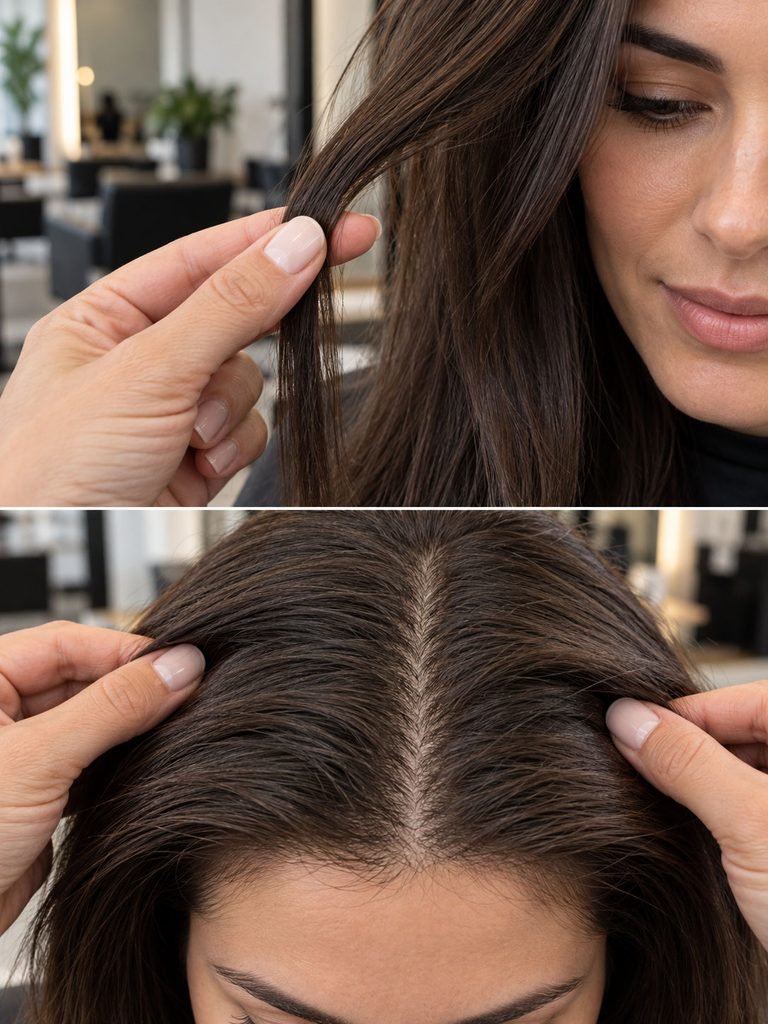
“Thick hair” can describe two different things in everyday conversation. You may have individual strands that feel substantial, a large amount of hair growing across the scalp or both.
Dermatology research treats hair density and hair shaft diameter as separate measurable characteristics. A systematic review in the Journal of the American Academy of Dermatology examined hair density measurement while also distinguishing related shaft parameters such as diameter. review of hair density measurement PubMed
That distinction matters at the salon.
If your strands are individually thick but your overall density is moderate, aggressive weight removal can take away more fullness than you expected. If your strands are medium or fine but you have very high density, the hair can still feel extremely heavy because so many strands occupy the same area.
Look at the problem before choosing a technique. Ask yourself:
- Does the bottom spread outward into one heavy block?
- Does most of the bulk sit behind the ears and through the back?
- Does the crown lie flat because the length below feels heavy?
- Do the ends already look lighter than the middle?
- Do you want visible layers or simply less internal mass?
Those answers tell you much more than the word “thick.”
Match the cut to where the bulk sits
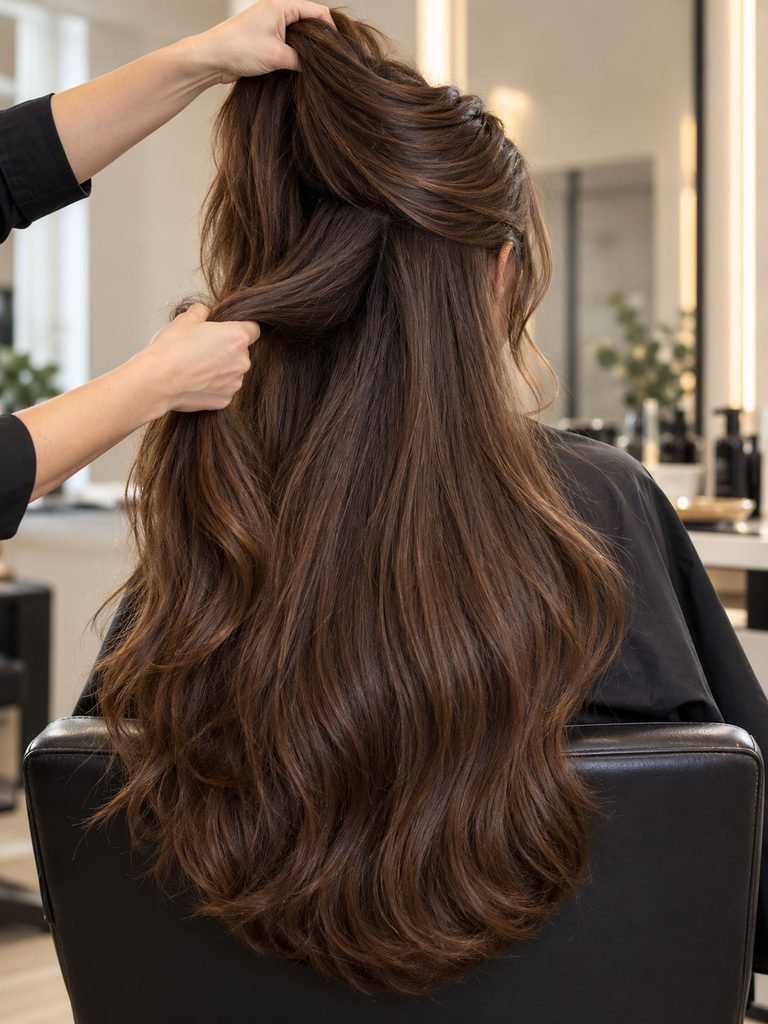
The best haircut depends on where you want the silhouette to change.
If the bottom feels too heavy, start with long layers that begin relatively low. This lets some shorter lengths move independently without taking a large amount of hair away from the perimeter.
If the whole interior feels bulky, ask about internal or hidden layering. The goal is to create different lengths beneath the visible surface so the haircut has less concentrated mass while the outside line can remain comparatively strong.
If the front feels overwhelming, use restrained face framing rather than changing the entire back of the haircut. Shortening a controlled front section can open the face without sacrificing much overall density.
If the sides feel excessively wide, the perimeter shape matters. A U shaped outline keeps more side length than a pronounced V shape. A stronger V removes more side length as the line narrows toward the longest point at the center back.
If the crown feels flat while the lower hair feels enormous, you may need redistribution through more of the haircut rather than only texturizing the last few inches.
The terminology can become confusing because several layer names overlap visually. Femorias’ guide to face framing, long, ghost and butterfly layers explains what each structure changes and how visible that change tends to be. femorias.com
Six long haircut structures that can reduce bulk
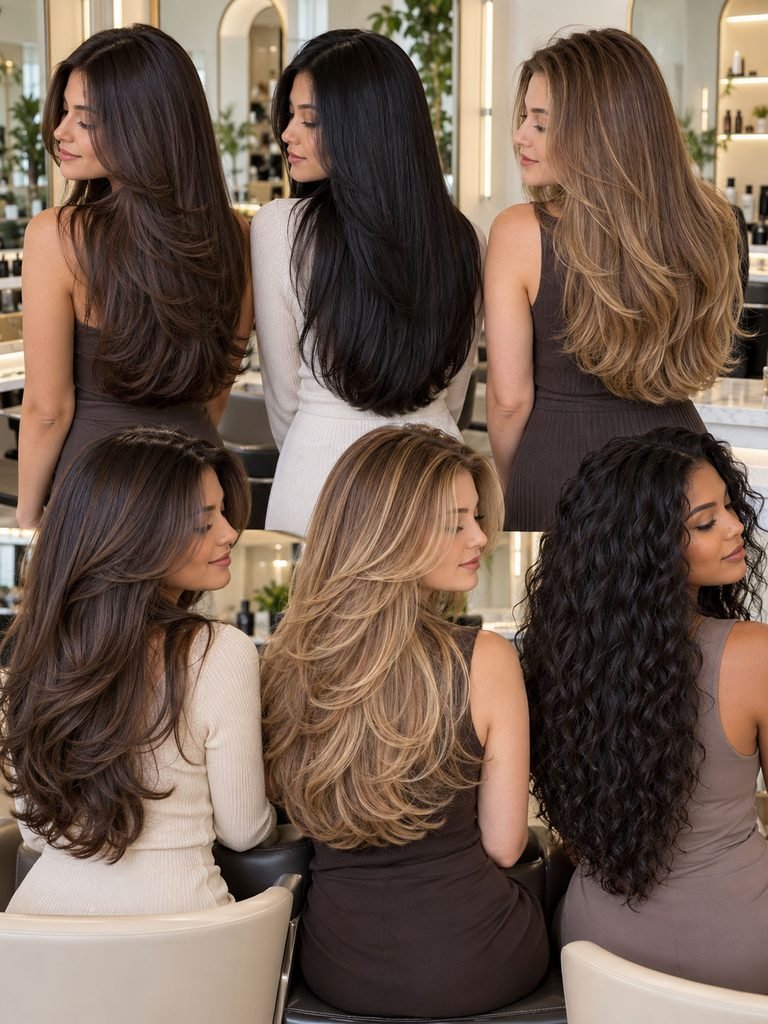
1. Low long layers
This is the conservative starting point when you want movement but still care strongly about a substantial bottom edge.
The shortest back layers stay well below the shoulders and blend through the lower portion of the length. Because more hair still reaches the bottom, the perimeter remains comparatively full.
This structure makes the most sense when the bulk bothers you mainly near the lower half of the hair rather than close to the crown.
The tradeoff is simple. Low layers remove less overall weight than a more aggressive layered structure. If your entire head feels extremely dense, the change may be too subtle on its own.
2. Hidden internal layers
Internal layering is useful when you want the haircut to feel lighter without displaying several obvious horizontal tiers.
The stylist creates shorter lengths within the interior while leaving much of the visible surface longer. The visual effect can be quieter than conventional cascading layers.
This approach is especially useful if you like sleek finishes, prefer a strong perimeter or dislike seeing clearly separated layers from the back.
The important question is how much interior hair will be shortened. “Hidden” does not mean consequence free. Removing too much material can still change the way the surface falls.
3. A U shaped perimeter with long layers
A U shape keeps more length around the sides than a dramatic V while still softening a heavy straight line across the back.
For many readers, this is the middle ground between a blunt perimeter and a noticeably tapered outline. Add long layers through the interior and the haircut can move without losing as much visual width at the lower sides.
Choose this when you want the back to feel softer but still want the hair to look substantial when brought over either shoulder.
4. Face framing with a strong back perimeter
Not every heavy haircut needs layers everywhere.
If the problem is concentrated around your cheeks, jaw or front corners, a limited amount of face framing can create a noticeable change while keeping most of the back close to one length.
This works especially well for someone who likes a full ponytail and does not want shorter layers escaping throughout the back.
Ask where the shortest front section will land when your hair is dry. Then check whether that piece still reaches your ponytail if that matters to your routine.
5. Butterfly inspired layers
Butterfly layering creates a much stronger contrast between shorter upper sections and the longest lower sections. The shape can make very thick hair look lighter and more animated because the shorter pieces move separately.
It is also easier to overdo.
A voluminous blowout can make every tier look exceptionally full. On an ordinary day, the same haircut may show a lighter perimeter and more obvious separation between layers. Decide whether you like the actual cut or mainly the styled finish in your reference photo.
Choose butterfly layers because you want visible layering, not merely because you want less weight.
6. A V shaped perimeter with controlled layering
A V shaped outline keeps the longest point at the center back while progressively shortening the sides.
That naturally reduces the amount of hair reaching the outer lower corners, so it can make a very heavy perimeter feel lighter without requiring short crown layers.
The tradeoff is side fullness. If you regularly pull all your hair forward over your shoulders, a pronounced V can leave less visible length at the front than a U shape or straighter baseline.
Ask to see the intended perimeter from the back before deciding how deep you want the V.
Adjust the layer plan for your natural texture
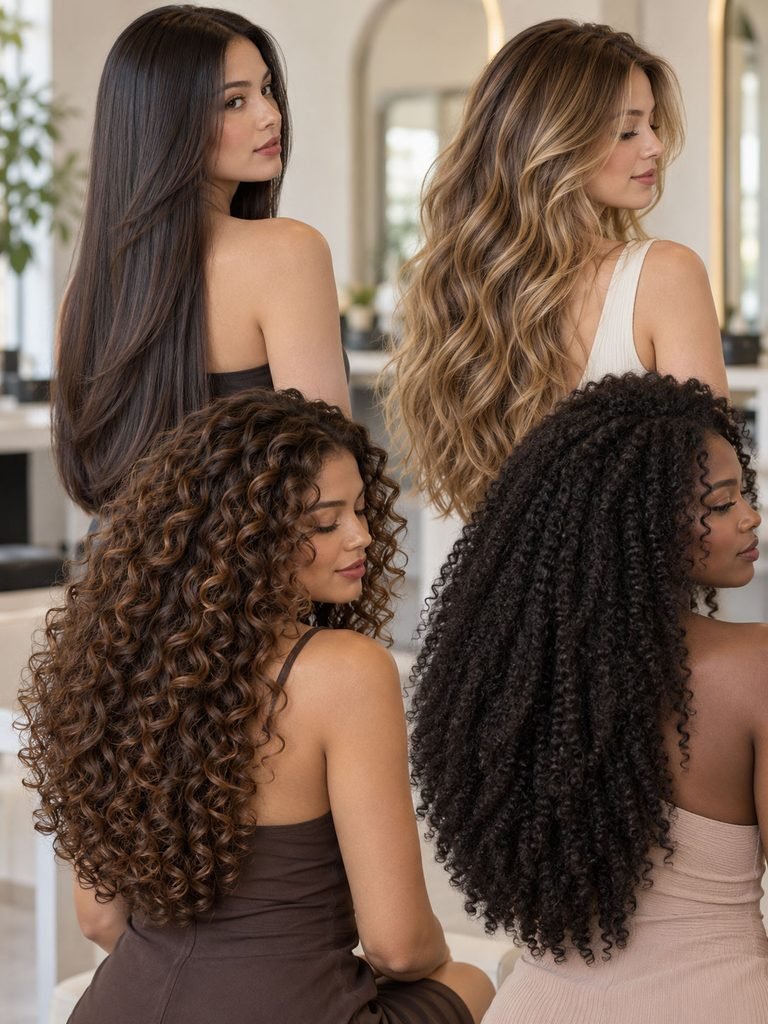
The same layer map will not produce the same silhouette on straight, wavy, curly and coily hair.
Straight thick hair shows cutting lines clearly. If you dislike visible tiers, keep the surface layers well blended and decide carefully how high the shortest back layers should begin. Internal weight removal may give you the lighter feeling you want without turning the back into several obvious steps.
Wavy thick hair can use natural bends to soften transitions between lengths. The important decision is where you want width. If the hair already expands around the shoulders, adding many shorter pieces at exactly that height can increase the visual width even if the haircut technically contains less weight.
Curly and coily thick hair needs a shape plan that accounts for the hair’s normal dry position. A section that looks long when stretched can sit much higher when it returns to its curl pattern. Decide where you want the shortest visible layer to live when the hair is worn normally rather than judging only by stretched length.
Femorias’ guide to layered haircuts for curly hair goes deeper into choosing shape, density, dry length and perimeter for curls. femorias.com
Texture also changes the value of a polished reference photo. A round brush blowout can stretch waves, bend straight hair and create temporary lift at the roots. Ask yourself whether you want the haircut shown underneath that finish.
What to tell your stylist before the first cut
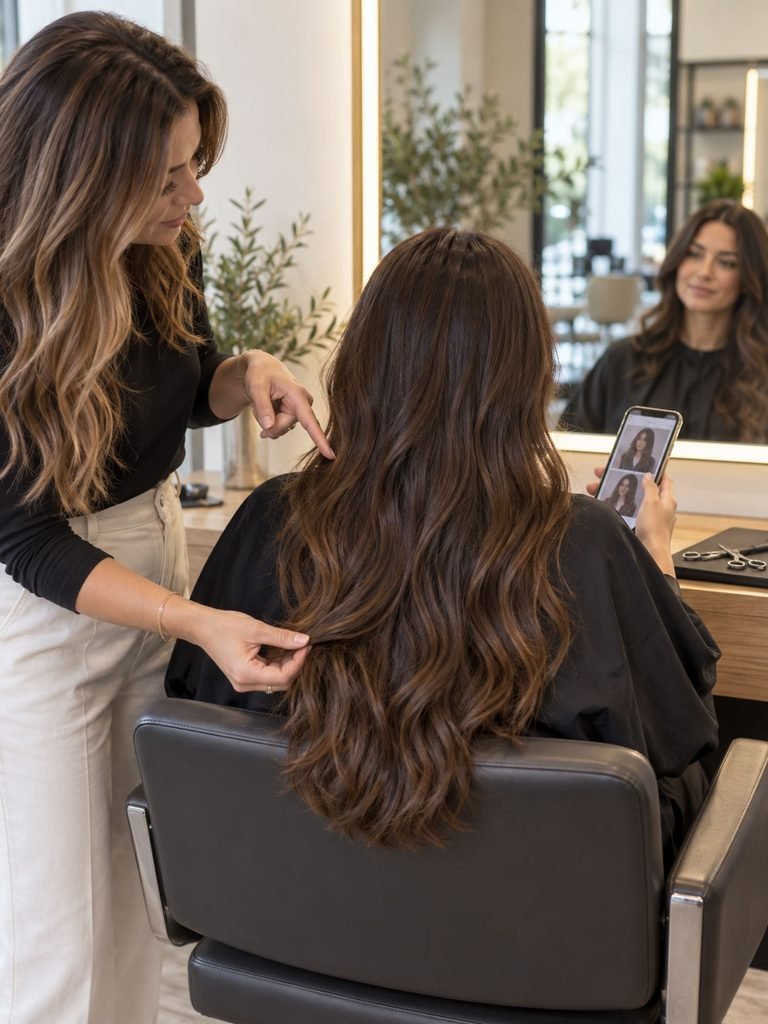
A useful consultation describes the result, the problem and the limits.
Instead of saying only, “I want layers,” tell your stylist what you want the haircut to do.
Useful phrases include:
- “I want less weight through the back, but I want the bottom to keep looking full.”
- “I want movement without short layers at the crown.”
- “The bulk bothers me mostly behind my ears.”
- “I wear my hair in a ponytail often, so I need most of the front pieces to reach the elastic.”
- “I like the movement in this photo, but I do not want to depend on a round brush blowout.”
- “Show me where my shortest layer will sit when my hair is dry.”
- “Before removing more interior weight, show me how much hair will still reach the perimeter.”
Reference photos are still useful. Bring one for what you like and, if possible, another showing what feels too layered, too triangular or too thin at the bottom.
Also show your normal texture. A consultation is more useful when the stylist knows how your hair behaves outside a fresh blowout.
If your ends are already noticeably lighter than the middle, say that before any additional weight is removed. The solution may be to protect the bottom first and reduce bulk higher inside the haircut rather than continuing to thin the final inches.
Style thick long hair without adding unnecessary damage
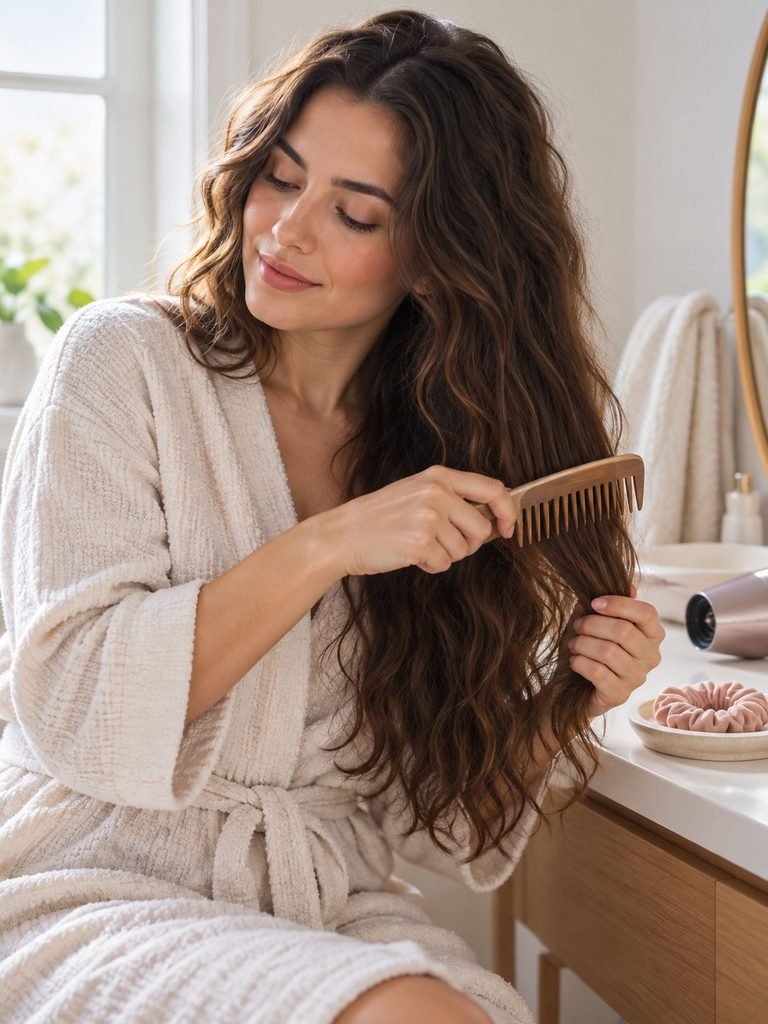
A haircut that reduces bulk should make your routine easier, but styling choices still matter.
The American Academy of Dermatology advises reducing excessive heat, partially air drying before styling and using flat irons on dry hair at low or medium heat. Its guidance also notes that excessive heat can damage hair. American Academy of Dermatology hair styling guidance American Academy of Dermatology
That does not mean thick hair must always air dry. It means the polished blowout in a haircut reference should not quietly become a requirement unless you actually want that routine.
Try the lowest effort version of the cut first. Let waves or curls form normally. See where the layers fall when straight hair is simply dried smooth. Then decide which sections genuinely need extra styling.
Long dense hair can also make ponytails and buns feel heavy. Avoid solving that problem by pulling the base tighter and tighter. The American Academy of Dermatology warns that repeatedly tight ponytails, buns, braids and other pulling styles can contribute to traction alopecia. AAD guidance on hairstyles that pull American Academy of Dermatology
Use a looser base when possible and change where you place contained styles rather than putting tension on the same area every day.
If a hairstyle causes scalp pain, do not treat that as the price of keeping thick hair under control. Loosen it.
Common questions about long hairstyles for thick hair
Are internal layers the same as thinning?
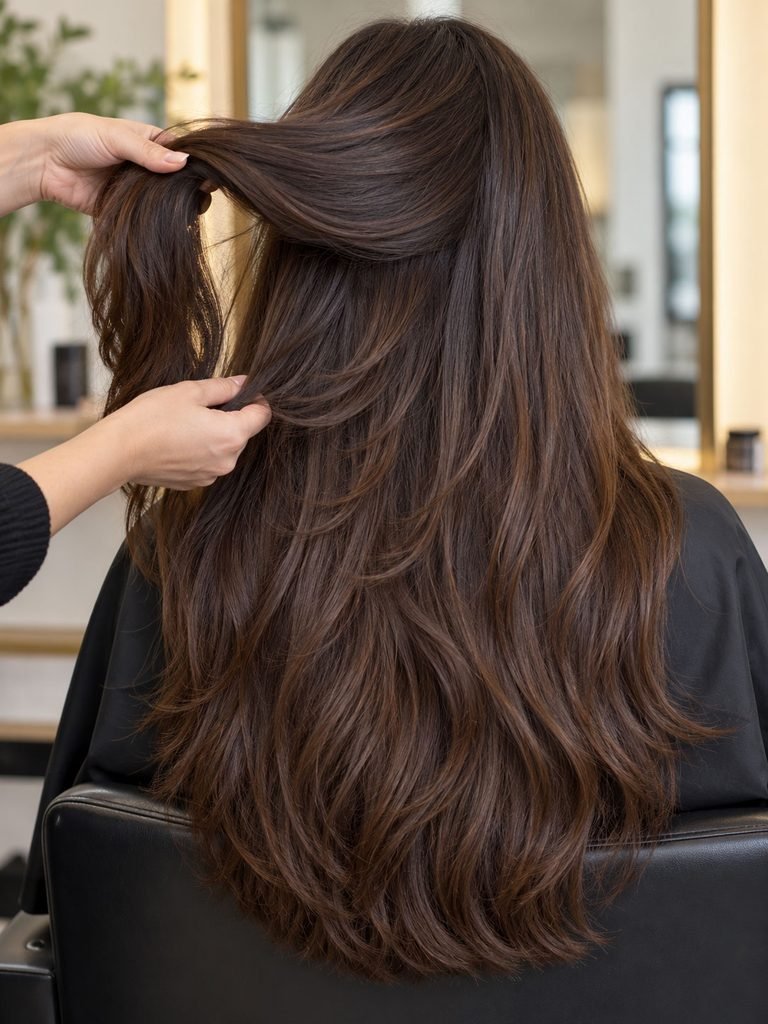
No. They can overlap in purpose, but they are not interchangeable terms.
Internal layers create different lengths inside the haircut. “Thinning” can refer broadly to several texturizing or bulk reduction techniques. Two stylists may also use the same words differently.
Instead of relying on the term, ask what will physically happen: Which sections become shorter? How much hair remains at the bottom? Will the surface stay long? Will the perimeter become narrower?
The visual result matters more than the label.
Will layers make thick hair frizzy?
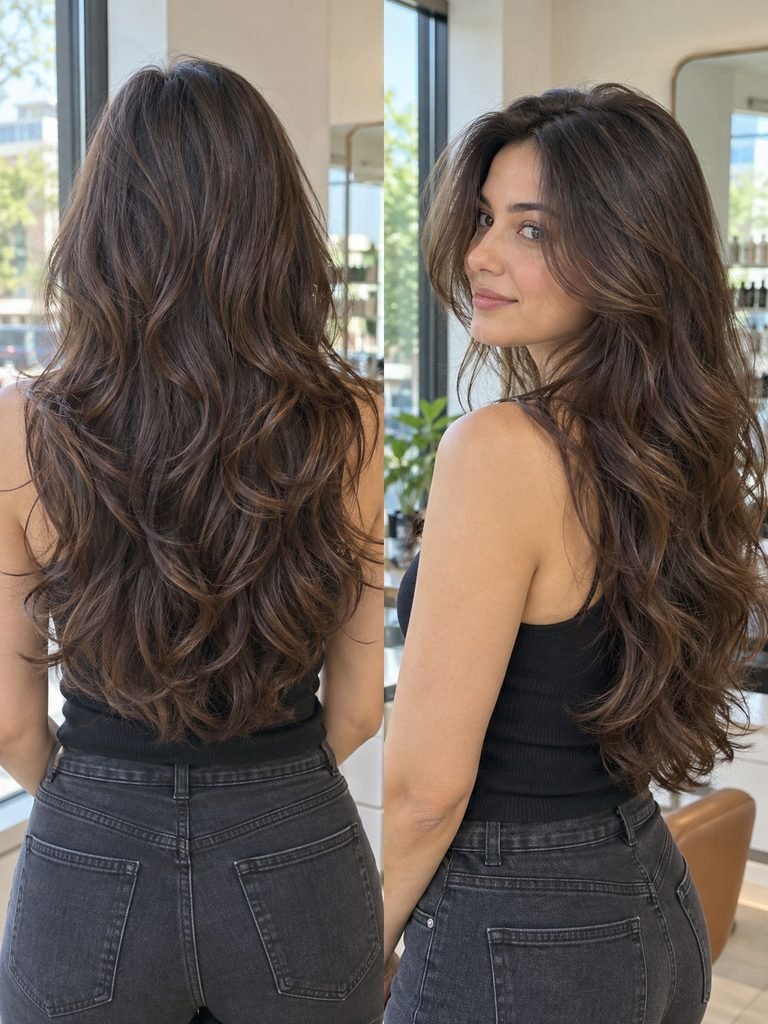
Layers do not automatically create frizz. They change length distribution and can expose more ends or create more visible movement, which may make your natural texture look different.
If your hair already expands when shorter, very high surface layers may create more visible width. If your waves or curls need length to hang the way you like, keep that behavior in mind before moving the shortest layers upward.
The useful salon question is not “Will layers cause frizz?” It is “What will this layer length do when my normal texture returns?”
Can I keep a full perimeter and still remove bulk?
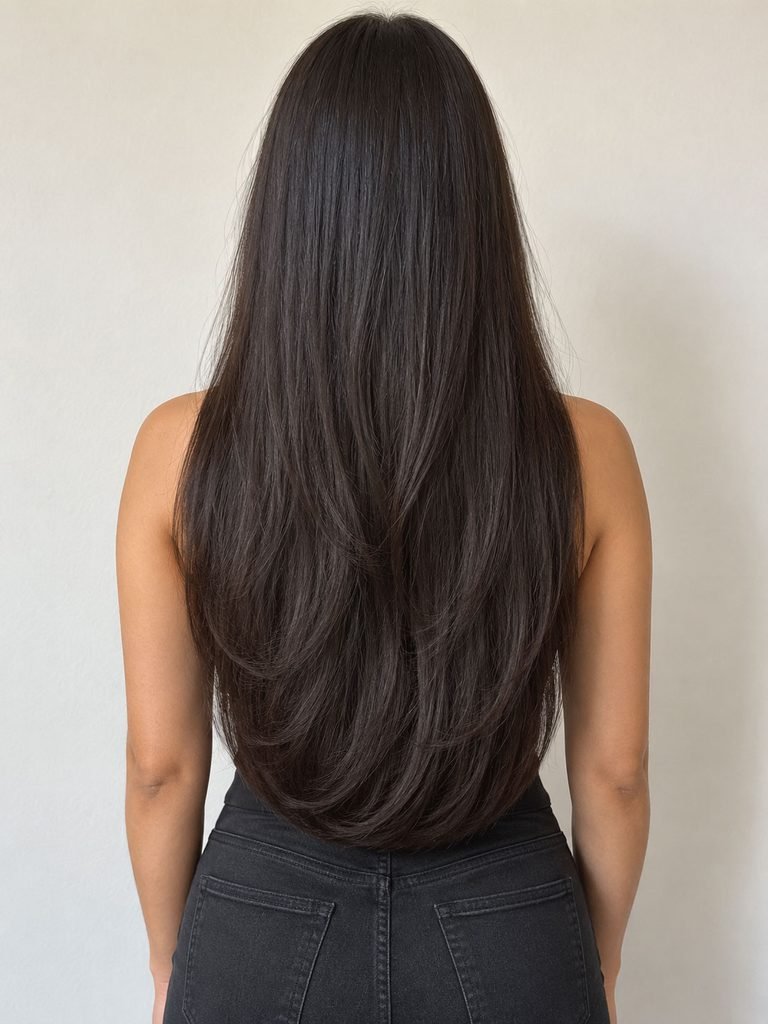
Yes, within limits.
Keeping a strong perimeter means preserving a meaningful amount of hair that reaches the outside line. A stylist can still redistribute some weight higher inside the haircut or use longer layers that do not remove as much from the lower outline.
The more weight you remove, however, the less hair remains somewhere else. No technique can remove a large amount of mass while leaving every visible part completely unchanged.
Decide which matters more: maximum bulk reduction or maximum perimeter fullness. Most successful long thick haircuts sit somewhere between those two extremes.
What if my hair is thick at the roots but thin at the ends?
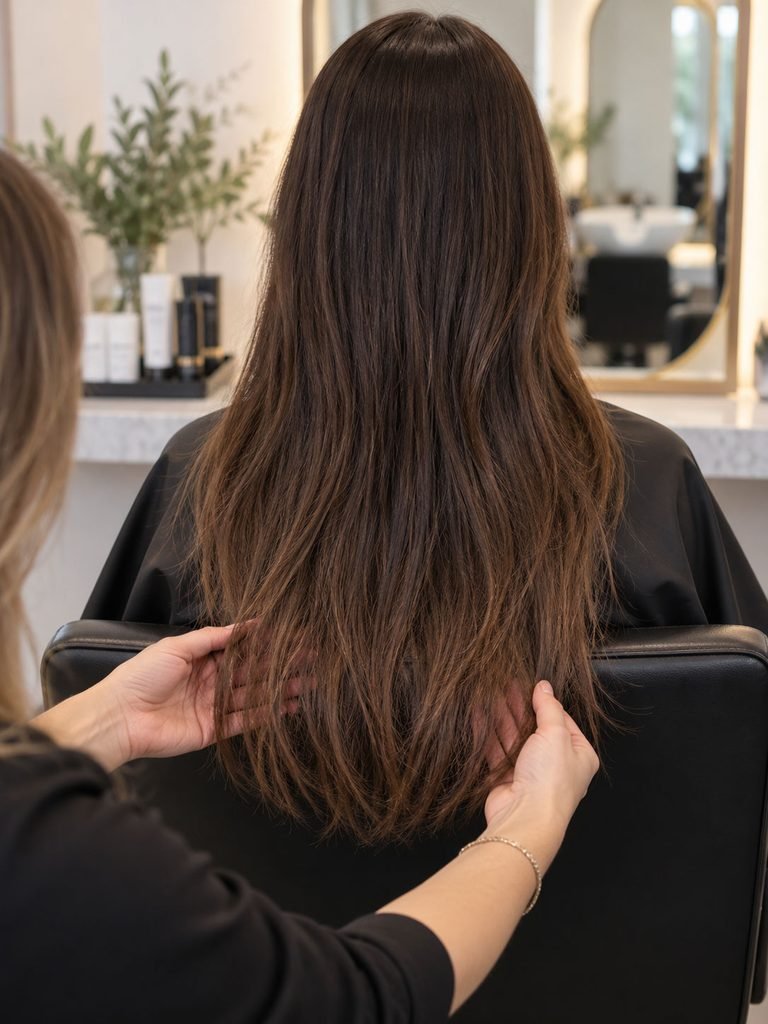
Protect the ends before asking for aggressive layering.
Hair can feel very abundant near the scalp while the lower perimeter has much less visible mass. In that situation, adding many short layers may reduce the amount of hair reaching the bottom even further.
Ask whether the first appointment should focus on strengthening the outline, removing only clearly unwanted bulk inside the upper or middle sections and keeping the longest layers conservative.
Your first salon decision does not need to be the name of a trend. Decide where the hair feels too heavy, how full you want the bottom to remain and where the shortest layer can realistically sit. Once those three points are clear, the stylist has a much better brief than “thin it out.”
