Cozy Living Room Ideas for Hot Climates That Do Not Trap Heat

Most cozy living room advice was written for cold rooms. Chunky wool throws, lined velvet drapes, thick pile rugs and a tightly packed seating group all do the same job: they slow the movement of heat and air. In a room sitting at 90°F at four in the afternoon, that is precisely the wrong instinct.
Coziness, though, is not a temperature. It is a set of sensory signals, and only one of them has a thermal cost:
- Enclosure, the sense that a room has edges and a center
- Softness, what your skin actually touches when you sit down
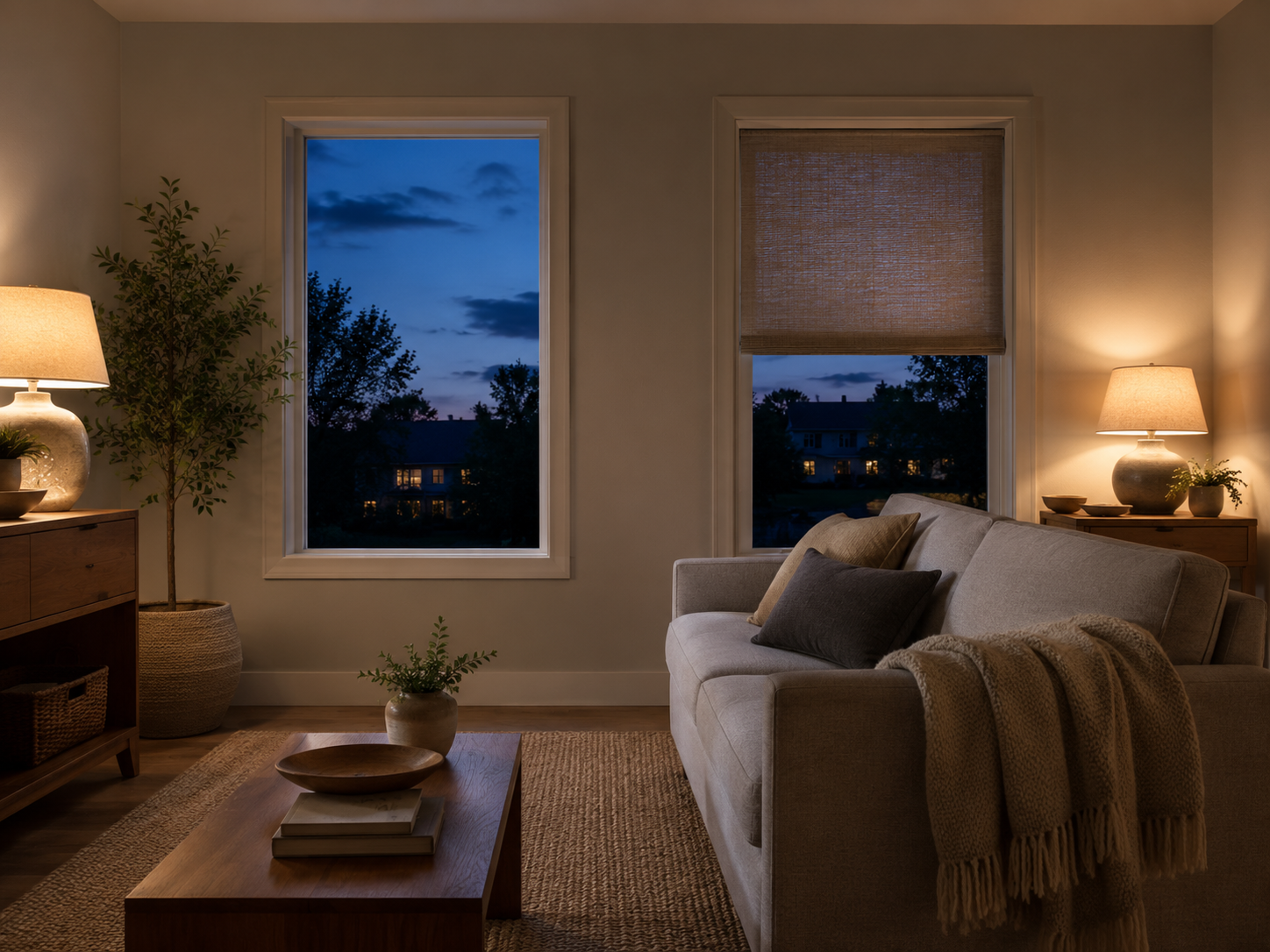
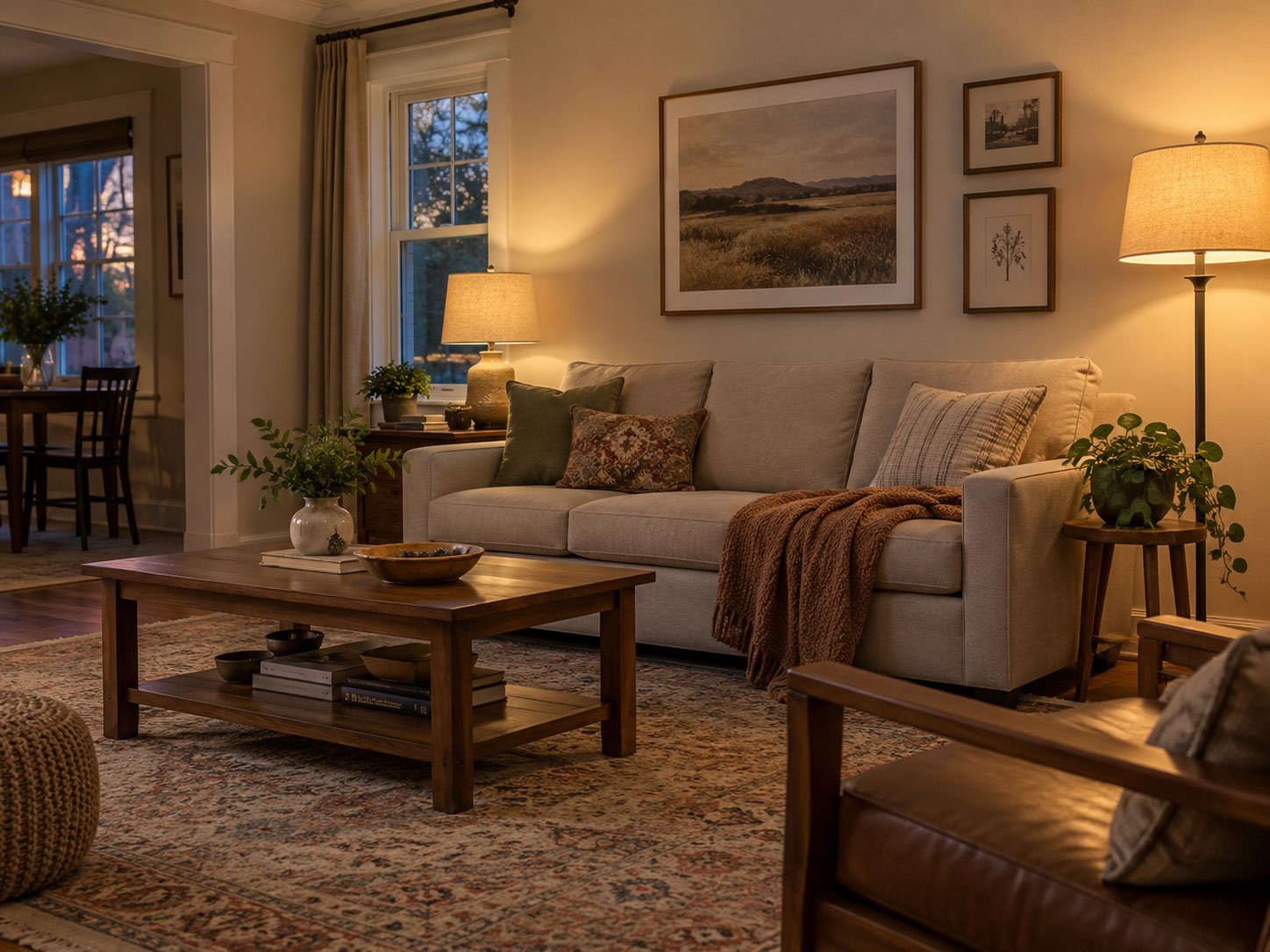
- Warm light, meaning color temperature and where light sits in the room
- Personal density, the books, art and objects that prove someone lives here
Enclosure, warm light and personal density are free in thermal terms. Only softness carries a penalty, and even that depends entirely on which fibers you choose. Everything below is built on that distinction. If you want the general version of this topic first, the broader guide to making a living room feel warm and settled covers the basics that apply anywhere.
Deal with the sun before you deal with the sofa
In cooling seasons, roughly 76 percent of the sunlight falling on a standard double-pane window enters the room and becomes heat, according to the US Department of Energy. Your floor, walls and furniture absorb that energy through the afternoon and release it back into the room for hours afterward. A west-facing window left uncovered from two o’clock onward will undo every other decision you make.
The order matters more than the product:
1. Outside the glass first.

The EPA notes that outdoor awnings and louvers reduce incoming heat more effectively than indoor shades, because they stop the sun before it reaches the window at all. Exterior roller blinds, deep shutters, a pergola, a planted screen or even a market umbrella positioned outside a patio door all belong in this category.
2. Then at the glass.
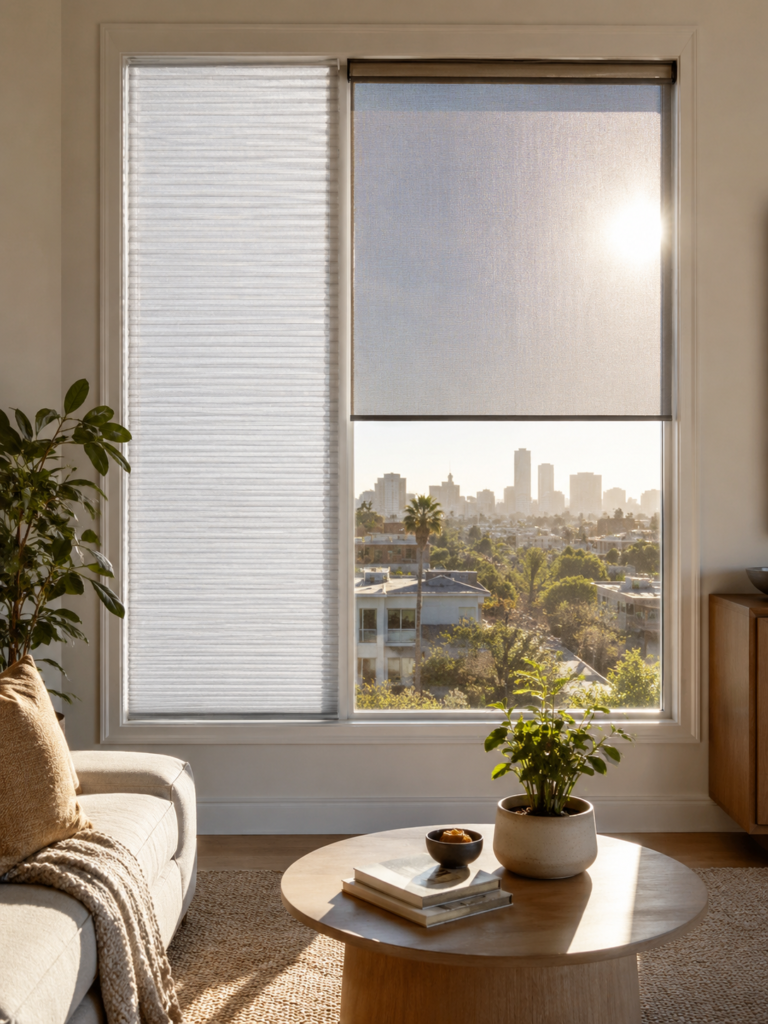
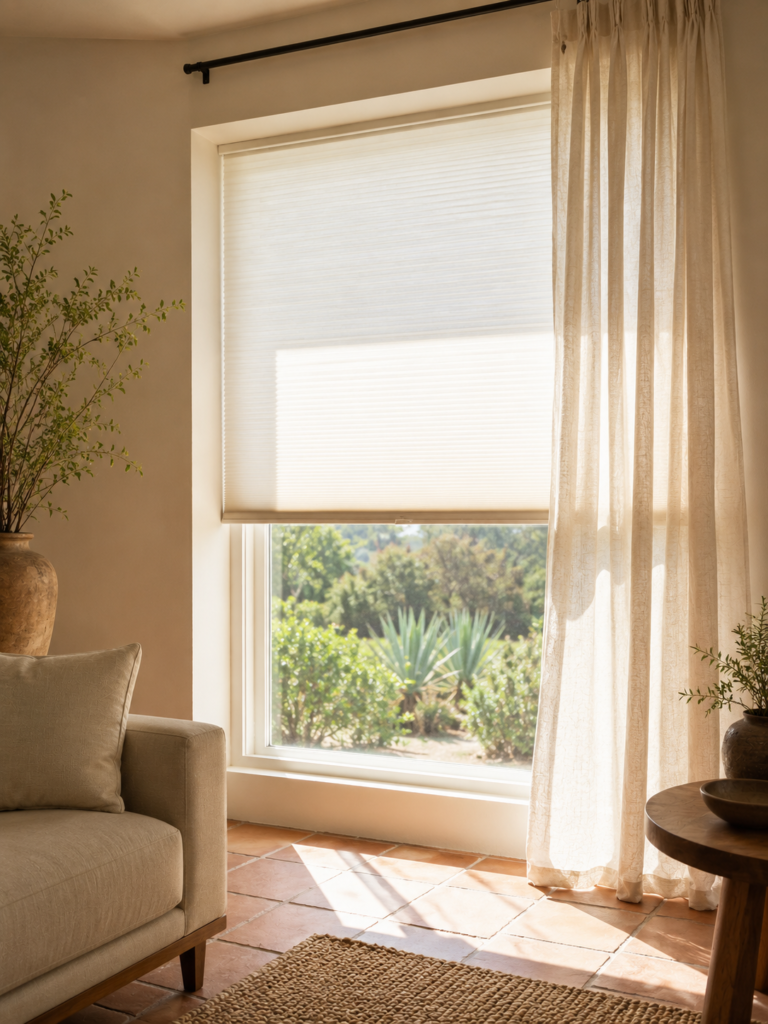
Cellular shades can cut unwanted solar heat gain through a window by up to 60 percent when they are fitted tightly to the frame. Solar screen roller shades are the other strong option, since they knock down glare and heat while preserving the view outward.
3. Then the decorative layer.
This is where curtains earn their place, but only if they are light colored or white backed so they reflect rather than absorb. A dark lined drape hanging in direct sun becomes a warm panel radiating into the room. If you are still deciding whether your room needs fabric at the window at all, that question is worth answering on its own terms before you buy anything.
One practical note for renters: tension-mounted cellular shades and removable solar film both work without drilling, and both come out cleanly at the end of a lease.
Design the room around the air, not just the view

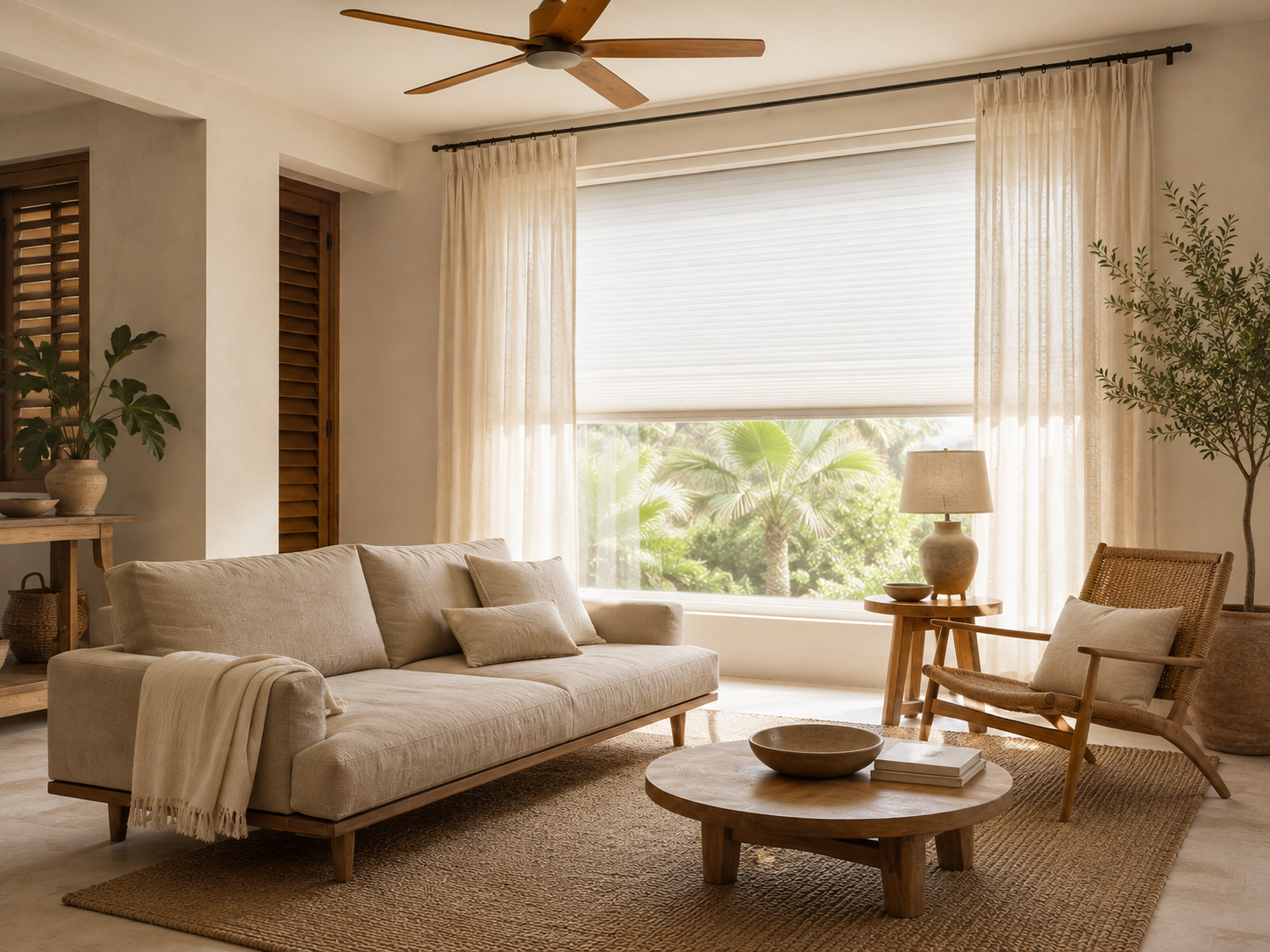
Air movement does more for perceived comfort in a hot room than almost any decor choice, because moving air speeds evaporation from your skin. A ceiling fan running counterclockwise in warm weather lets you raise a thermostat setting by about 4°F, with no loss of comfort. The Department of Energy suggests a 36 or 44 inch fan for rooms up to about 225 square feet (21 square meters) and 52 inches or larger beyond that, with ceilings at least eight feet (2.4 meters) high.
Where the fan sits matters as much as its size. Center it over the seating group rather than over the geometric middle of the room, since a fan cools people rather than air. For the same reason, switch it off when you leave.
Layout choices either help or fight that airflow:
- Keep the path between your main window and the room’s doorway reasonably clear, so cross ventilation has somewhere to go
- Favor low-backed seating and furniture on legs, which lets air pass underneath instead of pooling
- Avoid parking a tall bookcase or a high-backed armchair directly beside the window that supplies your breeze
- Float the seating group slightly off the walls, which reads as intimate and leaves circulation space at the same time
One important limit. Fans are comfort devices, not protection. The EPA advises against relying on electric fans for cooling once room temperature reaches the mid-90s Fahrenheit, because at that point they will not prevent heat-related illness. During genuine heat events, air conditioning or a cooling center is the answer and styling is beside the point.
Choose textiles that read as soft but do not behave like insulation
This is the trade most people get wrong. Softness is the one cozy signal that can trap heat, but the difference between fibers is large enough that you rarely have to give up the look.
| Material | How it behaves in heat | What it contributes | Watch out for |
|---|---|---|---|
| Washed linen | Loose weave, moves moisture away quickly, feels cool on contact | Rumpled softness, matte texture | Creases readily, which suits a relaxed room and not a formal one |
| Cotton percale or canvas | Breathable, washable, dries fast | Slipcovers and cushion covers you can launder | Loses body over time on a very used sofa |
| Jute, sisal or flatweave wool | Thin profile, low pile, does not hold warmth against the floor | Anchors a seating group without a thermal blanket effect | Coarse jute is unpleasant underfoot barefoot, so test before buying |
| Rattan, cane and light timber | No insulating layer at all, visually warm | Enclosure and natural warmth with zero heat penalty | Cane can loosen in very dry conditioned air |
| Leather and vinyl | Non-breathable, holds body heat and sticks to skin | Durability | Uncomfortable in humidity unless the room is reliably conditioned |
| Wool bouclé, velvet, faux fur, shag | Traps warm air against the body by design | Strong visual coziness only | The main culprits in an uncomfortable hot-climate room |
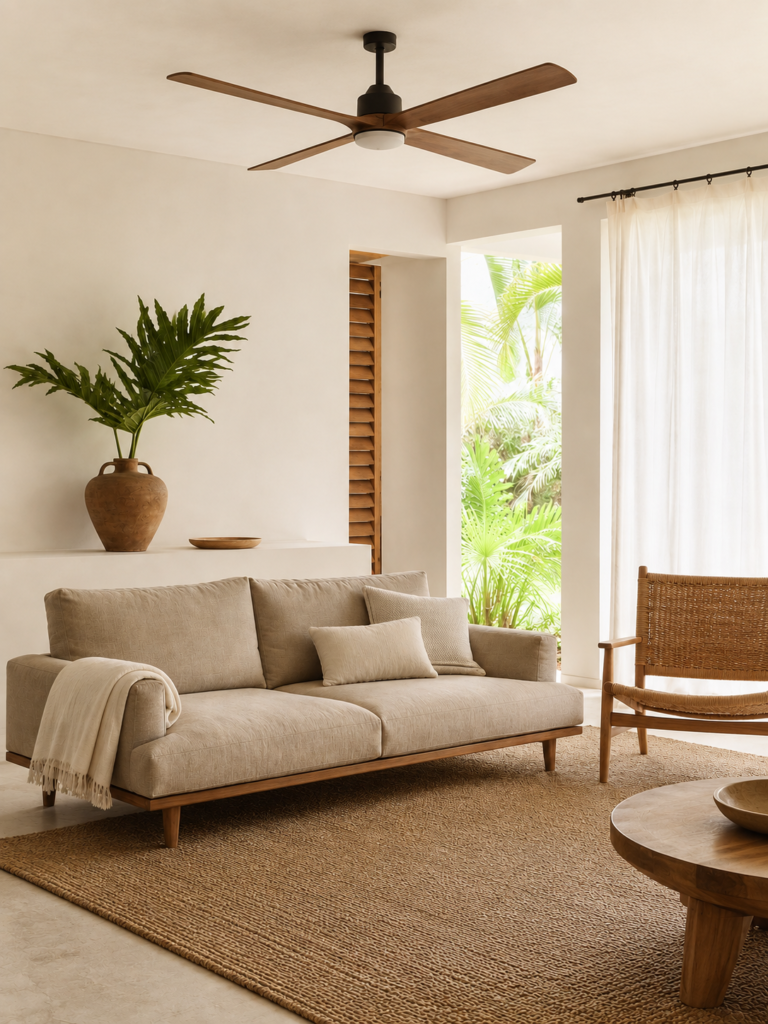
A useful rule: keep one soft textile at contact height and let the rest of the softness be visual. A cotton throw folded over a sofa arm and a single flatweave rug read as warmth to the eye while touching very little of you.
Seasonal slipcovers are the other underrated move. Swapping a heavy upholstery cover for washed cotton in summer changes how a sofa feels without changing the furniture.
Warm light without a warmer room
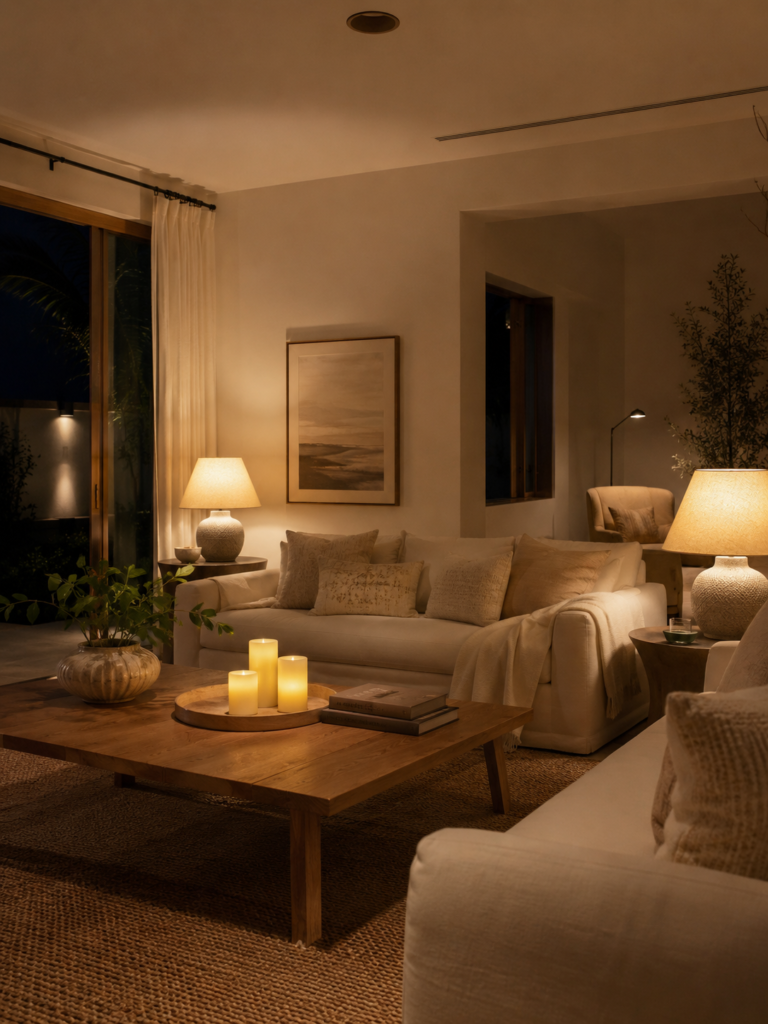
Light color does most of the emotional work in a cozy room, and it costs nothing thermally if you choose correctly.
Use LED bulbs rated around 2700K for lamps and 3000K where you need working light. Warm light at low height is the single most reliable cozy cue there is, which is why a pair of table lamps beats an overhead fixture in almost every room, hot climate or not. Add a dimmer if the fitting allows one.
Two adjustments specific to hot rooms. Skip any remaining halogen or incandescent bulbs, which convert most of their energy to heat rather than light. And go easy on candles. A single candle contributes almost nothing measurable to room temperature, but a cluster of six on a coffee table adds noticeable warmth at close range, and heavy fragrance sits differently in humid air than it does in dry cold air. Flameless LED candles give the same flicker with none of that.
Humidity is the half of comfort most decor advice ignores
Two rooms at identical temperatures can feel completely different depending on moisture. The EPA recommends keeping indoor relative humidity below 60 percent, ideally between 30 and 50 percent, which is a comfort target as much as a mold prevention one.
What this changes about furnishing a living room:
- Choose covers and throws you can actually wash, since textiles in humid rooms hold odor
- Resist stacking rugs, particularly on a ground floor slab where moisture rises
- Leave a small gap behind large upholstered pieces so air can move against the wall
- Treat leather and velvet as conditional choices that suit reliably air-conditioned rooms and struggle in naturally ventilated ones
- A cheap hygrometer costs very little and tells you whether your discomfort is heat or moisture, which are solved differently
Enclosure without blocking the breeze
Enclosure is what makes a room feel held rather than empty, and you can build it without walling anything in.
Define the seating zone with the rug rather than with furniture backs. Use a low console or a bench instead of a tall sideboard as the room divider. Hang art low enough to bring the visual ceiling down, which reads as intimate even in a room that is physically open. Group objects in clusters rather than scattering them, since density in a few places reads warmer than even distribution.
If you want a reading corner, place it on the coolest wall you have rather than the prettiest one. In most homes that is the north-facing wall in the northern hemisphere and the south-facing wall in the southern hemisphere. A corner that bakes from three o’clock onward will not get used, however good it looks.

Coziness in a hot climate is mostly an evening activity
This is the shift that changes everything else. In a hot climate the room genuinely has two states, and designing for both is more useful than chasing one perfect look.
By day the room is shut and shaded, working to keep heat out. The EPA’s guidance is straightforward: when outdoor air is hotter than indoor air, close the windows, and when it is cooler, open the shades and the windows. After sunset, in most hot climates, that flips.
So build the cozy version of the room around the evening. Open the windows once the outside air drops below the inside air, switch on the lamps, and let the room fill with the softness you kept deliberately minimal all day. A cotton throw pulled over your legs at nine at night feels exactly as good as a wool one does in a cold country. It just does not sit on the sofa cooking in the sun all afternoon.

Mistakes that quietly make a hot living room worse
- Styling before shading. Buying cushions while the west window stays bare solves nothing.
- Dark, heavy, unlined curtains in direct sun. They absorb the energy and then radiate it inward.
- A ceiling fan hung over empty floor. Fans cool people, so put yours over where people sit.
- Layering rugs for texture. Two rugs on a slab floor add insulation and hold moisture.
- Treating humidity as weather rather than a decor input. It determines which fabrics are pleasant, and no amount of cooling makes a non-breathable sofa comfortable in a damp room.
Where to start
If you only do one thing, shade the window that gets the strongest afternoon sun, from the outside if you can. If you do two, add the ceiling fan over the seating. Textiles, lighting and layout are refinements on top of those. Cozy living room ideas for hot climates work best in that order, because comfort you can feel comes first and the things you can see come second.
Frequently Asked Questions
Can a living room feel cozy without any rug at all?
Yes. A rug adds acoustic softness and defines a seating zone, but a hot-climate room can get both from a lower-cost path: heavier curtain fabric on one wall, upholstered seating and a grouped arrangement of furniture. If you do want a rug, a flatweave in cotton or jute gives you the visual anchor without much insulation.
What is the best sofa fabric for a hot, humid living room?
Loose-weave washed linen and cotton canvas perform best, because they breathe and can be washed. Performance polyester blends resist stains well but tend to feel warmer against skin. Leather is durable and can look excellent, though it holds body heat and sticks in humidity, so it works better in consistently air-conditioned rooms.
Do houseplants make a hot room hotter or cooler?
Neither to a degree you would notice. A handful of plants will not measurably change room temperature. They contribute visual softness and life, which are genuine cozy signals, and they add a small amount of moisture to the air. In an already humid room, keep the count modest and avoid standing water in saucers.
Should I still use curtains in a hot climate?
Often yes, but for different reasons than in a cold one. In a hot room, curtains handle glare, privacy and softness, while the actual heat blocking is better done by an exterior shade or a tightly fitted cellular shade behind them. Choose light colored or white backed fabric so the panel reflects rather than absorbs.
Is a ceiling fan enough on the hottest days?
No. A fan improves comfort by moving air across your skin, and it does not lower the actual air temperature. Public health guidance is clear that once a room reaches the mid-90s Fahrenheit, around 35°C, fans should not be relied on as the primary cooling method. On those days, air conditioning or a cooler public building is the safe answer.