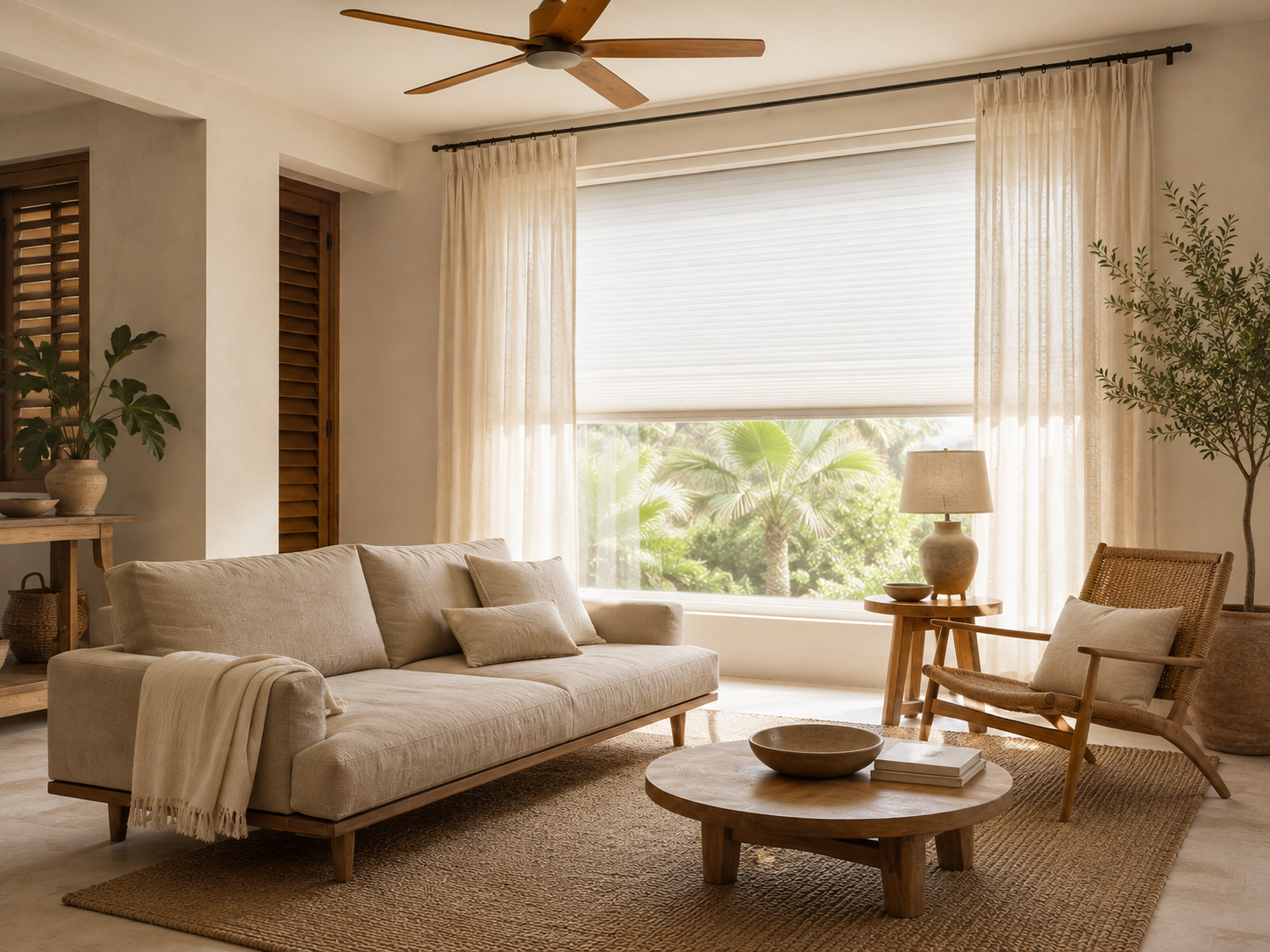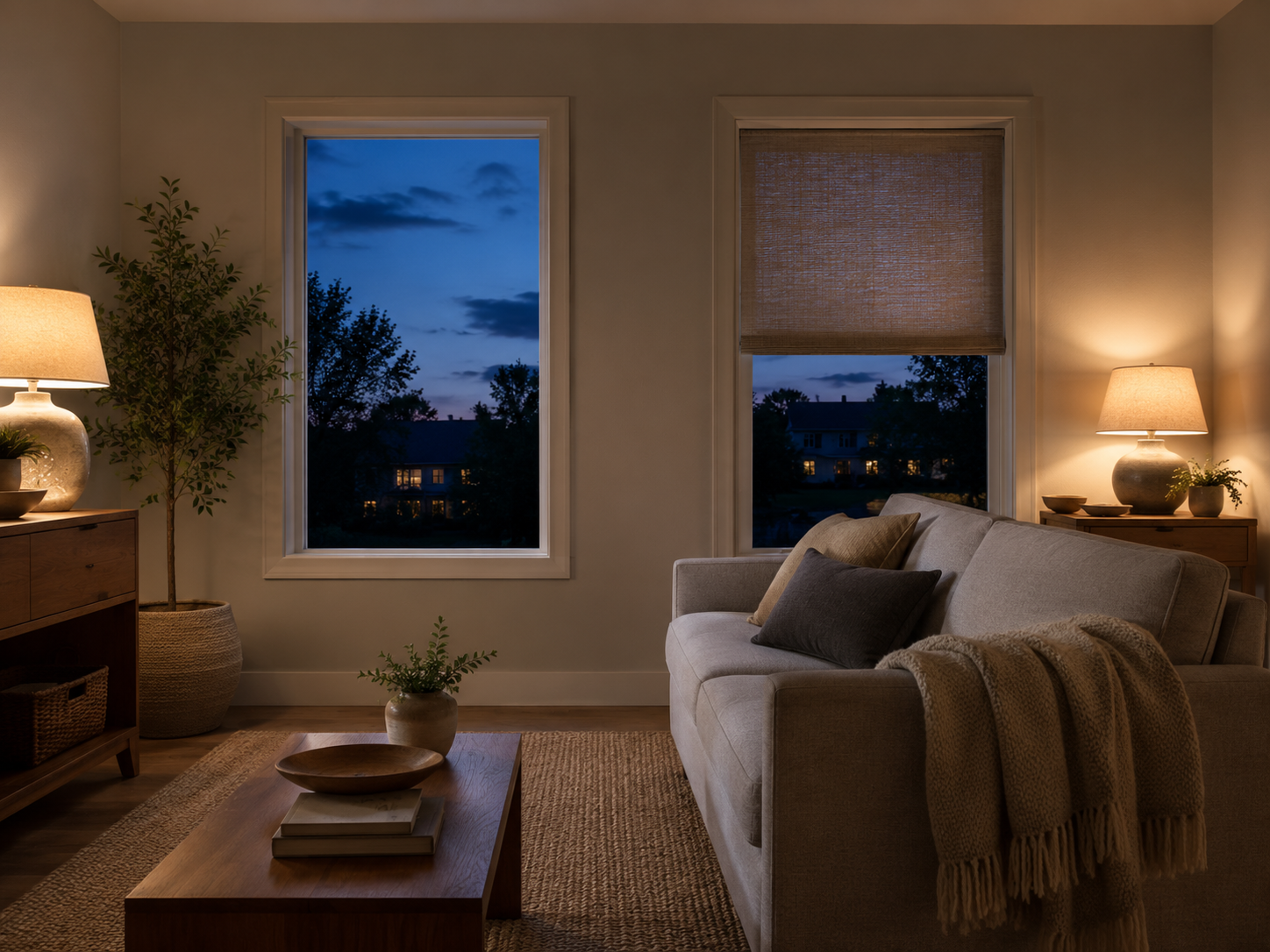
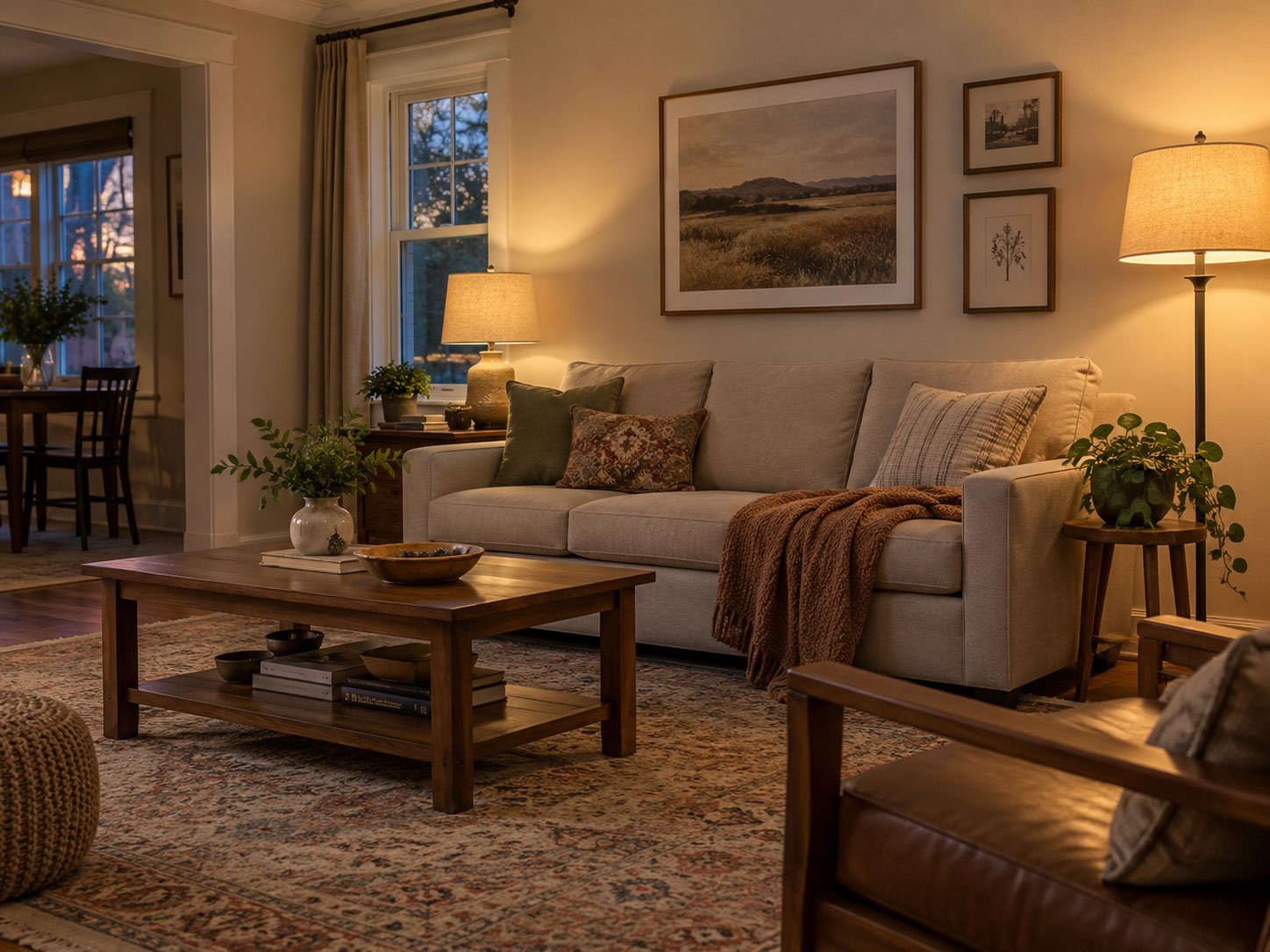
Simple Cozy Living Room Ideas for a Calm, Relaxing Home

A living room usually feels cozier when the furniture forms one comfortable zone, the evening light comes from more than one source, and the hardest surfaces are balanced with a few soft ones. You do not need to replace the sofa or cover every surface with decor.
Start with what costs nothing. Clear the room, look at the layout, and turn on the lights you actually use after dark. Then add only what solves a visible problem. That sequence keeps a cozy refresh from turning into another shopping project.
Find what is making the room feel cold
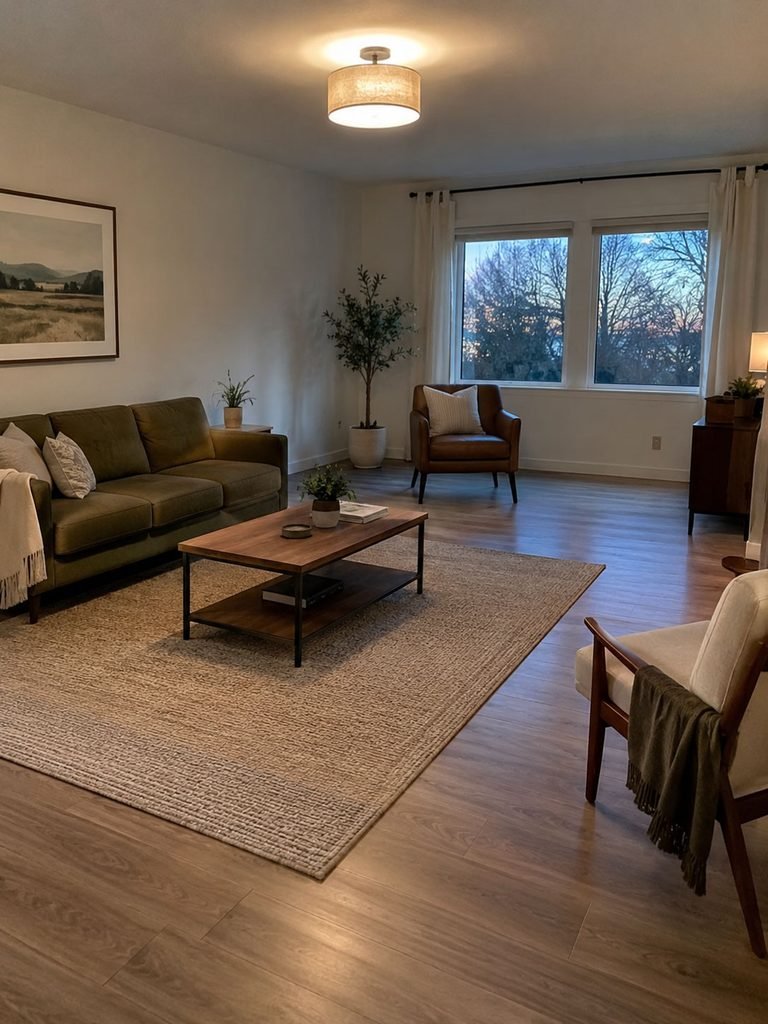
Before you buy a rug, lamp, pillow or paint, identify what is actually bothering you.
Stand in the doorway and look at the room without focusing on individual objects. Then sit where you normally sit in the evening. Ask four questions.
- Does the seating feel scattered rather than connected?
- Does one ceiling fixture provide nearly all the light?
- Are most visible surfaces hard, shiny or bare?
- Are shelves and tables so full that your eye has nowhere to rest?
Most rooms do not fail all four tests. Fixing the strongest problem first usually gives you more improvement than buying several unrelated accessories.
A sparse room may need softness. A crowded room may need removal. A comfortable room that still feels flat may simply need better light. Cozy is not automatically the same as more.
Rearrange before you shop
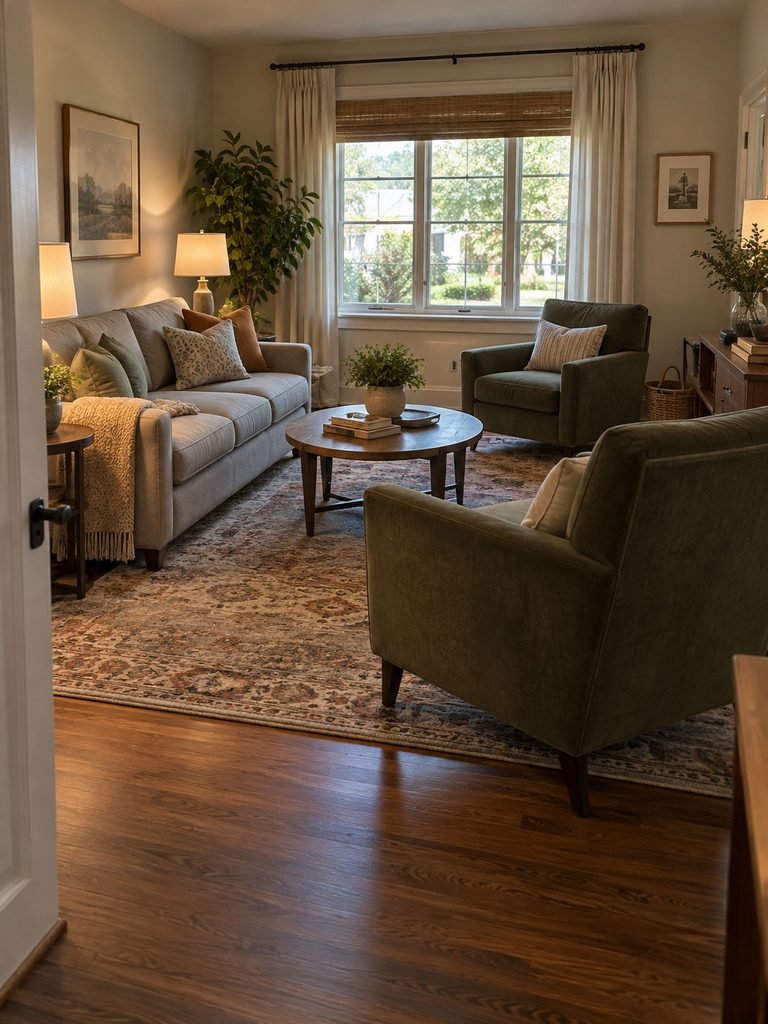
Furniture placement can change the room before you spend a dollar.
If every seat is pushed to a different wall, try bringing the usable pieces into one visual group. You do not need to float everything dramatically into the center. Even moving a chair closer to the sofa or turning it slightly toward the conversation area can make the room feel more connected.
Keep the everyday route through the room clear. If you have to squeeze around an ottoman or turn sideways between a chair and coffee table, the arrangement is working against comfort.
In a small living room, resist the urge to fill every empty corner. Fewer useful pieces often feel calmer than several undersized tables, stools and decorative stands.
Then test the room instead of judging it only from the doorway. Sit on the sofa. Reach for the side table. Watch television if that is what the room is for. Talk to someone in the opposite chair. A cozy arrangement has to work from the seats, not just in a photograph.
Use warm, layered lighting at seated height
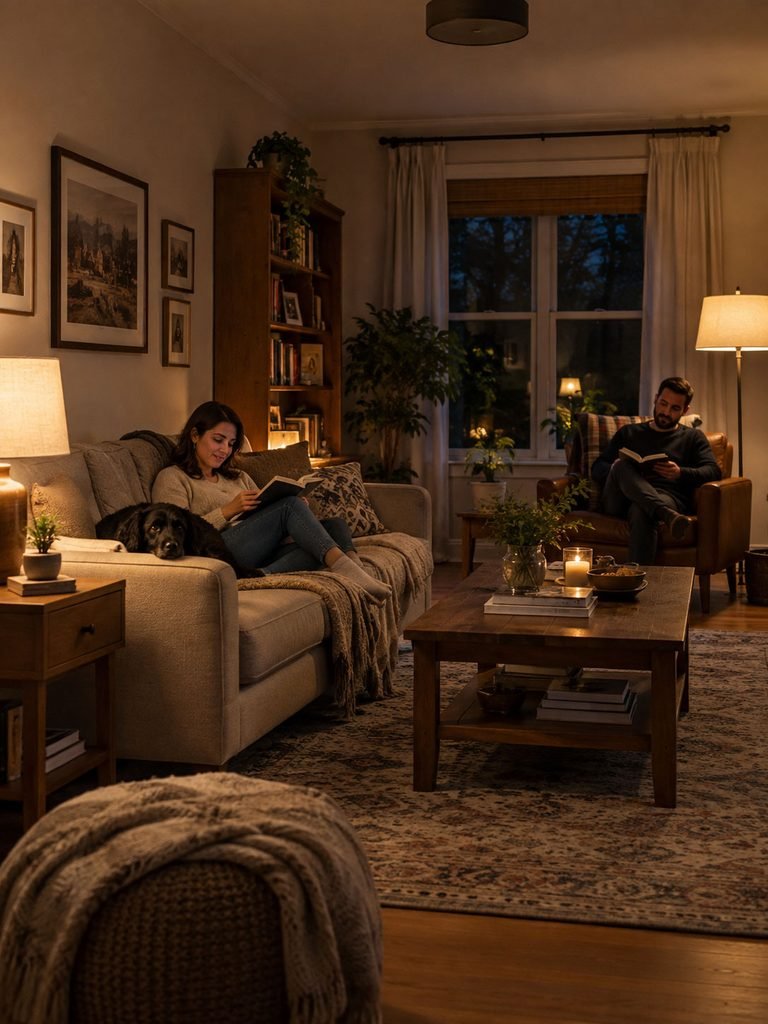
If you want the fastest evening change, stop relying on one bright fixture in the middle of the ceiling.
Use a table lamp beside the sofa, a floor lamp beside a chair or another low source that puts light close to where people actually sit. Different pools of light make a room feel less flat and give you control over how bright it is.
For bulb color, ENERGY STAR’s color temperature guidance explains that lower Kelvin values such as 2700K and 3000K appear warmer, while 4000K and higher appear cooler. For a living room where the goal is a softer evening atmosphere, 2700K is a practical starting point rather than a rule you have to follow.
Keep useful task lighting where you read, sew or work. Cozy should not mean struggling to see.
If a dimmer is already installed, make sure any replacement LED bulb is labeled as compatible with dimming. Otherwise, adding a second lamp is often simpler than trying to make one fixture perform every job.
Add texture and color where they do the most work
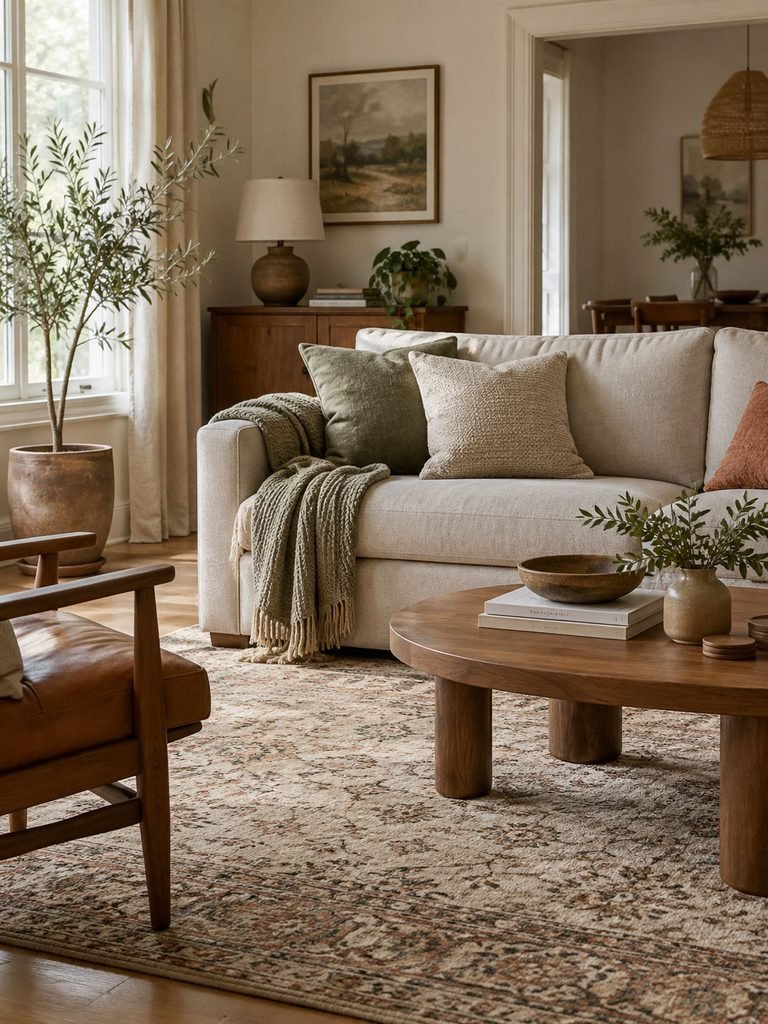
Texture works best when it softens something that currently feels hard.
If the floor dominates the room, start with a rug. When space and budget allow, choose one large enough to visually connect the main seating rather than leaving a small island beneath the coffee table.
If the sofa looks flat but is already comfortable, one throw and a few cushions can add enough variation. Mix surfaces rather than piling on quantities. A smooth cotton cushion next to a woven one creates more interest than six nearly identical pillows.
Curtains can add softness, privacy and visual weight, but they are not mandatory. A room with attractive windows, good shades and enough textile elsewhere may be better without them. The separate Femorias guide on deciding whether a cozy living room actually needs curtains covers that choice in more detail.
Color works the same way. You do not need an all beige room or an all brown room. Warm wood, muted olive, rust, clay, tobacco, cream or softened blue can all contribute to a settled palette. Look at what you already own and repeat one or two existing colors before introducing an entirely new scheme.
Make the room personal without filling every surface
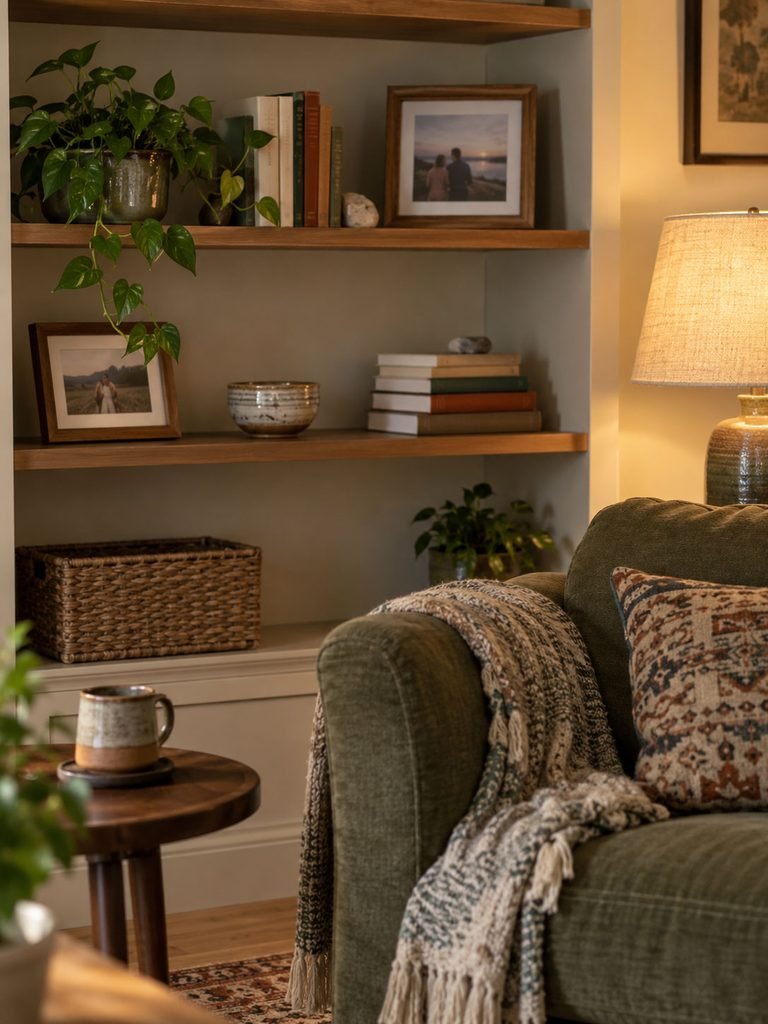
A room starts to feel lived in when it contains evidence of the people who use it. That does not require covering every shelf.
Keep the books you reach for, photographs you care about, art you would still choose without a trend telling you to, and a few objects with some history. Grouping several meaningful items in one place often looks calmer than scattering small decor across every available surface.
Leave some empty space around those groups. The gap is part of the composition.
Plants can add shape and color if they suit the available light and your willingness to care for them. They are optional, not a requirement for coziness.
Candles are optional too. If you use real flames, the National Fire Protection Association’s candle safety guidance recommends keeping candles at least 1 foot from anything that can burn and extinguishing them when you leave the room or go to bed. Flameless candles provide the flicker without an open flame.
Adjust the cozy formula to your space
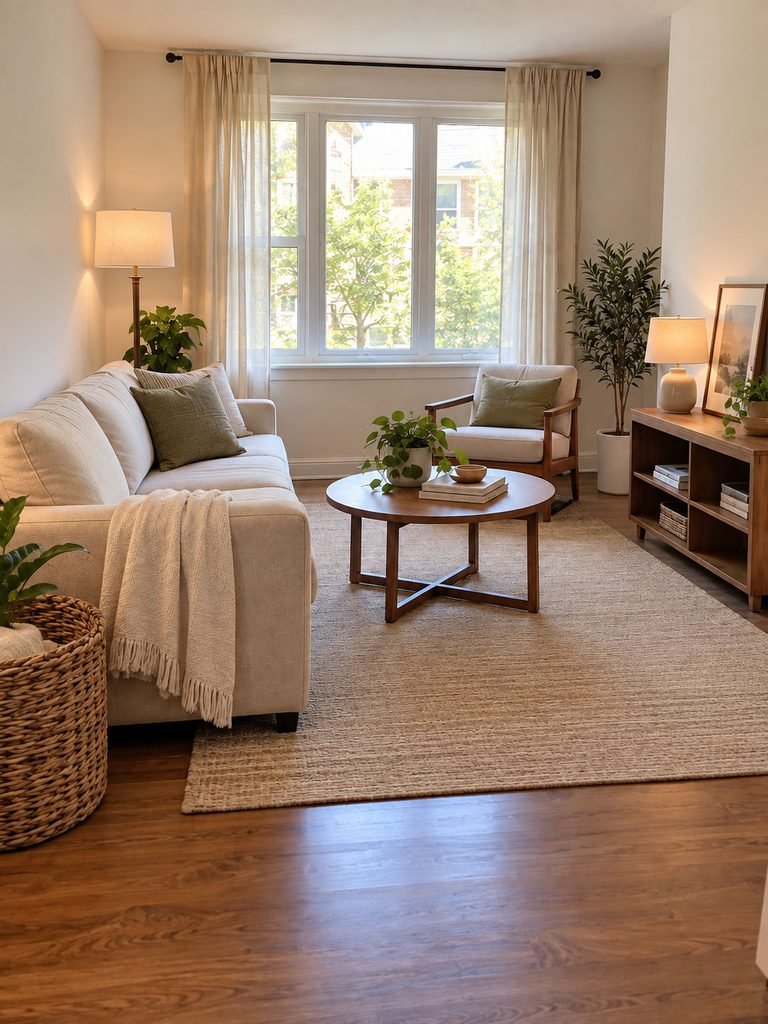
The same advice does not suit every room.
| Situation | Start with | Watch out for |
|---|---|---|
| Tight budget | Rearrange furniture, edit surfaces and borrow a lamp or throw from another room | Buying several small accessories before fixing the layout |
| Rental | Plug in lamps, freestanding storage, textiles and lease appropriate removable decor | Painting, drilling or replacing fixtures without permission |
| Small room | One clear seating zone, fewer useful pieces and a rug that connects them | Filling every corner or collecting many tiny decorative objects |
| Hot climate | Warm light, breathable textiles, restrained layering and good air movement | Heavy drapes, thick piles of fabric and layouts that block airflow |
| Cold or drafty room | Address the window and physical comfort before decorative layers | Assuming extra cushions will solve a genuinely cold seat |
Hot weather deserves its own version of the formula. Femorias’s guide to cozy living rooms in hot climates explains how to keep the visual warmth while avoiding heavy materials and blocked airflow.
At the other extreme, a seat beside cold glass can feel uncomfortable even when the rest of the room looks cozy. If that is the problem, decorating the sofa is not the first fix. The U.S. Department of Energy notes that well fitted cellular shades can reduce nighttime heat loss and cold drafts around windows. See the Department of Energy’s cellular shade guidance.
Treat your room’s actual conditions as part of the decorating plan. Comfort is more convincing than a room that merely photographs as cozy.
Cozy living room FAQs
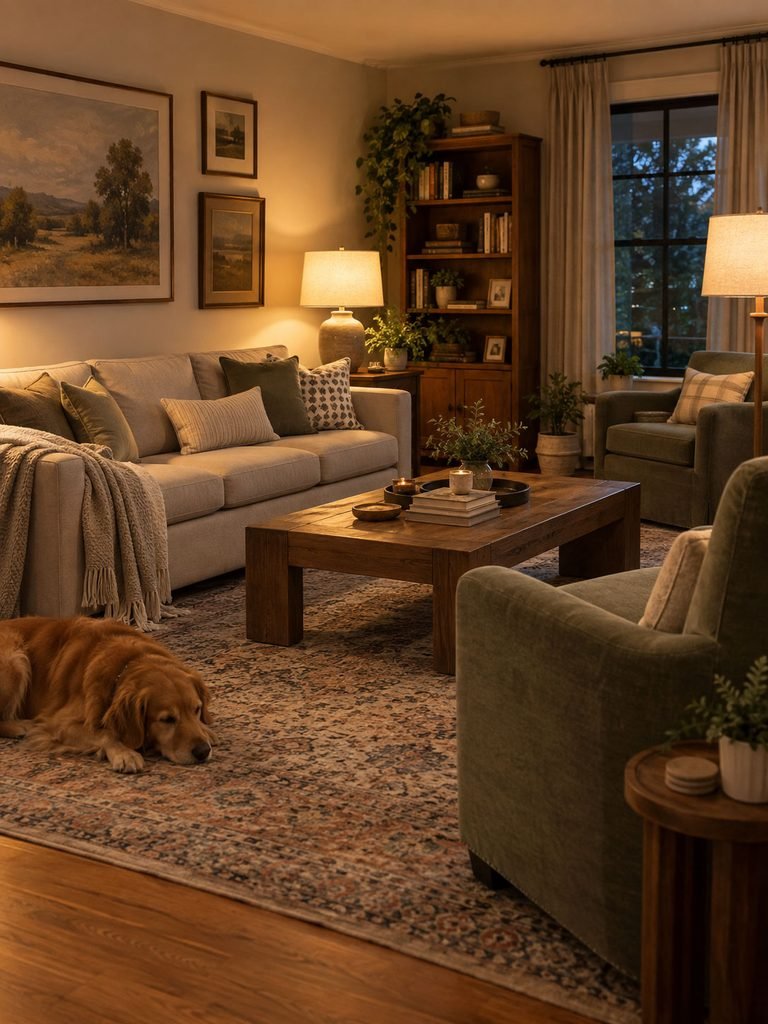
What makes a living room feel cozy fastest?
Lighting usually creates the quickest visible change after dark. Turn off an overly bright overhead fixture and use a lamp near the seating. If the room still feels bare, add one substantial soft surface such as a rug or throw rather than several small decorations.
Do cozy living rooms have to use warm colors?
No. A blue, green, gray or white room can still feel comfortable when the shade, lighting, materials and furniture arrangement work together. Warm wood and textiles can soften a cooler wall color without requiring repainting.
How can I make a small living room cozy without making it crowded?
Use fewer objects with more visual weight. A properly scaled rug, one lamp, one comfortable chair and a restrained group of cushions usually do more than filling shelves and corners with small decor. Keep the walking route visibly clear.
Can a modern or minimalist living room still feel cozy?
Yes. Minimalism becomes cold when it removes comfort along with clutter. Keep the simple lines, then add warm light, tactile fabric, wood, art and a few personal objects.
What should I buy first for a cozy living room?
Buy only after rearranging and editing what you own. If the room is uncomfortable after dark, a lamp is often the most useful first purchase. If the room sounds and looks bare, consider a rug. If the furniture works but feels visually flat, start with a throw or cushion covers.
Start with three changes tonight
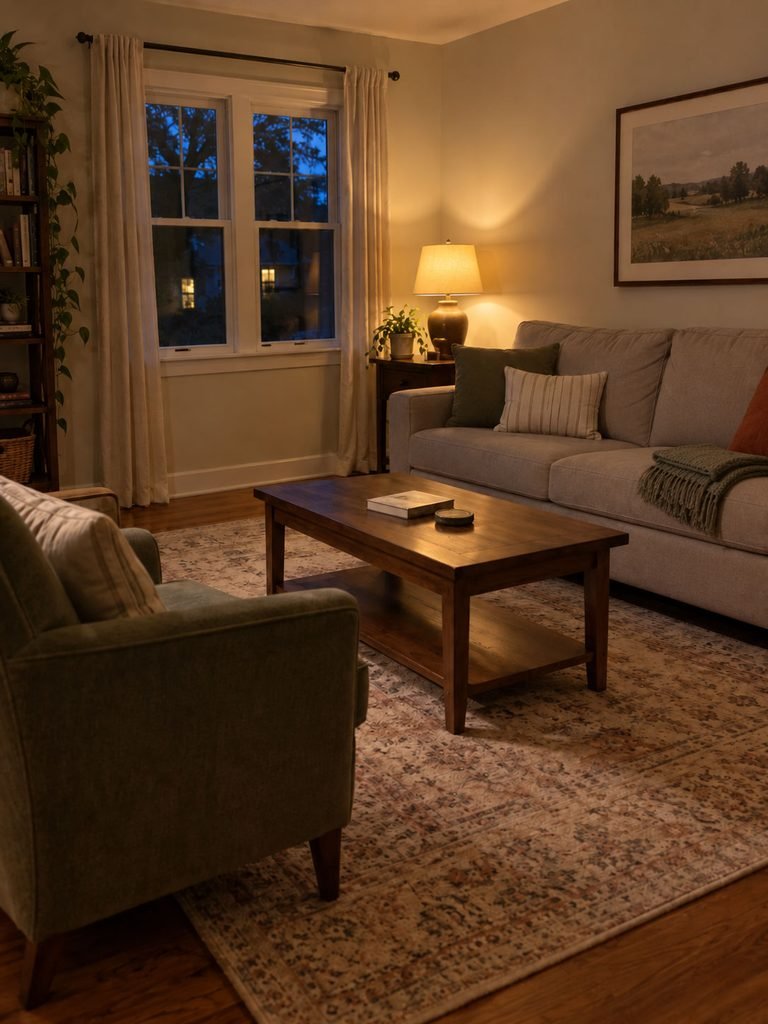
Start by removing anything that does not belong in the room. Then move one chair or side table so the seating works better. Finally, switch off the harshest light and turn on a lamp close to where you sit.
Live with those changes for an evening before buying anything.
If the room still feels bare, add softness. If it feels busy, remove more. If the window is the problem, solve the window. If the room is physically too hot or cold, deal with that before styling it.
A cozy living room does not need the maximum number of cozy objects. It needs the right amount of comfort in the places you actually use.