Cozy Living Room Ideas for Small Spaces That Feel Warm, Not Crowded

A small living room feels cozy when its furniture forms one clear zone, its evening light sits close to where people actually relax and its soft surfaces are concentrated where they matter. The trick is not filling every empty corner.
Start with the layout. Keep the normal walking route easy, let fewer pieces do more work and use one substantial rug or textile layer instead of many small decorative objects. Then add warm light, useful storage and personal details. Empty floor and wall space are not unfinished areas. In a compact room, they are part of what keeps the cozy elements comfortable instead of claustrophobic.
Start with the room you need to move through
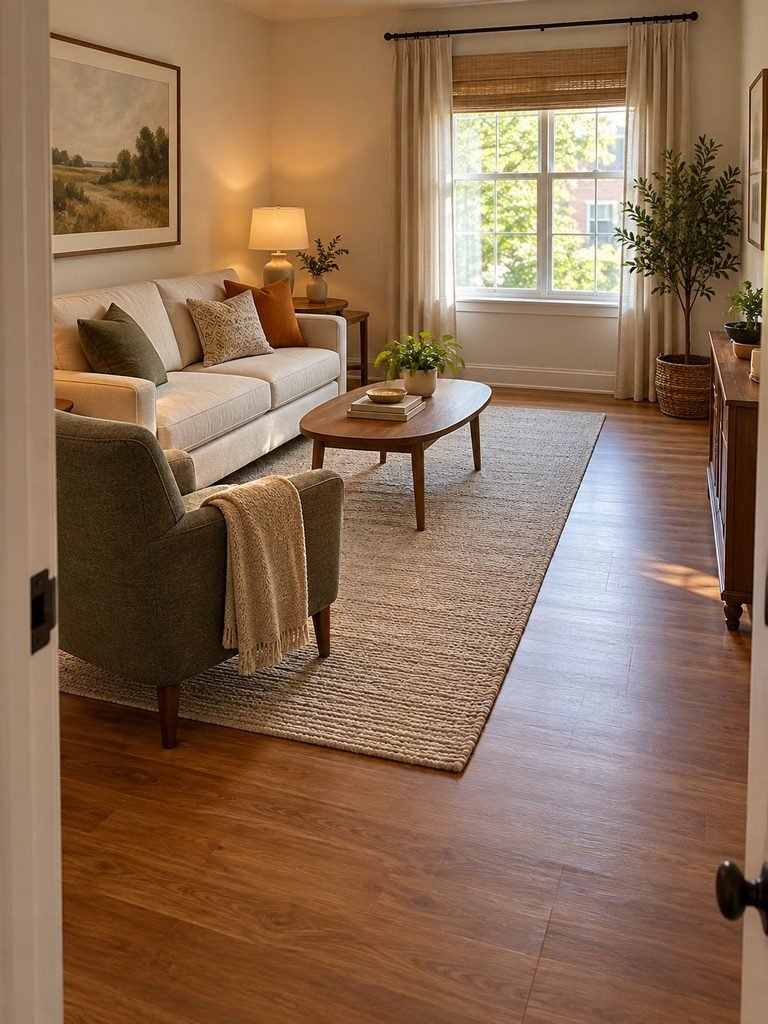
Layout matters before decor because a room cannot feel comfortable if everyday movement feels awkward. If you need to turn sideways around a coffee table or step over an ottoman to reach the sofa, adding another basket or floor lamp will not improve the experience.
Start with the route you use most. Walk from the entrance to the sofa, window, television and any adjoining room. Remove the easiest obstacle first. Sometimes that means shifting a chair. Sometimes it means admitting that a second side table is doing very little for the space.
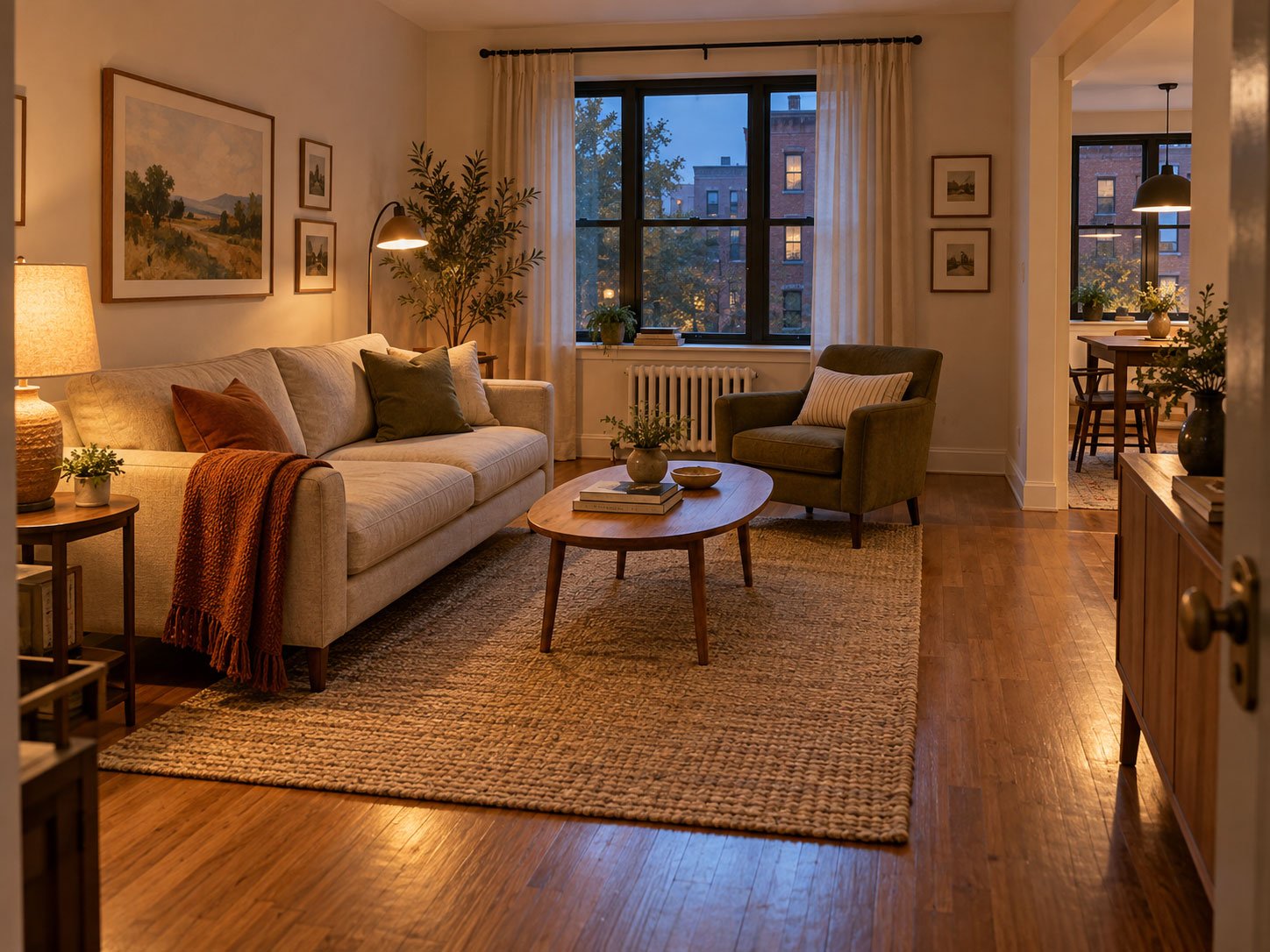
Then form one recognizable seating group. A sofa and chair that relate to each other usually feel more settled than several small pieces distributed around the perimeter. You do not need to drag everything into the center. Even a slight turn toward the main seating area can make the arrangement feel connected.
Femorias already has a broader guide to diagnosing why a living room does not feel cozy. The small space version is stricter: once the main seating works, protect the remaining open floor instead of treating it as somewhere else to put decor.
Let fewer pieces carry more weight
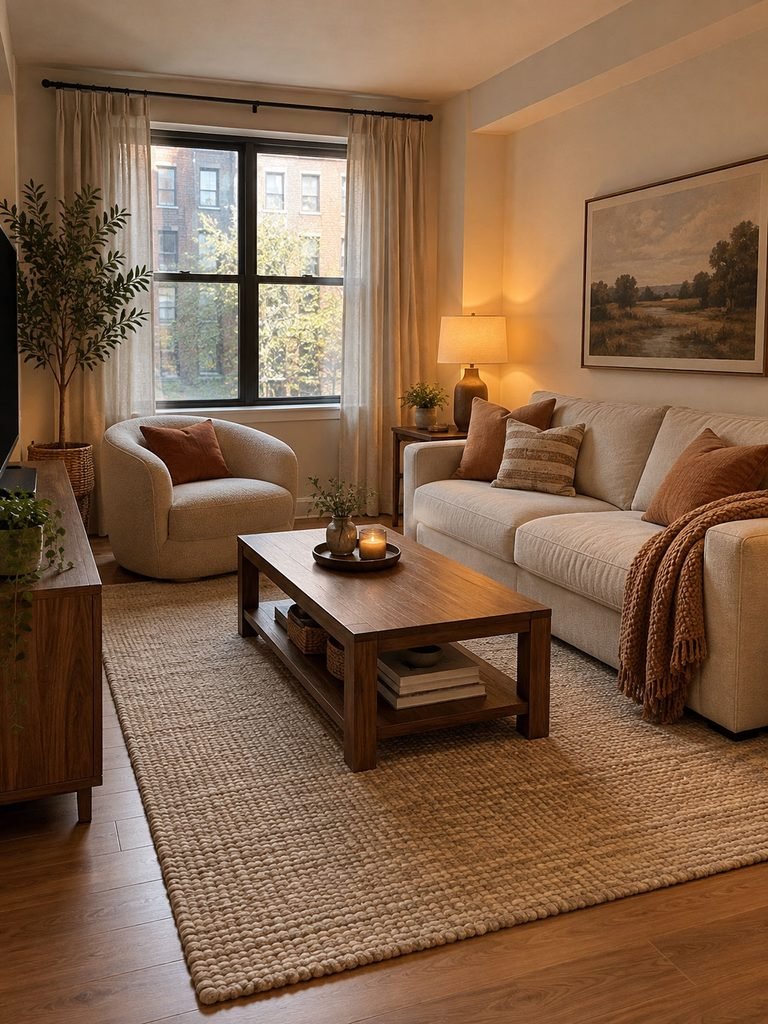
Small rooms often become crowded because every need gets its own piece of furniture. A side table solves one problem, a storage basket solves another and an extra stool appears just in case someone visits. Soon the floor plan is a collection of small interruptions.
Try the opposite approach. Keep the sofa that is genuinely comfortable. Add one chair if you regularly need another seat. Then choose supporting pieces that solve more than one problem. A coffee table with storage can hold blankets or remotes. An ottoman can provide a soft footrest and occasional seating. A narrow console can create storage and hold a lamp without taking over the center of the room.
Do not automatically assume that every item must be tiny. Several undersized pieces can create more visual noise than one correctly scaled piece. Current small living room coverage increasingly makes the same point: scale and function matter more than simply shrinking everything.
The useful test is simple. If you remove a piece for a week and never miss it, the room may be better without it.
Use one connected layer of softness
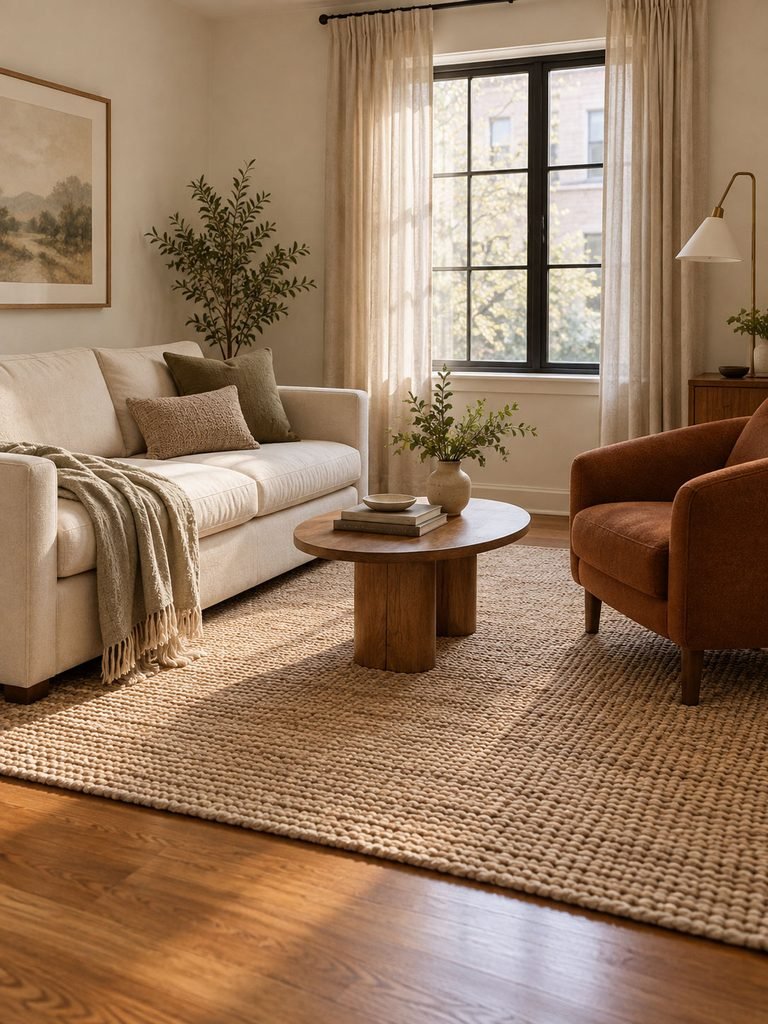
A substantial soft surface usually does more for a small room than five small soft accessories.
If the floor is visually dominant, start with the rug. The rug should make the seating read as one area rather than a small island beneath the coffee table. In many rooms that means choosing a size that reaches under at least part of the main seating instead of stopping far short of the sofa.
Then look at the sofa. If it already has comfortable fabric, you may need only one throw and a restrained mix of cushions. Vary the texture more than the quantity. Linen, woven cotton, wool like texture and smooth upholstery can create enough contrast without covering every seat.
This is also where editing matters. A basket full of extra throws may look cozy in a photograph while taking up useful floor space in real life. Store what you are not using. Keep the softness that improves touch, comfort or visual balance.
The goal is not maximum texture. It is enough softness to balance hard flooring, glass, painted walls and wood without making the room feel padded from edge to edge.
Build warmth with light instead of clutter
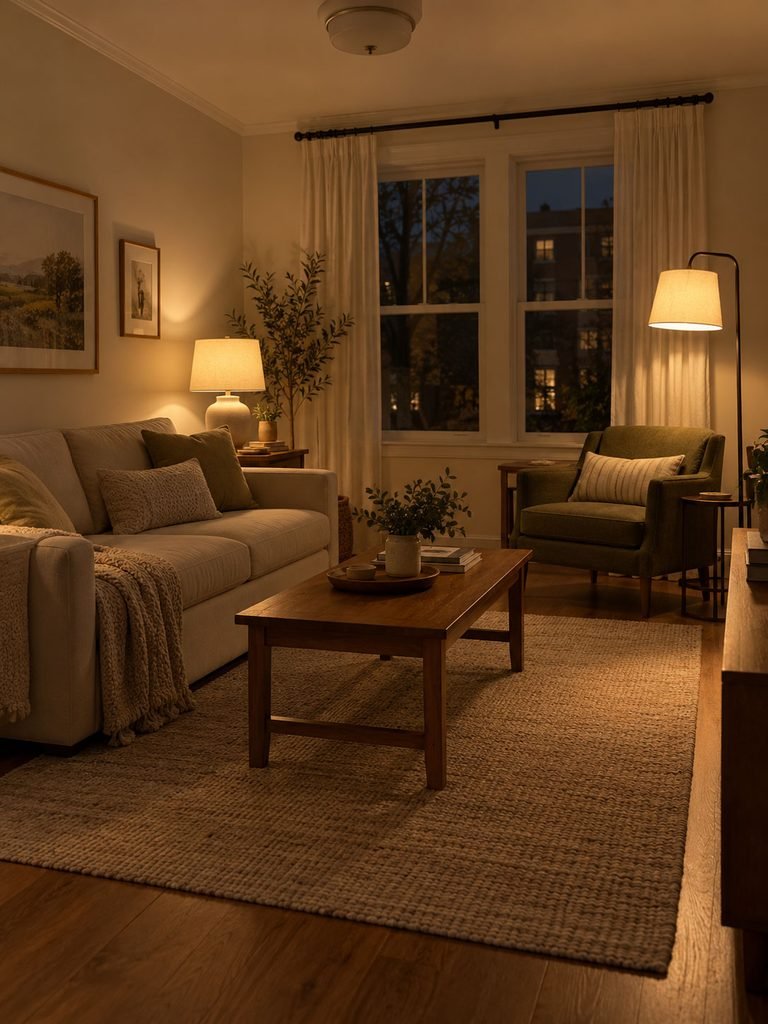
Lighting creates atmosphere without using another square foot of floor if you choose the sources carefully.
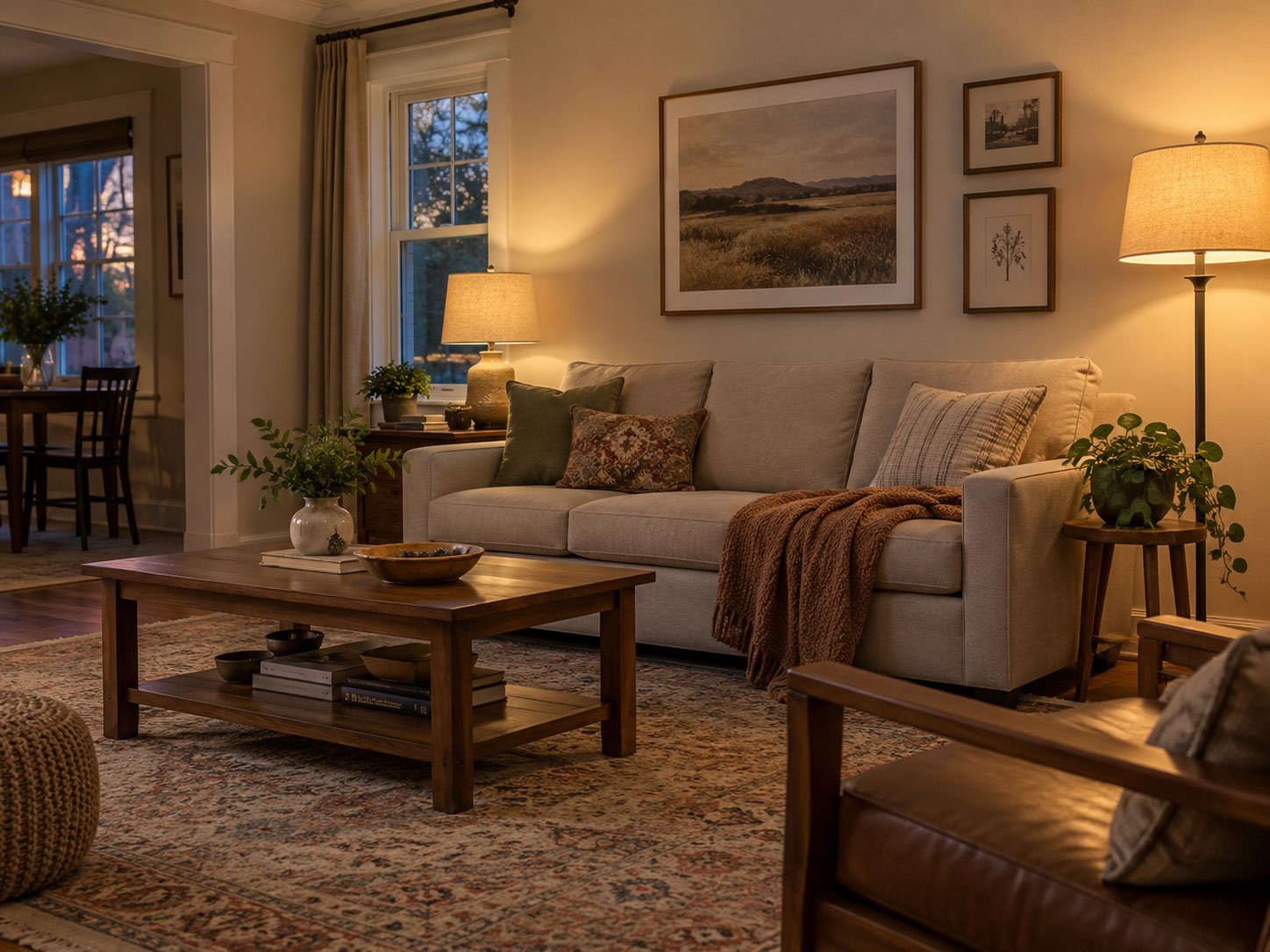
One bright ceiling fixture tends to flatten a room because everything receives similar light. A lamp beside the sofa or reading chair creates a smaller pool of light around the place people actually occupy. If the room has a dark corner that matters, a second source can balance it.
Bulb color matters too. The US Department of Energy describes 2700K as warm and 3000K as soft, warm light commonly suited to homes. Its guidance on light bulb color temperature also distinguishes those warmer appearances from cooler light around 4100K. For a relaxed living room, 2700K or 3000K is a practical range to test rather than a rule every fixture must follow.
In an extremely tight room, do not assume you need a large floor lamp. A compact table lamp on an existing surface can create the effect without adding another base to walk around.
Keep task lighting where you read or work. A cozy room still needs enough useful light to function.
Make the window earn the space it takes
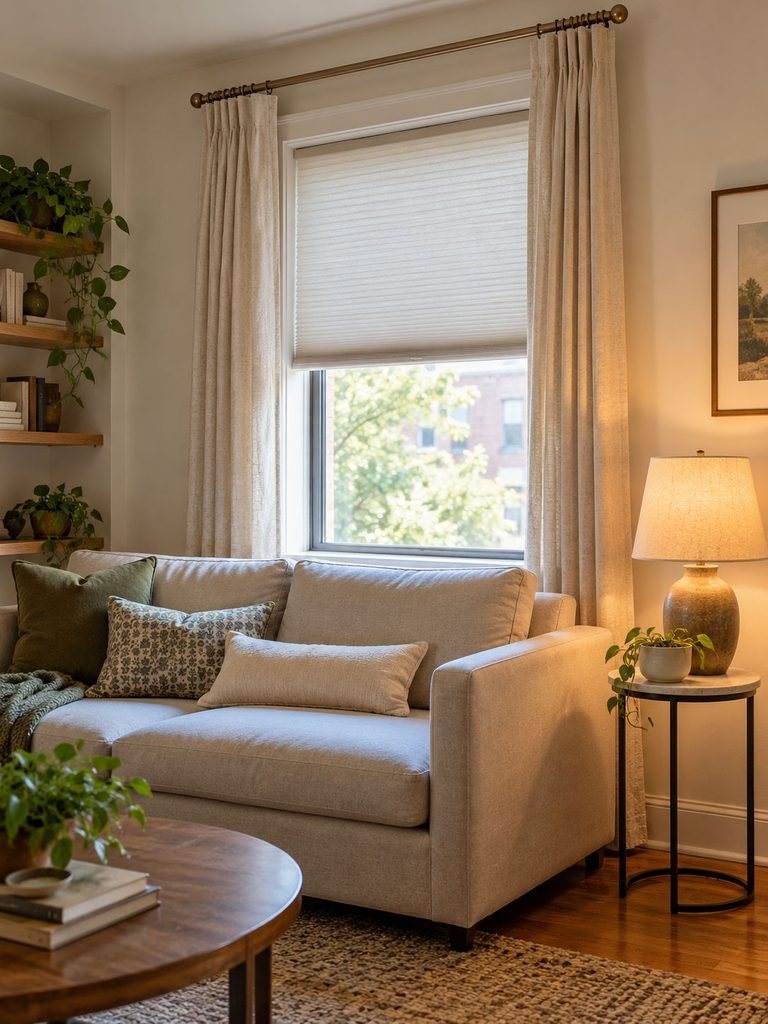
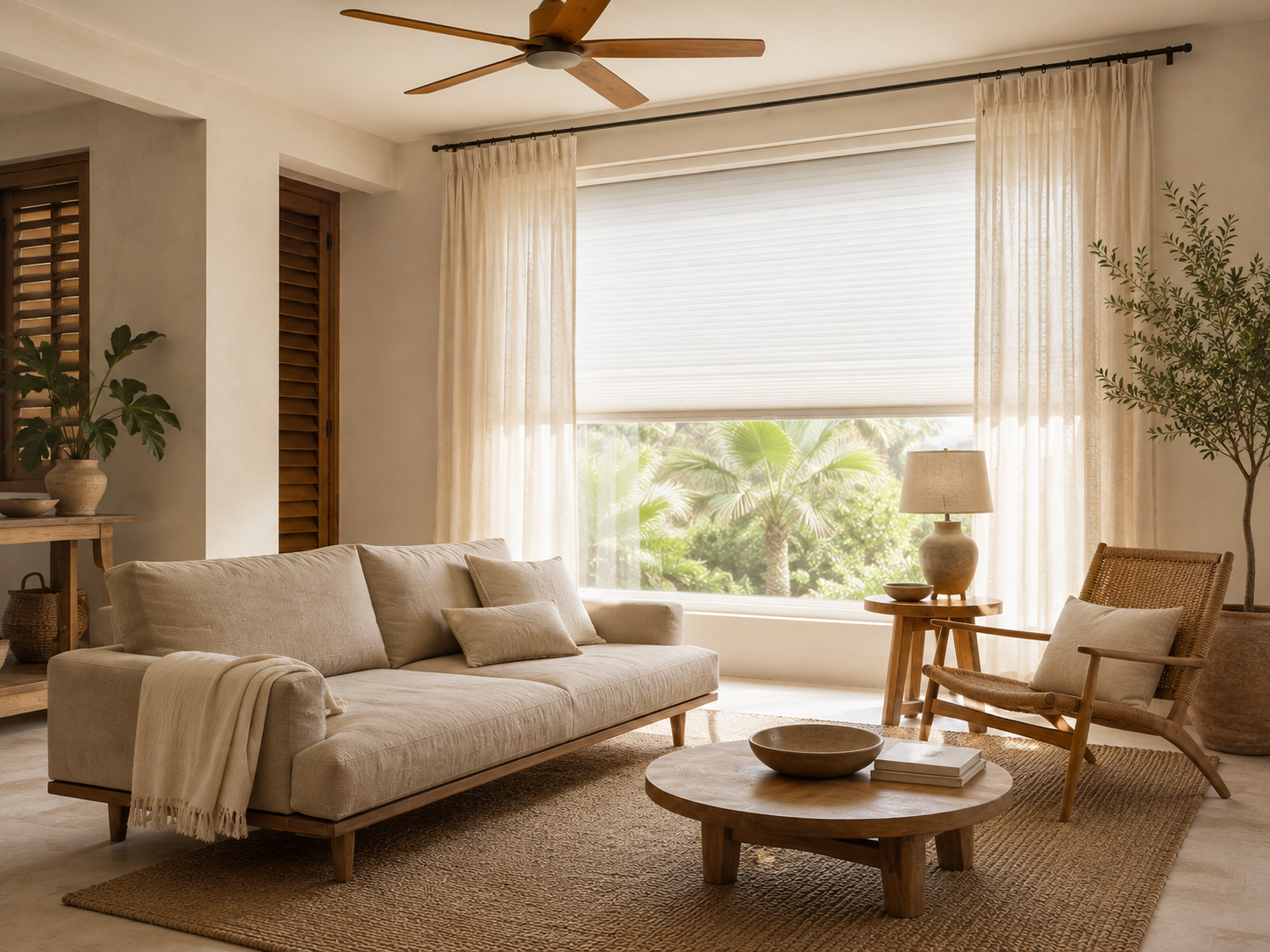
Windows can add softness, but fabric also consumes visual and physical space. That makes window treatments a genuine small room decision instead of an automatic finishing step.
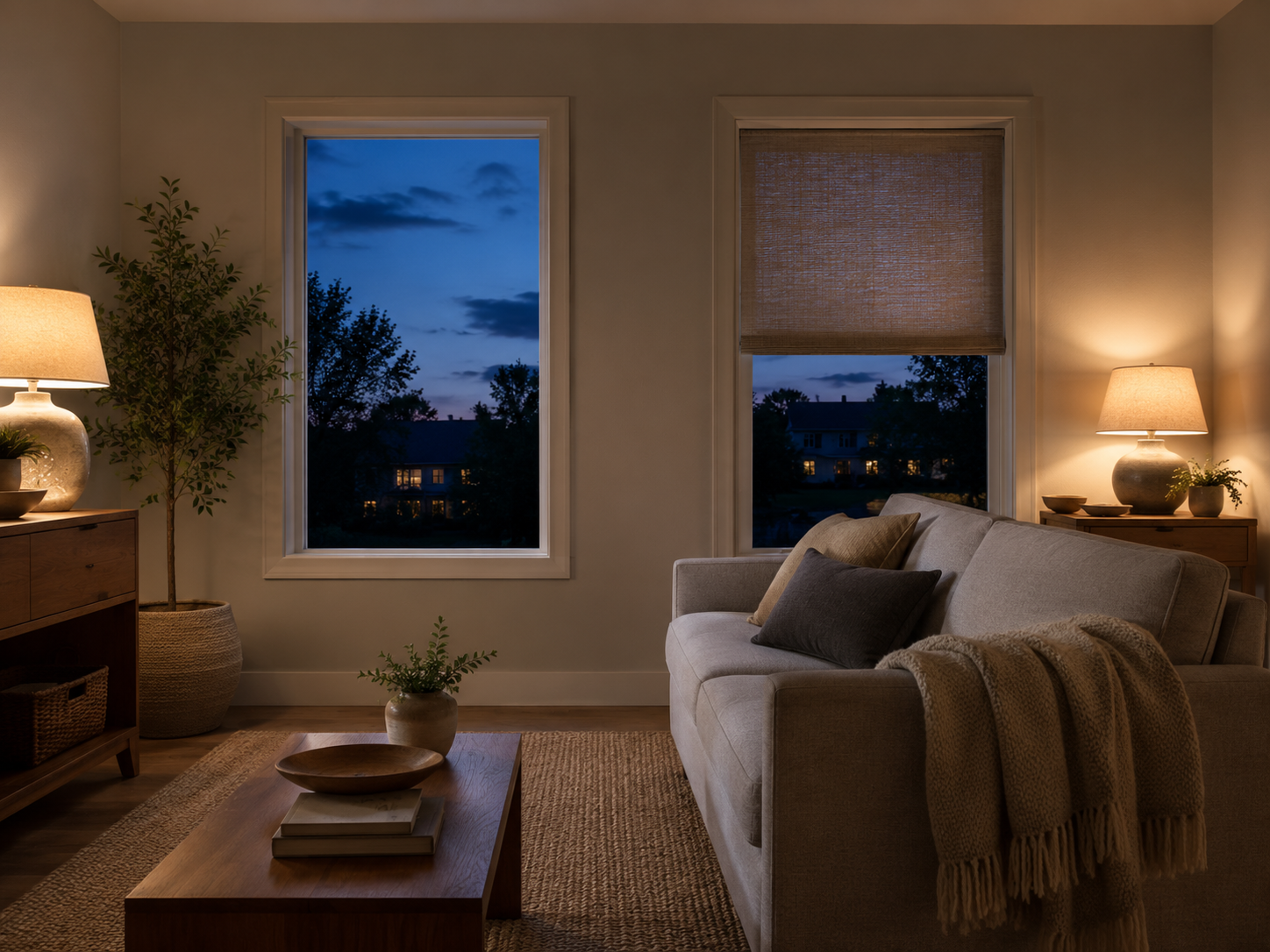
If the window already has an attractive frame, a useful blind or good privacy, leaving it visually simple may make the room feel calmer. If the wall looks bare after dark or the glass creates physical discomfort, a treatment can do more work.
Femorias has a separate guide on deciding whether a cozy living room needs curtains. For small rooms, pay particular attention to how much wall the open panels need and whether the fabric interferes with furniture, radiators, doors or daylight.
If the problem is comfort near cold glass rather than appearance, consider a functional shade before adding decorative layers. US Department of Energy research on insulating cellular window shades supports their ability to reduce heat loss and improve comfort when the product and climate are appropriate.
A window treatment earns its place when it solves privacy, light control, comfort or visual balance. If it solves none of those, you do not need it simply because the room is small and cozy.
Hide the busy stuff and display less
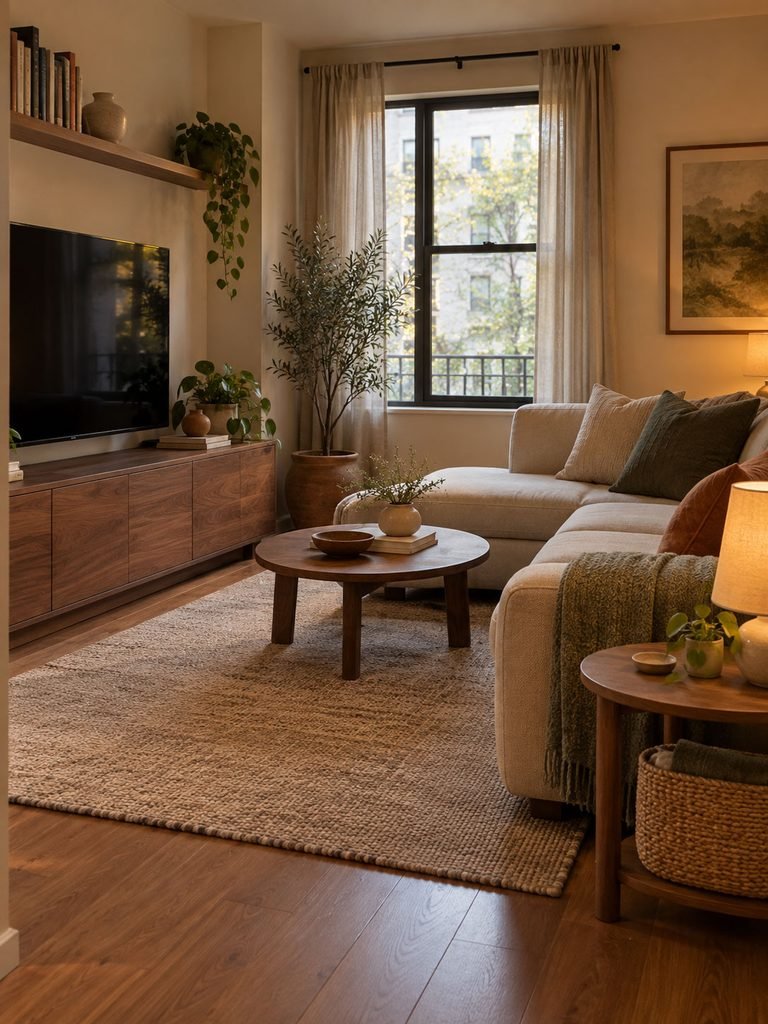
Storage should make a small room quieter, not give you another surface to fill.
Closed storage is useful for visually busy objects such as chargers, game controllers, paperwork and spare cables. Open shelves are better for things you actually want to see. Mixing the two usually works better than forcing every possession onto display.
Use the walls for storage where it makes sense, but do not cover every vertical surface with shelves. A tall narrow unit may provide more capacity than several short pieces spread around the room. The tradeoff is visual weight, so give a tall cabinet breathing room rather than surrounding it with more furniture.
The same principle applies to coffee tables. A lower shelf or drawer is valuable when it prevents everyday objects from collecting on top. Storage ottomans can work well too, although a bulky one in the center of a narrow room may make circulation worse.
Before buying storage, remove what does not belong in the room. Storage is most effective after editing, not before it.
Use color and personal objects with restraint
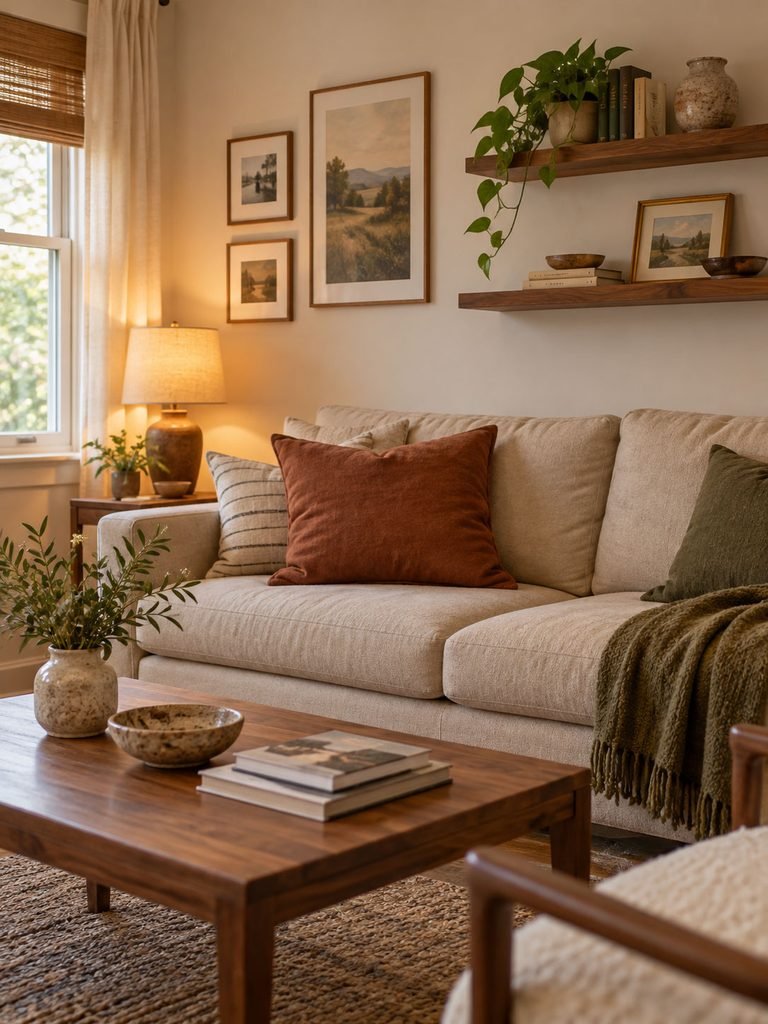
A small room does not need to be pale or personality free. It does need enough continuity that the eye is not stopping at a new color, material and object every few inches.
Start with what is already expensive or difficult to change. If the sofa, rug or flooring has a clear color direction, repeat one or two related tones elsewhere instead of introducing a completely separate palette.
Dark colors can work in compact rooms too. The useful question is whether the contrast helps the room or chops it into disconnected blocks. A dark chair, painted wall or wood cabinet can add depth when the rest of the composition gives it room.
Personal objects matter because they keep the room from looking like a furniture display. Choose the books you use, photographs you care about and art you actually enjoy. Then group them instead of scattering one small object onto every available surface.
Leave some visible wall, shelf and tabletop around those groups. Empty space makes the things you chose easier to notice.
Small cozy living room questions
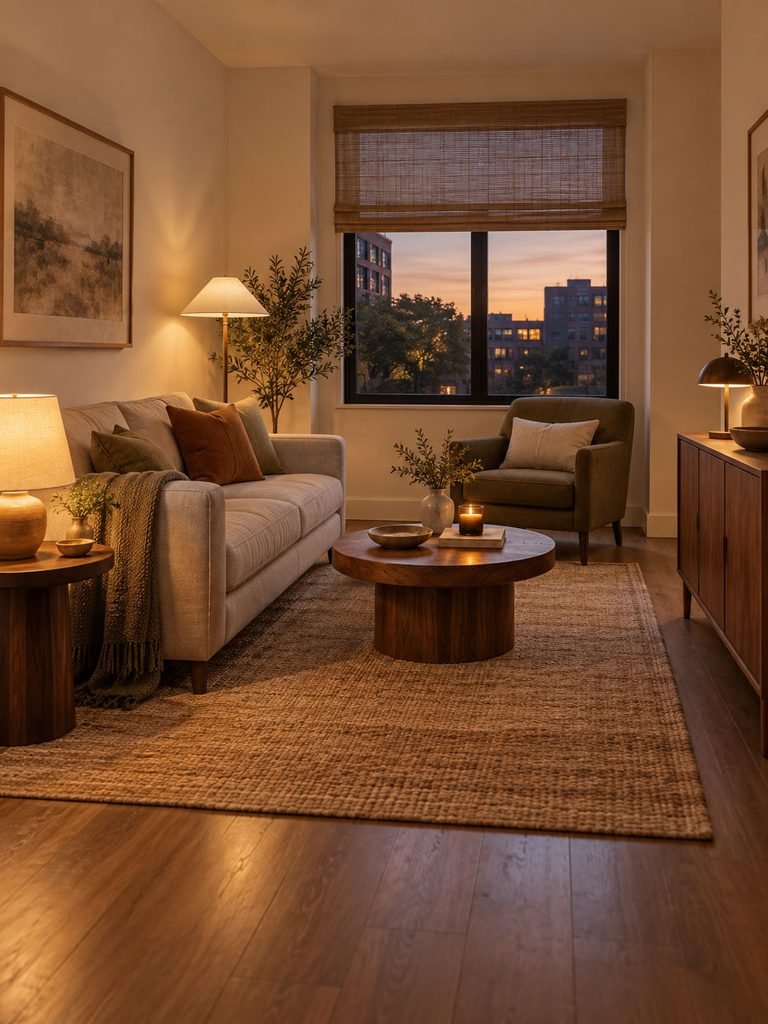
How do I make a small living room cozy without making it cluttered?
Fix the layout first, then add warmth in larger moves. One connected rug, one or two useful lamps and a restrained textile layer usually create more impact than many small accessories. Keep the main walking path visibly clear.
Should all the furniture be small?
No. Furniture needs to suit the room, but several tiny pieces can feel busier than fewer correctly scaled ones. Prioritize the sofa or main seat you genuinely use, then limit supporting furniture to pieces that solve a real need.
What colors work best in a small cozy living room?
Warm neutrals are easy to layer, but they are not mandatory. Olive, softened blue, clay, rust, brown and deeper colors can all work. The room usually feels calmer when a limited set of colors repeats across several surfaces.
Do I need curtains to make a small living room cozy?
No. A fitted shade, attractive bare window or existing blind may be the better choice when curtains would consume useful wall space or daylight. Add curtains when they solve a specific problem such as privacy, glare, physical comfort or missing softness.
What should I change first if I have almost no budget?
Move the furniture before buying anything. Clear the route through the room, remove one object that is not earning its space and test the lighting after dark. Borrow a lamp or throw from another room before shopping.
Once those changes are in place, live with the room for a few evenings. If it still feels cold, add one substantial layer of softness. If it feels busy, remove more. If the seating feels disconnected, adjust the layout again. A small room becomes cozy when the pieces you keep work well together. It does not need to look full.