
Are Curtains Necessary for a Cozy Living Room? How to Decide

No, curtains are not necessary. Plenty of living rooms feel warm and settled with bare windows, and plenty of rooms with expensive drapery still feel like waiting areas.
Curtains are popular because they quietly do four different jobs at once. They control light after dark, they take the edge off the chill that comes off cold glass, they absorb a little of the sound bouncing around a hard room and they give the wall around a window some visual weight. If your room already handles those four things, curtains are a preference. If it fails two or three of them, curtains are usually the cheapest single fix you can buy.
So the useful question is not whether curtains are required. It is which of those four jobs your room is currently failing.

The four jobs behind that cozy feeling

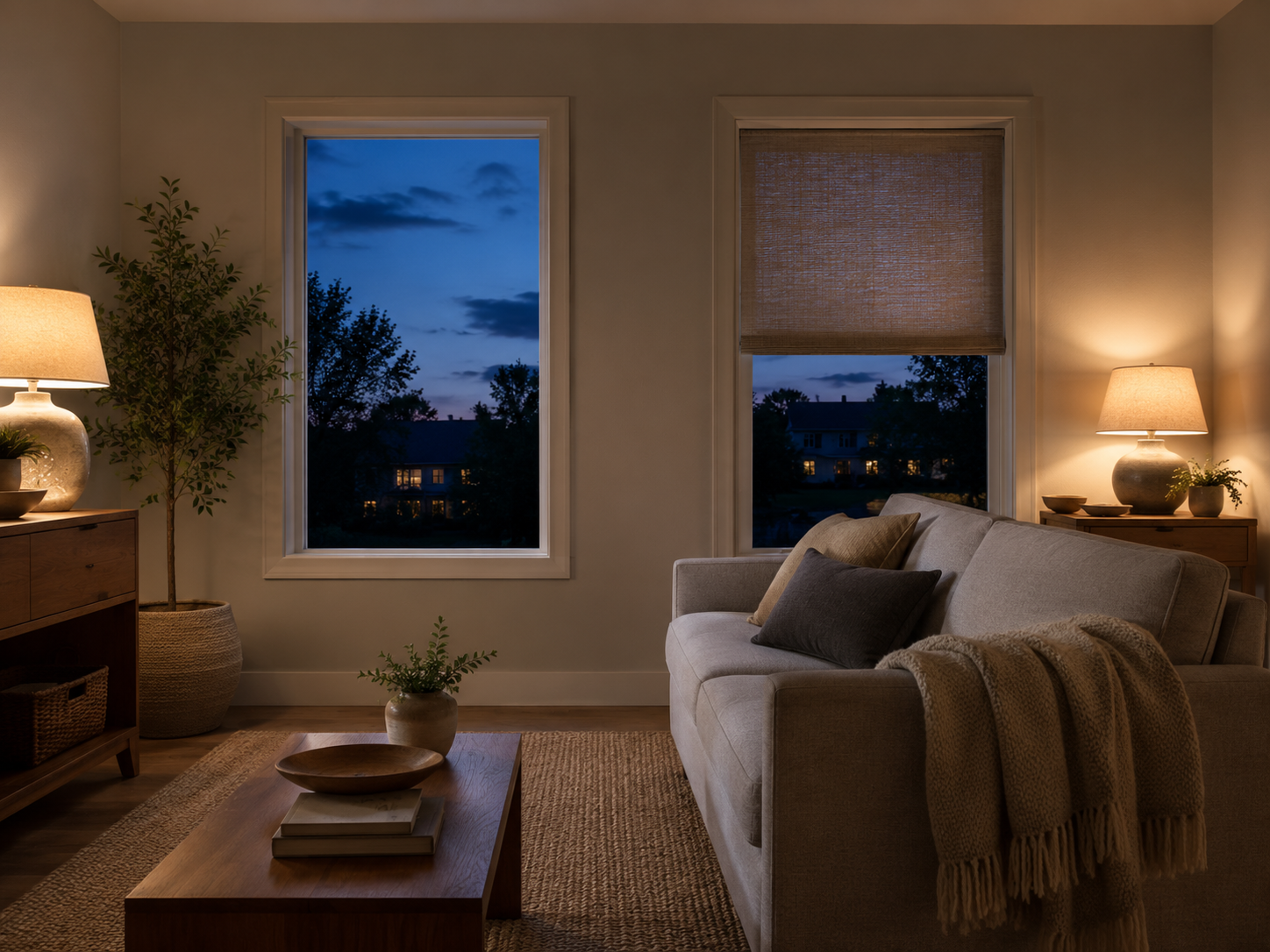
Light after dark. Once the sun goes down, an uncovered window stops being a view and becomes a black rectangle that mirrors your own lamps back at you. That reflection is why a room can feel exposed at night even when nobody outside can see in. Anything that breaks the mirror effect fixes this, and fabric is only one option.
The temperature you feel near the glass. This is the part people underestimate. Your body loses heat by radiating it toward colder surfaces, which is why sitting near a cold window feels chilly even when the thermostat says the room is fine. Cornell Cooperative Extension’s fact sheet on energy saving window treatments explains this and notes that a single pane window loses roughly twenty times as much heat as the same area of well insulated wall, with double glazing losing about ten times as much. Research from the University of Salford’s Energy House on the thermal performance of window coverings puts windows at around one fifth of total heat loss in UK homes. A sofa pushed against a cold window will feel less comfortable than the same sofa in the middle of the room, and no amount of throw blankets fully hides that.
How the room sounds. Hard floors, plaster and glass make a room ring. Soft porous material takes the edge off. Trevor Cox, professor of acoustic engineering at the University of Salford, tested a range of absorbers including curtains and found that hanging fabric with deeper folds, which moves more of the material away from the wall, noticeably increases how much sound it absorbs. The same testing is blunt about the limits: thin shop-bought panels do very little, and porous material of any kind barely touches low frequencies.
Visual weight. A room reads as cozy when the eye keeps landing on soft edges rather than hard ones. In a space full of glass, painted walls and wood, a bare window can look like a hole punched in the wall. Curtains fill that gap, but so does anything with texture near the window.
A five minute check on your own room

Do this before you buy anything.
- Sit where you actually sit, after dark, with your usual lamps on. Can you see the room reflected in the glass? Does the window pull your attention away from the people in the room?
- On a cold evening, sit in the seat closest to the window for a few minutes, then move to the seat furthest from it. If the first seat is noticeably less comfortable, the glass is the problem.
- Clap once, hard, in the middle of the room. A sharp ring that hangs in the air means the room is short on soft surfaces.
- Stand in the doorway during the day and look at the window wall without focusing on anything. If your eye reads it as a blank gap rather than part of the room, it needs weight.
- Walk outside at night and look in from where a neighbor or passerby would stand.
Fail one of these and you probably do not need curtains. Fail two or more and fabric at the window is likely the fastest improvement available to you.
When skipping curtains is the right call
Some rooms are genuinely better off bare.
If the window has good trim, a deep sill or an unusual shape, covering it hides the best architectural feature in the room. If you already have shutters or well fitted blinds, curtains layered on top are decoration rather than function. In a small room, two panels can eat a surprising amount of wall, and stacked fabric next to a narrow window makes the window look narrower still. Rooms with a radiator, a bench or a low bookcase under the sill often cannot take floor length panels at all. Sliding doors that get used every day rarely stay pleasant with fabric in the way. And in a naturally dark room, adding heavy panels to already limited daylight is a poor trade.
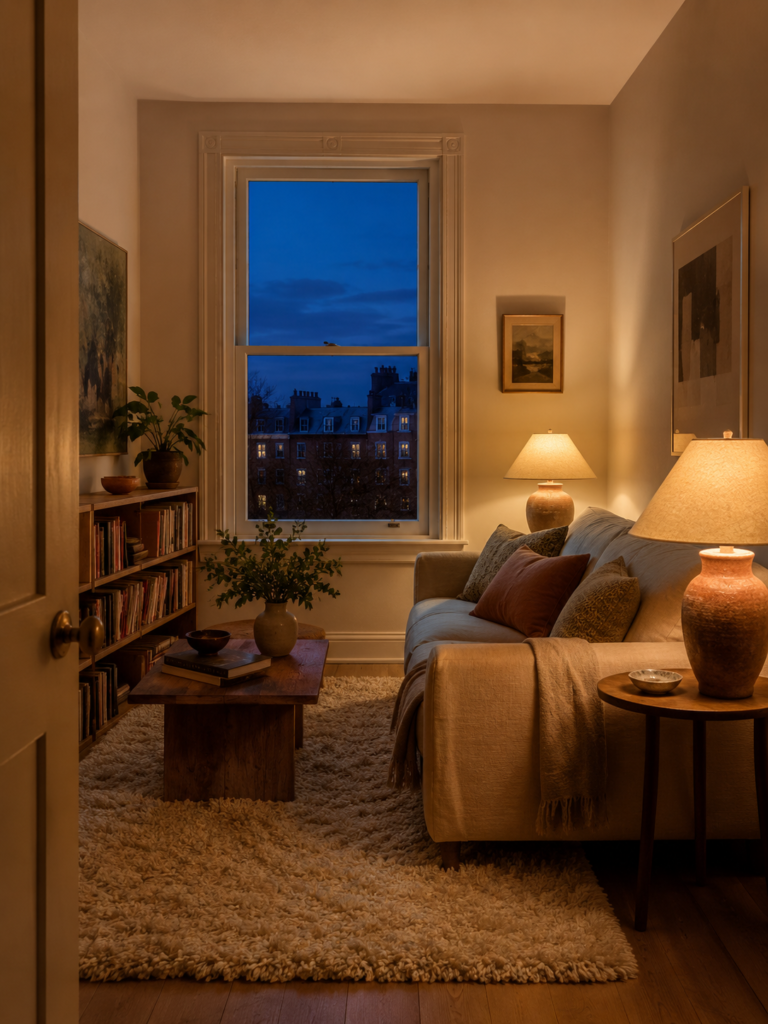
In all those cases you still need the warmth to come from somewhere. Put it on the floor and the seating instead: a rug that reaches under the front legs of the furniture, upholstered rather than hard-edged pieces, lamps at seated height rather than one ceiling fixture, and a wall of books or textiles somewhere in the sightline. This is the same logic behind the simple cozy living room ideas that work without touching the windows at all.
Where curtains are oversold
Curtains help. They help less than the marketing suggests, and how you hang them matters more than what you spend.
On heat, the Cornell figures are sobering: drapery hung conventionally on a rod reduces window heat loss by roughly five to ten percent, while tightly woven lined drapery sealed at all four edges gets to about twenty five percent. The Salford review of earlier research found published savings ranging from under four percent to nearly forty, and identified the reason for that spread. What matters most is how well the covering is fixed at the edges, because that is what traps a still layer of air against the glass. Loose panels let warm room air slide down behind the fabric, cool against the window and spill back out at the floor.
On sound, a pair of thin unlined panels is close to acoustically irrelevant. Curtains that genuinely change how a room sounds are heavy, and the Salford testing puts purpose-made acoustic drapery at around half a kilogram per square metre. Curtains also absorb sound rather than block it, so they will soften the echo of your own room and do very little about the neighbor’s television.
And no curtain fixes lighting. If the only light source is a single fixture in the middle of the ceiling, the room will feel institutional with or without fabric at the window.
Comparing the options
| Option | Strongest at | Weakest at | Practical notes |
|---|---|---|---|
| Lined curtains or drapes | Softness, visual weight, killing the night mirror | Precise daytime light control | Best value when hung high, wide and long. Needs wall space to stack back. |
| Sheers alone | Daytime privacy, keeping a room bright | Night privacy, warmth | Good in dark rooms. Often paired with a shade behind. |
| Cellular or honeycomb shades | Insulating a cold window | Adding softness or texture | Fit inside the frame. Visually neutral rather than cozy. |
| Roman or woven wood shades | Texture without eating wall space | Full blackout unless lined | Strong choice for small rooms and narrow windows. |
| Shutters | Adjustable light, tidy look, no fabric | Warmth of texture | Higher cost, semi-permanent, popular with awkward shapes. |
| Venetian or slat blinds | Directing daylight and glare | Heat loss, softness | Cornell puts their heat loss reduction in single figures. |
| Nothing | Showing off a good window | Every job listed above | Works when the rest of the room carries the warmth. |
If you do hang curtains, these details decide the result
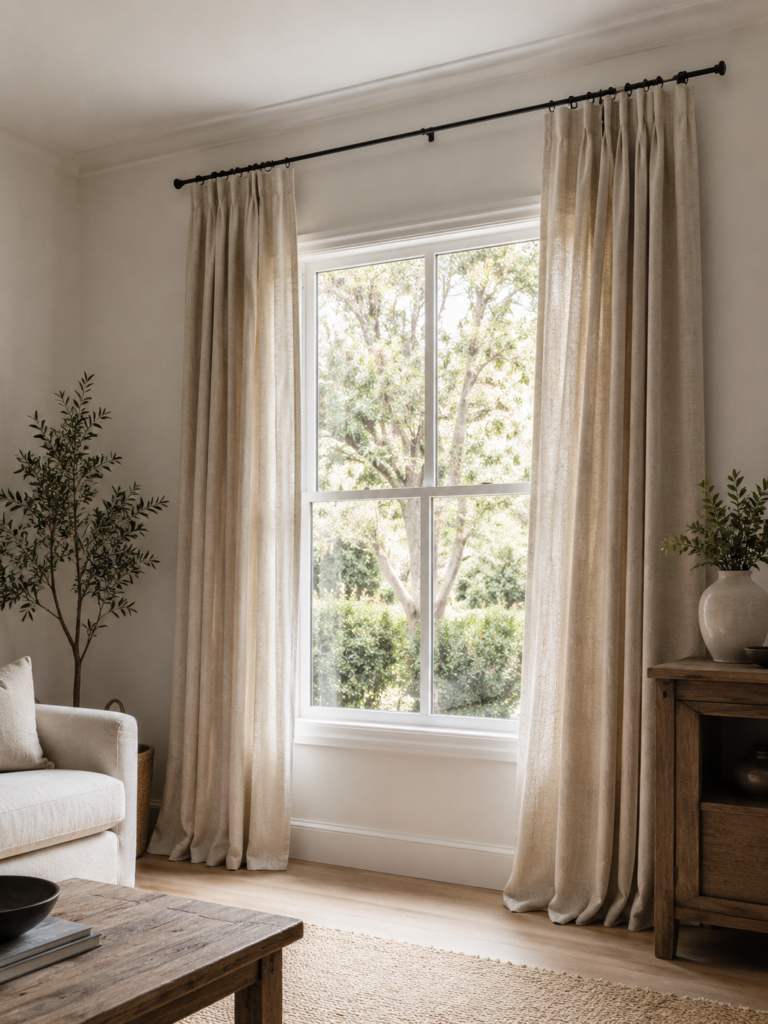
Height. Mount the rod well above the window frame, closer to the ceiling than to the trim. Panels that start at the frame make the ceiling look lower and the window look smaller.
Width. The rod should extend past the frame on both sides so the open panels stack on wall rather than on glass. This is the single most common reason curtains look mean and stingy rather than generous.
Fullness. Aim for panels that together measure at least twice the width they cover. Flat, tight fabric looks like a bedsheet, and the folds are also what put the material out from the wall where it absorbs more sound.
Length. Floor length reads as intentional. If a radiator, a bench or a cabinet sits below the sill, stop at the sill instead. The Salford whole house testing found heat loss through covered windows rose noticeably where the radiator sat directly beneath, because the warm air was being funnelled straight up the back of the covering rather than into the room.
Lining. A separate lining does more for both warmth and drape than upgrading the face fabric.
Then actually close them. Coverings only insulate while they are drawn, and it is easy to hang panels that never move for a year.
The mistakes that undo the effect
Panels too narrow to close properly. Fabric that stops several inches above the floor. A rod mounted inside the window frame, which shrinks the window and blocks the glass when open. A single decorative panel on one side that was never intended to move. Heavy blackout fabric added to a room that was already short on daylight. Each of these is common, and each one turns a fix into an expense.
Deciding in one pass

Run the five minute check. Cold glass plus a ringing room points to lined curtains hung high, wide and long. When the room is already warm and quiet but the window still reads as a gap after dark, sheers or a woven shade will do. If the window is the best thing in the room and nothing on the list is failing, leave it alone and spend the money on the rug and the lamps instead. The same measure-first thinking applies to the rest of the house, including the dining room decor decisions that start with measurements.
Two small gains from the rewrite: “Cold glass plus a ringing room” ties the two failed checks together more tightly than the original conditional did, and “reads as a gap after dark” echoes the earlier visual weight section, which helps the close feel like a summary rather than a new thought. Punctuation rules are intact and no dashes or Oxford commas were introduced.
Frequently Asked Questions
Can a living room look finished without curtains?
Yes, as long as something else in the room carries the soft weight that fabric would have added. A rug sized to reach under the furniture, upholstered seating and at least two lamps below eye level usually do it. Rooms that look unfinished without curtains are normally rooms that are short on texture everywhere, not just at the window.
Do curtains really keep a room warmer?
They help, modestly, and mostly by reducing the chill you feel near the glass rather than by cutting your heating bill. Measured results vary widely because the fit matters more than the fabric. Conventionally hung drapery reduces window heat loss by roughly five to ten percent according to Cornell Cooperative Extension, while lined drapery sealed along all four edges reaches around twenty five percent. If the window itself is draughty, sealing the gaps around the frame will do more than any curtain.
Will curtains block noise from outside?
Not really. Curtains absorb sound inside the room, which softens echo and makes voices and television sound less harsh. Blocking sound coming through the window is a different problem that needs mass and an airtight seal, which fabric cannot provide. Heavier curtains hung with deep folds absorb more than thin flat ones, but even then the effect is on the room’s own liveliness rather than on the street.
What can renters do if they cannot drill into the wall?
Tension rods inside the window recess work for lighter panels and sheers. Freestanding options do more than people expect: a tall bookcase or a plant stand beside the window, a folding screen at an angle, or simply moving seating away from the coldest glass. Removable window film handles daytime privacy without hardware, though it will not help with warmth or night-time reflection.