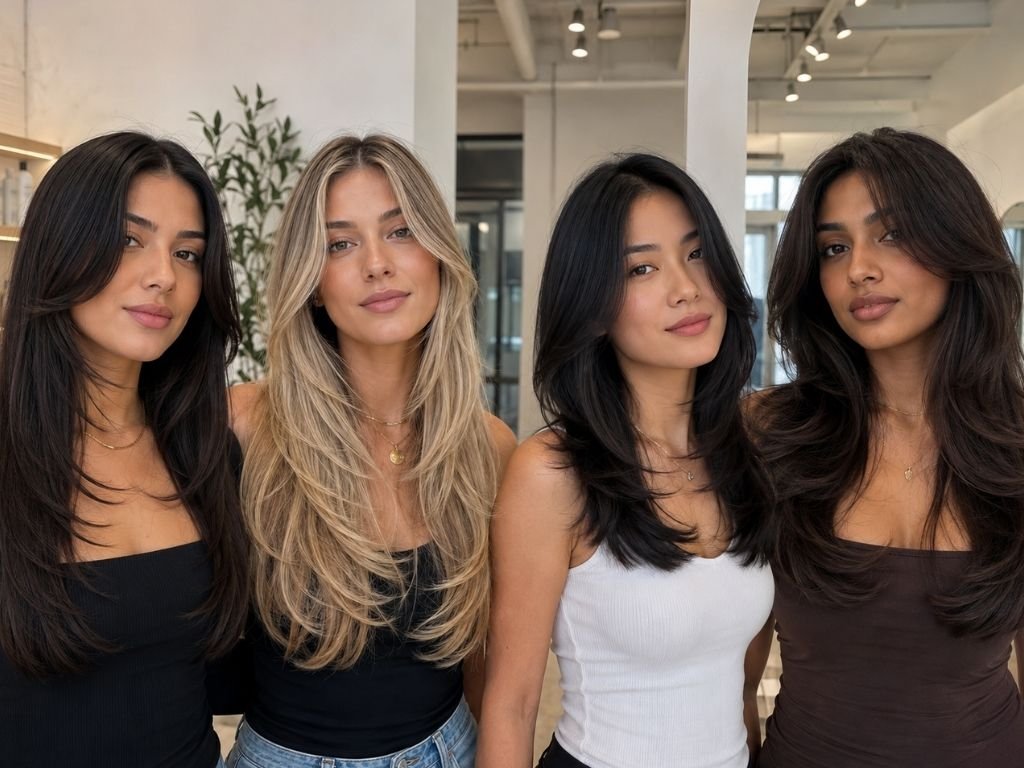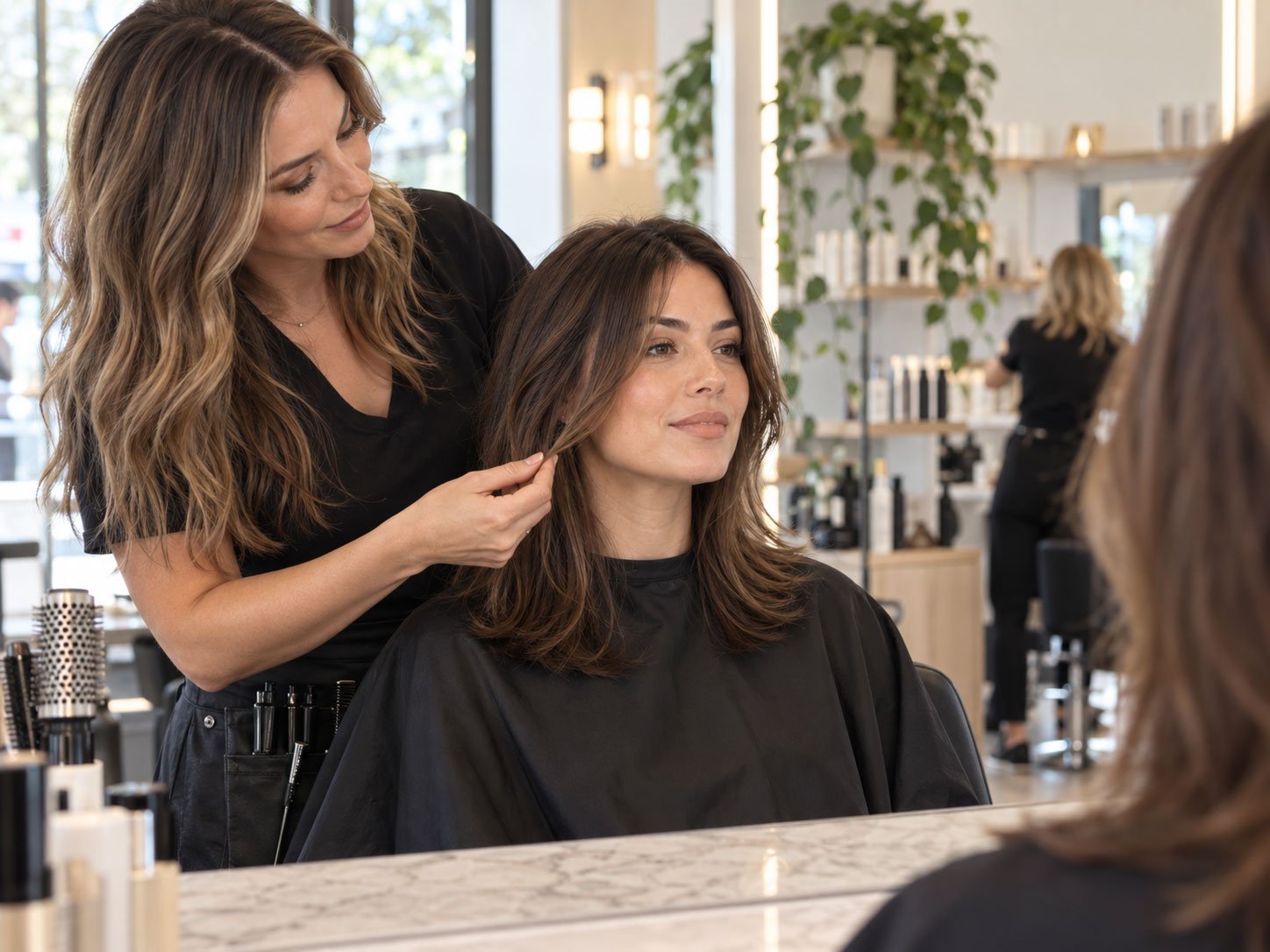
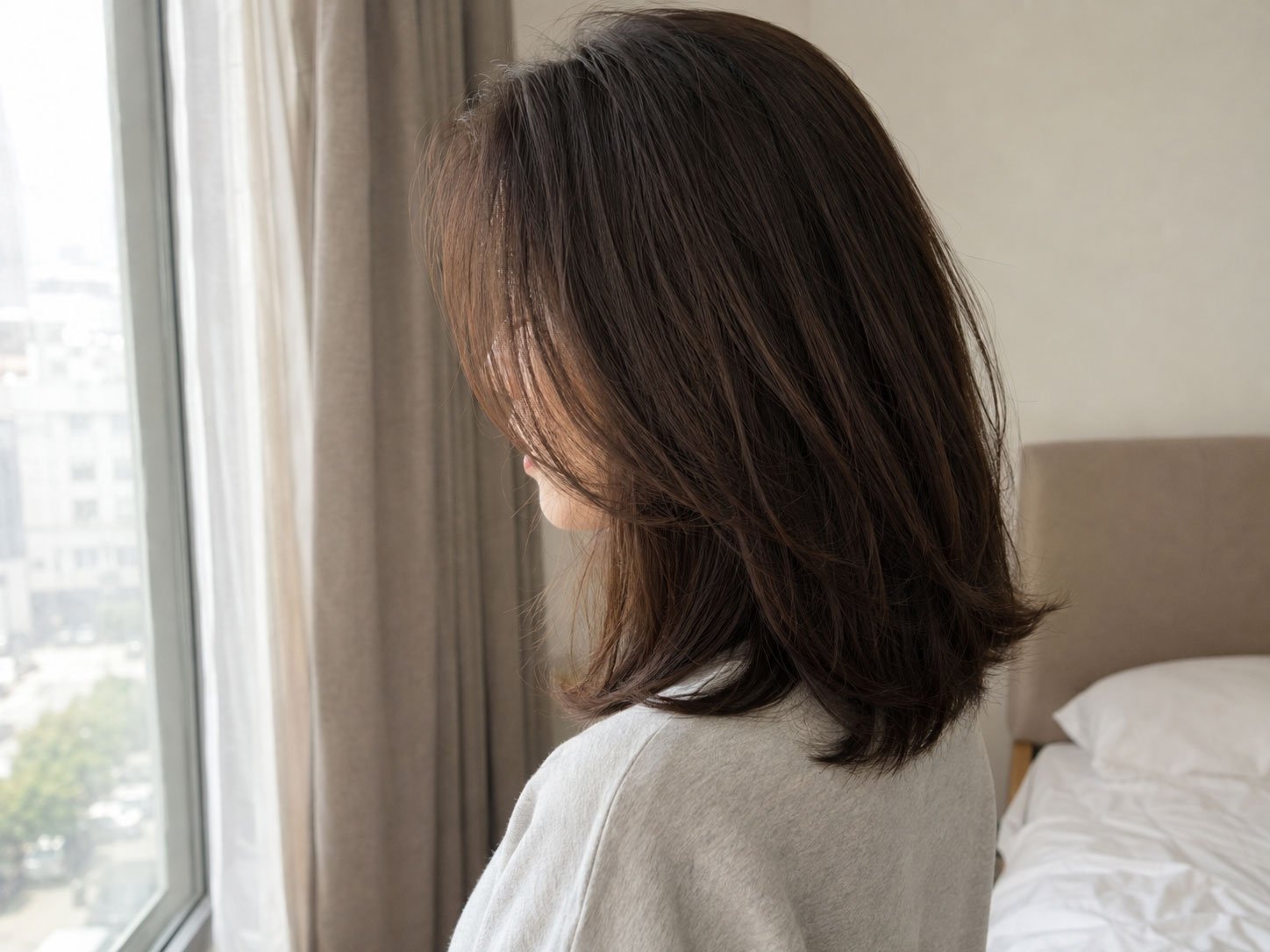
Why layered hair flips out at the ends and how to stop it

Your layers looked smooth in the salon mirror. Two washes later the ends kick outward, one side worse than the other, and brushing only makes the flip bigger. The cause is rarely a bad haircut. Most flipped ends come from the way the hair dried. Length and weight at the tips do the rest.
Layered hair flips out because hair sets into the shape it holds while it dries. Short layers are too light to hold a direction on their own. Dry the ends downward with tension, curve them under at the last moment, then let them cool.
Four reasons layered hair flips out
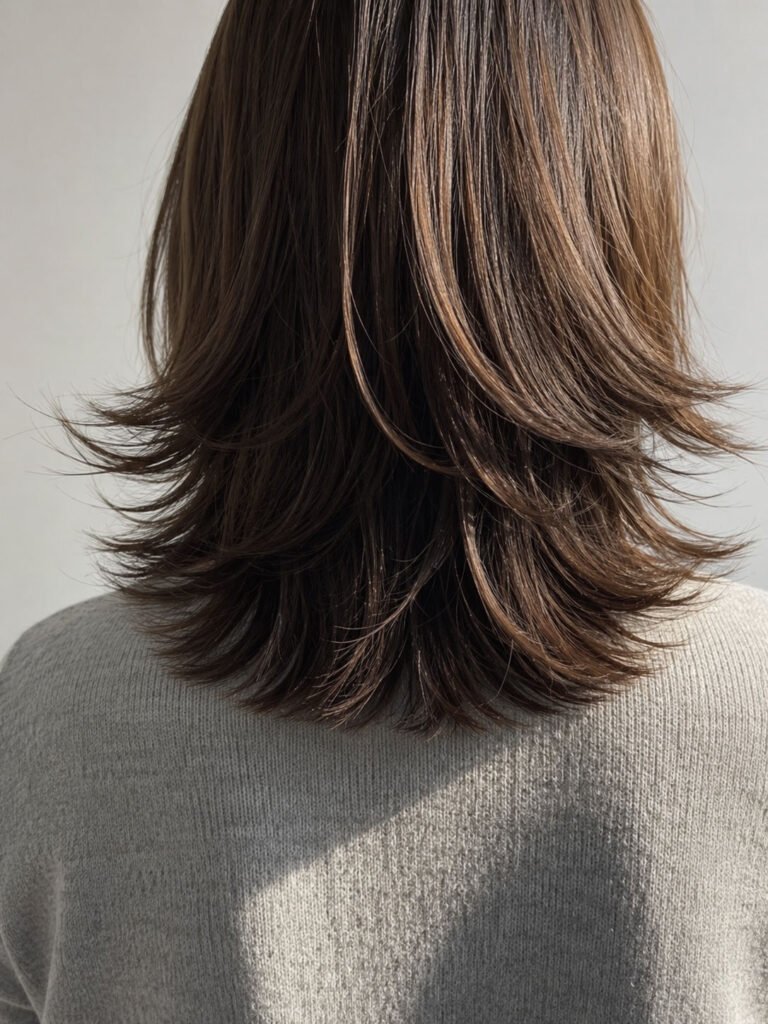
Layered hair flips out for four reasons, and most people are dealing with two or three of them at the same time.
The first is drying direction. Wet hair is soft and movable, and it hardens into whatever shape it holds when the water leaves. Dry your ends pointing sideways and they will stay pointing sideways.
The second is length. Hair that stops at shoulder level has nowhere to go. Your shoulders push the ends up and your collar adds friction. Every turn of your head trains the flip a little more.
The third is weight. Layers work by taking weight out, because the shorter pieces are cut to sit above the longer ones. Once a piece is short and fine enough, gravity stops pulling it down. The end then curls wherever it likes.
The fourth is your natural pattern. Most hair carries a slight wave, and a wave near the ends reads as a flick. Straightening the mid lengths without shaping the tips makes that flick more obvious, not less.
How to tell which reason applies to you

You can identify the cause within one wash. Pay attention to when the flip appears and where it sits.
If the ends flip after every wash, whatever tool you use, the cause is drying direction. Hair sets once, and it sets the way you dried it.
If the ends look smooth after styling and kick out by lunchtime, the cause is length and friction. Check where the shortest pieces land against your shoulder.
If one side flips and the other lies flat, look at your part and the side you sleep on. Hair grows in a slight swirl at the crown. One side usually falls with that swirl while the other fights it.
If only the shortest layers flip while the longer lengths hang straight, the cut is doing it. A piece that light will not stay down without help.
The blow dry that trains ends to curve under
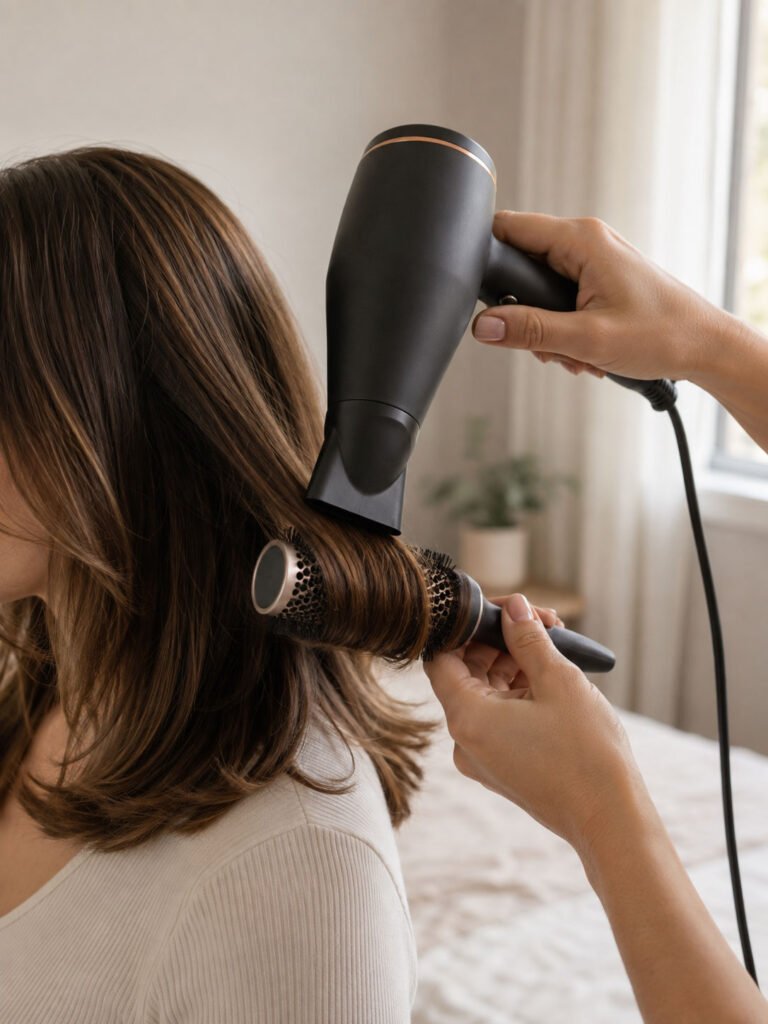
Start when your hair is about 80 percent dry rather than soaking. A brush on very wet hair only moves water around, and the shape will not hold.
Work in horizontal sections about two inches wide, beginning at the nape. Style the front sections while they are still damp, since front pieces dry fastest and set their shape before you reach them.
Point the nozzle down the hair, from root to end. The airflow should travel the way you want the ends to fall. Aiming upward lifts the cuticle and feeds the flick.
Match the brush to your length. A 1.5 inch round barrel suits shoulder length hair and a 2 inch barrel suits anything past the collarbone.
At the ends, roll the brush half a turn under. Hold it there for three to five seconds with the air running over it. Follow with the cool shot for another five seconds, then let the section drop.
That cooling step matters more than people expect. Hair takes its shape as it cools, so releasing a hot section undoes the work.
Keep the dryer moving and about six inches away. Researchers who compared hair dryer distances in Annals of Dermatology tested that spacing. A dryer held at roughly six inches, kept moving, did less damage than letting hair dry on its own.
How to stop the flip without heat
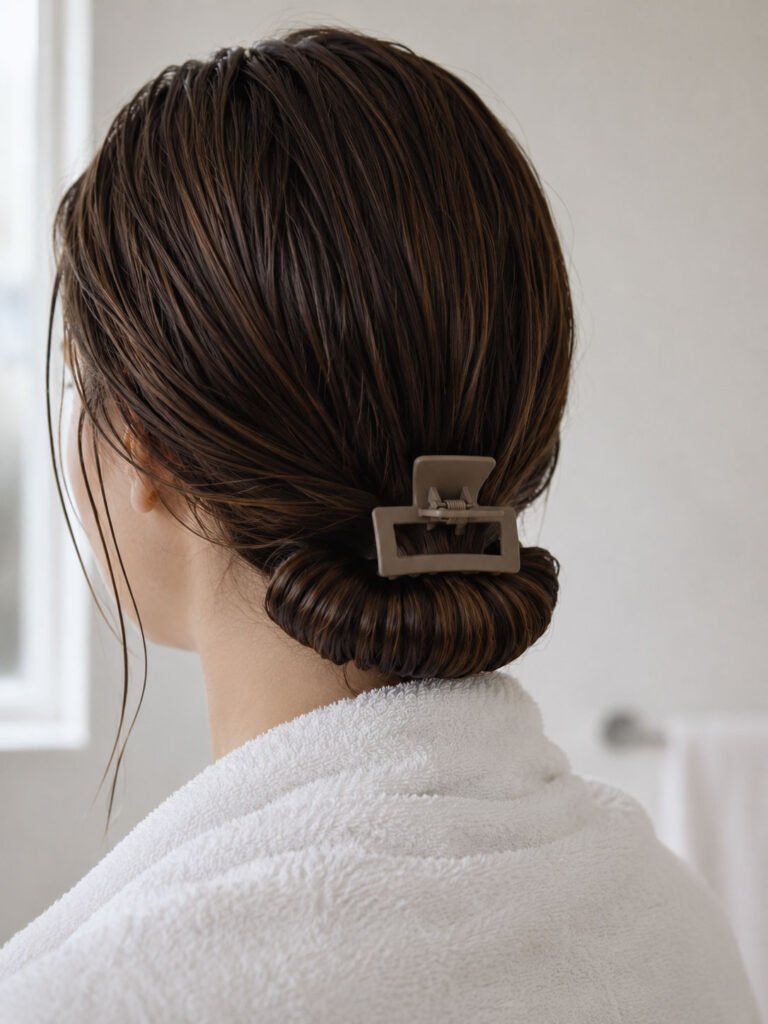
Air drying works as long as you set the direction while the hair is still wet. The mistake is leaving soaking ends to do whatever they want.
Squeeze the water out with a microfiber towel or a soft cotton shirt instead of rubbing. Rubbing roughens the cuticle and adds frizz to the pieces that already misbehave.
Comb everything down while your hair is still dripping, then leave it alone. Every touch after that point resets the shape.
For a stronger curve, wrap the last two inches around two fingers. Roll it under toward your neck, then clip it flat to your head. Leave the clips in for twenty minutes or until the ends feel dry.
Avoid tucking damp hair behind your ears. The tuck sets a sharp bend right where the front layers start.
A pea sized amount of light cream or oil on the last two inches is usually enough. That small amount of weight keeps the tips pointing down. More than that will make fine hair look flat rather than smooth.
Adjust the method to your texture
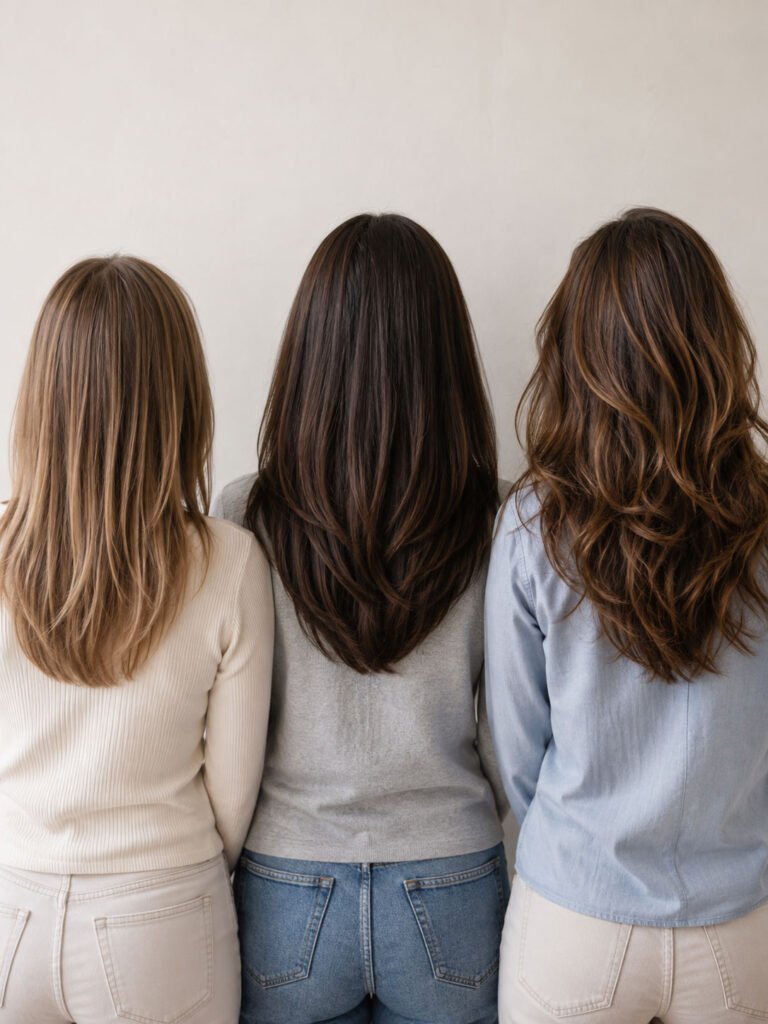
Texture decides which part of the routine does the work.
Fine straight hair needs tension and cooling more than heat. Keep the brush firm through the ends and use the cool shot on every section. Go light on product too. A heavy cream flattens the roots long before it weighs the tips down.
Thick straight hair needs smaller sections. Anything wider than two inches leaves the hair underneath damp, and damp ends are the last to set, usually in the wrong direction. Finish with a light hold spray on the last two inches.
Wavy hair does better when the wave is used rather than fought. Half straightening is what creates the flick. The mid length goes flat while the natural bend survives at the tip. Either smooth the ends properly or scrunch the waves in with a curl cream and a diffuser.
Curly hair rarely flips for drying reasons. A curl that sticks out is usually a layer cut too short for its shrinkage. The fix belongs in the salon, not in your dryer. Brushing dry curls will always make the shape worse.
Quick fixes for a flip that appears midday
Rewetting beats reheating. Mist only the flipping section until it is damp, then comb it down. Dry it for twenty to thirty seconds with the airflow pointed at the floor.
With a flat iron, clamp at the mid length and glide down slowly. Rotate the plates a quarter turn under through the last two inches. Stop there. Running the iron dead straight to the tip is what creates the kick.
Let the section hang and cool for at least thirty seconds before touching it.
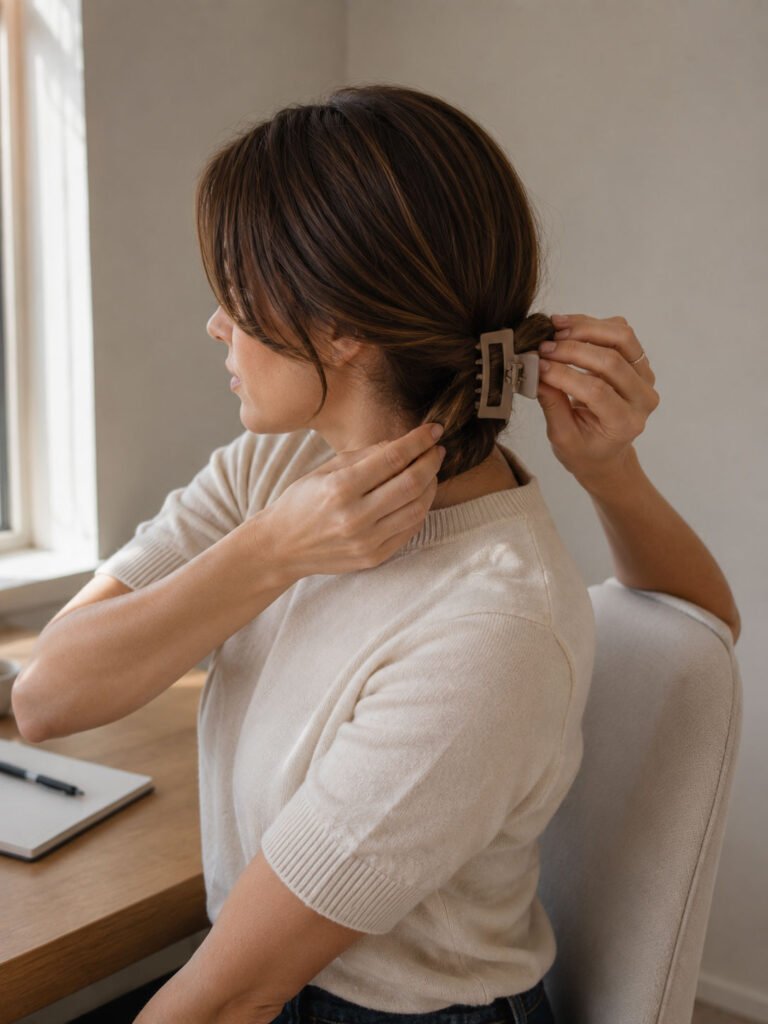
When there is no time for either, put the ends away. A low twist, a claw clip or a loose bun hides a flip completely. The front pieces still frame your face.
What to change at your next haircut
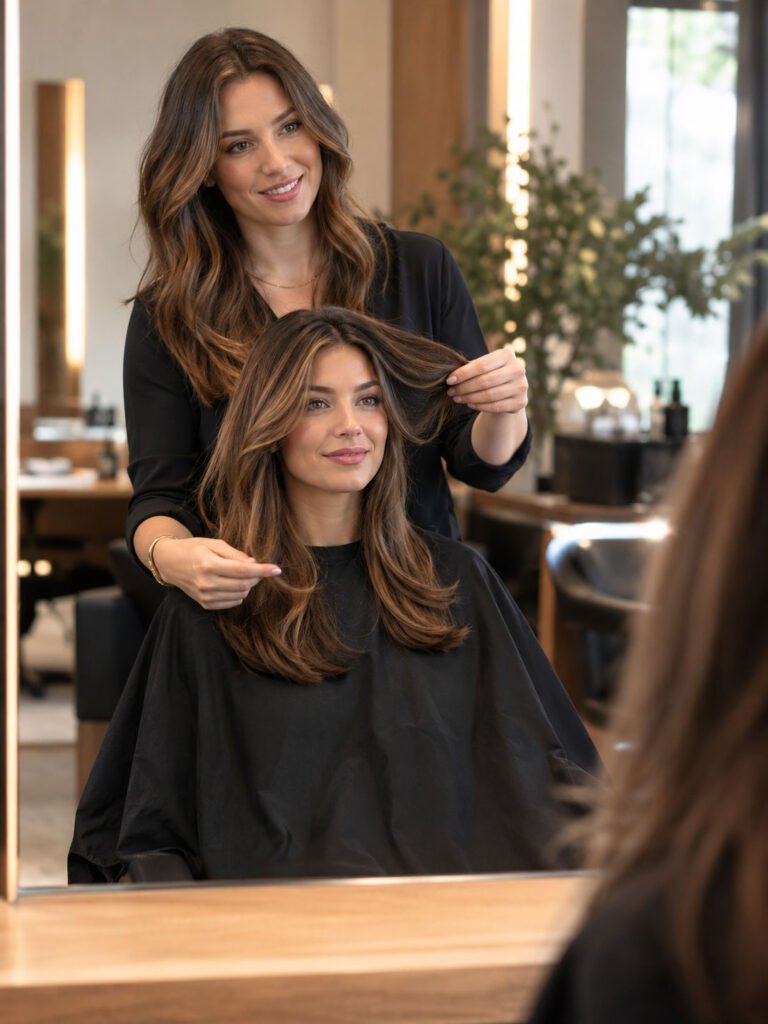
Raise the flip at the consultation rather than hoping the next cut solves it by chance. Two requests make the biggest difference.
Ask about the perimeter first. Hair that stops exactly at shoulder level flips more than hair sitting an inch above it or several inches below. Moving the length in either direction usually calms the ends down.
Ask to keep weight at the tips. Heavy point cutting, thinning shears and razor work all leave the ends lighter, and light ends flick. A blunter finish gives them something to hang from.
Plan the front pieces separately. Face framing layers on medium length hair behave differently depending on where the shortest piece starts. Placement also depends on your features. It helps to know where your layers should start for your face shape before you book.
If your hair is wavy or curly, ask for the ends to be checked dry before you leave. Wet hair hangs longer than it dries. A section that looked level when wet can sit an inch or more higher once the wave forms.
Habits that lock the flip in place
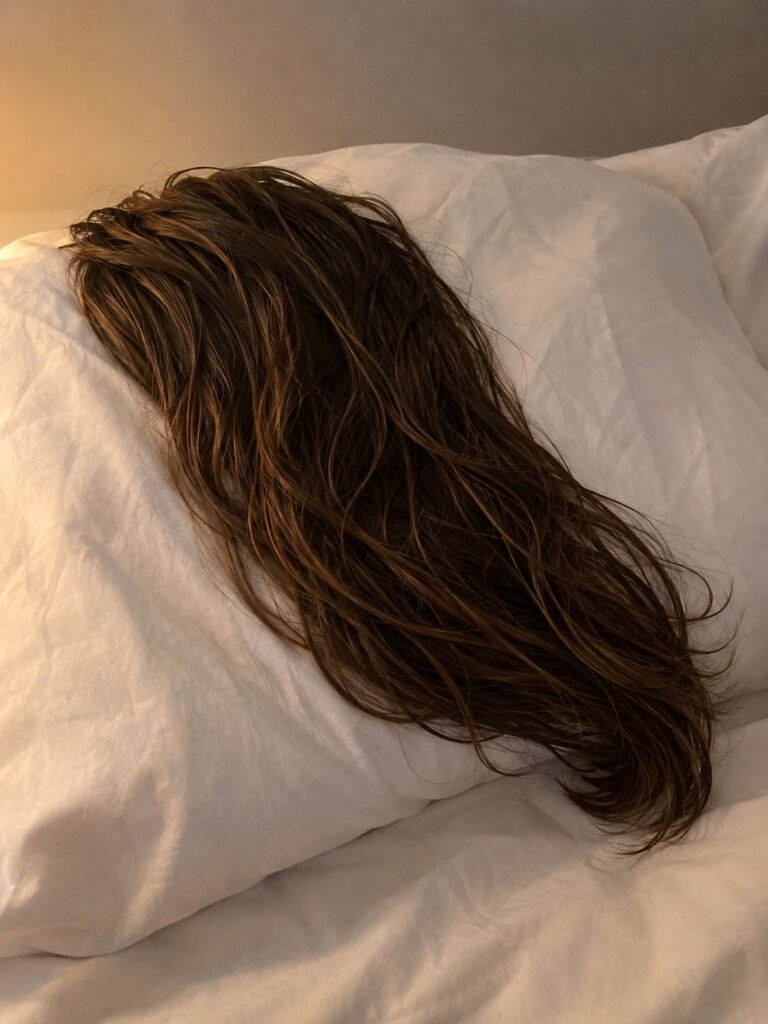
Several everyday habits keep resetting the flip you just fixed.
Sleeping on damp hair is the biggest one. Your pillow presses a bend into the ends and they dry into that bend overnight.
Brushing dry hair outward comes next. The brush lifts the cuticle and pushes the ends away from your head. That is the exact shape you are trying to lose.
Rough towel drying does the same damage faster. Wet hair is at its most fragile, and friction on wet ends leaves them rough and quick to flick.
Skipping trims allows split ends to build up. Damaged tips are lighter and stiffer than healthy ends, so they curl outward more easily and hold that curl through the day.
Layering on smoothing serum is the last one. Product can add useful weight. Too much leaves the roots limp while the dry ends still do as they please.
Frequently asked questions
Why does my hair flip out at the ends even after I straighten it?
A straightener presses the mid lengths flat and often skips the tips, so the last inch keeps its old bend. Clamp at mid length, glide down slowly and turn the plates a quarter turn under before you reach the end. Then let the section cool completely. Hair holds the shape it has while it cools, not the shape it had under the plates.
Will cutting my layers shorter stop them from flipping out?
Shorter layers usually flip more rather than less. A short piece carries less weight, so gravity has less to pull on and the end curls freely. Longer layers that keep weight at the tips lie flatter. When the flip starts right after a haircut, the answer is normally length and perimeter weight rather than extra layering.
Does humidity make layered hair flip out?
Humidity makes it worse, because hair absorbs moisture from the air and drifts back toward its natural pattern. Ends styled straight in the morning start bending again as the day goes on. A light cream or oil on the last two inches slows this by coating the surface. Wavy hair usually looks better styled with the wave than fought into a straight line.
How do I stop one side of my hair from flipping out when the other side is fine?
Uneven flipping usually comes from your part, your growth pattern and the side you sleep on. Dry the stubborn side first, while it still holds the most water, and use slightly more tension with the brush. Switching your part for a few days helps too. It stops the hair falling into the same swirl every morning.
Should I get a trim if my layers keep flipping out?
A trim helps when the ends are split or wispy, because damaged tips are lighter and curl outward more easily. It will not help when the flip comes from drying direction or from hair sitting right at shoulder level. Try a week of drying the ends downward first. If they still flip, book the trim and ask for a blunter perimeter.
Where to start this week
Before changing your haircut, change the way you dry it. Layered hair flips out mostly because of direction, and direction costs nothing to fix.
If the ends still kick out after a full week of drying downward and cooling properly, the haircut is the cause. That belongs in a salon consultation rather than your morning routine.
Try one blow dry with the airflow pointed down and a full cool shot at the ends. Look at your hair again that evening. The layered hairstyles section at femorias.com has more guides if you want to plan the next cut before you book.