Kitchen Decor Ideas That Make Your Space Feel Finished Without a Full Remodel

A kitchen usually feels unfinished for one of four reasons: the counters are crowded, the walls have no clear focal point, the lighting feels flat or the finishes have nothing visually connecting them. You do not need to fix all four.
Start with the problem you notice first. Clear what interferes with cooking, add warmth where the room feels hard and choose one or two places for personality. The most successful kitchen decor earns its space. A bowl can hold fruit. A cutting board can add wood tone. Art can finish a blank wall. A runner can soften a long floor. The goal is not more stuff. It is a room that looks considered and still works.
Start with what looks wrong before you buy anything
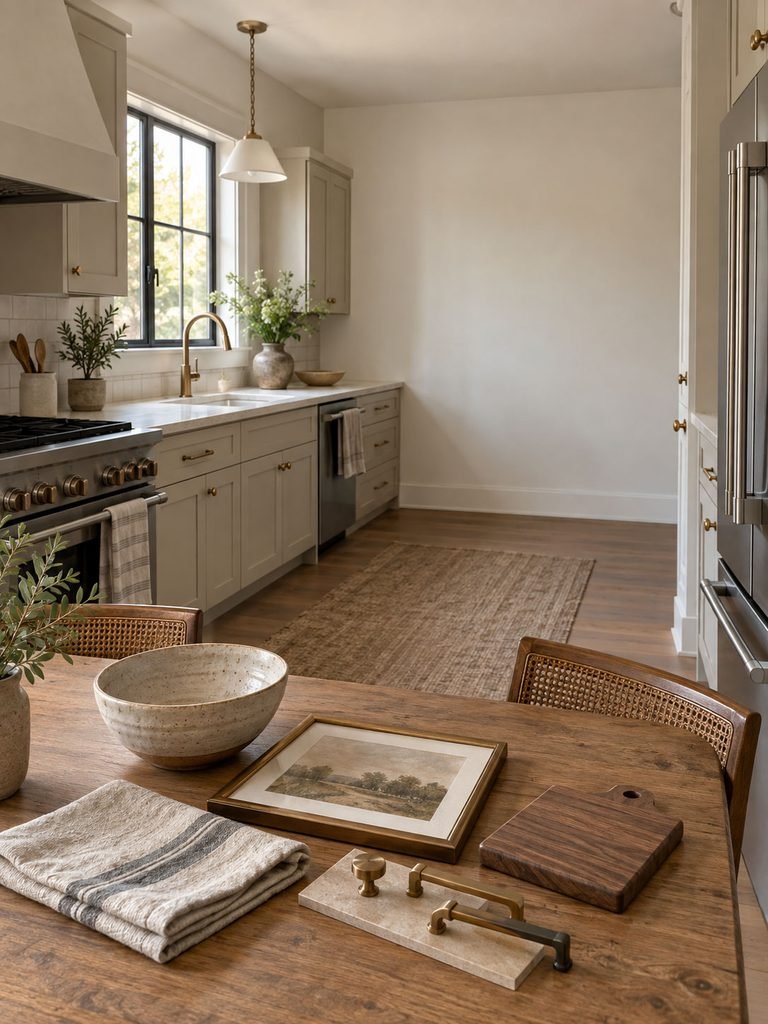
Before buying decor, stand at the kitchen entrance and decide what your eye is reacting to. This prevents a common mistake: adding small objects to a room whose actual problem is something larger.
A crowded kitchen may need subtraction before decoration. A blank kitchen may need one larger focal point rather than several small accessories. A dark kitchen may need better lighting before a new color palette. A room with several unrelated finishes may simply need one repeated material or color to connect them.
A useful first check is:
- If the counters look busy, remove things before adding anything.
- If the room looks bare, identify one wall or surface that can carry visual interest.
- If the kitchen feels cold, add texture through wood, woven material, ceramic or fabric.
- If the cabinets dominate the room, consider hardware before adding several decorative objects.
- If everything looks disconnected, repeat one or two existing finishes elsewhere in the room.
Take a quick phone photo after clearing the obvious clutter. A photograph often makes scale and empty space easier to judge than standing inside the room.
Keep counters functional first
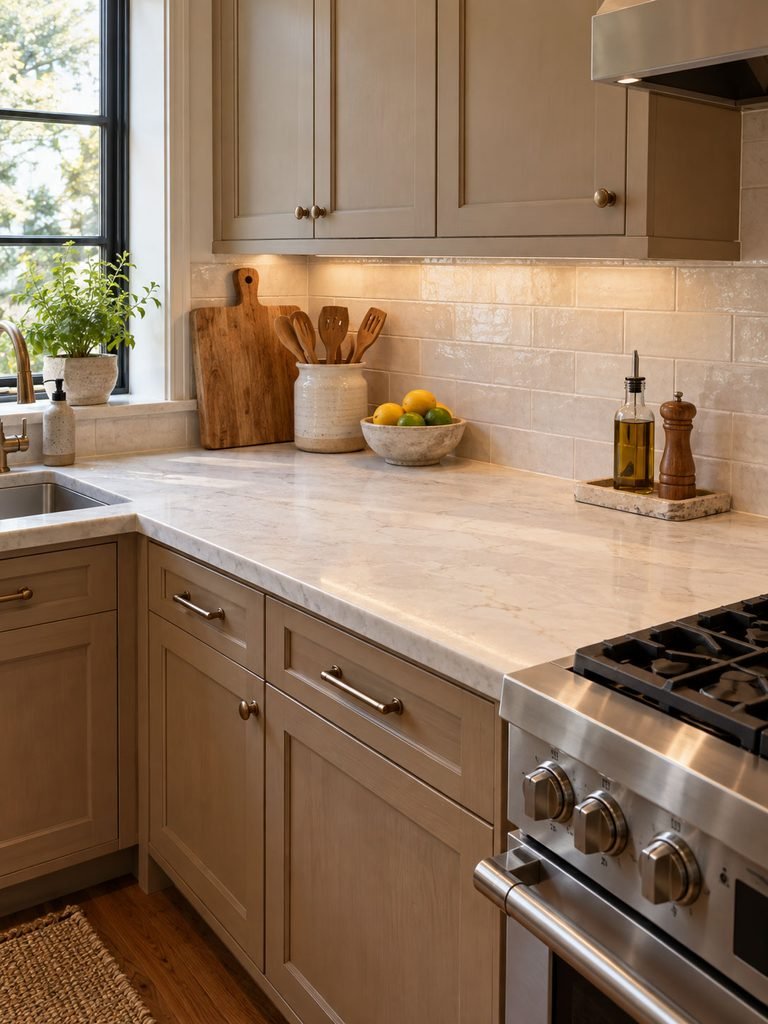
A counter is a work surface before it is a display surface. Keep the area where you chop, mix or plate food mostly clear, then decide what deserves permanent space around it.
Useful objects make the easiest decor because they already have a reason to stay. A wood cutting board can bring warmth to a pale backsplash. A ceramic crock can hold tools you reach for every day. A fruit bowl can add shape and color while doing a real job. A compact tray can contain oil, salt or coffee supplies that would otherwise spread across the counter.
Move rarely used appliances into storage when you have a practical place for them. If an appliance comes out once a month, it does not automatically deserve prime counter space all year.
Do not use the area around the cooktop as a decorating shelf. The U.S. Fire Administration advises keeping items that can catch fire away from the stovetop and emphasizes attentive cooking. U.S. Fire Administration cooking fire safety guidance
A good counter should still have somewhere obvious to put down a grocery bag, cutting board or hot pan. If styling removes that space, there is too much styling.
Give blank walls one clear job
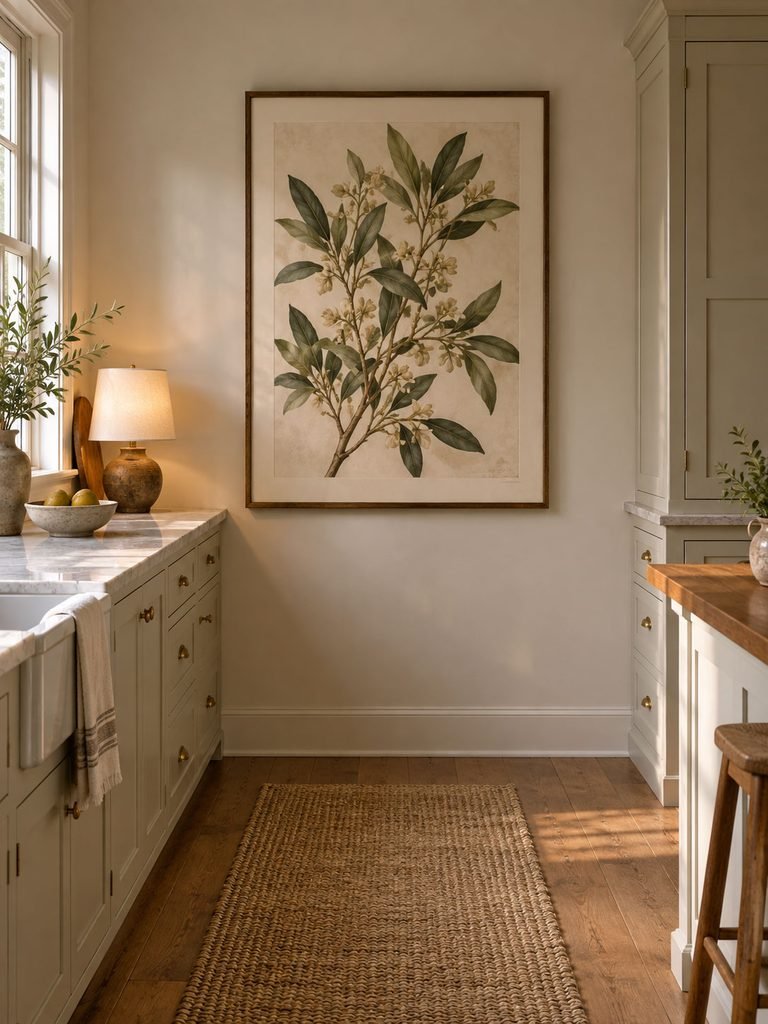
A blank kitchen wall does not need several objects. Give it one job: hold art, add useful storage or create one visual focal point.
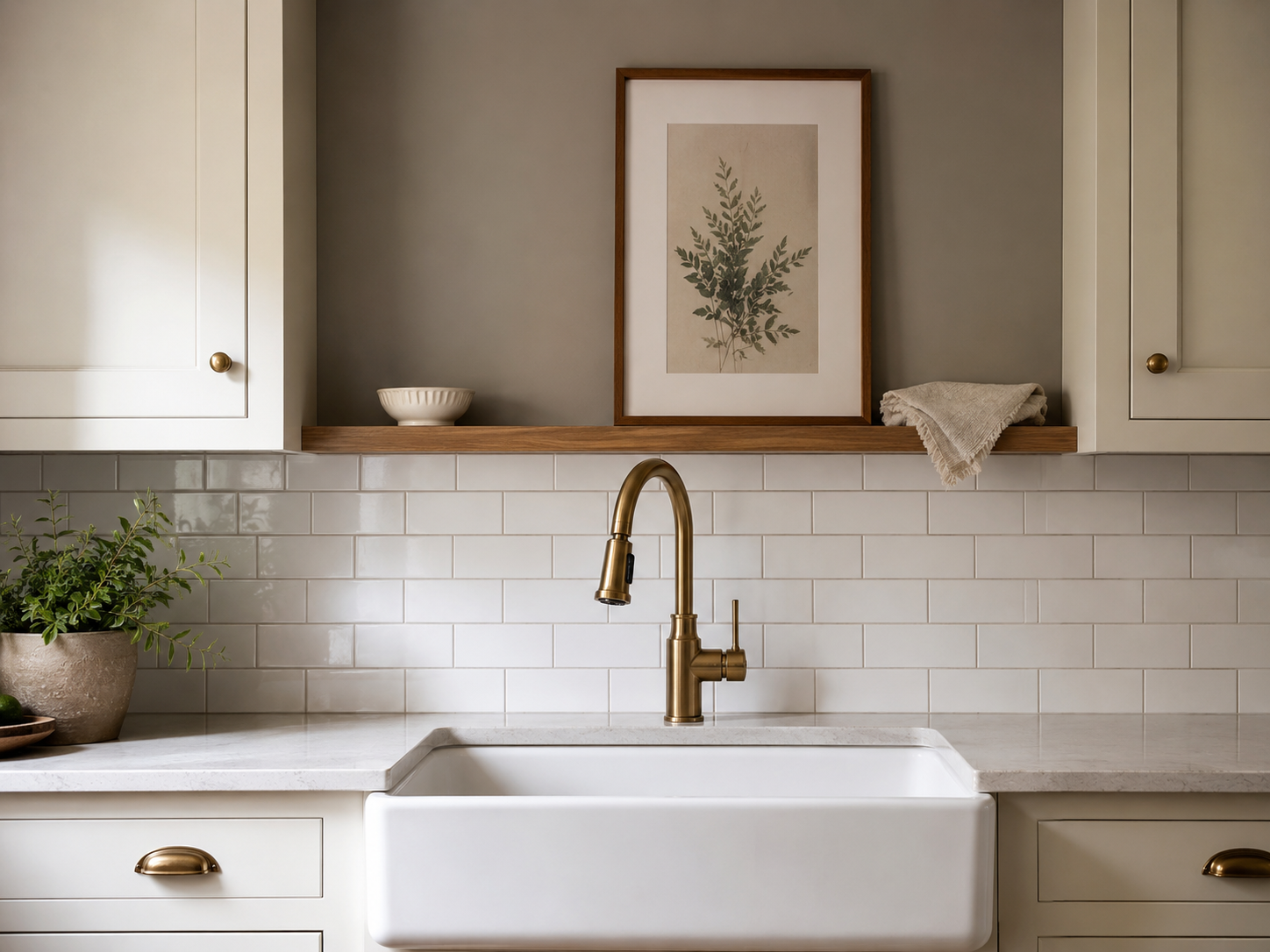
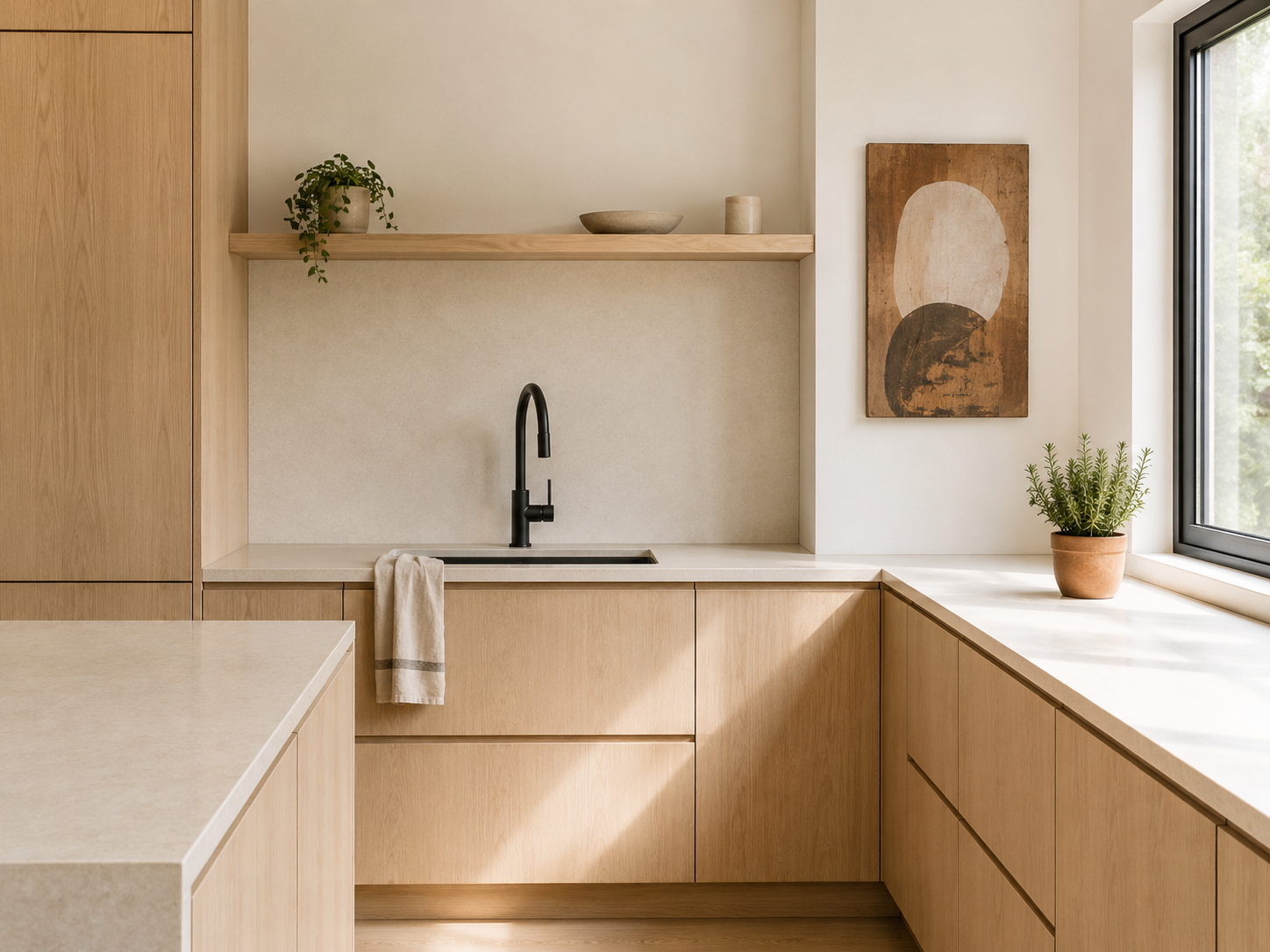
Start with scale. One piece that relates to the cabinet run, console, breakfast table or section of counter beneath it will usually look more intentional than a scatter of small objects. Framed botanical prints, food photography, vintage pieces with genuine meaning and simple mirrors can all work when the location suits the material.
Open shelving can also decorate a wall, but shelves should solve a storage or display problem rather than exist only because the wall is empty. Anything stored in the kitchen eventually collects dust and cooking residue, so display pieces you are prepared to clean.
The wall behind a sink needs separate treatment because faucet clearance, splash and moisture change what belongs there. Femorias has a dedicated guide to what to put above a kitchen sink with no window that covers measurements, splash exposure and material choices in more detail.
Leaving part of a wall empty is also a design decision. Negative space allows the useful parts of the kitchen to read more clearly.
Add warmth with textiles, color and natural material
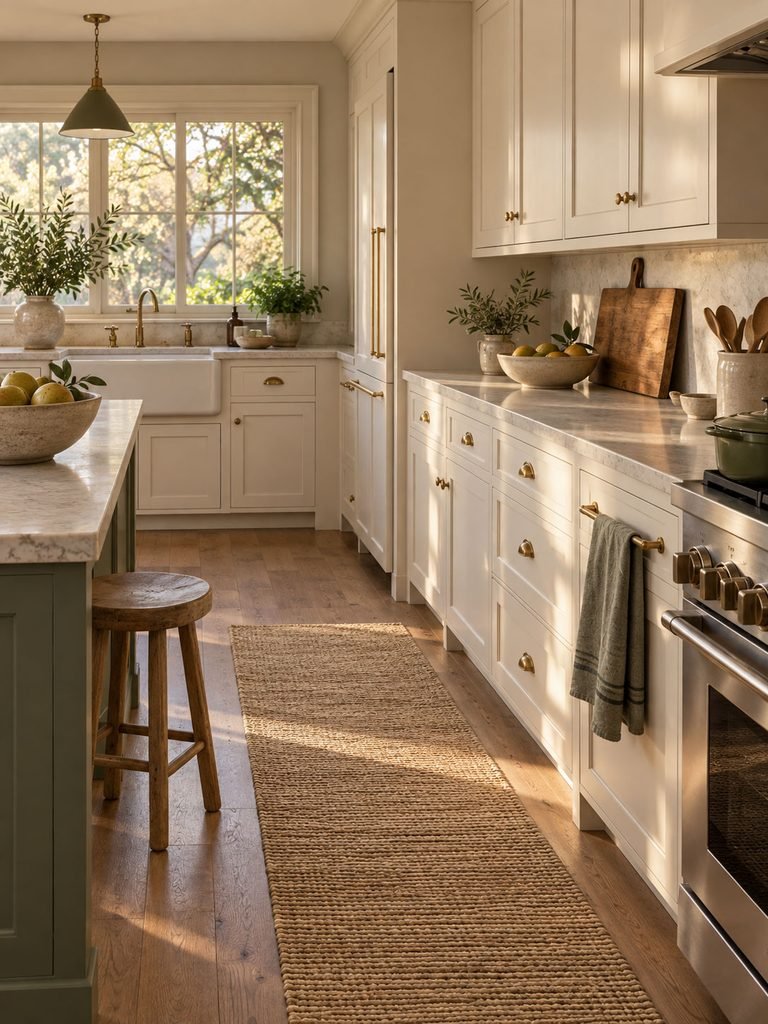
Kitchens contain a lot of hard surfaces, so warmth often comes from materials rather than from adding more objects.
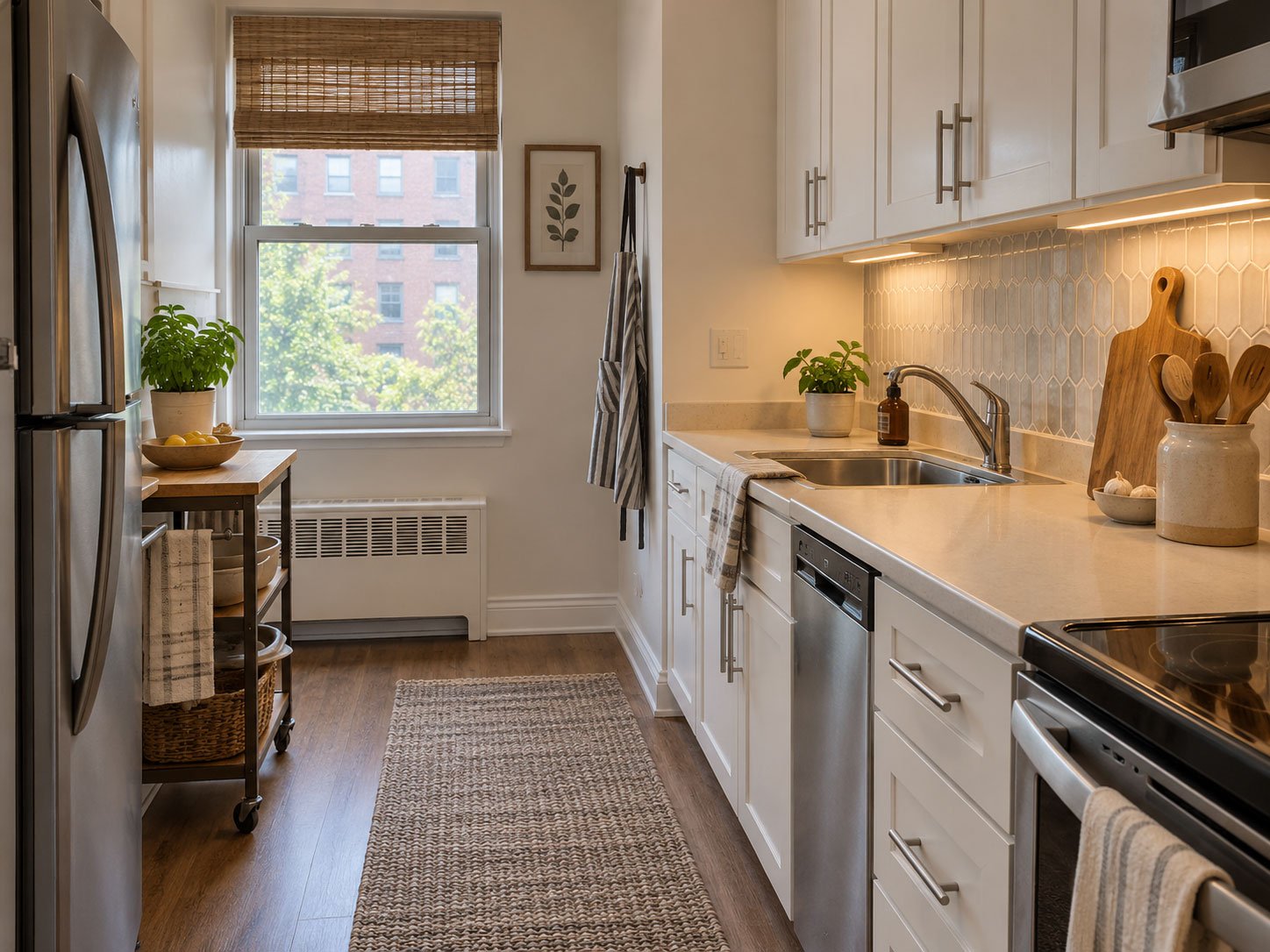
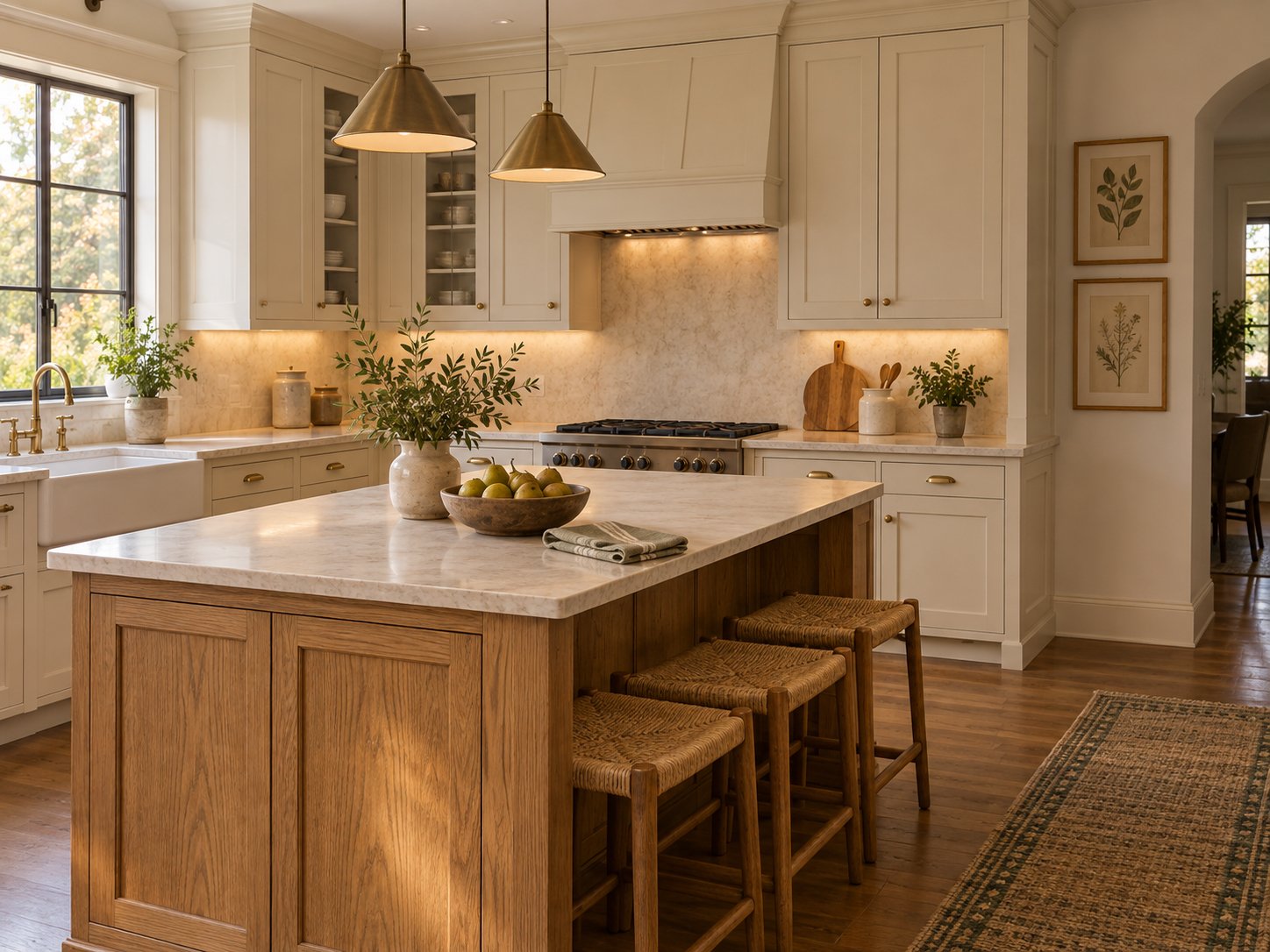
A runner can soften a long galley or cabinet run. Dish towels can introduce color without permanently changing anything. Wood cutting boards, stools and bowls can warm cool stone or white cabinets. Glazed ceramics add shape and variation without making the room feel fragile.
Choose one color already present in the room and repeat it lightly. A muted green in artwork could return in a towel or bowl. A warm brown from the floor could appear again in a wood board. Repetition makes separate pieces look related.
You do not need matching sets. In fact, exact matching can make a kitchen feel more staged than personal. The goal is enough repetition to create a relationship between the pieces.
For rugs, measure with appliance doors open. A runner that catches the dishwasher, refrigerator or lower cabinet door will become irritating no matter how good it looks. It should lie flat, suit the flooring underneath and survive the amount of cleaning your kitchen requires.
Upgrade the details that repeat across the room
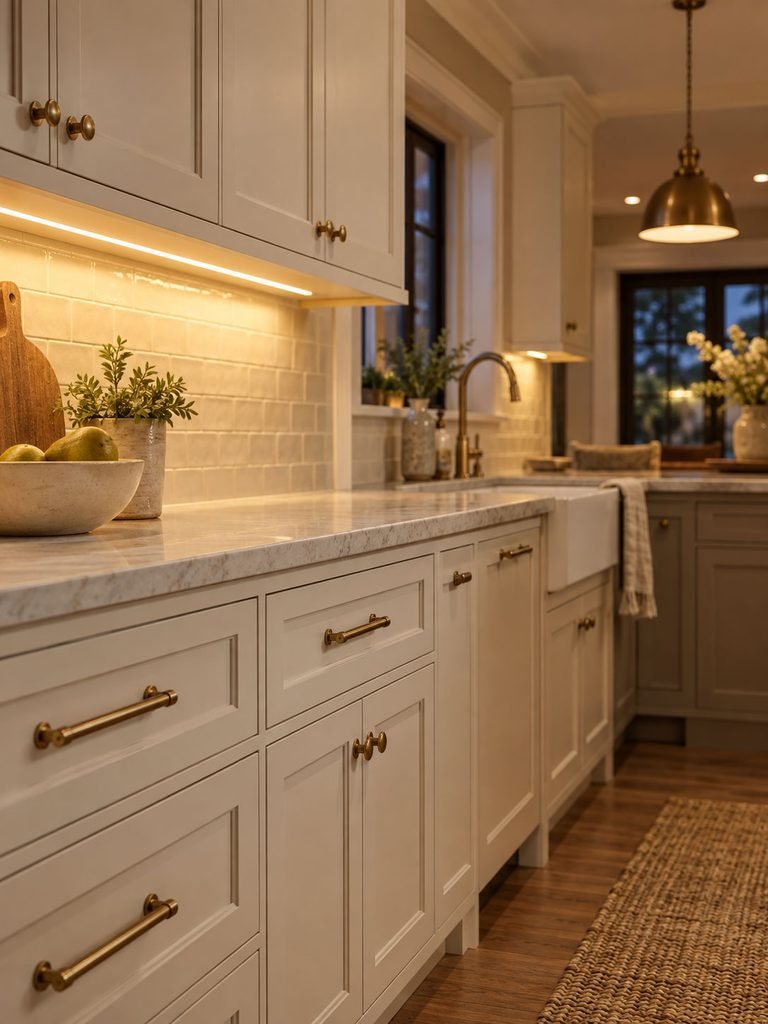
Some small changes repeat so many times that they affect the whole room. Cabinet hardware is the clearest example. Changing every visible knob or pull can shift the character of a kitchen more than adding several small accessories.
Match existing holes unless you are intentionally taking on a larger cabinet project. Check how a pull feels in your hand as well as how it looks. A kitchen is touched constantly, so decorative details still need to work.
Lighting has similar reach. One bright ceiling fixture can make every surface look flat. Task light at the counter and softer ambient light can make the same finishes feel warmer at night.
Current research from the National Kitchen and Bath Association identifies personalized style, storage maximization and organic or earthy aesthetics among the themes shaping 2026 kitchen design. Those directions support using fewer details that feel connected to the household rather than filling a kitchen with generic accessories. NKBA 2026 Kitchen Trends Report
Renters need a different level of commitment. The Femorias guide to kitchen decor ideas for renters covers portable lighting, hardware using existing holes, textiles and reversible surface changes while accounting for leases and material compatibility.
Hardwired lighting, new outlets and other fixed electrical work move beyond a simple decorating project. Follow applicable requirements and use an appropriately qualified professional where needed.
Decorate for heat, water, grease and ventilation
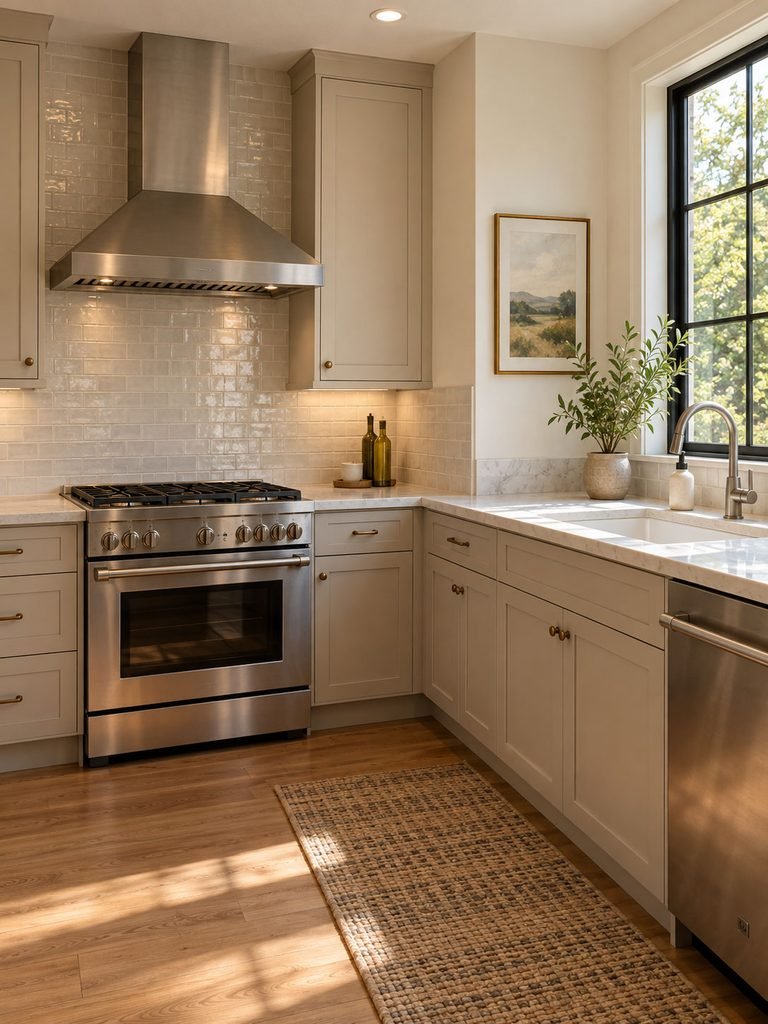
Kitchen decor has to live around heat, steam, water and airborne cooking residue. Placement matters as much as style.
Near the range, keep decorative paper, towels, baskets and other combustible items away from the cooking area. The U.S. Fire Administration specifically advises keeping anything that can catch fire away from the stovetop. U.S. Fire Administration cooking safety information
Around the sink, choose things that tolerate regular wiping. A decorative object that needs delicate handling will become frustrating in a splash zone. Keep electrical decor and cords away from water.
Ventilation also affects how a decorated kitchen ages. The U.S. Environmental Protection Agency recommends running an outdoor venting range hood while cooking and continuing for about 10 to 20 minutes afterward. It also recommends routine cleaning of kitchen surfaces, cooking appliances and the hood grease filter. EPA guidance for indoor air quality while cooking
That has a practical decorating consequence. Open shelves, frames and accessories close to the cooking zone will need cleaning more often than objects in a breakfast nook or on a dry wall. Put your easiest to clean materials closest to active kitchen work.
Use a simple commitment ladder for bigger changes
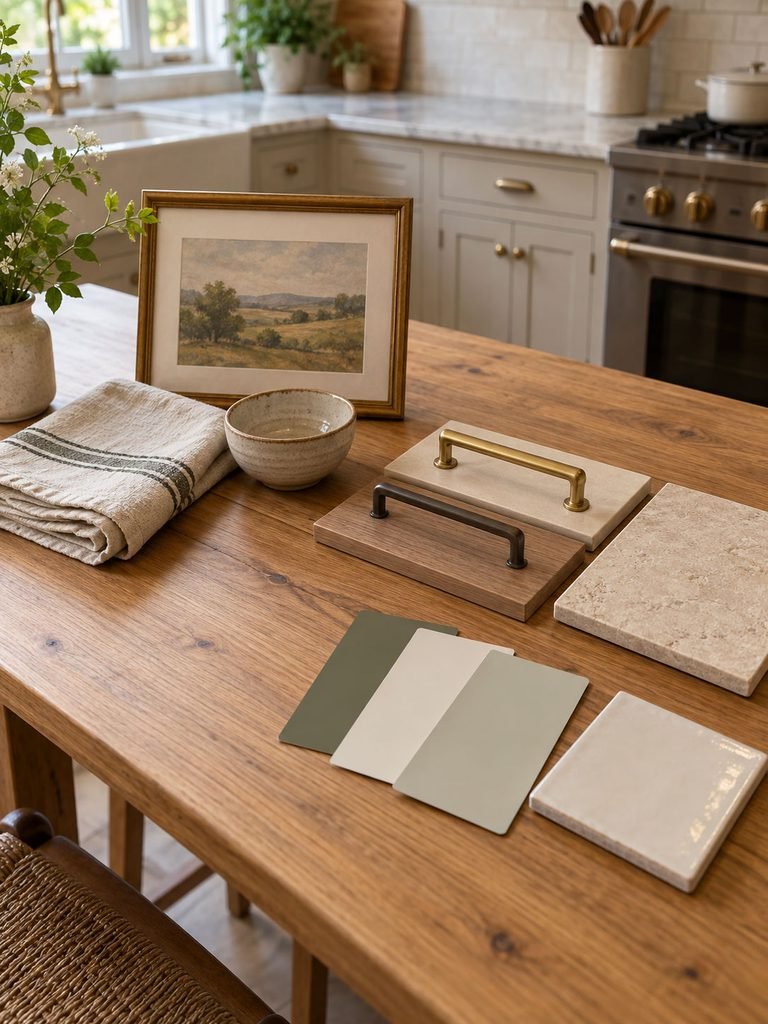
Do the easiest changes first. A kitchen often reaches the point where it feels finished before the expensive ideas become necessary.
Start with movable decor. Edit the counters, add a runner, hang art in a suitable dry location, change towels or bring in one useful ceramic or wood piece.
Move next to reversible changes. Cabinet hardware that fits existing holes, removable decor and some surface products can create a stronger shift, but compatibility matters. Follow the instructions for the exact product and surface rather than assuming anything marketed as removable will behave the same everywhere.
Permanent changes belong last. Paint, installed backsplash, hardwired lighting and plumbing changes can be worthwhile when the underlying surface is the real problem, but they involve more cost and more consequences.
This sequence also makes budgeting easier. You may discover that better lighting, clear counters and one strong wall treatment solve most of what felt wrong.
Common kitchen decor questions
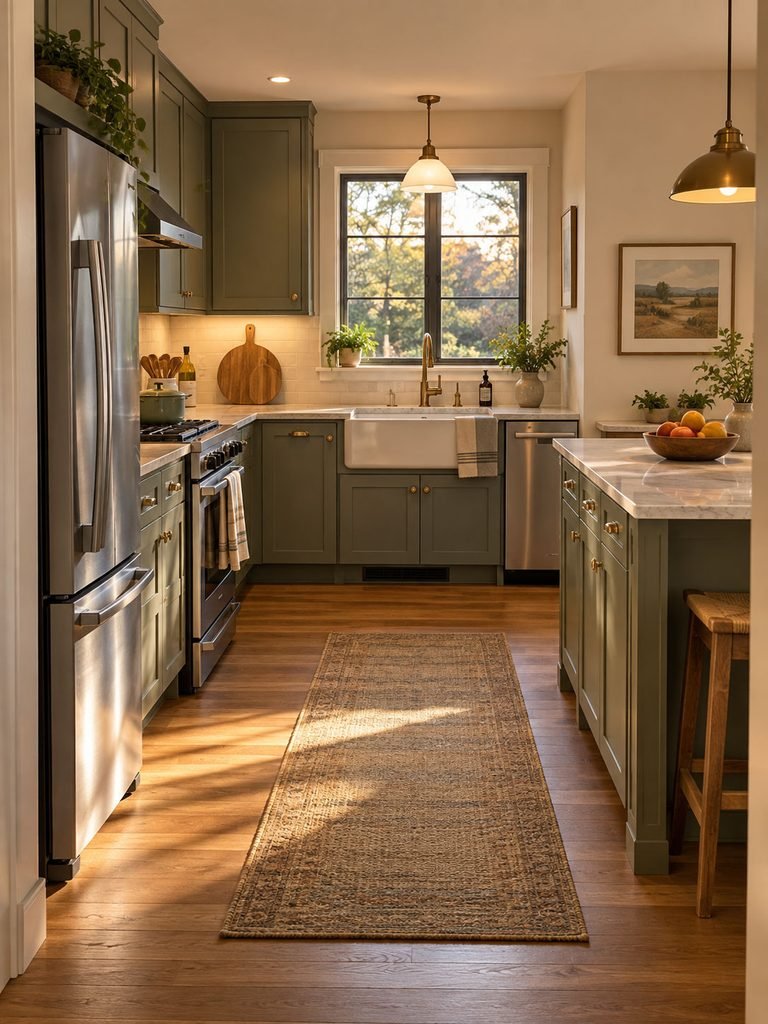
What should I put on my kitchen counters?
Keep things you use often or objects that provide enough visual value to justify the space. A cutting board, utensil crock, fruit bowl, kettle or compact coffee setup can work. Leave the main preparation area clear.
How much kitchen decor is too much?
There is no useful universal number. It is too much when you have to move objects every time you cook, clean or open an appliance. Empty counter and wall space are part of the composition.
How can I decorate a small kitchen without making it look crowded?
Use fewer objects and let useful pieces carry more of the decorative work. Put visual interest on a suitable wall rather than filling the counter. Repeat a small number of colors and materials so the room reads as one composition.
Can I mix wood tones and metal finishes in a kitchen?
Yes. They look more intentional when each finish appears more than once or has a clear relationship with an existing surface. You do not need every metal or wood tone to match exactly.
What is the cheapest place to start?
Clear the counters and change nothing for a day. Then identify the one area that still looks wrong. A towel, bowl, framed print or rearranged object can cost very little. Better editing can cost nothing.
Do kitchen decor ideas need to follow current trends?
No. Trends are most useful as evidence of broader design direction, not as a shopping list. Choose pieces that fit the room, the household and the way you actually cook.
Take one photo of your kitchen from the doorway. Circle the first area that looks crowded, bare or disconnected. Fix only that area, then take another photo before moving on. A kitchen usually looks more finished when each object has a reason to be there and enough empty space around it to be noticed.