Kitchen Decor Ideas for Renters: Reversible Updates That Work

A rental kitchen does not need a full makeover to feel better. Start with the fixed feature that bothers you most, then choose the least permanent change that actually addresses it. Bad lighting may need a better bulb or portable task light. Dated flooring may need a washable runner. Plain cabinets may only need different hardware.
Adhesive products can be useful too, but they are not automatically risk free. Paint finish, tile condition, laminate age, heat, moisture, product instructions, and removal technique all matter. The safest rental kitchen plan moves from portable changes toward adhesive changes only when the simpler options are not enough.
Start with the lease, the surface, and the exit plan
Before changing anything attached to the property, check what your lease says and what the surface actually is. A lease is a contract, and rights and obligations also depend on applicable landlord and tenant law, which varies by jurisdiction. That makes your own lease agreement and applicable law more useful than a blanket internet promise that something is renter safe.
Take photos of the kitchen before you start. Photograph cabinet fronts, hardware, counters, backsplash, flooring and any existing chips, stains or loose paint. This does not guarantee how a deposit dispute would be resolved, but it gives you a clear record of the starting condition.
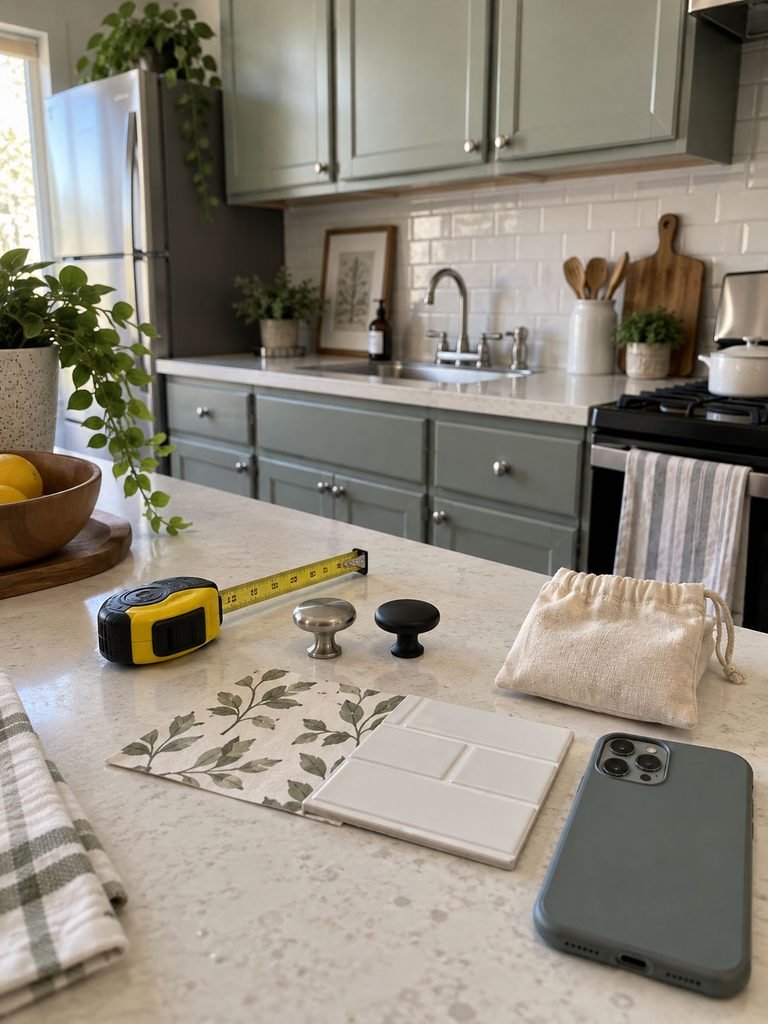
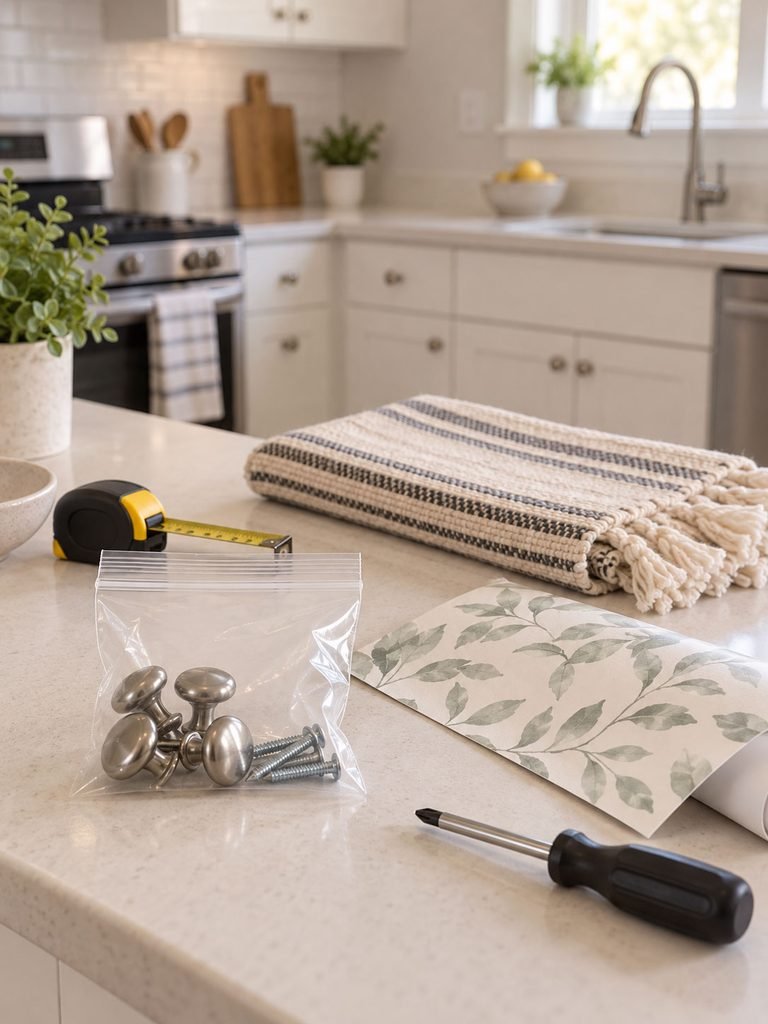
For anything you remove, plan the restoration at the same time. Keep original knobs, screws and other small parts together in a bag or box. If you cannot explain how an update comes off and how the original condition will be restored, it is probably not the first project to try.
Rank updates by how easy they are to undo
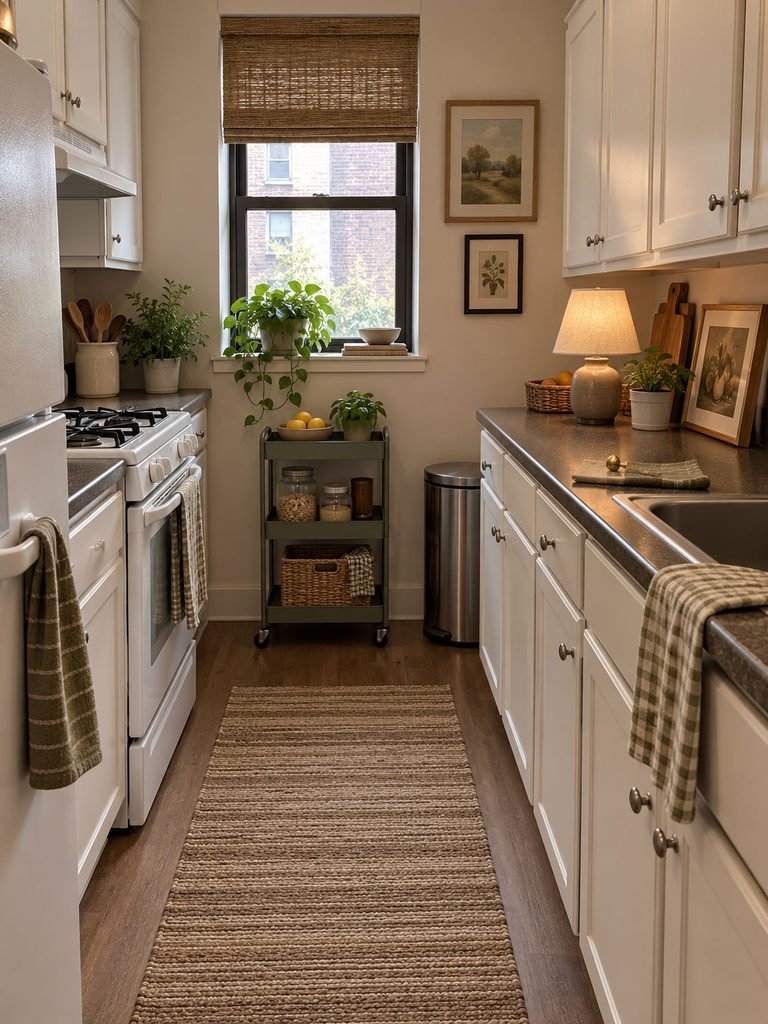
Not every temporary update carries the same amount of restoration work. Start at the low risk end and move upward only when the visual payoff is worth the extra uncertainty.
| Update type | Relative renter risk | What to check first |
|---|---|---|
| Countertop editing, plants, textiles and movable decor | Lowest | Space, cleaning and kitchen function |
| Runner rugs, carts and freestanding shelving | Low | Dimensions, stability and walking clearance |
| Hardware using the existing holes | Low when permitted | Screw size and hole spacing |
| Tension storage and removable hooks | Low to moderate | Fit, weight rating and surface compatibility |
| Removable wallpaper and backsplash products | Moderate | Surface finish, product instructions and patch test |
| Contact paper on counters or cabinets | Moderate | Existing finish, heat, moisture and removal |
| Adhesive floor coverings | Higher | Lease approval, existing flooring and removal plan |
| New holes, painting or hardwired changes | Highest for this article | Written permission and appropriate professional work |
This order prevents a common rental decorating mistake: taking on a messy surface project when a rug, light, hardware change or storage piece would have solved most of the problem.
Treat peel and stick products as surface specific
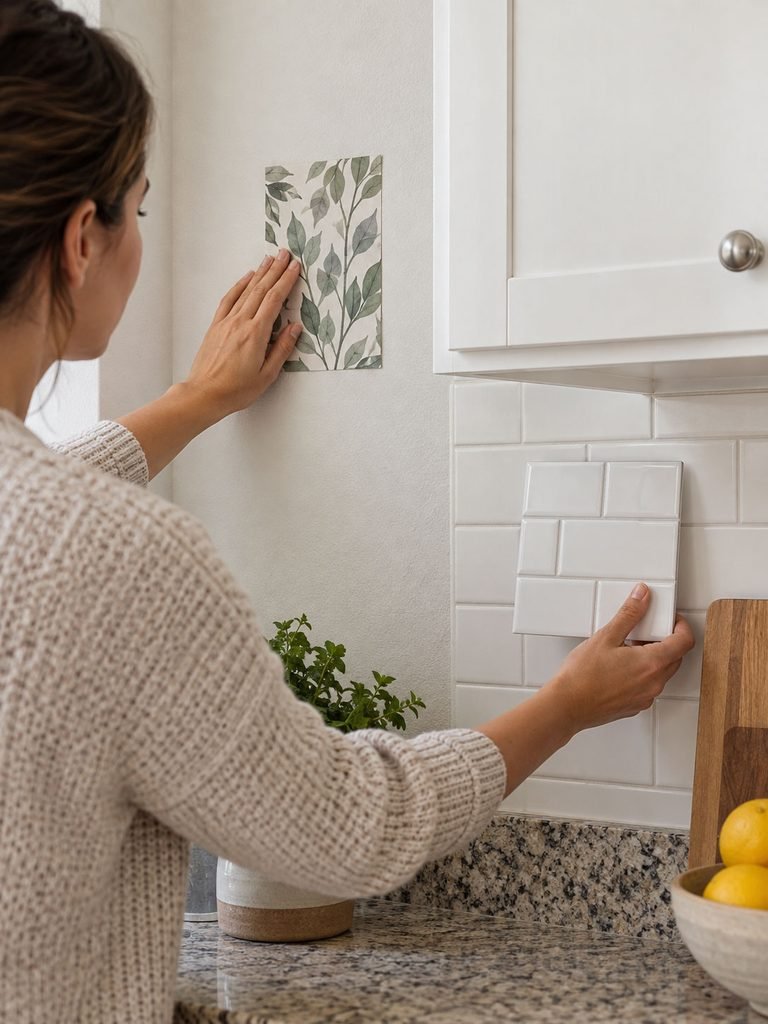
Peel and stick wallpaper, backsplash panels and contact paper can create the biggest visual change in a dated rental kitchen, but the adhesive has to agree with the surface underneath it.
Do not assume that a product marketed as removable is appropriate for every painted wall. For example, Tempaper’s current removable wallpaper installation guidance recommends smooth surfaces in good condition and identifies several finishes and textured surfaces that are not recommended. It also tells users to let fresh paint cure and prepare the surface according to its instructions.
Treat that as the broader lesson rather than a recommendation for one brand. Check the instructions for the exact product you buy. Test a small piece in an inconspicuous area and leave it long enough to learn whether it lifts, discolors, pulls at the finish or leaves residue.
A backsplash covering should also suit the location. The area behind a range gets more heat and airborne cooking residue than a dry wall beside a pantry. The wall beside a sink gets repeated splashes. Check the product’s permitted surfaces and placement instead of assuming one adhesive material belongs everywhere in the kitchen.
Counter contact paper deserves the same caution. It can disguise laminate you dislike, but counters see water, hot cookware, cutting, cleaning products and constant friction. If the original counter finish is already lifting or fragile, adding another adhesive layer may create more work at move out.
Refresh cabinets and storage without creating new holes
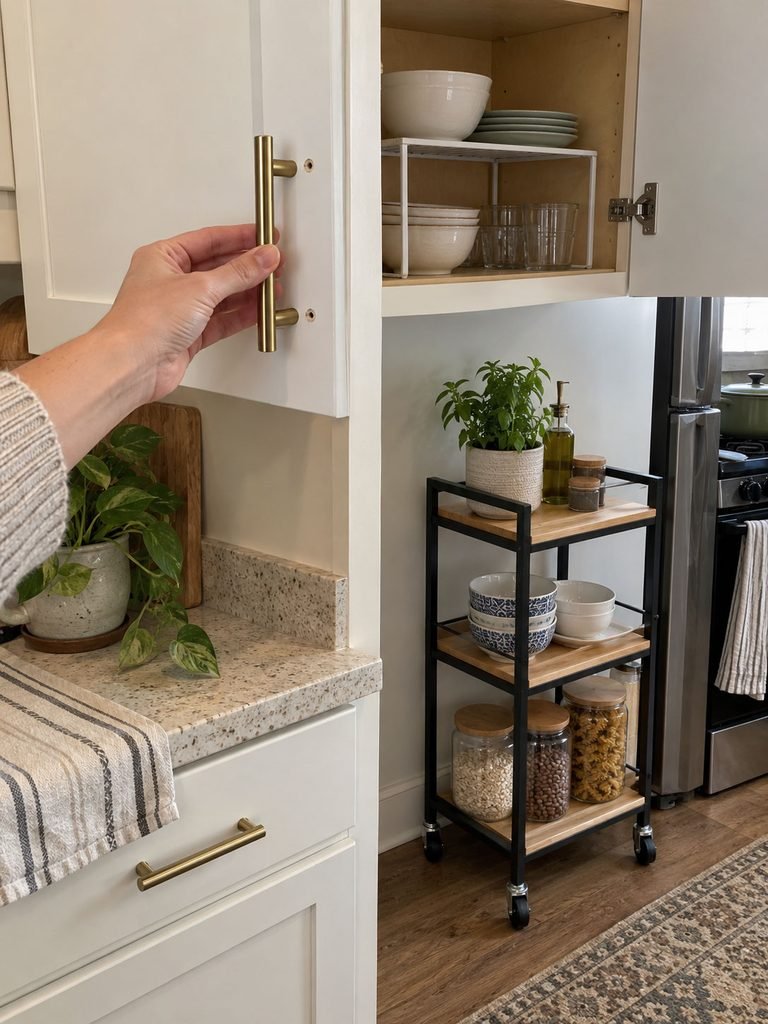
Cabinet hardware is one of the few small changes that can affect almost every cabinet at once. The safest version uses exactly the holes that already exist.
A knob normally uses a single screw. A pull usually uses two. For a two screw pull, measure the center to center distance between the existing holes before shopping. Matching that measurement lets you change the style without drilling another opening into the door.
Keep every original part. A labeled bag stored inside a moving box is more reliable than assuming you will remember which screw belonged to which pull months later.
For storage, choose things that stand on their own before asking adhesive to carry weight. Shelf risers, drawer dividers, over cabinet organizers, a narrow baker’s rack and a rolling cart can add useful capacity without touching the walls.
Adhesive hooks can still earn a place for light items when the product is compatible with the surface. Follow the actual weight limit, preparation and removal method. Command’s current manufacturer instructions for removable hooks, for example, specify preparation steps, waiting periods and a particular downward removal technique rather than treating the adhesive as foolproof.
Avoid making an adhesive ledge responsible for heavy dishes, glassware or anything that could cause injury if it falls. Portable storage is less dramatic in a photograph, but it is often the better renter decision.
Improve the lighting without rewiring
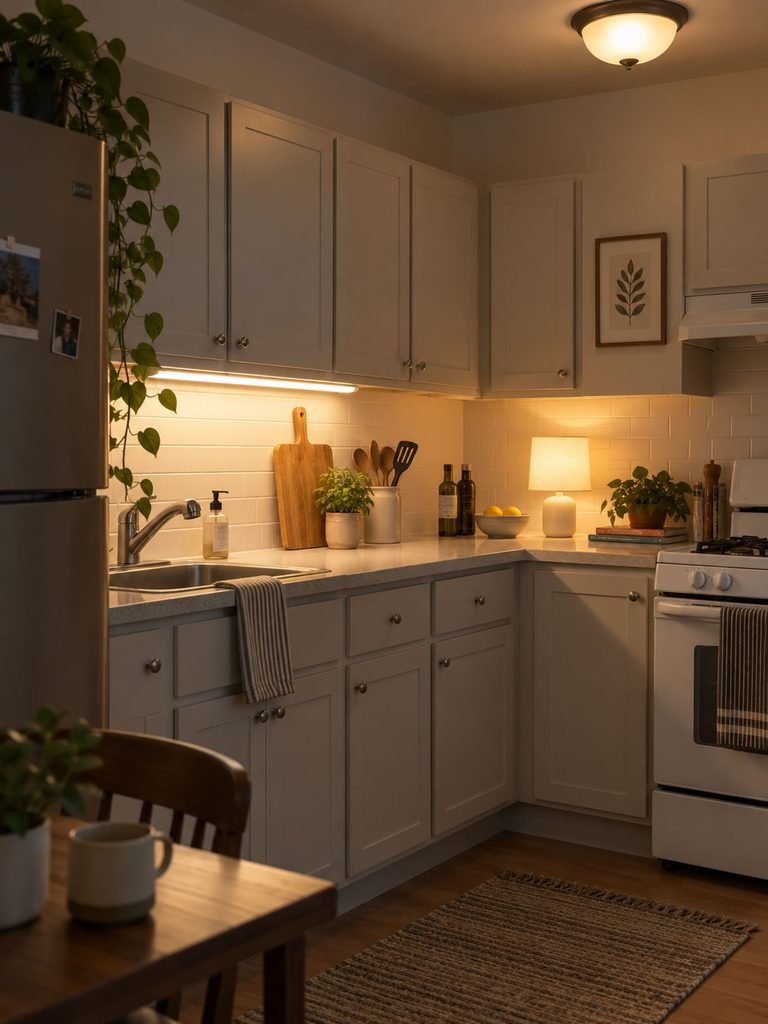
Bad lighting can make dated finishes look worse than they are. Before covering cabinets or counters, see what happens when the room has better task light.
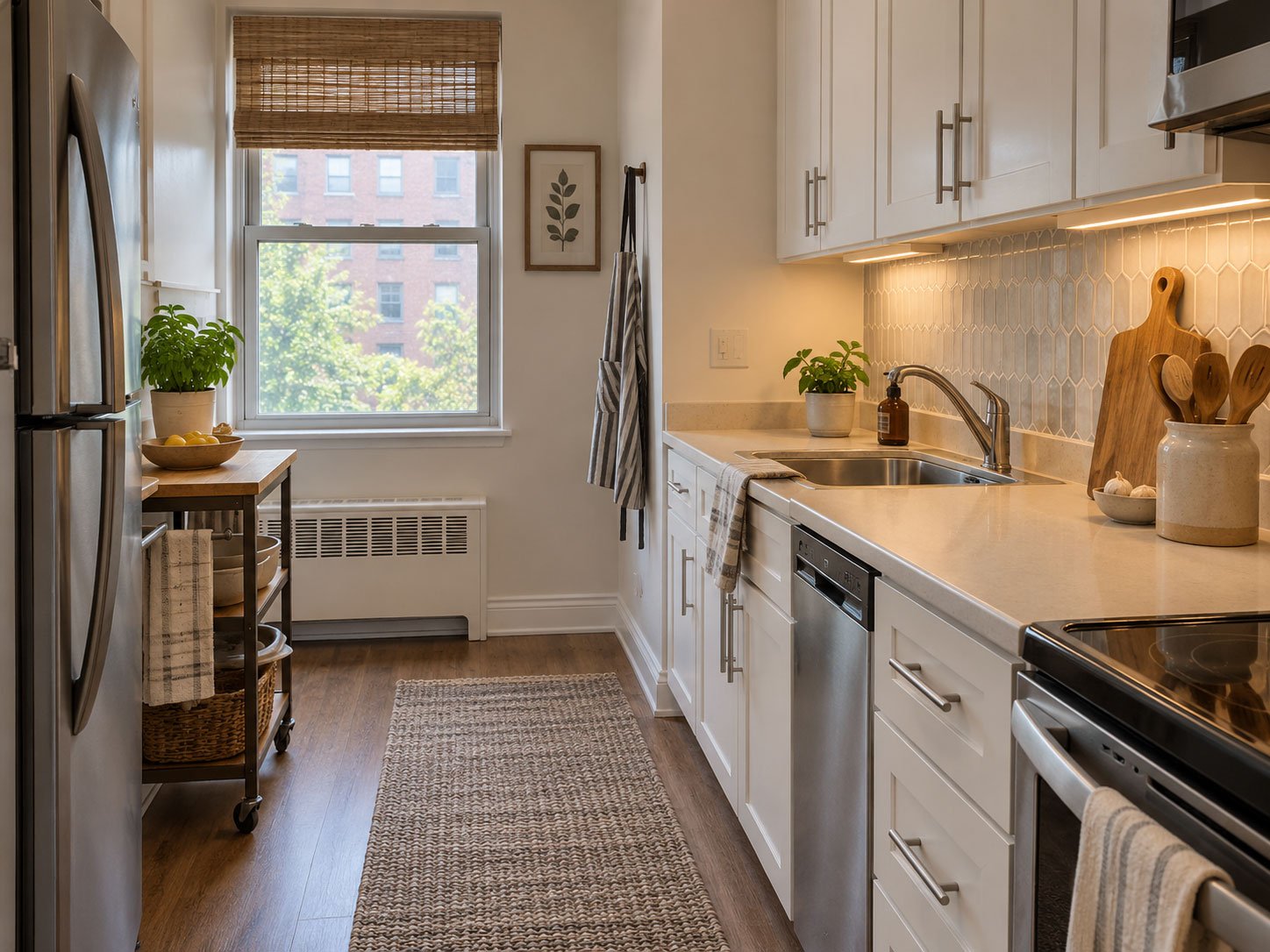
If the existing fixture accepts replaceable bulbs and your lease does not prohibit changing them, choose an appropriate bulb that stays within the fixture’s specifications. For darker counters, portable under cabinet lights or a small lamp on a dry, protected surface can add a second layer of light without touching hardwired wiring.
Treat cords as part of the design. The U.S. Fire Administration electrical safety guidance advises against overloading outlets, putting cords where they can be pinched or damaged, and using bulbs that exceed the fixture’s recommended wattage.
Keep portable lights and cords away from the sink, active cooking surfaces and walking paths. If improving the kitchen requires altering fixed wiring, installing a new outlet or replacing a hardwired fixture, that has moved beyond a simple decor project.
Cover dated floors with movable layers first
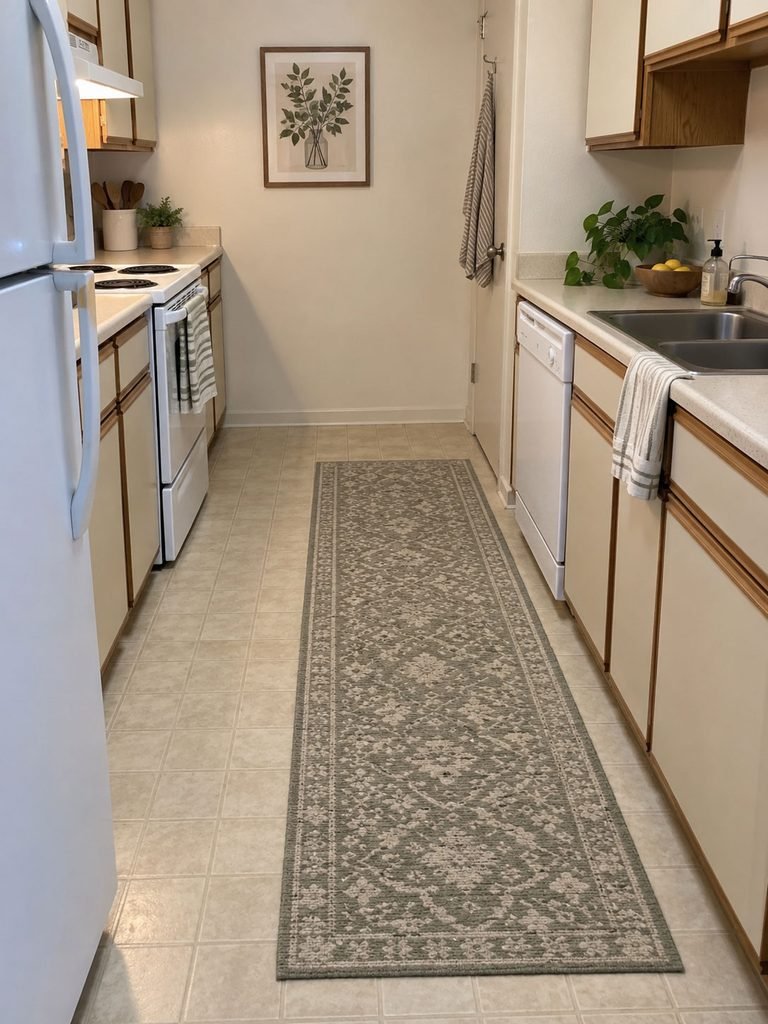
An unattractive rental floor is usually better covered than altered. A washable flat runner changes a large amount of visible surface, adds color and moves with you.
Measure the clear floor area with appliance and cabinet doors open. A rug that looks perfect while everything is closed can become annoying if the dishwasher catches its edge or a drawer cannot open fully.
Choose a rug that lies flat and can handle the cleaning demands of a kitchen. A rug pad must also be compatible with the existing flooring because some backings and flooring finishes do not behave well together.
Peel and stick floor tile is a much bigger commitment than a runner because adhesive touches a large area of the original floor. If you are considering it, check the lease and the flooring manufacturer’s care requirements, then test your intended removal method. Do not treat a successful installation photo as proof that your particular floor will restore cleanly.
Color can also come from dish towels, a café curtain on an appropriate tension rod, seat cushions, art or one useful decorative object. If you are considering typography or wall signs as part of the kitchen, Femorias has a more focused look at whether kitchen signs still feel current.
Style counters around how you cook
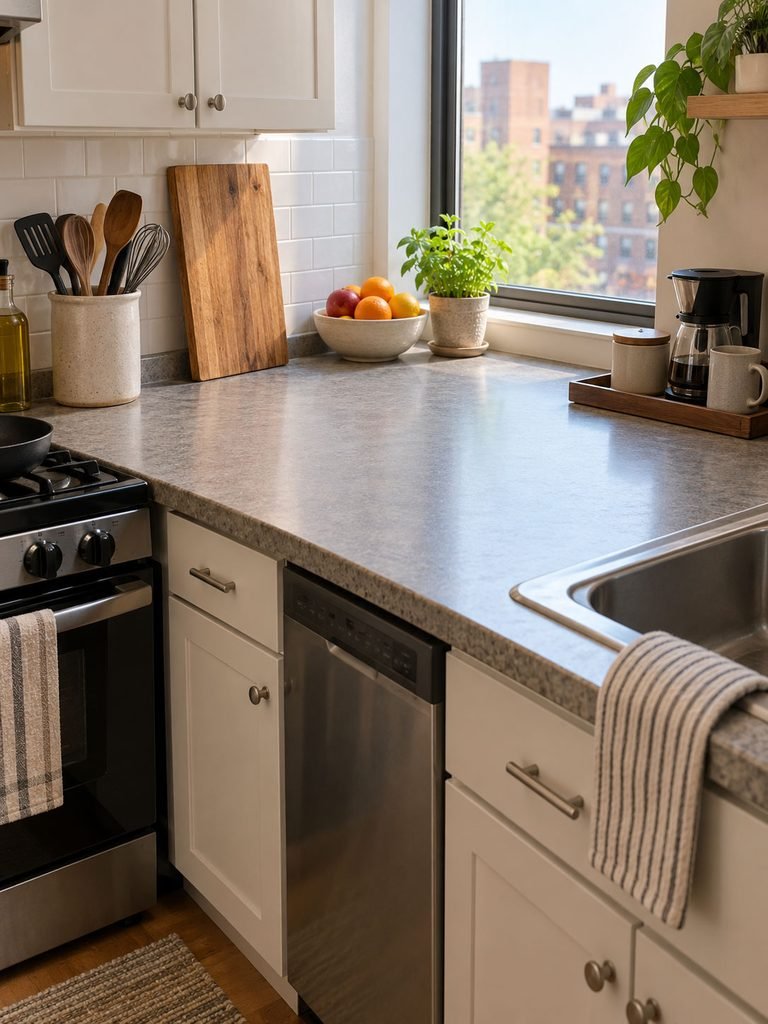
A rental kitchen can look unfinished because the counters are crowded, not because the finishes are ugly. Edit what stays visible before buying more decor.
Keep the main preparation area mostly clear. Move rarely used appliances elsewhere if you have storage for them. Then let a few useful pieces handle the decorative work: a cutting board, utensil crock, fruit bowl, attractive kettle, tray or jar that you genuinely use.
A coffee or tea station makes sense when it consolidates things that would otherwise spread across the counter. It does not need a dedicated cart, sign, plant and matching container set to qualify as a zone.
Use plants only where the available light suits them and where leaves will not interfere with food preparation. An herb pot on a bright sill can be useful. A struggling plant in a dark corner is neither functional nor decorative.
The awkward wall behind or beside a sink deserves its own decision because splash exposure and faucet clearance change what works there. The Femorias guide to what to put above a kitchen sink with no window goes deeper into that specific problem.
Decide what to do first
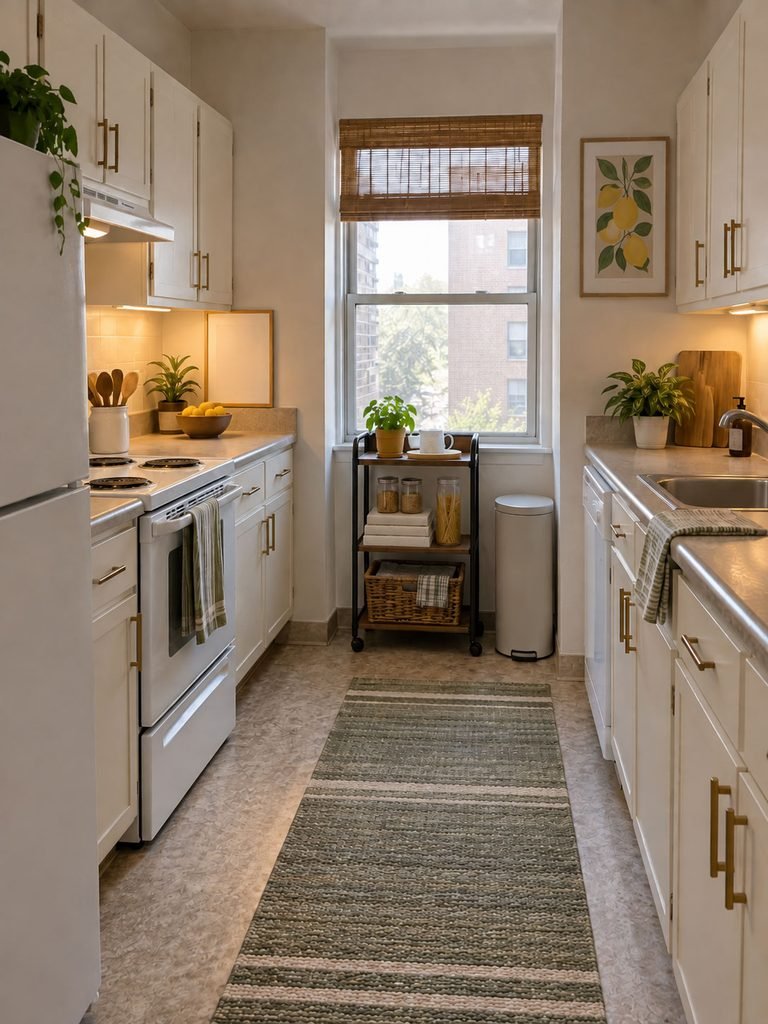
The best first project is usually the one that fixes the most irritating visible problem with the least restoration work.
If the kitchen feels dark, improve the light first. If the floor dominates the room, try a runner. If the cabinets look dated but are otherwise fine, test new hardware that fits the existing holes. If storage is the problem, add a cart or cabinet inserts before attaching shelves to a wall.
Move to removable surface coverings after those changes, not automatically before them. They can have strong visual payoff, but they also create the most questions about adhesion and removal.
A practical sequence is:
- Photograph the original condition and check the lease.
- Clear unnecessary countertop clutter.
- Improve portable lighting and textiles.
- Add movable storage if function is the problem.
- Swap hardware only when the existing holes can be reused and the change is permitted.
- Test adhesive products before covering a large surface.
- Store every original part you will need at move out.
That approach keeps the kitchen flexible. You can stop as soon as it feels good instead of completing a checklist of upgrades the room never needed.
Rental kitchen FAQs
Can peel and stick products damage rental walls?
They can interact differently with different finishes, which is why a universal yes or no is not useful. Product, paint type, paint age, wall condition, heat, moisture and removal method all matter. Follow the specific product instructions and test an inconspicuous spot before committing to a large area.
Can renters change cabinet handles?
Sometimes. Check the lease or ask when the rule is unclear. If the change is permitted, use hardware that fits the existing holes and keep all original pieces. Do not drill additional holes merely to make a different pull fit.
How can I add kitchen storage without drilling?
Start with freestanding and inside cabinet solutions: rolling carts, shelf risers, drawer dividers, countertop racks and organizers that hang from an existing cabinet door when the door can still close properly. Tension products and surface rated removable hooks can solve some lightweight storage problems after compatibility checks.
What is the cheapest way to make a rental kitchen look better?
Clear the counters first because that costs nothing. After that, a better lightbulb where appropriate, dish towels, a runner, a secondhand tray, a plant you already own, or inexpensive hardware using the existing holes can have more impact than covering every fixed surface.
Should renters use peel and stick floor tile?
Treat it as a higher commitment temporary project rather than the default solution. The adhesive contacts a large surface area, and flooring materials vary. A removable rug or floor mat is easier to take with you and normally deserves consideration first.
If you make only one change today, identify the fixed feature you notice every time you enter the kitchen. Solve that problem with the most portable option available. If the room still feels unfinished afterward, move up the risk ladder one step at a time.