Layered Haircuts for Curly Hair: How to Choose Shape Without Losing Definition

Layered haircuts can work beautifully on curly hair, but the best version is chosen by shape, density, dry length and styling routine, not by a trend name alone. Decide first where you want fullness to sit. Then decide how much of your perimeter you are comfortable lightening and where the shortest layer can land once your curls are dry.
If your ends already look sparse, choose restrained layering. If the bottom feels heavy while the crown collapses, more shape through the upper or internal sections may make sense. The goal is not simply more layers. It is the right distribution of the hair you already have.
Start with shape, not a curl number
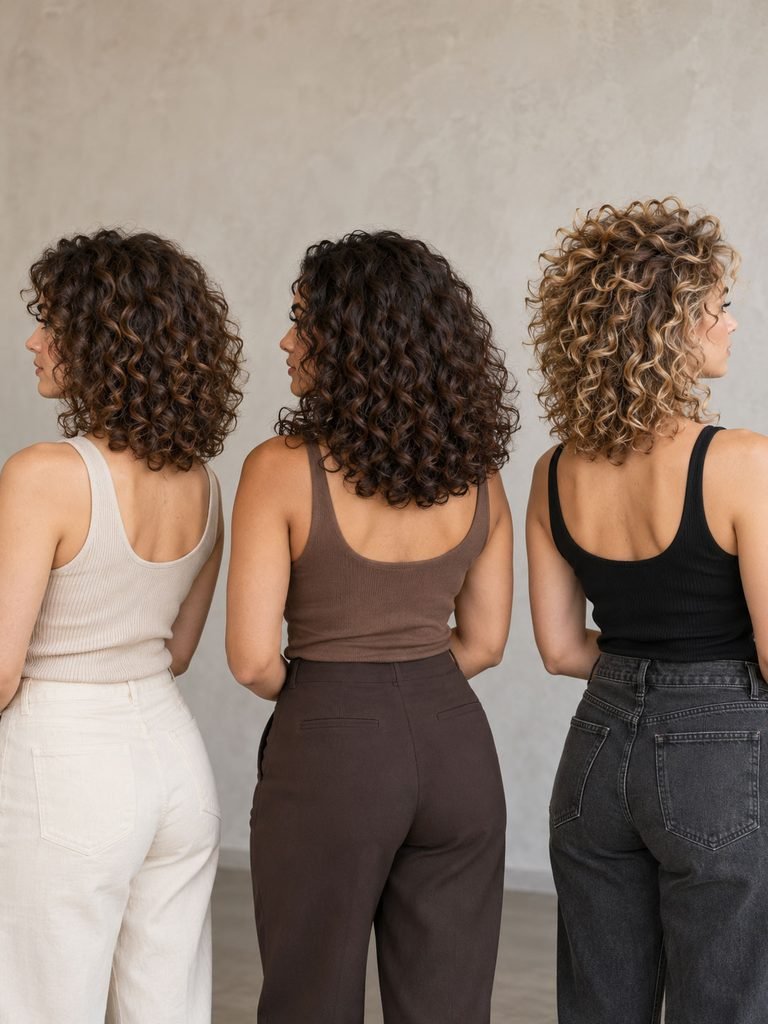
Curl labels can be convenient shorthand, but they do not tell you everything a stylist needs to know. Two people with a similar visible curl pattern can have very different amounts of hair, strand sizes, lengths and natural volume.
Research on curly hair also shows that hair curvature is only one part of a more complicated set of physical characteristics. The visible fiber can differ in geometry, diameter and mechanical behavior. The broader point is useful in a salon: one curl label cannot predict the whole haircut. See this peer reviewed review of curly hair structure and behavior. PubMed Central (PMC)
Professional cosmetology education makes a similar distinction. Haircutting instruction at Horry Georgetown Technical College specifically treats growth pattern, density, texture and wave pattern as factors that affect how hair behaves. Review the college haircutting course objectives. Loon 1
Before choosing a haircut photograph, answer a simpler question: What shape do you want your hair to make around your head when it is dry?
You may want a rounded shape with width through the middle, more lift near the crown, a fuller bottom edge or a longer shape with only subtle movement. Those are more useful starting points than asking which haircut belongs to a particular curl category.
Choose where you want the fullness to sit
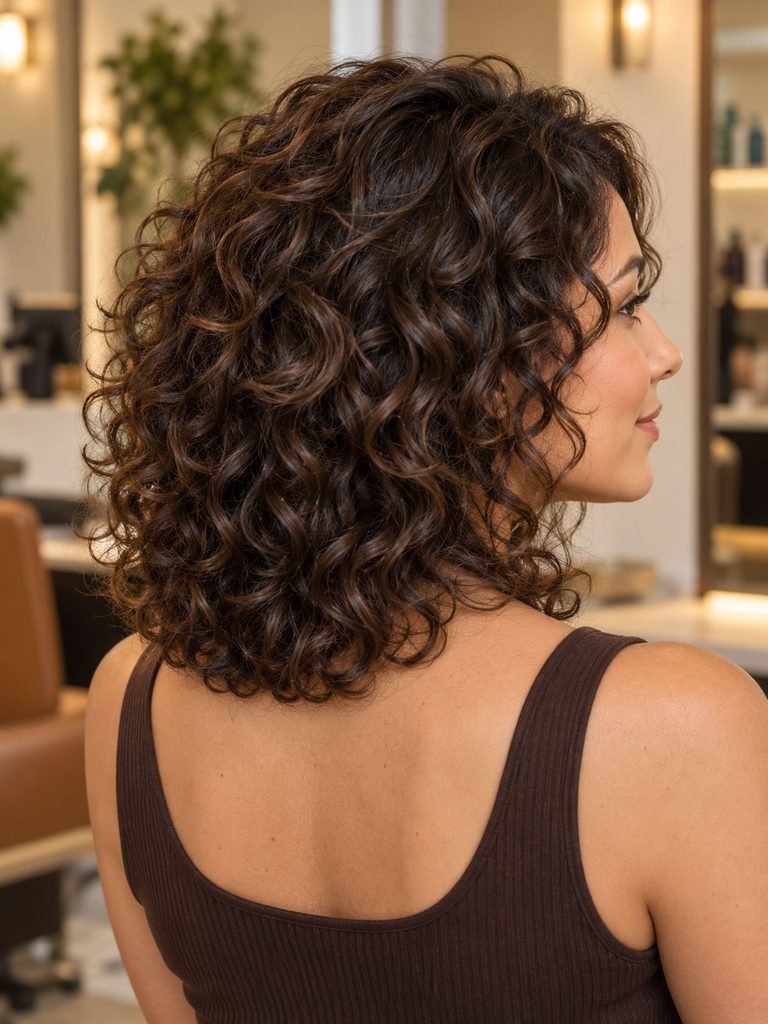
Where the haircut carries its visual weight matters more than the number of layers.
For more crown lift: You may want shorter upper layers, but decide how short you are genuinely willing to go. A reference photograph with dramatic height can involve both a structural haircut and deliberate styling.
For a rounder silhouette: The stylist can distribute length so the sides and upper sections contribute to the overall curve instead of leaving all of the visible mass near the bottom.
For a fuller perimeter: Keep more hair reaching the bottom edge. The layers can begin lower or remain subtle through the exterior.
For less bottom heaviness: Ask whether internal weight removal or more visible layering makes sense for your density. Those approaches can create different appearances even when both reduce visual bulk.
For a long overall look: Keep the shortest major layers long enough that the haircut still reads as long hair when your curls are fully dry.
A useful reference photograph should show the shape you want, not simply curls you like.
Choose the haircut by length and density
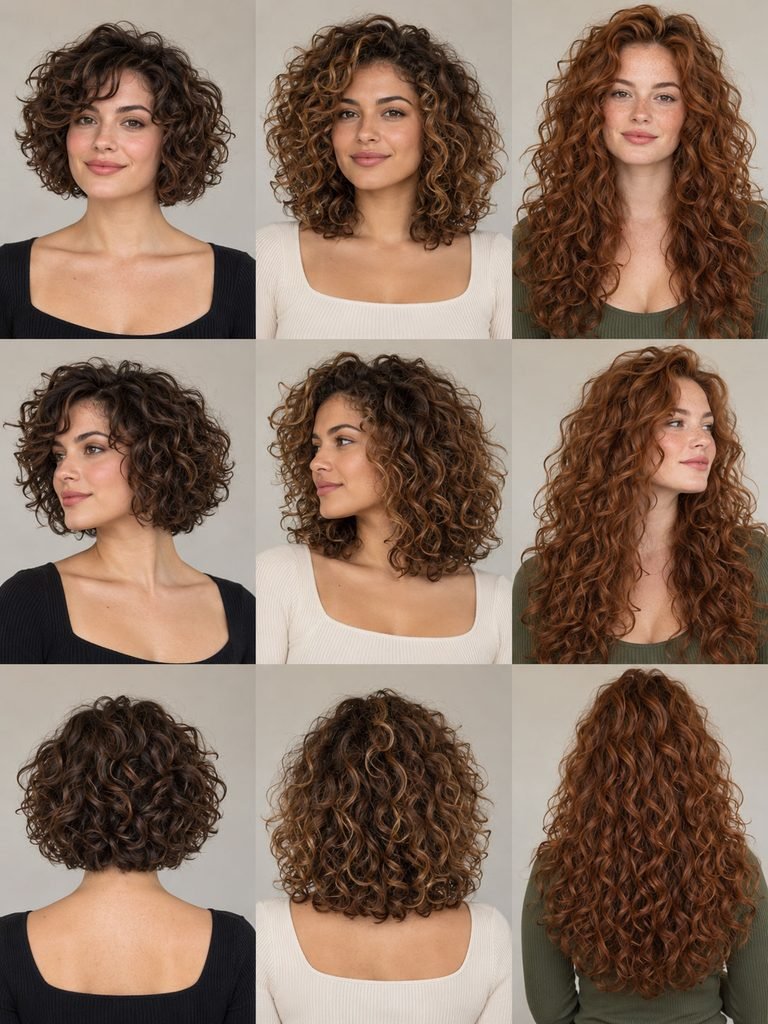
A shorter haircut makes each change in layer placement more visible. A longer haircut gives a stylist more distance over which to blend the change.
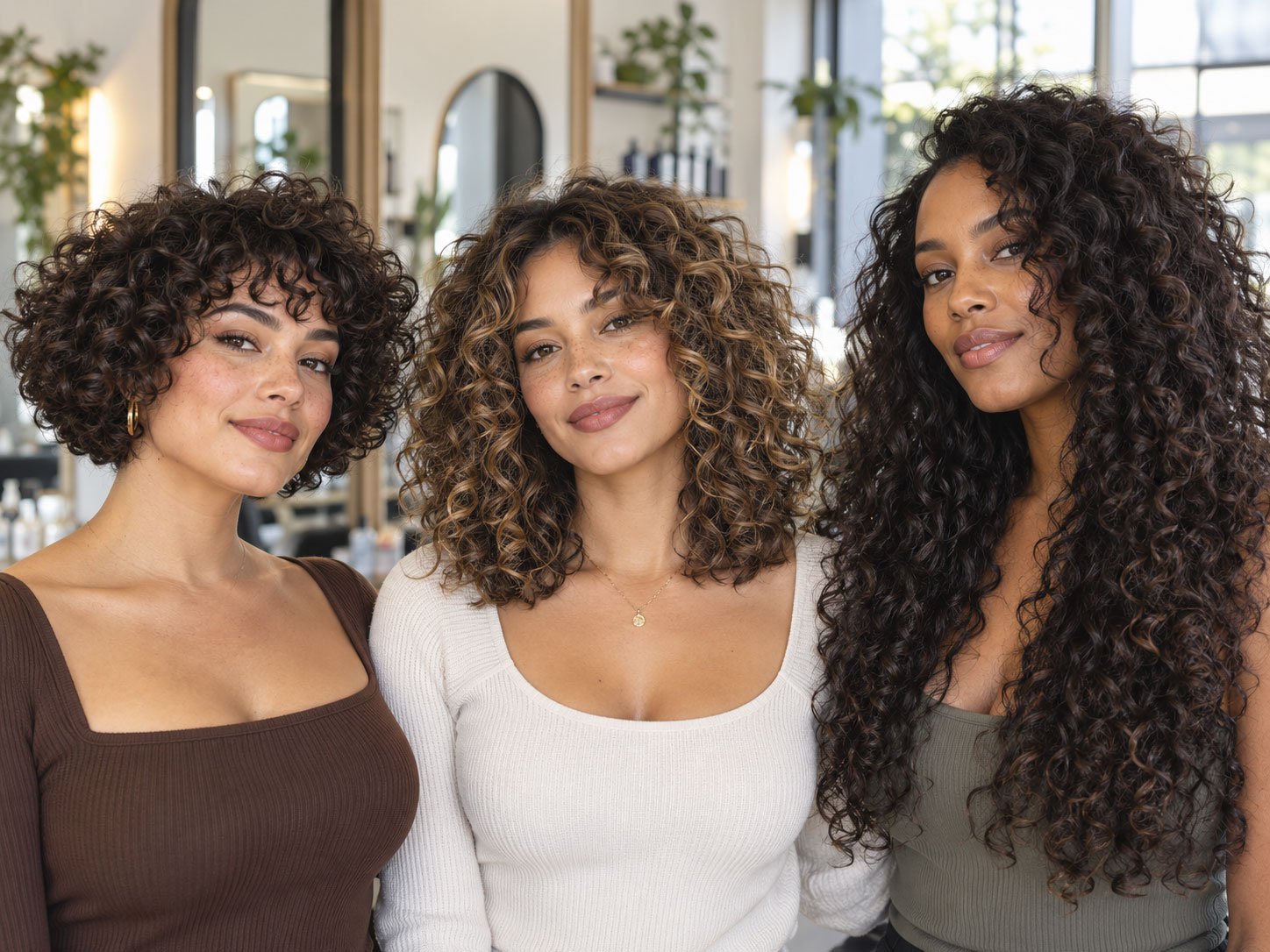
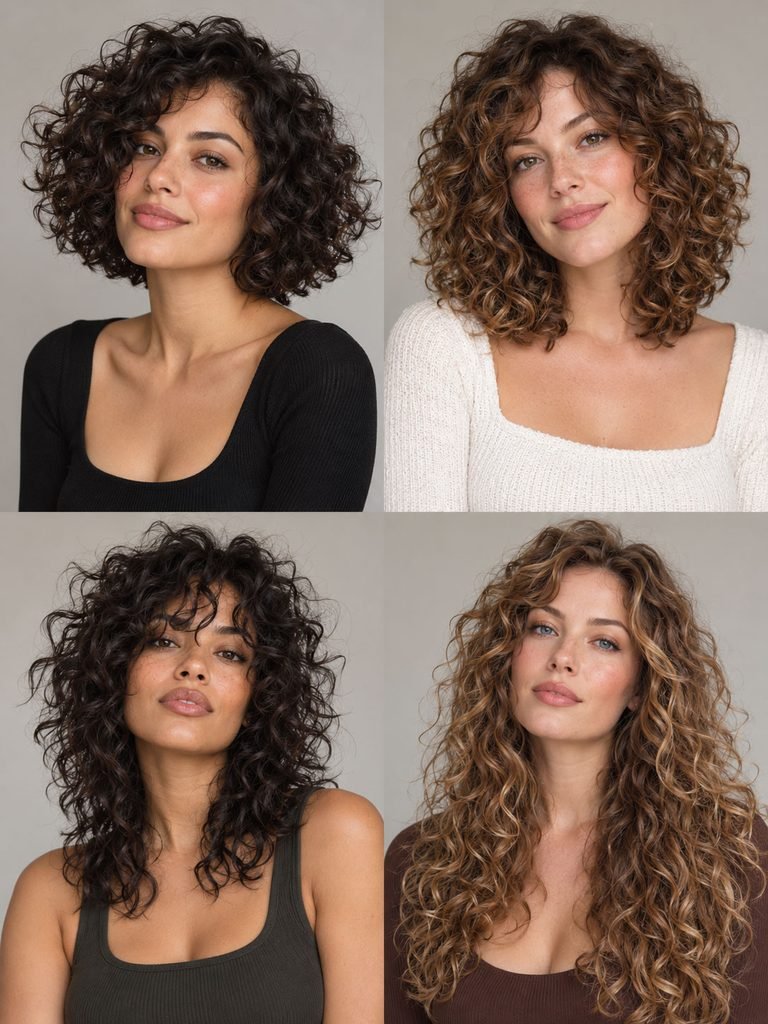
Curly layered bob: This works well when you want the outline itself to become part of the style. Decide whether you want the widest point near the cheek, jaw or lower toward the neck. A short curly bob can look soft and rounded, but it leaves less length available to disguise a layer that feels too short.
Shoulder length rounded layers: This is a useful middle ground when you want visible shape without committing to a very short cut. Pay attention to where the dry ends actually sit because curls meeting the shoulder can behave differently from curls hanging freely beneath it.
Curly shag: A shag deliberately creates more contrast between shorter upper sections and longer lower sections. It suits a reader who genuinely wants separation, crown movement and a less solid perimeter. It is not the safest choice for someone whose main goal is to preserve a dense bottom edge.
Long cascading layers: These can introduce movement while keeping the overall impression of long hair. They are often a more conservative choice when you want to preserve length or when your ends already need protection.
Subtle internal layers: These may redistribute some internal weight without making every change obvious on the outside. If terms such as internal, long, ghost and face framing layers are unfamiliar, Femorias’ guide to types of hair layers explains what each one changes.
Density deserves separate attention from curl pattern. If a lot of hair reaches the bottom edge now, you have more room to redistribute some of that weight. If the perimeter already looks light, removing more hair from it can make that lightness more obvious.
Plan the shortest layer around shrinkage
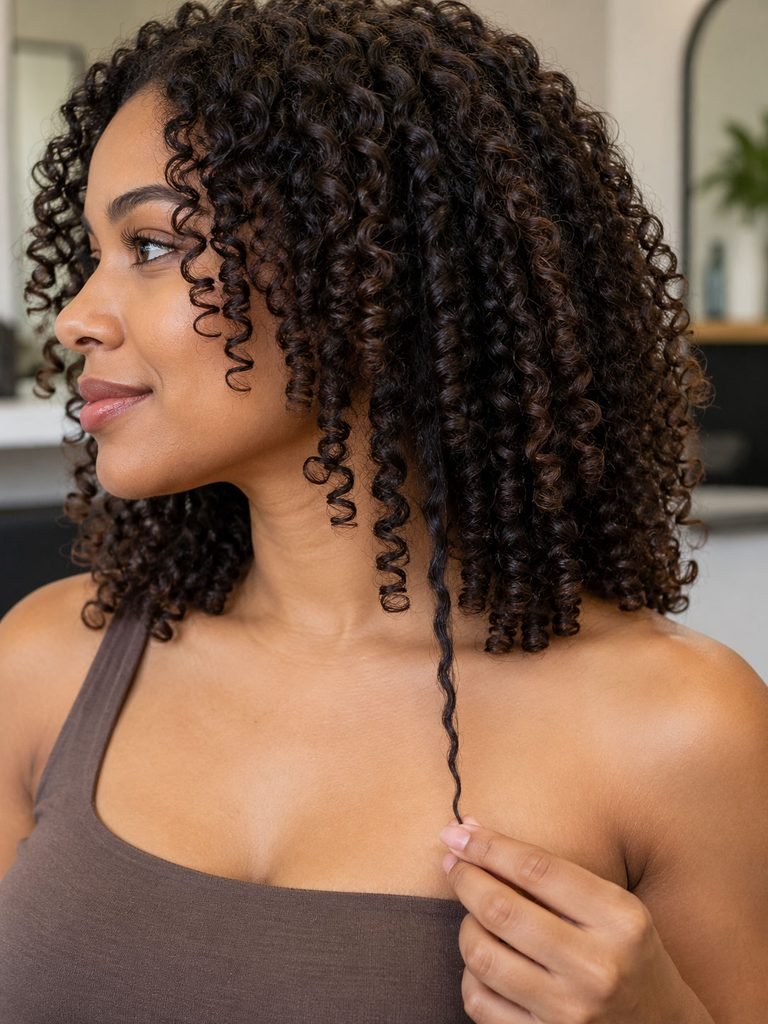
The shortest layer should be planned around where your curls actually sit when you wear them, not only where the strand reaches when stretched.
That matters most around the crown, temples and face. A piece that looks comfortably long while damp or stretched can occupy a much higher position after the curl returns to its normal shape.
Before the stylist cuts a major face framing or crown section, agree on the shortest acceptable dry position. Saying, “I do not want this section to finish above my cheekbone when my hair is dry,” is clearer than saying, “Do not take too much off.”
Do not assume that every curly haircut must be performed entirely dry. Stylists use different cutting systems and may work wet, dry or with a combination. The more useful question is: How will you account for where these curls sit when the haircut is finished and dry?
Bring reference photographs that show a texture and density reasonably close to your own. Even better, include photographs of your own hair on a typical wash day. That gives the stylist information about your normal shape rather than only the most polished version of somebody else’s hair.
Protect the perimeter if your ends already look light
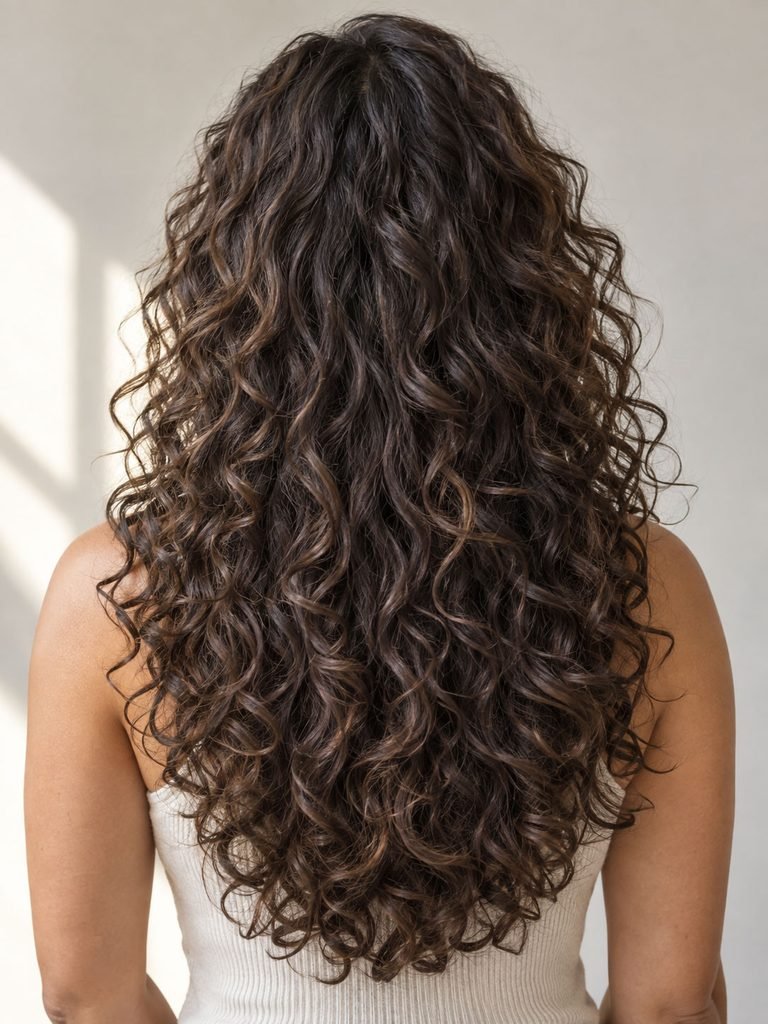
Layers redistribute hair. They do not create additional density.
That sounds obvious, but it is easy to forget when a reference photograph has enormous styled volume. If your ends already look see through or sparse, sending more strands into shorter layers can leave fewer strands reaching the perimeter.
A conservative starting point is to keep the major layers lower and protect the bottom edge. You can still use some face framing or carefully placed internal movement if your hair supports it.
If you have a very dense perimeter and feel that the bottom dominates the whole haircut, the decision can move in the other direction. More internal weight removal or visible layering may help create the shape you want.
The useful salon question is not, “Are layers good for my curls?” Ask, “How much hair can we redistribute without losing the fullness I want at the bottom?”
Match the cut to the styling routine you will actually use
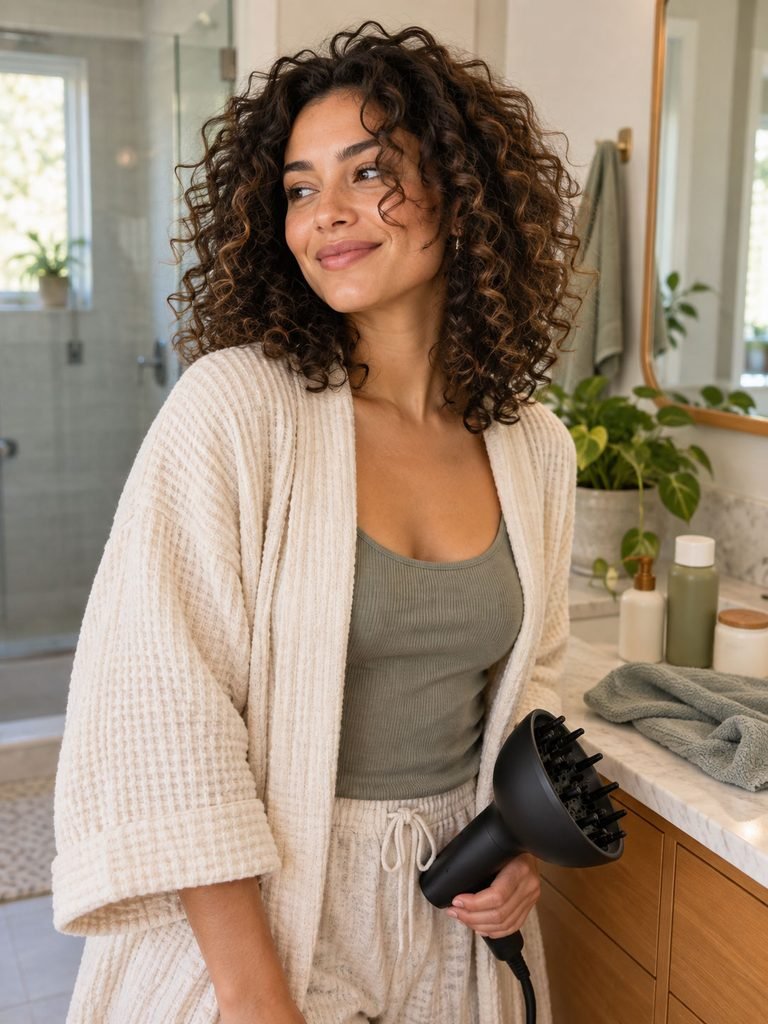
A haircut that needs a round brush, diffuser or detailed curl setting to resemble the saved photograph is not automatically a bad haircut. It may simply be the wrong haircut for someone who does not want that routine.
Ask yourself how your hair is usually dried. If you normally air dry, show your stylist what that result looks like. If you diffuse every wash day, say so. If you frequently stretch or straighten your curls, mention that too because you need a cut that makes sense in more than one state.
The American Academy of Dermatology advises people with curly hair to detangle carefully while wet rather than repeatedly brushing the finished dry texture. Its dermatologists also recommend limiting excessive heat exposure. Their curly hair care guidance and hair styling guidance provide useful care boundaries. American Academy of Dermatology
That does not mean you need to air dry every haircut. It means the haircut should not quietly commit you to a styling routine you do not want.
If you wear longer curls and want styling options between wash days, Femorias’ guide to hairstyles for long natural hair groups styles according to the state the hair is already in.
Take a decision brief to the salon
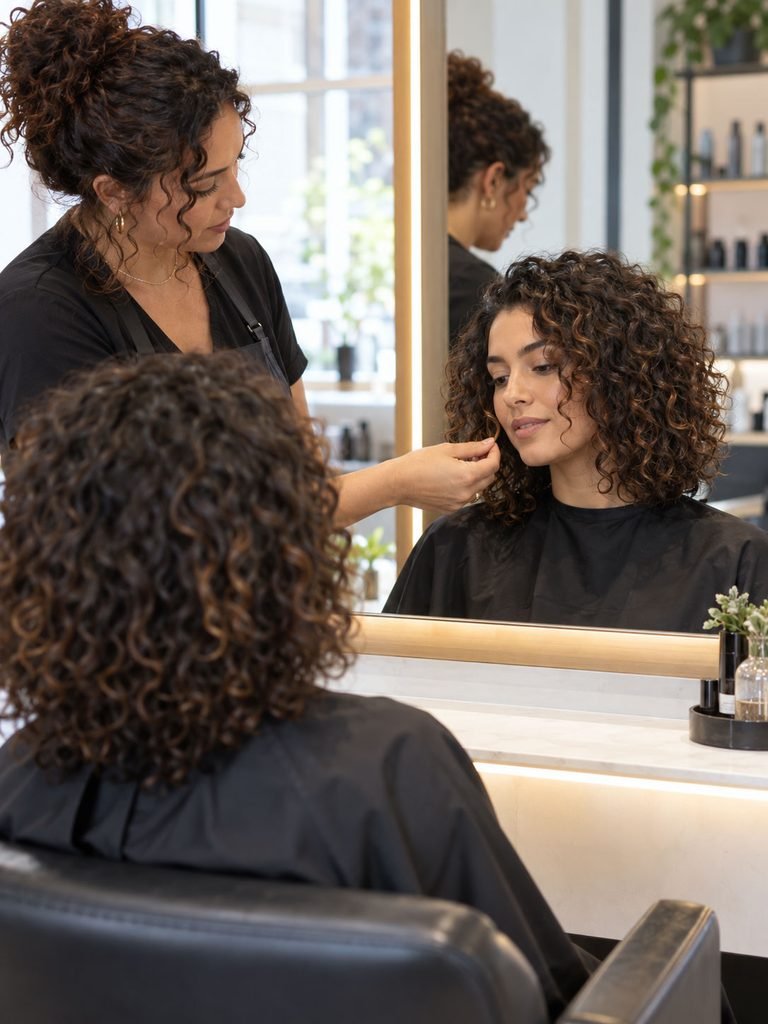
A good consultation is easier when you describe the result instead of relying on one haircut name.
Take these decisions with you:
- Dry length: Decide the shortest overall length you are comfortable seeing after your curls settle.
- Shortest layer: Choose the highest point you are willing to let a crown or face framing layer reach.
- Perimeter: Say whether keeping the bottom edge full is a priority or whether you are comfortable with a lighter outline.
- Volume placement: Explain whether you want more lift at the crown, more width through the sides or a longer downward shape.
- Normal styling: Tell the stylist whether you air dry, diffuse, stretch, straighten or switch between several routines.
- Tie back needs: Mention ponytails, buns or other styles you rely on. Very short front pieces may not reach an elastic.
- Reference photo reality check: Ask which parts of the photograph come from the haircut and which appear to come from styling, product, color placement or unusually high density.
Then ask the stylist to show you approximately where the shortest major sections will land. You do not need to understand every cutting technique. You do need to agree on the visible result.
Common questions about layered curly hair
Are layers good for curly hair?
They can be. Layers are useful when they create the shape you actually want, such as more crown movement, a rounder silhouette or less weight near the bottom. They are less useful when added simply because curly hair is assumed to need them.
Can layers make curly hair look thinner?
They can make the perimeter look lighter if too much hair is removed from the lengths that currently reach the bottom. This matters most when your ends already look sparse or when preserving a solid outline is important to you.
Should curly hair be cut wet or dry?
Neither method is automatically right for everyone. Different professional systems use wet cutting, dry cutting or combinations. Ask how the stylist evaluates shrinkage and checks the final dry silhouette instead of choosing a stylist solely on that label.
How short should face framing layers be on curly hair?
Judge them by their dry resting position and by what you need the hair to do every day. If you frequently wear a ponytail, for example, make sure the shortest front pieces are not shorter than you are comfortable leaving loose.
Will layers make curls more defined?
A haircut can change how curls sit, separate and distribute weight, which may make the overall pattern more visible. It cannot guarantee curl definition. Moisture, handling, styling technique, weather and the hair’s own characteristics also affect the finished result.
What is the safest choice if I am unsure?
Make the smallest structural change that solves the problem. Keep more length, protect the perimeter and place the shortest major layer conservatively. You can always add more layering at another appointment. Growing back an unexpectedly short section takes much longer.
If you are choosing between two reference photographs, ignore the color and polished styling for a moment. Look at the outline, the shortest layer and the amount of hair reaching the bottom. Pick the version whose structure matches what you want your own curls to do. That is a much more useful starting point than choosing the trendiest haircut name.